Select an organization you work for or one in your chosen field.
Conduct online research on the ethics of your organization and the industry it belongs to.
Write a 750- to 1,050-word paper describing how ethical principles can address organizational issues. Include the organization you selected and discuss the following with regards to that organization and its industry:
•What role do external social pressures have in influencing organizational ethics?
•How might these issues be relevant to organizational and personal decisions?
•What is the relationship between legal and ethical issues?
Format your paper consistent with APA guidelines
SAMPLE ANSWER
The Responsibility Project
At the top of discussion in every arena such as churches, schools, and casual fellowship is how the principles of ethics are used to address organizational issues. Ethical principles are applicable in a number of ways that establish a strong relationship structure that workers of all level will value and appreciate (Trevino & Nelson, 2006). This paper discusses how the ethical issues are applied and used in organizations regarding the information about a film redeemed from “Responsibility project” website. The important highlights from the film are the roles, which external pressure has in influencing the ethics of an organization, relevance of these issues in personal and organizational decision, and the relationship between the ethical and legal issues.
The short film known as Good Vibration is a lively animated story that depicts the image and the responsibility of the community and cost of being pleased. The film majorly focuses on a group responsibility within the society and the way community and organizations behave. The milieu of this film is the society responses on their behavior when they see the helpless and disabled individuals walk down on the sidewalks tripping and falling. Some of the employees of the organization find it very interesting when they see these individuals fall. They mock and laugh at them without giving the necessary warning to the ones who are coming on the danger that faces them (Good Vibrations, 2009). After a short time, the laughing employees see an elderly person approaching, he opens the window and warns the next helpless of the dangers ahead at the loose bricks. This helps the person from getting hurt.
A major highlight in this film is how just a single person can take the initiative and responsibility to warn other individuals on the defective pavement, while a group enjoys how the helpless people suffer. An interrelation of this kind can be gotten when it is linked with the attitude of numerous organizations. In many instances, serious problems are figured out by many people regarding certain organizations. However, in this case they are laughed upon, and an effort of improvement becomes an interesting topic of discussion. There are times when an individual finds a problem in the firm, but instead of solving the problem, one just assumes the issue and makes it fun. The major problem with such issues is that if they get ignored for a long time, they become incurable and cause big losses (Trevino & Nelson, 2006). At the end of the day, it is the organization that suffers for its malfunctions and lack of positive attitude to ensure development.
External social pressure manipulates an organizational ethics extensively. In most instances, the number of stakeholders such as the employees, shareholders, and customers increases greatly. As a result, their interests overlap causing serious problems in the organization. In this case, Enron’s example can be cited. To continue with such existing stakeholder and welcome new shareholders, Enron started an off the books to conceal the massive debts and loans. To acknowledge the financial crisis in Enron’s business to the global world, a major reaction to the issue was inevitable, and the business would come down. Nevertheless, due to the social pressures Enron handled it in a different manner. This is an example on how external social pressures affect the ethics of an organization.
In order to secure an organization’s turnover, deals, and profits, in many occasions, legal and ethical responsibilities may be neglected. To save the firm from internal and external problems the head in some cases, implements and makes his verdicts. In doing so, they tend to forget that just for the sake of saving the company; the unethical decision can ruin the firm at the long run. In the case of Enron’s scandal, the unethical and illegal decisions were done in the employee’s good understanding, but at last, they remained numb to the situation. Later, when the scenario got exposed individuals tried what they could to safeguard themselves from the quandary. At last, it jeopardized the reputation of the organization. It would have been much better alternative for Enron to reveal their financial position earlier and avoid unethical decisions.
Between ethical and legal issues, correlation is common in many a times (Trevino & Nelson, 2006). The practices and decisions that are ethical are habitually illegal. In the film, the employees laugh at the helpless people; this act cannot be seen as illegal, but it is very unethical for the company reputation hence cannot be sighted as the illegal act but certainly unethical one. The employees ought to have taken the responsibility to fix the pavement or to erect a warning signs to caution the pedestrian. Therefore, some acts may not be illegal but very unethical.
From the discussion, we can learn the real story of what might happen to any organization when the employees lack the nerves to do the right thing and follow the moral stand in some situations. Unethical acts of employees are enough to spoil an organizations reputation. Even though external social pressures have an inevitable role in manipulating an organization’s code of ethics, moralistic approaches should be maintained in the organization for the good of every stakeholder
References
Trevino, L.K. & Nelson, K.A. (2006).Managing business ethics: Straight talk about how to do it right (4th ed.). Hoboken, NJ: John Wiley & Sons.
1. The Copyright Term Extension Act (CTEA) was passed in 1998.
What are the purposes of the act? Specifically identify the copyright extension for both individuals as well as the corporations?
2. The Act has also been called the Mickey Mouse Protection Act? Why? Specifically identify the threats companies like Disney faced and continue to face.
3. How does this act specifically tie into the public domain?
SAMPLE ANSWER
Copyright Term Extension Act
The Copyright Term Extension Act was enacted in 1998 for purposes such as providing sufficient copyright protection for American works and more so, to have a continuation of economic benefits when copyrighted work are exploited. It also brought about job creation. With the provision of adequate copyright protection, an important foundation is not only for the present times, but also for the future. Less incentives will be experienced for individuals who wish to become creators. It would also be fair deal to protect the works of authors for their descendants. This would work by having the authors’ copyrights remain valuable resources for their families. For individuals, the copyright would go for 50 years plus the author’s life, while 75 years are awarded to corporates.
The nickname “Mickey Mouse Protection Act” was brought about by the Disney Company strategically lobbying for the Act, which as a result of delayed streaming and production of the Mickey Mouse movies. Efforts trying to prevent the Extension Act from being passed came from all sides, which caused a threat to the success of the term. For some, the extension Act meant more costs to the American people, which did not get any benefit as per their thoughts. Companies faced the claim that the legislation was totally unconstitutional in accomplishing the State’s mandate to bring about improvement in science and arts. To support this, they argue that majority of the works only fetch profits during the first years and go dormant when pushed off the market, thus extending the term has no economic benefit. Copyright protection does not last for life. This means that copyright does grow old and eventually dies, and the efforts falls to the public.
The Act ties to the public domain in that when a work enters it, it means the public can modify and own it, therefore, giving it a new look or a new sense as per their preference. The work can be used without permission from anyone as it is owned by no one. The extension Act had it that no new works would be pushed to the public domain until 2019. The Act also ties to the public domain in that works without proper copyright notice were included in it too. All published works ought to be published and if not, the work was put into the public domain
1. How many significant figures are in the number 0.0030 g?
A. 1 B. 2 C. 4 D. 5
2. Which of the following is equivalent to 1 µg?
A. 1000 ng B. 1000 kg C. 10–3 g D. 1000 mg
3. If the density of a sample is given as 6.57 g/mL, what volume does a 22.5 g sample occupy?
A. 148 mL B. 3.42 mL C. 0.292 mL D. 6.57 mL
4. The following unit, °C, is a measure of
A. mass B. volume C. temperature D. heat
5. The dosage of a narcotic containing cough syrup is dispensed at the rate of 0.250 mL per kilogram
per dose for adult females. The prescription is written for three days and is to be taken four times per
day. What volume of the medication should be dispensed for a 108 lb adult female?
A. 59.5 mL B. 225 mL C. 1.02 mL D. 147 mL
6. Which of the following would be considered a hypothesis?
A. The volume of a sample was measured at 1.86 mL
B. The color of the sample was recorded as clear green
C. The color of the sample changed to dark blue when 10.0 mL of acid were added to the sample,
and bubbles evolved from the mixture.
D. Since bases sometimes react with acids to produce gaseous products, the sample is likely some
kind of base.
7. The energy in a chemical bond, such as a covalent bond, is an example of ______________ energy.
A. kinetic B. potential
8. On a cool day in autumn, the temperature was 9.0°C. What does this correspond to in degrees
Fahrenheit?
A. 5.0 °F B. 9.0 °F C. 16 °F D. 48 °F
9. The number 5 X 10⁻³ can be written in full as:
A. 0.005 B. 0.05 C. 500 D. 500010. Convert 23 cm into
10. inches and report the answer with the correct number of sigfigs.
A. 0.11 in B. 9.1 in C. 9.055 in D. 58 in
11. A quantitative measurement was recorded as: The mass = 25. Why is this measurement recorded
incorrectly?
A. The measurement does not include any description of the sample.
B. The measurement does not have enough significant figures.
C. The measurement does not include the mass unit in which the measurement was taken.
D. None of the above. It is an example of an appropriate way to record a quantitative measurement.
12. Convert one serving of vegetables (2.5 oz) to grams.
A. 0.014 g B. 0.88 g C. 71 g D. 11 g
13. The dimensions of a room are typically given in feet, but carpeting is sold by the square yard. How
many square yards of carpet are required to cover the floor of a room that is 12 feet wide by 18 feet
long? There are 3 ft in one yard.
A. 12 yd2 B. 18 yd2 C. 24 yd2 D. 216 yd2
14. What is the mass in g of 30.0 mL of a liquid if its density is 0.60g/mL?
A. 0.056 g B. 0.020 g C. 50. g D. 18 g
15. The number 0.0004210 L expressed in scientific notation becomes
A. 4.21 X 10⁻⁴ L B. 4.210 X 10⁻³ L C. 4.210 X 10⁻⁴ L D. 4.210 X 10⁴ L
16. A patient is 6 feet 2 inches tall (1 ft = 12 in). Express this height in m and report the answer with 2
sigfigs.
A. 29 m B. 1.9 m C. 74 m D. 188 m
17. The side of a box was measured as 1.675 meters. Convert this measurement to centimeters.
A. 0.01675 cm B. 0.1675 cm C. 167.5 cm D. 1675 cm
18. Which of the following numbers or conversions are exact?
A. 12 inches = 1 foot
B. 1 mL = 1000 µL
C. There are 12 children in the room
D. All of these are exact
19. Convert 147 lb into kg.
A. 3.09 kg B. 30.6 kg C. 324 kg D. 66.7 kg
20. A student is instructed to determine the density of an unknown. The mass of an empty beaker is
25.678 g. The student adds 10.15 mL of the unknown to the beaker. The mass of the beaker and the
unknown is 56.750 g. What is the density of the unknown?A. 31.07 g/mL B. 5.591 g/mL C. 3.061 g/mL D. 0.3267 g/Ml
SAMPLE ANSWER
Chemistry Term Paper
C
B
B
C
A
D
B
D
A
B
C
C
C
D
A
B
C
A
D
C
We can write this or a similar paper for you! Simply fill the order form!
Leading and Change Management Order Instructions: Case study research assignment (50%): An essay of 3,000 words identifying a strategic planning or change management initiative within an organisation with which you are working or with which you are familiar.
Leading and Change Management
The requirement can be past, present or future. The essay will need to draw heavily upon the learnings from the workshops supported by students’ own research.
Leading and Change Management Essay Sample Answer
Leading and Change Management
Assessment of the strategic initiatives employed in the case study: Journey of Hong Kong Public Teaching Hospital in Preparation of Hospital Accreditation will be based on Kotter’s 8-Step Change Model. Strategic planning refers to a disciplined attempt that offers basic decisions and actions, which contribute to the shaping and guiding what a firm is, what a firm does, and why such a firm does what is does, in relation to the future (Heward, Hutchins & Keleher, 2007, 176). Strategic planning focuses on three cyclical elements, which are often known as the ABCs of strategic planning. They include: moving from component A to component B takes into consideration the clarification of vision, mission and objectives; moving from component A to component C represents a process of strategy development/formulation, whereas moving from component C to component B represents the aspect of strategy implementation. The case study focuses on the aspect of preparation accreditation, which is aimed at transforming Queen Mary Hospital’s culture and fostering safety, effectiveness, reliability of services and quality.
In 2008, Hong Kong SAR Administration and Hospital Authority’s Food and Health Bureau launched a pilot plan of hospital accreditation. Accreditation involves a process in which health institutions/hospitals struggle to offer high quality care in relation to the external peer-reviewed standards (Chiu, Seto & Lai, 2011, pp. 231). This concept is gaining a global popularity, but happens to be a novel idea in Hong Kong’s health care system. Most of the workers are ignorant of the concept or means of preparation. As such, developing new ideas can be discouraging to both frontline staff and hospital executives. This problem can be compounded by situations in which health care facilities lack sound and robust quality management schemes/plans.
In relation to Kotter’s 8-Steps Change model, Queen Mary’s management should be developing a sense of necessity/urgency, which is step 1. Major projects of change can emerge successful when they obtain adequate support from the organization’s employees. As such, organizations should ensure that they begin the process of transforming their institutions by convincing members of staff of the significance and urgency of moving a new direction. In relation to this, the hospital’s management should gather it staff members and inform them about the hospital need for accreditation (Heward, Hutchins & Keleher, 2007, 177). Being that accreditation is aimed at improving the quality of health care services in hospitals, Queen Mary’s management should inform its staff about this necessity. Moreover, since many health care employees are unaware of this concept, the hospital’s management should use this opportunity to inform them about it, and its significance. This step is significant in ensuring that the hospital’s employees develop the determination/willpower to move and win.
A false sense of necessity/urgency and complacency alongside anger, frustration and anxiety act as the principle stumbling blocks to change in organizations. To succeed individuals should often focus on the significant/important aspects of change. Creating a sense of urgency will ensure that the hospital’s management succeeds in minimizing cases of complacency, anger and anxiety among its employees in relation to the intended change. In the real sense, urgency not only acts as a significant trigger for the change, but also serves as the engine or driving force of change (Hillol & Viswanath, 2013, pp. 1125). Successful creation of a sense of necessity among staff members requires that change management leaders, point out the risks and potential opportunities that arise from the business environment in relation to the intended change. Successful leaders often accomplish this goal by appealing to the minds and hearts of workers. One of the approaches that the firm’s management can employ in accomplishing this goal is conducting a SWOT analysis.
SWOT analysis will play a vital role in pointing out the external environmental aspects, which are the threats and opportunities, and the internal environmental aspects/company’s internal environment dimensions, which are weaknesses and threats. While addressing weaknesses and threats, focusing on the opportunities provides suitable platform on which the organization’s management can build strengths and enhance performance (Heward, Hutchins & Keleher, 2007, 178). Exploring the hospitals internal environment helps in the revelation of its core competencies alongside its distinctive core competencies as shown below:
Leading and Change Management Essay Strengths
Significance of Queen Mary Hospital to the community: the hospital acts as a tertiary referral center kidney, heart, liver, bone marrow transplantation and lung (Chiu, Seto & Lai, 2011, pp. 231). Moreover, the institution is affiliated to the University of Hong Kong, which makes it significant to students who often conduct some of their learning it.
Financial position of the institution: Currently, the hospital’s annual is estimated to be over HK$30 billion. This robust financial position is significant in funding the intended change (Chiu, Seto & Lai, 2011, pp. 231).
Robust Partnership: Being a public teaching hospital, the Hong Kong SAR Administration and Hospital Authority’s Food and Health Bureau has opted to partner with the firm in enhancing the implementation of the change.
Robust staff Capacity: The hospital employees more than 4800 individuals who can be employed in leveraging the process of delivering of high quality care.
Leading and Change Management Essay Weaknesses
Many staff members with the organization are not aware of the concept of accreditation (Chiu, Seto & Lai, 2011, pp. 231).
The hospital lacks a suitable mechanism of ensuring that its staff members deliver high quality care to patients.
Conducting an assessment on the external environment will help the hospital’s management identify the following threats and opportunities.
Leading and Change Management Essay Opportunities
Support from the government: Hong Kong’s government aims at enhancing the process of change implementation in Queen Mary Hospital (QMH) through the Food and Health Bureau
Support from the NGOs: Apart from the government , the change implementation process in the hospital is supported by the ACHS (Australian Council of Health Standards)
Most health institutions in the country have not implemented this concept: the hospital is at an advantage of gaining a competitive benefit over its rivals who in terms of delivery high quality care to patients. Many health care institutions (Hong Kong Authority Hospitals) have not implemented the concept as it is not popular in Hong Kong.
Leading and Change Management Essay Threats
Threat from the Inclusion of other Hospitals in Change’s Pilot Scheme: other hospitals are also inclined towards the implementation of the same change in their institutions. The accreditation exercise has been joined by three private health care institutions and five public hospitals (Chiu, Seto & Lai, 2011, pp. 231). As such, the organization is likely to face an intense rivalry from these institutions in terms of funding from the sponsors. Besides, the Queen Mary Hospital is likely to witness intense rivalry from these institutions in relation to the delivery of high quality health care, which is the principle purpose of the accreditation process.
Step 2: Establishing a Guiding Coalition
Formation of a coalition of individuals to be in charge of leading the change exercise process acts a significant step towards the realization of a successful change implementation process. Members of the team should have enough expertise, credibility, power, and excellent skills of leadership. Moreover, these individuals should have a share aim as it is vital in the realization of a successful strategy implementation process (Hillol & Viswanath, 2013, pp. 1127). When members of the change implementation team have a common objectives, issues such as conflicts, which are always associated with different interests, can be minimized in an effective manner. Moreover, lack of a shared objective among individuals selected to spearhead the project can result into wastage of resources. As such, organizations should ensure that they are involved in the selection of individuals who have shared goals to lead the change exercise.
The consideration of aspects of leadership skills, expertise, credibility and power is also significant in ensuring that individual who are selected to lead the strategy implementation have the necessary physical and intellectual abilities, which are required for successful execution of the change implementation exercise. Such abilities are vial in ensuring that these individuals provide adequate guidance to other people who are included in the change process. Furthermore, the possession of such potentials is significant in ensuring that the core team is at a suitable position of addressing challenges that can be encountered during the strategy implementation process in an effective manner.
Queen Mary Hospital’s management responded to the accreditation exercise an effective way. This reaction occurred twenty-four months prior to the formal process of accrediting QMH. The formation of the projects core team took into consideration individuals from with robust leadership skills, credibility and expertise (Hillol & Viswanath, 2013, pp. 1129). These individuals were recruited from various disciplines such as allied health, nursing, laboratory, administration, clinical specialties and pharmacy among others. Such a selection was significant in ensuring that issues from various perspectives cold be integrated, thereby leading to the realization of a rational decision-making process. QMH’s Chief Executive acted as the core team’s patron. The core team’s function was to oversee the entire change implementation/accreditation exercise.
Step 3: Establishing a Change Vision
The third step that could have been followed during the implementation of the change is development of a vision for the strategy. This role was to be played by the core team. The establishment of a vision for the change could have served as a basis for efficient decision-making. Efficient decision-making during change implementation can be accomplished in an effective manner when an appropriate vision is developed for the exercise. Developing a vision for a change implementation exercise ensures that strategy executors have a clear direction of as to where the project heads.
Developing a vision for the project could have also contributed to the motivation of the core team members towards taking action in the appropriate direction in case the initial steps of the project happened to be painful. Strategy implantation is not a smooth process as it is always associated with other drawbacks such lack of adequate funding, conflicts among core members and resistance (Scott, 2010, 481). As such, establishing a clear vision for the process is vital in ensuring that core team members remain in the right path despite encountering such challenges. Furthermore, such vision offers a significant meaning to individuals. It also serves as glue that binds every aspect of the change implantation process.
QMC’s management could have ensured that a clear vision is developed for the accreditation exercise. This vision needed to be imaginable, desirable, feasible, focused, flexible and communicable. By being imaginable, the vision could have ensured that it conveys a clear picture/view of what the future would be to the organization. This feature could have contributed positively to the motivation of core team members, and other stake holders. The aspect of desirability could have ensured that the vision remain appealing to the long-term interests of the organization’s management, staff and other stakeholders, thereby minimizing cases of resistance (Hafiz, Ali-Fazal & Fareeha, 2014, 194). The aspect of feasibility could have ensured that the accreditation’s vision contain attainable and realistic goals. For instance, change’s vision could have been developed in manner that does not compromise the organization’s financial potential of HK$30 million. This undertaking could have ensured that the company’s resources are taken into consideration, thereby minimizing the wastage of the firm’s resources. By being focused, the strategy’s vision could have provided a clear guidance on the direction that should be taken in relation to the realization of an effective decision-making process. Consequently, the aspect of flexibility could have ensured that the strategy’s vision allow alternative responses and individual initiative in relation to the changing circumstances involved in the accreditation exercise. Some of the factors that could have been considered in the attainment of this goal are the company’s resources and other alternatives of funding. By being communicable, the change’s vision could have ensured that it is explained in an easy and quick manner to the target group or stakeholders (Foltin & Keller, 2012). This aspect could have also contributed significantly to the minimization of cases of resistance from the firm’s employees/staff members.
Step 4: Communication of the Vision for Buy-In
The next step that could have been embraced by QMH’s management is spreading the strategy’s vision through the firm/organization. This approach could have ensured assisted the organization management in receiving opinions of employees about the vision (Feyerherm et al, 2014, pp. 1167). As such, it could have provided a suitable platform on which changes that matched the interest of employees could have been made. Moreover, this step could have provided a suitable platform on which employee engagement could have been achieved. Employee engagement in a strategy implementation exercise helps in minimizing cases of resistance as it makes them feel as part of the change process.
Effective communication of the change’s vision is significant in ensuring that all individuals involved in the change implementation exercise comprehend the process. As such, QMH’s management could have ensured that they employ various mechanisms in communicating the strategy’s vision to employees and other stakeholders. For instance, the organization’s management could have attempted to employ mechanisms such as story telling in communicating the vision to the target groups (employees and stakeholders). Such an approach could have helped in making the strategy’s vision more vivid than in a situation in which only words were used in communicating it (Decker et al, 2012, pp. 43). Leaders should ensure that they motivate and inspire employees as this helps in overcoming cases of mistrusts in the organization.
Step 5: Empowerment of Borad-Based Action
Once QMH’s management had ascertained that its employees had accepted the novel vision, it could have adopted measures that are aimed at empowering employees to act upon the new vision. The core team can contribute significantly to the realization for this goal. This team can achieve this objective by engaging in an active removal of barriers, which are associated with the accreditation process. In the case study, is clear that the core team engaged in the identification and elimination of barriers that were encountered during the accreditation exercise. Some of these barriers were complacency, vested interest, technical businesses terms, inertia, lack of alignment of key stake holders and core team members understanding and ideology on accreditation and poorly managed meeting among others (Diane et al, 2014, pp. 75). Leaders should ensure that they are involved in a active process of addressing the barriers or resistances to change.
The Four types of resistance that leaders should focus on addressing are rational factors that arise from different evaluations between management and employees concerning the need for change and results, non-rational factors such as emotional responses, poor management and political factors. As seen in the Case study, individuals often resist organizational change due to self-interest or vested interest. Besides, individuals can resist change due to issues such as disturbance/interruption of social networks, loss of face, and fear of unknown outcomes and change-averse among others (Canato, Ravasi &Philips, 2013, 1743). Some of the methods that people often employ in resisting change are anticipation and humor. As such, leaders should prepare adequately to address such issues as resistance can lead to skill gaps. After addressing such issues, QMH’s management could have ensured that all members possess appropriate systems, tools and skills that are needed in the realization of the intended change. In addition, the organization’s information systems and human resource systems could have been employed in implementing the vision at this stage.
Step 6: Generation of Short-Term
QMH’s management could have then proceeded to the generation of short-term wins stage. Major and long-term efforts of change often lose their momentum earlier than expected. For change implementers to uphold/maintain the sense of urgency and motivation of everyone involved, they need to point out their short term successes. This step could have involved the mentioning of the successes that the company has achieved prior to the achievement of the main objective (Casida & Parker, 2011, pp. 484). Besides, the company could have enhanced this step by celebrating such achievements. This often plays often contributes positively to members’ motivation, which is essential for the accomplishment of the project’s main objective.
Short-term wins also contributes to the taking out of winds of sails of resistors and cynics. Research indicates that organizations that witness significant short-term successes have higher chances of completing their transformation processes in successful ways that those firms that do not witness significant short-term wins (Casida & Parker, 2011, pp. 485). Such organizations are often characterized by high levels of motivation on the part of employees and members of core teams.
Step 7: Consolidation of Gains and Production of More Change
Declaration of victor prior to the full incorporation of the business improvement and changes into the organization’s culture can lead to a significant failure. As such, firms should not overindulge in the celebration of short-term success as such this tendency may lead to the loss of focus on the major vision. Moreover, such an act can result into the killing of the ongoing momentum, thereby allowing resistors to gain control of the process (Taina, 2013, pp. 54). In relation to this, the company’s management should have also taken this aspect into its consideration while celebrating its short-term wins during the change implementation exercise.
Project leaders should use this stage a suitable platform on which they can realize more change. They should ensure that they employ the increased credibility from the previous wins in enhancing the change process. At this stage, QMH’s management could have involved new groups of individuals in the process of accreditation (Taina, 2013, pp. 56). Moreover, such individual could have been promoted to major roles. The level of focus and urgency should be kept constant to avoid people from engaging in activities or actions that can derail the change implementation process.
Step 8: Incorporation of Changes into the organization’s Culture
The final stage of the Kotter’s 8-steps Change model involves the incorporation of the changes into the organization’s culture. In relation to this, QHM’s management could have finalized the accreditation process by incorporating the policies and guidelines that are associated with it into the organization’s culture. After incorporating these approaches into the firm’s culture, the management could have embarked on constant process of communicating the improvements or benefits realized from the accreditation process (Tyler & Jonathan, 2014, 327). Consequently, this stage should be accompanied by the establishment of leadership succession and development plans, which are in line with the norms and values of accreditation.
Processes of change often put significant demands on managers and executives alongside the entire organization. Kotter’s 8-step framework offers a robust checklist for many things that should be taken into consideration during the process of change execution (Wilson, 2014, pp. 49). The key requirements/prerequisites for the steps involved in this model are a sense of urgency, excellent leadership, open information exchange or open communication among the involved groups and constant communication across various levels of the company.
Leading and Change Management Essay Reference List
Canato, A., Ravasi, D & Philips, N. (2013). “Coerced Practice Implementation in Cases of Low Cultural Fit: Cultural Change and Practice Adaptation during the Implementation of Six Sigma at 3M,” Academy of Management Journal, 56(6), pp. 1724-753.
Casida, J & Parker, J. (2011). “Staff Nurse Perceptions of Nurse Manager Leadership Styles and Outcomes,” Journal of Nursing Management, 19(1), pp. 478-486
Chiu, A., Seto, W & Lai, L. (2011). “Journey of a Hong Kong Public Teaching Hospital in Preparation of Hospital Accreditation,” Hong Kong Medical Journal, 17(1), pp. 231-236.
Decker et al. (2012). “Predicting Implementation Failure in Organization Change. Journal of Organizational Culture,” Communications & Conflict, 16(2), pp. 39-59.
Diane et al. (2014). “A Theory of Organization HER Affordance Actualization,” Journal of Association for Information Systems, 15(2), pp. 53-85.
Feyerherm et al. (2014). “Partners for a Healthy City: Implementing Policies and Environmental Changes within Organizations to Promote Health,” American Journal of Public Health, 104(7), pp. 1165-1168
Foltin, A & Keller, R. (2012). “Leading Change with Emotional Intelligence,” Nursing Management: Retrieved from: www.nursingmanagement.com
Hafiz, N., Ali-Fazal, A & Fareeha, Z. (2014). “Four Factors to Influence Organization & Employee Commitment to Change within Pakistan,” International Journal of Information Business & Management, 6(4), pp. 183-200
Heward, S., Hutchins, C & Keleher, H. (2007). “Organizational Change-Key to Capacity Building and Effective Health Promotion,” Health Promotion International, 22(2), pp. 170-178
Hillol, B & Viswanath, V. (2013). “Changes in Employee’ Job Characteristics During an Enterprise System Implementation: A Latent Growth Modeling Perspective,” MIS Quarterly, 37(4), pp. 1113-1135.
Scott, S. (2010). “We’Re Changing or Are We? Untangling the Role of Progressive, Regressive and Stability Narratives during Strategic Change Implementation,” Academy of Management Journal, 53(3), pp. 477-512
Sotanto et al. (2008). “Change Management in Inter-organizational Systems for the Public” Journal of Management Information Systems, 25(3), pp. 133-175
Taina, S. (2013). “Change Implementation in Intercultural Context: A Case Study of Creating Readiness to Change,” Journal of Global Business Issues, 7(2), pp. 51-58
Tyler, T & Jonathan, C. (2014). “Pressure and Performance: Buffering Capacity and the Cyclical Impact of Accreditation Inspections on Risk-Adjusted Mortality,” Journal of Healthcare Management, 59(5), pp. 323-335
Wilson, J. (2014). “Managing Change Successfully,” Journal of Accountancy, 217(4), pp. 38-41
We can write this or a similar paper for you! Simply fill the order form!
Case study research assignment (50%): An essay of 3,000 words identifying a strategic planning or change management initiative within an organisation with which you are working or with which you are familiar. The requirement can be past, present or future. The essay will need to draw heavily upon the learnings from the workshops supported by students’ own research.
SAMPLE ANSWER
Leading and Managing Change
Assessment of the strategic initiatives employed in the case study: Journey of Hong Kong Public Teaching Hospital in Preparation of Hospital Accreditation will be based on Kotter’s 8-Step Change Model. Strategic planning refers to a disciplined attempt that offers basic decisions and actions, which contribute to the shaping and guiding what a firm is, what a firm does, and why such a firm does what is does, in relation to the future (Heward, Hutchins & Keleher, 2007, 176). Strategic planning focuses on three cyclical elements, which are often known as the ABCs of strategic planning. They include: moving from component A to component B takes into consideration the clarification of vision, mission and objectives; moving from component A to component C represents a process of strategy development/formulation, whereas moving from component C to component B represents the aspect of strategy implementation. The case study focuses on the aspect of preparation accreditation, which is aimed at transforming Queen Mary Hospital’s culture and fostering safety, effectiveness, reliability of services and quality.
In 2008, Hong Kong SAR Administration and Hospital Authority’s Food and Health Bureau launched a pilot plan of hospital accreditation. Accreditation involves a process in which health institutions/hospitals struggle to offer high quality care in relation to the external peer-reviewed standards (Chiu, Seto & Lai, 2011, pp. 231). This concept is gaining a global popularity, but happens to be a novel idea in Hong Kong’s health care system. Most of the workers are ignorant of the concept or means of preparation. As such, developing new ideas can be discouraging to both frontline staff and hospital executives. This problem can be compounded by situations in which health care facilities lack sound and robust quality management schemes/plans.
In relation to Kotter’s 8-Steps Change model, Queen Mary’s management should be developing a sense of necessity/urgency, which is step 1. Major projects of change can emerge successful when they obtain adequate support from the organization’s employees. As such, organizations should ensure that they begin the process of transforming their institutions by convincing members of staff of the significance and urgency of moving a new direction. In relation to this, the hospital’s management should gather it staff members and inform them about the hospital need for accreditation (Heward, Hutchins & Keleher, 2007, 177). Being that accreditation is aimed at improving the quality of health care services in hospitals, Queen Mary’s management should inform its staff about this necessity. Moreover, since many health care employees are unaware of this concept, the hospital’s management should use this opportunity to inform them about it, and its significance. This step is significant in ensuring that the hospital’s employees develop the determination/willpower to move and win.
A false sense of necessity/urgency and complacency alongside anger, frustration and anxiety act as the principle stumbling blocks to change in organizations. To succeed individuals should often focus on the significant/important aspects of change. Creating a sense of urgency will ensure that the hospital’s management succeeds in minimizing cases of complacency, anger and anxiety among its employees in relation to the intended change. In the real sense, urgency not only acts as a significant trigger for the change, but also serves as the engine or driving force of change (Hillol & Viswanath, 2013, pp. 1125). Successful creation of a sense of necessity among staff members requires that change management leaders, point out the risks and potential opportunities that arise from the business environment in relation to the intended change. Successful leaders often accomplish this goal by appealing to the minds and hearts of workers. One of the approaches that the firm’s management can employ in accomplishing this goal is conducting a SWOT analysis.
SWOT analysis will play a vital role in pointing out the external environmental aspects, which are the threats and opportunities, and the internal environmental aspects/company’s internal environment dimensions, which are weaknesses and threats. While addressing weaknesses and threats, focusing on the opportunities provides suitable platform on which the organization’s management can build strengths and enhance performance (Heward, Hutchins & Keleher, 2007, 178). Exploring the hospitals internal environment helps in the revelation of its core competencies alongside its distinctive core competencies as shown below:
Strengths:
Significance of Queen Mary Hospital to the community: the hospital acts as a tertiary referral center kidney, heart, liver, bone marrow transplantation and lung (Chiu, Seto & Lai, 2011, pp. 231). Moreover, the institution is affiliated to the University of Hong Kong, which makes it significant to students who often conduct some of their learning it.
Financial position of the institution: Currently, the hospital’s annual is estimated to be over HK$30 billion. This robust financial position is significant in funding the intended change (Chiu, Seto & Lai, 2011, pp. 231).
Robust Partnership: Being a public teaching hospital, the Hong Kong SAR Administration and Hospital Authority’s Food and Health Bureau has opted to partner with the firm in enhancing the implementation of the change.
Robust staff Capacity: The hospital employees more than 4800 individuals who can be employed in leveraging the process of delivering of high quality care.
Weaknesses:
Many staff members with the organization are not aware of the concept of accreditation (Chiu, Seto & Lai, 2011, pp. 231).
The hospital lacks a suitable mechanism of ensuring that its staff members deliver high quality care to patients.
Conducting an assessment on the external environment will help the hospital’s management identify the following threats and opportunities.
Opportunities:
Support from the government: Hong Kong’s government aims at enhancing the process of change implementation in Queen Mary Hospital (QMH) through the Food and Health Bureau
Support from the NGOs: Apart from the government , the change implementation process in the hospital is supported by the ACHS (Australian Council of Health Standards)
Most health institutions in the country have not implemented this concept: the hospital is at an advantage of gaining a competitive benefit over its rivals who in terms of delivery high quality care to patients. Many health care institutions (Hong Kong Authority Hospitals) have not implemented the concept as it is not popular in Hong Kong.
Threats:
Threat from the Inclusion of other Hospitals in Change’s Pilot Scheme: other hospitals are also inclined towards the implementation of the same change in their institutions. The accreditation exercise has been joined by three private health care institutions and five public hospitals (Chiu, Seto & Lai, 2011, pp. 231). As such, the organization is likely to face an intense rivalry from these institutions in terms of funding from the sponsors. Besides, the Queen Mary Hospital is likely to witness intense rivalry from these institutions in relation to the delivery of high quality health care, which is the principle purpose of the accreditation process.
Step 2: Establishing a Guiding Coalition
Formation of a coalition of individuals to be in charge of leading the change exercise process acts a significant step towards the realization of a successful change implementation process. Members of the team should have enough expertise, credibility, power, and excellent skills of leadership. Moreover, these individuals should have a share aim as it is vital in the realization of a successful strategy implementation process (Hillol & Viswanath, 2013, pp. 1127). When members of the change implementation team have a common objectives, issues such as conflicts, which are always associated with different interests, can be minimized in an effective manner. Moreover, lack of a shared objective among individuals selected to spearhead the project can result into wastage of resources. As such, organizations should ensure that they are involved in the selection of individuals who have shared goals to lead the change exercise.
The consideration of aspects of leadership skills, expertise, credibility and power is also significant in ensuring that individual who are selected to lead the strategy implementation have the necessary physical and intellectual abilities, which are required for successful execution of the change implementation exercise. Such abilities are vial in ensuring that these individuals provide adequate guidance to other people who are included in the change process. Furthermore, the possession of such potentials is significant in ensuring that the core team is at a suitable position of addressing challenges that can be encountered during the strategy implementation process in an effective manner.
Queen Mary Hospital’s management responded to the accreditation exercise an effective way. This reaction occurred twenty-four months prior to the formal process of accrediting QMH. The formation of the projects core team took into consideration individuals from with robust leadership skills, credibility and expertise (Hillol & Viswanath, 2013, pp. 1129). These individuals were recruited from various disciplines such as allied health, nursing, laboratory, administration, clinical specialties and pharmacy among others. Such a selection was significant in ensuring that issues from various perspectives cold be integrated, thereby leading to the realization of a rational decision-making process. QMH’s Chief Executive acted as the core team’s patron. The core team’s function was to oversee the entire change implementation/accreditation exercise.
Step 3: Establishing a Change Vision
The third step that could have been followed during the implementation of the change is development of a vision for the strategy. This role was to be played by the core team. The establishment of a vision for the change could have served as a basis for efficient decision-making. Efficient decision-making during change implementation can be accomplished in an effective manner when an appropriate vision is developed for the exercise. Developing a vision for a change implementation exercise ensures that strategy executors have a clear direction of as to where the project heads.
Developing a vision for the project could have also contributed to the motivation of the core team members towards taking action in the appropriate direction in case the initial steps of the project happened to be painful. Strategy implantation is not a smooth process as it is always associated with other drawbacks such lack of adequate funding, conflicts among core members and resistance (Scott, 2010, 481). As such, establishing a clear vision for the process is vital in ensuring that core team members remain in the right path despite encountering such challenges. Furthermore, such vision offers a significant meaning to individuals. It also serves as glue that binds every aspect of the change implantation process.
QMC’s management could have ensured that a clear vision is developed for the accreditation exercise. This vision needed to be imaginable, desirable, feasible, focused, flexible and communicable. By being imaginable, the vision could have ensured that it conveys a clear picture/view of what the future would be to the organization. This feature could have contributed positively to the motivation of core team members, and other stake holders. The aspect of desirability could have ensured that the vision remain appealing to the long-term interests of the organization’s management, staff and other stakeholders, thereby minimizing cases of resistance (Hafiz, Ali-Fazal & Fareeha, 2014, 194). The aspect of feasibility could have ensured that the accreditation’s vision contain attainable and realistic goals. For instance, change’s vision could have been developed in manner that does not compromise the organization’s financial potential of HK$30 million. This undertaking could have ensured that the company’s resources are taken into consideration, thereby minimizing the wastage of the firm’s resources. By being focused, the strategy’s vision could have provided a clear guidance on the direction that should be taken in relation to the realization of an effective decision-making process. Consequently, the aspect of flexibility could have ensured that the strategy’s vision allow alternative responses and individual initiative in relation to the changing circumstances involved in the accreditation exercise. Some of the factors that could have been considered in the attainment of this goal are the company’s resources and other alternatives of funding. By being communicable, the change’s vision could have ensured that it is explained in an easy and quick manner to the target group or stakeholders (Foltin & Keller, 2012). This aspect could have also contributed significantly to the minimization of cases of resistance from the firm’s employees/staff members.
Step 4: Communication of the Vision for Buy-In
The next step that could have been embraced by QMH’s management is spreading the strategy’s vision through the firm/organization. This approach could have ensured assisted the organization management in receiving opinions of employees about the vision (Feyerherm et al, 2014, pp. 1167). As such, it could have provided a suitable platform on which changes that matched the interest of employees could have been made. Moreover, this step could have provided a suitable platform on which employee engagement could have been achieved. Employee engagement in a strategy implementation exercise helps in minimizing cases of resistance as it makes them feel as part of the change process.
Effective communication of the change’s vision is significant in ensuring that all individuals involved in the change implementation exercise comprehend the process. As such, QMH’s management could have ensured that they employ various mechanisms in communicating the strategy’s vision to employees and other stakeholders. For instance, the organization’s management could have attempted to employ mechanisms such as story telling in communicating the vision to the target groups (employees and stakeholders). Such an approach could have helped in making the strategy’s vision more vivid than in a situation in which only words were used in communicating it (Decker et al, 2012, pp. 43). Leaders should ensure that they motivate and inspire employees as this helps in overcoming cases of mistrusts in the organization.
Step 5: Empowerment of Borad-Based Action
Once QMH’s management had ascertained that its employees had accepted the novel vision, it could have adopted measures that are aimed at empowering employees to act upon the new vision. The core team can contribute significantly to the realization for this goal. This team can achieve this objective by engaging in an active removal of barriers, which are associated with the accreditation process. In the case study, is clear that the core team engaged in the identification and elimination of barriers that were encountered during the accreditation exercise. Some of these barriers were complacency, vested interest, technical businesses terms, inertia, lack of alignment of key stake holders and core team members understanding and ideology on accreditation and poorly managed meeting among others (Diane et al, 2014, pp. 75). Leaders should ensure that they are involved in a active process of addressing the barriers or resistances to change.
The Four types of resistance that leaders should focus on addressing are rational factors that arise from different evaluations between management and employees concerning the need for change and results, non-rational factors such as emotional responses, poor management and political factors. As seen in the Case study, individuals often resist organizational change due to self-interest or vested interest. Besides, individuals can resist change due to issues such as disturbance/interruption of social networks, loss of face, and fear of unknown outcomes and change-averse among others (Canato, Ravasi &Philips, 2013, 1743). Some of the methods that people often employ in resisting change are anticipation and humor. As such, leaders should prepare adequately to address such issues as resistance can lead to skill gaps. After addressing such issues, QMH’s management could have ensured that all members possess appropriate systems, tools and skills that are needed in the realization of the intended change. In addition, the organization’s information systems and human resource systems could have been employed in implementing the vision at this stage.
Step 6: Generation of Short-Term
QMH’s management could have then proceeded to the generation of short-term wins stage. Major and long-term efforts of change often lose their momentum earlier than expected. For change implementers to uphold/maintain the sense of urgency and motivation of everyone involved, they need to point out their short term successes. This step could have involved the mentioning of the successes that the company has achieved prior to the achievement of the main objective (Casida & Parker, 2011, pp. 484). Besides, the company could have enhanced this step by celebrating such achievements. This often plays often contributes positively to members’ motivation, which is essential for the accomplishment of the project’s main objective.
Short-term wins also contributes to the taking out of winds of sails of resistors and cynics. Research indicates that organizations that witness significant short-term successes have higher chances of completing their transformation processes in successful ways that those firms that do not witness significant short-term wins (Casida & Parker, 2011, pp. 485). Such organizations are often characterized by high levels of motivation on the part of employees and members of core teams.
Step 7: Consolidation of Gains and Production of More Change
Declaration of victor prior to the full incorporation of the business improvement and changes into the organization’s culture can lead to a significant failure. As such, firms should not overindulge in the celebration of short-term success as such this tendency may lead to the loss of focus on the major vision. Moreover, such an act can result into the killing of the ongoing momentum, thereby allowing resistors to gain control of the process (Taina, 2013, pp. 54). In relation to this, the company’s management should have also taken this aspect into its consideration while celebrating its short-term wins during the change implementation exercise.
Project leaders should use this stage a suitable platform on which they can realize more change. They should ensure that they employ the increased credibility from the previous wins in enhancing the change process. At this stage, QMH’s management could have involved new groups of individuals in the process of accreditation (Taina, 2013, pp. 56). Moreover, such individual could have been promoted to major roles. The level of focus and urgency should be kept constant to avoid people from engaging in activities or actions that can derail the change implementation process.
Step 8: Incorporation of Changes into the organization’s Culture
The final stage of the Kotter’s 8-steps Change model involves the incorporation of the changes into the organization’s culture. In relation to this, QHM’s management could have finalized the accreditation process by incorporating the policies and guidelines that are associated with it into the organization’s culture. After incorporating these approaches into the firm’s culture, the management could have embarked on constant process of communicating the improvements or benefits realized from the accreditation process (Tyler & Jonathan, 2014, 327). Consequently, this stage should be accompanied by the establishment of leadership succession and development plans, which are in line with the norms and values of accreditation.
Processes of change often put significant demands on managers and executives alongside the entire organization. Kotter’s 8-step framework offers a robust checklist for many things that should be taken into consideration during the process of change execution (Wilson, 2014, pp. 49). The key requirements/prerequisites for the steps involved in this model are a sense of urgency, excellent leadership, open information exchange or open communication among the involved groups and constant communication across various levels of the company.
Reference List
Canato, A., Ravasi, D & Philips, N. (2013). “Coerced Practice Implementation in Cases of Low Cultural Fit: Cultural Change and Practice Adaptation during the Implementation of Six Sigma at 3M,” Academy of Management Journal, 56(6), pp. 1724-753.
Casida, J & Parker, J. (2011). “Staff Nurse Perceptions of Nurse Manager Leadership Styles and Outcomes,” Journal of Nursing Management, 19(1), pp. 478-486
Chiu, A., Seto, W & Lai, L. (2011). “Journey of a Hong Kong Public Teaching Hospital in Preparation of Hospital Accreditation,” Hong Kong Medical Journal, 17(1), pp. 231-236.
Decker et al. (2012). “Predicting Implementation Failure in Organization Change. Journal of Organizational Culture,” Communications & Conflict, 16(2), pp. 39-59.
Diane et al. (2014). “A Theory of Organization HER Affordance Actualization,” Journal of Association for Information Systems, 15(2), pp. 53-85.
Feyerherm et al. (2014). “Partners for a Healthy City: Implementing Policies and Environmental Changes within Organizations to Promote Health,” American Journal of Public Health, 104(7), pp. 1165-1168
Foltin, A & Keller, R. (2012). “Leading Change with Emotional Intelligence,” Nursing Management: Retrieved from: www.nursingmanagement.com
Hafiz, N., Ali-Fazal, A & Fareeha, Z. (2014). “Four Factors to Influence Organization & Employee Commitment to Change within Pakistan,” International Journal of Information Business & Management, 6(4), pp. 183-200
Heward, S., Hutchins, C & Keleher, H. (2007). “Organizational Change-Key to Capacity Building and Effective Health Promotion,” Health Promotion International, 22(2), pp. 170-178
Hillol, B & Viswanath, V. (2013). “Changes in Employee’ Job Characteristics During an Enterprise System Implementation: A Latent Growth Modeling Perspective,” MIS Quarterly, 37(4), pp. 1113-1135.
Scott, S. (2010). “We’Re Changing or Are We? Untangling the Role of Progressive, Regressive and Stability Narratives during Strategic Change Implementation,” Academy of Management Journal, 53(3), pp. 477-512
Sotanto et al. (2008). “Change Management in Inter-organizational Systems for the Public” Journal of Management Information Systems, 25(3), pp. 133-175
Taina, S. (2013). “Change Implementation in Intercultural Context: A Case Study of Creating Readiness to Change,” Journal of Global Business Issues, 7(2), pp. 51-58
Tyler, T & Jonathan, C. (2014). “Pressure and Performance: Buffering Capacity and the Cyclical Impact of Accreditation Inspections on Risk-Adjusted Mortality,” Journal of Healthcare Management, 59(5), pp. 323-335
Wilson, J. (2014). “Managing Change Successfully,” Journal of Accountancy, 217(4), pp. 38-41
We can write this or a similar paper for you! Simply fill the order form!
Analyze the relevancy of the top three issues critical to the two national unions.
Consider the following:
•What are the issues? Are the issues the same for both unions? Why do you think they are similar or dissimilar?
•What is the source of the statement presenting the issue: a particular political representative, a recent poll, or some other source? Is this source reliable?
•Do you think the issues are relevant to the current world of work? Are the more relevant issues that are not being addressed? Include evidence to support your opinion.
•Do you think the issues could be addressed by management within today’s laws? Why or why not?
•Is there a better alternative than the voice of these two unions?
Present evidence you have found through your research to support your impression of the issues’ relevance to the world of work today.
SAMPLE ANSWER
Labor Unions in America: AFT and SEIU
According to Skurzynski (2008), a union refers to “an alliance of men and women, who fight together for safe working conditions, decent pay, better health benefits, the right to work at whichever jobs they want, and several other additional rights”. In America, there are numerous labor unions, which have taken an active role in championing for the rights of their members, and advocating for favorable legislation for workers within and beyond American borders (Skurzynski, 2008). The American Federation of Teachers (AFT) and the Service Employees International Union (SEIU) are examples of such unions.
AFT was founded in 1916 to represent more than 1.6 million workers within the education sector, as well as nurses and other healthcare personnel (American Federation of Teachers). Through political activism, public engagement, and collective bargaining, the union advocates for economic opportunity, social justice and equity, quality education and healthcare, and democracy. SEIU, on the other hand, was founded in 1921 to represent workers in property services, public services, and healthcare sectors (Service Employees International Union). With more than 2 million union members, SEIU is the fastest growing workers’ union in America. The union campaigns for economic relief for its members, healthcare reform, better working conditions and rights, and social justice.
Both AFT and SEIU address similar issues because, in America today, organizations are more concerned with accumulating wealth than the welfare of their employees. Likewise, the nature of jobs constantly changes while the standard of living continues to rise, and yet, working conditions remain the same. Now more than ever, unions provide the collective bargaining power needed to ensure that employees do not go back to unlivable wages, impossible working hours, and sweatshop working conditions. In the absence of this collective representation, even favorable legislation and policies will have minimal impact on the welfare of employees, if there is no one to strong-arm corporations into enforcing them.
In conclusion, labor unions are exceedingly essential to America’s workforce, and the welfare of middle and low class working families. Without them, there is no better voice to champion for job security, safe working environment, better working rights, and decent wage
References
American Federation of Teachers. (n.d.). About AFT. Retrieved September 10, 2014, from American Federation of Teachers: http://www.aft.org/about/
Service Employees International Union. (n.d.). About SEIU. Retrieved September 10, 2014, from SEIU.org: http://www.seiu.org/our-union/
Skurzynski, G. (2008). Sweat and Blood: A History of U.S. Labor Unions. Minneapolis: Twenty-First Century Books.
We can write this or a similar paper for you! Simply fill the order form!
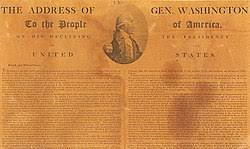
For this assignment, you will analyze the major points of George Washington’s “Farewell Address” and write a 3-page analysis, considering contemporary government and including differing points of view.
Your analysis must adhere to the following specifications:
• No more than 3 double-spaced pages (12-point font with 1-inch margins).
• Must include a title page (not counted in total page number) that contains:
o A title,
o Your name,
o Your section (GOVT 200-S02),
o Your instructor’s name, and
o The date the assignment is due (all single-spaced in the footer of the cover page).
• No page number is necessary for the cover page or for the first page in the body of the paper.
• Pay particular attention to the grading rubric for how your paper will be graded.
SAMPLE ANSWER
Washington’s Farewell Address
George Washington was a prudent man endowed with acerbic wits; in 1796 he gave a farewell address to tell the elector’s that he would rather retire than accept another term as the U.S President. Washington gave sound judgments in all things, and just before his retirement he gave the famous farewell address highlighting the defects that he thought would be detrimental to American liberty. Having worked in a republican government he was thoroughly acquainted with its workings, and he knew ways in which it could be misused.
From the beginning of his address, George Washington seeks to defend a well-built, central government. The point he was passing across was not that autocratic governance would usurp power from the citizens and impose its will on them but rather a sturdy system that would shelter the citizenry and make sure that their liberties are protected (SENATE DOCUMENT NO. 106–21, WASHINGTON, 2000). He requested the Americans to be united in purpose and have a feel of oneness; he wanted them to feel as though they belonged to one nation irrespective of the states they come from. Washington also wanted to reinforce the power of the newly implemented constitution which safeguards individual welfare and the rights of the U.S citizens. He knew united Americans would be strong; but alienation would make them weak and vulnerable (Ellis, 2001).
The other element that Washington addressed was the harm that political parties would precipitate. Since every person would seek to back his identity with his state and background, there were high chances that regional parties would tear down federal unity. Union in his terms is considered as the main strut of individual liberty; he challenged the Americans to preserve each other through bonds of love. In the modern America unity has been sustained but the regional parties as Washington feared are the very vehicles that threaten the future American unanimity (SENATE DOCUMENT NO. 106–21, WASHINGTON, 2000). George Washington hated parties and wanted them thrown out, although to the modern thinker this kind of approach serves to throttle democracy and cannot be accepted in the modern American society. Nonetheless, Washington did not hate the parties per se he feared that selfish individuals would use parties as vehicles of disrupting unity in order to take power for themselves.
The manner in which the democrats and the republicans compete displays the spirit of revenge that George Washington prophesied long time ago. Despotism has been rampant in the party politics as one party seeks to exert itself, or by implementing policies intended to serve one ideology over the whole nation. Washington foretold that when people became disorderly and miserable they would seek security and recline in the unconditional power of the party leader (SENATE DOCUMENT NO. 106–21, WASHINGTON, 2000). For instance, the terrorist revolt compelled George Bush to take more power than the presidents had before. Economic down times also pushed Barrack Obama to add to the presidential power. In these two cases, the leading parties accorded presidents’ power through great lenience in what they did. As the U.S citizenry continue to support the dynamic rivalry between the national parties they allow them to groom powerful figures who take advantage of the citizens.
Creating powerful presidents poses a great danger as it could give hem liberties to change the constitution and this could compromise on the rights and privileges of the U.S citizens. Washington wanted the U.S citizens to have mutual checks that would ensure that political power is not abused; this could only be achieved if political power was distributed into diverse depositaries, ordaining each to be the guardian of the public weal against attack by the others. He urged political leaders to be guided by religion and morality. A people guided by religious morals could not abuse power or bring disunity.
He urged the leaders to use public credit sparingly; this would help Americans to minimize debt accumulation. In the past, America operated with a balanced budget and balanced credit but in the modern U.S the nation lives beyond its means. The loss of good credit could essentially compromise the American liberty. In order to have peaceful existence America was advised to observe good faith and justice towards all nations at the same time cultivating harmony with all; these elements could only be attained through morality and religion. Liberty could be perpetually attained by keeping away from foreign powers. But there is a notable aversion for Iraq and fealty for China amongst the Americans that contravenes Washington’s wisdom.
George Washington gave Americans a blueprint for enhancing liberty. He illuminated the core things that could pose a threat to the American freedom such as regional and ideological factions, power seekers, foreign debts and commercial entanglements (Gilbert, 1965). Currently, America faces each of the named threats. Washington came from a unique viewpoint. He had thorough knowledge of what it felt like to live under repressive regime. Being amongst the founding fathers of the nation since its conception and infancy. Washington saw how the power moved and how its patterns worked, so he was well-positioned to predict the outcome of power play. Washington considered it his duty to warn the Americans so that they don’t fall into despair and lose their liberties (Ellis, 2001). Gradually, the U.S leadership let Washington’s waning slide, today the many things he predicted are happening. Americans now have a duty to listen and act and pursue the path that our founding fathers etched for us.
References
Ellis, J., J. (2001) Founding Brothers: The Revolutionary Generation. New York
Gilbert, F. (1965). The Beginnings of American Foreign Policy: To the Farewell Address. New York: 1965.
I would prefer at least 35 of the references to come from books.
SAMPLE ANSWER
E-business
ACKNOWLEDGEMENTS
Many people contributed in different capacities to the successful completion of this research. I would like to extend my heartfelt thanks and appreciation to:
My heavenly Father, the creator of the Earth and the Heavens, for the strength and grace to carry out this research.
My supervisor………………………………………………….
The respondents, this research would not have been successful was it not for your interest in this work. The fact that you willingly decided to share your hearts’ deep thoughts with me and others who may benefit from this research is highly appreciated.
(Any family member) for…….
(Family member or friend) for………
DEDICATION
I am humbled to dedicate this dissertation to God Almighty, the maker of the Earth and the Heavens, who has made it possible for me to enter the path of my personal fulfillment despite inevitable job commitments. The same applies to my invaluable parents and other family members.
ABSTRACT
Appreciation of the internet as one of today’s most popular marketing avenues has motivated recent studies to investigate consumer motivations that determine or affect their online shopping behavior. In spite of that, it has not been clearly comprehended as to what factors influence the process of online shopping decision. This study set out to provide an overview of the factors that affect online consumer behavior. Through an employment of a comprehensive quantitative and qualitative approach, an attempt was made to have a glimpse of what really influences online customers to make the decisions they do as regards their purchase activities through internet. Conveniently, it was deemed fit to compare, albeit shallowly, the processes of decision making in both online and offline scenarios. It was hoped that by so doing, the differences that exist in the two scenarios’ marketing communication processes would be understood and as such help gain insight into the factors under investigation. The constant question at the back of the researcher’s mind throughout all the stages of this study was: What factors motivate online customers to make decisions to buy or not to buy? As it were, quantitative evidence describing internet shopping in its actuality was obtained, and an explanation sought as to what influences customers. Largely, the following construction has built on relevant literature while at the same time examining consumer behavior as informed by questionnaires. In order to achieve a greater degree of accuracy in any inferences to be made, quantitative and co-integration research methods were employed. Insight gained from this study led to development of managerial implications which it is believed would help online stores improve their marketing / business environment.
This chapter presents an introduction to this study. As it were, covered in this chapter are aspects that include the theoretical background of the research (study), research rationale, and the cardinal purpose of the research as well as its objectives. Research questions and the importance of the research have also not been left out.
1.2 Theoretical background
For a period spanning over a decade since the invention and gradual evolution of e-commerce, practitioners and researchers in the field of electronic e-commerce have constantly been in pursuit of a deeper understanding of cyberspace consumer behavior (Gatautis, Kazakeviciute, & Tarutis, 2014). Even with further developments in retail e-commerce that have seen it get to a whole new level, researchers continue to seek an explanation of different perspectives of consumer attitudes that affect their decisions concerning what they do online. Indeed, such a comprehension would help managers and owners to take optimal measures that would see them significantly improve business over the internet.
Is it not important that one understands what e-commerce entails? Precisely, it is the selling and buying of services and goods online (Singh, & Singh, 2014). Internet gains relevance as the best available tool and resource for e-commerce. It is noted that the volume of trade that is conducted in this electronic platform has increased with the continuous widespread of technology in general and internet in particular (Lin, & Lekhawipat, 2014). As such, e-commerce now includes the online transfer of funds as well as general marketing that encompasses supply chain management operating over the internet (Yulin et al, 2014).
A completely new pattern has been created in the way people traditionally shop following technological invention in form of internet (Malik, & Guptha, 2013). A major implication is that as opposed to the old way, customers are no longer confined within specific time frames or locations. Opening hours no longer count much in the business world, at least those that have appreciated the online avenue of doing business (Ning, Yan, & Xiao, 2014). Customers may become virtually active anytime anywhere and buy the products or services they desire. In this and many other respects, the internet stands out as a new medium fro the exchange of information and general communication which is ever present in people’s lives (Sagar, Bora, Gangwal, Gupta, Kumar, & Agarwal, 2013). It is absolutely true that the number of users of the internet is constantly going up, much the same way as the number of people carrying out purchases online (Joines, Scherer, & Sheufele, 2003). Managers of businesses have appreciated this development and moved to tap into the power of e-commerce. An examination of some of the solutions adopted by sinking business across the globe reveals their adoption of e-commerce and broader use of the internet as a redemption tool. Indeed, much progress has been achieved by many firms courtesy of this tool, making e-business as one of the most effective and important sales and marketing tools (Mishra, & Singh, 2014). A customer can basically buy anything that is availed through the internet.
In order that a critical understanding of online consumer behavior be achieved, it is crucial to first explore the factors that affect purchase decisions. Oftentimes, these factors are unequivocal, or ignored all the same (Grant, Clarke, & Kyriazis, 2007). Nevertheless, customer behavior in the electronic business environment is influenced by the very factors that affect their purchase decisions i. e decisions on what to buy, whether to buy or not, or when to buy. For instance, the concerns raised by most online consumers concerning their fear of a lack of opportunity to examine products before any purchase has been specifically regarded as one of the most influential factors at play as far as purchase decisions are concerned. Thus, a proposal has been made by a numbers of researchers that the purchasing behaviors of online shoppers can be significantly different from those of customers in the traditional business setting (Chieh-Min, & Kimsuwan, 2013). A note is made that more frequent users of the internet are likely to get more confident and have trust in what is being offered through the internet in opposition to those that do not frequently visit the web. Clearly, electronic business dynamics are quite different from those of the conventional business setting (Cheng-Hsun, & Ting-Yun, 2012). They need to be understood so as to have effective and optimal marketing that takes into consideration the needs, worries, and concerns of customers in the online business environment. That way, business opportunities presented by the connectivity and interactivity offered by the web can be maximized. After all, customer is king.
E-business enables various types of enterprises to increase profitability through increased sales while at the same time offering them an excellent opportunity to establish and maintain direct relationships with their customers (Emmari, 2014). It has been central in the process of globalization of many firms. As a result, more global companies can now market their products with ease across the globe, conveniently exploiting the big market created by web users. Topaloğlu, (2012), made note of the competitive prices of online products owed to the fact that processes like shipping and delivery have to be taken care of. Also, other schools of thought have suggested a review of the entire system due to concerns arising from customer fears that their credit cards can be hacked.
In a word, there is need to understand the psychological state of customers engaging in online shopping since that will help know the reasons behind reluctance of some customers to make purchases online (Rahman, 2014). Major concerns that have emerged include insecurity of debit and credit cards, passwords, and fears that accounts could be hacked and access gained to personal information. Some also do not trust the online transacting system in terms of reliability and assurance of privacy. They think security breaches can bring about associated social risks.
1.3 Rationale of Research
The last two decades have seen rapid development of the internet and the rise of an economy driven by an entrepreneurial technological innovation that virtually connects every corner of the world, one to the other. Along with the mentioned development of internet came a rise in the number of web users, often encouraged by improved connection and browsing speeds. New advanced innovations in the field of information technology have made it easier for firms to enhance and promote better images of their services and products through the web. The online platform becomes attractive to customers since they are able to gain access to detailed product information, something they can not do in the conventional offline business setting. Those who have been accustomed to online shopping have shown a tendency to have a preference of it over offline shopping. As such, consumer behavior has changed from the traditional setting to fit the online mode. Despite the advantages presented by operating business online, it has come to the realization of many companies that a need to understand the purchase behavior of online consumers is inevitable as such success would be greatly informative as concerns optimal business decisions and measures. Without doubt, the firms will continue to operate in a relatively heterogeneous, dynamic and turbulent business environment if enough is not done to sufficiently appreciate the factors that affect the behavior of online consumers. Appreciation of the said factors made the rationale of this research more vivid since a deeper comprehension of the same will undoubtedly make it possible for appropriate measures to be devised for the effective management of the factors. The research focused on specified segments of web users as shall be made clear in the course of this dissertation’s construction.
1.4 Research Question and Objectives
A scientific approach was adopted from the very beginning of this research. To improve the credibility and reliability of this study, and as such the trustworthiness of any inferences to be made from it, it was considered necessary to develop research objectives and questions which it was hoped would be satisfied building on the raw data that would be collected in the course of the study.
1.4.1 Objectives
These were clearly laid out as thus:
Research Objective 1: To undertake a critical review of available contemporary literature of the factors that influence online customer behavior.
Research Objective 2: To carry out an exploration of the extent to which the factors (in research objective 1 above) affect online customers’ purchase decisions.
Research Objective 3: To examine how online shopping differs from the traditional offline shopping environment.
Research Objective 4: : To critically evaluate how various factors affecting online customer behavior can be best managed for business optimization, and as such come up with recommendations for mangers of online enterprises/stores on how to achieve greater success towards that end.
1.4.2 Research questions
The following questions guided the research:
Research Question 1: What factors affect /shape online consumer behaviour and attitudes?
Research Question 2: How do online shopping and the traditional offline shopping compare and/or contrast in terms of what they offer to customers?
Research Question 3: How can managers of businesses or enterprises operating in the online platform best handle/manage the factors that affect online customers’ purchase decisions, in order that they may increase volume of sales transactions for ultimate optimal profitability?
1.5 Significance of the Research
1.5.1 Managers of businesses operating online
This research is of much importance to managers of online enterprises/ stores as it gives clear and better understanding of the factors that influence online customer behaviour. It gives much insight that is often sought, especially by global companies who engage with customers from all corners of the world, as to what influences them when deciding whether to buy or not, or when to buy. More specifically, the research will enlighten managers and others responsible for online business operations and enable them to better address the factors under investigation.
Operations managers and their counterparts in the sales docket grapple with numerous challenges in the present world business that is characterized by advanced technological innovations. Inventions and developments in the internet imply that various dynamics concerning market segments change from one place to another (Hung, Cheng, & Chen, 2012). The fact that they are able to virtually access customers from every region of the world implies that the factors that influence customer behaviour may change from one individual to another considering the general complexity in the demographic composition of the world. By exploring these factors rather exhaustively, this research becomes resourceful as far as shedding light on these factors is concerned. The said managers and supervisors are obliged to design and execute relevant mechanisms and devise innovative competencies as well as take any measures deemed necessary to cope with the factors that are the basis of this construction (Panda & Biranchi, n.d.). Truly, they are a target audience of the findings of this study since it is hoped they will help in that respect.
1.5.2 The Researcher
It has to be admitted that to a great extent, the research is principally an important part of the researcher’s academic accomplishment and fulfilment. All the same, it has provided an excellent avenue for the comprehension of the factors that influence online customer behaviour. The insight that has been gained from the research will remain helpful and relevant in present and future life, especially considering the fact that the researcher harbours entrepreneurial ambitions. It has provided a more vivid understanding on what influences purchase decisions of customers in the online platform.
CHAPTER TWO
LITERATURE REVIEW
Introduction
Almost every research activity calls for a comprehensive knowledge of the literature of the matter under investigation. As it were, the literature review deeply explains the theoretical rationale of the subject under study including relevant and/or related research already conducted (Chai, Das, & Rao, 2011). Through the review, one is able to have a clear picture of the relation between the matter at hand and findings emanating from the study. The literature review presented in this chapter revolved around the issues arising from the study’s primary objectives. A lion’s share of what was discussed relied greatly on earlier works as put forth in published materials of reference such as books and journals (Hong-Youl, 2004). This offered an overview of past activities that were coupled with findings of this study to draw appropriate inferences.
2.1 Theoretical review of past studies
Recent research has shown that internet/online shopping has become a fully effective business model that has been adopted by a good number of companies (Pingjun, & Jones, 2014). According to Vesterby and Chabert (2007), the internet makes it easier for firms to avail relevant information on available services and products to their customers. The two assert that in order for a customer to remember simple brand details like names, it calls for a company to carry out an extensive online campaign that would lead to trust between the company and the respective customer. To examine online consumer behavior is such a complex undertaking that is now regarded as one of those integral to general human behavior in the present world (Shiau, & Luo, 2012). As it were, to fully comprehend humans is an almost impossible task, something that makes studies complicated and full of ambiguities. This complexity of consumer behavior poses a challenge to interested parties who would want to carry out research on the matter, including marketers (Jifeng, Sulin, & Han, 2012). Based on the very foundational concept of marketing, there is need to create a satisfying relationship between buyers and sellers in the online platform. Malcolm insists it is important for marketers to understand customer behavior in order to formulate and adopt effective market strategies.
Warner presents that consumer behavior mainly involves the physical and mental activities performed by segments of consumers or individual customers, which result in actions or decisions largely associated with purchase, disposal or use of services and/ or goods. He goes on to lay emphasis that there is a usually a collective undertaking of the behaviors related to consumption. For instance, there may be purchase decisions made by individuals but those consuming the goods or services are family members or groups, which the decision makers represent (Jifeng, Sulin, & Han, 2012). The case is the same considering organizations whose activities are informed by group/collective decisions. This implies that consumer behavior goes beyond purchasing, often extending to subsequent usage or disposal of the goods. A company well-informed on these behaviors is better positioned to make optimal marketing decisions (Malcolm). A model relatively different from online shopping is observed in traditional consumer shopping. As it were, the purchase process starts with problem recognition that prompts a search for information and consequential evaluation of available alternatives. It is after these purchase occurs, followed by post-purchase behavior. This is well elaborated by Rafiq, Fulford, & Lu, (2013). In the process of these serial actions, different consumer behavior perspectives emerge, namely: micro perspectives and macro perspectives. The former mainly entails decision theories whereas the latter have more to do with processes and modes of thought and information inquiry (Malcolm).
The dominant influences on consumer behavior are oftentimes dictated by internal and external factors. Internal factors are those that originate from the mind of the consumer (Rahman, & Hussain, 2014). On the flipside, external factors are defined by prevailing conditions of the surrounding, or simply environmental conditions. Irrespective of the nature of the factors, appreciation is made that they affect consumer behavior, in more ways than one, each in its own way. Warner divides the external influences into five main categories given as: Socio-economic factors, demographics, reference group and public policy, culture and sub-culture, as well as technology and marketing dynamics (Batautis, & Kazakevičiūtė, 2012). On the other hand, the internal influences fall into a broad bracket of psychological processes that encompasses attitudes, perception, learning, self image, motivation and semiotics (Malcolm). Besides these, a suggestion is made by Sheth 2007) that when shopping consumers usually have two types of motives namely: Functional and non-functional motives. More often than not, functional motives are those to do with time, the particular place to shop and general needs of the consumer. Such would entail specific shopping time as may be deemed convenient by the consumer, or the surrounding of the shopping place. For instance, a customer may want a place that has plenty of secure parking spaces. Also, one may be so choosy as regards the price of commodities or the availability of a wide variety of products from where to choose as per need (Racherla, Mandviwalla, & Connolly, 2012). As for the non-functional needs, they have more to do with, or rather are related to matters involving societal, cultural or general social values.
Traditional shopping is basically defined by the fundamental desire by customers to satisfy their needs by making relevant purchases. In most cases, customer behavior in this setting is influenced by the advertising and promotion efforts of the seller. For instance, it is through such efforts that a customer will be influenced to go to a store and purchase products, even new ones; something they would not have done had it been not for the marketing efforts of the seller (Tanrikulu, & Celilbatur, 2013). A deeper examination of the traditional shopping and the internet shopping that is the bedrock of this dissertation reveals that the former offers customers more convenient and interactive services. Also, traditional shopping has its own array of conveniences such as ample shopping environment complimented by such aspects like parking space. However, it is noted that both aspects of shopping are in continuous bids to improve what they offer customer (customer satisfaction) by constantly learning from each other (Ghan, & Rizvi, 2012). For instance, in order to improve customer convenience, players in the traditional shopping platform have tried to move provide more spacious parking lots at shopping malls and making sure the malls re closer to residential areas so that customers do not have to travel long distances to get what they want. Noticeable improvements have also been made in the structure and design of counters. On the other hand, internet shopping has adopted 3D techniques that enhance virtual reality in the presentation of products. Miller (2000) is of the view that greater influence in the online shopping platform is highly likely to be born out of the type and nature of the services and products being offered. He presents that a number of factors play a central role in internet shopping. They are: technology, convenience, price, and the product itself.
According to Miller, (2010), the fact that online shopping does not limit the customer as to when and where to buy presents them (customers) with such a convenient that can not be accorded in the traditional shopping setting. In other words, they can make purchases anytime anywhere they like. This is largely implied by the consideration that they can browse the internet twenty four hours a day, and seven days a week (24/7) either from home or the office. They can purchase online for as long as they are connected to the internet. A significant benefit derived from this type of shopping is that time-starved customers are saved the ‘headache’ of having to physically move from store to store looking for products. Perhaps it simultaneously offers them a way to purchase according to their needs, even as they save money and time. This can be further emphasized since shopping online would mean no transport costs are incurred (Khan, & Rizvi, 2012). In opposition to traditional shopping, one does not have to wait in the line for their turn to be served. The pressure that one may usually experience as they deal with the sales personnel is conveniently eliminated in web shopping. In light of this, one is persuaded to agree that online shopping is indeed better than the traditional offline shopping. Miller puts forth that much of the convenience that is enjoyed in the online shopping platform is owed to technological advancement. Indeed, strides in development of technology have played a key role in the innovation and improvements in web-based shopping (Tong, Ineson, & Green, 2013). In the last two decades, it has come to the realization of many firms that new technology has to be embraced if much has to be achieved in online marketing. For that reason, many have adopted advanced techniques in virtual reality and 3D graphics so as to enhance product presentation as to be viewed by prospective customers. Indeed, those that have done this have gained competitive advantage that has granted them an edge above their competitors (Lai, & Zhaocheng, 2012). Information technology advancements have made it simpler for marketers to offer customers comprehensive information regarding services and products. This is crucial in the customers’ decision making processes.
It is true that more than one quarter of web users have had online shopping experience at some point. Various surveys have inferred that the number online shoppers who are willing to make payments online has gone up significantly. However, there is still a large portion that is not willing to pay online due to security concerns (L-Qasa, MD Isa, Norezam S, & Faaeq, 2013). This implies that the online payment security is still a major concern that deserves keen attention by online marketers. It is one of the issues influencing online customer shopping behavior/purchase decisions. As expected, it has become one o f the areas with the highest budget allocations by retailers in internet service development. The technology required for optimality is so complex that more often than not the retailers have to seek the help of professional security providers to set up their e-business websites to suit customer needs (Mohammed, 2013). They have to acquire reliable verification certificates to gain the confidence and trust of customers; that indeed it is safe to make payments online. Another aspect that ensures greater success in this regard is the development s of a virtual community. Kim, Hong, & Rho, (2013) argued in a report that online shopping is highly boosted by the inter-personal interactions that occur between service providers and customers. Through various features, customers have the opportunity to explore almost everything they want to know about the services and products being offered. Since parties in the various business interactions do not meet directly, it goes without saying that the online shopping is a convenient interface for customer interaction that not only makes them happy but also offers an intriguing shopping experience.
Prior studies in the marketing management domain shed light on customers’ perception of risks, and as such helps understand the purchasing behavior o f consumers in the online arena. Tao, Yaobin, & Bin, (2009) pointed out two types of risks that stand out. They include: financial risks and product category risks. Product category risks are those that focus on the product or service itself as regards the customer’s belief and expectations concerning their functionality (Dwivedi, 2008). On the other hand, financial risks correspond to whether or not the web is a safe shopping avenue for customers. More specifically, they define the reliability of using the internet to conduct financial transactions. A precise explanation of the relationship between marketing strategy and consumer behavior is given by Donal (2007). He explains that marketing strategy is fundamentally about increasing and improving the frequency and probability of buyer behavior. In order to succeed in this regard, customer wants and needs must be understood to the letter.
Jabr and Zhiqiang, (2014) explains that human motives and needs are inextricably related and as such the relation existing between them is so close that it makes it almost impossible to differentiate between them. For instance, people may purchase heavy coats because they would protect them from harsh weather (Piacentini, & Cui, 2013). An underlying main need in this case would be to keep up to speed with the latest trend in fashion. It has been observed that instances of impulse buying go up when there are promotion of products through discounted sales (Hark, Rim, & Lee, 2013). In the same manner, when the online marketing campaign is aggressive, consumers tend to make more and more purchases. Through this platform, the advertising message is directly delivered to them, and they can act on it via a single click. A purchase can be made instantly as thus.
A framework was created by Ariff, Yan, Zakuan, Bahari, & Jusoh, (2013), which they applied in their study that sought to explore the customers’ own understanding of their attitudes towards shopping in the web platform. Conveniently, beliefs and attitudes are separated from psychological characteristics of the consumer as determined by their prior (learning experience) (Király, Nagygyörgy, Griffiths, & Demetrovics, 2014). Most of the time, the customers are very sensitive to the evolution of product and service prices and would prefer to make purchases when prices are lowest. Along with the attention given to commodity price is the need to get the optimal value for their money. After comprehensively comparing the online shopping stage with the traditional one, Subramanian et al (2014) concluded that online shopping is more convenient than the traditional offline shopping. Their inference was informed by the fact that the internet allows the customer to get a lot of product and service information with the least quantity of effort as well as invested time (Polly, & Institute 2008). This presents the customer with a higher degree of convenience.
In identifying and examining factors that affect online consumer behavior, Titko, & Lace, (2012) pointed out that marketing strategists must consider issues revolving around social-cultural influence, psychological matters, emotional factors as well as a variety of issues that have a lot to do with privacy. Customers’ experiences before purchase and that which they go through after purchase are also likely to affect future purchase decisions. In the same breath, Smith and Rupp present that customers are affected by a number of psychological factors like personality, motivation, perception, and individual attitudes and emotions (Lee, Noh, & Kim, H 2013). The trio point out that so as to ensure customers feel secure about giving certain personal details over the internet, it is important that it be made clear to them why certain details are important.
2.2 Schematic Conceptual Framework
The developed conceptual framework was based on the appreciation that the behaviors and attitudes of online customers is what will determine their purchase decisions i. e the decisions whether to by or not, or when to buy. Indeed, click through rates (CTRs) have a correlation with purchase decisions as determined by attitudes and general behavior. CTRs refer to the number of people who decide to click through ( an ad) to make a purchase or view product information.
CHAPTER THREE
RESEARCH METHODOLOGY
Introduction
In this chapter, the procedure and approach employed in the research are explained. Presented herein are details on research design, research instrumentation, target population, and the technique employed in sampling. The sampling size has also been highlighted here, as well as data processing and analysis. In addition, the researcher deemed it necessary to clarify the research’s quality criteria atop the ethical considerations factored in during the research.
3.1 Research Design
The design employed in any research must go hand in hand with what is being investigated and is therefore dictated by it (the study). This research sought to carry out an exploration of the factors that affect the behavior of customers shopping in the online platform. The research’s pivotal data took both qualitative and quantitative forms. However, it must be noted that most aspects of the study employed a quantitative approach. An epistemological concept was also employed greatly in this study. This was considered appropriate since that would allow for more inclination towards objectivism (Phillips, & Young, 2009). Largely, this objectivism is banked on an ontological school of thought that is of the opinion that individuals face social phenomena as external facts which are beyond their influence and control. The data collection entailed employment of structured interviews. As should be the case, the respondents participating in the study were all granted the same (material) contexts of questioning so as to make sure there was harmony in various perspective of the phenomenon being investigated. This method of data collection is advantageous since it allows for a generation of definite answers. The research also made use of descriptive statistics. Here, data is usually summarized through a statement of what is observed graphically and numerically from what has been sampled. This kind of approach is primarily concerned with the need to evaluate what ‘might be’ and ‘what is’ as they are applied in deeply investigating research questions.
As already implied, the study adopted a descriptive research design. Özdemir, (2012) gives an explanation that this conveniently refers to all that revolves around the research questions and design of data and its analysis, as they are applied in the exploration of a certain issue. This usually investigates and reports the way certain issues are regarded among the focus group, all along being guided by study objectives. It is noted by Zawiyah, and Mohd, (2012) that descriptive research primarily seeks to determine the attitudes, opinions, perceptions, and preferences of the researcher’s group of interest with the ultimate aim of coming up with a precise description.
To ensure the research was comprehensive, survey methods of research were also adopted as they would be central in providing a holistic and detailed prescription of the phenomenon under investigation. More focus was laid upon description and interpretation of the collected information (Miles, & Huberman, 2004). It must be noted the research mainly aimed to use the data collected in verifying and answering the research questions and objectives as formulated. This kind of approach has been widely preferred due to the convenience attached to it in terms of finances and feasibility (Sarantakos, 2008). Also, the approach is very flexile in more ways than one. For these reasons, the descriptive and survey methods of research would be integral towards ensuring more comprehensive investigation of emerging issues and satisfaction of any questions that would arise in the course of the research (Cho, Im, Hiltz, & Fjermestad, 2002). As such, it would be possible to get a precise description of the nature of situations in their state of existence under the research since that would help accurately explore particular causes of the phenomenon under investigation. In that respect, the researcher would get a more accurate profile and picture of the situation on the ground. The information obtained when these methods are employed is without doubt first hand, as provided by the respondents themselves (Sridhar, & Srinivasan, 2012). This is the information that is used to come up with relevant and appropriate inferences and implications/ recommendations at the end of the study (Fox, & Long, 2000).
3.2 Target group
The research’s target group was the general public around the neighborhood of Cardiff Metropolitan University. That would include some tutors and students of some of the institutions of learning around the stated neighborhoods. Their participation precisely entailed them having to fill questionnaires whose composite questions centered on online shopping. The survey targeted a total of 120 people.
3.3 Sampling
3.3.1 Sampling Technique and Size
In the survey, participants of various ages were selected from the Cardiff neighborhood. In selecting each research sample, a random sampling technique was employed. It was important to record the age and gender of every respondent and that was done. The sample group comprised of 120 respondents and it was crucial that a random selection method was employed so as to ensure that all age-groups were evenly represented in the target population (Piercy, & Lane, 2009). If there was even and unbiased representation in the sample size, the reliability and credibility of the results would be eventually achieved (Yinyin, 2014).
3.3.2 Sampling Procedure
For this research, stratified random sampling was used in the selection of the people to be involved. Conveniently, an assumption was made that there existed no homogeneity as regards attributes between the different participants concerning the factors that affect online customer behavior. Since stratified random sampling uses a combination of both random and purposive sampling, it was preferred for this research. The process of stratification entailed dividing the target group into there age brackets namely those aged 17-25 years, 26-39 years , and those above 40 years of age.
3.3.3 Sample Size
Considering the time and resources available to the researcher, a sample of 80 people was used in the study survey.
Table1 Sample size distribution
Population Category
Target population
Sample size
Percentage
17-25 years
26-39 years
40 years & above
TOTALS
30
60
30
120
20
40
20
80
25
50
25
100
3.4 Research Instrumentation
The main research instrument employed was the questionnaire. The design of this research instrument adopted both closed and open-ended questions since it would be more appropriate considering the fact that an interpretation of the respondents’ activities would be required. Preference of the questionnaire was due to its convenience in the study. As it were, it would allow the researcher to gain access to a large sample in a short period of time with no need of extra hands. It was also necessary as it facilitated the avoidance of bias as is the case in interviews. To ensure a greater degree of honesty in answering the questions, it was ensured that anonymity was granted as they filled the questionnaires. In the development of the questionnaire, the questions were framed in such a way that they could easily give insight into the factors affecting customer behavior in the online platform. In other words, the instrument was designed to address the issue that formed the bedrock of the research. For enhancement of the questionnaire’s validity, a pilot study was carried out on a population similar to the study’s target group. This pilot study used a group of ten respondents. The main motivation behind the pilot study was to assess the consistency and clarity of the instrument so that any items discovered to be insufficient would be discarded or modified accordingly for improvement of quality and validity.
3.5 Data collection Method
Collection of data from the respondents was done through a self-administration of the questionnaires. The said instruments of research consisted of closed and open-ended questions posted to specific respondent selected to participate in the research. It must not be forgotten that it was sure the participants from whom data was collected were distributed across the various age brackets already indicated. This was a necessary measure to make sure there was unbiased representation of the overall population within the neighborhood of Cardiff Metropolitan University within the sample size.
3.6 Data Processing and Analysis
To ensure wholeness and accuracy of the data collected, it was checked accordingly and that marked the first step in the analysis of data. Considering the approaches employed in the study, the data obtained was expected to be both qualitative and quantitative in nature. The analysis largely made use of descriptive statistics. For the descriptive aspect of the analysis, percentages were used as the main tool for analyzing closed questions. The open-ended ones were appropriately listed and their proportions approximated. Tables, charts and graphs were used to define how the various aspects of the collected data related to each other. Indeed, they were quite simple and cheap to compute. Greater accuracy of different values was achieved by employment of the Microsoft excel program in computing. Indeed, qualitative and quantitative aspects the analysis were achieved by generating the data into frequency counts. This was considered significant in ensuring the collected was scientifically assigned meaningful sense. That would make it easy for the researcher to conduct a sensible discussion of the results, and therefore, draw meaningful conclusions.
3.7 Quality Criteria of the Research
For further credibility in this research, quality cognizance has not been ignored. The reader is therefore invited to appreciate this effort and confirm rigor and quality in as much as trustworthiness may be objectively unattainable. In fact, trustworthiness is largely banked on the ability of the researcher to make the audience understand that the research is indeed helpful and meaningful, and that such meaningfulness is dictated by what they give as input. To establish the degree of trustworthiness, contemplation is made of the regularity, objectivity, the value of truth and facts, and the relevance of various aspects. A scientific model of these dimensions simply interprets them to be dependability, confirmability, credibility, and transferability. Efforts geared towards the attainment of several criteria were made. A discussion of the criteria follows.
Credibility is largely associated with the confidence of the researcher. Details of what is presented are dictated by the research design employed as well as specific perspective of the research and the respondents whose input is very central. To maintain this quality criterion in the research, a comparison was made between research findings and available literature. The literature review as presented was helpful in making sure any issues not covered by the target group were covered and not overlooked. Indeed it gave a deeper comprehension of the issues that emerged in the study’s findings.
What of dependability? To a great extent, this would seek to give insight into what would be expected if the research was carried out in a comparable context, or if the same respondents were involved. It would also help know if the findings would be the same incase of transferability i. e if it was to involve larger populations. Nevertheless, the researcher was of the opinion that the main objective of this study would not be generalizable per se, and as such what was provided by the participants was largely accommodated and consistency was expected. Therefore, room was given for the findings emanating from the research to be compared with other closely related contexts.
Last but not least in the research’s quality effort is confirmability. This refers to the extent to which the research findings are the results of the primary investigation, and not the objectivity of the researcher. For assurance in this respect, study findings were presented to the course supervisor who gave necessary guidance and input which proved helpful in subsequent analysis.
3.8 Ethical Considerations
The need to address ethical issues in the course of the research was inevitable since it involved human participants (Vyas, & Raitani, 2014). An appreciation of all relevant issues was made to ensure that the privacy and confidentiality of participants were upheld. A shining example of some of these efforts was the fact that involvement of respondents was through informed consent. Truly, an assurance was made that the information to be obtained from respondents would be kept confidential. This has been clearly spelt out in the letter of introduction as presented in’ appendix I’
To succeed as far as ethical issues were concerned, the researcher invested considerable time and effort in explaining the necessary research procedures to potential respondents. That was dome before admission of the questionnaires. Therefore, before their participation through informed consent, important aspects of the study were explained to them, such as its objectives and aim. This was important in the ultimate completion of the study as they would understand why their participation was crucial. Participants were free to accept to participate in the study willingly, or turn down the request all the same. Moreover, in ensuring the confidentiality of the information given by respondents, an assurance was given that such information would not be revealed to any other party, and that it would be used solely for academic purposes. This must be done in any research of this nature to uphold the privacy that characterizes the practice (Zhou, & Amin, 2014). More precisely, if any names or personal details were to be obtained in the course of the research, they would not be made public, or be mentioned anywhere in this dissertation.
CHAPTER FOUR
FINDINGS, ANALYSIS AND SYNTHESIS
4.0 Introduction
A summary of the data analysis and findings emanating from this study is presented in this chapter. Much of it was summarized and presented in form of charts and tables. Principally, it is a documentation of the factors that affect the behaviour and attitudes of customers in the online platform.
4.1 Presentation of Findings
The analysis (quantitative) comprised of both scientific and mathematical expressions of the questionnaire questions as employed in the study. Respondents were given a choice to decide upon questions and their answers analysed and presented as shall follow.
4.2 Response Rate
The results presented below are based on the response rate of the respondents randomly selected from Cardiff Metropolitan University neighbourhood. It is indicated that a 75% response rate was achieved as opposed to 25% of the sample size who never responded. Since this result represents a considerable percentage of people from the target population, it can be inferred that it provides a suitable platform for analysis.
Table2 Response Rate
Category
Sample Size
Respondents
Percentage(to the sample size)
17-25 years
26-39 years
40 years & above
Totals
20
40
20
80
15
35
10
60
19
44
12
75
Figure1 Response Rate
4.3 Gender of Respondents
It was necessary to explore the gender aspect so as to know whether or not there was gender balance in the responses obtained. It can be seen that 60% of the respondents were female whereas 40% were male.
Table3 Gender of respondents
Gender
Frequency
Percentage
Male
Female
32
48
40
60
TOTALS 80 100
Figure Gender of respondents
Have you ever purchased anything online?
It was not a surprise that with the various technological advancements and innovations in the world, 80% of the respondents answered this question in the affirmative as opposed to 20 % who replied in the negative.
Table Online purchase experience
Purchase experience(online)
Frequency
Percentage
Yes
No
64
16
80
20
TOTALS
80
100
Figure Online purchase experience
Would you recommend online shopping to a family member or friend?
75% of the respondents said they would advise their friends or relatives to shop online as opposed to 25% who said they would not. It is imperative to note that their responses were based on their past purchase experiences or what they had heard people say about online shopping. Major factors influencing answers to this question revolved around product quality, convenience, price, time of delivery, and service response among others.
Table Recommendation for online shopping
Recommend online shopping?
Frequency
Percentage
Yes
No
60
20
75
25
Totals
80
100
Figure Recommendation for online shopping
In your opinion, to what extent do you think does online shopping save time?
Respondents answered this question as thus:
Great extent-60%
Moderate extent-20%
Little extent-15%
No extent-5%
Table Extent of being time saving
Frequency
Percentage
Great extent
Moderate extent
Little extent
No extent
48
16
12
4
60
20
15
5
Totals
80
100
Figure Extent of being time saving
As regards security and trust in the online shopping arena, would you say you feel secure?
56% of the respondents said they felt secure when shopping online in opposition to 30% who said they did not feel secure. A significant 14% took a neutral stand in their response.
Table Security and Trust aspect
Frequency
Percentage
Secure
Never secure
Neutral
45
24
11
56
30
14
Totals
80
100
Figure Security and Trust aspect
To what extent do social-cultural dimensions affect your online purchase decisions?
Participants responded as follows:
Great extent-70%
Moderate extent-25%
Little extent-3%
No extent-2%
Table Extent of influence of social-cultural dimensions in online shopping
Frequency
Percentage
Great extent
Moderate extent
Little extent
No extent
56
20
3
1
70
25
3
2
Totals
80
100
Figure Extent of influence of social-cultural dimensions in online shopping
What do you think about the prices of goods and services in the online arena as compared to those on the traditional offline shopping arena?
48% of the respondents said they thought prices of commodities and services in the online platform are higher than those in the traditional shopping stage. 24% were of the contrary opinion as they indicated they thought online prices are relatively lower. On the other hand, 28% said they thought there was no significant difference
Table Online shopping prices as compared to those in the offline shopping stage
Frequency
Percentage
Higher
Lower
Similar
38
19
23
48
24
28
Totals
80
100
Figure Online shopping prices as compared to those in the offline shopping stage
Are you familiar with website language?
90% responded in the affirmative whereas 10% responded in the negative.
Table Familiarity with web language
Frequency
Percentage
Yes
No
72
8
90
10
Totals
80
100
Figure Familiarity with web language
Have you ever had a discounted deal or price cut in the online platform?
Responses to this question were as follows:
Yes-70%
No-30%
Table Discounted deals
Frequency
Percentage
Yes
No
56
24
70
30
Totals
80
100
Figure Discounted deals
To what extent are deliveries of goods purchased in the online arena timely?
The participants responded to this question as follows:
Great extent-60
Moderate extent-20
Little extent-15
No extent-5
Table Extent of timeliness
Frequency
Percentage
Great extent
Moderate extent
Little extent
No extent
48
16
12
4
60
20
15
5
Totals
80
100
Figure Extent of timeliness
If anyone advised you to buy anything online, would you follow their advice?
Responses were as thus:
Yes-40
No-60
Table Action on advice
Frequency
Percentage
Yes
No
32
48
40
60
Totals
80
100
Figure Action on advice
Between online shopping and the traditional offline shopping, which one do you prefer over the other?
The way respondents answered this question perhaps acts as a challenge to online marketers and other stakeholders to do more in improving the online shopping platform. 38% said they preferred online shopping in opposition to 62% who preferred shopping offline.
Table Preference for online or offline shopping
Frequency
Percentage
Online shopping
Offline shopping
30
50
38
62
Totals
80
100
Figure Preference for online or offline shopping
SUMMARY OF FINDINGS, CONCLUSIONS AND RECOMMENDATIONS/IMPLICATIONS
5.1 Introduction
This chapter is mainly a presentation of the main findings of the research as based on the primary objectives. In addition, conclusions and recommendation largely informed by the findings of the study have been presented here.
5.2 Summary of Findings
The primary aim of the study was to make an exploration of the factors that affect the behaviour and attitudes of consumers in the online shopping platform. A significant percentage of the issue that were largely expected to give more light in the exploration revolved around the convenience of shopping online as compared to that of carrying out the exercise in the traditional offline stage. As expected, it became quite clear that a majority of consumers would consider the convenience that comes along with saving of time and money. As such, a consumer would opt to purchase a commodity or service online if they think it is cheaper. For example, when considering the general attitudes of customers as regards prices in the online arena, the study revealed that 48% of the respondents thought online prices are lower as compared to those in offline shopping. 24 % differed with this stand whereas 28% thought no difference exists in the prices. If this were to be keenly interpreted in the business sense, an inference would be made that a customer thinks a given price is relatively lower they would without doubt go ahead and make the purchase. In this context, the 48% would prefer online shopping. Also, it would only be sensible to say that those who think the prices are the same would not mind to purchase online, unless price is not the influencing factor.
The results of the study as presented in the previous chapter motivate one to cluster the factors affecting online customer behaviour into different broad categories. It is to be noted that the nature of the question in the main instrument of the research reveals an appreciation of these different dimensions which stand out in the literature review section. The reader is persuaded to appreciate this summary of the factors under exploration as a replica of the summary of the findings emanating from this study. The factors that affect online customer behaviour are:
Psychological factors
Economic/financial factors
Emotional factors
Privacy factors (Trust and security)
5.3 Answers to research questions
What factors affect /shape online consumer behaviour and attitudes?
Customers shopping in the online platform make their purchase decisions based on a number of factors which are being explored here as is clear in the title of this dissertation. The factors, which include trust and security concerns, prices of commodities, convenience, and time factor and ease of delivery as well as past shopping experiences in the same stage, have stood out (Ahmadian, Haghtalab, & Danaee, 2014). A customer will make a purchase decision in the affirmative if they feel the information they will give in the course of the transaction will not compromise the security status of their financial accounts. That is as far as security and trust go. Customers will be reluctant to make purchases if they have the slightest suspicion that their debt or credit cards will not be secure.
As regards price(s), financial implications are weighed against the decision whether to buy or not. If a customer is of the view that online shopping will prove to be cheaper in the long run and help them save a few coins, they are more likely to buy as opposed to when they are of the opinion that, for instance, offline shopping is relatively cheaper. Psychological factors also gain relevance especially with respect to past experiences and what customers hear other people say about online shopping experience. If a customer enjoyed the experience of shopping online in the past, they are more likely to buy again in opposition to those whose experiences were not desirable. Also, a prospective customer who is advised to go for online shopping by family members or friends is more likely to opt for this shopping platform. It is appreciated that social and cultural factors also gain relevance.
How do online shopping and the traditional offline shopping compare and/or contrast in terms of what they offer to customers?
Online shopping, in opposition to traditional shopping, offers customers the convenience of buying or viewing or products any time they want. They can also do this from anywhere, be it from their offices or homes. Also, in the online shopping scenario, they are able to find more detailed information regarding the particular goods or services. There is no possibility of conflict with the sales people when the customers would be trying to enquire about the products or services, or as they would be trying to make bargains on the prices. All their dealings with specific enterprises are in the virtual world. On the other hand, offline shopping offers customers the convenience of having the chance to look at the goods as they are, and not their graphic enhancements which could be deceiving sometimes, or far from reality. Those who would like to pick the good themselves are provided with parking spaces. Also, stores are moving their operations closer to residential places of customers. Another advantage that comes with online shopping is the saving on transport costs since one buys from home, and home deliveries are made.
How can managers of businesses or enterprises operating in the online platform best handle/manage the factors that affect online customers’ purchase decisions, in order that they may increase volume of sales transactionsfor ultimate optimal profitability?
Firstly, it would be imperative if they put in place measures that would address the various security concerns and fears harboured by customers. For instance, getting the services of renowned security service and IT firms would go along way in ensuring the information that customers have to input during transactions does not compromise the security status of their debt and credit cards. Also, it would be important if they increased the variety of products they offer considering the social-cultural diversity encountered in the web. By so doing, they would remain relevant to a wider bracket of customers. Indeed, this is something that global companies must do. Another step thy would take is to ensure they deliver products to customers in time as agreed or promised so as to gain the trust of the customers even for future transactions. In addition, they should do more to impress customers and ultimately influence them to buy by providing vivid graphical representation of their products. Customers will get a step closer to buying if they think desired products are appealing.
5.4 Recommendations
Based on the findings of the study as regards the findings of this research, the following recommendation are made for consideration by marketers and other stakeholders who play a role in online marketing:
Ensure that graphical representations of products are appealing and catchy
Deliver goods on time to win customer trust and confidence
Improve the service security as regards debt and credit cards
Advertise with acknowledgment of diversity of the online market segment
Increase their efforts geared towards making online shopping more preferable to traditional offline shopping.
5.5 Conclusion
From this study, it is inferred that customer online behaviour is influence by a number of factors broadly categorized as
Psychological factors
Economic/financial factors
Emotional factors
Privacy factors (Trust and security)
Indeed these factors, which include trust and security concerns, prices of commodities, convenience, and time factor and ease of delivery as well as past shopping experiences in the same stage, have stood out. A customer will make a purchase decision in the affirmative if they feel the information they will give in the course of the transaction will not compromise the security status of their financial accounts. That is as far as security and trust go. Customers will be reluctant to make purchases if they have the slightest suspicion that their debt or credit cards will not be secure, or the information they give about them is made public. As regards price(s), financial implications are weighed against the decision whether to buy or not. If a customer is of the view that online shopping will prove to be cheaper in the long run and help them save a few coins, they are more likely to buy as opposed to when they are of the opinion that, for instance, offline shopping is relatively cheaper. Psychological factors also gain relevance especially with respect to past experiences and what customers hear other people say about online shopping experience. If a customer enjoyed the experience of shopping online in the past, they are more likely to buy again in opposition to those whose experiences were not desirable (Aghdaie, & Mahdavinia, 2014). Also, a prospective customer who is advised to go for online shopping by family members or friends is more likely to opt for this shopping platform. It is appreciated that social and cultural factors also gain relevance as far as online customer behaviour is concerned. If managers of online stores and other firms that have made in-roads into online marketing sufficiently appreciate these factors, they would do a lot that would be geared towards increasing business volume, and therefore, profitability. Some recommendations have been put forth in the suggestive section.
References
Aghdaie, S, & Mahdavinia, S 2014, ‘Investigating the factors affecting information seeking behavior among families and its relationship with selecting brands’, Advances In Environmental Biology, p. 36.
Ahmadian, S, Haghtalab, H, & Danaee, H 2014, ‘The affecting factors in e-shopping intention electronic ticket in the airlines’, Advances In Environmental Biology, p. 379.
Ariff, M, Yan, N, Zakuan, N, Bahari, A, & Jusoh, A 2013, ‘Web-based Factors Affecting Online Purchasing Behaviour’, IOP Conference Series: Materials Science & Engineering, 46, 1, p. 012038.
Chai, S, Das, S, & Rao, H 2011, ‘Factors Affecting Bloggers’ Knowledge Sharing: An Investigation Across Gender’, Journal Of Management Information Systems, 28, 3, pp. 309-342.
Chieh-Min, C, & Kimsuwan, A 2013, ‘Factors Affecting Purchase Intention of Online Game Prepayment Card — Evidence from Thailand’, Journal Of Internet Banking & Commerce, 18, 3, pp. 1-13.
Cho, Y, Im, I, Hiltz, R, & Fjermestad, J 2002, ‘The Effects of Post-Purchase Evaluation Factors on Online vs. Offline Customer Complaining Behavior: Implications for Customer Loyalty’, Advances In Consumer Research, 29, 1, pp. 318-326.
Dwivedi, Yogesh Kumar. Understanding Factors Affecting Consumer Adoption of Broadband in India : A Pilot Study. [S.l.]: IGI Global, 2008. Discovery eBooks
Effects of Computer Self Efficacy on the Use and Adoption of Online Social Networking’ 2011, Credo Reference Collections.
Emmari, E 2014, ‘Using an Extended Technology Acceptance Model to Explore Factors Affecting Online Shopping Intention in Developing Countries: A field Study of Kuwait’, Arab Gulf Journal Of Scientific Research, 32, 1, p. 11.
Furaiji, F, Łatuszyńska, M, & Wawrzyniak, A 2012, ‘An Empirical Study of the Factors influencing Consumer Behaviour in the Electric Appliances Market’, Contemporary Economics, 6, 3, pp. 76-86.
Gatautis, R, Kazakeviciute, A, & Tarutis, M 2014, ‘CONTROLLABLE FACTORS IMPACT ON CONSUMER ONLINE BEHAVIOUR’, Economics & Management, 19, 1, pp. 63-71, Business Source Complete, EBSCOhost, viewed 19 September 2014.
Grant, R, Clarke, R, & Kyriazis, E 2007, ‘A review of factors affecting online consumer search behaviour from an information value perspective’, Journal Of Marketing Management, 23, 5/6, pp. 519-533.
Güngör, A, & Çadirci, T 2013, ‘segmenting ewom engagers on online social networks based on personal characteristics and behaviour’, Ekev Academic Review, 17, 57, pp. 33-50.
Hong, T, & Kim, E 2012, ‘Segmenting customers in online stores based on factors that affect the customer’s intention to purchase’, Expert Systems With Applications, 39, pp. 2127-2131.
Hong-Youl, H 2004, ‘Factors Affecting Online Relationships and Impacts’, Marketing Review, 4, 2, pp. 189-209.
Huang, C, Chen, P, & Chen, C 2014, A Study On The Correlation Between The Customers’ Perceived Risks And Online Shopping Tendencies, n.p.
Hung, S, Cheng, M, & Chen, P 2012, ‘Reexamining the Factors for Trust in Cultivating Online Customer Repurchase Intentions: The Moderating Effect of Perceived Waiting’, International Journal Of Human-Computer Interaction, 28, 10, pp. 666-677.
Jifeng, L, Sulin, B, & Han, Z 2012, ‘The effectiveness of online shopping characteristics and well-designed websites on satisfaction’, MIS Quarterly, 36, 4, pp. 1131-A9.
Khan, S, & Rizvi, A 2012, ‘Factors Influencing The Consumers’ Intention to Shop Online:’, Skyline Business Journal, 7, 1, pp. 28-33.
Kim, K, Hong, E, & Rho, S 2013, ‘The study of defined buying factors affecting trust building and service performance in financial management systems’, Mathematical And Computer Modelling, 58, Financial IT & Security and 2010 International Symposium on Computational Electronics, pp. 38-48.
Király, O, Nagygyörgy, K, Griffiths, M, & Demetrovics, Z 2014, ‘Chapter 4: Problematic Online Gaming’, Behavioral Addictions, pp. 61-97.
Lake, L 2009, Consumer Behavior For Dummies, Hoboken, N.J.: Wiley, eBook Collection.
Lee, S, Noh, S, & Kim, H 2013, ‘A mixed methods approach to electronic word-of-mouth in the open-market context’,International Journal Of Information Management, 33, pp. 687-696.
Lee, Y 2014, Customers’ Cross Buying Behaviours In Asian Banking Services : Cases Of South Korea And Taiwan, New York: Routledge.
Lei, J, Xing, Z, & Helin, W 2012, ‘The Research of Factors Affecting Consumer Channel Migration Behavior’, Modern Marketing, 2, 1, pp. 18-25.
Li, D, Fu, Z, Duan, Y, & He, Q 2008, Factors Affecting Online E-Payment Adoption: A Company Perspective, n.p.: IGI Global.
Li, H, Lin, L, & Meng, L 2014, ‘QVS Model in Online Shopping Platform’, Proceedings Of The 9Th International Symposium On Linear Drives For Industry Applications, Volume 2, p. 645,.
Lin, C, & Lekhawipat, W 2014, ‘Factors affecting online repurchase intention’, Industrial Management & Data Systems, 114, 4, pp. 597-611.
Lin, C, Huang, Y, Li, C, Jalleh, G, & Liu, Y 2013, A Preliminary Study Of Key Factors Affecting Management And Evaluation Of IT Outsourcing Contracts In Hospitals, n.p.: IGI Global, Gale Virtual Reference Library.
L-Qasa, K, MD ISA, F, Norezam Othman, S, & Faaeq, M 2013, ‘Factors Affecting Intentions to Use Banking Services in Yemen’, Journal Of Internet Banking & Commerce, 18, 3, pp. 1-14.
Martins, R, Hor-Meyll, L, & Ferreira, J 2013, ‘Factors affecting mobile users’ switching intentions: a comparative study between the Brazilian and German markets’, BAR – Brazilian Administration Review, 3, p. 239.
Miles, M. B., & Huberman, A. M. (2004). Qualitative data analysis: An expanded sourcebook. Thousand Oaks: Sage Publications
Mishra, V, & Singh, V 2014, ‘Factors affecting the adoption or acceptance of internet banking services: a review and analysis of past research’, International Journal Of Electronic Business, 11, 3, pp. 234-255.
Mohammed, S 2013, ‘Factors Affecting E-Banking Usage in India: an Empirical Analysis’, Economic Insights – Trends & Challenges, 65, 1, pp. 17-25.
Ning, L, Yan, C, & Xiao, H 2014, ‘A Classification Study on the Factors Affecting Customer Satisfaction at Online Consumption. (English)’, Journal Of Northeastern University (Social Science) / Dongbei Daxue Xuebao (Shehui Kexue Ban), 16, 1, p. 32.
Olis, B 2010, Engage! : The Complete Guide For Brands And Businesses To Build, Cultivate, And Measure Success In The New Web, Hoboken, N.J.: John Wiley.
oodman, JA 2009, Strategic Customer Service : Managing The Customer Experience To Increase Positive Word Of Mouth, Build Loyalty, And Maximize Profits, New York: AMACOM.
Özdemir, E 2012, Gender And E–Marketing: The Role Of Gender Differences In Online Purchasing Behaviors, n.p.: IGI Global.
Panda, Rajesh, and Biranchi Narayan Swar. “Online Shopping: An Exploratory Study to Identify the Determinants of Shopper Buying Behaviour.” International Journal Of Business Insights & Transformation 7, no. 1.
Pappas, I, Pateli, A, Giannakos, M, & Chrissikopoulos, V 2014, ‘Moderating effects of online shopping experience on customer satisfaction and repurchase intentions’, International Journal Of Retail & Distribution Management, 42, 3, p. 187.
Phillips, D, & Young, P 2009, Online Public Relations : A Practical Guide To Developing An Online Strategy In The World Of Social Media, London: Kogan Page.
Piacentini, M, & Cui, C 2013, Multicultural Perspectives Customer Behaviour, Hoboken: Taylor and Francis.
Piercy, N, & Lane, N 2009, Strategic Customer Management : Strategizing The Sales Organization, Oxford: Oxford Univ. Press.
Pingjun, J, & Jones, D 2014, ‘An Exploratory Study of Factors Affecting Consumer International Online Shopping Behavior’,International Journal Of E-Business Research, 10, 2, p. 45.
Polly, A, & Institute D 2008, The Growing Business Handbook : Inspiration And Advice From Successful Entrepreneurs And Fast Growing UK Companies, London: Kogan Page.
Racherla, P, Mandviwalla, M, & Connolly, D 2012, ‘Factors affecting consumers’ trust in online product reviews’, Journal Of Consumer Behaviour, 11, 2, pp. 94-104.
Rafiq, M, Fulford, H, & Lu, X 2013, ‘Building customer loyalty in online retailing: The role of relationship quality’, Journal Of Marketing Management, 29, 3/4, pp. 494-517.
Rahman, M 2014, ‘Factors affecting customer satisfaction in mobile telecommunication industry in Bangladesh’, Business, Management & Education / Verslas, Vadyba Ir Studijos, 12, 1, pp. 74-93.
Rahman, M, & Hussain, B 2014, ‘Perceptual Differences Of Older Customers’ To Purchase From Online: Malaysian Perspective’, International Journal Of Business & Society, 15, 1, pp. 171-190.
Sagar, M, Bora, S, Gangwal, A, Gupta, P, Kumar, A, & Agarwal, A 2013, ‘Factors Affecting Customer Loyalty in Cloud Computing: A Customer Defection-Centric View to Develop a Void-in-Customer Loyalty Amplification Model’, Global Journal Of Flexible Systems Management, 14, 3, pp. 143-156.
Sarantakos, S. (2008). Data analysis. Los Angeles: SAGE.
Sebastiani, R, Montagnini, F, & Dalli, D 2013, ‘Ethical Consumption and New Business Models in the Food Industry. Evidence from the Eataly Case’, Journal Of Business Ethics, 114, 3, pp. 473-488.
Shiau, W, & Luo, M 2012, ‘Factors affecting online group buying intention and satisfaction: A social exchange theory perspective’, Computers In Human Behavior, 28, 6, pp. 2431-2444.
Shin, J, Chung, K, Oh, J, & Lee, C 2013, ‘The effect of site quality on repurchase intention in Internet shopping through mediating variables: The case of university students in South Korea’, International Journal Of Information Management, 33, pp. 453-463.
Singh, S, & Singh, B 2014, ‘A cross sectional study of online shopping behavior trends of electronics in UAE: A case of Ajman’, Middle East Journal Of Business, 9, 3, pp. 22-30.
Subramanian, N, Gunasekaran, A, Yu, J, Cheng, J, & Ning, K 2014, ‘Customer satisfaction and competitiveness in the Chinese E-retailing: Structural equation modeling (SEM) approach to identify the role of quality factors’, Expert Systems With Applications, 41.
Tanrikulu, Z, & Celilbatur, N 2013, ‘Trust Factors Affecting E-Ticket Purchasing’, Procedia – Social And Behavioral Sciences, 73, Proceedings of the 2nd International Conference on Integrated Information (IC-ININFO 2012),Budapest, Hungary,August 30 – September 3, 2012, pp. 115-119.
Tao, Z, Yaobin, L, & Bin, W 2009, ‘The Relative Importance of Website Design Quality and Service Quality in Determining Consumers’ Online Repurchase Behavior’, Information Systems Management, 26, 4, pp. 327-337.
Titko, J, & Lace, N 2012, ‘Bank value: comparing customer and employee perceptions’, Business, Management & Education / Verslas, Vadyba Ir Studijos, 10, 1, pp. 66-76.
Tong, T, Ineson, E, & Green, E 2013, ‘Online social networking: Relationship marketing in UK hotels’, Journal Of Marketing Management, 29, 3/4, pp. 393-420.
Vyas, V, & Raitani, S 2014, ‘Drivers of customers’ switching behaviour in Indian banking industry’, International Journal Of Bank Marketing, p. 321.
Yi, Y 2015, Customer Value Creation Behavior, Abingdon, Oxon: Routledge, Discovery eBooks.
Yinyin, W 2014, ‘The Analysis of Factors Affecting Consumer Mobile Shopping’, Advanced Materials Research, 912-914, p. 1432,.
Zhao, F, & Fang, X 2009, ‘Factors Affecting Online Game Players΄ Loyalty’, Internationalization, Design & Global Development, p. 197.
Batautis, R, & Kazakevičiūtė, A 2012, ‘Consumer behavior in online social networks: review and future research directions’, Economics & Management, 17, 4, pp. 1457-1463.
Cheng-Hsun, H, & Ting-Yun, W 2012, ‘FACTORS AFFECTING INTENT TO PURCHASE VIRTUAL GOODS IN ONLINE GAMES’, International Journal Of Electronic Business Management, 10, 3, pp. 204-212.
Decision Factors For The Adoption Of An Online Payment System By Customers 2009, n.p.: IGI Global, Gale Virtual Reference Library.
Close, A 2012, Online Consumer Behavior : Theory And Research In Social Media, Advertising, And E-Tail, New York: Routledge.
Factors Affecting the Citizens’ Trust in E-Government’ 2011, Credo Reference Collections.
Fox, J., & Long, J. S. (2000). Modern methods of data analysis. Newbury Park, Calif: Sage Publications.
Gatautis, R, Kazakeviciute, A, & Tarutis, M 2014, ‘CONTROLLABLE FACTORS IMPACT ON CONSUMER ONLINE BEHAVIOUR’, Economics & Management, 19, 1, pp. 63-71, Business Source Complete, EBSCOhost, viewed 19 September 2014.
Ghan, S, & Rizvi, A 2012, ‘Factors Influencing The Consumers’ Intention to Shop Online:’, Skyline Business Journal, 7, 1, pp. 28-33.
Hark, Y, Rim, M, & Lee, S 2013, ‘Factors affecting customer loyalty of mobile RFID services in Korea’, Technological And Economic Development Of Economy, 4,.
He, F, & Mykytyn, P 2009, Decision Factors For The Adoption Of An Online Payment System By Customers, n.p.: IGI Global.
Hemmer, E 2013, Information Seeking Stopping Behavior In Online Scenarios : The Impact Of Task, Technology, And Individual Characteristics, Frankfurt am Main: Peter Lang.
How Online Advertising Affects Buyer Behavior’ 2012, Credo Reference Collections.
How Online Advertising Affects Buyer Behavior 2012, n.p.: IGI Global, Gale Virtual Reference Library.
Jabr, W, & Zhiqiang, Z 2014, ‘Know yourself and know your enemy: an analysis of firm recommendations and consumer reviews in a competitive environment’, MIS Quarterly, 38, 3, pp. 635-A1.
Kim, D, & Ammeter, A 2008, ‘EXAMINING SHIFTS IN ONLINE PURCHASING BEHAVIOR: DECODING THE ‘NET GENERATION”, Allied Academies International Conference: Proceedings Of The Academy Of Information & Management Sciences (AIMS), 12, 1, pp. 7-12.
Lai, E, & Zhaocheng, W 2012, ‘An empirical research on factors affecting customer purchasing behavior tendency during online shopping’, 2012 IEEE International Conference On Computer Science & Automation Engineering, p. 583.
Malik, G, & Guptha, A 2013, ‘An Empirical Study on Behavioral Intent of Consumers in Online Shopping’, Business Perspectives & Research, 2, 1, pp. 13-26.
Papadopoulou, P, & Pelet, J 2014, User Behavior In Ubiquitous Online Environments, Hershey, PA: Information Science Reference, an imprint of IGI Global, Discovery eBooks.
Sridhar, S, & Srinivasan, R 2012, ‘Social Influence Effects in Online Product Ratings’, Journal Of Marketing, 76, 5, pp. 70-88.
Topaloğlu, C 2012, ‘CONSUMER MOTIVATION AND CONCERN FACTORS FOR ONLINE SHOPPING IN TURKEY’,Asian Academy Of Management Journal, 17, 2, pp. 1-19.
Virvilaitė, R, & Saladienė, V 2012, ‘MODELS INVESTIGATION OF FACTORS AFFECTING CONSUMER IMPULSIVE PURCHASE BEHAVIOUR IN RETAIL ENVIRONMENT’, Economics & Management, 17, 2, pp. 664-670.
Yulin, F, Israr, Q, Heshan, S, McCole, P, Ramsey, E, & Kai H., L 2014, ‘TRUST, SATISFACTION, AND ONLINE REPURCHASE INTENTION: THE MODERATING ROLE OF PERCEIVED EFFECTIVENESS OF E-COMMERCE INSTITUTIONAL MECHANISMS’, MIS Quarterly, 38, 2, pp. 407-A9.
Zawiyah, Y, & Mohd, I 2012, Factors Affecting Knowledge Sharing Practice In Malaysia: A Preliminary Overview, n.p.: IGI Global, Gale Virtual Reference Library.
Appendix
LETTER OF INTRODUCTION
Dear Respondent,
RE: CONDUCTING RESEARCH ON CHALLENGES FACING SUPPY MANAGEMENT
I am a student at Cardiff Metropolitan University pursing a Masters degree in…………………………………(course) . I am researching on the factors affecting online consumer behavior.
All the information that you provide through your participation on this study will be kept confidential and at no instance will your name be mentioned in this research. The data collected
through this study shall be used to analyze the overall data. The research will take place at the neighborhood of Cardiff Metropolitan University
Your cooperation will be highly appreciated. Thank you in advance for your participation.
Yours Sincerely,
(signature)
(Name)
APPENDIX 11.
RESEARCH QUESTIONNAIRE
The researcher is a postgraduate student in………………..(course), department of……………, school……………….at the Cardiff Metropolitan University .This study is meant to evaluate the factors affecting the behavior of customers in the online platform. You have been selected for the study and the information provided will be used for academic purposes only. Do not write your name on this questionnaire. Kindly respond to all the questions or use initial N/A where the stated question(s) is not applicable to your case.
(Please tick where necessary)
Which is your gender? Male ( ) Female ( )
Have you ever purchased anything online?
Yes ( ) No ( )
Would you recommend online shopping to a family member or friend?
Yes ( ) No ( )
In your opinion, to what extent do you think does online shopping save time?
Great extent ( )
Moderate extent ( )
Little extent ( )
No extent ( )
As regards security and trust in the online shopping arena, would you say you feel secure?
Secure ( )
Never secure ( )
Neutral ( )
To what extent do social-cultural dimensions affect your online purchase decisions?
Great extent ( )
Moderate extent ( )
Little extent ( )
No extent ( )
What do you think about the prices of goods and services in the online arena as compared to those on the traditional offline shopping arena?
They are:
Higher ( )
Lower ( )
Similar ( )
Are you familiar with website language?
Yes ( )
No ( )
Have you ever had a discounted deal or price cut in the online platform?
Yes ( )
No ( )
Would you check online again for a commodity you bought in the past?
Yes ( )
No ( )
Have you been influenced by anyone to buy online?
Yes ( )
No ( )
Are there instances you bought a product online and later wished you better had not?
Yes ( )
No ( )
To what extent are deliveries of goods purchased in the online arena timely?
Great extent ( )
Moderate extent ( )
Little extent ( )
No extent ( )
If anyone advised you to buy anything online, would you follow their advice?
Yes ( )
No ( )
Have you ever desired to make a purchase online but failed to get the product or service you wanted?
Yes ( )
No ( )
Between online shopping and the traditional offline shopping, which one do you prefer over the other?
Online shopping ( )
Offline shopping ( )
a) If you were a global entrepreneur, would you carry out business or even advertise online?
Yes ( )
No ( )
b) Give a reason (s) for your answer in (a) above.
This paper is a continuation of 111489, but I have revised the introductory paragraph that your writer wrote since he really did not understand what to do and by the time you send the revised version from the new writer, it was past due so I did not use it as you will see hear if you take time to read the paragraph below. The writer will have to take time read the entire assignment requirement and respond accordingly. It is a very easy paper if proper instructions are followed. The writer must take note of every aspect of this paper and respond to all the different sub headings using the template provided before. Note that every aspect of this paper is critical so the writer must pay attention , and also note that it is require that he write a summary at the end and not a conclusion because as I mentioned before this paper is a continues paper and we will put it together section by section each week.
3. Write the body of the proposal.
The public policy problem is that section 2713 requires organizations to provide their workers with birth control as part of their insurance coverage. The public policy question is: should the federal government mandate that organizations can choose whether or not to provide contraceptive services to employees as part of their insurance coverage? The public policy resolution is an amendment to section 2713(a) (4) of PL 111-148 that would say: organizations – both for-profit and non-profit organizations – have the option of either offering their employees birth control as part of their insurance coverage or not to offer contraceptive services (Cauchi, 2014).
After the introductory paragraph above, create headers for social, political, economic, legal, and ethical issues, as well as the stakeholders. Write one paragraph for each type of issue with citations and references for each describing how the issue would support or not support your proposed amendment.
Start each issue section like this example and write each section in 4 to 5 sentences with cites and references- you may use the links provided in the resources for cites and references:
The legal issue that would affect passage of the proposed amendment is that the U.S. Supreme Court ruled the law constitutional and the payment mandate a tax because (you fill in this after reading about it).
Here are the topics to cover under each issue section. Be sure to say how the issues support passage of your proposed amendment and if the issue does not support passage of your proposed amendment, how you plan to get Congress to vote to pass the amendment into law anyway.
Legal Issues
Write about the 28 states that have filed suit against the federal government to repeal PL 111- 148 claiming the law is unconstitutional. Be sure to include the status of the lawsuit in the U.S. Supreme Court and the effect this would have on getting your proposed amendment passed if the law is ruled unconstitutional or constitutional
Political Issues
Write about the Senate and House bills in Congress to repeal PL 111-148 and the effect repealing the law would have on getting your proposed amendment passed.
Economic Issues
Write about the trillion dollar U.S. budget deficit, budget cuts to entitlement programs like the one you may propose, and spending cuts as well as increased taxes to balance the Congressional budget and the effect this would have on getting your proposed amendment passed.
Social Issues
Describe why the proposed amendment is good for all Americans and why Americans would support the amendment to Congressional stakeholders to vote for it.
The last issue is a little different so you will write it like this:
Ethical Issues
Choose one ethical principle and use it to convince stakeholders why your amendment should pass. Begin the paragraph like this instead of like the other issues:
The ethical principle that supports passage of the proposed amendment is (insert principle) because (insert why) (cite).
Stakeholders
Then list the stakeholders who have a stake in seeing your amendment pass or fail and in one sentence describe the role of each stakeholder- remember nurses would be an American voter.
You would use a numbered list for clarity.
Use these stakeholder groups
1. Politicians because a politician would vote to pass, not pass, or table the amendment.
2. The American voter who would support or not support the amendment to politicians.
3. Political Activists who demonstrate for or against the amendment.
4. Political Lobbyists who lobby for or against the amendment.
Next write a summary (not a conclusion): Summary
First write about what the section of your proposed amendment says. Then write how the amendment would change the section. This is a summary (not a conclusion) that describes the section of the law you chose and why the amendment is important to America from a social, economic, political, legal, and ethical point of view. In this section, you would “sell” the amendment to stakeholders. So talk about the social, legal, political, ethical, and economic issues that support passage of the amendment to the stakeholders.
On the last page list references in the most recent version of APA format and remember for every reference there needs to be at least one citation in the body of the paper.
References Note:
References will come from your class textbooks and reliable internet websites and be no older than 2010.
Resources to be use
Landmark: The inside story of America’s new health-care law and what it means for all of us
• Chapter 9: “On the Front Lines”
• Chapter 10: “Preventative Measures”
• Chapter 11: “In the Workplace”
• Chapter 12: “Medicaid’s Expansion”
• Chapter 13: “Paying for It”
• Chapter 14: “The Abortion Fight”
• Chapter 15: “The Rest of the Story”
• Conclusion: “Judging Success”
Mason et al.: Policy and politics in nursing and healthcare
• Unit 4: “Policy and Politics in the Workplace and Workforce” (Chapters 47–53)
• Unit 5: “Policy and Politics in the Government” (Chapters 68–73)
The public policy problem is that section 2713 requires organizations to provide their workers with birth control as part of their insurance coverage. The public policy question is: should the federal government mandate that organizations can choose whether or not to provide contraceptive services to employees as part of their insurance coverage? The public policy resolution is an amendment to section 2713(a) (4) of PL 111-148 that would say: organizations – both for-profit and non-profit – have the option of either offering their employees birth control as part of their insurance coverage or not to offer contraceptive services (Cauchi, 2014).
Economical issues
The economic issue that would affect passage of the proposed amendment is the dollar-trillion budget deficits that are continuously witnessed in the U.S. According to the treasury department, the federal debt is over 16.7 trillion (Desilver, 2013). Despite coming with free packages such as preventive health care, the initiative, which offers tax credits to small employers that provide health insurance for workers who earn relatively low average wages has not seen major success in the recent past (Owcharenko & Nix, 2012). Currently, there are plans to inject over $14 billion into the scheme over the next ten years.
Political issues
The political issue that would affect passage of the proposed amendment is that the Act states that ‘The law creates a new nationwide requirement for health plans to cover essential health benefits and preventive services, but does not allow stakeholders to opt out of covering items or services to which they have a religious or moral objection, in violation of the Religious Freedom Restoration Act (Public Law 103–141)” (Hass, 2012). Because the government has exempted faith-based organizations from the preventive health care, there is still an outcry from the same quarters over signing of Form 700, which requires the services to be provided by a third party.
Legal Issues
The legal issue that would affect passage of the proposed amendment is that the U.S. Supreme Court ruled the law constitutional and the payment mandate a tax because the rising health care costs and its unpredictability had become burdensome for employers, thus, providing the same for employees at a minimum cost would have been welcome (Newman, 2014) . Later on, 28 states (out of which 26 were enjoined) filled a suit seeking nullification of the Act. The case was based on two main issues: the Act is undermining the sovereignty of the individual states and it also heaps unfair financial obligations to state governments. In 2014, the Supreme Court also allowed religious based organizations to opt out of the free birth directive in the ACA in the popular Hobby Lobby case (Kessenides, 2014).
Social Issues
The social issue that would affect passage of the proposed amendment that would allow the U.S. government to provide quality healthcare to women while at the same time respecting religious inclinations creates a lot of controversies. Religious groups do not seem satisfied by the government’s exemption because it requires third parties to offer contraceptive medication that they view as immoral (Lederman, 2014). The signing of Form 700 or writing of a special notification letter also brews tussles as most people view it as committing to immorality. Faith-based organizations have come out in arms against these provisions.
Ethical Issues
The ethical principle that supports passage of the proposed amendment is the principle of individualism because it emphasizes on individual consumer’s choice in any circumstance whether for education or health care services (Williams et al., 2011). The power of choice will enable women working in religious based organizations choose programs that suit them.
Stakeholders
Politicians – because a politician would vote to pass, not pass, or
table the amendment.
The American voter, who would support or not support the amendment for politicians.
Political Activists, who demonstrate for or against the amendment. An example would be Teamsters PAC, which deals with labor issues hence the welfare of employees.
Political Lobbyists, who lobby for or against the amendment. An example would be the American Jewish Committee.
Summary
The public policy problem is that section 2713 requires organizations to provide their workers with birth control as part of their insurance coverage. The public policy question is: should the federal government mandate that organizations can choose whether or not to provide contraceptive services to employees as part of their insurance coverage? The public policy resolution is an amendment to section 2713(a) (4) of PL 111-148 that would say: organizations – both for-profit and non-profit – have the option of either offering their employees birth control as part of their insurance coverage or not to offer contraceptive services (Cauchi, 2014).
Amending section 2713 would mean that American women will have access to basic health care based on the options chosen. On the other hand, faith-based organizations will have the right to opt out of the preventive health care scheme for their female employees but continue to cover them for other services. This will also stop the politicking associated with the preventive health care service in that individuals will not have to sign Form 700, which most organizations view as committing an immorality.
Critical Analysis of “Common Core” And “The Battle against Common Core Standards”
Define the term conclusion
Conclusion is the major statement or statements that summarize the major inferences that can be drawn from the information presented by the an article, report, or research work. It gives answers to the question that originally was raised by the research problem and supported by at least one premise.
What is the conclusion of each article?
The battle against common score
The common score should not be implemented because it cheapens education and erode the country federalism.
Common score
The common score should be implanted since it sets standard for all students and assist the learners to pass every stage with basic skills.
Define the term premise
A premise is assertions that when joined together, leads the reader to the conclusion. This is the part the audience will accept in order for them to accept the conclusion. In simple term, the premise justifies the conclusion.
What premises support the conclusions in each article?
The battle against common score
First, the new standards are tougher than the one being used right now. Second, there is the danger of states being questioned of ever raising standards beyond the initiative. Lastly, the exceptional will obstruct some from reaching beyond mediocre.
Common score
First, the common score will highlight the best students. Two, the standard will assist them get the best work force with the best education. Lastly, the new course of study expects students to have proficient skills level and attain deeper understanding of the curriculum.
How convincing is the conclusion of each article? Explain your answer.
The article “common score” is more convincing than the article “The battle against common score.” The common score is proving that learning process and education should give the best workforce and should be selected on their merits. By setting standards, it will be easy to know the best students.
Define the term biases
This is a favor of or against one group of people compared to another one.
What biases did you observe in each article? Why do you think they are biases?
The battle against common score
The will only impede exceptional students from reaching beyond the mediocre; they are favoring student who cannot work hard and compete with others.
Common score
The people supporting are from one state hence only wants this system regardless to who will examine it in other states.
What might be the sources of the biases in each article?
The sources of biases are a result of personal interest and inability to get the reality from the premises that lead to the conclusion
References
Sell, M. (2013). Common core. McClatchy – Tribune Business News
We can write this or a similar paper for you! Simply fill the order form!