


The role of accounting and finance Term Paper

The role of accounting and finance
    The role of accounting and finance

The role of accounting and finance

Order Instructions:

Dear Admin,

Note: To prepare for this essay please read the required articles that is attached then answer the following questions:

•Consider the role that accounting and finance play in organisations and how accounting and finance information can add to the value chain of an organisation.

Also,

1) The answer must raise appropriate critical questions.

2) Do include all your references, as per the Harvard Referencing System,

3) Please don’t use Wikipedia web site.

4) I need examples from peer reviewed articles or researches.

5) Turnitin.com copy percentage must be 10% or less.

Note: To prepare for this essay please read the required articles that is attached

Appreciate each single moment you spend in writing my paper

Best regards

SAMPLE ANSWER

Introduction

The role of accounting and finance

Accounting provides the basis for assisting managers in organizations, creditors, bond holders, suppliers, customers and many other stake holders make effective decisions.

The major role of accounting is to provide financial information in a way that it’s understandable to most stakeholders. Accounting provides financial information for the following three reasons,

  1. External reporting: Entails preparation of financial reports that are used by investors, government authorities, creditors among other stakeholders.
  2. Routine internal financial reports: These are reports that are generated periodically by the accountants to be used by the management of the company for making internal decisions.
  3. Non-routine internal reports: These financial reports are mostly generated to support decisions and other projects that need clarification when necessary. Accounting information is prepared in different formats depending on the users of the financial information

There are also three types of accounting information; Management accounting, Financial accounting and cost accounting. Management accounting focuses on financial information that

assists managers make decision in organization. The reports generated for the management are mostly routine but they can also fall on non-routine reports (Garrison, Noreen & Brewer, 2009).

Financial accounting generates reports, measures and also records all the business transactions according to the principles as set out by the policies and concepts of Generally Accepted Accounting Principles (GAAP). Financial accounting generates information that are used by the creditors who need to know the financial leverage of the company before extending any loans or financial assistance to the company. This information can be derived from the statement of financial position of the company or the balance sheet. Investors need to know if the company is liquid or not. Companies that are insolvent find it difficult to find investors as their profitability is not guaranteed. Information on the company’s profitability is obtained from the company’s income statement or cash flows (Atrill & Mclaney, 2013).

Cost accounting on the other hand provides information that facilitates decision making for both financial accounting and management accounting. Cost accounting measures and reports financial and also non financial information in a company that is associated with the costs of acquisition, production and consumption of an organization’s resources. Managers require information to make certain decisions. The costs of manufacturing a product and the expenses involved in sales and distribution are added together to determine the products total cost per unit to facilitate calculations of breakeven costs and the contribution margins. Managers need this kind of information to make decisions on the minimum number of units to produce in order to breakeven. This is a situation where all the fixed costs and other expenses have been covered but no profits have been realized. Its critical because without the production of the minimum units required for the company to honor its fixed expenses and other basic costs then the company will be insolvent and finally file for bankruptcy.

Cost Management

It’s an activity that is mostly carried out by the managers and it relates to cost control and planning.  Managers have to constantly make decisions regarding the cost of materials, production processes and designs. The items to be included on annual budgets that target annual costs and expenses must be generated through information generated by cost accountants during cost management activities. Cost management ensures that costs are incurred with expectation of profits in future. Cost accounting provides the different combinations of expenses and the expected profits for different purposes and projects (Dayananda, Irons, Harrison, Herbohn and  Rowland, 2002).

Cost management provides the system that managers require to record all the required information needed to make the right decisions. Cost management involves the production of such reports that are based on different formats and which have been prepared using different concepts such as absorption, marginal costing or activity based accounting. All these processes are applicable but certain concepts and procedures apply to different setups and conditions. Cost management determines the best method to be applied and also when to apply them.

Management Accounting

The main role of management accounting is to solve management’s problems, maintain the production scores and other costs while also directing the company to profitability. Scorekeeping maintains all the results that occur as a result of the actions of various managers and head of sections. These scores are also compared with the reaction of other companies in the same industry.

Value Chain

It’s the overall visualization of the entire business a series of activities that occur in a sequence of processes and activities that add value and usefulness to the services or products in the company and which are later sold. Management accountants are instrumental in providing decision support for each activity that is forms part of the value chain. The processes involved in value chain require careful analysis which can only be achieved through cost accounting to determine their profitability and other variable costs involved (Drucker, 1999).

Management accounting provides the various accounting reports for all the work in progress and finished goods. The various types of information that are required to maximize profits and minimize cost are generated by the cost accountants. The role of accounting in global business is critical as it provides a unified standard system for preparing financial statements in a way that is understandable by all accountants and auditors globally.

References

Atrill, P. & Mclaney, E. (2013) Accounting and Finance for Non-Specialists. 8th Ed. Harlow, UK: Pearson Publishing.

Dayananda, D., Irons, R., Harrison, S., Herbohn, J. and P. Rowland (2002) Capital Budgeting: Financial Appraisal of Investment Projects, Cambridge University Press. pp. 150.

Drucker P. F. (1999) Management Challenges of the 21st Century. New York: Harper Business.

Garrison, R., Noreen, W. & Brewer, P. (2009). Managerial Accounting, McGraw-Hill Irwin.

We can write this or a similar paper for you! Simply fill the order form!
The international accounting profession assignment

The international accounting profession

The international accounting profession

Order Instructions:

Dear Admin,

Note: To prepare for this essay please read the required articles that is attached then answer the following questions:

Address the following issues/questions:
The international accounting profession has lost its way and is no longer serving the needs of different users of accounting information in a manner which is appropriate and meaningful for the global business environment of today.
Do you agree or disagree? Identify the different user groups who require accounting information and explain how this information is provided for them. Discuss how the status of the accounting profession, both in your country and internationally, has been impacted by financial scandals in the recent past and describe what measures have been taken to counterbalance the impact of these. Do you think that the measures have been successful?

Also,

1) The answer must raise appropriate critical questions.

2) Do include all your references, as per the Harvard Referencing System,

3) Please don’t use Wikipedia web site.

4) I need examples from peer reviewed articles or researches.

5) Turnitin.com copy percentage must be 10% or less.

Note: To prepare for this essay please read the required articles that is attached

Appreciate each single moment you spend in writing my paper

Best regards

SAMPLE ANSWER

Introduction

I disagree with the statement as the accounting profession is now more than ever before serving the needs of the global business environment and the contribution that the accounting profession has contributed to the global business environment is phenomenal and cannot be ignored, not even in the wake of the major financial scandals that rocked the financial markets in the last two decades. It’s true that some accounting professionals failed miserably in their responsibilities and which resulted in massive losses in the financial markets that brought most of the European countries including the US and UK to dire financial crises (Hermanson, 2008). The most notable financial scandal that shook the world economy was the Lehman Brothers in 2008, one of the largest investment banks in the US and it was also the largest financial institution in the US to collapse due to bankruptcy and the Enron scandal in 2001.

The most affected people were the shareholders, depositors and creditors. Most depositors had trusted the institution with all their life savings while shareholders invested their hard earned money in the hope of creating more wealth while the creditors were also hoping to gain financially by extending both long and short term loans to the bank (Atrill & Mclaney, 2013).

These groups of people require accurate and up to date information concerning their investments, savings and debt portfolios and payments. Investments accounts provide a range of investment portfolio that the institution has interest in and the amounts invested. The published accounts provide all the information regarding customer savings and the debts that the company has accumulated for a particular financial year. Specific financial statements that provide investment information are the company’s cash flow and the statement of equity. The balance sheet provides the total assets and liabilities that the company has for a particular financial period and it also shows the company’s leverage that most creditors and financiers require. The income and expenditure account provides information on the company’s revenue expenditure and sales. The creditors are mostly interested in this information as it proves whether the company is liquid or not. It provides the information that reflects the company’s liquidity.

The accounting profession in the US has been impacted negatively by the numerous scandals that have created a lot of financial crises in the corporate world. The confidence rating of the profession has been eroded and the public’s trust in the institution has waned. The US government reacted by introducing the Sarbanes Oxley Act that places criminal liability for certain acts of irresponsibility among company executives. The Act places a lot responsibility on the decisions made by company executives. Other institutions like the European union have been active in creating the Basel I, II and III that makes it mandatory for financial institutions to maintain certain ratios for protection of the depositors funds in case of liquidity problems (Sissell,  2006).

The US government also reacted by trying and jailing all the perpetrators of the financial scandals including reprimanding Ernest and Young, the accounting firm that was largely blamed for the collapse of the Giant Lehman Bros in 2008 while after the Enron scandal, Arthur Andersen, the accounting firm that assisted the company’s fraudulent activities was dissolved and most of the senior executives from the company were sent to prison together with Enron’s management team.

These actions have created more transparency and accountability in the accounting profession (Kuschnik, 2008). The number of scandals has significantly dropped since the introduction of the Sarbanes Oxley act in 2002 hence these measures have been fairly successful in tackling inefficiencies and fraudulent activities in the accounting profession (Hartman, 2005).

References

Atrill, P. & Mclaney, E., 2013, Accounting and Finance for Non-Specialists. 8th Ed. Harlow, UK: Pearson Publishing.

Hartman, T., 2005, The cost of being public in the era of Sarbanes-Oxley. Foley and Lardner

Presentation. June 2005. Hay, D.C., W

Hermanson, D. R., 2008, Fraudulent Financial Reporting: How Do We Close the Knowledge Gap? Retrieved May 29, 2015, from http://www.theifp.org/research-grants/IFP-Whitepaper-1.pdf. Center for Audit

Kuschnik, B., 2008, The Sarbanes Oxley Act: “Big Brother is watching” you or Adequate Measures of Corporate Governance Regulation? 5 Rutgers Business Law Journals.

Sissell, K., 2006, Committee to Recommend Changes to Sarbanes-Oxley Act. Chemical

Week 68, 31:

http://mym.cdn.laureate-media.com/2dett4d/UofLiverpool/KMGT/0712/01/mm/audio/index.html

We can write this or a similar paper for you! Simply fill the order form!

The Bullock Gold Mining Assignment Paper

The Bullock Gold Mining

The Bullock Gold Mining

Order Instructions:

For this paper I will upload the PDF for the minicase, and the writer must pay attention to details. I will also upload a template that the writer will use in completing this paper. The writer must use the template as it is please responding base on the headings and the formate. The writer will include any calculations as mentioned in the appendix section and also tables in necessary and will reference it in the summary. The writer will use APA format and rules throughout this paper.

• Mini-Case Study: Bullock Gold Mining

This case study, found on page 170 of your course text, deals with the process of determining future yields for a new gold mine. After reading the case study:

• Respond to the first two questions at the end of the study.

• Do not include your spreadsheet file; however, include your calculations in your response.

SAMPLE ANSWER

The Bullock Gold Mining Assignment

The estimates provided by Danto can be used by Alma to determine the revenue that is expected from the gold mine. The expense of opening the mine and the annual operating expenses is determined. Opening the mine will cost an initial capital of $750 million with a cash outflow of $75 million for 9 years. The expected cash flows from the mine for the 9 year period is represented by the table shown below.

Table 1. Summary Table

Year Cash flow $ (million)
0 -$750
1 130
2 180
3 190
4 245
5 205
6 155
7 135
8 95
9 -75

Discussion

Payback Period

The payback period is the time taken by the investment to recoup the initial cash injected into the project. Lucrative projects have shorter payback period than the non-lucrative project that tends to have a long payback period. The calculation of the payback period of this case is summarized in the appendix A.

Net Present Value

The Net Present Value (NPV) involves the calculations of the percentage return rate, less the initial cash outlay. The NPV bigger than 1, implies that the project is lucrative and economically viable and is worth the risk (Griffin, 2009). On the other hand, the NPV value which is less than one implies that the investment is less lucrative since the returns will be less than the costs involved in the project (Cornett, Adair, & Nofsinger, 2013). In this case, the calculations of NPV are shown in appendix B.

Internal Rate of Returns (IRR)

In this case, a rate of 12% provides an IRR of $1,594,792,833. Since it can be discounted on both the higher and the lower rate, the project IRR higher than the discounting rate of returns is acceptable as shown in the Appendix.

Modified Internal Rate of Return

The modified IRR operates on the principle that the positive cash flows are reinvented at the firm’s cost of capital and the firms’ financial cost are done with the initial capital outlay (Bragg, 2009). In this regard, the modified IRR stands out as the most precise way of determining the cost and profitability of an investment as can be seen in the appendix Cullen, & Broadbent, 2012).

Conclusion

The Bullock Gold Mining case can be analyzed by the use of Payback Period, NPV, IRR, and modified IRR. From the calculations in the appendix, all the above calculations show positive results to imply that the project is worth investing in. Therefore, the Ballock Gold mine is a viable project.

References

Cornett, M., Adair, T., & Nofsinger, J. (2013).M:Finance.McGraw-Hill/Irwin; 2 edition

Bragg, S. (2009). Accounting Control Best Practices. Wiley

Cullen, J., & Broadbent, M. (2012). Managing Financial Resources (CMI Diploma in Management Series).Routledge; 3 edition

Griffin, M. (2009). MBA Fundamentals Accounting and Finance.Kaplan Publishing

http://files.constantcontact.com/46bbe3bf601/50aa6eef-1567-4562-be1e-2c3b5567dc51.pdf

Appendix A

Payback Period represents the number of years before the project pays off

Year 0= -750

Year 1=-750 130= -620

Year 2=-750 130 180= – 440

Year 3= -750 130 180 190= -250

Year 4= -750 130 180 190 245= -5

Year 4= -750 130 180 190 245 205= 200

This gold mine project will pay off between the 4th and the 5th year

5/205= 0.0244

Appendix B and 12% rate

Initial investment ($750,000,000)
1st year’s return $130,000,000
2nd year’s return $180,000,000
3rd year’s return $190,000,000
4th year’s return $245,000,000
5th year’s return $205,000,000
6th year’s return $155,000,000
7th year’s return $135,000,000
8th year’s return $95,000,000
$1,594,792,883

Appendix C

IRR can be calculated as follows

Description Data Data
initial investment ($750,000,000) ($750,000,000)
1st years returns $130,000,000 $130,000,000
2nd years returns $180,000,000 $180,000,000
3rd year returns $190,000,000 $190,000,000
4th year returns $245,000,000 $245,000,000
5th year returns $205,000,000 $205,000,000
6th year returns $155,000,000 $155,000,000
7th year returns $135,000,000 $135,000,000
8th year returns $95,000,000 $95,000,000
16% 14%

Appendix D

Modified IRR can be calculated as follows

Description data MIRR after 3 year
initial investment ($750,000,000) 220%
1st years returns $130,000,000 MIRR After 7 years
2nd years returns $180,000,000 613%
3rd year returns $190,000,000
4th year returns $245,000,000
5th year returns $205,000,000
6th year returns $155,000,000
7th year returns $135,000,000
8th year returns $95,000,000

We can write this or a similar paper for you! Simply fill the order form!

Accounting Research Paper Available Here

Accounting
Accounting

Accounting

Order Instructions:

kindly check the following information regarding the assignment. the accounting issue to be chosen can be either financial instruments or accounting for agriculture or any other given in the list below. your choice. Rest of the information is as follows.
The objective of this assignment is to link your understanding of accounting theory and research to
Accounting practice. One way to tackle this task is to identify one of the more controversial
Accounting standards that you will be familiar with from previous financial accounting units or this
unit. Once you have identified the standard, read the Deegan texts to find out about the background
to the development of the standard. You will also find it useful to follow up on some key end of
chapter references from the Deegan texts. Following this approach you will develop an
understanding of the theoretical and research issues in accounting for the activity. You will then be
able to see how these ideas from theory and research have influenced the current accounting
standard.

Research item Guidance
1. Significance of the issue Examples: Accounting issue e.g. accounting for goodwill, accounting for R&D, accounting for extractive industries, lease accounting, executive compensation, financial instruments, accounting for agriculture.

2. History of the developments of accounting thought Development of accounting thought related to your topic. Start with your textbooks and textbook references. What are the key theoretical issues? Have these changed overtime? What have been the research outcomes?

3. How accounting thought developments
have impacted standards and practice How have the key theoretical issues influenced accounting standards and accounting practice?

4. Conclusion Has the standard effectively addressed the ideas stemming from accounting theory and accounting research? You may want to link this to the conceptual framework. You may also consider how the consideration of economic and social consequences has had an impact on the development of a standard.

5. Reflection What are the key learning outcomes for me in completing this assignment? What skills have I acquired from completing this assignment? Has this assignment changed my view of accounting research and practice?

SAMPLE ANSWER


Financial instruments are the traceable packages of capital that a given firm enjoys after its good work in accounting matters that are very key in the organization’s success with allowance to efficiency inflow of capital among the world investors (Ramcharran, 2000). Financial instrument has been proven to pose high significance in accounting and this is much evident where the financial instruments poses three attributes inclusive of transparency measures used by the financial instruments, comparability in its dealings and full disclosure of the required information that the management is interested in knowing (Raquel, Blay & Hurtt, 2006). When financial documents pass transparency measure they will in a better position of revealing all the vents and transactions that will be needed to be in making the right judgments and all the required underlying statements of the organization that is transacting the accounting issue (Kaplan, Keinath & Walo, 2001). This helps all the statement that is made to possess good implications towards the financial instruments that have been used (Taylor & Curtis, 2010). Transparency in the financial instrument is of high benefit as it has proven to give users an opportunity of viewing the judgments that are made by the management and the entire implications of the decisions that are followed by the same management (Mensah, Nen-Chen & Wu, 2004). The full disclosure that is provided by the financial instruments are quite useful in terms of providing the necessary information that is required in decision making of the given organization.  This information that is provided by the financial statement through the use of full disclosure help the investors in their organization to get information about how their money will get returns and they are assured of having not been misled. Financial statement are very significant as they help in identifying any similar transaction that might have been accounted in a similar manner and ensure that this mess is rectified with an immediate effect (Marshall, Dombrowski, & Garner, 2006). This checkup is done to the organization over a given period of time to ensure that the accounting information that is given is accurate and does not have any form of contractions in it (Jeter, Chaney & Daley, 2008). This is the reason as to why the financial instruments given high quality information due to the corrections and high efficiency that is employed in making them perfect.

History of the developments of financial instruments

The history of the financial instruments applies to the east-west perspective in the Middle East, where financial techniques were used in making the instruments flourish in a good way. Financial techniques helped to flourish the Middle East region in the 1000AD and all these techniques were used by the merchants in the Mediterranean region and they came along with very many innovations (Gordon, 2011). The financial instrument knowledge was then exported to all Low Countries as it proved to be of great use and high importance on accounting matters (Giacomino, & Akers, 1998).  These countries were inclusive some financial institutions in England and they were later used in the economic development, financial instruments began to be successful in Abassid Iraq and Mamluk Egypt, where these instruments proved to be of high significance to accounting matters that were being employed during that time. It has been since then that the International standard of the Accountancy Board (ISAB) has really devoted them in making reporting simplified for the sake of making it easy to use the financial instruments (Eaton & Giacomino, 2001). Financial instruments have more focus on the provision of financial statements that are provided on a timely basis to the organization (Leitsch, 2004). All the complexity in accounting has been reduced according to the history of financial instruments. Since their establishment the financial instruments have been useful in the provision of guidance on the classification and measurement of all the required financial assets within a given organization (Colley, Volkan, Drucker & Segal, 1996). The financial instrument has a theoretical connection to their functionality that imply that the growth of the given organization will surely come as a result stability of the accounting measures that have been used and the ability of the organization to be responsible to monetary and all fiscal policies that lead the firm ahead (Cohen & Single, 2001). The other theoretical issue is linked with the stability of the financial sector that is highly regarded to be of great use to the success of then organization. Financial stability is useful in guaranteeing a faster financial development and this is the reason as to why it’s an issue that is heavily considered for the success of the organization (Clarke & Hession, 2004).

How the theoretical issues have influenced the accounting standards

The financial stability measure that have been put in place by the financial instruments have brought along the issue of asymmetric information that help the people asking for loan to know more concerning the financial situation that is at hand (Cormier & Gordon, 2001). This theoretical issue has helped solve the problem of moral hazards that has been a problem for many organizations in dealing with accounting matters. Accounting standards have been effected through the use of financial instruments as they have made their efficiency in giving information more effective and accurate than some years ago (Borker, 2013). The accounting standards have been made more integrated and this has reduced any risks that could be experienced in the accounting operations. Through the use of the theoretical issue accounting standard can now solve complex problems that have been existence (Marcheggiani, Davis & Sander, 1999). All the accounting practice is done in a timely manner and with the required accuracy levels as a result of the developments that have come along with the use of the financial instruments (Canning & O’Dwyer, 2003).

Conclusion

In conclusion, financial instruments have been of high use of the accounting practices as it ensures that they are done on accurate and timely basis according to the requirements of the organization. On the economic side, it has had a positive impact towards the financial instruments that have been good in the perfection of the accounting standards through giving a chance of identifying the most important and potent parts of the financial instrument. The use of financial instrument has not quite explained the accounting research that is used and that is regarded to be of high use. However, it has explained the best way that needs to be followed in ensuring that the accounting practices are done, corrected and through the use of the right procedures (Vinciguerra & O’Reilly-Allen, 2004). Use of financial instruments is a god and a key issue in accounting applications of any organization. Financial instrument has been proven to pose high significance in accounting and this is much evident where the financial instruments poses three attributes inclusive of transparency measures, comparability in its dealings and full disclosure of the required information that the management is interested in knowing (Bishop & Lys, 2001). When financial documents pass transparency measure they will in a better position of revealing all the vents and transactions that will be needed to be in making the right judgments and all the required underlying statements of the organization that is transacting the issue.

References

Bishop, M. L., & Lys, T. Z. (2001). Inferring accounting information from corporate financing choices: An examination of security issuances in the banking industry. Contemporary Accounting Research, 18(3), 397-423

Borker, D. R. (2013). Is there A favorable cultural profile for IFRS?: An examination and extension of gray’s accounting value hypotheses. The International Business & Economics Research Journal (Online), 12(2), 167-n/a

Canning, M., & O’Dwyer, B. (2003). A critique of the descriptive power of the private interest model of professional accounting ethics: An examination over time in the irish context. Accounting, Auditing & Accountability Journal, 16(2), 159-185

Clarke, P., & Hession, A. (2004). An examination of the leaving certificate accounting syllabus. Irish Journal of Management, 25(2), 139-154

Cohen, J. R., & Single, L. E. (2001). An examination of the perceived impact of flexible work arrangements on professional opportunities in public accounting. Journal of Business Ethics, 32(4), 317-328

Colley, J. R., Volkan, A. G., Drucker, M., & Segal, M. A. (1996). Evaluating the quality of transfer versus nontransfer accounting principles grades. Journal of Education for Business, 71(6), 359

Cormier, D., & Gordon, I. M. (2001). An examination of social and environmental reporting strategies. Accounting, Auditing & Accountability Journal, 14(5), 587-616

Eaton, T. V., & Giacomino, D. E. (2001). An examination of personal values: Differences between accounting students and managers and differences between genders. Teaching Business Ethics, 5(2), 213

Giacomino, D. E., & Akers, M. D. (1998). An examination of the differences between personal values and value types of female and male accounting and non-accounting majors. Issues in Accounting Education, 13(3), 565-584

Gordon, I. M. (2011). Lessons to be learned: An examination of Canadian and U.S. financial accounting and auditing textbooks for Ethics/Governance coverage. Journal of Business Ethics, 101(1), 29-47

Jeter, D., Chaney, P., & Daley, M. (2008). Joint accounting choices: An examination of firms’ adoption strategies for SFAS no. 106 AND SFAS no. 109. Review of Quantitative Finance and Accounting, 30(2), 153

Kaplan, S. E., Keinath, A. K., & Walo, J. C. (2001). An examination of perceived barriers to mentoring in public accounting. Behavioral Research in Accounting, 13, 195-220

Leitsch, D. L. (2004). Differences in the perceptions of moral intensity in the moral decision process: An empirical examination of accounting students. Journal of Business Ethics, 53(3), 313-323

Marcheggiani, J., Davis, K. A., & Sander, J. F. (1999). The effect of teaching methods on examination performance and attitudes in an introductory financial accounting course. Journal of Education for Business, 74(4), 203-210

Marshall, P. D., Dombrowski, R. F., & Garner, R. M. (2006). An examination of alternative sources of doctoral accounting faculty. Journal of Education for Business, 82(1), 44-48

Mensah, Y. M., Nen-Chen, R. H., & Wu, D. (2004). Does managerial accounting research contribute to related disciplines? an examination using citation analysis. Journal of Management Accounting Research, 16, 163-181

Ramcharran, H. (2000). The need for international accounting harmonization: An examination and comparison of the practices of russian banks. American Business Review, 18(1), 1-8

Raquel, M. A., Blay, A. D., & Hurtt, R. K. (2006). An examination of convergent validity between in-lab and out-of-lab internet-based experimental accounting research. Behavioral Research in Accounting, 18, 207-217

Taylor, E. Z., & Curtis, M. B. (2010). An examination of the layers of workplace influences in ethical judgments: Whistleblowing likelihood and perseverance in public accounting. Journal of Business Ethics, 93(1), 21-37

Vinciguerra, B., & O’Reilly-Allen, M. (2004). An examination of factors influencing managers’ and auditors’ assessments of the appropriateness of an accounting treatment and earnings management intentions. American Business Review, 22(1), 78-87

We can write this or a similar paper for you! Simply fill the order form!

Audit Planning and Control Assignment Help

Audit Planning and Control
                                        Audit Planning and Control

Audit Planning and Control

Order Instructions:

Assignment 2: Audit Planning and Control

It is common industry knowledge that an audit plan provides the specific guidelines auditors must follow when conducting an external audit. External public accounting firms conduct external audits to ensure outside stakeholders that the company’s financial statements are prepared in accordance with generally accepted accounting principles (GAAP) or International Financial Reporting Standards (IFRS) standards.

Use the Internet to select a public accounting company that appeals to you. Imagine that you are a senior partner in a public accounting firm hired to complete an audit for the chosen public company.

Write a four to six (4-6) page paper in which you:
1. Outline the critical steps inherent in planning an audit and designing an effective audit program. Based upon the type of company selected, provide specific details of the actions that the company should undertake during planning and designing the audit program.
2. Examine at least two (2) performance ratios that you would use in order to determine which analytical tests to perform. Identify the accounts that you would test, and select at least three (3) analytical procedures that you would use in your audit.
3. Analyze the balance sheet and income statement of the company that you have selected, and outline your method for evidence collection which should include, but not be limited to, the type of evidence to collect and the manner in which you would determine the sufficiency of the evidence.
4. Discuss the audit risk model, and ascertain which sampling or non-sampling techniques you would use in order to establish your preliminary judgment about materiality. Justify your response.
5. Assuming that the end result is an unqualified audit report, outline the primary responsibilities of the audit firm after it issues the report in question.
6. Use at least two (4) quality academic resources in this assignment. Note: Wikipedia and other Websites do not qualify as academic resources.

Your assignment must follow these formatting requirements:
• Be typed, double spaced, using Times New Roman font (size 12), with one-inch margins on all sides; citations and references must follow APA or school-specific format. Check with your professor for any additional instructions.
• Include a cover page containing the title of the assignment, the student’s name, the professor’s name, the course title, and the date. The cover page and the reference page are not included in the required assignment page length.

The specific course learning outcomes associated with this assignment are:
• Plan and design a generalized audit program.
• Determine the nature and extent of evidence accumulated to conduct an audit after considering the unique circumstances of an engagement.
• Evaluate a company’s various risk factors and the related impact to the audit process.
• Evaluate effective internal controls that minimize audit risk and potentially reduce the risk of fraud.
• Use technology and information resources to research issues in auditing.
• Write clearly and concisely about auditing using proper writing mechanics.

SAMPLE ANSWER

Auditing Planning and Controls

Auditing can be viewed in a myriad of dimensions, the key determinant being the context and environment in which it is carried out. The widely accepted description defines auditing as the examination and analysis of source documents, books of original entry, books of accounts, financial statements, and other relevant accounting documents to ascertain whether they present a fair and true view of the financial performance of an organization (Robertson, 2010). Auditing is quite independent from accounting, with the aim of the latter being collecting, recording, summarizing, analyzing, classifying and interpreting financial accounting information for financial decision making by the users of accounting information (Robertson, 2010).

Auditing largely borrows from the International Accounting Standards (IAS), International Financial Reporting Standards (IFRS), Generally Accepted Accounting Principles and Standards (GAAPs), and the laws of the particular country to affirm whether the books of accounts have been maintained properly (Robertson, 2010). Owing to this, auditing is a legal requirement and it is hence mandatory for books of accounts to be audited either at the lapse of a financial year or on a systematic basis after a certain period. Auditing is meant to safeguard the interests of stakeholders and ensure that there is maximization of their value (Robertson, 2010). Auditing also helps in the minimization of the agency problem, which arises when managers work to satisfy their own interests rather than the maximization of shareholder value. Auditing also ensures tax compliance. Either the managers of a firm who are the stewards can carry out auditing internally, or an independent auditor can do it externally (Robertson, 2010).

Auditing, like many other processes, occurs in stages. The preliminary stage is the initiation of the audit, followed by the initial preparation of the audit prior to the audit being conducted. After the audit is conducted, audit reports are prepared and the audit is concluded (Pickett, 2006). In these stages, there are a number of tools used to abet the audit work. These include working papers, the permanent file, the current file, and most imperative, the audit plan (Pickett, 2006). Audit planning takes place at the commencement of the audit work, and it entails formulating a framework of how the entire work will be conducted with major focus placed on areas that are potentially significant. It encompasses the nature, scope, and duration of the audit to ensure it is performed effectively, efficiently with consideration to timeliness (Pickett, 2006).

External public accounting firms conduct external audits to assure outside stakeholders that the financial statements of the company are harmonized with the International Financial Reporting Standards (IFRS), International Standards on Audit (ISA), and Generally Accepted Accounting Principles and Standards (GAAPs). Deloitte & Touche is among several public accounting companies and one of the big four, with the other three being Ernst & Young, PricewaterhouseCoopers and KPMG (Kettle & Cooper, 2002). The company spans over one hundred countries from various continents (Kettle & Cooper, 2002).

For companies such as Deloitte & Touche to conduct effective auditing of their clients, audit planning needs to be effected. The planning of the audit will involve several steps, the first being understanding of the business a client is involved in and analyzing the entire industry (Pickett, 2006). This is followed by the assessment of the client’s business risk. Preliminary analytical procedures are then performed, and an assessment is done to determine the inherent risks and audit risks that are acceptable (Pickett, 2006). Planning further calls for the clear understanding of the internal control system, and the control risk that may be posed. The development of the audit plan and program is thereafter preceded by the gathering of information vital in the assessment of fraud risks (Pickett, 2006).

There exist performance ratios that are utilized so as to determine which analytical tests to perform. These consist of the liquidity ratios and the profitability ratios (Pickett, 2006). Liquidity ratios are concerned with how a firm is capable of meeting its short-term obligations and some of the ratios include the quick and current ratio, and the cash ratio. The accounts majorly involved are current assets and current liabilities (Pickett, 2006). Profitability ratios are concerned with the effectiveness of a firm in the generation of revenue. Some of the ratios under this category are the earnings per share (EPS) and the profit margin. These ratios deal with sales, incomes, and the share structure of a company (Pickett, 2006). The ratios aforementioned are critical in determining the analytical measures auditors should enforce while auditing a business concern.

Analytical procedures involve the analysis of relationships that exist amongst financial accounting data to identify whether they depict a significant relationship and to identify consistency (Pickett, 2006). The analytical procedures utilize relationships and comparisons to determine whether the accounting information and account balances are reasonable. One analytical procedure is comparison between client data and that of the industry, as in regards to inventory turnover (Pickett, 2006). Another analytical procedure is comparing client data and previous data of a similar period. An example is comparing the net income of the period with that of the previous period. The third analytical procedure is the comparison of client data with auditor-determined expected results (Pickett, 2006).

Audit evidence can be obtained by means of substantive testing which allows the auditor to form an opinion. Methods that can be utilized to collect audit evidence entail observation, inspection, computation, sampling, analytical procedures, inquiry and confirmation, and representations by management (Kelting, 2011). From the analysis of the financials of Deloitte & Touche, analytical procedures are preferred for collecting evidence.

As previously mentioned, analytical procedures necessitate the analysis of financial data to identify consistencies and anticipated patterns. In this perspective, financial data will be the income statement and the balance sheet of the company. This method is bound to lead to evidence that is sufficient since, being generated internally from financial statements, it relates directly to the accounting internal control system that is usually effective. In addition, evidence that has been obtained in the form of documents and written representations are deemed more reliable compared to oral representations (Kelting, 2011).

Audit risk is the risk posed to an auditor by financial statements that are materially misstated, hence resulting to the auditor giving an inappropriate audit opinion (Kelting, 2011). The audit risk model consists of the inherent risk, the control risk and the detection risk (Kelting, 2011). Inherent risk is a result of lack of effective internal controls, leading to accounts and transactions susceptible to misstatements. The control risk arises in the existence of an effective accounting internal control system. It is where a material misstatement in an account or a transaction cannot be detected or prevented by the accounting internal control system. The detection risk arises when substantive procedures executed by the auditor will not be capable of detecting material misstatements in accounts or transactions (Kelting, 2011).

Audit sampling entails the application of substantive tests or compliance procedures to accounts and transactions that are less than a hundred percent of the entire items involved (Kelting, 2011). This facilitates an auditor to come up with a conclusion concerning the entire accounts and class of transactions. Audit sampling can take two approaches; judgemental or non-statistical sampling and statistical sampling (Kelting, 2011). Judgemental sampling engages the use of the auditor’s knowledge and experience pertaining the client’s business to decide on the sample to be used without necessarily involving any statistical or mathematical tools (Kelting, 2011).

Statistical sampling on the contrary involves the use of probability theory in the establishment of the sampling size by the application of various statistical and mathematical models. The statistical sampling is the best technique in this milieu, since it is scientific and the auditor is capable of justifying selected samples. This technique is also vital in the elimination of personal bias by the auditor since the end sample selected is unbiased. The method further results to uniformity amongst various auditors, making comparisons between results possible (Kelting, 2011).

References

Kelting, W. R. (2011). Audit Planning: An empirical investigation into the timing of principal substantive tests. Arbor, Mich: University Microfilms.

Kettle, R., & Cooper, E. (2002). Deloitte & Touche. New York, NY: Vault Inc.

Pickett, K. H. S. (2006). Audit Planning: A risk-based approach. Hoboken, N.J: Wiley.

Robertson, J. C. (2010). Auditing. Homewood, IL: BPI/Irwin.

We can write this or a similar paper for you! Simply fill the order form!

Auditors and Regulatory Oversight

Auditors and Regulatory Oversight
   Auditors and Regulatory Oversight

Auditors and Regulatory Oversight

Order Instructions:

Auditors and Regulatory Oversight

The Securities and Exchange Commission (SEC) regulates public companies. The SEC has found that some of these companies have violated GAAP by using creative accounting practices to mislead investors and creditors regarding the health of their company.
Use the Internet or Library to research a recent accounting scandal within the last five (5) years where the SEC accused public companies of accounting irregularities.
Write a three to four (3-4) page paper in which you:

1.Analyze the audit report that the CPA firm issued. Ascertain the legal liability to third parties who relied on financial statements under both common and federal securities laws. Justify your response.

2.Speculate on which statement of generally acceptable auditing standards (GAAS) that the company violated in performing the audit.

3.Compare the responsibility of both management and the auditor for financial reporting, and give your opinion as to which party should have the greater burden. Defend your position.

4.Analyze the sanctions available under SOX, and recommend the key action(s) that the PCAOB should take in order to hold management or the audit firm accountable for the accounting irregularities. Provide a rationale for your response.

5.Use at least three (3) quality academic resources in this assignment. Note: Wikipedia and other Websites do not qualify as academic resources.

Your assignment must follow these formatting requirements:

•Be typed, double spaced, using Times New Roman font (size 12), with one-inch margins on all sides; citations and references must follow APA or school-specific format. Check with your professor for any additional instructions.

•Include a cover page containing the title of the assignment, the student’s name, the professor’s name, the course title, and the date. The cover page and the reference page are not included in the required assignment page length.

The specific course learning outcomes associated with this assignment are:
•Analyze the required generally accepted auditing standards, professional ethics, and legal liability of the auditor.
•Assess how the Sarbanes-Oxley Act has affected auditing.
•Evaluate an audit report.
•Evaluate objectives for conducting audits, and compare management’s and auditors’ responsibilities.
•Use technology and information resources to research issues in auditing.
•Write clearly and concisely about auditing using proper writing mechanics.

SAMPLE ANSWER

Efficacy in oversight of audit reports is very fundamental in ensuring that there is integrity in financial reporting. Acceptable auditing standards are very key to any auditing firm or individual auditors. This research aims at critically analyzing these standards, legal liability of parties’ involved and general professional ethics that needs to be upheld by auditors. However, for the past few years many cases of sub-optimal procedures and oversight framework processes have been witnessed. Most of the accounting firms have been involved in unscrupulous practices with some committing harder to detect financial frauds (Wines, 2010). According to Wall Street however, measures by Securities and Exchange Commission (SEC) to step up their accounting fraud policing has witnessed the unveiling of Accounting Quality Model which has enabled such frauds to be sniffed out.

In August, 2014 Wall Street journal reported allegations accounting misconduct by CVS Caremark Corp. that boosted reported revenue in 2009. This is further backed by the United States Securities and Exchange Commission; Form 10-K Item 3 (8) on legal proceedings where CVS received subpoenas and requests on information regarding the same allegations. In the audit report, prospectus supplements for 1billion US dollars offering was not well disclosed in the fiscal year that ended December 31, 2008. This was not further described in forms 10Q or 8K that were subsequently filed by CVS. It is noted that CVS lost several Pharmacy Benefits Manager (PBM) contracts that was significant for 2010 that would have resulted in a 125% net loss in revenue during that season which was not indicated or disclosed in their report. These key findings show clearly that CVS misled investors (third parties) on their expectations towards financial results of the PBM segment. According to release by the centers for Medicare and Medicaid Services, CVS fared very poorly for the bidding process in Medicare Part D which according to the release the company stood to loose as much as $101 million earnings before taxes and interest.

In failing to disclose the true status of the company, CVS contravened SEC rule 10b-5 that “prohibits making of any untrue statement of a material fact or omitting to state a material necessary in making the statements made. In light of the circumstances under which they were made, and not misleading in connection with the buying or selling of any security.” CVS was solely responsible in submitting corrective disclosure in which it had to relate to the matter either as misrepresentation on omission (Business, 2013). CVS had violated generally acceptable accounting standards, by failing to precisely disclosing material trends, trace of misstatements in their report and changing calculation methodologies which had significant change in directional trends. To an a big extend, auditors carried the biggest responsibility by further alluding the retention rate of PBM as 92% as opposed to actual 88% which they had knowingly changed the way retention rate was calculated thereby omitting $1.7 billion expected revenue loss from being unsuccessful in Medicare part D bidding (Business, 2013). The company suffered a big blow when it was sanctioned and requested to pay $20 million to settle the allegations. Management was also culpable but on only before enacting Sarbanes Oxley Act when recruitment, assessment and independence of an auditor was determined by the management. Since then Audit committees have been tasked with oversight of quality and integrity of financial statements of a given company.

These forms of malpractices are the basis in which Sarbanes-Oxley Act became mandated with harsh regulations to increase auditor’s liability (Deng, 2012). This outlines measures that ought to be taken to make corporations organizations to have more usefulness and reliability in their financial disclosures. Since investors significantly rely on an auditor as a mechanism in which the firm can credibly communicate a company’s value, there’s a great need to build on that trust. SOX has took this to the next level when they ushered in Public Company Accounting Oversight Board (PCAOB) which has strengthened corporate governance. Through PCAOB, SOX sets the required standards, Conducts inspections and enforces disciplinary measures against unruly auditors. PCAOB has the utmost power to impose hefty fines to individual auditors or auditing firms, revokes registration licenses prohibits association with other audit firms (Deng, 2012). However, there is still a lot to be done in regards to enforcing discipline in management.

While most companies absolve themselves from responsibility when such cases of anomalies occurs, it should be noted that it is always their primary responsibility to protect the investors’ interest. As was the case of CVS Caremark Corp. who claimed that it was public knowledge that the loss of their three major customers could not have caused the share price drop. This was true though they failed to own up to as why they lost the three customers (Business Report, 2013). In deed the more reason why PCAOB needs to strengthen their enforcement capabilities targeting the management and governance of concerned corporations. Measures such as Chief Executives of companies having to certify financial reports before being circulated to the public are good in accounting practice. Ensuring that auditors are not given misleading information in the first is also another vital concern for most auditors (Deng, 2012).

Regulatory oversight of all auditing firms and individual auditors should always be carried in a manner that is both fair and professionally acceptable. In recent years unintended consequences of Sarbanes Oxley Act have to some extend witnessed a collapse in investments. It is therefore paramount to a have a balance between Capital markets, auditors’ liability and investments.

References

Business Torts Reporter (2013). Securities Litigation and Fraud. Database: Business Source Complete. 25 (9) 250-254.

Caskey, J. & Hanlon, M. (2013). Divident Policy at Firms Accused of Accounting Fraud. Contemporary Accounting Research. 30 (2) 818-850

Deng, M, Melumad, N & Shibano, T. (2012). Auditors’ Liability, Investments, and Capital Markets: A Potential Unintended Consequences of the Sarbanes-Oxley Act. Journal of Accounting Research. 50 (5) 1179-1216

Wines, L. G, & Houghton, K.A. (2010). Anomalies in the Oversight of Australian Auditors. Australian Accounting Review. 20 (2) 83-95

We can write this or a similar paper for you! Simply fill the order form!
Bankruptcy and Insolvency Essay Paper

Bankruptcy and Insolvency
          Bankruptcy and Insolvency

Bankruptcy and Insolvency

Order Instructions:

Describe bankruptcy and describe insolvency, including the roles of difference parties, the steps in the process, the sales and distribution of the assets, and any wrongdoings of the debtor.

SAMPLE ANSWER

Introduction

Bankruptcy refers to the legal status of an entity or a person who cannot repay all the debts owed to a creditor. Bankruptcy is mostly declared by the courts or initiated by the debtor himself. Insolvency mostly occurs in a situation where a company or an individual cannot honor his entire financial obligation mostly due to inadequate financial resources. In the financial world it relates to situation where all the company’s total liabilities have exceeded its total assets and the net worth of the business is negative.

The major goal of the bankruptcy laws as enacted the US congress was is to provide the debtors with a clean and fresh financial start from the burdensome debts as in the case of Local Loan Co. v Hunt, 292 U.S. 234, 244 (1934). There are six types bankruptcy in the US that are provided under the Bankruptcy code and which are named as per the chapter that describes their nature. These are chapter 7, 9, 11, 12, 13 among others. The different forms of bankruptcy, allows the debtors opportunities to arrange for different settlements including loans rescheduling, and asset financing.

The processes of bankruptcy are different depending on the two main types of bankruptcies. Where the bankruptcy has been instituted by the debtor by petitioning the courts, then the court will appoint a receiver manager to be in charge of the debtor’s estate and evaluate all the options available before deciding on the best settlement. However, if the creditors have petitioned the court to have the company or an individual declared bankrupt then the court will set a hearing date and all the parties in the bankruptcy case would be given equal opportunity to present their cases in court (Debt.org, n.d).

The parties to a bankruptcy case are mostly made up of the estate’s receiver manager, the debtor and the creditors. The major role of the receiver manager is to exploit all ways of reviving the company and pay off all the creditors or to dispose of the assets and pay the creditors in a predetermined way and as provided for under the bankruptcy act. The first to be paid off are the secured creditors, then the preferential stock holder and debenture holders the finally the ordinary stock holders. The role of the creditors is to agree on a suitable system that can resolve the bankruptcy situation amicably where all the parties have consented. The role of the debtor is to cooperate and provide all the details of the assets. In the event that the debtor is dishonest and tries to hide or exclude other assets from the receiver manager then the courts can impose heavy fines or impose an imprison term on the debtor.

Bankruptcy leads to the discharge of all debts owed but the bankruptcy remains in the debtor’s debtor’s credit report for almost ten years as in the case of chapter 7 while in chapter 13 is seven years. However, one is entitled to $16500 for equity payments one’s house and $2575 for the car as well as some job related tools and equipment. The debtor is also allowed some pension, social security, welfare, unemployment and other veteran benefits.

References

Local Loan Co. v Hunt, 292 U.S. 234, 244 (1934)

Debt.org (n.d) America’s Debt Help Organization retrieved on 24 February 2015 from http://www.debt.org/bankruptcy/

We can write this or a similar paper for you! Simply fill the order form!

Cash Flows at Warf Computers, Inc.

Cash Flows at Warf Computers, Inc.

Cash Flows at Warf Computers, Inc.

Mini-Case Study: Cash Flows at Warf Computers, Inc.

Order Instructions:

I have attached a documents containing information that will be use in completing this paper. It is critical that the writer pay attention to details for this paper and all calculations must be clearly shown where require. The writer must respond to the 3 questions asked in the mini case as indicated in the assignment requirement.

• Mini-Case Study: Cash Flows at Warf Computers, Inc.

This case study, found on page 42 and 43 of the attachment , deals with a small computing firm that has developed a new, unique product and has decided to seek outside funding. You have been asked to help prepare the necessary financial statements. After reading the case study:
• Complete the financial statement of cash flows and the accounting statement of cash flows.
• Briefly answer the three additional questions referencing cash flows and expansion plans found on page 43 (2-3 sentences each).
Remember to include proper APA citations in all Mini-Case Study assignments.

Resources
• Articles
• Adams, S. (2008, February). Fundamentals of business economics. Financial Management (UK), 46–48. Retrieved from Business Source Premier database.

This article provides an analysis of the principal-agent problem and discusses some of the ways that many companies address the issue.
• Rappaport, A. (2006, September). Ten ways to create shareholder value. Harvard Business Review, 66–77. Retrieved from Business Source Premier database.

In this article, the author states his belief that there are certain principles that when followed will result in increased shareholder value for a company. He provides a review of the 10 steps he has found to be most important and provides a brief description of each.

• Shleifer, A., & Vishny, R. (1997). A survey of corporate governance. Journal of Finance, 52(2), 737–783. Retrieved from Business Source Premier database.

The authors use a survey instrument to study how financial suppliers use corporate governance to assure that they receive a return on their investment.

• Almazan, A., Banerji, S., & DeMotta, A. (2008). Attracting attention: Cheap managerial talk and costly market monitoring. Journal of Finance, 63(3), 1399–1436. Retrieved from Business Source Premier database.

This article presents a new theory as to the best way to increase shareholder value by seeking market attention while the firm is undervalued
Readings
•Ross, S. A., Westerfield, R. W., & Jaffe, J. (2013). Corporate finance (10th ed.). New York: McGraw-Hill Irwin.
?Chapter 1, “Introduction to Corporate Finance”
This chapter introduces some of the basic ideas in corporate finance; namely, capital budgeting, capital structure, and cash flows. In addition, there is a discussion on maximizing the value of stock, one of the most important concepts in finance.
?Chapter 2, “Financial Statements and Cash Flow”
This chapter introduces and discusses basic corporate accounting procedures, as well as devices used to calculate a corporation’s cash flow from operations, changes in fixed assets, and changes in working capital.

SAMPLE ANSWER

Introduction   

Cash flow statements final balance indicates the net cash flow in a business which reflects the balance of money which ultimately remains after deducting the total cash outflows flows from the cash inflows in a business for a particular financial period. (Vance, 2003) Payments and business expenses mostly form the cash outflows in a business while sales revenues, sale of assets and other incomes form the bulk of the cash inflows (Drucker, 1999). The company cash flows are as follows:

Table 1: Accounting Cash Flow

Table 2: Sources and Uses

Questions Answers

  1. The Warf computer’s cash flow has a positive net cash flow. The cash flow from operations was the most active besides the cash flow from investing activities. (Garrison, Noreen & Brewer, 2009)

The cash flow of Warf computers indicate that the increase in fixed assets is much more that it was reported. These means that more assets were bought or alternatively the assets that had been reported as sold were still in the company’s record. (Ross, Westerfield & Jaffe, 2013)

  1. The two methods of compiling the cash flow statement are direct and indirect methods. The indirect method is preferable as it reveals more information on the operations of the firm and it’s more commonly used. It starts with cash from operating activities which can be the net income of the company or the balance of the retained earnings in the balance sheet changes. (Khan, 1993)
  2. Nicks expansion could be affected by the highly levered firm. The company has a lot of debts and its current assets and current liabilities are almost on the range of 1:1 when they should be 1:2 respectively as per the current assets and the current liabilities. (Vance, 2003)

The Cash flow coverage = Net cash flow/ interest Expense

The Cash Flow Coverage = 47/105

= 44.76 %

The interest coverage ratio is not sufficient. The net cash flow value is below the normal average of 50% and above. This ratio points out that the company is heavily indebted. (Adams, 2008)

However, the expansion strategy of Nick would receive a boost if the investment made would result in large profits for the company. The company has invested heavily on its fixed assets which increased by 30.5% from the year 2012 as per the balance sheet financial statements. The sale of stock to raise money for the expansion may work but the company needs to do more to generate and expand its revenue base. Advertisement and aggressive marketing strategies might do wonders for the Warf Computer Company.

References

Adams, S. (2008) Fundamentals of business economics. Financial Management (UK), 46–48. Retrieved from Business Source Premier Database.

Drucker, F. (1999) Management Challenges of the 21st Century. New York: Harper Business.

financial problems and make effective business decisions. New York: McGraw-Hill.

Garrison, R., Noreen, W. & Brewer, P. (2009) Managerial Accounting, McGraw-Hill Irwin.

Higher Education.

Khan, M. (1993) Theory & Problems in Financial Management, Boston: McGraw Hill

Ross, S. A., Westerfield, R. W., & Jaffe, J. (2013). Corporate finance (10th Ed.) New York: McGraw-Hill Irwin.

Vance, D. (2003) Financial analysis and decision making: tools and techniques to solve

We can write this or a similar paper for you! Simply fill the order form!
Analyzing and Ratio Calculation for PepsiCo Company

Analyzing and Ratio Calculation for PepsiCo Company PepsiCo is the company you’re analyzing

Analyzing and Ratio Calculation for PepsiCo Company

Calculate the following ratios for the current and immediate previous year and explain it the difference from year to year is improving or getting worse. Explain why you came to your answer.
o Current
o Debt
o Return on equity
o Days receivable
Please make sure you cover exactly what the reassignment requires.

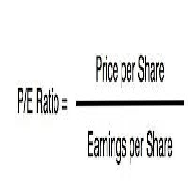
Relative valuation technique determines the value of PepsiCo Inc. by comparing it to similar entities (like industry or sector) on the basis of several relative ratios that compare its stock price to relevant variables that affect the stock’s value, such as earnings, book value, and sales.

  • Current Valuation Ratios
  • Historical Valuation Ratios (Summary)
  • Price to Earnings (P/E)
  • Price to Operating Profit (P/OP)
  • Price to Sales (P/S)
  • Price to Book Value (P/BV)

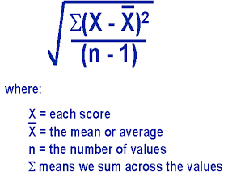
Statistical Analysis and Brief Summary

Statistical Analysis and Brief Summary . You will need to do the week5 assignment and then do the assignment below. I will attach the other two completed assignments.

Statistical Analysis and Brief Summary

Take the results of your surveys and in 2-3 pages create a statistical analysis that draws a conclusion on your research. Be sure to address the following in your analysis:
•Provide a brief summary of the experiment.
•Describe the results from each of the surveys.
•Describe the approach that was used to demonstrate the results of the surveys.
•Provide a brief summary of the end results of the experiment.