Structure of Eukaryotic Cells and Importance of Membranes
Structure of Eukaryotic Cells and Importance of Membranes
Order Instructions:
Assignment requested deadline November 22; NLT 8pm. Please read below for information concerning assignment. Support responses with examples and use APA formatting in the paper. You may access the school’s website by logging into: https://mycampus.southuniversity.edu/portal/server.pt
Please note that when you log into the website you must click launch class, and on the next screen click syllabus to view this week’s readings (week2) and Academic Resources to access the school’s library.
The minimum length for this assignment is 1,200 words.
Structure of Eukaryotic Cells and Importance of Membranes
Eukaryotic cells are the most structurally advanced of the major cell types. Describe the structure and function of each of the eukaryotic organelles. Distinguish between those that are and are not membranous. Most are membranous. Explain the importance of membrane structure and function in the organization of living processes within cells.
Please be as thorough and original as possible.
SAMPLE ANSWER
Structure of Eukaryotic Cells and Importance of Membranes
Introduction
Eukaryotic cells are present in plants, animals, protozoa, and fungi (Voet, 2012). This paper will explore the structure and function of the eukaryotic cell organelles. The paper will also discuss the structure and function of biological membranes including the cytoplasmic membrane. A special focus will be given to internal membranes that enclose cellular organelles such as the nucleus, the mitochondrion, the peroxisome, the lysosome, the chloroplast, and the endoplasmic reticulum.
Cell Structures and Functions
The Cell Wall and Glycocalyx
The cell wall is a rigid layer that surrounds some cells, is composed of one or more polysaccharides, and provides additional strength to the cell. Higher plants and algae have cell walls made up of cellulose, pectin, and hemicellulose. Chitin is the main polysaccharide of fungal cell walls, while yeast cells have cell walls composed of mannan and glucan. An external layer called glycocalyx that strengthens the cell and facilitates attachment to neighboring cells surrounds animal cells (Voet, 2012).
The Cytoplasm
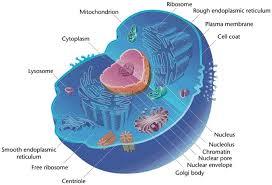
The cytoplasm is bound by the plasma membrane and includes all the materials inside the cell with the exclusion of the nucleus. It comprises of a gel-like substance called cytosol and internal cell substructures called organelles. Most of the cell activities such as cell division and metabolism occur in the cytoplasm. It is approximately 80% water, has dissolved salts and biomolecules such as proteins and carbohydrates and suspended insoluble molecules such as lipids (Nelson & Cox, 2013; Voet, 2012).
The Cytoskeleton
The cytoskeleton is a lattice-like array of cell fibers and fine tubes. It has three components namely: microtubules, microfilaments, and intermediate filaments. Microtubules maintain the cell shape and play central roles in chromosome segregation during cell division, endocytosis, and cell differentiation. Other eukaryotic cell structures derived from microtubules include cilia, flagella, centrioles, and spindles. Microfilaments are involved in cell shape change, phagocytosis, cyclosis, and amoeboid movement while intermediate filaments anchor membrane-bound organelles in the cytoplasm (Berg, Tymoczko, & Stryer, 2012; Voet, 2012).
Membrane-Bound Organelles
The nucleus is arguably the largest cell organelle and is bound by a membrane called nuclear envelope, which is punctuated into pores. The nucleus contains the genetic material called DNA and controls all the activities of the cell. The Endoplasmic Reticulum (ER) is a network of tubules that act as the transport system of the cell. There are two types of ER: rough ER and smooth ER. The rough ER is coarse in appearance because it is lined with ribosomes and is involved in the transport of proteins, while the smooth ER has no ribosomes and is the lipid transport system.
The Ribosomes are small particles either scattered in the cytosol or lined on the surface of rough ER. They contain RNA and proteins in almost equal proportions. The ribosomes function as the sites of protein synthesis. The Golgi apparatus is a membrane-bound eukaryotic cell organelle made up of tubes called cisternae. The Golgi is supported by microtubules and is located in proximity to the nucleus and the ER. The Golgi performs post-translational modification of proteins, packages them into vesicles, and exports them into target cell compartments(Berg et al., 2012; Voet, 2012).
The lysosomes are roundish, vesicular structures of animal cells that have a lumen containing hydrolytic enzymes. The pH of the luminal contents is 4.5-5.0 which is optimal for lysosome enzymes. The lysosome digests unwanted materials from outside the cell as well as obsolete cell components. The centrosome is present in eukaryotic animal cells and is made up of two centrioles and surrounding pericentriolar materials. The centrioles are short cylinders arranged such that they are perpendicular to each other. The centrosomes are microtubule-organizing centres that contain gamma-tubulin. The microtubules grow out of this gamma-tubulin in the pericentriolar material. The Vacuole is the major acid-containing organelle of plant and fungal cells. It contains a fluid called cell sap and is surrounded by a membrane called tonoplast. The plant vacuole is the equivalent of the lysosome in animal cells as it has hydrolytic enzymes that digest waste materials. The vacuole is also involved in maintaining cell turgor pressure (Berg et al., 2012; Nelson & Cox, 2013).
The mitochondrion and the chloroplast are two organelles involved in energy production. The mitochondrion is sausage-shaped double membrane cell structure whose inner membrane is invaginated to form cristae. The mitochondrial matrix contains ribosomes and DNA and is therefore self-replicating and semi-autonomous. The main function of the mitochondrion is synthesis of ATP. The chloroplast also has a double membrane and is present in plant cells. It has internal structures such as thylakoids and stroma and its main function is to carry out the process of photosynthesis. The peroxisome is another self-replicating organelle that has enzymes for oxidative degradation of molecules such as uric acid, amino acids, purines, methanol, and fatty acids (Nelson & Cox, 2013).
Structure of Biological Membranes
A biological membrane is composed of a phospholipid bilayer. The membrane is amphipathic, meaning that the polar phosphate lipid heads are on the surface while the hydrophobic tails point inwards. The lipid molecules diffuse rapidly in the plane of the biomembrane but not across. Also, the phospholipid molecules can move laterally from one side of the bilayer to the other, a process called the flip-flop. Moreover, biological membranes are asymmetric, meaning that the two phases are different from each other. In addition to the lipids, membranes also have proteins that move freely within the membrane, and this makes the membrane fluidic and mosaic. The proteins are categorized into either integral or peripheral proteins depending on their degree of association with the membrane. Integral proteins penetrate deep into the bilayer while peripheral proteins are superficially located. Some lipids are linked to carbohydrates to form glycolipids. Cholesterol is present in animal cells and is involved in maintaining membrane fluidity (Berg et al., 2012; Nelson & Cox, 2013).
General Functions of Biological Membranes
The plasma membrane plays a role in establishing a physical barrier between the cell contents and extracellular environment. Biomembranes also facilitate the formation of membrane-enclosed organelles a process called intracellular compartmentalization. Compartmentalization establishes microenvironments and biological barriers between biochemical processes, which allow the cell to carry out different processes simultaneously. Biomembranes are selective permeability barriers as they confine certain molecules within a specific region while restricting the entry of others (Voet, 2012). They contain molecular pumps, sinks, and gates or channels that regulate the molecular and ionic composition of the intracellular or intra-organelle medium. Membranes are the sites of biochemical processes such as oxidative phosphorylation (inner mitochondrial membrane) and photosynthesis (thylakoid membrane). Membranes also have receptors that trigger signal transduction (Berg et al., 2012).
The Plasma and Organelles Biomembranes
The Plasma Membrane
This is the biological barrier between the cell and the external environment. It has biomolecules for intercellular communication and transport. Based on the external environment, the cell membrane can either be an apical, sinusoidal or basolateral membrane. Contact between cells is either through tight junctions, gap junctions or desmosomes (Voet, 2012).
The Nuclear Membrane
The nucleus has a double membrane that is often continuous with the ER membrane. It houses and protects the genetic material and keeps the confines the DNA processing molecules closer to the DNA itself. The nuclear membrane also creates a barrier between transcription and translation and ensures that the two occur as separate processes. Nuclear membrane has nuclear pores, which allow passage of mRNA-protein complexes from the nucleus to the cytoplasm and passage of regulatory proteins from the cytoplasm into the nucleoplasm (Berg et al., 2012).
The Mitochondrial Membrane
The mitochondrion has inner and out membranes. The outer membrane has integral channels called porins that allow proteins less than 5KDa to diffuse through. A translocase is involved in the shipping of larger proteins. The outer membrane forms structures with the ER called mitochondria associated-ER membrane that are useful in calcium signaling and transfer of lipids between the two organelles. The inner membrane is impermeable to all molecules, and they require a transporter to pass through. The inner membrane is convoluted to many cristae to increase surface area for ATP synthesis (Berg et al., 2012; Nelson & Cox, 2013).
The ER and the Golgi Membranes
The ER membrane is an extension of the plasma membrane and is attached to the nuclear membrane. The ER membrane can form vesicles containing proteins that then fuse with the Golgi membrane. The Golgi membrane also facilitates the secretion of processed proteins via exocytosis (Berg et al., 2012).
The Chloroplast Membrane
This is a double membrane enclosing a third internal membrane called thylakoid membrane, which is a system of interconnecting compartments. The thylakoid membrane is the site of energy synthesis and contains a series of proteins collectively referred to as electron transport chain. The outer chloroplast membrane is highly permeable to small organic molecules, while the inner membrane is less permeable and has transport proteins as well as light harvesting pigments (Berg et al., 2012; Voet, 2012).
Lysosome Membrane
This membrane separates the cytoplasm from the acidic milieu of the lysosome. The lysosome membrane has glycosylated membrane proteins called lysosome-associated membrane protein (LAMP) which mediates contact to cytosolic proteins and with other cell organelles. Thus, the lysosome membrane and its proteins facilitate lysosome motility, exocytosis, phagocytosis, macroautophagy among other lysosome functions (Voet, 2012).
Peroxisome Membrane
This biological barrier surrounds the peroxisome and provides a compartment for oxidation reactions. It has membrane proteins called peroxins (PEX) that shuttle proteins between the peroxisome membrane and the cytosol. The peroxisome shuttling process is dependent on ATP and ubiquitylation (Voet, 2012).
Conclusion
Eukaryotic cells have subcellular structures called organelles that have specific functions. Both the plasma membrane and the organelle membrane are composed of lipid bilayers, proteins, and glycans. The plasma membrane is the biological barrier to the extracellular environment. The organelle membranes create microenvironments suitable for specific biochemical reactions.
References
Berg, J. M., Tymoczko, J. L., & Stryer, L. (2012). Biochemistry (7 ed.): W. H. Freeman.
Nelson, D. L., & Cox, M. M. (2013). Lehninger Principles of Biochemistry (6 ed.): W.H.Freeman.
Voet, D. (2012). Fundamentals of Biochemistry: Life at the molecular level: Wiley.
We can write this or a similar paper for you! Simply fill the order form!
Assignment requested deadline November 18; NLT 10pm. Please read below for information concerning assignment. Support responses with examples and use APA formatting in the paper. You may access the school’s website by logging into: https://mycampus.southuniversity.edu/portal/server.pt
Please note that when you log into the website you must click launch class, and on the next screen click syllabus to view this week’s readings (week2) and Academic Resources to access the school’s library.
Hints from the Doc
Here is a link to a video I put up on Youtube a few years ago comparing prokaryotic and eukaryotic cells. http://youtu.be/4ASXK6RG_f0
As you prepare your post, think about the many kinds of prokaryotic and eukaryotic organisms alive today and how each is successful in its own way. If they were not successful they would no longer be alive but would have gone extinct long ago :).
Students run into problems on this one by one or both of two routes:
1. Not covering all the differences between the two kinds of cells. Posting just two or three is definitely not enough.
2. Not explaining how the special characteristics of each kind of cell has set the stage for very different but successful evolutionary paths of the organisms made of these cells. Many students don’t even cover this. You are not likely to find a pat answer somewhere on this. Instead think critically and creatively about the characteristics of the cells, the characteristics of modern organisms having those cells, and how they moved along evolutionarily to get where they are today.
And as always, avoid short answers. I hate to think how many students have not been successful over the years in this class by trying to get by with short answers lacking substance.
Please respond to both of the discussion questions listed.
Question 1: Importance of water and carbon
Water and carbon are major components of all life. Describe the characteristics of these materials which make them so important to living things. Be prepared to discuss how life as we know it might be affected by slight changes in the characteristics of water or carbon.
Question 2: Prokaryotic versus eukaryotic and success
Prokaryotic and eukaryotic are the two major categories of cells making up life on earth. Describe the differences in prokaryotic and eukaryotic cells. How have the characteristics of each kind of cell put limitations and provided opportunities for the survival and divergence of modern living things? Be prepared to discuss why both types of cells could be considered equally successful as life has evolved over time.
SAMPLE ANSWER
W2 Assignment 1 Discussion
Importance of water and carbon to life
Water and carbon have unique properties that make them essential for life. Specifically, water has a high heat capacity and high heat of vaporization, meaning that water absorbs more heat per unit rise in temperature. This allows water to regulate environmental and physiological temperatures. Biochemically, water is a reactant in many hydrolytic reactions in the cells. Water is also a universal solvent, dissolving biomolecules such as proteins, sugars, and minerals. However, water is a poor solvent for non-polar molecules such as lipids, which enables the formation of bilayer lipid membranes (Berg, Tymoczko, & Stryer, 2012; Nelson & Cox, 2013). Similarly, carbon is also important element to life. Biomolecules such as proteins, carbohydrates, lipids, and nucleic acids are composed of carbon bonded with hydrogen, oxygen, or nitrogen. Carbon is also light and small making it easier for enzyme manipulation (Berg et al., 2012).
Prokaryotes versus Eukaryotes and Success
Both prokaryotes and eukaryotes adopted different but successful evolutionary strategies. Prokaryotic cells are smaller than eukaryotic cells and lack most of the classical organelles such as endoplasmic reticulum, the Golgi, cytoskeleton, peroxisomes, and lysosomes. As result, prokaryotes cannot carry out some eukaryotic cell functions such as sexual reproduction, cytoplasmic movement, endocytosis, and phagocytosis (Nelson & Cox, 2013). In addition, a membrane does not surround prokaryotic cell organelles while in eukaryotes a single or a double membrane binds the organelles. Prokaryotic cells have a single chromosome made up of circular naked DNA while eukaryotic cells have many chromosomes made up of linear DNA and histone proteins. Finally, gene expression is a continuous process in prokaryotes and occurs in the cytoplasm. In eukaryotes, transcription occurs in the nucleus while translation occurs in the cytoplasm and the two are separate processes (Berg et al., 2012; Nelson & Cox, 2013).
References
Berg, J. M., Tymoczko, J. L., & Stryer, L. (2012). Biochemistry (7 ed.): W. H. Freeman.
Nelson, D. L., & Cox, M. M. (2013). Lehninger Principles of Biochemistry (6 ed.): W.H.Freeman.
We can write this or a similar paper for you! Simply fill the order form!
Inferential statistical methods are widely used in research in order to conduct tests of differences for dependent or independent samples, analyse associations between different types of variables and establish relationships using models between dependent and independent variable(s). For this week’s Key Concept Exercise you will evaluate examples of inferential statistical analysis by discussing empirical results and the strengths, weakness and suitability of different statistical estimation and hypothesis testing procedures.
To prepare for this Key Concept Exercise:
• Read the Required Learning Resources for Week 5. (Provided by email)
• It is strongly recommended that you work through the Week 5 Test Your Knowledge Questions and while undertaking your reading. These are located with the Week 5 Learning Resources. (the file is sent by email)
• In approximately 550 words, answer TWO of the FOUR questions in the file provided here on Inferential Statistical Analysis (PDF). (The file is sent by email)
SAMPLE ANSWER
Question 1
The below table shows the results of an OLS regression of US real GDP growth rates (REALGDP) on changes in oil prices (OIL), interest rate (INTERESTRATE) and inflation rates (INFLATION) (monthly data from 1990 to 2013):
REALGDP=CONSTANT+a∗OIL+b∗INTERESTRATE+c∗INFLATION
(a) Discuss the statistical significance of the parameters, interpret the sign and magnitude of the estimates, and overall fit of the model.
The p-value, in this case, quantifies the null hypothesis by indicating that the coefficient is analogous to zero. The zero coefficients mean that there is no effect (Yuan, Cheng & Maxwell 2014). Moreover, the low p-value for Constant, Oil and interest rates demonstrates that the regression model has rejected the null hypothesis. Implicitly, the Constant, Oil and interest rates predictor variables are pertinent to the regression model (Strasheim 2014). As such, any slight variation in these predictor variables will automatically result in changes in the response variable (Radu, 2014). On the other, a high p-value than the standard alpha level represented by inflation rates demonstrates that any variation in the dependent variable is statistically insignificant to cause variations in the independent variables. While the adjusted R-squared that leans towards 100% is considered model fit. There has never been the benchmark for what is a good value. In this case, the adjusted R-Squared for the regression model is 58% fit. When it comes to the significance of the approximated coefficients the T-stat for the constant is greater than 2 in scale and corresponds to the p-value that is less than 5%. This indicates that the independent variable belongs to the model. However, because the oil prices and interest rates have a T-stat that is less than 2 with a corresponding p-value that is less than the standard alpha value of 0.005, implies that the coefficient can only be significant coincidentally (Satorra 2015). On the other hand, the T-stat for inflation is less than 2 with a p-value that is greater than 0.005, hence the variable is not the best fit for the model.
(b) Are the results in line with the predictions of the theory and why?
Yes: the adjusted R-squared of 58% shows that the model expounds 58% of the response statistics around the mean
Question 3
A company wants to produce three different mobile phones, with low-range, mid-range and high-range specifications, respectively. A survey with 100 respondents has been used to reveal the choices of potential customers. The company wants to review the figures to see if the three mobile phones would be equally popular. The results of the Chi-Square test are given in the following tables:
(a) Describe the null hypothesis for the Chi-Square test.
H0 = Customers do not like phones with low-range, mid-range and long-range specifications
(b) Discuss the results and explain whether there are statistically significant differences in the preference for the three devices.
Mobile
Observed N
Expected N
Residual
1.00
31
33.3
-2.3
2.00
45
33.3
11.7
3.00
24
33.3
-9.3
Total
100
99.9
Because the Asymptotic significance of the statistical tests is less than the standard alpha value of 0.005, it refutes the hypothesis. Moreover, we can, therefore, sum up that other factors other than chance may be operating on the variables for the changes to be this great (Amodio, Aria & D’Ambrosio 2014). The p-value of 0.032 simply indicates that the probability of 3.2% chance may influence the variable. As such, the variations in predictor variables are so minute that chance may constitute to any change (Lemeshko 2015).
(c) What are the underlying assumptions of the Chi-Square test? Explain if, in your opinion, those are met in the above examples
The underlying assumption for this Chi-square test is that customers buy mobile phones regardless of whether or not they have mid-range, low-range and high-range specifications. As such, the chi-square test outcomes fit the model.
References
Amodio, S., Aria, M. & D’Ambrosio, A. 2014, “On concurvity in nonlinear and nonparametric regression models”, Statistica, vol. 74, no. 1, pp. 85-98.
Lemeshko, B.Y. 2015, “Chi-Square-Type Tests for Verification of Normality”, Measurement Techniques, vol. 58, no. 6, pp. 581-591.
Radu, S. C. 2014, TESTING THE MARKET MODEL – A CASE STUDY OF FONDUL PROPRIETATEA (FP). Knowledge Horizons. Economics, 6(1), pp. 126-131.
Satorra, A. 2015, “A Comment on a Paper by H. Wu and M. W. Browne (2014)”, Psychometrika, vol. 80, no. 3, pp. 613-618.
Strasheim, A. 2014, “Testing main and interaction effects in structural equation models with a categorical moderator variable”, Management Dynamics, vol. 23, no. 4, pp. 31-68.
Yuan, K., Cheng, Y., & Maxwell, S. 2014, Moderation analysis using a two-level regression model. Psychometrika, 79(4), pp.701-732.
We can write this or a similar paper for you! Simply fill the order form!
A health care organization is comprised of different professionals who serve different functions. Their roles may determine how they view quality initiatives, including the different methods measurement and types of improvement tools.
Design a graphic organizer (such as a chart or table) that identifies a minimum of three quality measurement/improvement tools. Describe how they are used for measuring quality by at least four professionals in a health care organization. You must include at least one administrative health professional, one mid level provider, one physician, and one auxiliary staff member.
Make sure to include a References page with at least four references, including your textbook.
While APA format is not required for the body of this assignment, solid academic writing is expected, and in-text citations and references should be presented using APA documentation guidelines, which can be found in the APA Style Guide, located in the Student Success Center.
This assignment uses a rubric. Please review the rubric prior to beginning the assignment to become familiar with the expectations for successful completion.
Unsatisfactory
0.00%
Less than Satisfactory
65.00%
Satisfactory
75.00%
Good
85.00%
Excellent
100.00%
90.0 %Content
70.0 % Content/Resource Requirements: A Graphic Organizer Mapping Three or More Quality Improvement Tools as Applied by Four or More Types of Health Care Professional
Graphic organizer does not demonstrate an understanding of the basic requirements as specified in the assignment. Graphic organizer does not demonstrate critical thinking and analysis of quality measurement tools in health care, and does not develop effective rationale as to how they are used by different types of health care professional.
Graphic organizer demonstrates minimal understanding of the basic requirements as specified in the assignment. Graphic organizer demonstrates only minimal abilities for critical thinking and analysis of quality measurement tools in health care, and develops weak rationale as to how they are used by different types of health care professional.
Graphic organizer demonstrates knowledge of the basic requirements as specified in the assignment. Graphic organizer provides a basic idea of critical thinking and analysis of quality measurement tools in health care, and develops satisfactory rationale as to how they are used by different types of health care professional. Graphic organizer does not include examples or descriptions.
Graphic organizer demonstrates acceptable knowledge of the basic requirements as specified in the assignment. Graphic organizer satisfactorily develops understanding of critical thinking and analysis of quality measurement tools in health care. Graphic organizer develops an acceptable rationale as to how they are used by different types of health care professional. Graphic organizer utilizes some examples.
Graphic organizer demonstrates thorough knowledge of the basic requirements as specified in the assignment. Graphic organizer thoroughly develops an understanding of critical thinking and analysis of quality measurement tools in health care. Graphic organizer clearly answers the questions and develops a very strong rationale as to how they are used by different types of health care professional. Graphic organizer introduces appropriate examples.
20.0 % Integration of Information From Outside Resources
Assignment does not use references, examples, or explanations.
Assignment provides some supporting examples, but minimal explanations and no published references.
Assignment supports main points with examples and explanations.
Assignment supports main points with explanations and examples. Application and description are direct, competent, and appropriate of the criteria.
Assignment supports main points with references, examples, and full explanations of how they apply.
10.0 %Documentation
10.0 % Documentation of Sources (citations, footnotes, references, bibliography, etc., as appropriate to assignment and style)
Sources are not documented.
Documentation of sources is inconsistent and/or incorrect, as appropriate to assignment and style, with numerous formatting errors.
Sources are documented, as appropriate to assignment and style, although some formatting errors may be present.
Sources are documented, as appropriate to assignment and style, and format is mostly correct.
Sources are completely and correctly documented, as appropriate to assignment and style, and format is free of error.
SAMPLE ANSWER
Quality Measurement by Health Care Professionals
In healthcare, measuring the quality of services delivered is essential since it presents a clear picture regarding the health structure’s performance while contributing to enhanced care. Quality measurement tools can take different forms and assesses care within health care structures ranging from doctor’s office, imaging facilities to the hospital structures (Schuur et al. 2013). This essay presents a table demonstrating three quality measurement tools including plan do study-act (PDSA), Six Sigma Methodology, DMAIC-define. In addition, the essay demonstrates how these tools are used by administrative health professionals, midlevel provider, physicians, and auxiliary staff members to measure quality.
Quality measurement tools
Administrative healthcare professional
Middle-level profession
Physician
Auxiliary staff
Six sigma
Administrative health care professional can use six sigma positive impact health care setting (Schembri, 2015)
For instance, in control operations, patients’ care leading to significant cost reductions as well improving quality. Can also use it to effectively use resources while eliminating wastes and get the required outcomes and ensure patient satisfaction.
Can use it to assess work flow such as reducing wait times, and increase number of patients in the hospital.
Can use it to minimize the number of errors while reducing steps in supply chain. This is done to improve patient outcomes.
Can utilize it enhance turnaround time
DMAIC
Can utilize it to not only define but also analyze existing processes.
Uses it in improving patients’ outcomes.
May use it in determining adverse actions and create preventive actions to tackle them (Pantouvakis & Bouranta, 2014).
PDSA
May use it to implement changes to improve health care service delivery
In deciding necessary actions to be taken to improve quality
Can use it in various processes including; -selecting quality improvement program; implementing an improvement program; assess the success of the program; and adjust improvement program based on the patient outcomes events (Bishop & Cregan, 2015).
References
Bishop, A. C., & Cregan, B. R. (2015). Patient safety culture: Finding meaning in patient experiences. International Journal of Health Care Quality Assurance, 28(6), 595-610. Retrieved from http://search.proquest.com/docview/1694933831?accountid=45049
Schuur, J. D., Hsia, R. Y., Burstin, H., Schull, M. J., & Pines, J. M. (2013). Quality measurement in the emergency department: Past and future. Health Affairs, 32(12), 2129-38. Retrieved from http://search.proquest.com/docview/1467750122?accountid=45049
Assignment requested deadline November 12; NLT 10pm. Please read below for information concerning assignment. Support responses with examples and use APA formatting in the paper. You may access the school’s website by logging into: https://mycampus.southuniversity.edu/portal/server.pt
Please note that when you log into the website you must click launch class, and on the next screen click syllabus to view this week’s readings (weeks 1) and Academic Resources to access the school’s library.
To support your work, use the textbook, lectures and scholarly outside sources. As in all assignments, cite your sources in your work and provide references for the citations in APA format.
Please take in consideration the “Hints from the Doc” below to achieve the best score possible.
Hints from the Doc:
Class, this assignment is fairly straight forward so there are not a lot of loose ends for me to cover to help you. I do find that it helps if you pick two specific things (one living and one never living) that you can look at or hold directly and compare to the lists of properties and characteristics of life we cover this week in the text and lecture.
Students tend to get into trouble on this one when they do not pick specific examples and when they do not compare them for all the characteristics of life described in our text and lecture. Short answers are also a problem. For some reason some students try to get by with the least amount of information as possible. This is not a winning strategy. I have to grade you based on the breadth and depth of understanding you display relative to the assignment. Short answers don’t give you enough verbal space to that and generally wind up with very poor grades.
By Saturday, November 12, 2016, respond to both of the discussion questions listed.
Discussion Question I
Question 1: Properties of life and recognizing living and nonliving things
Consider the properties and characteristics of life. Choose two items (one of which is alive or has been alive and one which has never been alive). Compare and contrast their characteristics. What characteristics do they share and how are they different. Be prepared to discuss the importance of the various characteristics of living things and how their combination makes life an emergent part of the universe.
Discussion Question II
Question 2: Thinking as a scientist, designing research
Consider the process by which scientists think through information and solve problems and how this is similar and different to how nonscientists approach the world. Consider a small problem that is solvable scientifically. Describe the process you would go through in solving that problem. Be prepared to discuss the significance of the scientific approach to the development and advancement of human knowledge
SAMPLE ANSWER
Discussion Question 1: Properties of life & recognizing living from non-living things
An object is considered to be alive if it possesses the following properties of life. The first property is order. All living things have complex and ordered organization in their system. Secondly, a living organism has the ability to adjust its internal environment in order to maintain it within the important limits. For instance, during cold season, a whale is able to regulate its body temperature to limits that will sustain its survival. Living things have the ability to grow and develop. The carry coded information in form of DNA which regulates its growth and development pattern (Robertson, 2016).
Energy processing ability is another property of live. Living organism takes in energy and applies it to perform their daily living activities. Their energy levels are emitted as heat. For instance, a dog obtains its energy by from eating meat, and the energy is used to power its activity such as running and panting. When performing these activities, the dog emits body heat continuously. Living things also have the capacity to respond to the environment stimuli. For instance, if a dog steps on hot surface, it will remove its limb immediately and/or even run away. Similarly, insect feeding plants such as Venus fly trap close its leaves when an insect gets into contact with its sensory hairs. Living things have the capacity for reproduction. They reproduce living things of their own make. Lastly, the reproduction underlies the capacity of the population to evolve over a period of time (Simon, Dickey, Reece, & Hogan, 2016).
Although these seven properties of life are used to differentiate living things from non-living things, some nonliving things do possess some these properties. For instance, motor vehicles have complex fuel and exhaust system; it responds to environmental stimuli, uses energy to perform its activities and emits heat to the atmosphere. In addition, the manufacturings of motor vehicles have evolved from the steam engines, coal, carbon products and most recently, electric vehicles. However, they do not grow, lack DNA and cannot reproduce (they are manufactured); thus, they are nonliving entities. On the other hand, a bacteria is a living entity because it have cells that carryout metabolism, maintains its internal environment within the required limits, and have the ability reproduce organisms of their kind. The concept of bacteria resistance is an indicator of how the bacteria have continued to evolve. Despite its size, bacteria are living entity (Robertson, 2016).
These properties of living things are important and their combination facilitates the ability to live. For instance, all living things feed. The food is processed to provide energy for their daily activities such as movement, growth, development, response to stimuli, respiration and excretion. In addition, the energy is used by living things for reproduction processes, and for developing adaptive responses to the environment (evolution). Therefore, each of the traits plays an integral role that makes the living things to survive in this universe (Robertson, 2016).
Discussion question II Thinking as a scientist, design research
Science is an approach that aids in understanding the worlds nature, based on literature search, explanations and objective answers to research questions. Scientist thoughts are guided by discovery science and hypothesis driven science (Simon, Dickey, Reece, & Hogan, 2016). For instance, as one is preparing her supper, the kitchen lights suddenly go off. You try to switch on the backup generator, but the problem persists. As a nonscientist, one is likely to blame the incidence on supernatural spirits, and one is likely to meditate on the occurrence of this situation. Unlike scientists, the nonscientist approach does not involve formulation of hypothesis, testing it or even trying to solve the problem.
On the other hand, as a scientist, the question that arises immediately is ‘why did the bulb blow up?’ There are dozen explanations to this problem that can be investigated simultaneously including power surge, electricity is lost, or the quality of the kitchen bulb. However, one is likely to focus and test one explanation (based on experience). In this case, the most possible explanation is that the ABG electricity bulb has blown up (where ABG is the brand name). If the incidence have occurred several times in the recent past, then a hypothesis can be formed as follows; the ABG electricity bulb do not last long because they are of low quality. The logical testing process will be as follows (Simon, Dickey, Reece, & Hogan, 2016);
Step 1: Observation – The ABG electricity bulb blow up easily. They do not last more than one month
Step 2: Research Question – The ideal question is ‘what is wrong with the remote?’
Step 3: Formulation of hypothesis
Hypothesis: The ABG electricity bulb do not last long because they are of low quality
Step 4: Prediction
If a replacement of ABG bulbs is done with another brand, then the electricity bulb will last for long
Step 5: Experiment
The ABG electricity bulb is replaced with a new brand. If the new bulb does not last long, then one should formulate another hypothesis and repeat the test, until a satisfactory conclusion to the research question is reached.
From reading this, it is evident that the concept of solving society’s daily challenges is embedded deeply in scientific research method. The significance of solving problems using this approach is that it minimizes influences when solving a problem. This way, it creates an opportunity of developing objective and standardized approaches, which makes one feel confident that the truth will be revealed, and that the issue will be addressed appropriately. This approach is of relevance because the society is bombarded by facts and fiction information from magazines, televisions and website. It is challenging to filter out the truth from the available information’s. However, adopting a culture scientific way of reasoning enables one to test for theoretical facts and to integrate them into reality (Simon, Dickey, Reece, & Hogan, 2016).
References
Robertson, B. (2016). Science 101: Q: How Do We Distinguish Between Living and Nonliving Things? Sci. Child., 053(09) .doi.org/10.2505/4/sc16_053_09_76
Assignment: Instructional Content and Implications
Teachers need to determine the point at which consideration should be made for integrating social concepts, such as gender and diversity. Design a lesson plan that focuses on promoting diversity and equality in your classroom.
Write a four to FOUR (4) page paper in which you:
Formulate a lesson plan which focuses on maintaining a diverse classroom, including at least one (1) comprehensive integration strategy, a list of materials that will be utilized to integrate social concepts, and an assessment method for determining evidence of success.
Analyze two to four (2-4) implications that social class has on schooling, and determine a method of handling these implications in the lesson you have created.
Develop three to four (3-4) instructional strategies that avoid the seven (7) forms of gender bias in the lesson you have created.
Construct a method of conceptualizing and implementing the lesson you have created in terms of diverse population groups with your students.
Provide at least three (4) references (no more than two to three [2-3] years old) from material outside the textbook.
Your assignment must follow these formatting requirements:
Be typed, double spaced, using Times New Roman font (size 12), with one-inch margins on all sides; citations and references must follow APA or school-specific format. Check with your professor for any additional instructions.
Include a cover page containing the title of the assignment, the student’s name, the professor’s name, the course title, and the date. The cover page and the reference page are not included in the required assignment page length.
SAMPLE ANSWER
Instructional Content and Implications
Introduction
Diverse classroom lesson plan designing is a sophisticated, proactive and systematic process involving comprehensive, integrated, cohesive and participatory educational acquisition principles (Reece & Walker, 2016). Instructional content and implication accommodation in different classroom designing do not primarily alter the instructional standards, performance criteria or the instructional materials, but change the instructional delivery strategies and assessments methods. Based on comprehensive integration plans, the list of materials that are required to be utilized for integrated social concepts is instructional content, instructional process, instructional products, and the efficient learning environment. However, the specific materials needed for engaging diverse learning based on integrated social concept specifically involve auditory, visual, tactile-kinesthetic, practical and technology option materials. Social integration provides non-discrimination, diversity, equal opportunities and pluralism (Cremer-Schulte, 2016; Baker, 2016).
Comprehensive integration strategy on maintaining diverse classroom enables efficient designing of diverse and equality eliminating class harassment, victimization, and discrimination. Besides, full integration foster class relationships allowing various, inclusive presentation, specific or adapted resources, content selection and expected output. When designing diverse classroom lesson, comprehensive, integrated strategy allow understanding the list of materials and resources needed in diverse teaching programming, analyzing the learners’ characteristics and reviewing teachers expectations based on risk assessment and alternative identifications or adjustments. However, the comprehensive integration content, process and the environment should be differentiated to allow flexibility and manipulations (Cremer-Schulte, 2016).
The method used is assessing and evaluating the evidence of diverse classroom planning, and integrated social concepts are mainly diagnostic method. The diagnostic method takes into account of the accommodative teaching and learning content, process, products and the classroom environment aiming at determining the outcome and the objectives of integrated social concepts. The diagnostic assessment method takes an interim evaluation approach to enable periodical data collection and adjustments on the set classroom instructions and activities (Cremer-Schulte, 2016; Baker, 2016). An employing diagnostic method as both formative and interim assessment approach, instructors can assess the created plan for adapting the materials and resources used in integrated classroom designing. In this regard, the fundamental and strategic skills used in diverse instruction design and the individual’s role in implementing the created plan for adapting diverse materials and resources are assessed (Messiou & Vitorino, 2016). Comparatively, the diagnostic assessment method is an effective method for identifying and evaluating the learners and teachers demand that have not been meet diverse classroom lesson designing to allow future adjustments. Similarly, the assessment process can determine whether the integrated social concepts based on content and format are adequately adapted or need further modification (Reece & Walker, 2016).
Social class has both active and adverse implication on schooling as they can affect the steps of diverse instructional learning and teaching based on the process, content, environment, and products directly. The social class affects the political, social, economic and environmental background of schooling (Baker, 2016). From a political, economic and social perspective, the social classes based on complex industrial societies can influence classroom behaviors that only rewards acquire personality traits. Similarly, the social class affect schooling curriculum based on social power and regards administered such as medical and managerial skills and knowledge. Schools in complex industrial society or upper classes are likely to acquire better schooling compared to lower-class schools based on learning environment, social structure, and affluent professionals. Practically, the social class affects the success of education based on parental achievement, class and its environment, the class correlation and the gap between socioeconomic factors (Messiou & Vitorino, 2016).
The efficient method used in assessing the social class implications in schooling for the four effects is the formative assessment process. The applied formative evaluation method is a systemic approach to both mastery teaching and learning following detailed theoretical analysis of the social structure and the nature of the feedback obtained. Therefore, incorporating the formative assessment approach in social class implication is schooling assessment allow tracking and exploitation of the effects of social class in school. The formative evaluation method assesses the bridging gap, class correlation, parental achievement and the class environment that are directly affected by social class based on school (Reece & Walker, 2016).
The instructional strategies that avoid the seven forms of gender bias in the designed lesson planning are the social integration, social cohesion, social inclusion and social participation. The instructional strategies of eliminating the gender bias ensure that the materials and resources are accessible to all learners, students’ ability understandings are clearly demonstrated, technical instructions stereotyping, invisibility, unreality, imbalance selectivity, linguistic bias, and fragmentations are efficiently solved. Social integration allows instructional differentiation is eliminating gender isolation, linguistic bias based on gender and ethnicity, and promotes investigative approach for bias detectives (Cremer-Schulte, 2016). Therefore, integration, inclusive, cohesion and participatory strategies enable avoidance of the seven forms of gender bias in a diverse lesson instructional planning.
The method of conceptualizing and implementing the lesson created based on diverse population groups with learners is the adaptive differentiation method. The adaptive differentiated method measures the impacts of the diverse lesson formulation by establishing the starting point of the plan and setting the diverse and healthy equality learning outcomes (Messiou & Vitorino, 2016). Similarly, adaptive differentiation method for conceptualizing and implementing the lesson created based on diverse population groups with learners allows inclusive, differentiated and participatory learning where the issues with learners’ language, abilities and needs are handled. Similarly, the method allows both formative and diagnostic assessment of the learning process so that the steps of differentiated learning and teaching are implemented. For example, the method can challenge the impacts of social classes in schooling, the methods used in the formulation and implementation of the diverse lesson plan designing and the comprehensive integration strategies used on maintaining diverse classroom (Baker, 2016).
Conclusion
The diverse classroom lesson plan designing is a complicated process that can only be understood by collective bargains. However, employing comprehensive integration strategies on maintaining diverse classroom, understanding the social class impacts on schooling and the effective strategies to be used in eliminating gender bias enable efficient designing of the diverse lesson plan that is integrated, inclusive and cohesive. Therefore, diverse lesson planning requires both formative and diagnostic methods to test the outcome of the set objectives and make the future adjustments for effectiveness.
Cremer-Schulte, D. C. (2016). On the links between natural amenities, residential processes and urban planning: lessons from an Alpine urban region (Doctoral dissertation, Grenoble Alpes).
Messiou, K., Ainscow, M., Echeita, G., Goldrick, S., Hope, M., Paes, I., … & Vitorino, T. (2016). Learning from differences: a strategy for teacher development in respect to student diversity. School Effectiveness and School Improvement, 27(1), 45-61.
Reece, I., & Walker, S. (2016). Teaching, training and learning: A practical guide. Business Education Publishers Ltd.
We can write this or a similar paper for you! Simply fill the order form!
Financial resources are critical to the operations of organizations in the sense that they promote efficacy through the acquisition of human resources, equipment, and technology among other vital organizational elements. However, the management of financial resources is also a challenge as many cases of misappropriations are reported all over the world. In the health care sector, the management of financial resources is even greater considering that the sound financial resources management improve the quality of care given to the patients and save healthcare expenditures.
Unit 14 Assignment
Introduction
Financial resources are critical to the success of organizations because, with sound financial backgrounds, the institution can achieve efficiencies in some areas. However, a robust financial background implies having effective and relevant financial management strategies. This is even more essential when it comes to the health or social care sector where there are diverse departments and many personnel. This essay explains some of the aspects related to financial management in the health or social care sectors.
1.1The Principles of Costing and Business Control Systems
In the health or social care organizations, costing applies to the financial process of estimating the amount of money spent while generating services to patients or clients (Field & Brown 2007).
The main principles of costing in the institution are based on the cost-benefit analysis (CBA) in health care. Understanding the concept of costing and business control system in health and social care organization, it gives a comparison to the expected monetary benefit that is derived from several varied health care interventions with the anticipated cost of providing each intervention to establish what is the best or the most profitable option. Underpinning the different internal and external cost that includes institution maintenance, clinical workers or health care workers, and health care treatment to the residents of the institution; which may involve supplies and labor.
In order for the institution to take control of its business, it is also highly important for the company to include basic needs for a health care institution to succeed; such as preventive controls for both patients and health care workers, defective, and security controls.
Preventive controls are the most basic but vital in business. It provides protection that separates staff to the patient. For instance, home care workers often deal with stress and pressure; thus, to prevent health care worker errors, it is imperative for the institution to provide assurance of job safety and security. Moreover, it allows the institution to identify and monitor inaccuracy of information data.
1.2Information needed to manage financial resources
Management defines the process of controlling things while financial resources are the money the organization has at its disposal to spend and is available in different formats such as credit lines, liquid securities, and cash (Field & Brown 2007). The management of financial resources does not occur in a vacuum but instead require certain critical information.
The institution’s responsibility for managing financial resources is gathering and pay respect to the past performance, availability and or shortage of funds that may also occur in the present operational process.
Finance and health care personnel must have great collaboration during financial difficulties and how to maintain financial flow and solvency. Thus, during financial difficulties, the management are able to recover costs, cash flow forecasting possibilities of inaccuracy in cash flow and assets, and other working capital.
On another aspect, it is also imperative to provide accuracy in consumable items such as food, bed sheets, towels, and soaps to mention but a few. The information that arises from the use of consumables is significant in the management of financial resources because failing to establish the pattern may mean not having an appropriate control system. Administration refers to the process of management, and because there are equipment, technology, and personnel tasked with the administration purposes, the information from the administration is also key to the management of financial resources. Lastly, income streams apply to the organization’s sources of income, and this information is crucial for the management of financial resources because it helps to determine the balance between income and expenditure (HFMA 2015).
1.3The Regulatory Requirements for Managing Financial Resources
Regulatory requirements are the policies and legislations that control the financial operations of the organization. It is the regulatory requirements that function to align the financial operations of the organization with the statutory provisions standards expected. For instance, in the UK, the Health and Social Care Act of 2012, governs all the financial operations in the health sector (HFMA 2015). In healthcare, there are external influences to business costs from a regulatory requirement perspective. One of the external influences to business costs revolves around changes in policies. When there is a change in healthcare policy, the organization has to embrace changes that will reflect the adaptation to the new policy and the integrations of the new requirements means expenditure (Lindsay et al. 2014). Competitive factors such as the pricing of health care services or diagnostic costs also represent another external influence to business costs in the healthcare sector. With the competitive factors, the healthcare organization is forced to introduce new technologies or professionals, and this means additional costs (Field & Brown 2007). Legal requirements are the other external influences that add costs in the healthcare sector. The legal requirements imply that the organization has to be regulated by certain bodies and this implies subscription fees and other necessities to be fulfilled. The financial legislation and codes of practice also have their associated implementation costs, and when the healthcare institution implements them, there are costs incurred. Another source of regulatory cost to the business is an audit. Although internal auditors can undertake auditing activities, sometimes it is a requirement that external auditors have to be used. In such case, external auditing firms have to be given the job on a fee or contract, and this means additional costs to the business. Lastly, accountability is another external factor that influences business costs. Accountability generates costs in the sense that the organization has to implement systems and establish external associations to oversee accountability (Monitor 2016).
1.4 System Evaluation for Management of Financial Resources
Collectively, the institution shall utilize Financial Management System (FMS) to manage the institute’s finances. Financial Management System (FMS) according to Anderson (2007), FMS is an efficient software and methodology that enables the management to control its allocation on expenses, income, and assets. Additionally, as its goal to maximize profits and ensure the institution’s sustainability, it allows the health care facilitator to monitor the institution’s total expenditures freely. Thus, by adopting this process in managing the financial resources, the management will be able to timely record all the budget line items such as salaries, utilities, equipment, and other expenses needed in the health care institution. Furthermore, by practicing the financial management system, it shall assist the management to produce financial records on time.
The institution is able to produce reliable analysis on budgets and costs with the data produced through the utilization of Financial Management System. For instance, the institution is able to decide on budget allocation on products and services through the financial reports produced by FMS.
2.0 Planning and Management on Social and Health Care Budgets
2.1 Diverse Source of Income in Health and Social Care
Understanding budget and planning have its internal and external sources of income. Like other health care institutions, the institution utilizes resources such as customers, government institutions, private sectors, and corporation. The institution may encounter income non-stabilization due to funding mechanisms that influence the institution’s profit, which is similar to other health care homes. However, through the utilization of a diverse source of income, the institution is capable of sustaining its needs. For instance, contributions to tax, loans, social insurance, grants from different government and private sectors.
Charity donations from private sectors individuals, who are interested in aiding elderlies and disables, are another diverse source of income that helps sustain the institution. Additionally, these types of the collection do not negatively influence the institution’s finances since the latter are not generated from the main financial source unlike insurance, tax for payments and health and patients’ payments.
2.2The Factors That May Influence the Availability of Financial Resources in Health And Social Organizations
Despite the presence of various sources of income in the health and social care, there are factors that determine the availability of the financial resources. One such factor is the availability of resources. In some cases, only a few sources of income may be available while in other cases, the health or social organizations may be swarmed by the various sources (Ball et al. 2013). Therefore, the more the financial sources are available, the more the financial resources are likely to be available.
The institution is mainly influenced by varied risks on financial resources and the payments from service providers, service seekers, and business corporations. Under availability of resources, the funding priorities also determine the availability of financial resources in the sense that where health or social care are not given priority, then financial resources will be limited and vice versa.
Moreover, similar to other home care institutions, the operating system of the institution faces similar challenges when raising funds because of the level of income and due to the institution and limited administrative capacity (Erxton & Marel, 2011). Thus, the availability of financial resources depends on the capacity of the state to pay for the service.
The second factor that may influence the availability of financial resources in health and social organizations relates to agency objectives and policies regarding financing. If the potential contributors of income establish that the objectives and policies related to finance are sound or advancing health or social, they are likely to channel their contributions to the organization (Field& Brown 2007).
2.3The Different Types of Budget Expenditure in Health and Social Care Organizations
In health and social care, budget refers to the estimated financial data relating to the different departmental and operational activities in the organizations based on the trends. On the hand, expenditure applies to the actual finance spent on different aspects while the organizations deliver care (Broadbent & Cullen 2003).
The institution is mainly concerned with its budget expenditures including operating budgets, personal budgets, and sales budget. Operating budget are the expenses with significant influence to the incurred expenses within a financial year; this includes labor costs. Personal budget, on the other hand, receives a major impact due to the growing competition and the level of the financial resources dependency caused by demand on technology and other human resources utilization. Lastly, when it comes to sales budget the actual estimation of the sales and services provided by the current financial year and reported. Mainly, the focus of the budget is to provide estimation in the sales expenses, the estimated amount of services and products during the budget year, and the estimated on the accrued revenue by selling the institutes services and products.
2.4How the Decisions about Expenditure Are Made Within a Health or Social Care Organization
There are various reasons to make decisions in health and social care. The institution’s decisions are based on understanding the needs of residents, altogether with its detailed analysis. Thus, ensuring the financial resources are well managed is one of the utmost priorities in making decision within the health care institution. Moreover, with the help of internal and external financial analysis, the institution is capable of deciding on the estimated accrued expenses for monitoring of current and future expenditure (Herman, 2008).
The expenses and value added services expenses incurred are taken into a strategic, operational planning to ensure financial resources sustainability. Moreover, the institution assures that decision making shall include varied project management capabilities, estimations on financial risks, and calculations of the cost benefits and more. The advantage of this factor is that it enables the organization to distribute its financial resources in the right ways. Its disadvantage is that it can confuse the long and short-term objectives and create financial shortfalls.
3.0 Importance of Monitoring the Budget Expenditure
3.1How Financial Shortfalls Can Be Managed
Financial shortfall refers to a situation whereby the amount of finance available is lower than the amount that is needed to fulfill a given organizational function (Armit & Oldham 2015). In other words, it means having fewer amounts than what is required. One of the obvious reasons for financial shortfalls in health or social care concerns embezzlement or misappropriations. This can take place when those charged with financing and budgeting divert the financial resources for their personal or other uses (Iacobuci 2013). Second, financial shortfalls can be caused by poor forecasting and budgeting techniques that may engender discrepancies between what is budgeted and what takes place in reality (Field & Brown 2007). The lack of costs controls can also be a source of financial shortfall because not all departments may observe the projections guidelines. Lastly, changes in the external environment such as currency value as well as changes in technology and employee aspects can also lead to financial shortfalls (Broadbent & Cullen 2003).
In this case, the institution does not consider cost-cutting nor inappropriate decision making without strategic, operational analysis; while, the institution focuses on the generated wastage during operations. In this stance, wastage reduction within the operational process shall enable the institution to gain performance improvement charted by covering the shortage. Additionally, to reduce shortage, the institution anticipates the future financial requirements; thus, all planning are based on strategic analysis. Strategic planning and analysis includes assessment of satiation of the market and tends to gauge the level of future shortage in resources.
3.2The Actions to be Taken In The Event of Suspected Fraud
Fraud is defined as an intentional act to gain financial rewards unfairly. This can be done by hiding the identity and manipulating the financial spreadsheets that contain financial information of the healthcare organization (Field & Brown 2007). So to speak, to handle fraud and other related frauds within the institution, the management has considered a separate department that will be responsible for the investigation and evaluating the situation. The institution understands that most of the frauds are brought about by misinformation and miscommunication on the rules and process of the operation. Therefore, a good investigation and justification of evidence when analyzing improper behavior will lead to an immediate solution.
Since the institution had instilled a group that will handle fraud cases, they are also responsible for providing accurate data analysis on the fraud cases. This analysis may include the incident inquiry, determining the culprits, the development and how the fraud incident was handled, a detailed incident report, and recommendations on preventing similar fraudulent activity.
3.3Evaluations of Budget Monitoring Arrangements in Health or Social Care Organization
Budget monitoring according to Scheiber et al. (2001), is a process of evaluating the organization’s ability in fulfilling the financial goals and objectives in accordance to the institutes’ budget preparation.
Example of the organization budget for the year 2016
Sources of income
Amount
Expenditure
Amount
Public
$10000000
Employees’ salaries
$1200000
Private
$6000,000
Equipment
$3000000
Local
$3000000
Consumable goods
$2000000
National
$5000000
Maintenances/regulatory requirements
$1000000
Total
$24000000
Total
$7200,000
To monitor the budget, the organization has adopted different strategies. One of the strategies is the establishment of cost centers which are departments created specifically to evaluate the budgets and financial practices of the organization (Armit & Oldham 2015). Through the cost centers, the organization is able to discern the wasteful practices and the spending trends and consequently adopts the relevant practices. Accountabilities represent another approach used to monitor the budgets, and this means the integrations of systems that facilitate transparencies and responsibility on financial matters (Broadbent & Cullen 2003). The organization also uses regular audits to identify variances in budgets and promote compliances with the established standards.
4.0 Systems and Process for Managing Financial Resources
4.1The Information Required To Make Financial Decision Related To Health and Social Care Service
When making financial decisions related to health and social care service, there is certain information that is of significance. Information on expenditure which is the amount spent on different areas is important because it shows the organization what it needs to spend to realize its objectives or obligations (Lingg et al. 2016). Budget information is also important because it provides the estimations of the income and expenditures as well as their trends. Capital information is another component that is important because it gives the picture of the assets that the company has and how such assets can be used. The health or social care organization must also understand its sources of income so that financial decisions reflect the available income to the institution (Pflueger 2015). Cost-benefit-analysis information is also essential in the making of financial decisions in the sense that it facilitates the adoption of the best decisions with the greatest impacts. It is also imperative that the financial information is analyzed for reliability and validity before making the financial decision so that issues of malpractices are avoided (CIMA 2016a).
4.2The Relationship between a Health and Social Service Delivered, Costs and Expenditure
The institution focuses on the development of health care services to its clients; this includes issuing provisions in providing utmost satisfaction and quality to its clients. Service delivery refers to the health or social care component that describes the interaction between the organization and the patients/clients whereby the organization provides services, and the clients/patients derive value from the services. Expenditure talk about to the amount of money that has been spent while the cost is the amount to be disbursed in order to obtain something (Mccan et al. 2015). From a cost –benefit analysis perspective, the service delivered is usually connected to the cost and expenditure in direct ways. Where the quality is of service delivered is high, the costs and expenditure are also the same and vice versa. Concerning pricing policies, service deliveries of premium prices are often linked to high costs and expenditure. Additionally the expenditures within the health and social care sector, according to OECD (2001) have been spent on elderlies, patients with terminal and complicated diseases.
Therefore, the health and social care point of collaboration and connection should be improved for the purpose of achieving a suitable saving arrangement for the organization’s resources. For instance, the institute can save the cost wastage if the primary focus and objective are primarily based on improving the quality health care services even accompanied with issues.
Unnecessary hospital admissions can be undermining to the institute’s operational revenue; thus, it is reasonable to avoid such tendencies for the purpose of reducing cost expenditures. Modification and technological enhancement can be considered as significant barriers to cost reduction. Ideally, to provide quality service to its clients, the Institute is obliged to keep all the institutes’ structure in order; however, this requires funding and expenditures. For this matter, the institute must consider reviewing the needed enhancement and technological upgrades that will is capable of withholding on a long-term basis. Furthermore, the institute must have purchasing arrangements to determine the efficiencies of the services delivered and eliminate unnecessary costs and expenses (Lingg et al. 2016).
4.3How Financial Considerations Impact Upon an Individual Using Health and Social Service
Financial considerations impact upon an individual using health and social services in two primary ways. For starters, financial consideration affects the quality of care given because where there are budget constraints, some services, technologies, or expertise have to be overlooked, and this lowers quality (Mann et al. 2016). In this stance, the institute must have strategies in obtaining an improved and modified health care and social service since it is undeniable that the industry is facing an upsurge of cost and expenditures.
Critically, the since the industry demands technological advance to provide quality service to its clients, there are significant changes in the growth of public health care institutes even with the declining quality service. Correspondingly, private sectors are more focused on improving the quality service; thus, this includes high expenditures that lead to a costly service for its clients. Then, with the high cost of service, this does not only impact the revenue but the customers who may consciously consider that the term quality service is based on the price they need to pay.
4.4Ways to Improve the Health and Social Care Service through Changes to Financial Systems and Resources
Health and social care services such as the National Health Service (NHS) are facing various problems such as huge and unsustainable budget deficits on a yearly basis (Iacobucci 2013). The reason for the persistence of this problem is that the organization uses irrelevant resources and systems in some areas yet such resources or systems are expensive. To overcome this challenge, it is worth considering certain recommendations. The financial decision makers should shift huge parts of the budgets to preventive strategies as opposed to treatment strategies. Another recommendation is that such organizations should adopt evidence-based practices in services delivery. Studies have shown that where preventive measures are stressed, health and social services considerably reduce their budgets (Turner-Stokes et al. 2011). The benefits of these recommendations are that they eliminate the need for treatments, which increase costs and encourage the use of true and tested approaches to service deliveries that eliminate wastes.
In conclusion, the benefits of effective financial management are varied and evident. Nonetheless, management of financial resources in health and social care organizations continues to be a problem. At the heart of the problem are ineffective financial systems, lack of compliance with the code of ethics, and financial malpractices. Health and social care organizations should thus develop approaches that address these factors.
References
Anderson GF.,2007, In search of value: An international comparison of costs, access, and outcomes. Health Affairs, 116:163-171
Armit, K. and Oldham, M., 2015. The Ethics of Managing and Leading Health Services: a view from the United Kingdom. . Asia Pacific Journal of Health Management, 10(3), pp.118–121. Retrieved, 2016 from Ebscohot.com
Ball, R., Eiser, D. and King, D., 2013. Assessing Relative Spending Needs of Devolved Government: The Case of Healthcare Spending in the UK. Regional Studies, 49(2), pp.323–336. Retrieved, 2016 from Ebscohot.com
Broadbent, M. and Cullen, J., 2003. Managing financial resources. Oxford: Butterworth-Heinemann.
CIMA, 2016a. [online] CIMA Financial Management Magazine | Chartered Institute of Management Accountants. Available at: <http://www.fm-magazine.com/> [Accessed 15 Nov. 2016].
CIMA, 2016b. HELPING PEOPLE AND BUSINESSES TO SUCCEED. [online] CIMA. Available at: <http://www.cimaglobal.com/> [Accessed 15 Nov. 2016].
Erxtin,F. and Marel, E. V., 2011. “What is driving the rise in health care expenditures? An Inquiry into the Nature and Causes of the cost Disease.” SciencePO ECIPE
Field, R. and Brown , K., 2007. Managing with plans and budgets in health and social care. Exeter: Learning Matters.
Herman, L., 2008, What Do We Really Know About International Trade in Health Care Services? Brussels: European Centre for International Political Economy (ECIPE)
Iacobucci, G., 2013. NHS cash props up private health sector as recession cuts private patients’ spending. Bmj, 346(may22 16). 24(1)-p13-18. Retrieved, 2016 from Ebscohot.com
Lindsay, C., Commander, J., Findlay, P., Bennie, M., Corcoran, E.D. and Meer, R.V.D., 2014. ‘Lean’, new technologies and employment in public health services: employees’ experiences in the National Health Service. The International Journal of Human Resource Management, 25(21), pp.2941–2956. Retrieved, 2016 from Ebscohot.com
Lingg, M., Wyss, K. and Durán-Arenas, L., 2016. Effects of procurement practices on quality of medical device or service received: a qualitative study comparing countries. BMC Health Services Research, 16(1). Retrieved, 2016 from Ebscohot.com
Mann, R., Beresford, B., Parker, G., Rabiee, P., Weatherly, H., Faria, R., Kanaan, M., Laver-Fawcett, A., Pilkington, G. and Aspinal, F., 2016. Models of reablement evaluation (MoRE): a study protocol of a quasi-experimental mixed methods evaluation of reablement services in England. BMC Health Services Research, 16(1), pp.2–9. Retrieved, 2016 from Ebscohot.com
Pflueger, D., 2015. Accounting for quality: on the relationship between accounting and quality improvement in healthcare. BMC Health Services Research, 15(1).pp1-10. Retrieved, 2016 from Ebscohot.com
Scheiber GJ., Poullier J-P., and Greenwald, L., 2001, Health care system in twenty-four countries. Health Affairs. 10:22-38
Turner-Stokes, L., Sutch, S. and Dredge, R., 2011. Healthcare tariffs for specialist inpatient neurorehabilitation services: rationale and development of a UK casemix and costing methodology. Clinical Rehabilitation, 26(3), pp.264–279. Retrieved, 2016 from Ebscohot.com
We can write this or a similar paper for you! Simply fill the order form!
Why would quantitative research be relevant in this scenario? Give reasons for your answer
Order Instructions:
You work as a support worker in an aged care facility and you are part of a multidisciplinary team, which includes nurses, support workers and diversional therapists. In addition, there is a geriatrician that visits the centre once a fortnight as well as other allied health professionals that visit when needed, including a social worker and an occupational therapist. The organisation prides itself on using only EBP.
There is a weekly team meeting in which the team discusses the service users’ needs, any issues that they may be experiencing and any action that needs to be taken.
Mary is 78 years old. She was living at home, but after having several falls was assessed by the Aged Care Assessment Team (ACAT) as eligible for residential care. She has been at the facility for a few months. Her case is discussed at the meeting because the team is concerned that she may be experiencing symptoms of depression – she is not sleeping, her mood is low and she is not eating. It was agreed by several team members that counselling (especially cognitive therapies) can be helpful for older people experiencing depression.
The team agrees that it would be good to find the evidence to support this suggestion before any further action is taken.
QUESTIONS: (pleaseanswer all of the following)
Why would quantitative research be relevant in this scenario? Give reasons for your answer.
Using the PICO format, (PICO stands for Population (Participants), Intervention (or Exposure for observational studies), Comparator and Outcomes.
Describe the steps that need to be taken before you begin searching for the evidence.
Where would you look in order to find the evidence?
How would you recognise and appraise the evidence when you see it?
What steps need to be taken before applying the evidence?
How would you evaluate the application of evidence?
SAMPLE ANSWER
Why would quantitative research be relevant in this scenario? Give reasons for your answer.
Evidence based practices the integration of best clinical practice as evidenced by research in order to deliver quality and cost effective care. Quantitative research is relevant in this scenario because it aids the researcher to test objective hypothesis and theories by examining the relationship between variables (Age, depression and cognitive therapies). In addition, quantitative research aims at establishing significant relationships between the study variables. This method of research addresses the project problem by describing it, and is mainly based on objective observations and measurement. The study is concerned mainly with causation and correlation (Burns and Grove, 2013).
There are four main design of quantitative research namely correctional, descriptive, quasi-experimental and experimental. The most appropriate in this case study is experimental research because it is systematic and objective. This method is considered as a gold standard in researching best practice evidence. In this type of research design, the investigator uses two treatments (control and intervention) and randomly assigns the participants in either of the two groups. The study outcome is reached by comparing the differences in statistical findings, which aids in evaluating the effectiveness of the proposed evidence practice in addressing the research problem. One advantage of this study design is that study findings can be generalized (Polit and Hungler, 2013).
Using the PICO format, (PICO stands for Population (Participants), Intervention (or Exposure for observational studies), Comparator and Outcomes. Describe the steps that need to be taken before you begin searching for the evidence.
The first step is identifying a research problem. This is the first step of evidence practice and should be done appropriately. To start with, the researcher should select parameters set by evidence based practice. The problem identified should be manageable. Once the topic is identified, it is important to state it as a question using the PICOT format. This helps one identify the main study concepts/keywords that should guide the research (Polit and Hungler, 2013).
In this case study, the PICO statement is as follows; In geriatric population (P), cognitive therapies (I) or standard care (C), is effective in treating depression (O), over a period of one year.
Using the key words identified, then a preliminary research should be conducted to check is there is adequate literature of the problem out there that meets the study needs and to also set the research context. Preliminary search for the information should be done in periodical databases, internet and lecture books. In some cases, one may want to adjust the focus of the study topic according to the information available (Wolters et al., 2014).
Where would you look in order to find the evidence?
Once the study problem is identified and written in PICOT format, the next step is to locate materials. This is important as it helps the investigator to learn known and what is unknown about the study topic, identify literature gaps, develop significance of the study and situate the project within the available research literature. There are a number of places to locate materials including books and electronic databases such as school online library, CINAHL, Cochrane, NCBI, Proquest, JSTOR, Web of science and EBSCOhost data bases. Data bases with peer reviewed journals are the best places to look for evidence as they contain current evidence based practice.
How would you recognize and appraise the evidence when you see it?
The next step is to critically appraise research evidence of the material located from the databases. Rapid appraisal is done to ensure that only relevant, reliable, valid and applicable literature applicable to the study is collected. The studies selected are the “keeper studies.” One barrier to effective implementation of evidence based practice is due to laborious critiquing process. However, using the rapid critical appraisal uses three major questions to evaluate the relevance of the study (Nieswiadomy, 2012).
The first question reflects the validity of the study findings. This question helps identify of the research method used is rigorous enough to render the results that are as accurate as possible. It explores questions if the study used randomization when assigning subjects to intervention or control group and if the study used reliable and valid instruments to measure and analyzes the study outcomes (Polit and Hungler, 2013).
The second question evaluates the relevance and effectiveness of the study findings. This assesses if the intervention was effective, its impact on the study outcomes and likelihood of generating similar results if the study is replicated. It involves assessing if the research approach fits the study purpose and evaluates the reliability of the study findings. The next question explores on the applicability to the study materials on investigators research and if the intervention benefits outweigh the study feasibility, cost-effectiveness, patient values, risks and preferences (Wong, 2014).
What steps need to be taken before applying the evidence?
The first three steps that have been aforementioned are important is indicating if evidence based practice is effective or not. This includes identifying the nature of the problem, developing PICOT statement, locating literature, critical appraisal of the literature and literature synthesis. Research evidence only is not adequate enough to justify for its integration into practice. The implementation of evidence based practice should be guided by the clinical expertise based on patient’s clinical assessments, preferences and values. There is no magic formula on how to weight these core elements, and mostly implementation process is usually guided by healthcare facility institution values and patient variables (Polit and Hungler, 2013).
For instance, if the strong body of evidence indicates that depression in geriatric population is reduced if they receive sessions of cognitive therapies before discharge, then the hospital is likely to hire a therapist to offer the proposed therapy. However, some constraints such as financial constraints or resistance to change can hinder successful implementation of the evidence based practice (Nieswiadomy, 2012).
Before implementing the evidence based practice, it is important to design an implementation plan as well as the evaluation plan, and develop translational strategies that will facilitate the adoption of evidence practice as a new practice. Some of these strategies would include use of opinions from leaders and project. After the implementation of the Evidence based practice, the team members should gather baseline data of the implementation process and the outcomes indicators. Key action in this step is sharing identifying of flaws in the new practice and in identifying effective recommendations for the new practice. To sustain the change, it is important to monitor the change continuously (Polit and Hungler, 2013).
Considering the merits of evidence based practice, it is obvious that evidence based practice should be the norm. Unfortunately, this is not the case. There several barriers that impede effective implementation of evidence based practice. This includes negative attitudes from the staff, organization’s culture and lack of support by the administration. Most of organizations lack systems in place to facilitate implementation. The use of EBP champions, educational materials, refresher trainings, policies, effective communication and leadership support (Wong, 2014).
How would you evaluate the application of evidence?
After the evidence based practice is implemented, it is important to evaluate the changes of the evidence based intervention so that the negative effects can be removed and the positive effects supported. Studies indicate that just because the intervention was successful in pilot study it will yield the same exact effects in the clinical settings. It is important to monitor the effects of the proposed evidence change on quality and clinical outcomes so as to spot and eliminate flaws in the implementation process (Hoffmann, Bennett, and Del Mar, 2013).
In this case study, the outcome evaluation can be psychosocial such as improved quality of life, reduced depression, anxiety and patient perception of care; physiologic such as functional impairment. Evaluation of the process can be done through audit, self reflection of peer assessment. Depending on the type of outcome, it is possible to evaluate the effectiveness of the intervention at local, regional and national (Nieswiadomy, 2012).
References
Burns, N. and Grove, S.K. (2013). The Practice of Nursing Research: Appraisal, Synthesis and Generation of Evidence. Maryland Heights, Missouri: Saunders Elsevier.
Hoffmann, T., Bennett, S. and Del Mar, C. (2013). Evidence‑Based Practice across the Health Professions. Chatswood, Sydney: Churchill Livingstone, Elsevier.
Nieswiadomy, R.M. (2012). Foundations of Nursing Research. Boston: Pearson.
Polit, D.F. and Hungler, B.P. (2013). Essentials of Nursing Research: Methods, Appraisal, and Utilization (8th Edition ed.). Philadelphia:
Wong, G. (2014). Research Questions. In V. Wright‑St Clair, D. Reid, S. Shaw and J. Ramsbotham (Eds.), Evidence‑based Health Practice. South Melbourne: Oxford University Press
We can write this or a similar paper for you! Simply fill the order form!
The Personal Development Portfolio (PDP) provides the framework to help you expand your academic, professional and career development; build and sustain a personal learning network; articulate your professional goals; and reflect on your skills through various strategies and assessments.
Conducting research and exploring a research topic means dealing with the unknown. Collis and Hussey (2013) make a good point for students in the early stages of their research, maintaining that, apart from gaining a reasonable understanding of your topic, you also need specific skills to overcome the difficulties related to your research.
Reflect on the readings you have encountered in the first 4 weeks of this module. (all files have been uploaded)
Write a critically reflective paper (550 words) considering the following:
How has the information that you have discussed in class, researched and read helped you to understand the practice of academic research and the type of research skills that you have developed over your previous modules?
Have your ideas and views of academic research changed?
How has your understanding of academic research and your own ability to conduct research developed?
How will you apply what you have learnt so far when conducting future research?
SAMPLE ANSWER
RM PDP W4
Introduction
In this paper, the purpose is to reflect on the readings that I have encountered on the first four weeks of this modules. I will reflect based on four essential issues. Foremost, I will determine the manner in which the information that I have discussed in class, researched and read has assisted me in understanding the practice of academic research and the form of research skills that I have developed over the previous modules. The second objective will be on the way in which my ideas and views of academic research have changed. Thirdly, I will seek to document how my understanding of academic research and my own ability to carry out an inquiry has developed. Ultimately, I will attempt to inform the audience on how I will apply what I have learnt so far when conducting future research.
Learning Points
The information that has been discussed in the class, researched, and read has allowed me to gain an optimal understanding of the academic research practice. For instance, from Saini and Budhwar’s (2008) study and that by Şendoğdu, Kocabacak, and Güven (2013), I learned that a research topic that one seeks to investigate must be precise and directive. As such, it should show the reader what the intention of the study is and the potential interaction between the variables. From the article by Fan and Yan (2009), I learned that when carrying out research, it is of central importance for an inquirer to provide future research directions on the research issue under question. The essence is not only to build the knowledge produced but also to try and answer any question that has been left unanswered. In addition to this, I learned that the ability of a researcher to open up areas needing further research portrays that an investigator is not only willing but also ready to support continued research.
The information also helped me to understand that the research process is a systematic procedure. As such, it requires one to identify the research topic, state the reason for the interest in that subject, clarify the objectives to guide a research process, and devise the research questions. Besides, the research practice necessitates a person to explore what the previous studies that have been carried out on a similar topic, and establish a comprehensive research methodology to gain the necessary data for analysis (University of Liverpool, School of Management, 2016). The research process, as well, entails reporting the results, offering recommendations, and opening up avenues for future studies. While each part of the research process is fundamental, emphasis should be laid on the research methods. As a matter of fact, the nature of the methods tends to determine how meaningful the findings will be. Part of the focus should be the research paradigm; a researcher has to be overly keen to select the most suitable study model.
My ideas and views regarding academic research have changed significantly. Previously, I thought that an academic research process was merely meant to fulfill the university demands. As such, I believed that it was only a means for securing one’s higher education success. Nonetheless, I am now aware that an academic research process might have larger implications for the society. As such, it may assist in solving some of the pertinent problems that continue to confront the society. In the light of this, it is integral to take an academic research seriously and put greater effort in facilitating the underlying procedures.
Development Points
In feel that I need to know more about the application of the mixed methods that are used in research. While the module oriented me to these methods, I was not able to understand how they could be applied hand in hand. Developing this knowledge is of central importance. I understood that it is through the use of mixed methods that a researcher can be allowed to present robust and more meaningful findings. Hence, I think that I should make concerted efforts to understand the application of the mixed methods of research.
Conclusion
To conclude, my understanding of academic research and my ability to carry out research has developed tremendously. I am now well aware of the various processes involved and how to interact with them more productively. For example, I now have knowledge of where one can derive problems for research from. As such, the existing societal status quo and the existing literature can help a person to pinpoint an issue that requires investigations to develop a suitable cause as the study by Chang, Yu, and Lu (2015) portrays. Into the future, I will apply what I have learned to carry out research in a more efficient way. For example, rather than seeking for broad topics and objectives, I will be much more specific. This will allow me to focus my future inquiries. Moreover, I will seek for ways through which I can ensure that my study initiatives are credible and reliable, free from bias. In this way, I will become a trustworthy source of knowledge regardless of how complex an issue might seem (University of Liverpool, School of Management, 2016).
Bibliography
Chang, Y.T., Yu, H. and Lu, H.P., 2015. Persuasive messages, popularity cohesion, and message diffusion in social media marketing. Journal of Business Research, 68(4), pp.777-782.
Fan, W. and Yan, Z., 2010. Factors affecting response rates of the web survey: A systematic review. Computers in human behavior, 26(2), pp.132-139.
Saini, D.S. and Budhwar, P.S., 2008. Managing the human resource in Indian SMEs: The role of indigenous realities. Journal of World Business, 43(4), pp.417-434.
Şendoğdu, A.A., Kocabacak, A. and Güven, Ş., 2013. The relationship between human resource management practices and organizational commitment: A field study. Procedia-Social and Behavioral Sciences, 99, pp.818-827.
University of Liverpool, School of Management, 2016. Key Concept: Research Methods. Laureate Education, Inc., Baltimore, MD.
We can write this or a similar paper for you! Simply fill the order form!
In examining the characteristics of different types of quantitative data, consider their suitability for your research plans, and evaluate any ethical or feasibility barriers, and ideas of how those could be overcome.
My chosen topic problem:
Research Aim:To identify and explore the human resource strategies that influence employee engagement within organisations in Qatar and to develop recommendations on how these human resource strategies can be changed in order to improve employee engagement.
Research Questions:
RQ 1: Which human resource strategies influence employee engagement within organisations in Qatar?
RQ 2: How do these human resource strategies influence employee engagement within organisations in Qatar?
RQ 3: How can these human resource strategies be changed in order to improve employee engagement within organisations in Qatar?
End-Product:Objective: To develop recommendations on how human resource strategies can be changed in order to improve employee engagement within organisations in Qatar.
SAMPLE ANSWER
Quantitative Research Pros and Cons
Quantitative research aims at measuring and quantifying data using not only statistical analysis but also numerical information. Using prescribed variables, quantitative research samples a huge sample targeting a given population to assess behaviors, attitudes and views to quantify the results. In this study, the target population/group is the organisations within Qatar.
Pros
Quantitative research is objective in nature. As such, it allows that researcher to not only measure but also analyse data. Again, the element of objectivity helps the researcher to collect numerical data that cannot be misinterpreted. In addition, it allows the researcher to determine the relationship between independent and independent variables. The dependent variable in this study is employee engagement while human resource activity is the independent variable. Understanding this relationship is important to the researcher since it helps him/her to be objective regarding the findings of the study (Saunders, Lewis & Thornhill 2012). Another advantage of quantitative research is the statistical technique. In this study for instance, the researcher gets the opportunity to use statistical methods. In turn, this helps the researcher to understand the important characteristic of data (Ross & Onwuegbuzie 2014). Also, the use of statistics allows the researcher to test hypotheses by measuring data using applicable statistics. The researcher in this scenario will be able to use statistical methods to measure the way human resource strategies influence employee engagement.
Quantitative research is also beneficial as it enable the researcher to collect information faster. Besides, the data can be analysed quicker while generalizing the results to the entire population. By using a suitable sample, the researcher will select a few Oatar organizations that will be studied; the findings would be generalized to all organization within Qatar. With reliable data, quantitative research that uses questionnaires can present valid data for conducting future research. This type of research may be anonymous meaning that it is appropriate when it comes to handling sensitive information (Saunders, Lewis & Thornhill 2012).
Cons
Quantitative research requires a big sample. The bigger the sample, the higher the chances of getting statistically accurate results (Collis &Hussey 2013). Hence, a researcher needs time to select the sample. Nonetheless, the large sample is not all about accuracy of statistical results since there is self-selection for those ready to take part in the study, an aspect that contributes to potential prejudice. Conducting a quantitative research is costly. This due to the fact that the researcher has to ensure that the sample is big enough and money is needed to develop questionnaires, send to participants and collect among other issues. Due to the cost involved in conducting a quantitative study, it is not possible to investigate further than the initial surface responses to assess the views in detailed (Smith 2014). Another disadvantage of quantitative research is that study context is overlooked. Since this research does not highlight the natural occurrences or even describe the meaning of various elements to different respondents.
Moreover, quantitative research does exactly tell the number of people that respond to a given question. This element makes it challenging to develop any form of solid statistics. In reality, this hinders the researchers from probing participants’ views. Owing to the fact that quantitative researcher allows the generalization of findings; it creates bias (Sreejesh, Mohapatra & Anusree 2014). This is because participants may have similar characteristics but such characteristics are not applicable to the entire population.
Bibliography
Collis, J. and Hussey, R., 2013. Business research: A practical guide for undergraduate and postgraduate students. Palgrave Macmillan.
Ross, A. & Onwuegbuzie, A.J. 2014, “Complexity of quantitative analyses used in mixed research articles published in a flagship Mathematics education journal”, International Journal of Multiple Research Approaches, vol. 8, no. 1, pp. 63-73
Saunders, M., Lewis, P., & Thornhill, A. 2012. Research Methods for Business Students, 6th ed. Pearson Learning Solutions.
Smith, T.A. 2014, “testing theory and related factors for influencing proficiency in quantitative research”, Academy of Educational Leadership Journal, vol. 18, no. 4, pp. 117-128.
Sreejesh, S., Mohapatra, S. and Anusree, M.R., 2014. Business research methods. Springer International Publishing AG
We can write this or a similar paper for you! Simply fill the order form!