



The DaVinci Code by Dan Brown Essay Paper

The DaVinci Code by Dan Brown

The DaVinci Code by Dan Brown

Final, 6 page Term Paper (not including Bibliography) (Double spaced, 12 pt type). Choose your topic from those listed below. The paper should contain a bibliography with at least six sources. Use MLA citation guidelines and formatting throughout.

THE FOLLOWING WEBSITE HAS THE MLA RULES FOR PAPERS, INCLUDING EXAMPLES:

http://www.writinghelp-central.com/mla.html

Term Paper Topics: Choose One:

  1. Read The DaVinci Code, by Dan Brown (a very exciting mystery novel). Record his references to Renaissance art and art history and find and discuss sources that support or reject his ideas. Reasearch the life and work of Leonardo Da Vinci and write about what kind of man he was and how he influenced his contemporaries and those who came after him.
  2. Study the life, times and work of Hieronymous Bosch. Describe three of his paintings in detail, including “The Garden of Delights.” Write about his life and his interests and the religious atmosphere of his time and place. Where do you think his images and ideas came from? Other artists, the church and its doctrines of heaven and hell, magic, alchemy, drugs, etc?
  3. Research the history of printing from the mid 15th century. What effect did this have on the availability of art for the people of that time? How have other processes and techniques of mass media affect cultures past and present? Discuss at least three examples and describe their effects in detail (including how you have been affected personally).
  4. Visions of Hell. Find five examples of paintings that portray what life is like for those sent to “hell.” Compare the visions of the different artists. How are they the same; how are they different? Do the visions vary according to the times they were painted? Where do you think these visions came from? Support your thoughts with historical references. Choose artwork from different periods and you can also choose one modern art form that depicts similar subject matter (for example: a movie).
  5. Study the life and work of Elizabeth Louise VigeeLe Brun (1755-1842). Read her memoirs written in 1835-1837. Describe her work and her life as a female artist. What was it like for a woman to be an artist during her times? Are things different for women today? What things are different and what things are similar? The memoirs are available at: http://www.batguano.com/vlblsmemoirs.html
  6. Girolamo Savonarola predicted the end of the world in 1500 due to the “degradation” of life in Renaissance Italy. Find five examples of apocalyptic art (art promising the end of the world) from different places and different times (including modern times). Describe the works in detail and describe how the art relates to the moral or amoral conditions and beliefs of the time and place.
  7. On page 604 of your text, study carefully Jan Vermeer’s painting “Woman Holding a Balance.” Go to www.nga.gov/feature/vermeer/index.shtm

and carefully read all the information about Vermeer and this painting. Write about the artist’s life and then describe the painting. Read about the symbols and meaning. Answer the following questions:

  • Describe what the “experts” think about the meaning and symbols in this painting.
  • Do you think the woman is pregnant? If so, what do you think the artist is trying to tell us about life, death, birth, religion, etc.
  • Discuss your interpretation of each symbolic element in the painting and support your interpretation with information from Vermeer’s life and times.
  1. Rent and watch the latest movie version of The Count of Monte Cristo. This movie is based on a novel by Alexander Dumas written in 1845 during the Romantic Movement. Describe the story and tell how the movie illustrates the characteristics of art during the Romantic Era. Find and describe five paintings that also embody the qualities of romantic art and explain why. (The paintings do not all have to have been painted during that time). Be sure to document the paintings’ names, size, the artists’ names and where (website or book) the paintings can be seen.

We can write this or a similar paper for you! Simply fill the order form!

Plan Technology Professional Growth

Plan Technology Professional Growth

Plan Technology Professional Growth

Instructions

Goal Setting Focus Areas – Your first steps in creating this plan will be guided by Goal-Setting Focus Areas, provided below.

Focus Area 1: Technology Operations and Concepts

Throughout this program, you have developed your technical skills by using various tools, applications, hardware, and software such as the Internet, Microsoft Word, Excel, and PowerPoint. You have also used a Web editor along with other web-based applications. Reflect on how you have improved in these skills since beginning this degree program. Use the technology self-assessment located in the Books and Resources for this Week to help you determine areas or skills to improve on:

Then, consider how your own personal development of these skills has influenced student learning. Reflect on how your approach to teaching and learning has been enhanced by your increased understanding of technology operations and concepts.

Focus Area 2: Planning and Designing Learning Environments and Experiences

You have come to realize the importance of planning as it relates to technology integration. Think about the planning process you employ to infuse technology into the curriculum, including how you target content and technology standards while striving to meet all learners’ needs . By now you have collected and used many different technology resources. Consider these resources (hardware, software, curriculum, personnel) and the ways you select the most appropriate resource for a given learning situation.

Focus Area 3: Productivity and Professional Development

Technology has profoundly changed teachers’ opportunities for professional development. Today, personal contact with both colleagues and experts is as close as one’s computer, and professional collaboration has been affected in ways never before possible. Access to professional journals and current research is likewise just a click away. As you know, even higher education is available online. Technology has also been enhanced productivity. Whether you use it to maintain quick and easy contact with students and parents, or to help design scoring guides and rubrics, technology can be both a time saver and valuable resource in your practice.

Focus Area 4: Leadership

You have examined the importance of teachers’ roles as leaders and looked at how technology can widen your spheres of influence. All teachers are leaders, but teachers may approach leadership in many ways, from a classroom perspective to school to district or beyond.

Goal-Setting Tips: Review these goal-setting tips provided below for setting appropriate goals. You might also want to conduct a web-search for other goal-setting suggestions.

Will accomplishing this goal influence student achievement (if in education) or the goals of the company (if in business)? For example, a goal to obtain state-of-the-art video equipment is great—if you have a plan for using it to benefit learning. Likewise, a goal to develop your own technical skills should be made with consideration of its value to students.

Am I passionate about this goal? Certainly some goals are more exciting than others, but working at something you really care about is far more motivating than reluctantly pursuing something just because you think you should. You only have so much time to spend, so make it count for you as well as your students.

Is achieving this goal reasonably within my control? You may want to supply every student or colleague with a PDA, but unless you have a practical expectation about how to achieve this (such as a grant idea), don’t set yourself up for disappointment or misused time. This is not to imply that you should avoid tough goals. Just remember that the more control you have over the process, the more influence you will have over its ultimate success.

Are my goals specific and measurable? Vaguely stated goals with no clear outcomes are hard to assess in terms of achievement. You will want to know when you have accomplished your goal. Make sure you build in a way to do this.

Are my goals realistic? Can you reasonably expect to get the information and resources you will need to achieve this goal within a timeframe that makes sense for you?

Are my goals set too low? Stretching and growing means challenging yourself. A goal that is set too low is just a task.

Have I written my goal in positive terms? Stating a goal as a negative isn’t motivating, and it doesn’t do much to direct your efforts. For example, “Learn to use and successfully implement an electronic grading program” sounds a lot more purposeful than “Stop keeping grades in a paper-based grading book.”

Setting Goals ( This is the Assignment)

For this task, look closely at the four focus areas, reflect on what you have accomplished, and set goals for what you would like to achieve. Then, develop a plan that will be guided by the above focus areas. Be sure to include the following in your plan:

List one goal for each focus area. Then, offer your rationale for selecting that goal; be sure to include specific reference information that helped direct your choice.

Describe any valuable resources you identified in helping you achieve this goal. For each, explain how this resource could be applied and why it would be useful.

Include additional information about some roadblocks that you might have to navigate to achieve this goal.

NO COVER PAGE!!!

Length: 5 pages

References: Minimum of three scholarly resources

We can write this or a similar paper for you! Simply fill the order form!

Diversity social justice and advocacy

Diversity social justice and advocacy

Diversity social justice and advocacy

Choose 2 of 3 Prompts, and indicate which prompts. Answer should include terms, concepts, and discussion topics from class lectures and course literature indicating that you have a clear understanding of the course material.

  1. What is social justice and advocacy?What does it mean to be an ally and how is that related to social justice work? This answer should include in-depth discussion of the Three Levels of Action including a clear example of what social justice work looks like on the three levels of micro, meso, and macro. Evaluate and reflect on your experience at Auburn. Give an example of how you can advocate for a group at the meso and macro level relative to Auburn University.
  2. What is cultural competency and why is it important? Prove why cultural competency should be a requirement of training for law enforcement officials and for secondary educators and administrators. Your answer should include current research, historical context, and a review of policies and regulations. Please include at least 4 best practices including a rationale for each.
  3. Describe cultural appropriation and describe an example of how culture can be appropriated using an ethnic minority population as your example. Why might cultural appropriation impact individuals eho belong to a minority negatively? How can one show cultural appreciation instead and what are best practices? Explain the Bennett’s Model of Cultural Competence. Reflect on your own personal growth throughout the course of this semester and relate it to where you find yourself on the Bennett’s Model. Explain your position and rationale for what stage you currently exist in. In conclusion, discuss what behavioral actions may indicate what stage an individual may be in when progressing through Bennett’s Model.

We can write this or a similar paper for you! Simply fill the order form!

International Business Law Term Paper

International Business Law

International Business Law

Multiple Choice Questions

1. Only stats (nations can be parties to the case before the world count

A.True                                                                                                  B.False

2. Only of the major objectives of European Union regulation is to ensure the free movement of people, capital, goods, and services.

  1. True
  2. False

3. Under NAFTA, a country can make citizenship a requirement for intellectual property rights protection.

  1. True
  2. False

4. The united states is one the few nations of the world that regulates advertising to children.

  1. True
  2. False

5. In a prosecution for violating the foreign corrupt practice ACT ( FCPA,) the defendant conduct will be excused if he r she can prove that the payment was paid as a result of extortion by the foreign official.

  1. True
  2. False

6. Assume article X is manufactured in Country Y. it is shipped to country Z where it is substantially transformed before being imported into the united states for resale. For the purposes of imposing import duties under U.S. law, article X will be considered a product of Country Y.

  1. True
  2. False

7. Forms of international business can include all of the following except:

  1. Foreign direct investment
  2. Trade
  3. Licensing of intellectual property
  4. There is no exception. All of the other choices are forms of international business

8. Under the harmonized tariff schedule, all countries charge the same rate of duty upon the import of the same or similar products.

  1. True
  2. False

9. Remedies for breach of contract under the UN convention on contracts for the International Sale of Goods (CISG) can include cancellation of the contract, an extension of performance, money damages, specific performance and price reduction.

  1. True
  2. False

10. The United States is part of the common law system.

  1. True
  2. False

11. GATT stands for:

  1. General administration of Tactical Trade
  2. General assistance for traffic in trade
  3. General administrative trade treaty
  4. General agreement on trade and tariffs.

12. If mediation is chosen as a form of dispute resolution, it will be:

  1. A mandatory process
  2. Binding on all the parties
  3. Not available in international disputes.
  4. A voluntary process.

13. In interpreting the harmonized tariff schedule, the courts will look at the common and commercial meaning of the items being imported.

  1. True
  2. False

14. Europe Is part of the civil law system.

  1. True
  2. False

15. Copyright, patents and trademarks are intellectual properties.

  1. True
  2. False

16. Some foreign countries require employee input into strategic decisions, prescribe employee representation on boards of directors and place impediments on dismissals.

  1. True
  2. False

17. European Community competition law applies only to agreements and transactions that:

  1. The European community wishes to have its approval and involvement.
  2. Involve a European community-based company
  3. Have a direct impact on foreign commerce
  4. Have an effect on intra-European community trade.

18. An independent firm that purchases goods for resale directly from the exporter assumes credit risks in the local market, and provides product service and support is known as:

  1. A freight forwarder.
  2. A foreign distributor
  3. A customs broker
  4. A foreign sales representative.
  5. A sales agent

19. The International Chamber of Commerce is:

  1. None of the other choices are correct.
  2. The headquarters for GATT
  3. A worldwide organization with business community memberships
  4. Part of the United Nations with emphasis on tariff reductions.

20. Letters of credit are a flexible banking arrangement that gives parties an opportunity to experiment with doing business with each other.

  1. True
  2. False

We can write this or a similar paper for you! Simply fill the order form!
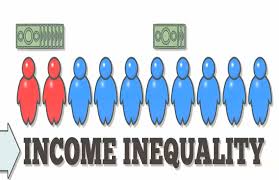
Income inequality Research Assignment Available

Income inequality
               Income inequality

Income inequality

4 – 7 pages typed (1,000 – 1,750 words), double-spaced, 12-point font, Times New Roman, 1-inch margins a minimum of 3 scholarly sources that are no older than 1990 (a scholarly source is one that has a well-developed list of references, is published in a credible journal or by a credible publisher and has been peer reviewed).

Having narrowed your topic and gathered sources, it is appropriate to begin the writing phase. Your paper should have the following qualities:

1 An APA cover/title page.

2 A research question that guides the logic of the paper.

3 A well-developed thesis claim.

4 Source support and evidence.

5 In-text citations giving credit to the scholars you are pulling from.

6 A bibliography properly citing all sources you have used.

We can write this or a similar paper for you! Simply fill the order form!
Business ethics and social responsibility Essay

Business ethics and social responsibility
            Business ethics and social responsibility

Business ethics and social responsibility

Read all of the following nine questions in Parts A, B, and C before beginning this project. Use the questions to reflect on the activities you completed in Modules 1 to 4.

Write a paper addressing the following questions and reflections. The paper should be no more than 20 pages double-spaced (approximately 5,000 words) and should include examples from your journalling activities.

Part A: Stakeholders and Interrelationships

Describe how the activities influenced your awareness and understanding of the interrelationship between business and society. Use examples from your activities in each of the modules to support this answer. (10 marks)

Using examples from your activities, describe the challenges of dealing with the conflicts and/or confluence of stakeholder needs, wants, expectations, and perspectives. Identify whose perspective you are representing in each of your examples. List examples of some of the ramifications of ignoring or improperly addressing stakeholder interests. (10 marks)

Comment on how the use of “circles of reflection” can affect your perspective of an issue or situation. Cite examples from your activities to demonstrate how use of the circles of reflection affected your analysis. (5 marks)

Part B: Forces and Influences

Comment on how ethics and social responsibility relate to some of the internal and external forces in business and society that we discussed in this course. Review activities in Modules 3 and 4, as well as Module 2, for examples. (10 marks)

Describe how the readings and journalling activities influenced your views on workplace ethics and corporate social responsibility. Did you have a shift in your perspective? Do you consider ethics and/or corporate social responsibility to be important to business and society today? Explain your answer, and use examples from the activities. (10 marks)

Comment on the interrelationship between external forces such as globalization, economics, technology, and the environment, and internal influences on business and society including governance and corporate citizenship (CSR), consumer protection, employee rights and responsibilities, and workplace diversity. Remember to support your argument with multiple examples such as sample journal entries, and readings. (20 marks)

Is the government an external force, an internal force, a stakeholder, or all of the above? Using examples from your activities, comment on the government’s role in business and society. (5 marks)

Part C: Final Reflection

Comment on how journalling activities helped you recognize the real or potential impact of stakeholder biases as well as your own biases. How do biases or differing perspectives influence the media, public opinion, and decision-making in business and society? Use examples from your activities to support your commentary. (15 marks)

We can write this or a similar paper for you! Simply fill the order form!

Sociology new mainstays of the US economy

Sociology new mainstays of the US economy

Sociology new mainstays of the US economy

Please don;t just spit back definitions or phrases from the book. I want to see you integrate the concepts in to your answers.

Part one

Go to the website http://www.procon.org/and select any one of the issues related to a topic that we covered this past semester in class. When selecting a topic, click on the pros and cons tab for that particular issue and read both sides of the argument on the issue. Some of the topics may have multiple questions/issues in the general topic. Try to limit yourself to one particular point or question within that issue. Briefly describe which of the three sociological perspectives we have been studying is being used by each side. Defend your answer with concepts from the course. (25 points)

Part 2

Technology and Innovation are the new mainstays of the US economy and bring great rewards as well as some potentially troubling changes. As you think about the future of business and companies becoming more automated and relying on various forms of artificial intelligence (including the use of robots) discuss what the impact on the stratification of wealth might be in this new economy.

Part 3

(all students choose two of these four topics to respond)

For Part 3, read all four of the attached articles and select two that you will respond to. You response should include your opinion of which sociological paradigm you think the author or the article is coming from. Briefly defend why. Then state which perspective you are most likely to view this social issue from (you could agree or disagree with the author) and give one or two reasons why you think that is the case.

  1. Detailed maps show where children live matters deeply(http://edition.pagesuite.com/popovers/dynamic_article_popover.aspx?artguid=1544bbed-6f29-4c91-bd14-48e0b78cca5a&appid=1165)
  2. Across generations, a fading bond(http://edition.pagesuite.com/popovers/dynamic_article_popover.aspx?artguid=71f754a1-9ef8-431e-9165-baeef354bd23&appid=1165)
  3. Educated parents have educated kids. Genes aren’t the reason.(http://edition.pagesuite.com/popovers/dynamic_article_popover.aspx?artguid=d69f514b-b3ce-4265-8dc7-a0c604ca4447&appid=1165)
  4. The Ghost Budget

(http://edition.pagesuite.com/popovers/dynamic_article_popover.aspx?artguid=77d1ed9d-d1e2-456c-9779-88d93b23bb21&appid=1165)

We can write this or a similar paper for you! Simply fill the order form!
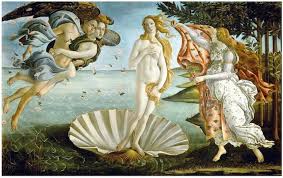
BIRTH OF VENUS VS. VENUS OF WILLENDORF

BIRTH OF VENUS VS. VENUS OF WILLENDORF

BIRTH OF VENUS VS. VENUS OF WILLENDORF

The “Compare and Contrast” essay is a popular method for discussing works of art. You will be asked to write an essay using this format on each exam. Compare and Contrast essay questions are intended to stimulate you to explore the differences between the period styles of the two works of art compared, and /or the individual styles of the two artists who created them. You may also explore not only the stylistic differences between the two works but discuss the effect that these stylistic differences had on the subject matter, theme or symbolism of the works. “Compare,” should tell you to look for similarities while “Contrast” should suggest looking for differences. In any compare and contrast analysis you ought to begin with the basics such as identifying the work of art (artist, title, period/style) and giving a description of the work and its special features. The following is a list of issues to consider in your analysis:

  • Culture/artist: Who produced it?
  • Period/style: When and where was it produced?
  • Function: What was its purpose?
  • Physical context: How was it used? How does it relate to its environment? Where was it located?
  • Medium/material: What is it made of?
  • Scale: What size is it?
  • Subject matter: Who or what is the subject? Doesn’t apply to architecture
  • Sacred or secular: Is it religious or non-religious in function and/or subject?
  • Artistic conventions: What reoccurring techniques, devices or motifs are used?
  • Abstraction/realism: How are the figures and forms rendered?
  • Cultural context: What was going on historically, socially, politically, religiously during the period in which it was produced?
  • Symbolism/themes: Why was it produced? What symbolic meaning or message does it convey to the viewer?

Be sure to employ specific art history terms from your vocabulary list in your essay comparison. This will help demonstrate your knowledge of the works and the subject of art history. Check your response: What is the main point of the comparison? Why did your instructor choose these two particular works to compare? How do they epitomize the culture and period that produced them? Use complete sentences and paragraphs including a brief introduction and wrap your essay up with a conclusion that reminds your reader of the main point.

Assignment

Write a minimum four- to five-page essay comparing and contrasting two works of art from two different styles covered in this course between the Pre Historic through the Early Italian Renaissance periods. One of your selected works of art must be from AFTER the midterm (Modules 8-14). You must cover the following points in your comparison:

Introduction and Thesis

  • Introduce the artwork titles, period styles and artists names
  • Briefly state what you believe is significant about these artworks
  • In other words, tell your reader what works of art you will be discussing and why you think they are important

Stylistic analysis

  • Correctly identify artwork titles, period styles, and artists’ names
  • Compare the artworks by discussing key stylistic characteristics associated with artists and period styles
  • Apply art-history vocabulary correctly and use it to support your stylistic analysis
  • In other words, what makes these works stylistically significant?

Cultural analysis

  • Compare the artworks by discussing key cultural issues associated with artists and periods
  • Discuss how the cultural context of each period influenced the artistic development of the period style (make connections between cultural context and style)
  • In other words, what makes these works culturally significant?

Conclusion and Thematic Connection

  • Analyze the ways art can affect and/or reflect cultural, political and social issues
  • Draw conclusions about the artist/society which produced the artwork from the comparison
  • In other words, what “thematic connection” can you make between the two works of art that helps you better understand them or the culture they represent?

We can write this or a similar paper for you! Simply fill the order form!

Adulthood Case Study Analysis Assignmen

Adulthood Case Study Analysis

Adulthood Case Study Analysis

For this assignment, you will complete an analysis of a case study that deals with one of the following stages of lifespan development: middle adulthood or later adulthood.

Select one of the following case studies from your Broderick and Blewitt textbook to complete an analysis of the developmental and contextual issues related to the selected case:

David, page 554.
Lupe, page 524.
Each of the case studies includes a set of questions that can guide your analysis of the pertinent issues for the particular case.

Expectations
Address the following in your case study analysis:

  • Analyze lifespan development theories to determine the most appropriate theory or theories to apply to the case study.
  • Apply the appropriate lifespan development theory to support an identified intervention process.
  • Describe the potential impact of individual and cultural differences on development for the current age and context described in the case study.
  • Write in a manner that is scholarly, professional, and consistent with expectations for graduate-level composition and expression.

Content
The case study analysis should be a maximum of 5 pages in length, including the introduction and conclusion, each of which should be approximately a half page in length. The body of the paper should not exceed 4 pages.

Provide the following content in your paper:

An introduction that includes an overview of the paper contents, including a brief summary and background information regarding the case study.
The body of the case study, including:

  • The presenting challenge or challenges and primary issue or issues.
  • The appropriate lifespan development theory and research-based alternatives that explain the presenting challenges.
  • The potential impact of individual and cultural differences on development for the current age and context described in the case study.
  • Evidence-based support from lifespan development theory and current scholarly research to support appropriate interventions.
  • A conclusion that summarizes what was introduced in the body of the paper, with respect to the case study context, challenges, and interventions.

Requirements
Submit a professional document, in APA style, that includes the following required elements identified with headings and subheadings:

Title page.
Introduction (half page).
Case study analysis (4 pages).
Conclusion (half page).
Reference page: Include a minimum of 5 scholarly resources from current peer-reviewed journals as references, in addition to referencing the textbook in which the case study is embedded.
Font: Times New Roman, 12 point.

Resources
Case Study Analysis: Adulthood Scoring Guide.
APA Guide: The Title Page: Course Papers.
APA Style and Format.
Professional Communications and Writing Guide.

We can write this or a similar paper for you! Simply fill the order form!

California State and Local Government

California State and Local Government
        California State and Local Government

California State and Local Government

What elements of California State and Local Government seem similar to those at the federal, or national, level? What elements seem different? What, do you imagine, would account for these differences?

Please use this link as your source as much as possible:

https://openstax.org/details/books/american-government

Your assignment must follow these formatting requirements:

  • Be typed, double spaced, using Times New Roman font (size 12), with one-inch margins on all sides; citations and references must follow APA or school-specific format. Check with your professor for any additional instructions.
  • Include a cover page containing the title of the assignment, the student’s name, the professor’s name, the course title, and the date. The cover page and the reference page are not included in the required assignment page length.

We can write this or a similar paper for you! Simply fill the order form!