




Health history and physical examination

Health history and physical examination

Health history and physical examination

RUA Paper Outline
This outline is to help provide a framework for writing your paper. Please review the guidelines for this paper before using this outline.

Your paper will be graded based on the rubric provided within the assignment guidelines. It would be to your best benefit to review the guidelines BEFORE beginning your paper. There is an 8 page maximum, including the cover and reference pages.

Write a paper using the headers below. Include information provided as an outline for writing your paper.

I. Health History:

One paragraph:
• Demographics: Introduce your client/patient with initials (Example: “K.B.”) (USE OF FULL NAME IS PROHIBITTED AND A VIOLATION OF PRIVACY). Include race, occupation (include type of work, NOT their exact workplace), where they live, and age.


• Perception of Health: What are your client’s beliefs about health? How healthy are they? How does their health affect their behavior?


• Past Medical History: Do they have any medical diagnoses? Have they had any procedures? Include the year. What medications do they take (OTC medications should be included)?

*MUST include at least 1 medication and list details (dosage, frequency, etc)** Do they have any allergies? If so, what is the reaction? Are they up-to-date on immunizations?

Second paragraph
• Family Medical History: Do their close relatives have a significant medical history?
• Collaborative Resources: What/who do they have in the community to assist with their health? Do they attend church? Do they have a life coach, mentor, personal trainer, etc? Do they have a family member who assists with their health?

II. Review of Systems:
A review of systems includes SUBJECTIVE data only. Physical assessments should NOT be performed. Use your text book to ask detailed questions about signs and symptoms for each body system.

List denials and confessions of signs and symptoms. 1-2 sentences for each body system should suffice. Explore all any admission of signs or symptoms further. Use your book for examples of questions to ask your client to assess for signs and symptoms of the following body systems:

Integumentary
• Head, Neck, Lymphatics
• Eyes, Ears, Nose, Throat, and Mouth
• Respiratory
• Cardiovascular
• Neurological
• Gastrointestinal
• Musculoskeletal
• Peripheral vascular

III. Developmental, Cultural, and Psychosocial Considerations

• Developmental: What are some developmental considerations for your client’s age group?
• Cultural: How does culture or tradition affect this person’s health?
• Psychosocial: Which Erikson stage is the client in? How does the stage affect their needs?

IV. Objective Data:
• Write out your physical exam in complete sentences. Be sure to use professional terminology.
• Refer to the course textbook and notes from lab for detailed components of each system exam.

V. Health Education Needs:
Based on the health history and physical examination findings, determine at least two health education needs for the individual. Select two peer-reviewed journal articles (published within the last 5 years) that provide evidence-based support for the health teaching needs you have identified.

• Write one paragraph discussing (1) the rationale for the selection of the health teaching topics and (2) how the findings in the scholarly articles (identified in the needs assessment portion of the assignment and properly cited) were used to develop the health teaching topics to promote the individual’s health and wellness status.

• Write one paragraph discussing (1) how the interrelationships of physiological, developmental, cultural, and psychosocial considerations will influence, assist, or become barriers to the effectiveness of the proposed health education and (2) a description of the impact of the individual’s strengths (personal, family, and friends) and collaborative resources (clinical, community, and health and wellness resources) on the proposed teaching.

VI. Reflection:

• Describe the environment, your approach to the individual, and time of day of Health History Interview
• How did your interaction compare to what you have learned?
• What went well?
• What barriers to communication did you experience?
o How did you overcome them?
o What will you do to overcome them in the future?
• Were there unanticipated challenges to the interview?
• Was there information you wished you had obtained?
• How will you alter your approach next time?

We can write this or a similar paper for you! Simply fill the order form!

HEALTHCARE ETHICS ESSAY ASSIGNMENT

HEALTHCARE ETHICS
HEALTHCARE ETHICS

HEALTHCARE ETHICS

As a healthcare professional, you will be tasked with making critical decisions that will test your ethical understanding and abilities.

For your Module 2 SLP, you are to take a short quiz that will provide you with actual cases:

Open Learn. (2017). Difficult healthcare decisions: What will you choose? Retrieved from http://www.open.edu/openlearn/medical-ethics-quiz

For each question you can select one of two responses. Once you submit your answer to the question you will be provided with a brief summary and a percentage of individuals who agreed with your response. You are to take notes for each question as you go along in the quiz, as you only are able to take the quiz once. In a 2-page paper, complete the following:

For each question provide a brief description of the case, your response, and the percentage of individuals who agreed with you.
Explain the rationale for your response and identify and examine the ethical principles and theories the case presented. Support your rationale with scholarly reference(s).

Conduct additional research to gather sufficient information to support your analysis.

Limit your response to a maximum of 2 pages.

Support your proposal with peer-reviewed articles, and use at least 3 references. For additional information on how to recognize peer-reviewed journals, see http://www.angelo.edu/services/library/handouts/peerrev.php.

You may use the following source to assist in your formatting your assignment: https://owl.english.purdue.edu/owl/resource/560/01/.

We can write this or a similar paper for you! Simply fill the order form!
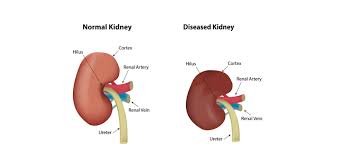
End Stage Renal Disease Assignment

End Stage Renal Disease

End Stage Renal Disease

o Use the link below for in-text citations
https://owl.purdue.edu/owl/research_and_citation/apa_style/apa_formatting_and_style_guide/in_text_citations_author_authors.html

o Use the link below for references
https://owl.purdue.edu/owl/research_and_citation/apa_style/apa_formatting_and_style_guide/reference_list_author_authors.html

Below please find the required format for Case Study Part 1

1. Include your name and ID number on the assignment. ( 1 pt)

2. Briefly explain, in no less than five but no more than 10 sentences, the disease or disorder you picked. Note the incidence, prevalence, related morbidities and mortality rate as relates to your disease or disorder. (2.5 pts)

3. List the body system that correlates with the disease or disorder you picked and how the disease or disorder affects that body system. (1 pt)

4. List the body cavity associated with the disease or disorder you picked. (.5 pt)

5. List the organ that is most closely associated with the pathology of the disease or disorder you picked and how the disease or disorder affects that organ. (1 pt)

6. List and define five (5) prefixes you could use for the disease, disorder, or the body system you picked. (1.25 pts)
• This information must come from the required textbook

7. List and define five (5) suffixes you could use for the disease, disorder or body system you picked. (1.25 pts)
• This information must come from the required textbook

8. List and define ten (10) combining forms specific for the body system you picked in question 3. (2.5 pts)
• This information must come from the required textbook

9. a. List and define ten (10) medical terms related to the disease or disorder you picked, but not the actual disease. (2.5 pts)

b. Write a sentence using each of the medical terms listed in 9 (a). The information used in each of the sentences cannot be taken from the answer provided in question 2. (5 pts)

10. List and describe five (5) symptoms that a patient would present with for the disease or disorder you picked. Please note that the description you provide must reflect the words a patient would use. (2.5 pts)

11. List and describe three (3) signs that a patient would present with for the disease or disorder you picked and would be observable to the health care provider. These signs CANNOT be from a test result or procedure. Try not to repeat a symptom. (2.5 pts)

12. List six (6) important facts in the patient’s history (medical, social, family, surgery, or other) that could correlate with the disease or disorder you picked or could interfere with treatment. (3 pts)

13. Select two (2) body systems that you would perform a physical examination on for your patient. For each body system, list three (3) physical exam findings and describe each finding which could be associated with the disease or disorder you picked. These are not to be tests or procedures unless they are specifically part of the physical examination. (4 pts)
• Refer to The Physical Examination: Approach and Overview in An Overview of Physical Examination and History Taking by Bates

14A. List at least two (2) radiological imaging studies you could or would need to use to confirm or disprove (rule out) your diagnosis; be specific. For instance, a CT is not specific; a CT scan of the chest is specific for the diagnosis of certain diseases (i.e., lung cancer). (1 pt)

14B. Describe how the radiological imaging studies in 14A would confirm or disprove (rule out) your diagnosis. (1.5 pts)

15A. List three (3) tests or procedures (i.e., blood, stool, urine, etc.) that could be performed to confirm or disprove the disease or disorder you picked. Be specific. Do not use the same information provided in question 14A. (1.5 pts)

15B. Describe how the tests or procedures in 15A would confirm or disprove the disease or disorder you picked. (1.5 pts)

16. Use in-text citations, in APA format, to reference the information obtained from ALL sources you used. (1.5 pts)
https://owl.purdue.edu/owl/research_and_citation/apa_style/apa_formatting_and_style_guide/in_text_citations_author_authors.html

17. Cite all references, in APA format, at the end of this document. (1.5 pts)
https://owl.purdue.edu/owl/research_and_citation/apa_style/apa_formatting_and_style_guide/reference_list_author_authors.html

We can write this or a similar paper for you! Simply fill the order form!

Offenders with mental health problems

Offenders with mental health problems

Whether offenders with mental health problems should be ‘diverted

The essay question: With reference to relevant evidence and psychological literature critically discuss whether offenders with mental health problems should be ‘diverted’ away from the Criminal Justice System.

Please make sure the structure makes sense (logical order) and there is sensible moves from one paragraph to another and that every point is backed up by evidence
It has to be critical all the way through: analysing and evaluating!

We can write this or a similar paper for you! Simply fill the order form!

Narration and Persuasion Essay Assignment

Narration and Persuasion Essay

Narration and Persuasion Essay

In approximately 400-500 words, using narration and persuasion techniques, persuade readers that they should be physically active and eat a healthy diet.

Your assignment must follow these formatting requirements:

  • Be typed, double spaced, using Times New Roman font (size 12), with one-inch margins on all sides; citations and references must follow APA or school-specific format. Check with your professor for any additional instructions.
  • Include a cover page containing the title of the assignment, the student’s name, the professor’s name, the course title, and the date. The cover page and the reference page are not included in the required assignment page length.

We can write this or a similar paper for you! Simply fill the order form!
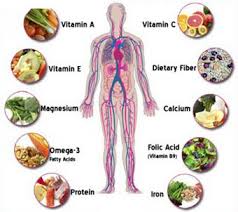
Human nutrient Essay Assignment Paper

Human nutrient
Human nutrient

Human nutrient

You will keep track of everything you eat and drink for 3 consecutive days (including one weekend day) using the form below and then give it to your partner. Then you will assess your partner’s diet. You will need to discuss the good parts of your partner’s diet (what they’re doing well) and also discuss what, in your opinion, they could do better.

2 page minimum: describe, in detail, the strengths of your partner’s diet. Please be sure to assess macronutrients, micronutrients, vitamins, minerals, sugar intake, water, fiber, etc.

2 page minimum: discuss what you think your partner could do with their diet to improve their nutritional status.

For a total of 4 pages minimum in the BODY of the paper.

Full APA Style is required. 12 point font, Times New Roman, Double Spaced. Please be sure to use a Title Page, Abstract, Reference Page, etc.

USE THE INFORMATION PROVIDED BELOW

19 year old boy, height 5’9, weights 210 pounds
DAY 1 March 17
BREAKFAST- cereal and milk
SNACK- gold fish and coffee
LUNCH- cheeseburger and side salad
SNACK- hot Cheetos
DINNER- rice, chicken, plain yogurt and salad

DAY 2 March 18
BREAKFAST- 3 boiled eggs and fruit smoothie
SNACK- chocolate bar
LUNCH- turkey sandwich + apple
SNACK- plain greek yogurt
DINNER- steak and fries

DAY 3 March 19
BREAKFAST- omelet with cheese

SNACK- hummus and pretzels
LUNCH- veggie pizza
SNACK- almonds and dry fruit
DINNER- chicken wrap, mash potatoes, corn

We can write this or a similar paper for you! Simply fill the order form!

Health Promotion in Minority Populations

Health Promotion in Minority Populations

Health Promotion in Minority Populations

Instructions will be attached.

Details:

Select an ethnic minority group that is represented in the United States (American Indian/Alaskan Native, Asian American, Black/African American, Hispanic/Latino, Native Hawaiian, or Pacific Islander). Using health information available from Healthy People, the CDC, and other relevant government websites, analyze the health status for this group.

In a paper of 1,000-1,250 words, compare and contrast the health status of your selected minority group to the national average. Include the following:

  • Describe the ethnic minority group selected. Describe the current health status of this group. How do race and ethnicity influence health for this group?
  • What are the health disparities that exist for this group? What are the nutritional challenges for this group?
  • Discuss the barriers to health for this group resulting from culture, socioeconomics, education, and sociopolitical factors.
  • What health promotion activities are often practiced by this group?
  • Describe at least one approach using the three levels of health promotion prevention (primary, secondary, and tertiary) that is likely to be the most effective in a care plan given the unique needs of the minority group you have selected. Provide an explanation of why it might be the most effective choice.
  • What cultural beliefs or practices must be considered when creating a care plan? What cultural theory or model would be best to support culturally competent health promotion for this population? Why?

Cite at least three peer-reviewed or scholarly sources to complete this assignment. Sources should be published within the last 5 years and appropriate for the assignment criteria and public health content.

Prepare this assignment according to the guidelines found in the APA Style Guide, located in the Student Success Center. An abstract is not required.

We can write this or a similar paper for you! Simply fill the order form!
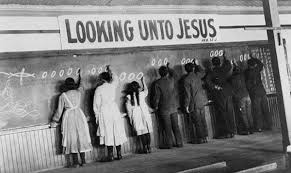
Aboriginal economics in Canada Essay

The Indian residential school's impact on aboriginal economics in Canada
The Indian residential school’s impact on aboriginal economics in Canada

The Indian residential school’s impact on aboriginal economics in Canada

-Introduction
should do the following: 1.Introduce your topic, and in a way that indicates its importance. 2.Indicate briefly the research that has been done on the topic. 3.Identify a gap, problem, controversy, etc., in the existing research.

4.Explain how the present paper will fill that gap, solve that problem, etc. 5.State the thesis of the paper the answer to the research question that the paper attempts to
answer. 6.Indicate briefly the limits of your study

-Literature Review
Your literature review should describe the studies of your topic that are relevant for your present study.

Begin with a brief general assessment of the literature (e.g., it is abundant, there? not much there, most studies focus on methodological issues, data problems beset research on this topic, most studies look at X, little has been done in the past thirty years, etc.).

Then get down to brass tacks by describing the aspects of the literature that are most relevant to your study. (It is not necessary or even desirable to comment on every feature [data, methodology, findings, policy implications, etc.] of a previous study.)

For example, if the main contribution of your paper is to extend an existing model, it may make sense to focus your review on a discussion of the models used in other papers. Organize your review along those same lines. For instance, you may first describe the papers that use the model you will extend.

You may then describe those papers that have extended that model in a certain way.

-Data
The Data section (which you?l see only in empirical papers) identifies the source of the data and any
problems or special features of the data. Your data section should do at least the following:

1.Identify the source of your data. 2.Describe the source. 3.Explain why you use that source. 4.Identify any caveats: features of the data that may affect your results or that a reader should keep in mind in evaluating them (e.g., the data over-represent a certain demographic population, the data is plagued by self-selection bias, etc.)

-Methodology/Model
1.Identify your methodology/model. 2.Describe your methodology/model. 3.Explain why you use that methodology/model. 4.Identify any caveats: features of your methodology/model that may affect your results or that a reader should keep in mind when evaluating them

-Results
1.Identify the results that answer your research question. 2.Identify and comment on any unusual or surprising or intriguing results. 3.Identify and comment on any results that you have told your reader you will comment on

You may wish to begin your results section by reminding the reader of the question you are trying
to answer and any caveats the reader should bear in mind. Note: It is not necessary or even
desirable to comment in detail on every single result.

Conclusion
The Conclusion sections of economics papers are the least standardized, and are an often neglected
section. Conclusions may consist of a single paragraph restating the main points or main findings. Sometimes they suggest lines of future research.

Your conclusion may do any or all of the following: 1.Restate the question you have attempted to answer. 2.Restate your main contribution and/or findings. 3.Indicate lines for further research. 4.Remind readers of the limitations or caveats of your study. 5.Identify broader implications (e.g., policy implications)

We can write this or a similar paper for you! Simply fill the order form!

Quick Service Restaurants Market research

Quick Service Restaurants Market research

Quick Service Restaurants Market research

How much revenue does a quick service restaurant lose due to customer’s being deterred from a long line?

How much waste is created from order ahead systems? (In regards to products getting cold sitting on the counter, then returned by the customer and having to be thrown away and re-made)

How much money do quick service restaurants pay for drive-thru management systems?
How much money do quick service restaurants pay for drive-thru management system add ons? (this would be like timers that help them track how long customers are in the drive thru)

We can write this or a similar paper for you! Simply fill the order form!

Single individual rebel against society

Single individual rebel against society
Single individual rebel against                          society

Single individual rebel against society

Compare works that offer ( attached on files) support for the idea that a single individual can have a decisive effect on society.

In a number of these works, a single individual rebels against society and suffers defeat or death. Are these works therefore pessimistic and despairing? If not, what is the purpose of the rebellions, and why do the authors choose to bring their characters to such ends? Writing topic: Compare works that offer support for the idea that a single individual can have a decisive effect on society.

Really considered and focus on the concept the purpose of the rebellion, it against any kind of order generally have some kind of purposes stated than others one. there is an impulse that people have, maybe there is a thought, a motion a feeling. it usually has to deal with unfairness, injustice,… And then bring that together to talk about the idea that can individual have an affect on society and rebelling make a different.

*Sources are provided and choose at least 2 of them in the essay.

We can write this or a similar paper for you! Simply fill the order form!