Public Economics – Climate Action in the presence of free riders
I already have the report. But, it needs to be rewritten. I need solid and supported economic arguments in terms of taxes, subsidies, economic incentives, exchange rates, exports, imports, production and carbon leakages, etc. Also, the paper needs a strong thesis statement, improved grammar, and wording. Overall, the paper needs an economic perspective and economic discussion.
I also want a PPT, which is just the summary of the paper and have a ?few slides. Please read the details before offering a price. Please make sure that your price includes the revision of the report and the PPT.
Topic: Climate action in the presence of free-riders:
Does it make sense for Canada to meet its commitments under the Paris Agreement on Climate
Change when other countries, notably the United States, have reneged on their commitments?
Won’t this lead to extensive carbon leakage? What are the options?
Description:
Critically review 8-12 academic research papers on a common theme.
Organize the paper with reference to a research question. In other words, what is the problem the researchers are seeking to solve? How have they addressed the question (what methods)? What has been learned so far? What is still unknown? Why is this question important? What suggestions can you make for further research?
Bibliography: After selecting your topic, you should start assembling your bibliography (the papers you are going to discuss).
Thesis:
– a succinct statement (one or two sentences) which expresses the author’s point of view or
main argument
– alternatively one may think of the thesis as the conclusion of the paper stated at the outset –
i.e. that which is to be proven
– the thesis is the statement which “governs” the rest of the paper
Introduction:
– introduces the topic
– states the thesis
– gives an overview of the paper
Conclusion:
– summarizes what has been discussed in the paper
– draws together the arguments in the paper into a number of succinct conclusions
– restates the thesis and shows how it has been supported by the body of the paper, the
conclusions, etc.
Content:
– adequate coverage of the relevant literature; i.e. are the number of references adequate for the
topic?
– content is often (although not always) reflected in the length of the paper; a student who has
not read enough usually does not have enough material to meet the minimum requirements
for length
– relevance: it is important that the works cited be relevant to the thesis; i.e. no padding of
bibliographies with irrelevant references!
Analysis:
– analysis involves a critical discussion and evaluation of the material the student has read
– i.e. has the student simply summarized material he/she has read, or has he/she also provided
an assessment of the material through thoughtful, informed evaluation and criticism?
Accuracy:
– all papers involve a certain degree of summarizing other peoples’ works, so that the reader
understands the intellectual debate to which the writer is responding
– in addition, other peoples’ works provide a useful source of factual information and
interpretation
– it is important to present other peoples’ works accurately
Organization:
– an effective paper must be organized into broad categories, according to main ideas
– each main idea is represented by a separate paragraph
– the main idea of a paragraph is expressed succinctly in a topic sentence (i.e. just as the thesis
is to the whole paper, so the topic sentence is to the paragraph)
– the use of strong topic sentences and distinct paragraphs helps the reader follow the train of
thought and organize the material mentally as he/she reads
– without topic sentences and strong paragraphs, a paper will ramble
Attribution:
– it is essential to distinguish what is your material in a paper and what is someone else’s
– direct quotations must be indicated with quotation marks and footnotes
– paraphrased material does not need quotation marks but must nonetheless be attributed to the
author in some way, usually by footnotes or by introducing it as such
– e.g. The following summary of Brazilian tax practices relies on Binswanger (1991).
Writing quality: grammar, spelling, writing style
– grammar, spelling, syntax, etc. are always important.
We can write this or a similar paper for you! Simply fill the order form!
Directions: Develop a hypothetical scenario of an elderly person seeking services. The scenario will be at least 200 words and include:
1.a summary of the client’s physical or mental issues
2.a description of the condition(s) – whether they are intrinsic or extrinsic
3.a description of why the client decided to seek counsel
After your summary, address the following in an additional 800 (1000 words total):
1.What suggestions would you share with your client to help improve their quality of life?
2.What recommendations would you make to your client related to successful aging?
3.Summarize two support groups that could potentially help your client.
4.Name one best practice to help your client improve and/or maintain their physical/mental status.
If you choose a condition such as dementia or Alzheimer’s Disease, consider that you may be working with the family member more so than the client.
This case study must:
have a thesis statement (statement of purpose/intent), must indicate the topics to be covered
use ONLY professional, objective language. Use objective, formal, not conversational tone/style
use APA style
use direct quotes sparingly – work on paraphrasing and appropriate citations for the paraphrased information (use at least three scholar peer-review article found, via the online library, plus your course textbook).
EBOOK: Issues in Aging
WEBSITE : chegg.com
*** if copy and paste do not work just type in info**
We can write this or a similar paper for you! Simply fill the order form!
An allergy can be defined as an adaptive immune response directed against non-infectious environmental substances. Allergens are antigens that cause allergic responses (McCance, Huether 2014). In this case, Janet is experiencing different symptoms accompanied with different diagnosis that indicate an underlying allergy response. She has itchy eyes, nasal congestion, and watery nasal discharge. She also states that she has a tickling cough along with episodes of sneezing. Janet also gets frequent “colds” every spring and fall. Although many of these symptoms overlap when diagnosing, Janet is experiencing allergic rhinitis, acute sinusitis, and allergic conjunctivitis.
Allergic rhinitis is characterized by having symptoms of sneezing, nasal pruritus, airflow obstruction, and mostly clear nasal discharge. Not only was she experiencing these symptoms mentioned above but also presented with medium polyps on each side which is linked to allergic rhinitis (Wheatley & Togias, 2015). Upon physical examination, she also experienced tenderness over maxillary sinuses indicating acute sinusitis. Clinically, sinusitis is classified by nasal congestion, rhinorrhea, facial pain, and sneezing (Aring & Chan, 2016). Finally, she is also presenting redness on sclera and slightly swollen exhibiting allergic conjunctivitis.
Although there is a lot of information supporting allergies, there are a few questions that could be asked upon examination.
1. How long have you been experiencing these symptoms?
2. Have you ever had allergy testing?
3. Do you have any pets?
4. Have you ever had a history of asthma?
5. Are you exposed to smoke, mold, dust?
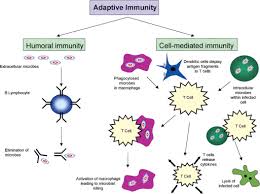
Rhinitis is the inflammation of the nasal mucosa. When a person is exposed to an allergen (pollen, molds, smoke, dust, etc.) it causes in an infiltration of mast cells, T cells, B cells, macrophages, and eosinophils within the nasal lining. The T cells release cytokines that promote the production of IgE. IgE later triggers the release of histamine and leukotrienes that cause vasodilation, increased capillary permeability, itching, runny nose, mucous secretion and smooth muscle contraction. The mediators and cytokines that have been released during this first exposure to the allergen then prompt a further cellular inflammatory response (late-phase inflammatory response) which occurs over the following 4-8 hours leading to nasal congestion and recurrent symptoms (Small & Kim, 2011).
Hypersensitivities are over-exaggerated immune responses and can be broken down into different classified reactions: allergy, autoimmunity, and alloimmunity. Hypersensitivity Type I (IgE-mediated) reactions are mediated through the binding of IgE to Fc receptors on mast cells. This causes mast cell degranulation and in turn causes the release of histamine and other inflammatory substances. Type II (tissue-specific) occurs when antibody binds to tissue-specific antigens. It is mediated by IgM or IgG targeting membrane-associated antigens. This hypersensitivity can be caused by five possible mechanisms: complement-mediated lysis; opsonization and phagocytosis; neutrophil-mediated tissues damage; antibody- dependent, cell mediated cytotoxicity; and modulation of cellular function. Type III (immune complex-mediated) reactions are caused by the formation of immune complexes that are deposited in target issues, where they activate the complement cascade, producing chemotactic fragments that attract neutrophils into the inflammatory site. Neutrophils then release lysosomal enzymes that result in tissue damage. Type IV (cell-mediated) has a cell-mediated response rather than antibodies unlike other hypersensitivity reactions. These reactions can involve either cytotoxic T lymphocytes (Tc cells) or Th1 cells (McCance, Huether 2014). All of Janet’s signs and symptoms that she presented with are indicative of type 1 hypersensitivity.
McCance, K.L, Huether, M. (2014). Pathophysiology: The biologic basis for disease in adults and children (7th Ed.). St. Louis, Missouri. Elsevier Mosby.
Small, P., & Kim, H. (2011). Allergic rhinitis. Allergy, asthma, and clinical immunology: official journal of the Canadian Society of Allergy and Clinical Immunology, 7 Suppl 1(Suppl 1), S3. doi:10.1186/1710-1492-7-S1-S3
Wheatley, L. M., & Togias, A. (2015). Clinical practice. Allergic rhinitis. The New England journal of medicine, 372(5), 456-63.
Week 2 responses 2
Based on her symptoms, Atopic dermatitis would be consistent with Janet’s flaky, erythematous rash on her arms. Up to 80% of people with atopic dermatitis have a personal or family history of asthma, allergic rhinitis, or food allergy. The cause of this dermatitis “involves an interplay of genetic predisposition, altered skin barrier function associated with filaggrin gene missense mutations (proteins that bind keratin in the epidermis), reduced ceramide (a stratum corneum lipid) levels, altered innate immunity, and altered immune responses to allergens, irritants, and microbes” (McCann & Huether, 2014, p. 1654). Memory T cells express cutaneous lymphocyte antigen, which leads to lymphocytes traveling to the skin. When mast cells are activated, eosinophils, macrophages and expression of IgE contribute to the inflammatory process (McCann & Huether, 2014, p. 1654).
Since Janet has a history of getting frequent colds, that would be another differential diagnosis I would consider. Signs and symptoms would include a runny or stuffy nose, in which she complains of watery nasal discharge. A sore throat, which could account for her pharynx being slightly erythematous, as well as cough, congestion, and sneezing, in which she complains of all. A cold could also cause slight body aches, mild headache, and a low-grade fever and malaise. Her temperature was 98.8, but she has not complained of any head or body aches.
My third and primary diagnosis is allergic rhinitis which is seasonal or perennial itching, sneezing, rhinorrhea, nasal congestion, and sometimes conjunctivitis, caused by exposure to pollens or other allergens. Diagnosis is by history and occasionally skin testing. First-line treatment is with a nasal corticosteroid (with or without an oral or a nasal antihistamine) or with an oral antihistamine plus an oral decongestant.
To further evaluate her and to make a more definitive diagnosis, there are several other questions I’d like to ask Janet. These would be:
• Do you have a family history of allergic reactions, seasonal allergies, etc.? This question would help confirm my primary diagnosis of allergic rhinitis, as research shows that if one or both parents has a history of allergies, the child could have a 40-80% chance of also being susceptible (Rote & McCance, 2014).
• Are you exposed to animals and pet dander, dusty environments, cigarette smoke, etc.? These are fairly common triggers of allergic rhinitis, so establishing if there is exposure could help determine the causes of Janet’s symptoms, as well as help her avoid them and decrease her incidence of flare-ups.
• In regard to the skin symptoms, is the rash localized to the flexor surface of the elbow, and does the rash come and go or worsen with exposure to certain environmental factors? Or is the rash on other parts of the body as well, such as the scalp, and flares up regardless of exposure? These questions will assist in differentiating eczema versus psoriasis, as eczema, or atopic dermatitis, is often brought on by exposure, whereas psoriasis is an autoimmune response.
• Have the symptoms of both the allergic rhinitis and skin rash recently started, or have these symptoms occurred throughout your lifetime?
• Is there history of immediate family having skin issues similar to your symptoms? This can also help differentiate psoriasis, as it is often genetically hereditary (McCann & Huether, 2014).
The pathophysiological process of allergic rhinitis is a Type I hypersensitivity reaction. The tissues most commonly affected by histamine effects are the ones containing large amounts of mast cells, which include the skin, the gastrointestinal tract, and the respiratory tract. The allergens cause the inflammation of the mucous membranes in the nose, sinuses, sclera, and pharynx, and also cause increased mucus production and itching. Janet is experiencing textbook symptoms of allergic rhinitis and should be started on a daily antihistamine, such as cetirizine or loraditine, among others.
There are four types of hypersensitivity reactions.
Type I – mediated by IgE and the tissue mast cells.
Type I most often occurs in response to environmental antigens
Type II – Generally when the immune response targets a certain cell or tissue. Type II occurs when antibody binds to tissue-specific antigens.
Type III – Causes by antigen-antibody complexes that are made in circulation and dropped off later in vessel walls or tissues. The antibody binds to a soluble antigen, then deposits it into a tissue, but are not organ-specific.
Type IV – This type is the only one mediated by T lymphocytes and do not involve antibody. Tissue breakdown is usually caused by either Tc cell toxins killing the cell or the release of enzymes and toxic reactive oxygen species (Rote & McCance, 2014).
Janet is experiencing a type I hypersensitivity reaction. Some type I allergic responses can be controlled by blocking histamine receptors with antihistamines, however the primary mechanism of control is the autonomic nervous system. This system includes biochemical mediators such as epinephrine and acetylcholine, which like the mediators of the inflammatory response, have profound effects on cells. They bind to appropriate receptors on mast cells and the target cells of inflammation thereby controlling the release of inflammatory mediators from mast cells and the degree to which target cells respond to inflammatory mediators (McCann & Huether, 2014, p. 272).
References
McCann, S. A., & Huether, S. E. (2014). Structure, function, and disorders of the integument. In K. L. McCance, S. E. Huether, V. L. Brashers, & N. S. Rote (Eds.), Pathophysiology: The biologic basis for disease in adults and children (7th ed., pp. 1616-1652). St. Louis, MO: Elsevier Mosby.
Rote, N. S., & McCance, K. L. (2014). Alterations in immunity and inflammation. In K. L. McCance, S. E. Huether, V. L. Brashers, & N. S. Rote (Eds.), Pathophysiology: The biologic basis for disease in adults and children (7th ed., pp. 262-297). St. Louis, MO: Elsevier Mosby.
We can write this or a similar paper for you! Simply fill the order form!
1.Module 1 Discussion: Defining Ageism
Directions: In your own words, define and describe ageism. Give at least one example of positive and at least one example of negative stereotyping of the aging population. Describe an example of age stereotyping that you have witnessed. What was the issue and what was the reaction of the elder person?
Provide APA formatted reference information at the bottom of your post. The initial post will be a minimum of 400 words and a minimum of 3 paragraphs.
2.Module 2 Discussion: Theory and Research
Directions: For this discussion, we will put our research and critical thinking skills to work. Locate a journal article, website or research document that describes research related to one of the aging theories discussed in your text and respond to the following questions about the resource you found:
*What is the name, author, and source of the resource?
*Provide a brief summary of the article. What question does the research try to answer?
*Into which theory or theories described in the text does the research fit? Give evidence of your answer (in-text citation is needed).
*What additional references are listed to support the work? (In-text citation is needed)
Provide APA formatted reference information at the bottom of your post. The initial post will be a minimum of 400 words and a minimum of 3 paragraphs.
3.Module 4 Discussion: Minority Retirement Experiences
Directions: How is the retirement experience different for minority populations? Choose a minority population and research cultural, social, and economic factors that may effect this population. Then address the following:
*In what ways might this population experience retirement differently than our traditional view of retirement?
*What are some of the major reasons for this?
*How can human services professionals help better prepare people from this population for retirement?
*Recommend an agency or group that offers financial guidance and support for this population (it doesn’t have to specific to this population). Provide the name and website URL.
Provide APA formatted reference information at the bottom of your post. The initial post will be a minimum of 400 words and a minimum of 3 paragraphs.
4.Module 5 Discussion: Caregivers
Directions: Imagine that you are the caregiver of an elder. Think about some of the challenges that serving as a caregiver might entail. Share TWO of those challenges in your initial post. Additionally, address the following:
*Find at least 2 resources for caregivers that are different than the ones posted by your classmates
*Give at least 2 recommendations for reducing and avoiding caregiver burnout
Provide APA formatted reference information at the bottom of your post. The initial post will be a minimum of 400 words and a minimum of 3 paragraphs.
5.Module 6 Discussion: Changes in Family Life
Directions: It is not uncommon for elders to experience changes in family structure. As we advance in age, we may face more loss than in any other time in life. Often times, children marry, move away, and have their own families. Siblings, friends and longtime associates also move away or pass on. Further, elders typically experience illness or loss of their spouse. Loss of love and intimacy can also accompany such experiences. Human sexuality is frequently misunderstood in elders.
*For this discussion, summarize how changes in family dynamics can impact an elder. Be sure to include the following:
*Two challenges that can result because of changes in family structure.
*Two stereotypes that are attached to the sexuality of older people.
*Share a best practice or approach to addressing these issues and helping an elderly client with these issues.
Provide APA formatted reference information at the bottom of your post. The initial post will be a minimum of 400 words and a minimum of 3 paragraphs.
6. Module 7 Discussion: Improving Care
Directions: What can helping professionals do to improve care and service to ethnic elders? Give two examples of specific changes that would improve care and service.
Provide APA formatted reference information at the bottom of your post. The initial post will be a minimum of 400 words and a minimum of 3 paragraphs.
Essay Question #1:
You recently retired from government contracting work and established a consulting company (fully consistent with government ethics laws and rules, of course) with the primary focus of advising potential government contractors and subcontractors. Mr. Johnny Jones, of The Johnny Jones Flooring and Construction Company has approached you with a question. Jones and his company are potential subcontractors (they, obviously, specialize in flooring) on a federal construction contract worth a little over two million dollars ($ 2,000,000.00) recently awarded to the Jimmy Smith Construction Company (Jimmy Smith, the prime contractor). Neither Johnny nor his company has ever been part of a government contract before. He wants to know the ramifications associated with being a subcontractor on such a contract. His specific concerns are with protecting his ability to directly protest issues and concerns through the various courts and agencies able to handle such protests. He is specifically concerned that he may be left with only the option of suing Jimmy Smith if anything goes wrong on the contract. He would also like to have some assurance that he will get paid if the prime contractor becomes insolvent. You have agreed to steer Johnny in the right direction. What do you tell him? Include the rationale for your advice.
Essay Question #2:
ITI Inc. was put under contract by the United States Air Force to develop a new command and control (C2) system for a new weapon system. Much of the contract statement of work (SOW) called for a significant amount of noncommercial software to be developed by ITI Inc. during the contract period of performance. At the end of the contract, does ITI Inc. own the intellectual property rights in the form of federal copyrights to the software it developed? Does ITI Inc. need to ask permission from the Air Force to use the software for foreign commercial opportunities it also desires to pursue? Be sure to identify and discuss any relevant regulations.
Essay Question #3:
Ronald J. Sparrow heard of your success in dealing with your first two clients and has decided to hire you as well. He tells you that he recently signed a contract with the Department of the Interior to scoop up buffalo waste from six national parks in the western United States. He tells you he bid low because he thought he could pick up some cheap labor and haul the workers to the various parks in time to complete the work (which was supposed to be done within six months). Five months have passed and the Contracting Officer for the Department of the Interior just called him yesterday to tell him they are considering terminating the contract for default since he has only completed work in two of the six parks. He wants to know what a termination for default is and how it differs from a termination for convenience. He asks, if he is to default, which you would recommend his termination be characterized as (“for default” or “for convenience”). Finally, he asks what, if anything, he can do to salvage the situation without losing the contract. What do you tell him? Why?
Essay Question #4:
Your new consulting business is really taking off. Your fourth client of the day, Wayne Reliford, of Reliford food services, has just stopped in. Wayne tells you that he thinks the recent award of a food service contract on Camp Apache, a nearby Marine Base, to another company and competitor of Reilford food services, was improperly managed by the Government. Performance on the contract has not begun. Wayne thinks the Government failed to properly apply its own source selection evaluation criteria in evaluating the proposals. He also believes, based on his twenty five (25) years in the industry that he must have been the actual low bidder . He wants to know whether he can file a dispute, a protest or both. He also wants to know how to file whatever you advise him to file, where it will be heard, and what the procedures are. What do you tell him and why?
Essay Question #5:
Lieutenant Commander Ace Ventura, a reserve officer, has been recalled to active duty with the Navy with duty at Dolphin Island Naval Base. His duty while in uniform is to assist the Navy in selling outdated submarines to foreign countries that, unlike the United States, might actually find a future use for them. As a result of his Navy job he travels all over Europe, including Norway, Sweden, and Finland. Each of those countries is interested in purchasing the old subs and each is impressed with Ace. Ace also has an interest in getting a good job with one of the “big bucks” defense contractors he keeps running into in his Navy job. He has heard of your successful resolution of the previous four issues presented and he comes to you for advice. He is especially interested, he tells you, in working for World Domination (WD) a defense contractor with considerable expertise and interest in selling outdated U.S. submarines to northern European and Scandinavian countries. He tells you he read on the internet that WD has several immediate openings in the area he is interested in and that they are primarily interested in people with
language skills in Norwegian, Swedish, and Finnish. He’s enrolled, on his own, in a Swedish course at a local Junior College and purchased self-help books in Norwegian and Finnish. He is set to represent the Navy in Stockholm next week and knows the President and CEO of WD will be in attendance. He wants to ask for a job. What advice do you give him?
We can write this or a similar paper for you! Simply fill the order form!
Read the attached case and respond as required (4 pages)
1. Provide a detailed overview of the crisis in expatriate engineer Ana Lobato’s family.
2. Discuss the potential impact of this family’s dilemma on operations at Streuvels Chemicals.
3. Since Ana Lobato is integral to the growth of Streuvels Chemicals, provide two alternatives that you think Senior Human Resource Executive Anton Danois should explore. Provide adequate support for each alternative.
4. Given the importance of spouses and children to the success of expatriates, propose a comprehensive program that Streuvels Chemicals could implement in order to support its policy of overseas assignments being crucial to career advancement.
HUMAN RESOURCE MANAGEMENT
The Expat Dilemma
• Boris Groysberg
• Nitin Nohria
• Kerry Herman
November 2011 Issue
HBR’s fictionalized case studies present dilemmas faced by real leaders and offer solutions from experts. This one is based on the HBS Case Study “Solvay Group: International Mobility and Managing Expatriates.
As the senior HR executive in charge of managing overseas assignments, Anton Danois made a point of spending time with Streuvels Chemicals’ expatriate employees and their families. But this evening, dinner at the Lobatos’ home wasn’t going well.
Ana Lobato, a Brazilian engineer, had been working at her headquarters assignment in Brussels for more than a year and was doing a great job, but her husband, Oswald, was increasingly unhappy. Right now, Oswald was even more than unhappy—he was enraged. He was glaring at Anton, who steeled himself for the remote but real possibility that Oswald would reach across the table and punch him. Instead, Oswald rose and looked around at his three dumbstruck sons, his wife, and the remains of dinner. Visibly mastering his anger, he made his way down the high-ceilinged hallway to the kitchen and closed the door. It was silent in the Lobatos’ elegant apartment except for the muffled sound of traffic outside. All eyes came around to Anton, whose hand trembled slightly as he reached for his napkin. In a moment, Ana got up and went to her husband, leaving the boys to stare at their visitor.
All Anton had said was that if Oswald enrolled in a Belgian medical school, Streuvels would pay part of the tuition. It was intended to be a helpful comment; Oswald’s Brazilian medical degree didn’t allow him to see patients in Europe. But Anton hadn’t anticipated Oswald’s outrage at the idea of repeating medical school, and now he wished he hadn’t opened his big mouth.
When Ana had arrived in Belgium, she had been full of hope and excitement, ready to share with her headquarters colleagues the expertise she had acquired from high-level positions at polyvinyl chloride plants in Brazil and Argentina. Streuvels sorely needed her skills and experience as it rolled out plants all over Eastern Europe and Russia. The Lobatos seemed like another set of happy customers of Anton’s international mobility department. Ana, a star, had fit in from the first day. Her boys had adjusted to their new school, and at first Oswald had seemed to get along just fine, studying cochlear implants at UCL-St-Luc as part of his plan to acquire international stature as a researcher.
But it hadn’t taken long for things to go sour for Oswald. First the head of the implant lab was out for three months for heart-valve surgery, leaving Oswald without a mentor. Then Oswald’s project was folded into another, which made him feel useless. Soon he started complaining about the weather in Brussels. He then announced that his heart just wasn’t in the lab; he missed going to work every day in an otolaryngology clinic and seeing patients, but he could not practice medicine in Belgium.
Ana emerged from the kitchen, looking pained. “It might be better if—” she began.
She didn’t have to finish. “Please apologize for me,” Anton said, getting up to leave. “I’m so sorry.”
“It must have been a hard week for him,” Ana said, following Anton to the front door. “He’s always been such a positive person, but lately, well, he’s been different.”
Anton caught glimpses of his short but substantial self in darkened windows on his walk home. He looked like what he was: a business pro with decades of experience. But managing European chemical plants was what he knew best, not overseeing an international mobility department. He’d held the position for three years, and he couldn’t get over how unprepared he was to be an HR exec and, specifically, to manage expats. Admittedly, he had a tendency to run off at the mouth and say things he later regretted—a trait that had hardly mattered when he was a general manager but was a definite liability in HR. Now he was worried about what was happening with Ana’s family—worried for the family and for the company.
The Strange World of Mobility
Ah, Anton said to himself—this is more like it. He felt truly at home here. All around him were steel vats with fittings painted in pastel pinks and greens. Yellow plastic drums stood in rows on pallets, a long black hose hung coiled on a hook, and two forklift drivers dodged each other as they moved to and from racks holding thousands of identical lengths of plastic pipe. Anton’s shoes squeaked on the impeccably clean floor.
He spotted the HR head, Maria Claes, and waved. Maria had asked for a meeting, and her only unscheduled moment was right now, during her visit to this plant outside Brussels.
“Why can’t my office be in a place like this?” Anton asked, only half joking, when Maria came down from the catwalk.
“You don’t like the Labyrinth?” Maria responded, referring to the glass-walled executive offices at HQ.
“It’s just that I love being in a plant,” Anton said, taking a deep breath of the pleasantly vinegary air.
“You’re an expat yourself then,” Maria said. “An expat in the Labyrinth.”
The point of the meeting quickly became clear as Maria searched for a room where she and Anton could talk. “Another one of your requests for a special exception came across my desk this week,” Maria said, sounding a bit annoyed.
“He’s the only caregiver—” Anton started to explain.
Maria held up her hand. “I brought you into HR to streamline and rationalize the mobility program, and to make sure employees see it as completely consistent and transparent,” she said. “That’s why I picked someone who had been a general manager and not an HR professional. I’ve had too many complaints that the system seems illogical. But I get request after request from you for exceptions.” She paused. “You’re going to have to tell Sergio Gamelli that we can’t pay to send his mother to China.”
“I fully understand why you brought me into this job and what you want me to do, and I fully expect to excel at it,” Anton said. “I’ve been streamlining and rationalizing things my entire career. But mobility—it’s a strange world.”
“How so?”
“Unlike those PVC pipes out there, every expat or would-be expat is unique,” Anton said. “If you adhere to rules that are designed to save money, you sometimes end up spending even more. If Sergio leaves his mother behind, he’ll be distracted and unproductive, and his trips back to Milan will take time away from his work. What we’re doing in China is too important for that.”
“You’re really suggesting we write a new set of rules for every expat?” Maria raised her eyebrows. “I don’t call that rationalization.”
As a much-decorated veteran of a company that valued its senior managers and hadn’t fired anyone in living memory, he felt free to speak his mind: “You can rationalize something only if it has a rational basis,” he said. “As a GM, I dug down to the fundamental questions: What’s this program for? What’s the ROI? Mobility, as far as I can tell, doesn’t have a clear-cut purpose, and it seems to exist beyond the bounds of ROI. Am I right?”
Maria shrugged. “You’re probably right about ROI,” she said. “But mobility definitely has a purpose. Several, in fact, including recruitment and retention.”
“Granted,” Anton said. “But a lot of companies in our sector are cutting down on mobility. In some ways, it’s an expensive throwback to corporate colonialism. Why send people from Europe to run our plants in Southeast Asia when the homegrown talent is perfectly capable of running the plants?”
“Corporate colonialism?” Maria said, making a face.
“The reason the system seems illogical,” Anton said, “is that it is illogical.”
An Expensive Sideshow?
“I traveled a lot as a girl,” Ana was saying. “My father was a diplomat. I love to travel. My boys take after me. Brussels is great for them.”
“Brussels is good,” Anton said. They were in his favorite café, at a small table near the door. People were filing in with sleet on their shoulders.
“But Oswald—” She shook her head. “We made the decision together. We saw big opportunities for me and him and for the boys: an international school, new horizons. We wanted to do something different.”
“I tried every which way to figure something out for him,” Anton said.
“I know, I know,” Ana sighed.
“I called every academic medical center in Belgium looking for research programs that he might apply to. I even got the company to agree to help out with his tuition if he wanted to get a medical degree here.” He paused a moment. “Is he talking about—going back?”
“Yes—and with the boys,” Ana said. “That’s what kills me. The only reason he hasn’t gone is that the boys have rebelled.”
“I really don’t want him to go,” Anton said. “If he goes, you’ll be alone. That’s no way to live.”
Of course the real danger was that if Oswald left, Ana might be drawn back to Brazil herself, disrupting the company’s plans for its new polyvinyl chloride plants just as the joint venture in Nizhny was moving into high gear. Anton knew only too well that there were several major chemical companies in Brazil that would welcome Ana with open arms.
Ana looked down into her tea. Her calm demeanor seemed in danger of cracking. “I don’t want him to go, either,” she said.
Despite her emotions, Ana, ever the engineer, made a studied observation: “The spouse’s life—that’s the weakest point of expatriation, isn’t it?” she asked. “We seem to be relying on this model where one spouse is the leader and the other has to follow, whatever their genders. This is just too hard for a lot of couples. Maybe the standard three-year assignment is too long. Maybe we should switch to three months.”
To Anton, three months sounded more like a safari than an international assignment, but he didn’t give voice to the thought. “I don’t think spouses are the main issue,” he said. “The whole system is weak. I’ve got 30 French expats right now who have been abroad for 10 years or more, and every one of them is in a holding pattern; they all want to return to France. But our French operations are so minimal that we don’t have openings for them. Reintegrating people after they’ve been away is a constant headache. The mobility program is an expensive sideshow.”
“It’s not a sideshow,” Ana said sharply. “Not as long as the company insists on basing promotions on international experience. I’ve heard there’s an unwritten rule in this company: To get a senior leadership position, you have to have experience in at least two countries.”
Anton nodded slowly. She was right about that.
“So mobility is a matter of the highest importance for employees—especially young engineers like me,” Ana said. She shifted uncomfortably in her seat. “Could you—could you sweeten the deal?”
“You mean more money?” Anton asked.
“If the money were really good, I might be able to convince Oswald that another year or two would be worth it,” she said. “We’ve been having a hard time here, making it work economically. Everything in Europe is so expensive.”
“I don’t know,” Anton said. A big raise would have to be approved by Maria, who had continued to refuse several of Anton’s special requests, including the relocation of Sergio Gamelli’s mother.
Ana put another card on the table: “I should probably tell you, Anton, that the head of the Brazil operations is trying very hard to bring me back there. He wasn’t crazy about letting me go in the first place, as you know, and now that there have been a few retirements in the South America division, he has a big project in Bolivia for me.”
This was a shock. So Ana and the Brazil head had been working the back channels? Maria would go ballistic if Anton tried to transfer Ana back to South America prematurely. “But your assignment—you’re supposed to be doing a three-year stint here, with the possibility of renewal.”
“As I was saying, maybe we need to shorten the assignments,” Ana said. “I’ve already been very productive here. The Nizhny project is ready to go. I’ve gained a lot of useful experience that will help me move up once I get back home. And of course Oswald would be very happy, and that’s important to me.”
She looked intently at Anton. “What do you think? Could you arrange to have me reassigned back to Brazil?”
You’re really suggesting we write a new set of rules for every expat?” Maria raised her eyebrows. ?I don’t call that rationalization.”
The reason the system seems illogical,” Anton said, is that it is illogical.” Can Anton keep Ana happy in her foreign assignment?
Boris Groysberg is the Richard P. Chapman Professor of Business Administration at Harvard Business School, Faculty Affiliate at the HBS Gender Initiative, and the coauthor, with Michael Slind, of Talk, Inc. (Harvard Business Review Press, 2012). Twitter: @bgroysberg.
Nitin Nohria is dean of Harvard Business School.
Kerry Herman is the assistant director of the Global Research Group at Harvard Business School.
We can write this or a similar paper for you! Simply fill the order form!
Select a current country from within the Americas realms EXCLUDING THE UNITED STATES! . Research the following question: What is life like for the citizens of , or a particular cultural group in, the country you chose?
Then, write a 400 words essay containing the information you discovered in your step 2 research. State your country of choice at the beginning of your essay, as well as why you chose it. You can include illustration material such as maps and pictures if you choose, just make sure you meet the word count requirement.
We can write this or a similar paper for you! Simply fill the order form!
1. Identify an area of clinical interest 2. Find a minimum of one peer-reviewed journal article (no older than 5 years) related to your clinical topic of interest. Do not use a meta-analysis or systematic review. 3. Critique the journal article, fully answering the following questions:
Research Problems, Research Questions and Hypotheses
What is the research problem?
Does the problem build a persuasive argument for the new study?
Is the problem statement easy to locate?
What are the research questions and hypothesis?
Do the hypothesis state a predicted relationship between two or more variables?
Ethical Aspects of a Study
Was the study approved and monitored by an Institutional Review Board, Research Ethics Board or similar committee?
Were appropriate informed consent procedures used with all participants?
Research Design
Was the design experimental, quasi-experimental, or non-experimental?
Was the study longitudinal or cross-sectional?
What are the threats to the studies internal validity?
Sampling
What type of sampling design was used?
Are possible sample biases or weaknesses identified?
Data Collection
What methods of data collection were utilized (Self-reports, Scales, Observation, and Rating Scales)? If self report methods were used, did the researchers make good decisions about specific methods (in-person interviews, mailed questionnaires, etc.)?
If observational methods were used, did the report adequately describe what the observations entailed?
Statistical Analysis
Identify the type of analyses undertaken to address each research question or test each hypothesis.
Were appropriate statistical methods used, given the level of measurement of the variables, number of groups being compared, and so on?
Results/Findings
Were the findings effectively summarized, with good use of experts? Do the themes adequately capture the meaning of the data?
Does it appear that the researcher satisfactorily conceptualized the themes or patterns in the data?
Did the analysis yield an insightful, provocative, and meaningful picture of the phenomenon under investigation?
Clinical Practice
Did the researchers discuss the study’s implications for clinical practice or future research and if so, were the implications grounded in the study evidence, and in evidence from earlier research?
We can write this or a similar paper for you! Simply fill the order form!
1. Cuba has been under a Communist dictatorship for over fifty years. How has this influenced the development of the country in terms of politics, geography, economy, culture, music, etc?
3. There is a rich fusion of ethnic and cultural heritage present in Cuban food and music. Based on Hispanic cultural symbols that are popular in the United States, can you make some cultural connections and/or comparisons between Cuban
culture and other countries in the Caribbean? Give three (3) examples.
We can write this or a similar paper for you! Simply fill the order form!
Explore one specific element of ideology “Imperialism”. For example, you might focus on a person, a country, a practice, etc. You can then detain how that element contributes to your understanding of the Imperialism.
As with the exams, your task is ultimately to show that you understand the concepts taught in lecture. Use the study guides’ lists of terms as sources for the terminology you should utilize in your paper.
For example, you might focus on fascism and the Endelosung, or Final Solution Program employed by Hitler to eradicate the Jews.
Format: Length should be about 1000 words or four to five typed pages. The paper should be double-spaced with a 12-point font Times New Roman and 1 inch margins. Number the pages in the upper right hand corner of the page. Do not use a cover sheet, rather, use a simple heading in the upper left- hand corner of the first page
Sources: You are required to use five sources. No more than three sources can come from the Internet. U.S. News and World Report and your text can serve as other sources. Cite your sources in a either FOOTNOTES or ENDNOTES. A separate Bibliography is required as well. Follow the CMS style guidelines.
You can visit http://citationmachine.nethttp://owl.english.purdue.edu/handouts/research/r_CMS.html
We can write this or a similar paper for you! Simply fill the order form!