This is a discussion post. There is a video that pertains to this paper. I will record it and send it through an e -mail. We also have to include a nurse practice act from the state we live. I live in Texas. Thank you. If you have any questions, please don’t hesitate to call at 973-842-5512.
SAMPLE ANSWER
Legal and Ethical Conduct
The American Nurses Association (ANA) through its code of ethics recognizes the need for patient confidentiality by the nurses. It insists in the nurse’s responsibility for maintaining the confidentiality of all the information about the patient regardless of it being personal or clinical. The information should be kept a secret in the work setting or any other form of digital communications like the social media (Olson, 2016). Confidentiality and privacy form the basic components of human rights in our society. Safeguarding this right with concerns on the individual’s personal information on health records is not only an ethical but also a legal obligation required out of the health care providers. Doing so in today’s generation, however, is very tricky. Considering the scenario of Lena, she is faced with two critical decisions that are hard to make. After finding out that her sister’s boyfriend is HIV positive, her considerations would be two: 1. Go against the Health Insurance Portability and Insurance Act (HIPPA) that insists on patient confidentiality and save her sister from the situation through disclosing the information to her or uphold the patient confidentiality and avoid disclosing the information to her sister. Personally, the latter will take precedence (McGraw, 2013).
Upholding patient confidentiality is a sacred trust accorded to every nurse and thus taking a hard decision like the one above is mandatory. As clearly presented in the ANA’s Code of Ethics, the nurse should strive to advocate an environment that gives enough physical privacy to the patient needs as well as the auditory privacy. The maintenance of the patient confidentiality goes a long way in impacting the patients’ recovery as well as his/ her perspective towards the medical complication. The connection and the relationship that will exist between a nurse and a client will surely be dictated by whether the nurse upholds the privacy of the patient or not. According to the ANA code of ethics, the nurse is given a role in advocating, promoting and strive to protect the rights of the patient regardless of the situation at hand (Lachman, 2015).
According to the College of Registered Nurses in Colombia, the nurses are provided with an ethical obligation to safeguard the information that they receive in the context of the client-nurse relationship. This is because the clients disclose such information with confidence that it will not fall into the hands of wrong people. The possibility of a patient coming back for further consultations with regard to a new or previous complication is dictated by the nurses’ ability to keep the previous conversation a secret. The nurses are required to store the patient’s records in secure places taking great care when the information is being moved to various places; it also requires that the during electronic transfer of information, secure measures should be employed such as not using the client names or fax number (Bamford, 2013). Ensuring that the computer monitor displaying sensitive patient information is not left unattended to is also another security measure. In situations where a nurse is tempted to disclose information, then she must first find the consent of the patient with the best alternative being that the nurse encourages the patient to disclose the information alone. If I were Lena therefore, I would dedicate quality time to convincing my sister’s boyfriend to disclose the information about his HIV status in order to ensure that the life of my sister is safeguarded.
References
Bamford, M., Wong, C. A., & Laschinger, H. (2013). The influence of authentic leadership and areas of worklife on work engagement of registered nurses. Journal of nursing management, 21(3), 529-540.
McGraw, D. (2013). Building public trust in uses of Health Insurance Portability and Accountability Act de-identified data. Journal of the American Medical Informatics Association, 20(1), 29-34.
Olson, L. L., & Stokes, F. (2016). The ANA Code of Ethics for Nurses With Interpretive Statements: Resource for Nursing Regulation. Journal of Nursing Regulation, 7(2), 9-20.
We can write this or a similar paper for you! Simply fill the order form!
Knowledge Transfer Mechanism in the Multinational Enterprise Network
Knowledge Transfer Mechanism in the Multinational Enterprise Network
Order Instructions:
It should be critical Literature Review, NOT an essay
In introduction: we should focus on background of knowledge and ways of transferring it.
In main body: how multinational knowledge subsid (including types of subsiding). Include different ways of mechanism in multinational enterprise and subsidiary. How they transfer to subsidiaries?
Main focus only on how they transfer to subsidiaries.
and then conclusion, evaluation etc.
Please, see attached documents(it includes some articles), especially have a look on PPT, as it include some important information and some references which should be used.
Please, DONT use more then 60 references (90-95% of them should be up to date).
Marking criteria:
Clearly recognize and define a problem
Discover the evidence and build findings
Draw conclusion
Evaluate and communicate the conclusions
SAMPLE ANSWER
Knowledge Transfer Mechanism in the Multinational
Enterprise Network
Introduction
Knowledge sharing may be a two-way method. It is a vehicle for trust, regard, and change. This critique has incontestible information sharing even within competitive specialty units will produce associate whip hand associate association is associate aggregation of data. information drove cooperative approach offers several advantages: it’ll propel the organization, attract workers in the slightest degree levels, and absolutely have an effect on “all that basically matters”. information administration separated the close web {site} from different company auxiliaries with the neighborhood site illustrating “best in class” comes concerning on its key execution markers. Reassuringly, there’s adequate likelihood to boost execution assist once data administration is totally put in as a business procedure over the association.
Recent 10 years shows varied productions managing transfer problems associated with information are distributed in reports extending from Post-Communist, Conservative Biology, Economies, Youth and quarter of the ecu History targeted to additional business-related reports, as an example, analysis Strategy, Harvard Business Review, KM World, and information Journal Management.
For productive information management (KM), it is wear down the scan for “right” selective techniques and step by step procedures square measure important. Although, the choices created by this need an awfully abundant characterized scientific classification with clear ideas and terms. The substance and importance should be obvious and there need to be no unclearness concerning the purpose once key ideas square measure used. Despite the very fact that this can be while not a doubt associate enticing objective, it’s not really this situation with regard to usually utilized phrasing in Knowledge Management. Related to few of those cases, the creators utilize focal words conversely and with no alterations in refinement among them, what’s more, now and again without adequate clarification of from which point of view, the technical terminologies are used.
The primary part in managing the knowledge is to extent and create learning open which must be usable in organizations as well as between picked organizations. While assessing KM writing, there are a few terms that appear to be more focal and basic as compared to others. Let say, for knowledge based firm creation, the perspective, coordination, transfer, and also mix of learning makes aggressive preferences for different organizations (Ghosal and Moran 1996 (in Sambamurthy and Subramani (2005))). conjointly once King (in Schwartz (ed.) 2006) nonetheless proclaimed on top of, suggests the data exchange (KT) may be a crucial procedure for human advancement and conjointly it’s integral to understanding that that one is from basic to advancement, for investigation the term “information exchange”, there’s clear support. information Transfer is currently so used reciprocally with data sharing (Jonsson 2008), therefore keeping in mind the tip goal to research learning exchange, learning sharing (KS) need to be forgotten. Riege (2005; 2007) conjointly deals with the obstructions influencing the “Knowledge Sharing” and “Knowledge Transferring” that have gotten little thought whereas they negatively have an effect on kilometre and its potential outcomes to convey a positive rate of profitableness.
Polani (1966, 1967) and Nonaka (1966, 1967) portrayed that info are often recognized in 2 distinctive steps – understood and unequivocal learning. Basically, info is most often organized as either categorical (coded) or implicit (what is in individuals’ heads). Implicit learning is that the individual and context specific learning of a person that lives within the human temperament, conduct, and discernment. It develops from individuals’ co-operations and needs experience and follow. understood info is extremely individual (held within the holder), subjective, exhausting to formalize, make a case for and impart fully, encounter primarily based, contextualized, work explicit, changed through discussion or account, not caught by formal instruction or getting ready and should even be intuitive but suited aiming to be plainly unequivocal info. It’s the type of knowledge that’s utilised for the foremost half by gradable people within the execution of obligations. Implicit learning is troublesome to verbalize in light-weight of the very fact that it’s communicated through activity primarily based aptitudes and cannot be shrivelled to tips and formulas. It’s deeply established in real world, systems, responsibility, goals, qualities and it should be in an exceedingly road have to be compelled to (Baloh, 2011). Understood information is embrained learning and is at the metaphysics measure during which its elucidation needs the employment of representations and a broad procedure of socialization. Sharing of understood info is created conceivable through systems administration among the people United Nations agency have it, and this can be alluded to as Communities of follow (COP). It’s of significance to notice that implicit info is troublesome to repeat by contenders thus this makes it a major wellspring of rectifiable aggressive advantage. Consequently, the numerous worry of association is that the ought to embrace techniques for the modification of the implicit info into unequivocal learning so as to infer greatest advantage from the association’s profound capital.
In any case, Koenig (2012) additionally portrayed that this portrayal of knowledge into categorical and inferred as or even to a fault basic. He proposes that learning is best represented as unequivocal, understood, and inferred.
Data or information that’s taken off in clear form is alleged to be unequivocal. Understood is knowledge or, on the other hand learning that’s not taken off in substantial form however rather can be created unequivocal, whereas understood is knowledge or info that one would have outrageous hassle operationally coming out in clear form. Then again, prepare authoritative info into understood, categorical and social. In any case, in spite of whether or not inferred, certain, categorical or social, the foremost evident purpose is that the creating of the association’s info and knowledge accessible to the people from the association. In no matter measure learning exists, the move is in vast section associate exchange of knowledge.
Learning is that the results of the communication of categorical and implicit info and also the procedure of constructing learning brings a couple of helical of knowledge getting. It begins with people sharing their interior implicit learning by associating with others or by catching it in processed or straightforward frame. Different people then disguise the mutual learning, which procedure makes new info. These people, with the recently created learning, then share this info with others, and also the procedure starts yet again. Additionally to verbalize this procedure as development. Implicit what is a lot of, categorical learning square measure more and more being underlined in each follow and writing, as associate administration instrument to be victimized for the management of gradable info that is shared trough human ware, groupware, intranets, list serves, databases, and storehouses.
Since info is mostly understood and completely possessed, it’s exhausting to possess charge of, and management over it. To endeavor learning all a lot of effectively associations ought to classify and store the individual’s learning. This includes creating implicit info unequivocal and transposing singular learning into gradable info. These modification forms are created conceivable through ICTs. associate association’s assignment with metric linear unit have to be compelled to think about transposing understood info into understood and unequivocal learning and see thereto that individual learning moves toward turning into authoritative learning. this will be processed not simply by a demand for associations to higher administrate info by putting in place center capabilities for individuals, decision making accomplishment and execution markers by suggests that of acknowledgment of impalpable resources, to boot for associations to endeavor to became a clever association associated a learning association with an info sharing society (Martensson, 2000).
1.1 Development of term knowledge transfer and knowledge sharing
The definition, source, and strategy for the term “Knowledge” in the fact from which it is increased has been examined by considering the philosophical verbal confrontations by Aristotle and Plato. It would, along these lines, recommend that the underlying rise of the terms originates from these exchanges and that the proposals on the best way to manage proficient and compelling information exchange and sharing has been continuous to a shifting degree of power from that point forward. The recurrence of the relations can be followed to binary distinct floods of research.
Out of which, the first one is in item development and novelty move writing in which the relationship, what’s more, correspondence among units have been taking into considerations (e.g. Allen, 1977; Clark and Fujimoto, 1991).
Although the second one relies on upon the works of Michael Polanyi and the terms implied and express learning. In a convincing Harvard Business Review article, Ikujiro Nonaka addresses the issues of KT and KS, notwithstanding the way that he doesn’t state them explicitly. He communicates “Unequivocal data is formal besides, efficient. Along these lines, it can be easily passed on and shared” (Nonaka, 1991: 98).
Later in a comparable article, he says “This makes a “run of the mill scholarly ground” among laborers what’s more, in this way supports the trading of inferred data.” (Nonaka, 1991: 102).
Both the streams have, to some degree, united after Nonaka‟s one of a kind article. Since that article and later articles and books by him, (for instance, Nonaka and Takeuchi, 1995), in which they say that KS is an essential stage in KT) have unequivocally influenced the investigation gathering, we consider this to be the starting stage for the reemergence of KT and KS as we presumably am mindful them today. Starting now and into the foreseeable future, the terms have developed a tiny bit at a time and extensively. At to begin with, the terms were used proportionally (e.g. Badaracco, 1991; Hansen, 1999) however as of late there has been an advancing separation between them, which we will show in the going with portions.
1.2 KT development
Since Since the rule years after its reemergence, KT was all things considered regarded according to the likelihood of the information based hypothesis of the firm (Kogut and Zander, 1992; Grant, 1996). A champion among the most reliably suggested researchers here is Szulanski, who in various books and articles has built up the likelihood of KT, particularly with respect to intra-firm learning. His basic work unmistakably conveys that information is viewed as a firm‟s stock (Szulanski, 1996).
The late ’90s and mid ’00s, inside this, the concentrate this area stays on the basic level with producers who address the purpose of the bit of frailties in learning and sharing over connection subunits (Hansen, 1999), different people who concentrate on between corporate information streams inside multinational attempts and different people that consider distinguishing strength unit progress and execution (Tsai, 2001). A solitary noticeable remarkable case is the time when the mental piece of issue concerned join with the examination stream because of the impacts from outward and trademark inspiration in people on Knowledge Transfer inside the organization are thought about (Osterloh and Frey, 2000).Till this day and age, there is a change from sensible and speculatively orchestrated research towards more precisely engaged research. Paulin (2002 and 2006) considers KT frames in the auto business with a particular focus on the era strategy affirmation handle. Schlegelmilch and Chini (2003) show a composition review in which the written work insinuated (generally from 1997 to 2002) wins essentially toward observational surveys.
Late explores on information trade still change in accordance with the bigger measure of examination. Both the examination diaries Easterby-Smith, et al. (2008) and van Wijk, et al. (2008) have a sensible focus on intra or potentially between definitive information trades.
Regardless, Easterby-Smith, et al. (2008) perceived diverse demand of both theoretical and customary mass to the repeating design explore the matter inside the zone of between dynamic learning move and in their question “How does the strategy for learning exchange spread out at various levels of examination?” they in like way open up for examination on the individual level. This redirection from the control track is proceeded by Liyanage, et al. (2009) when they express that “information exchange is the vehicle of getting the hang of starting with one place, individual or possession then onto the accompanying.” (Liyanage, et al., 2009: 122).
KS development
The early work that was presented by Nonaka‟s HBR article, KT and KS is used alternately with power towards KT. One maker that grasps the term KS is Appleyard (1996). Here, she fuses both connections on the business level of participation (by taking a gander at KS in the semiconductor business with KS in the steel business) and on a national level (Japan is appeared differently in relation to the US) using solitary respondents. Diverse researchers in a comparative stream are Dyer and Nobeoka (2000). Their revelations consolidate the declaration that Toyota’s relative effectiveness great conditions are cleared up to some degree by their ability to make and oversee sort out level KS shapes.
Diverse perspectives that are strong in the KS stream of research are the mental and the sociological. Cabrera and Cabrera (2002), for example, fuse the mental thought of social issues while examining the inclination of individuals to bestow data to various individuals in spite of the way that the association that they work for has placed assets into specific advancement to enable such getting the hang of sharing.
Fernie, et al. (2003) has a strong comprehension on individual information. They battle that data is exceedingly individualistic and that it is introduced specifically social settings. This article is a fair instance of within learning sharing that is focused on the individual level – setting, especially on the subjective data. Another instance of this stream is when KS between individuals in affiliations is investigated (Ipe, 2003). Here, four principle contemplations that effect KS are perceived: 1) The nature of learning, 2) The motivation to share, 3) The odds to share and 4) The lifestyle and the work condition.
In a current distributed articles, an entire and exhaustive review of articles on individual-level data sharing is presented (Wang and Noe, 2010). They express that their article is the first to productively inspected singular learning sharing and that past explores have focused on inventive issues of data sharing or data trade transversely over units or affiliations, or inside between various leveled frameworks.
Barriers to knowledge sharing
Through expert experience, it is desirable that the people should have a tendency to promptly recognize obstructions to doing their employment and on account of this exploration would express reasons why hindrances exist in learning. A target of the critical research exercise was to progress proficient practice inside the association. Information boundaries ought to be caught on furthermore, where suitable evacuated if change in a specific region is to be accomplished. Thought was given to the accompanying to decide the effect of learning sharing (Reige, 2005)
Integration of a learning administration system into the Corporation or Sites’ objectives or vital approach might miss or misty
Lack of initiative and course as far as plainly conveying the fundamental estimations of learning sharing practices
Existing practices, arrangements, methodology, culture may not be helpful for learning sharing
Internal intensity inside specialty units, useful zones and backups can be high
Hierarchical association structure restrains or backs off most sharing practices
General absence of time to share learning
Apprehension of dread that sharing may lessen or risk individuals’ professional stability or, then again progression While these are all contemplations and all do exist at some level, they were most certainly not considered to be superseding or restrictive of the learning sharing procedure.
The Knowledge Organization
Foss and Pedersen (2004) guarantee that there is an absence of comprehension of how hierarchical configuration issues identify with learning forms in multinational enterprises. Simonin (1997) analyzed regardless of whether organizations can create specific information by means of experience and after that utilization this information to get further advantages. Simonin’s (1997) comes about demonstrated that organizations do gain, as a matter of fact, predominantly identifying with cooperation.
Becerra-Fernandez and Sabherwal (2003) express the effect of information administration heights from people to people and after that to the whole association. Sandrone (1995) expressed all workers have suggest information of occupation conditions and are along these lines ready to make helpful commitments. This has been developed much further to propose certain parts of business that have been moved toward becoming ‘individuals driven’ because of both the knowledge develop and the mechanical intends to exchange data and information. Keller (2003) contended the fact which was at that point when President of the University of California, Clark Kerr amid his Godkin Lecture of 1963, battled new information that had step by step turned into the key charge in the development, change for a “country’s wellbeing, military, financial aggressiveness, imaginative magnificence, social concordance, and political solidness”. Knowledge administration frameworks are thought to be best in class advancement (Adams and Lamont, 2003). Dish what’s more, Leidner (2003) examine how an information administration framework must be deliberately outlined and executed. Alavi and Leidner (2001) state how authoritative and administration rehearse has turned out to be more learning centered.
As an association assembles and extends its learning base, it fabricates its scholarly capital furthermore, subsequently upgrades its upper hand. Information turns into an aggressive resource, particularly learning, which is firm particular, private information, specifically licenses, copyrights and “mystery” systems (Bailey and Bogdanowicz, 2002). In any case, as best practices progress toward becoming dispersed inside an industry, they wind up noticeably open information (Matusik and Hill, 1998). As people in firm follow particular prescribed procedures, such learning ends up plainly versatile. It is a piece of a person’s and in addition a company’s human capital.
Literature Review
This is a critical literature review based on the published research journals about the knowledge mechanism in multination enterprise.
Multinational knowledge and Subsid
One research stream concentrates on the part of separation in information exchange or all the more extensively on its part in inter-organizational connections. Thinks that have been investigated the impact of separation on correspondence and trust in multination enterprises (Luo 2002), cross-fringe securing execution (Reisn 2012), obtaining, what’s more, joint wander mix forms (Hseih et al. 2010, Ulenbruck 2004) and regionalization (Williams 2009).
Let’s get to the fruition on the effect of division on learning trade and between hierarchical associations have, not just this, it likewise dominated the impacts (negative) effects in partition (e.g. Reus 2009). Actually, only two checks found that social detachment had a useful result either on information trade (Sarala and Vaara 2010) or on the between hierarchical relationship (Reus and Lamont 2009). Sartor besides, Beamish (2014) consider both right and wrong associations among different institutional partition estimations, also the various leveled control. Finally, a couple looks into found no effect of social partition (e.g. Park et al. 2012; Cui et al. 2006). Subsequently, that creates the impression that, practically identical to look at tending to market decision, an unmistakable plan ascends for the negative effect of partition – in particular social detachment – on data trade, likewise, between hierarchical associations. Additionally it must be stressed that most of studies focused on social separate to the inconvenience of other division estimations.
Accordingly, there is extraordinary requirement for more research investigating the impacts of different separation measurements on information exchange and inter-organizational connections.
Different ways of knowledge transfer mechanism in Multinational Enterprise and Subsidiary
I already clarified that the consideration towards the auxiliaries may influence the entrepreneurial procedures of the said auxiliary and its execution thusly.
Currently, it ought to know how these practices could give the great conditions to the MNCs with everything taken into account. It can be seen that, one should find the suitable reaction through those instruments, assumed by the written work as data trade.
The information exchange instrument strategy has been a subject for a couple surveys. It is insipidly observed as the improvement of learning inside the net. Specifically, it is the information and knowledge that is shared with each unit of an organization. (Appleyard, 1996; Gupta, 2000; Tsai, 2001). For this, I suggest the explanation referred to Szulanki (1996). In it, he explains that information exchange is a definite transfer of knowledge between a recipient and a source unit.
According to Ciabuschi (2004), it states that the headways nowadays are deficient to redesign the force of an association if that are not transferred all around. Those methods of transfer are genuinely troublesome and also costly: Von Hipple (1994) used the method to modify the description of each one of the systems that occur with regards to the data trade or basic considering. The maker communicates that those frameworks are fundamentally held in one single zone, and just from time to time ventures are rolled out to look for after improvements or more adequacy in those said practices.
Data transfer is a sensible opportunity to improve the general execution of the MNC (Kogut and Zander 1992; Barlett and Goshal 1989); up till now that can’t exist without considering the closeness of structures what’s more, frameworks that engage and support the procedure.
2.3.1 HQ attention given to the Subsidiary
According to (Michel Mazzoni, 2011), the consideration is characterized as the commitment to the general advancement of the backup given by the HQ, we centered our inquiries concerning the sum, sort and recurrence that assets, for example, money related, good or scholarly, are given by the Italian Multinational to the auxiliary.
Moreover we likewise needed to make sense of on the off chance that they know about any sort of reward as result for getting great outcomes, for example, rewards, open honors or affirmations.
2.3.2 Innovation and Subsidiary’s Performance
When they began discussing development, we generally needed to clarify that by that term they don’t just proposed new items or R&D. They really implied every one of the practices, forms and adjustments that are constructed by the auxiliary which are extensive novel to the organization. The adjustment to the Swedish market of an officially current item, that alternate way to transfer the items, managing providers and clients, how to confront strategic issues or finding any best hones that have all the earmarks of being more effective for the backup. (Michel Mazzoni, 2011).
Those developments that they asked which brought results, for example, as a general development of the backup as far as learning and productivity and how they made relevant to it.
2.3.3 Flow of knowledge between HQs and subsidiaries and between subsidiaries
According to (Michel Mazzoni, 2011), they began managing the information exchange segment of the meeting. We got some information about the way and the repeat they grant information to the headquarter starting from a general viewpoint (workshops, email, telephone and social events). Also a perpetually expanding number of unpretentious components concerning the way they team up with the HQ about organizing and decision techniques. We moreover understood that various MNCs have started using mechanically pushed IT System remembering the true objective to deal with the gathered learning stream (Ciabuschi, 2003). It can be considered that it was authentic to request those applicants if they have any and why.
To comprehend the learning streams amongst HQ and auxiliaries we chose to center, as a first approach, on how the correspondence is directed – how and how frequently they convey and about what.
2.3.4 Overall performance of the multinational enterprises
Upsides of the sharing of the knowledge was calculated by making inquiries with respect to the likelihood that those prescribed procedures, development or thoughts were contemplated from the HQ and after that mutual inside the MNC‟s net. In addition, we were likewise keen on comprehension the singular view of the chiefs about the information exchange components, inquiring as to whether any issue happened and which was surely their own fulfillment.
It would have likewise been fascinating to meet the HQ general administration about this subject at the same time, because of absence of time and assets, we were not ready to reach them. In any case I discovered a few truly fascinating data from the backups administration. (Michel Mazzoni, 2011)
In particular, I solicited whether any sort from neighborhood advancements, finest observes or queries about actually exchanged to the HQ. Along these lines, it didn’t concentrate on the kind of development itself, however in the way the HQ acknowledges it. Furthermore, I was keen on seeing the way that HQ understands the data and in what way it reinforces it or discards it.
2.3.5 Level of the HQ attention to the subsidiaries
In (Michel Mazzoni, 2011), they at first focus our energy on the level of thought given by the HQ to the helper. They on a very basic level need to fathom to gives any kind of resources by the Italian-based HQ in order to propel the change of improvement and best practices. By resources it actually don’t imply simply budgetary ones, yet we also consider intangible ones, for instance, “insightful assets”, time, and affirmation.
They met with Company A battled that the HQ does not normally give financial resources of any kind except for from rebates for some promoting operations or business practices.
What’s more he also communicated this reimburses are given reasonably direct. Startlingly, the helper acknowledges an anomalous condition of steady sharing of data, advancement and organization in demand to develop unique activities and unique plans as well.
The organization B situation is fairly uncommon, the HQ provides more than enough respect for the helper yet only because of the motives regarding the compass of targets. For various performs, the level of though is not higher and also the inclination for higher time don’t therefore considered. (Michel Mazzoni, 2011).
The thought for Organization B sways in the midst of the annum and the contenders also ensures that the dependence of thoughts relies upon the goals come to. The higher targets the reinforcement accomplishes, the lower thought the HQ accommodates the helper besides, the different way. In any case, for what regards the progression and change of improvements and also thought is lower or non-existent for considering the best practices.
Organization C situation is somewhat particular. The HQ thought is to an awesome degree low concerning each day operations. Out of the blue, the HQ tends to give higher thought regard to more vital endeavors. In any case, for this circumstance the Italian organization tends to wander out routinely to the Swedish reinforcement to amass information and perceive how practices are directed. This immediate contact may not be adequate for a perfect thought yet rather it proposes, as communicated by the Manager met, an awesome level of support between the HQ and the reinforcement. (Michel Mazzoni, 2011),
2.3.6 Degree of Liberty held by Subsidiaries
As per (Michel Mazzoni, 2011), relying upon the importance or radical level of the choice or the amendment completed by the helper, every one of them would like, as a necessary, the underwriting by the military installation. as an example, Company A has free decisional management as for the selection of suppliers, source of co-appointments, framework of business practices at neighborhood level, esteem exchange with customers, generation of post arrangements channels, clear confirmation of latest client sections. On the opposite hand, it wants the last support regarding the catching of latest delegates, remunerations and prizes, all the advancing structures (not to undermine the whole picture), re-esteeming and re-alteration of things to adjacent wants and acquisitions.
Notwithstanding the underwriting would like for a few business sharpens, the answerer feels that the military installation genuinely takes every one of his suppositions and suggestions into thought. The HQ, frankly, respects the importance of the auxiliary’s half and makes its boss being proactive and determinant for the physical phenomenon of the practices. (Michel Mazzoni, 2011).
The case with Company B is fairly extraordinary because the interest for underwriting is for the foremost half a lot of formal and functionary. aside from important suggestions that need purpose by purpose procedures for action, the various sales have to be compelled to take once strict pointers and temporal order given by the military installation. to boot, because of the high force of the market, the insecurity of the prices of unrefined materials and therefore the an excessive amount of contradictory and wide structure of the MNC, the military installation portrays a technique fully in light-weight of the action of commercial enterprise destinations and giving volumes. (Michel Mazzoni, 2011).
Notwithstanding the managers of the assistant acknowledge for the foremost half high decisional management regarding the physical phenomenon of the association. for instance, because of the on-going cash related subsidence, they anticipated that would make cuts in the backup’s structure. They decided to solidification two divisions of the reinforcement: customer organization and get ready. It wound up being a successful choice as the customer advantage division could set up the agents due to the cognizance of customer needs and issues of declare. (Michel Mazzoni, 2011).
Organization C, when stood out from interchange assistants, has the most essential level of decentralization. They acknowledge high decisional control with respect to advancing endeavors, web promoting, thing modifications, esteeming, enrolling and get ready, regardless of the way that they are obliged to imply a substantial segment of their key courses of action to the executive of Northern Europe and, discontinuously, to the top managers of the association. (Michel Mazzoni, 2011).
2.3.7 Knowledge transfer and communication inside the multinational enterprise
2.3.7.1 The Formal Communication Channels
As indicated by (Michel Mazzoni, 2011), the formal correspondence channels square measure created by the HQs to present a comparative add and nature of learning sharing to every reinforcement.
The formal correspondence coordinates square measure an equivalent in every MNC conversed with; they basically embody in vast social occasions for every region, for example, yearly get-togethers, quarter get-togethers, month to month get-togethers and semester get-togethers. the target is to boost and share best practices, new creation limits, new markets entrance practices, et cetera.
Also, they’re in like manner projected to create a web of associations between chiefs in numerous countries. this is able to permit a prompt contact for future obtaining the droop of sharing within the MNC.
According to the interviewees, one amongst the rule focuses of the customs, social events, fairs, and alternative formal channels is to create associations and, through that, trust between different administrators. Those correspondence channels allow limit social affairs of people to work together with each other in a compelled extent of time. (Michel Mazzoni, 2011)
Various kind of social affairs exists. Yearly social affairs concern normally general executives in the HQ a couple times each year, all around for business reports. Quarter social events generally concern a reduced number of countries and normally they are neighborhood get-togethers. Amid those social events, countries from the same land district meets to demonstrate their activities and practices grasped amid the year.
Finally, we found that every association has its own specific standardize practice to pass on specific necessities to the HQ. This is, for example, gotten for enrolling shapes, techniques for action shows what is all the additional, any reasonably sales or conditions asked for by the reinforcement. This standardized follow permits the HQ to relatively survey the request of every reinforcement.
The cutoff functions of formal correspondence channels ensured by the interviewees – the high price of affiliation, the time spent to travel Associate in Nursingd at on the far side what several would contemplate doable the likelihood to land up perceptibly additional conversant in the complete potential framework instigate the generation of an easygoing correspondence channel, worked all at once to evade the HQ insinuating significantly to varied backup’s chiefs within the MNC‟s organize. (Michel Mazzoni, 2011).
2.3.7.2 The Informal Communication Channels
As indicated by (Michel Mazzoni, 2011), Informal correspondence channels are created by the reinforcements as different correspondence ways to increase their ability to manage step by step problems and to manufacture their flexibility structure to the headquarters.
In all reinforcements, the quality easygoing station used, to avoid the headquarters, is that the helper to-reinforcement contact. The Company B director gave us one case concerning this issue. The HQ had presented another IT-structure specifically helpers yet one of these reinforcements arranged in Eastern Europe had a couple challenges using the new programming. After a couple of correspondences with the HQ, they reached another helper in Western Europe to deal with their issues. As opposed to sitting tight for the HQ to make a move, surmising time delays, they required to evade the military headquarters and contact significantly another assistant.
Another easygoing correspondence channel is usually in lightweight of composed contact among directors. Association A‟s responder gave United States of America many data regarding this stress. The chairman contacts its assistant in another Country to induce to specific data that might take overtime through the military headquarters. The responder ensured that the likelihood to induce to specific information totally different in several numerous reinforcements with different goals is sort of the only real approach to share data, seeable of the requirement of learning trade elements within the MNC. For instance, specific conclusions, for example, instrumentality or era techniques is difficult accessible through the military headquarters but by achieving the creation plant they will modify problems snappier. Giving higher client advantage.
One of the practices includes in building singular associations among reinforcements chiefs. Through that, correspondence is fast and therefore the danger to by-pass the military headquarters is high. Organization A’s boss communicated that the individual contact with numerous reinforcements managers is basic for his or her work.
There are various ways that to modify build frameworks, but the essential ways that permit the social affairs known as by military headquarters. The elemental obstacle is that not a soul will move to them as a result of physical, time and price objectives.
Knowledge Transfer Enhancement
To propose some control techniques, experts have endeavored that an HQ might grasp to overhaul the components in information exchange method.
Communal Contact
Information outpourings could also be practiced through varied leveled socialization, for example, a headway of a social half that improves the generation of heightened and pleasing HQ-reinforcement relationship (Ghoshal and Tsai, 1998).
Faith
“Faith, by keeping our minds hospitable all affirmation, secures correspondence and trades” (Misztal, 1996:10).
Fatih is in like manner an essential half that enhances the information trade. Examiners conceptualized it as an important half to end intra-and between varied leveled joint effort (Smith et al, 1995) and encourages the sharing of educational capital (Nahapiet and Ghoshal, 1998).
Implying Knez (1994) and to Kramer, Brewer and Hanna (1996), Nahapiet Associate in Nuilsring (1998) total trust is also seen as an “expectational asset” to believe upon and to update investment and coordination.
Conclusion
Amid the review, it may be aforesaid that number of info sources and segments impact the trail for a compelling knowledge trade within the MNC. Composing credits problems regarding the training trade insinuating psychological feature and ardent factors (Szulanski, 2006). additionally merely not solely learning is “tacky” (Tire 1994), what is more boss might systematically be selfish and ardent and that they ought to re-evaluate the wheel instead of use what some other person beginning at currently created. Varied factors happen. Each Subsidiary and headquarters have their own specific desires and longings. On one aspect, HQs tend to not acknowledge musings that do not begin from the highest and, as a result, reinforcement’s area unit jittery and do not manifest their entrepreneurial result the maximum amount as they might (Birkinshaw, 2000).
In our cases, managers grasp the spatial relation of the training trade within the affiliation, in any case they each currently and once more observe their errands because the accomplishment of given targets. In any case, it’s the HQs‟ enterprise to boost those segments basic cognitive process actuality objective to stimulate the learning overflowing. Professionals have planned management ways that support this method. for example, Ghoshal and Bartlett (1988) make sure that social joint effort and regularizing coordination improve the HQ-assistant support, and additionally paid reward and persuading power structures (Szulanski, 2006).
As confirmed in our review, trust may be a basic phase while not that the correspondence and learning sharing area unit avoided and also the general advantage of the MNC is minor (Nahapiet and Ghoshal, 1998).
List of References
Adams, G.L., Lamont, B.T., (2003). Knowledge Management Systems and Developing Sustainable Competitive Advantage. Journal of Knowledge Management. Vol. 7. No.2. pp 142-154.
Alavi, M., Leidner, D.E., (2001). Knowledge Management and Knowledge Management Systems: Conceptual Foundations and Research Issues. MIS Quarterly. Vol. 25. No.1 pp 107-136.
Allen, T. J. (1977) Managing the Flow of Technology, MIT Press, Cambridge, MA
Appleyard, M. M. (1996) „How does knowledge flow? Interfirm patterns in the semiconductor industry‟, Strategic Management Journal, Vol 17, No. pp 137-154.
Badaracco, J. L., Jr. (1991) „Alliances Speed Knowledge Transfer‟, Planning Review, Vol 19, No. 2, pp 10-16
Baloh, P., Desouza, K. C. and Paquette, S. (2011). The concept of knowledge. In: K. C. Desouza and S. Paquette (Eds.), Knowledge Management: An Introduction (pp. 35-71). New York: NY: Neal-Schuman Publishers, Inc.
Becerra-Fernandez, I., Sabherwal, R., (2003). An Empirical Study of the Effect of Knowledge Management Processes at Individual, Group and Organisational Levels. Decision Sciences. Vol. 34. No. 2. Spring 2003. pp 225-260.
Bailey, E.K., Bogdanowicz, M.S., (2002). The Value of Knowledge and the Values of the New Knowledge Worker: Generation X in the New Economy. Journal of European Industrial Training. pp 125-129.
Birkinshaw, J. 1997. Entrepreneurship in multinational corporations: the characteristics of subsidiary initiatives. Strategic Management Journal, Vol. 18:3, 207 – 229 (1997).
Brock, D.M. (2005). Multinational acquisition integration: the role of national culture in creating synergies. International Business Review, 14, pp. 269–288
Bartlett C.A. and Ghoshal S. (1989): Managing Across Borders: The Transnational Solution. Boston: Harvard Business School Press.
Clark, K. B. and Fujimoto, T. (1991) Product development performance: strategy, organization, and management in the world auto industry, Harvard Business School Press, Boston, Mass.
Cabrera, A. and Cabrera, E. F. (2002) „Knowledge-sharing dilemmas‟, Organization Studies, Vol 23, No. 5, pp 687-710.
Ciabuschi, F. (2004). On the Innovative MNC. Leveraging Innovations and the Role of IT Systems, PhD Thesis, Uppsala: Uppsala University Press.
Cui, A.S., Griffith, D.A., Cavusgil, S.T. and Dabic, M. (2006). The influence of market and cultural environmental factors on technology transfer between foreign MNCs and local subsidiaries: a Croatian illustration. Journal of World Business, 41, pp. 100–111.
Dyer, J. H. and Nobeoka, K. (2000) „Creating and managing a high-performance knowledge-sharing network: The Toyota case‟, Strategic Management Journal, Vol 21, No. 3, pp 345-367.
Dinur, A., Hamilton, R.D. and Inkpen, A.C. (2009). Critical context and international intrafirm best-practice transfers. Journal of International Management, 15, pp. 432–446.
Easterby-Smith, M., Lyles, M. A. and Tsang, E. W. K. (2008) „Inter-organizational knowledge transfer: Current themes and future prospects‟, Journal of Management Studies, Vol 45, No. 4, pp 677-690.
Fernie, S., Green, S. D., Weller, S. J. and Newcombe, R. (2003) „Knowledge sharing: context, confusion and controversy”‟, International Journal of Project Management, Vol 21, No. 3, pp 177-187.
Foss, N.J., Pedersen, T., (2004). Organising knowledge Processes in the Multinational Corporation: An Introduction. Journal of International Business Studies. Vol. 35. No. 5. pp. 340-349.
Grant, R. M. (1996) „Toward a knowledge-based theory of the firm‟, Strategic Management Journal, Vol 17, No. pp 109-122.
Gupta, A. K. and Govindarajan, V. (2000) „Knowledge flows within multinational corporations‟, Strategic Management Journal, Vol 21, No. 4, pp 473-496.
Hansen, M. T. (1999) „The search-transfer problem: The role of weak ties in sharing knowledge across organization subunits‟, Administrative Science Quarterly, Vol 44, No. 1, pp 82-111.
Ipe, M. (2003) „Knowledge Sharing in Organizations: A Conceptual Framework‟, Human Resource Development Review, Vol 2, No. 4, pp 337-359.
Jonsson, A. (2008) „A transnational perspective on knowledge sharing: lessons learned from IKEA‟s entry into Russia, China and Japan‟, The International Review of Retail, Distribution and Consumer Research, Vol 18, No. 1, pp 17-44
Kogut, B. and Zander, U. (1992) „Knowledge of the Firm, Combinative Capabilities, and the Replication of Technology‟, Organization Science, Vol 3, No. 3, pp 383-397.
Koenig, M. E. D. (2012). What is KM? Knowledge management explained. KM World, May, 2012. Retrieved Feb. 8, 2013 from http://www.kmworld.com/Articles/Editorial/What-Is- …/What-is-KM-Knowledge-Management-Explained-82405.aspx
Knez M. and Camerer C. 1994. Creating expectational assets in the laboratory. Coordination in “weakest link” games. Strategic Management Journal, 15: 101-119.
Keller, G., (2003). Reviewed Work(s): The Uses of the University by Clark Kerr. The Journal of Higher Education, Vol. 74, No.2. (Mar.-Apr., 2003), pp. 231-236.
Kramer, R. M., Brewer, M.B, and Hanna B.A. 1996. Collective trust and collective action. The decision to trust as a social decision. In R.M. Kramer & T. R. Tyler (Eds). Trust in organizations. Frontiers of theory and research: 357-389. Thousand Oaks. CA: Sage.
Kogut, B., and U. Zander. 1992. Knowledge of the Firm: Combinative Capabilities and the Replication of technology, Organization Science, Vol. 3, No. 2, pp383-397.
Liyanage, C., Elhag, T., Ballal, T. and Li, Q. P. (2009) „Knowledge communication and translation – a knowledge transfer model‟, Journal of Knowledge Management, Vol 13, No. 3, pp 118-131.
Matusik, S.F., Hill, W.L., (1998). The Utilisation of Contingent Work, Knowledge Creation and Competitive Advantage. Academy of Management Review. Vol. 23. No. 4. pp 680-697.
Martensson, M. (2000). A critical review of knowledge management as a management tool. Journal of Knowledge Management, 4(3), 204-216.
Misztal B (1996). Trust in modern societies. Cambridge, England. Polity press
Nonaka, I. (1991) „The Knowledge-Creating Company‟, Harvard Business Review, Vol 69, No. 6, pp 96-104
Nonaka, I. and Konno, N. (1998) „The concept of “ba”: Building a foundation for knowledge creation‟, California Management Review, Vol 40, No. 3, pp 40-54.
Nahapiet, J. and Ghoshal, S. (1998): Social Capital, Intellectual Capital, and the Organizational Advantage, Academy of Management Review, Vol. 23, No. 2, pp242-266.
Michel Mazzoni Jacopo Zucchelli Supervisor: Desirée Holm, “Knowledge Transfer In Multinational Corporations and Its Performance Implications: The Case Of Italian Subsidiaries Based In Sweden.” From http://www.diva-portal.org/smash/get/diva2:427494/FULLTEXT02
Park, C., Vertinsky, I. and Lee, C. (2012). Korean international joint ventures: how the exchange climate affects tacit knowledge transfer from foreign parents. International Marketing Review, 29, pp. 151–174.
Paulin, D. (2002) Virtual verification: Impact of a new work method on the final verification process, Licentiate thesis, Chalmers University of Technology, Göteborg.
Paulin, D. (2006) „The Effects on Knowledge Creation and Transfer in Production Process Verification due to Virtual Prototypes‟, [online], Academic Conferences Ltd, www.ejkm.com
Riege, A. (2005) „Three-dozen knowledge-sharing barriers managers must consider‟, Journal of Knowledge Management, Vol 9, No. 3, pp 18-35. Riege, A.
Reus, T.H. and Rottig, D. (2009). Meta-analyses of international joint venture performance determinants: evidence for theory, methodological artifacts and the unique context of China. Management International Review, 49, pp. 607–640
Riege, A. (2007) „Actions to overcome knowledge transfer barriers in MNCs‟, Journal of Knowledge Management, Vol 11, No. 1, pp 48-67.
Reus, T.H. and Lamont, B.T. (2009). The double-edged sword of cultural distance in international acquisitions. Journal of International Business Studies, 40, pp. 1298– 1316.
Szulanski G. (1996): Exploring Internal Stickiness: Impediments to the Transfer of Best Practice within the Firm, Strategic Management Journal, Vol. 17, pp27-43.
Sambamurthy, V. and Subramani, M. (2005) Introduction to: „SPECIAL ISSUE ON INFORMATION TECHNOLOGIES AND KNOWLEDGE MANAGEMENT‟, MIS Quarterly, Vol 29, No. 1, pp 1-7.
Szulanski, G. (1996) „Exploring Internal Stickiness: Impediments to the Transfer of Best Practice Within the Firm‟, Strategic Management Journal, Vol 17, No. Winter Special Issue, pp 27-43.
Schlegelmilch, B. B. and Chini, T. C. (2003) „Knowledge transfer between marketing functions in multinational companies: a conceptual model‟, International Business Review, Vol 12, No. 2, pp 215-232.
Simonin, B.L., (1997). The Importance of Collaborative Know-How: An Empirical Test of the Learning Organisation. Academy of Management Journal. Vol. 40. No. 5. pp 1150- 1174.
Smith, K.G.; Carroll, S.J.; and Ashford, S.J. (1995): Intra- and Inter-organizational Cooperation: Toward A Research Agenda, Academy of Management Journal, Vol. 38, No. 1, pp7-23.
Tsai, W. P. (2001) „Knowledge transfer in intraorganizational networks: Effects of network position and absorptive capacity on business unit innovation and performance‟, Academy of Management Journal, Vol 44, No. 5, pp 996-1004
Uhlenbruck, K. (2004). Developing acquired foreign subsidiaries: the experience of MNEs in transition economies. Journal of International Business Studies, 35, pp. 109– 123.
Von Hippel E. 1994. “Sticky Information” and the Locus of Problem Solving: Implications for Innovation” Management Science 40, no.4, April 1994: pp 429-439.
Weick, K. (1995) Sensemaking in organizations, Sage Publications, Thousand Oaks, California, USA
Williams, C. and van Triest, S. (2009). The impact of corporate and national cultures on decentralization in multinational corporations. International Business Review, 18, pp. 156–167.
Wang, S. and Noe, R. A. (2010) „Knowledge sharing: A review and directions for future research‟, Human Resource Management Review, Vol 20, No. 2, pp 115-131.
Kashlak, R.J., Chandran, R. and Di Benedetto, C.A. (1998). Reciprocity in international business: a study of telecommunications alliances and contracts. Journal of International Business Studies, 29, pp. 281–304
Luo, Y. (1999). Time-based experience and international expansion: the case of an emerging economy. Journal of Management Studies, 36, pp. 505–534
Reus, T.H. (2012). Culture’s consequences for emotional attending during cross-border acquisition implementation. Journal of World Business, 47, pp. 342–351.
We can write this or a similar paper for you! Simply fill the order form!
Case Report -Foetal Alcohol Spectrum Disorders
Case: Leena Kerama
Leena is a 26 year old women of Aboriginal decent. She has been admitted to the
mental health unit with a diagnosis of severe alcohol use disorder (DSM V 303.0, ICD10
F10.20) and alcohol-induced depressive disorder (DSMV 291.81). Leena’s past medical
history reveals a 10 year history of severe alcohol dependence consuming an average of
8 to 10 standard drinks of alcohol (wine or beer) per day (which continued during
pregnancy) and a two year history of symptoms of depression (low mood and diminished
interest or pleasure in all or almost all activities) associated with alcohol consumption.
Leena gave birth to a baby boy (Mani) six months ago.
Leena
a) Description of severe alcohol use disorder (DSM V 303.0, ICD10 F10.20) and alcohol-induced depressive disorder (DSMV 291.81)
b) Pathophysiology – the effect alcohol has on the adult brain
c) Signs and Symptoms
d) Contemporary treatment (pharmacological and non-pharmacological)
e) Nursing management within the multidisciplinary care team
f) Treatment outcomes
SAMPLE ANSWER
Introduction
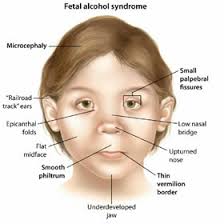
Fetal alcohol spectrum disorder (FASD) is used to refer to a condition that occurs from adverse effects on development especially when alcohol is taken during pregnancy. FASD is a brain disorder that comes with physical abnormalities. According to recent studied FASD is estimated to occur in 1 out of 100 live births but the numbers are higher in areas or communities that alcohol consumption are high (Asia News Monitor, 2015).
FASD is associated with primary disabilities that are directly from toxic effects of alcohol changing cell development. FASD conditions usually affect the nervous system and the brain since the organs are always under construction throughout pregnancy. Therefore the effect on the brain and nervous system leads to lifelong functional, emotional and cognitive difficulties (Asia News Monitor, 2015).
Excessive drinking especially taking 4 or more units per occasion may increase the risk of physical problems and unusual facial features during pregnancy especially in the first trimester. FASD can lead to secondary disabilities including mental health disorder social problems and educational (Asia News Monitor, 2015).
Description of severe alcohol use disorder (DSM V 303.0, ICD10 F10.20) and
Alcohol-induced depressive disorder (DSMV 291.81)
Alcohol Withdrawal is a diagnosis in DSM-5 which might be a life-threatening condition found in people who drink heavily over a period of time, but they then stop or dramatically decrease their alcohol consumption. The consumption period vary from weeks, months or years.
The more the individual drinks during this time, the more likely it is for alcohol withdrawal symptoms to manifest. The manifested symptoms are usually found in adults but may occur among children and youths. The manifestations of alcohol symptoms show the level of addiction.
Pathophysiology – the effect alcohol has on the adult brain
An acute effect of alcohol on human brain has been studied and has helped in rationalizing the development of psychotropic drugs that will assist in treating adverse effects of alcohol.
Alcohol is an addictive drug that stimulates the release of neurotransmitter dopamine from cells that originates in ventral tegmental area of the brain (VTA). THE VTA is associated with behavioral motivation and reward where if exposed to alcohol, dopamine is released into the nucleus known to reinforce drinking behaviors or make the drinking experience more enjoyable (Ritchie & Timothy & Corley & Geraldine & Davies, G., et al, 2014).
Excessive consumption of alcohol also affects the balance between excitatory and inhibitory neurotransmitters. This is because Electrochemical activation of neurons is controlled by the two hence alcohol consumption will inhibit ion flow between excitatory and inhibitory neurotransmitters leading to the imbalance (Ritchie & Timothy & Corley & Geraldine & Davies, G., et al, 2014).
The hippocampus is responsible for memory and learning and alcohol consumption reduces the size of the hippocampus. Alcohol consumption usually affect the hippocampus since its sensitive and contact with alcohol is poisonous to the nerve cells leading to damage to the cell. This therefore may lead to memory lose or may hinder learning altogether (Prakash & Neelu & Amool & et al, 2015).
Adverse consumption of alcohol may lead to lifelong problems including poor impulse control, which leads to unsafe sexual activity and unexpected bouts of violence. An individual may also experience memory loss, blackouts and poor retention of information (Lital & David & Harold, 2013).
An individual may experience permanent inability to walk straight. This because the part of the brain controlling balance is sensitive to alcohol hence continuous consumption may lead to permanent disability especially when the condition cannot be treated anymore (Prakash & Neelu & Amool & et al, 2015).
Signs and Symptoms
Alcohol use disorder ranges from mild, moderate or severe, depending on the number of symptoms one is experiencing. They include:
Inability to limit amount of alcohol intake
Having strong urge to drink alcohol
Spending a lot of money buying alcohol
Failing to do regular obligations including going to work, school or even going home
Continuing to drink alcohol even when one know it’s causing physical, social or interpersonal problems
Withdrawing from interacting with other people or reducing social activities including hobbies
Experiencing withdrawal symptoms such as sweating, shaking and nausea when one is not drinking (Asia News Monitor, 2015).
Contemporary treatment (pharmacological and non-pharmacological)
Treatment of alcohol use disorder is done using the 30-60 days approach where patients attend 2-3 sessions per week and are encouraged to abstain from talking alcohol while other will be given prescription to help them recover. Thereafter the patient enters the continuing care phase where they attend self-help meetings. Contemporary treatment therefore combines the traditional abstinence and staying sober approach with developed drugs to assist alcohol user to completely stop taking alcohol (Mental Health Business Week, 2015).
Patients with mental illness and those dependent on alcohol consumption should be given more care or be treated with professional multidisciplinary team to ensure that they are able to recover (Dennis & Victor & Mady & Brendan, 2013).
Nursing management within the multidisciplinary care team
Patients are usually monitored at least twice per week once they begin the detoxification program by a specialist nurse. The monitoring can be face to face or can be done through the phone. Alcohol content in the body will be taken frequently using urine drug-screening monitor. If any alcohol substance is detected the individual is discontinued from the program or they can start all over (Picci & Francesco & Marco, et al, 2014)
After the detoxification program a follow up treatment should be conducted by the specialist nurse to avoid patients from relapsing. Individual who fears that they may relapse should be given medication to prevent them from relapsing (Kattimani & Bharadwaj, 2013).
Treatment outcome
Most patients after undergoing alcohol detoxification usually recover from the disorder. However a few of them may relapse especially when they indulge in company that takes alcohol. This therefore will require them to start the program all over again in order to gain sobriety (Ken & Kushner &Matt, 2013).
Conclusion
Alcohol use disorder is becoming rampant in the society. Different avenues should be used to educate and treat those affected by the disease. Therefore qualified specialist in the field should be able to identify every patient needs in order to treat them accordingly.
References
Asia News Monitor, (2015). United States: Learn to Recognize the Signs of an Alcohol Problem. Asia News Monitor; Bangkok. 12 May 2015.
Asia News Monitor (2015) United States: Marijuana vs. Alcohol: Which Is Really Worse for Your Health? Asia News Monitor: Bangkok. 07 Oct 2015.
Dennis, M., Victor, C., Mady, C., Brendan, S., (2013). Treating Alcohol and Drug Use Disorders/Alcohol and Drug Use: The Authors Reply. Health Affairs; Chevy Chase32.3. PP. 630.
Kattimani, S., Bharadwaj, B., (2013). Clinical management of alcohol withdrawal: A systematic review. Industrial Psychiatry Journal; Mumbai22.2. Pp. 100-108.
Lital, R., David, T., Harold, W., (2013). Exendin-4 induced glucagon-like peptide-1 receptor activation reverses behavioral impairments of mild traumatic brain injury in mice. Age. Dordrecht35.5. PP. 1621-36.
Mental Health Business Week, (2015). Patents; “Combination Treatment for Alcohol Dependent Patients” in Patent Application Approval Process (USPTO 20150209372). Mental Health Business Week; Atlanta. Aug 22, 2015: PP. 154.
Picci, R., Francesco, O., Marco, Z., et al (2014). Quality of life, alcohol detoxification and relapse: Is quality of life a predictor of relapse or only a secondary outcome measure? Quality of Life Research; Dordrecht23.10. PP. 2757-67.
Prakash, S., Neelu, S., Amool, S., et al (2015). Personality disorder, emotional intelligence, and locus of control of patients with alcohol dependence. Industrial Psychiatry Journal; Mumbai24.1. PP. 40-47.
Ritchie, S. J., Timothy, B. C; Corley, J., Geraldine, M., Davies, G., et al (2014). Alcohol consumption and lifetime change in cognitive ability: a gene × environment interaction study. Age; Dordrecht36.3:PP. 9638.
Winters, Ken C.W., Kushner, Matt, G.K., (2013). Treatment Issues Pertaining to Pathological Gamblers with a Comorbid Disorder. Journal of Gambling Studies, supply toward an Improved Understanding of Comorbidity: New York19.3. PP. 261-7.
We can write this or a similar paper for you! Simply fill the order form!
Medical Records, Patient Consent, and Information Management
Medical Records, Patient Consent, and Information Management
Order Instructions:
Medical Records, Patient Consent, and Information Management
As your fourth assignment toward completion of the Session Long Project, you will need to discuss the fragile balance between the need for public health agencies to acquire data and the demand for security of sensitive information. Review the article Ethics in Public Health Research.
As public health director in a small county, you must maintain records that track diabetes rates, the incidence of HIV, and immunization records. Recently, there have been at least two breaches when computers were stolen from employees or an outside hacker broke into the system and downloaded data.
Now you must write an open letter addressing the community and explain how the department is going to protect the information. In your letter, address the following questions.
1.Explain why the health department collects this information conveying the idea of how it serves the greater good.
2.Discuss the public’s interest in privacy and why this is important in our society.
3.Discuss why the department needs to infringe on the community’s privacy.
4.Explain how the department might ensure greater security.
5.Be sure to identify at least one applicable regulation, statute, or source that supports the ability of the department to collect this information.
Module Overview
Informed consent requires more than just a good written form—it also requires preparation for a full discussion with the patient and a check to ensure that the messages have been received.
Informed consent is the process of communication between a patient and physician that results in the patient’s authorization or agreement to undergo a specific medical intervention [AMA 1998].
Disclosure of facts related to an individual’s healthcare, including level and location of care, are central to the fulfillment of informed consent. When an individual is unable to provide informed consent because they lack the decision-making capacity to process the information and/or they have been deemed legally incompetent, the healthcare team should obtain assent from the individual whenever possible.
Questions remain as to how to proceed when assent cannot be gained and the decision involved causes a level of distress for the individual that is difficult to resolve. A focus on maintaining hope and support with a clear transition and follow-up plan are important variables to consider for an ethical, caring response.
Traditionally, the ethical principle of patient confidentiality, including the right to personal privacy has been an important consideration in healthcare. Recent incidents involving identify theft, confidentiality, and patient privacy have led to increasingly restrictive policies on patient health information and access to records and data. Some believe that these restrictions can harm efforts to protect the public’s health. This has prompted discussions on a more appropriate balance between privacy concerns and the protection of public health.
Am J Public Health. 2008 May; 98(5): 793–801. doi: 10.2105/AJPH.2006.107706
PMCID: PMC2374810 Ethics in Public Health Research: Privacy and Public Health at Risk: Public Health Confidentiality in the Digital Age. Meyers, Frieden, Bherwani and Henning. http://www.ncbi.nlm.nih.gov/pmc/articles/PMC2374810/
Medical Records, Patient Consent, and Information Management
The health department maintains community records that track diabetes rates and incidence of HIV and their management practices in the community. The collection of data is a systematic approach that ensures the department spends its resources appropriately to improve the health of the population in the most effective approach. The data collected is used for epidemiological, qualitative and comparative analysis to describe the health problems of a community. The data is used to identify the inequalities of the health services and to determine the priorities for effective use of resources. The health benefits are those that benefit the wider environmental and social changes. Successful health needs assessment require practical approach to understand what is involved and the resources necessary to complete the assessments, and to ensure sufficient integration of the study findings that will help in planning and commissioning of the local services (Nass, Levit, & Gostin, 2009).
This is important because it does not only help the department to monitor but also to improve the healthcare services and well being of the community. The information gathered is important in assessing the health needs of a community. This is because the health needs of a patient collected in their respective clinics may reveal the community health needs. Therefore, this information is important in assessing the wider needs of a community in planning and providing the local health services. If the needs are ignored, the community health needs will not be addressed thereby putting more and more people in danger. Using the information collected, the department is able to assess the residents cost of care, safety, accessibility as well as the quality of health; and or use the information to partner with other institution for regional health planning (Meyers et al., 2008).
The privacy Act of 1974 states that all persons information obtained from individuals and have personal identifiers such as social security number, name or any other identifier should not be disclosed without prior written consent from the individual. The issue of Health Insurance portability and Accountability Act (HIPAA) comes into place when the health information is collected and discussed. The issue of confidentiality refers to the professional obligation to hold the health information collected as confidential. This obligation is supported by the professional association codes of ethics found in the first principle of the American Health Information Management Association Code of Ethics (AHIMA) “advocate, uphold and protect individual’s right to privacy and confidentiality when disclosing healthcare information (Nass, Levit, & Gostin, 2009).”
The public’s interest on the issue of privacy in this department arises from the breach of privacy due to the stolen laptops. The concern is caused due to worries that the information in those two stolen laptops may negatively affect the resident’s dignity, and is likely to cause harm. The public is scared that the breached information may contain personally identifiable health information, which can lead to embarrassment or discrimination. In addition, the medical information collected in this department include the most intimate details regarding patient’s behavior, and may also include information about their social behaviors or personal relationship or economic status. This brings forth the major concern for the medical data privacy. Thus, the society needs some sort of assurance that the information that got lost with the stolen laptops is protected and will not be disclosed to the public (Meyers et al., 2008).
All institutions that are involved in collection of resident’s healthcare information, they must establish strong measures that ensure that people’s personal data is not disclosed by taking strong strategies that safe guard the health data. All the organizations should take additional measures to strengthen the data protection. In this context, the department understand the value of individual rights, personal choice and is doing all it can to protect intrusion of the private sphere. The department understands the importance of maintaining the medical information confidential. For this reason, this organization have appointed security officers who have the responsibility of assessing effective strategies of data protection, and implementing staff training that will help implement the solutions. The departments also make greater use of encryption in order to further protect the resident health data (Krames StayWell Blog, 2009).
Effective data protection needs effective security measures. The HIPAA security rule sets floor for data security standards. However, the HIPAA security and privacy rule have not improved the public confidence that their personal information will be kept confidential. With the recent spate of the stolen laptops that contain patient health information, encryption has been done on other laptops and other removable media that contains such data (Meyers et al., 2008). Enhanced security measures will reduce risks associated with data theft and will reinforce the public’s trust and diminish the anxiety about potential risk of unintentional disclosure of the information. In addition, the department is considering applying new strategies such as pseudonymization strategy. This is a strategy used to replace the identities of the people’s information in the organizations database. The use of pseudo IDs ensures that the medical information cannot be linked directly to a person (Nass, Levit, & Gostin, 2009).
Meyers, J., Frieden, T. R., Bherwani, K.M., and Henning, K.J . (2008). Ethics in Public Health Research: Privacy and Public Health at Risk: Public Health Confidentiality in the Digital Age.. Am J Public Health. 98(5): 793–801. doi: 10.2105/AJPH.2006.107706 PMCID: PMC2374810 http://www.ncbi.nlm.nih.gov/pmc/articles/PMC2374810/
Nass, S.J., Levit, L.A., Gostin, L.O. (2009). Institute of Medicine (US) Committee on Health Research and the Privacy of Health Information: The HIPAA Privacy Rule: Beyond the HIPAA Privacy Rule: Enhancing Privacy, Improving Health Through Research. Washington (DC): National Academies Press (US); 2009. 4, HIPAA, the Privacy Rule, and Its Application to Health Research. Retrieved from https://www.ncbi.nlm.nih.gov/books/NBK9573/
We can write this or a similar paper for you! Simply fill the order form!
Make sure you have read all of the assigned readings. Discuss the questions presented below and follow directions
1.Review the case Informed Consent in Louisiana – Lugenbuhl v. Dowling.
2.First, identify the elements of the legal citation- plaintiff, defendant, court, location of case etc.
3.Explain the meaning and importance of the doctrine of informed consent.
4.Discuss why we have this doctrine and what would happen if we did not.
5.Discuss the two elements that must be present for informed consent to exist under the law.
6.In a legal case of negligence and liability explain why the basis for negligence may be battery, unconsented touching, or breach of a duty imposed on the doctor to disclose material information.
7.Explain the elements that must be present for a patient to give informed consent.
Module Overview
Informed consent requires more than just a good written form—it also requires preparation for a full discussion with the patient and a check to ensure that the messages have been received.
Informed consent is the process of communication between a patient and physician that results in the patient’s authorization or agreement to undergo a specific medical intervention [AMA 1998].
Disclosure of facts related to an individual’s healthcare, including level and location of care, are central to the fulfillment of informed consent. When an individual is unable to provide informed consent because they lack the decision-making capacity to process the information and/or they have been deemed legally incompetent, the healthcare team should obtain assent from the individual whenever possible.
Questions remain as to how to proceed when assent cannot be gained and the decision involved causes a level of distress for the individual that is difficult to resolve. A focus on maintaining hope and support with a clear transition and follow-up plan are important variables to consider for an ethical, caring response.
Traditionally, the ethical principle of patient confidentiality, including the right to personal privacy has been an important consideration in healthcare. Recent incidents involving identify theft, confidentiality, and patient privacy have led to increasingly restrictive policies on patient health information and access to records and data. Some believe that these restrictions can harm efforts to protect the public’s health. This has prompted discussions on a more appropriate balance between privacy concerns and the protection of public health.
Am J Public Health. 2008 May; 98(5): 793–801. doi: 10.2105/AJPH.2006.107706
PMCID: PMC2374810 Ethics in Public Health Research: Privacy and Public Health at Risk: Public Health Confidentiality in the Digital Age. Meyers, Frieden, Bherwani and Henning. http://www.ncbi.nlm.nih.gov/pmc/articles/PMC2374810/
Informed consent goes beyond just signing a piece of paper to the level that there must be a clear discussion between the patient and the medical professional in order to reach an understanding. Disclosure of the medical health history by a patient forms a greater part of informed consent. In the Lugenbuhl v Dowling case, the surgeon got the patient’s consent and gave and assurance that he would use the surgical mesh. The surgeon, however, went against this promise and never used it. While undertaking the operation, the surgeon thought that all would be well besides the change in plans, but unfortunately, things didn’t work out as he had planned. His patient who had intracostal incisional hernia sued him for going against the informed consent. During whole hearings of the case, the charges were separated into medical malpractice and the lack of informed consent. During the case, however, there was no sufficient evidence that the surgeon had gone against informed consent by not using the mesh as the plaintiff did not have the vital causation element. The medical evidence showed no case of violation on the healthcare by Dr. Dowling (Eonas, McCoy, & Eaton, 2010).
Question 2
In the case, the Plaintiff was the concerned patient, DR. John Downing who was a professional surgeon was the Defendant. The case was heard on 10th October 1997. It was filled in the Supreme Court of Louisiana.
Question 3
Informed consent is a legal process that ensures that the client, patient or the researcher are well informed about the potential dangers or risk and cost that comes with a medical process. The elements of informed consent include available alternative medical care, potential benefits, awareness about the nature of treatment and the treatment risks. For instances where a patient might not be able to make the consent, then a legal representative can be involved. It forms a bigger part towards satisfaction of medical attention as patients are part of the process (Faden, Beauchamp, & Kass, 2014). Informed consent serve as a guide to the physician when making great decisions concerning the health of the patient.
Question 4
The lack of informed consent can lead to many malpractices by the medical professionals during the provision of healthcare services. The healthcare professionals will have the freedom of administering any kind of medication on their clients without seeking their opinion. Informed consent, however, restricts them to always heed the patient’s need as going against it can lead to various legal implications. Through informed consent, a patient can fully participate in decisions that concern his or her life and in turn leads to them adopting a healthy way of living (Faden, Beauchamp, & Kass, 2014).
Question 5
The existence of informed consent under the law relies on two concepts. First, there should be a statement concerning the consequences that will occur in the event that the client decides not to proceed with the procedure. In the event that withdrawal from the procedure might cause some effects on the health of the patient, then there should be a clear explanation of the required withdrawal procedures in order to uphold patient safety (Tsai, Orav, & Jha, 2015). This will give an opportunity to the patient to make a decision on whether to withdraw or not, knowing the consequences that will accompany the option they will opt for. Secondly, there should be an explanation that the medical procedure involves some risks which might not be evident at the moment. Such risks must be explained by the medical professional as the patient might not be able to recognize such effects. Ensuring that the patient clearly understands the risk before undertaking a treatment is more paramount than just informing them.
Question 6
The basis of negligence might be considered as a battery if the doctor’s unconsented procedure amounts to the batter. The law does not protect any medical procedure which is performed outside the informed consent as it is considered as the legally permissible procedure. Breach of duty would occur when evidence prove that the defendant had a responsibility towards the plaintiff which was not upheld. Such cases would mean that the defendant exposed the plaintiff to loss.
Question 7
In order for the patient to provide informed consent, quite a number of factors must be present. To start with, the patient should be in the correct state of mind in order to voluntarily make decisions at that moment. The patient needs to be well informed that besides the paper they are signing they need to make a personal decision from their heart. The medical professional should act as a guide to the patient in the quest of reaching an informed consent through the provision of advice on the best alternative decisions in order for the patient to understand what is at stake. The professional should use simple terms and language in order to make sure that the patient clearly comprehends what is being said. The consent should also cover the following parts: it should provide reasonable alternatives, risks, and benefits, assessment of the patient’s understanding and the patient’s acceptance to undergo the medical procedure. In the case where a better alternative exists, then the medical professional needs to take the patient through the option convincing him or her to opt for that alternative.
References
Eonas, A., McCoy, J. D., & Eaton, S. H. (2006). Medical informed consent: clarity or confusion?. Journal of hospital marketing & public relations, 16(1-2), 69-88.
Faden, R. R., Beauchamp, T. L., & Kass, N. E. (2014). Informed consent, comparative effectiveness, and learning health care. N Engl J Med, 370(8), 766-768.
Tsai, T. C., Orav, E. J., & Jha, A. K. (2015). Patient satisfaction and quality of surgical care in US hospitals. Annals of surgery, 261(1), 2.
We can write this or a similar paper for you! Simply fill the order form!
For this module, explain the threats to patient information and confidentiality that are present in your selected organization (Salisbury,NC VA). Be sure to link them with regulations (e.g., HIPAA and Wi-Fi security).
Module Overview
Concerns over the privacy and security of electronic health information fall into two general categories: (1) concerns about inappropriate releases of information from individual organizations and (2) concerns about the systemic flows of information throughout the healthcare industry and related industries. Inappropriate releases from organizations can result either from authorized users who intentionally or unintentionally access or disseminate information in violation of organizational policy or from outsiders who break into an organization’s computer system. The second category, systemic concerns, refers to the open disclosure of patient-identifiable health information to parties that may act against the interests of the specific patient or may otherwise be perceived as invading a patient’s privacy. These concerns arise from the many flows of data across the healthcare system, between and among providers, payers, and secondary users, with or without the patient’s knowledge. These two categories of concerns are conceptually quite different and require different interventions or countermeasures.
Presentations and Required Readings https://www.salisbury.va.gov/
•The following is primary reading required for this module: Privacy and Security Concerns 1
•This article discusses the primary goals of information security in healthcare and examines policy and appropriate uses of medical data: Confidentiality of Electronic Medical Records 2
•Zachary Wilson offers a good explanation of the difference between internal and external sources of attacks. Additionally, he illustrates a wide range of vulnerabilities and how they can be exploited. (Do not get hung up in the technical concepts and jargon at this point. We will cover the more technical aspects later in this course.) Vulnerabilities and attacks3
•The following provides a brief overview of basic concepts surrounding information security along with an introduction to vulnerabilities, controls and policies: Security Concepts4
•Read Chapter 4 “Privacy and Confidentiality” from the following book that is available through the eBrary resource, which can be accessed from the TUI CyberLibrary:
?Anderson, J. G. (2002). Ethics and Information Technology : A Case-Based Approach to a Health Care System in Transition. Springer-Verlag New York, Incorporated, Secaucus: NJ. 63-112. Retrieved on September 8, 2007, from the eBrary database.5
•The following is the United States Department of Human Services summary version of the HIPAA Privacy Rule. HIPAA Privacy Rule6
•Wi-Fi Security concerns7
Sources for Presentation Material Referenced Above
For the Record: Protecting Electronic Health Information (1997). Committee on Maintaining Privacy and Security in Health Care Applications of the National Information Infrastructure Protecting Electronic Health Information. Washington, DC, USA: National Academies Press. 54-81. Retrieved from the eBrary database.
Barrows, R. C., and Clayton, P. D. (1996). Privacy, Confidentiality, and Electronic Medical Records. Journal of the American Medical Health Informatics Association, 3 (2), 139-148. Retrieved from the PubMed Central database.
Anderson, J. G. (2002). Ethics and Information Technology : A Case-Based Approach to a Health Care System in Transition. Springer-Verlag New York, Incorporated, Secaucus: NJ. 63-112. Retrieved from the eBrary database.
Alam AS, Al Sabah SAA, Chowdhury AR (2007). Wi-Fi Security The Great Challenge. National Conference on Communication and Information Systems. National Conference on Communication and Information Security.
SAMPLE ANSWER
Patient Information and Confidentiality
Concerns over security and privacy of the electronic health information may be in relation to releasing information inappropriately from an individual organization or the systematic information flows in a healthcare industry as well as the related industries. Information leaks from an organization when unauthorized users purposefully or unintentionally disseminate or access information against the organizational policy. Outsiders could also break into the computer systems. There are also cases where the professionals act against the interests of particular patients, therefore invading the privacy (Anderson, 2002). Data or information is normally exchanged between different professionals, and these concerns could arise in between, either among the secondary users, payers, and providers, either without or with information about the patient. Therefore, countermeasures and interventions are necessary. The aim of this paper is discussing the threats to patient confidentiality and information present in Salisbury,NC VA, with reference to regulations like Wi-Fi security and HIPAA.
Based on HIPAA, security provisions and data privacy is provided to medical information. The regulation guarantees proper protection of health information and at the same time, permitting easy and efficient health information flow for high quality care to be provided. This also helps in protecting the wellbeing and health of the public. There is a particular way in which the healthcare professionals are required to handle all the patient information they come across. The regulation requires that covered entities should have the appropriate physical, technical, and administrative safeguards for guarding the privacy of non-electronic and electronic protected health information (Barrows & Clayton, 1996).
HIPAA offers protections on the insurance information. From the institution’s website, there is a section on insurance and billing. If someone is really interested in the information, he or she can easily hack to acquire it. The link on patient information also has a lot that can be stolen. Therefore, there is a need to the hospital to be cautious about leaking information as this can easily tarnish the reputation and image, therefore, leading to patient turnover.
From the website, the phone directory provides information about the service, location, and phone for the various patient advocates. This is very risky since someone outside the healthcare institution might call asking for information of a particular patient or staff, or even go to the physical addresses provided (Barrows & Clayton, 1996). Unknowingly, a professional might provide the sensitive information to an outsider, after which it can be used in inappropriate activities.
Data protection has become very pertinent in the modern day technology world. Public WiFi providers should be informed about their obligations as far as the Data Protection Act (1998) is concerned, particularly in relation to the collection and processing of personal information. Salisbury, NC VA is posing immense threats to patient confidentiality and information. A quick scan at the institution’s website makes it evident that the personal information belonging to patients can easily be interfered with. The information might even be stolen and used for malicious activities. Regardless of the fact that the information might need to be used by different healthcare professionals for promoting high quality healthcare, there should be more controls where the external people should not be able to view the data as is the case.
When using internet at the institution, there should be controls, where the guest WiFi can be separated from the business WiFi (Alam, Al Sabah Chowdhury, 2007). This can go a long way in preventing compromises on the sensitive patient information. The hospital should take charge of its information technology privacy and confidentiality, and ensure that the EPOS systems and private networks are protected. WiFi and other forms of internet are normally used at the institution, and considering how delicate the exchange of information and data among and between the professionals has become, the necessary measures need to be taken.
Having noted that there is intensive internet use at the institution, there is a great need to emphasize that in case Wi-Fi passwords are normally offered to the customers or even patients for internet access, then the management should remain informed that this is actually a big risk to the business. This is the reason why there should be a secure and separate system for the guests. A good solution to this can be ensuring that the network is protected, and a secure login can be used (Barrows & Clayton, 1996).
Conclusion
From the foregoing discussion, it has been that patient confidentiality and privacy have been compromised to a great extent. This clearly relates to the storage and exchange of personal and sensitive patient information online or through the various social media platforms. As such, it can be very easy for the outsiders or even people within to exchange and share the information either intentionally or unintentionally. Consequently, the information and reputation of the institution would be compromised. However, there are regulations such as HIPAA and Wi-Fi which offer guidance on what institutions such as Salisbury, NC VA need to do so as to protect the information their patients offer.
References
Alam, A. S., Al Sabah, S.A.A., Chowdhury, A.R. (2007). Wi-Fi Security The Great Challenge. National Conference on Communication and Information Systems. National Conference on Communication and Information Security.
Anderson, J. G. (2002). Ethics and Information Technology : A Case-Based Approach to a Health Care System in Transition. Springer-Verlag New York, Incorporated, Secaucus: NJ. 63-112. Retrieved from the eBrary database.
Barrows, R. C., & Clayton, P. D. (1996). Privacy, Confidentiality, and Electronic Medical Records. Journal of the American Medical Health Informatics Association, 3 (2), 139-148. Retrieved from the PubMed Central database.
We can write this or a similar paper for you! Simply fill the order form!
Privacy and security in electronic health services
Privacy and security in electronic health services
Order Instructions:
Case Assignment
For your Module 4 Case Assignment, in 2-3 pages, answer each of the “questions for discussion” listed below each case. Develop your answers in 150 to 250 words for each question within the context of the background material. In addition, incorporate relevant applicable laws.
Section 1:
Explain the characteristics of technical, physical, and organizational privacy and security concerns.
Section 2: Case 4.8: E-Mail Goes Astray
Kaiser Permanente, one of the nation’s largest health insurers with 8.5 million subscribers, accidentally compromised the confidentiality of the medical information of 858 of its members. The problem occurred when a technician began sending out a large number of e-mail messages that had been backlogged while Kaiser’s system was being upgraded. Some e-mail messages were sent to the wrong recipients. Members access the website and use the e-mail system to fill prescriptions, make appointments, and seek medical advice. Some of the messages contained names, home telephone numbers, medical account numbers, and medical advice. When the technician noticed the problem, he stopped sending out e-mails but did not notify Kaiser managers of the problem. The next morning, two Kaiser subscribers notified the company that they had received other subscribers’ e-mails. The following message appears on the website:
“Your information is confidential. We are dedicated to keeping your personal health information confidential. We take many precautions to make sure others can’t pretend to be you and get your confidential information from the Web site. As long as you don’t give out your PIN, any confidential information you send or receive on this Web site can be seen only by you and Kaiser Permanente staff who have a ‘genuine business need.’ ” The director of Kaiser’s Web site indicated that once the error was discovered, Kaiser officials attempted to telephone each of the subscribers whose e-mails had been sent to the wrong person and, “We have fixed the problem.”
Source: Brubaker B. ‘Sensitive’ Kaiser e-mails go astray. The Washington Post. August 10, 2000: E01.
Questions for Discussion:
1.Who is responsible for the breach in confidentiality? The technician? Kaiser Permanente? And why?
2.Will this breach of confidentiality discourage subscribers from accessing the Kaiser Web site to fill prescriptions and seek medical advice? How can subscribers be reassured that their information will be kept confidential in the future?
Case 4.7: Patients’ Files Used for Obscene Calls
An orthopedic technician who had been convicted of child rape and indecent assault used the password of a former hospital administrator to gain access to confidential medical records of 954 patients at a major hospital. He then made obscene telephone calls to female patients as young as 8 or 9 years old.
The technician’s access to the confidential patient records began in December and continued until he was fired four months later. The hospital was not aware of the problem until a trace on the telephone line of a girl who was receiving obscene calls indicated that the calls originated from the hospital. The computer system failed to detect the outdated password and did not alert employees who were responsible for maintaining the information system that one individual was accessing a large number of patient files. Moreover, the hospital did not conduct background checks when hiring new employees.
Source: Brelis M. Patients’ files allegedly used for obscene calls. The Boston Globe. April 11, 1995: 1.
Questions for Discussion:
1.Should healthcare institutions conduct background checks on new employees who will be allowed access to confidential patient information? What information should be accessible to such employees?
2.How could the hospital have prevented the misuse of patient information from occurring? Was the hospital’s security system at fault for this breach of security?
3.Should the hospital be held accountable for the actions of the technician?
Case 4.44: University Tightens Computer Security
A university is tightening its computer security after hackers broke into a computer at the medical school and secretly used it to generate a flood of e-mail advertisements. Efforts by the university to cope with the break-in have caused balky and intermittent e-mail service for seven months for hundreds of staff members. At least once, e-mail service throughout the system shut down for two days. University officials did not detect the break-in until at least a couple of weeks later, when someone forwarded an advertisement sent by the computer.
A university spokesperson said that no file information was improperly accessed. Instead the hackers merely used the system to generate e-mail promoting other websites. The university announced that $150,000 would be spent to install new equipment to restore the e-mail system. A number of security measures were being upgraded to prevent the computer system from being broken into in the future.
Source: Birch D. Hopkins tightens computer security. The Baltimore Sun. May 29, 1999: 1B-2B.
Questions for Discussion:
1.Are university medical center information systems especially vulnerable to hackers? Why, or why not?
2.Is the medical center accountable for any harm that is caused by unauthorized entry into patient records?
Module Overview
Concerns over the privacy and security of electronic health information fall into two general categories: (1) concerns about inappropriate releases of information from individual organizations and (2) concerns about the systemic flows of information throughout the healthcare industry and related industries. Inappropriate releases from organizations can result either from authorized users who intentionally or unintentionally access or disseminate information in violation of organizational policy or from outsiders who break into an organization’s computer system. The second category, systemic concerns, refers to the open disclosure of patient-identifiable health information to parties that may act against the interests of the specific patient or may otherwise be perceived as invading a patient’s privacy. These concerns arise from the many flows of data across the healthcare system, between and among providers, payers, and secondary users, with or without the patient’s knowledge. These two categories of concerns are conceptually quite different and require different interventions or countermeasures.
Presentations and Required Readings
•The following is primary reading required for this module: Privacy and Security Concerns1
•This article discusses the primary goals of information security in healthcare and examines policy and appropriate uses of medical data: Confidentiality of Electronic Medical Records2
•Zachary Wilson offers a good explanation of the difference between internal and external sources of attacks. Additionally, he illustrates a wide range of vulnerabilities and how they can be exploited. (Do not get hung up in the technical concepts and jargon at this point. We will cover the more technical aspects later in this course.) Vulnerabilities and attacks3
•The following provides a brief overview of basic concepts surrounding information security along with an introduction to vulnerabilities, controls and policies: Security Concepts4
•Read Chapter 4 “Privacy and Confidentiality” from the following book that is available through the eBrary resource, which can be accessed from the TUI CyberLibrary:
?Anderson, J. G. (2002). Ethics and Information Technology : A Case-Based Approach to a Health Care System in Transition. Springer-Verlag New York, Incorporated, Secaucus: NJ. 63-112. Retrieved on September 8, 2007, from the eBrary database.5
•The following is the United States Department of Human Services summary version of the HIPAA Privacy Rule. HIPAA Privacy Rule6
•Wi-Fi Security concerns7
Sources for Presentation Material Referenced Above
For the Record: Protecting Electronic Health Information (1997). Committee on Maintaining Privacy and Security in Health Care Applications of the National Information Infrastructure Protecting Electronic Health Information. Washington, DC, USA: National Academies Press. 54-81. Retrieved from the eBrary database.
Barrows, R. C., and Clayton, P. D. (1996). Privacy, Confidentiality, and Electronic Medical Records. Journal of the American Medical Health Informatics Association, 3 (2), 139-148. Retrieved from the PubMed Central database.
Anderson, J. G. (2002). Ethics and Information Technology : A Case-Based Approach to a Health Care System in Transition. Springer-Verlag New York, Incorporated, Secaucus: NJ. 63-112. Retrieved from the eBrary database.
Alam AS, Al Sabah SAA, Chowdhury AR (2007). Wi-Fi Security The Great Challenge. National Conference on Communication and Information Systems. National Conference on Communication and Information Security.
SAMPLE ANSWER
Section 1
The physical, technical, and organizational privacy and security concerns are categorized into two main forms; concerns about the flow of information systematically within the whole healthcare industry and concerns over the inappropriate release of information within an organization. This may arise when some individuals are given access to some confidential information hence violating a company’s privacy policy (Kshetri, 2013). The systemic concern, on the other hand, is the release of particular patient identifiable information about their health that may be against their wishes hence presenting a major invasion of patient privacy.
The concerns hold different characteristics. For example, there is organizational threats which involve vulnerability of individual organization electronic health records to external or internal agents. Internal agents are those with authorization and have access to information yet they abuse their privileges.
Conversely, external agencies do not have access to the information, yet they try to manipulate the data or rendering the system unusable. Another characteristic includes the concerns that may arise due to sensitive information that could easily be used against the patients as a means of acquiring a leverage over them (Boric-Lubecke et al., 2014). The information mostly targeted are those of celebrities, employers, politicians, and journalists.
The basic approach to countering threats to privacy in healthcare is erecting policies against the act of violation and setting heavy fines against anyone who violates privacy rules. Organizations should also have continuous checkup of their system’s accessibility and employ trustworthy workers to man the system.
Section 2
Case 4.8: Emails Goes Astray
Question 1
The technician was in charge of the breach. The act of not checking the backlogged information before confirming who the email was sent to, suggests so. The other reason was the number of emails sent before realizing the mistake; the medical information of 858 of its members had compromised which is a high volume. Also, instead of reporting the problem to the superiors, the technician left the insurance company to deal with the mistake he had committed. Kaiser Permanente was not responsible for the breach as they even tried to correct and put the subscribers at ease as they handled their information. Under HIPAA privacy rule, the responsibility of health insurers and organizations is to be accountable to the disclosure of their patients and confidential communication. Therefore, Kaiser Permanente did the right thing of informing its subscribers about the technical challenges on the website. They also emphasized on the pretenders warning them in the case of such an issue.
Question 2
The breach will discourage subscribers from the Kaiser web due to reduced trust in confidentiality of the organization. People tend to learn or fear from others mistakes. The subscribers can be reassured by integrating a better system that requires constant change of passwords thus narrowing the margin of email being hacked and informing them. This also ensures that the company adjusts well to the need of the subscribers. Notifying them that they are securing the site for them will make them feel assured and valued. This goes hand in hand with reassuring them that their information is safe. Employing better technicians, to prevent incompetence at work and informing subscribers of the root of the problem after an investigation is essential as it informs the subscribers that the case was not completely forgotten and they are involved in the processes taking place in the organization.
Case 4.7: Patients Files Used for Obscene Calls
Question 1
Clinical centers should carry out background checks on all new employees before allowing access and employ them. It should be carried out by searching through their public records, private investigations, checking their websites and face to face interviews that requires a detailed history of all previous endeavors and checking if it all fits public record (Yüksel, Küpçü & Özkasap, 2017). The main benefits include increased in value of hire, prevents shame of employing criminals, ensures regulatory acquiescence; satisfies industrial standards, reduces chances of drug abuse and less absenteeism and improves workplace safety and security. Information that should be accessible to such employees should be petite. The technician should only be given access to names of patients and medical records under supervision. Allowing such minimal ensures that they do not get the personal information that can be used to irritate patients. The medical files would be required to conduct his work.
Question 2
There are multiple ways of preventing such a breach. The hospital could have performed a full background check on the technician which could have reduced the risk employing an incompetent individual. In the case study, the hospital had employed the technician yet he was previously convicted of indecent assault and child rape. The hospital should have regularly updated the accessibility passwords. The incident in the case study was due to a failure of updating password allowing for the access of the orthopedic technician even after he was fired. The hospital should have to conduct more frequent vulnerability assessments tests; monthly or every two months. Updating the software systems would also have prevented failure on alerting the people in charge of maintaining information systems. The hospital security system was responsible for the breach as it failed to inform the employees in charge of maintaining information systems.
Question 3
For the technician’s actions, the hospital should be held liable. The hospital was responsible for the employment of a rape offender and indecent assault, to begin with; they did not conduct background checks while hiring new employees. The security system of the hospital allowed the technician access even after he was fired. During his time as a technician, supervision was not provided giving him freedom of action. The hospital also granted access to personal confidential information to a technician, yet receptions and secretaries are the people supposed to possess such information. The hospital was not aware till the girl’s obscene calls were traced inside the hospital. The hospital information system, including employees, were incompetent as this could have been noted at early stages but it got to four months.
Case 4.44 University Tightens Computer Security
Question 1
The University Medical Center Information Systems are not vulnerable to hackers. As from the context the hacker who secretly used them to obtain a flood of e-mail for just advertisement purpose suggests that he or she was not interested in the medical information or records within the system. No information is recorded to be missing as reported by the spokesman. The main aim was to create flood email, and any of the superior computer systems would also have been an easy target. Hackers use an external server to avoid detection while sending emails or viruses like Trojan to render a given site useless. They look for the easy access mainframes to operate; in this case, the medical school computers were previously not as well protected the efforts done after the hack. To restore email system they spent $150,000 installation of new equipment and numbers of security measures were upgraded in the process.
Question 2
The health center is responsible for any harm that happens on patient health records. The spokesperson touched on the issue of improper access of information saying that none was obtained. This shows that the medical center should beef up the security of the information and prevent similar hacking cases from occurring in future. Medical centers are bound by Health Insurance Portability and Accountability Act, (HIPAA) rules to prevent disclosure privacy and security of the patients’ information, confidential communication. HIPAA privacy rule safeguards all identifiable health information of patients that is relayed by a covered entity or business associate. The university had the right of protecting its clients’ information against any hackers with the intention of violating the rules of privacy, as per HIPAA, within the medical center. Therefore, expenses on the installations were put across as well as an upgrade and prevent future hacking incidents.
References
Boric-Lubecke, O., Gao, X., Yavari, E., Baboli, M., Singh, A., & Lubecke, V. M. (2014, June). E-healthcare: Remote monitoring, privacy, and security. In Microwave Symposium (IMS), 2014 IEEE MTT-S International (pp. 1-3). IEEE.
Kshetri, N. (2013). Privacy and security issues in cloud computing: The role of institutions and institutional evolution. Telecommunications Policy, 37(4), 372-386.
Yüksel, B., Küpçü, A., & Özkasap, Ö. (2017). Research issues for privacy and security of electronic health services. Future Generation Computer Systems, 68, 1-13.
We can write this or a similar paper for you! Simply fill the order form!
Select Union or Management side and answer the following questions.
1. Summarize your opening statement.
2. Identify the strength and weakness of your case.
3. What questions could you ask in cross examination to assist in the presentation of your case.
4. How does the Oak and Dore test impact your position with respect to the no contact order.
5. What legal arguments would you make with respect to the discipline imposed.
SAMPLE ANSWER
UNION SIDE CASE ARGUMENT
Opening Statement
The Canadian Charter of Rights and Freedom confers on individuals the right to exercise freedom and association. The no-contact order violates Detective Sarah Conor’s privacy and infringes on her rights to freedom and association. Ms Conor should not have been punished for exercising her rights. Canada’s Department of Criminal Justice provides that no-contact orders may be issued at any stage in the criminal justice system until the offender has served his or her sentence. Mr Walter White has already served his term for the offenses committed and the police have no obligation to issue a no-contact order once the criminal justice process is complete.
Strengths of the case
The Canadian Charter of Rights and Freedom protects individuals by allowing them the right to freedom and association. Ms Connor has the right to associate with Mr White without interference from the department. Individuals also have a right to privacy.
No-contact orders apply during the criminal justice process as provided by Canada’s Department of Criminal Justice. By placing a no-contact order, the Police department violates Mr White’s right because he has already completed his term.
Weaknesses of the case
Ms Conor failed to honor orders from her employer. Disobedience counts as work misconduct and her employer could use this as a defense for suspending and demoting her.
In 2014, used PRIME police database to check Mr White’s criminal record. This was later discovered and Ms Conor reprimanded in writing for using PRIME for personal reasons. Ms Conor already has a record of misconduct.
The police use their intelligence to identify factors that may influence security and case proceedings. In this case, Mr White’s intentions are unknown and there is a possibility that he wants to take advantage of Ms Conor’s position to influence case proceedings.
Cross examination questions examples
In March 2014, Sergent Benson was assigned to the Professional Standards Unit of the department. Is that correct?
On March 12, 2014, Ms Conor approached Sergent Benson to ask for advice about dating an individual who has a criminal record, correct?
We can therefore state that Ms Conor was very open with her relationship with Mr White, right?
The Agrestic Police Department Policy and Procedure I.C.75 which explains safety concerns for Agrestic Police department does exist, right?
It is also true that the policy, despite being available has never been circulated to employees, correct?
On April 22, 2014, the Chief received Mr Wood’s investigative report, correct?
The report by Wood indicated that Mr White no longer had contact with any known criminals and was therefore not a security concern. Is that true?
On April 21, despite having a report on Mr White’s clean criminal record, you went ahead and maintained the order against Ms Conor. Right?
Oak and Dore test
The Oak and Dore test does not impact my position with regard to the no contact order. This is because there is a pressing objective in regard to the violation of Canadian Charter of Rights and Freedoms. Secondly, the means is proportional, given that there is a rational connection between the means to the objective, a minimal rights impairment exists and proportionality exists between the objective and right infringement.
Legal arguments
In regard to the discipline imposed, I would make an argument based on the labor law, which calls for progressive disciplinary action and disciplinary actions that are proportional to the misconduct. The Canada Labour Code is a basis for argument and Section 36.1(1) provides that disciplinary action should only be imposed with a just cause. The Canadian Charter of Rights and Freedom also gives individuals rights to freedom of expression and association.
Please follow these 12 rules for the Literature Review:
The main reasons for the inclusion, in a Masters dissertation, of a literature review section are:
1.To present and to analyse, in a critical manner, that part of the published literature which is relevant to your research topic and which acts as the basis for a fuller understanding of the context in which you are conducting your research; thus helping the reader to a more rounded appreciation of what you have completed. Remember critical does not mean looking at the negatives but forming an evaluation.
2.To act as a backdrop against which what you have done in the remainder of the dissertation may be analysed and critically evaluated so as to give the reader the opportunity to assess the worth of your writing, analytical and research skills.
3.To show that not only have you discovered and reported what you have found to be relevant in the literature search, but that you have understood it and that you are able to analyse it in a critical manner.
4.To show that your knowledge of the area of interest is detailed enough that you are able to identify gaps in the coverage of the topic; thus justifying the reason(s) for your research.
5.To show that you know what the key variables, trends and ‘actors’ are in the environment of your study, i.e. you show that you know what the important issues are that need to be investigated.
6.To enable readers to be able to measure the validity of your choice(s) of research methodology, the appropriateness of the process by which you analyse your results, and whether or not your findings are congruent with the accepted research which has gone before.
7.The literature review is presented in the form of a précis, a classification, a comparison and a critical analysis of that material which is germane to a full understanding of your research study.
8.Such published material may be drawn from all, or a combination of, textbooks, journal articles, conference papers, reports, case studies, the Internet, magazine features or newspaper articles.
9.It should be remembered, however, that the most important source of academic literature are journal articles and you should ensure that you are familiar with the most recent publications in journals relevant to your subject area.
10.Remember that your literature review should lead and justify the research objectives and questions of your dissertation.
11.Your literature review should not just be a catalogue of authors, frameworks and ideas but should attempt to introduce a critical evaluation of those authors work.
12. The style must be HARVARD only
SAMPLE ANSWER
Dissertation the Literature Review
Introduction
Organizations are working hard to be successful and out-compete the competitors in the same industry. Organizations are striving to be the best and lead in the globe market. In order to achieve this, organizations must have the right employees. It is through employees that a company can meet its goals. Employees are now known as the most valuable asset of an organization. There is an emerging trend of treating employees as the human assets because the success of any organizations depends on the appropriate utilization of the human assets. As a result, training and development is an effective method of improving the performance of employees. Training and development are used to improve the ability, wisdom, and skills of the human resource. Training enhances the performance of employees. It polishes the skills of workforce making it the most important factor in employee performance. The State of Qatar is an oil-rich country. The main source of income is the natural resources and heavily relies on the oil industry. Oil prices are experiencing a sharp increase in the global market (Cafiero 2016). This has had a huge impact on countries that rely on oil as the only source of income. Countries such as Saudi Arabia are looking for alternative sources of income and reducing the dependency of the country on oil. Future development of Qatar is important to ensure that Qatar fully utilizes its resources, Qatar must continue benefiting from its natural resources, and this is only possible through improvement of human capital. One of the main ways of improving human capital is through education and training. The falling oil prices have greatly impacted on the performance of companies in Qatar. Some organizations have reduced cost by reducing the workforce. Reduced workforce couple with a poor performance of organizations has resulted in low employee morale (Chaibi & Gomes 2013). Companies must come up with right strategies to continue being relevant in the market and raise revenues. Training and development are essential in the Qatar industry to improve the performance of employees. The main aim of this literature review is to review past studies on the role of training and development on the performance.
Training and Development in Qatar Companies
Oil, natural gas, and related companies are the backbone of the Qatar economy. The oil sector contributes 95% of the total government revenues (Cafiero 2016). Recently, oil and gas companies have faced numerous challenges. The companies are experiencing a sharp decrease in revenues due to the reduced oil prices. Additionally, employees are leaving the industry making it difficult for these companies to retain most valuable employees (Chaibi & Gomes 2013). Oil companies are now reorganizing to retain top performing employees. According to Jolo (2013), there is no link of communication between Oil and Gas Bases Industry and education institutions in Qatar. As a result, education institutions are failing to provide oil companies with workers equipped with the right skills. Education institutions are successful in equipping workers with general skills, but the oil industry requires workers who have certain technical skills. Jolo (2013) noted that the skills that are demanded by the oil companies are technical and they supplied moderately by the education institutions. There is a gap in skills because the institutions do not fully equip students with technical skills that are required in the oil industry. Companies are expected to offer training and development programs to ensure employees develop the specific skills that are required in the industry. Lack of training and development has been cited as a major obstacle to the development of workers competence and performance in the Qatar oil industry. Rodriguez and Scurry (2014) looked at various empirical studies conducted in Qatar on training and development and noted that there is a huge skills gap in the oil industry. Rodriguez and Scurry (2014) noted that to match the skills gap between education institutions and companies, training and development is not an option in oil based companies. Qatari workers require a special type of training in order to fit in the oil industry.
According to El (2015) research conducted in other oil based countries show that development and training are critical in enhancing the motivation of employees. Research conducted in Oman concluded that employees are not only concerned about monetary benefits but the non-monetary benefits are equally important (El 2015). An Oman-based oil company was used to conduct research on the factors that motivate employees in the oil industry. The study concluded that employees are looking for organizations that will empower them through training and development (El 2015). Rodriguez and Scurry (2014) point out that in an empirical study conducted in UAE, it was concluded that money is important to employees but it is not sufficient to retain employees. The study showed that training and development played a key role in employee retention in the oil industry. Training and development empowered employee and equips them with skills on health and safety. Additionally, it improves their competence and enhances the productivity at the workplace. This ultimately results in a high retention level.
Based on studies on the impact of training and development in oil industry one can point out certain challenges. There is a need to identify the specific training and development strategies that oil industry can apply. The oil industry is unique because of the type of jobs involved and the requirement for health and safety. The oil industry and Qatar must develop strategic measures that organizations can pursue in training and development. There is a gap in research as most of the study concentrate on the general and training development. This research will improve existing studies by filling the gap by identifying the specific training and development methods that will work in the Qatar oil industry.
Training and Development as Human Resource Strategy
Human resource management is the organization of human resource to ensure that a company has the right employees who can promote the vision, strategy, and aims of the company. Human resource management aims at securing, maintain and using an effective workforce to achieve the goals of the company and ensure that a company remains relevant in a competitive market ( Dhar 2015). Ford (2014) explains how the Briscoe study which is widely used in human resource management classified the core human resource functions into training and development, staffing, performance, compensation, employee relations, and benefits and appraisal. Jehanzeb and Bashir (2013) point out that training and development are the most effective human resource management. It ensures that employees remain productive and they can easily adapt to the changing job needs.
According to Dhar (2015), training and development are the transfer of knowledge, skills. And abilities that affect required to handle specific tasks. Training and development are used as Human resource strategy to address the current and future challenges of business. Training and development improve the knowledge, skills and attitude of employees hence it is necessary for reaching aims of a firm. Studies have been conducted to measure the efficiency of training and development as human resource strategy. According to Elnaga and Imran (2013), training and development is an important function of human resource management because it closes the gap between current performance and expected future performance. Training and development are used to identify the needs of the workers and based on these needs suitable training and development programs are developed. Training is effective human resource strategy because it provides employees with knowledge to manage various aspects of their life (Jehanzeb and Bashir 2013). Training ensures that employees remain relevant at the workplace by equipping them with new skills and advanced knowledge.
As one of the major areas in human resource development, training and development have attracted the attention researchers. Research conducted in this area has had a lot of impact on the training and development in organizations. As researchers continue with the quest in training and development research; they must continue to identify the importance of training in the oil industry. In most countries, the intensification of training and development has been caused by a rise in competition due to globalization. In Qatar, companies have not heavily invested in employee development as opposed to other countries such as the U.K. where training is considerably emphasized (Weerakkody et al. 2015). The sharp fall in oil prices and the reduction in workforce provide researchers with an opportunity to investigate how training and development can restore the oil industry. There are different types of employees in Qatar the skilled employees and semi-skilled employees hence it is important to identify the methods that will be effective in enhancing the knowledge and skills of employees to polish their careers and remain relevant in the market.
Types of Training
Training methods are divided into two broad categories the on-the –job training and off- the- job training. On-the –job training is conducted while employees are performing their daily work activities whereas off-the-job training is conducted away from the usual work environment. On-the-job training involves various training methods coaching, job rotation, and mentoring (Storey 2014). Job rotation and transfers improve the skills of employees through the movement of employees from a lower position to a high position. Job transfer involves the movement of employees from one country to another. Job rotation provides employees with an opportunity to acquire knowledge and skills on different company operation (Weerakkody et al. 2015). Job transfers especially when it involves employees from other countries provide employees an opportunity to acquire knowledge on the operations of the company in different countries. The knowledge that is acquired through job rotation and job transfers is beneficial to a company. Job rotation is used as motivation tool by organizations. Job rotation reduces the boredom of repeating the same task every day (Elnaga and Imran 2013). Additionally, when employees are moved to a higher position, they are motivated. Coaching and mentoring is used when the experienced employees coach the less experienced employees. Mentoring and coaching are applied to new recruits to provide them with the right job training. Mentoring is useful because it builds strong relationships in the company. Additionally, it is a good succession strategy for the company where the old employees who will leave the company equip the young employees with the knowledge they have acquired. Orientation is one of the widely used on-the-job training for new employees; it focuses on familiarizing new employees on the job and the organization (Storey 2014).
Off-the-job training involves various methods such as conferences, workshops, and role playing. Conferences and workshops involve presentations to a wide audience. Conferences are a cost effective method of training as it reaches a large number of employees at the same time. However, it has certain shortcomings. It may only benefit the employees who learn faster and follow the training session (Phillips and Phillips 2016). Role playing is used when employees are to act out work scenarios. Employees are provided with information on the company and expected to act out their role or provide ideas on how they would go about a certain company problem. Role playing is an effective training method in sales and marketing. Formal training courses are used to develop skills required by an organization (Kehoe & Wright 2013). The course programs may involve traditional classroom training and various work related activities.
Empirical studies on the types of training have revealed that Qatar companies must consider some factors when choosing the type of training methods the strategy of the organization, the goals of the company, resources available, target group to be trained, and the need to be identified (Kirat 2015). Oil companies in Qatar mainly look for technical skills hence it is important to determine the type of training methods that can develop these skills. Kirat (2015) recommends companies in Qatar to focus on on-the-job training methods to train fresh employees. Existing employees can use the off-job-training to improve their knowledge and develop more skills that will be used to develop the entire organization.
Impact of Training and Development on Performance
Employee performance can be looked at in terms of the outcomes. Alternatively, employee performance can be measured in terms of the behavior. Employee performance is measured against the performance standards of the organization. Certain measures are used to indicate the performance of employee they include quality, effectiveness, profitability, efficiency, productivity and effectiveness (Kehoe & Wright 2013). Recent research indicates that employee training and development plays a key role in enhancing the performance. Training and development improve the competencies of employees. It equips employees with knowledge, skills, and attitude that is not only necessary in the current job but also in their future jobs. Training contributes to the overall improvement of the performance of an organization. Training has been proved to generate positive impacts on the performance of a company. Gaining new skills and knowledge provides employees with the confidence that they need to complete their tasks. The employees can complete more tasks effectively. Training deals with skills gap in an organization (Storey 2014). Today, the needs of employees are changing at the same rate as the changes in the market. A company must fill the skills gap in an organization by developing various training and development programs throughout the year.
Performance is improved through aligning the skills with the goals of the company. Achieving company goals is a top priority activity for every organization. Training and development provide the company with a good opportunity of providing employees with the right skills to achieve company goals.
According to Lee et al. (2013), training and development show a positive relationship with job satisfaction, and motivation. Training and development provide employees with knowledge that keeps the employees relevant in the market. As a result, employees are satisfied with their jobs. Training and development also indicate that a company is willing to invest in the employees. The employees feel that the companies value them hence they are more motivated (Lee et al. 2013). Training and development intrinsically motivate the employees since they can complete tasks more efficiently (Kehoe & Wright 2013). The productivity of employees increases and output increases as well which in turn increases the revenue of the organization (Storey 2014).
The past studies on the impact of training on performance have revealed interesting findings. Studies have proved training improves performance through the development of knowledge, skills, ability, competencies, and behavior.one of the issue that have been identified in past study is that some studies look at the performance with regards to employee performance whereas other studies look at the organizational performance. Organization performance and employee performance are related in the sense that employee performances improve the general organization performance.
Training Needs
Training programs can fail to achieve the objectives when there is a mismatch between the skills gained and those skills that a company requires (Kehoe & Wright 2013). Training needs must be identified before conducting training to ensure that a training program focuses on the skills that employees require. For a training program to meet its goal, it is important to conduct a training needs assessment. Training needs assessment ensures that the resources used in training are directed towards the training programs that the company urgently needs. A training needs assessment can expose performance deficiencies through five ways. The first one is investigating the gap between existing skills and the skills the company requires the second one is an organization assessment. A company can analyze weakness, strengths, and competencies (Storey 2014). As a result, the organization identifies the training programs that can eliminate the weaknesses and enhance the strength of the company. The third one is occupational assessment where the skills of a certain occupation are examined. In occupation assessment, an organization can check job description and determine the competencies that the employee need to develop to meet the job requirements (Milhem et al. 2014). The fourth one is the individual assessment. This one focuses on personal goals of the employees. In training and development, a company must ensure that the personal goals of development of an employee are met. The fifth one is the identifying the training need that will meet the environmental and industry changes. Companies must ensure that employees have the right skills given the changes in the market such as technology changes.
With reference to previous studies on training needs, Qataris companies can understand the needs of planning training. Previous studies indicate that the benefits of training are achieved through planning. The first step of planning is identifying the training needs. According to Weerakkody et al. (2015), Qatari companies must start assessing the training needs before embarking on any training development programs. As a result, companies will focus on developing skills that are relevant to the company and will improve the productivity of employees.
Challenges Facing Employee Training and Development
Training and development, like many other company activities, faces various challenges. The first one is training a huge workforce. Phillips and Phillips (2016) noted that some companies employ a large number of employees and handling training becomes a huge challenge. The main challenges of handling a large workforce include accommodation, foods, arts, and entertainments. The second challenge is finding convenient training time that will have minimal impact on the company workflow. When employees are undergoing training and development program, there may be a shortage of workers resulting in a disruption in the workflow of the company. Sometimes a training program can increase the workload of employees at work (Phillips and Phillips 2016). The employees attend the training, but a large amount of work is piling back at the company, such situations make the training programs less effective.
The third challenge is convincing employees that training will be beneficial. Research indicates that it is challenging to convince managers to attend training programs. Junior employees are more willing to attend training program compared to managers. The third challenge is location. When the organization does not have a training hall, it is forced to book hotels or schools which increase the cost of training. The last challenge is the adverse changes in policies and procedures. Companies are now employing employees from different backgrounds. Some employees do not understand English. Companies are forced to train employees differently and develop training programs that meet their needs.
Theoretical Framework
The action theory explains how learning is controlled and provides insight on how people can change behavior to meet the requirements of the firm. The theory links behavior to specific outcomes. Action theory is used to address the goals of sustained change. Changes are occurring in the market every day. Training is essential in addressing the changing needs. The action theory stipulates that training employees identifies changes and ensures that training programs match skills gap in an organization (Milhem et al. 2014). The action theory attempts to show how employers can use study the behavior of employees and use it to influence their productivity (Baum et al. 2014). According to the action theory, a firm should believe in the unlimited potential of employees regardless of their position and ability (Patton and McMahon 2014). The managers should have the confidence in the value of collaboration and communication among the departments, and also commit to and implement a regular employee performance. Moreover, it is important for the organization to believe in the power of personal connections and relationships among the staff.
Based on the empirical literature review and studies on the impact of training and development on performance, the action theory will be a good fit for the Qatar companies. First, the Qatar companies mainly oil and gas companies hence experience frequent price fluctuations in the global market. According to a World Bank research price fluctuations can cause instability in the market and the companies (Word Bank Org. 2017). The action theory will be used to enhance the learning process and employees will be equipped with skills and knowledge to forecast changes in the market and respond to changes in good time. Secondly, learning should be a continuous process in Qatar firms (Baum et al. 2014). According to action theory, organizations must develop continuous policies of training. As a result, Qatar companies will implement frequent training programs and will not wait for the occurrence of skill gaps to develop training programs. The action theory focuses on the retention of employees. Action theory approaches training and development in a different angle. The action theory links behavior to the outcome (Patton and McMahon 2014). Knowles et al. (2014) point out that the action theory recognizes the adult learning methods hence it can be used to establish effective training programs. Effective training programs will ensure that Qatari firms retain employees. Training will be associated with a sense if achievement and knowledge since employees will develop their inherent capabilities. There will be few cases if job dissatisfaction and turnover will be greatly reduced.
Conclusion
Qatari companies strive to be the best in the global market. The price fluctuation in the oil industry has a huge impact on the economy of Qatar. Amidst the changes in the global market, Qatari companies must reinvent to remain competitive in the global market. Qatar companies can greatly benefit from employee training and development. Past studies have shown that there is a positive relationship between performance and employee training and development. Additionally, training and development will lead to job satisfaction and reduce the rate of turnover. Qatar companies need to point out the training methods that are appropriate for the firm. The application of action theory will be effective in identifying the specific training practices that will be effective in Qatari companies.
References
Baum, J.R., Frese, M. and Baron, R.A., 2014. The psychology of entrepreneurship. Psychology Press.
Cafiero, G., 2016. Qatar Cuts Spending to Cope with Low Oil Prices. (Updated 1 March 2016).
Chaibi, A. and Gomes, M., 2013. Volatility Spillovers Between Oil Prices and Stock Returns: A Focus on Frontier Markets (No. 2013-034).
Dhar, R.L., 2015. Service quality and the training of employees: The mediating role of organizational commitment. Tourism Management, 46, pp.419-430.
El Mallakh, R., 2015. Qatar (RLE Economy of Middle East): Development of an Oil Economy. Routledge.
Elnaga, A. and Imran, A., 2013. The effect of training on employee performance. European Journal of Business and Management, 5(4), pp.137-147.
Ford, J.K., 2014. Improving training effectiveness in work organizations. Psychology Press
Jehanzeb, K. and Bashir, N.A., 2013. Training and development program and its benefits to employee and organization: A conceptual study. Training and Development, 5(2)
Jolo, H., 2013. Human Capital Formation within Oil and Gas Based Industry: Manager’s perspective. IBA Business Review, 3, pp.95-95.
Kehoe, R.R. and Wright, P.M., 2013. The impact of high-performance human resource practices on employees’ attitudes and behaviors. Journal of management, 39(2), pp.366-391.
Kirat, M., 2015. Corporate social responsibility in the oil and gas industry in Qatar perceptions and practices. Public Relations Review, 41(4), pp.438-446.
Knowles, M. S., Holton III, E. F., & Swanson, R. A. (2014). The adult learner: The definitive classic in adult education and human resource development. Routledge.
Lee, C.K., Song, H.J., Lee, H.M., Lee, S. and Bernhard, B.J., 2013. The impact of CSR on casino
employees’ organizational trust, job satisfaction, and customer orientation: An empirical examination of responsible gambling strategies. International Journal of Hospitality Management, 33, pp.406-415.
Milhem, W., Abushamsieh, K. and Pérez Aróstegui, M., 2014. Training strategies, theories and types. Journal of Accounting, Business & Management, 21(1), pp.12-26.
Patton, W. and McMahon, M., 2014. Career development and systems theory: Connecting theory and practice (Vol. 2). Springer.
Phillips, J.J. and Phillips, P.P., 2016. Handbook of training evaluation and measurement methods. Routledge.
Rodriguez, J.K. and Scurry, T., 2014. Career capital development of self-initiated expatriates in Qatar: cosmopolitan globetrotters, experts and outsiders. The International Journal of Human Resource Management, 25(7), pp.1046-1067.
Storey, J., 2014. New Perspectives on Human Resource Management (Routledge Revivals). Routledge.
Weerakkody, V.J.P., Al-Esmail, R., Hindi, N., Osmani, M. and Irani, Z., 2015. Localising professional skills development strategies in the GCC: Research and policy considerations for Qatar.
Word Bank.org, 2017. How is Qatar Reacting to Low Oil Prices? Retrirved from:
I will attach documents which includes all the instructions, format of paper and some examples. Please, have a look on instructions and format with extra attention. Examples are a bit bigger then original paper should be, unless they show how paper should look like.
SAMPLE ANSWER
BOARD PAPER
Agenda Item: Exxon Mobil Oil Spillage.
Sponsor:
Draft Resolution: A proposed resolution to renovate the transport system is needed to avoid further oil spillage. The continuous oil spillage into the Indian Ocean, is as a result of the poor conditions of the oil tankers. This spillage results in water pollution.
Executive Summary
This board paper is about the rampant oil spillage that occurs in the Indian Ocean[1] as Exxon Mobil company oil tankers transport oil to our African clients. This has resulted in catastrophic negative impacts to the environment and huge losses incurred by the company. The paper is endeavoring to achieve a lasting solution to this situation and is therefore seeking the board’s approval to revamp the oil transport infrastructure.
Background
The current corporate social responsibility issue that we are facing as the Exxon Mobil Oil Company is the pollution of the ocean due to the recurring problem of oil spillage. The situation has escalated into unprecedented levels following the reported mass death of aquatic life and growth of water hyacinth and other troublesome water weeds as a result[2]. Coral reefs are also being reported to have been destroyed as spilt oil floats on the water thus blocking sunlight and oxygen from reaching aquatic life below[3]. The problem is being caused by the poor conditions of our oil tankers and lack of properly trained personnel to handle the situation. Our stakeholders who are mostly affected are our customers who live along the shores of the affected regions and depend on fish for their livelihood. The appendix provided below will illustrate this problem using some images that were taken recently to emphasis the predicament.
Recommendation:
The recommendations that were arrived at by the management involved the training of the current staff[4] on how to address such a scenario. The staff would also be trained on ways to ensure the oil tankers are in the best condition possible to avoid punctures and stalling of the ships. Another recommendation that was on offer was hiring qualified personnel but it was overlooked since the management concluded that it was more costly than training the existing staff. The other recommendation agreed upon was the acquisition of new and advanced oil tankers.
By implementing these recommendations, the management hopes to reduce the oil spillage and in the event of such a scenario, the staff will be in a position to deal with it appropriately.
Implications of non-action and of the recommendation:
The key stakeholders who will be affected are:
Customers
Shareholders
Marine society
The customers will be affected in that they will see that our company complies with environment preservation regulations and thus they can have complete trust in our business practices. The shareholders will be positively affected too as the reduced oil spillage will consequently reduce loses and subsequently increase profitability. The marine society will be impacted the most as the marine life they depend on will be conserved[5]. The company’s strategy, mission and policies will be maintained and we shall also be in compliance with corporate governance. The CEO and the board will also avoid any liability on environmental degradation.
However, inaction on these recommendations will lead to huge losses for the company, more aquatic life deaths[6], uncontrollable water pollution and negative impacts on the society and the company’s reputation. Refer to appendix 2 for risk assessment and financial implications.
Appendices
Appendix 1- Risk Assessment Table
RISK
DESCRIPTION
LIKELIHOOD
CONSEQUENCE
IMPACT POTENTIAL
A
Expensive oil tankers
Risk of acquiring expensive oil tankers thus increasing implementation costs
low
low
minor
B
Legal constraints
Risk of going against government regulations hence inviting lawsuits
high
high
moderate
Appendix 2- Images of Oil Pollution
b) spilt oil burning
a) Capsized oil tanker
c) Negative effects on aquatic life
Marine society affected negatively.
Appendix 3- financial implications
Recommendation
Estimated cost
Training the staff
$ 1500
Acquiring new oil tankers
$ 150,000
Bibliography
Kadafa, A.A., 2012. Oil exploration and spillage in the Niger Delta of Nigeria. Civil and Environmental Research, 2(3), pp.38-51.
Green, J. and Trett, M.W. eds., 2012. The fate and effects of oil in freshwater. Springer Science & Business Media.
Owa, F.W., 2014. Water pollution: sources, effects, control and management. International Letters of Natural Sciences, 3.
Al-Majed, A.A., Adebayo, A.R. and Hossain, M.E., 2012. A sustainable approach to controlling oil spills. Journal of environmental management, 113, pp.213-227.
Doerffer, J.W., 2013. Oil spill response in the marine environment. Elsevier.
Geraci, J. ed., 2012. Sea mammals and oil: confronting the risks. Elsevier
[1] Oil spillage is the number 1 cause for ocean pollution.
[3] Oil kills aquatic life by blocking sunlight and oxygen from penetrating into the deep. Sunlight and oxygen are important for life to thrive underwater.
[4] Highly trained personnel are one of the ingredients for a sustainable approach to controlling oil spills.
[5] The marine environment and the people who depend on it will be the highest beneficiaries of reduced oil pollution.
[6] Sea mammals will die in large numbers leading to a negative effect on the ecology.
We can write this or a similar paper for you! Simply fill the order form!