



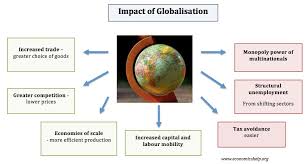
How Is Globalization Affecting the Key Actors in the International System?

How Is Globalization Affecting the Key Actors

How Is Globalization Affecting the Key Actors

How Is Globalization Affecting the Key Actors

Order Instructions:

Essay 1 (2000 words)

Is global governance desirable and/or necessary?

Essay 2 (3000 words)How is globalisation affecting the key actors in the international system?

ASSESSMENT

Criteria

Ensure you analyse and critique rather than simply describing the topic. This involves

using an analytical framework; – Choose relevant examples to illustrate your argument.

Tie theoretical perspectives to real-world examples; – Demonstrate comprehension of the

subject and ensure factual accuracy; – Structure their argument clearly – ensuring that their

essay flows from one point to the next; – Ensure you use evidence to back up the points you

are making; – Use high quality, relevant primary and secondary source literature and

reference their sources using a standard referencing protocol; – Proof-read you work before

submission, write in short sentences, use proper punctuation and grammar.

SAMPLE ANSWER

How Is Globalization Affecting the Key Actors in the International System?

Introduction

Globalization basically has no precise definition. In actual fact, globalization is in danger of becoming the truism of the modern era. Even so, the word globalization encompasses aspects of an extensive perception that there is a widening, deepening and accelerating of global interconnectedness in virtually every aspect of life (Rourke & Boyer, 2000). At the core of globalization is a global shift; meaning, the globe being shaped by technological and economic forces, into a collective political and economic arena. The three main perspectives with regard to globalization include transformationalist, the sceptical, and the hyperglobalist viewpoints (Verma & Singh, 2010).

Hyperglobalists: those who hold this viewpoint maintain the world today is a more and more global world wherein countries are being subject to immense political as well as economic processes of transformation. These processes serve to erode and fragment countries and reduce the power of political leaders. In circumstances such as these ones, countries are becoming gradually more the ‘decision- takers’ rather than the ‘decision-makers’ (D’Anieri, 2011). The sceptical: those with this viewpoint strongly oppose the perspective of hyperglobalists and maintain that present-day global circumstances are not unprecedented. According to them, although there has been an increase in social and international activity in the past few years, this has served to reinforce and enhance the powers of state in a number of domains (D’Anieri, 2011). Transformationalists: those who have this view maintain that globalization is producing novel economic, political as well as social situations that are actually altering powers of the state and the context wherein countries operate. Transformationalists do not try to envisage the outcome (Popa, 2014). They maintain that it is uncertain – but assert that politics is not just rooted in nation-states.

 Globalization

Globalization can suitably be seen as a process which exemplifies a change in the spatial organization of social transactions as well as relations, resulting in interregional or transcontinental flows and networks of activities, interaction as well as power (Kilic, 2015). Globalization is typified by the following: integration of international/global economic decision-making, integration of international economic decision-making, exponential growth in global fiscal transactions, increases in global Non-Governmental Organizations and Activities (NGOs), and strengthened political International Governmental Organizations (IGOs) (Goldstein & Pevehouse, 2006).

Furthermore, globalization is typified by 4 kinds of change: (i) globalization entails a stretching of economic, political and social activities across political regions, frontiers, and countries. (ii) Globalization involves the intensification of interconnectedness as well as flows of migration, finance, investment, and trade. (iii) The increasing intensity and extensity of international interconnectedness could be associated with an increase of international processes and interactions, as the development of global communication and transport systems increases the rate of the dissemination of information, capital, people, goods and ideas (Goldstein & Pevehouse, 2006). (iv) The rising intensity, extensity and rate of international interactions can be linked to their increasing impact such that the effects of distant occurrences could be very considerable in other places. In fact, the most local events and occurrences could have considerable international implications. As such, the boundaries between international affairs and domestic matters can become more and more blurred. On the whole, globalization could be described as the broadening, increasing, accelerating and rising impact of international interconnectedness (Nederveen & Dasgupta, 2009). When globalization is thought of in this manner, then patterns of international relations and connections could be empirically mapped in all major domains of human activity.

Principal actors in international system

 In the international system, the key actors include country government, international organizations, non-government organizations, multinational enterprises, inter-governmental organizations, and transnational corporations.

State Actors

On the modern world stage, the state is certainly one of the oldest and universally recognized actors. A State refers to a political unit which has sovereignty over a territory and the citizens in that territory (Gaur, 2015). Examples of states include sovereign country governments such as Italy, Canada, USA, UK, and Egypt among other countries.

Intergovernmental Organizations

Even as States are still the leading and main actors on the global stage, other important actors also exist such as intergovernmental organizations (IGOs). These are created by states, often through a treaty. The common IGOs are International Monetary Fund, World Trade Organization, International Criminal Police Organizations, and the World Bank Group. IGOs mainly do not have a way of enforcing state compliance with their decisions, perhaps except with the assistance of powerful nations (Kegley Jr. & Wittkopf, 2004).

Nongovernmental Organizations (NGOs)

Not every actor on the world’s stage has governmental roles. NGOs are essentially not-for-profit voluntary organizations which support public good or pursue it. These organizations are by and large involved in such things as economic development, issues pertaining to human rights, social welfare, as well as humanitarian assistance. Common non-governmental organizations are Greenpeace, the Amnesty International, Oxfam, and the Red Cross (Nederveen, & Dasgupta, 2009).

Multinational Enterprises

The other significant grouping of actors comprises multinational enterprises (MNEs). These are for-profit organizations with presence in more than 1 country. It is notable that some multinational enterprises such as Sony, General Electric, General Motors, and Wal-mart have very large amounts of monetary resources that equal or exceed the resources of smaller nations like Burundi, Fiji and Somalia. It is notable that an MNE’s interests do not essentially coincide with those of the countries wherein they do business, or even the MNE’s home country (Seitan, 2014).

Sub-state actors or domestic actors

These comprise groups of persons who have the same interests not beyond the countries which can affect the foreign policy of the State. Examples include tobacco sector and automobile sector in USA. These sectors, in essence, have interests in the country’s foreign fiscal policy so that they may sell automobiles or cigarette products overseas and decrease importations of competing products produced overseas. They can influence the decisions made with regard to their country’s laws with the aim of protecting the rights of workers (Antonelli, & Fassio, 2016).

 Intergovernmental Organizations (IGOs)

These are organizations whose members comprise at least 3 countries. These organizations are formed by countries to resolve common problems that give them authority of making collective decisions to deal with various problems and issues on the international agenda (Francioni, Musso & Vardiabasis, 2013). In IGOs, the representatives of country governments assemble to talk about issues which are of shared interests to member countries. There are 2 major kinds of Intergovernmental Organizations: the global Intergovernmental Organizations and the regional Intergovernmental Organizations. Global Intergovernmental Organizations are organizations with universal or nearly universal membership; this means that each country is a member such as the International Monetary Fund, World Trade Organization, and the United Nations. Regional Intergovernmental Organizations are essentially a subset of countries as members basing upon a certain interest or region, for instance the European Union and Association of Southeast Asian Nations (ASEAN) (Kegley Jr. & Wittkopf, 2004).

There are several reasons that cause countries to create or join Intergovernmental Organization. As per liberal institutionalism, states form Intergovernmental Organizations since it is in their best interest to form. With Intergovernmental Organizations, some problems or issues could be resolved easily and cheaper than without them. In particular, liberal institutionalism is focused on collective problems, for instance the security dilemma, the appeal to execute competitive tariffs, as well as the difficulty in agreeing to protect the environment (Art & Jervis, 2011).

Countries should correspond with one another and oversee other countries in order to ensure that they are actually sticking to their commitments to acknowledge many of the problems. For instance, in the case of free trade, the World Trade Organization was created to coordinate the negotiation of tariffs and offer a mechanism for dispute resolution. Some of these tasks may be more complex and costly to implement without the Intergovernmental Organizations (Taylor et al., 2014). There are times in which Intergovernmental Organizations are not only formed to resolve problems but also to offer a platform for discussing crucial issues (Art & Jervis, 2011). The United Nations General Assembly has no predetermined agenda but offers a forum for countries to talk about and debate matters that come up. Likewise, one of the goals of the World Trade Organization is to organize meetings at which countries would negotiate to resolve major issues (Goldstein & Pevehouse, 2006).


Common Intergovernmental organizations and their functions

The United Nations: This is in charge of maintaining international peace and security. It also develops friendly relations amongst countries. It also seeks to accomplish international cooperation in resolving global problems. Furthermore, it functions as a center for harmonizing the actions of states. World Trade Organization: this organization manages disputes that arise from trading partners. It also monitors trade in agriculture and manufacture commodities. ASEAN: this organization promotes regional economic, social and culture cooperation amongst the nations situated in the Southeast Asia region (Vadlamannati, 2015). NATO: this organization is a system of joint defense in which the member countries agree to collective defense in response to a military attack by a country that is not a NATO member state.

 Transnational Actors

These are actors which function below the state level. However, they function across the state borders. The 2 sorts of transnational actors include nongovernmental organizations and multinational/transnational corporations. Multinational/Transnational Corporations: Multinational corporations are firms which have headquarters in one country but do business extensively in other countries. Such companies are based in one country but have divisions that operate in other nations (Goldstein & Pevehouse, 2006). Put simply, such a firm is a big organization operating globally in different nations at the same time, with fixed facilities and staff members in state.

Types of multinational companies 

Industrial corporations manufacture their products in production facilities in different states and sell them to businesses and clients located in different states. The biggest multinational companies operate in the automobile, oil and electronic industries. Virtually every multinational corporation has its headquarters in the Group of Seven countries. Examples of these firms include Sony, Honda, Toyota, BP, BMW, General Motors, Wal-Mart, Total and Apple. Financial institutions like banks: these do business globally but have more restrictions compared to industrial corporations (Mehrabanfar, 2015). Examples include international airlines like Asiana Airlines, Virgin Atlantic; Hilton Hotels & Resorts and Sheraton; and services like McDonald’s fast-food chain.

Multinational corporations are becoming more and more powerful as autonomous actors. A lot of the industrial multinational corporations, Wal-Mart for instance, have yearly revenues of tens of billions of dollars annually. Multinational corporations can match most global companies in monetary resources as well as size. The biggest intergovernmental organizations, which is the United Nations, has an estimated two billion dollars annual revenue, which is really small in comparison to over 250 billion dollars for the largest multinational corporations. The biggest country economically, USA, has government revenues of over $2 trillion annually. This clearly demonstrates that the power of multinational corporations does not rival the biggest countries but in fact surpasses a lot of poorer countries (Francioni, Musso & Vardiabasis, 2013). Multinational corporations are viewed as citizens of the world and they are beholden to not any government. Head of Dow Chemicals Company once envisioned to purchase an island to construct the company’s head office. In such view, multinational corporations act internationally in the interests of their global stockholders. In actual fact, they do not owe loyalty to any country. Multinational corporations are motivated by the need to maximize profitability (Nederveen, & Dasgupta, 2009).

The operations of multinational corporations support an international business infrastructure linking a global community of businesspersons. For instance, an American manager who arrives in Tokyo Japan does not find a confusing and puzzling scene of strange customs, locations, as well as languages. Instead, this manager would be able to move through a known series of faxes and telephone calls, multinational hotels, airport lounges, business conference facilities, and international news broadcasts – most likely hearing the English language spoken in all of these (Mehrabanfar, 2015). Moreover, multinational corporations contribute to the development of their host country. As transnational companies operate in other countries, they create job opportunities for the locals in that country and in so doing help to stabilize the economy in that particular country.

 Nongovernmental Organizations (NGOs)

In the contemporary world, a lot of people find that by joining nongovernmental organizations, they may be able take part in the global system and lobby to influence international organizations. Most have joined as members of one or more nongovernmental organizations, which have roughly 30,000 members worldwide. Nongovernmental organizations are private global actors whose members are not countries, but rather volunteers from populations of 2 or more countries that have formed organizations to foster their common interests and ideals for the purpose of influencing the policies of intergovernmental organizations and country governments. Nongovernmental organizations handle many international issues and seek changes in the world for various causes like human rights, environmental protection and disarmament, among others (Nederveen & Dasgupta, 2009). Many nongovernmental organizations pursue objectives that are very much respected and positive, hence do not result in any controversies or a lot of resistance.

NGOs interact with multinational companies, nation-states, and sub-state actors, plus other NGOs. NGOs are increasingly becoming recognized in the UN and other forums, as real actors together with countries but are not equal to them. Some of the groups have a political purpose, some a humanitarian purpose, while others have an economic purpose. There are times in which nongovernmental organizations mix efforts by means of transnational advocacy networks (Antonelli & Fassio, 2016). By joining nongovernmental organizations, a lot of people learn that they may take part in the global system and lobby to influence multinational organizations.

Examples of nongovernmental organizations

A nongovernmental organization that particularly fights for human rights is the Amnesty International; a global movement of individuals campaigning for globally acknowledged human rights for everyone. They carry out research and generate actions aimed at preventing or ending serious human rights abuses and demanding justice for people whose human rights have been infringed. The main issues which have been campaigned include freedom of the press, welfare of children, protection of civilians during armed conflicts, rights of women, disability rights, rights of people with AIDS, human impact of pollution and environmental degradation among others (Goldstein & Pevehouse, 2006). The other sort of nongovernmental organizations is the religious movement. They are a politically active organization rooted in strong religious beliefs. Even though religious movements had a powerful influence in politics in the past decades for instance being able to cause a war between communities with different religious beliefs, religious movements these days are in fact peace makers between conflicting countries.

 Political Groups that Advocate Violence: Terrorists

Political factions which support violence or terrorism may really not refer to themselves nongovernmental organizations, but they operate in more or less the same fashion which is by interacting with countries and with relevant populations or institutions by means of violence and terrorist attacks. These groups have great power. They influence the international relations between different countries. One group that is currently active is the Islamic State group.

 International Criminal Groups

These actors are that are seen as transnational actors but they act in an illicit fashion. Most of these them have a great capacity of monetary resources which gives them the ability to influence the policies of the state (Goldstein & Pevehouse, 2006). Some international criminal groups can even threaten the security of the country. They are mainly operated secretly making it not easy for the authorities and the police to find them. These groups are largely involved in various crimes including human trafficking, drugs, prostitution, as well as firearms. Examples of international criminal groups include the Sicilian Mafia in Italy, Yakuza in Japan, and also Triads in Taiwan, Macau, and Hong Kong, Macau (Art & Jervis, 2011).

Impacts of Globalization

There are several effects that emerge from globalization which impacts different economies of the world. The production of goods and services is affected by different elements of globalization. This has also seen the development of different approaches of production such as capital and other inputs and labor that are primarily dependent on the levels of globalization. Additionally, competitiveness as seen in producing a good or service has resulted in the diffusion of technology that has resulted in the initiation of nations to other developed cities (Gaur, 2015). Having considered this, globalization is therefore ascribed as the force behind the efficiencies that have been experienced in affecting investment opportunities of different organizations within different nations and markets.

Investments are known to play a central role in technological transfer, formation of global investment and in industrial restructuring which have an effect in the national level (Luković, 2015). New technological advancements in different economies additionally remain an essential factor in globalization that stimulate competition and enhances the diffusion of nations through foreign direct investments.

Perception in world politics

Facts do not speak for themselves. Facts are organized by concepts, structured by theories, interpreted by worldviews and assessed in the light of individual and subjective value systems. Realism:  this view depicts the world’s political system as a disordered chaotic struggle for security and power amongst competing nation-states. There is no higher authority besides these countries (Verma & Singh, 2010). As such, countries individually, or alongside other countries, provide for their own defense. In essence, the only effectual way of assuring security is power. Idealism-Liberal Internationalism: this view maintains that there is reason to believe that the leading global role of countries may in fact be declining (Art & Jervis, 2011). Therefore, the world should be described not just in terms of country interactions, but also in terms of growing community.

Conclusion

In conclusion, even though countries remain as the most significant actors in the global system in today’s world, non-state actors have a growing power and influence in globalization. One of the biggest multinational enterprises has annual revenues which actually exceed some of the gross domestic product of poorer countries and this demonstrates their growing influences. As the world keeps globalizing, it would really not be easy to different between multinationals, states and other actors in a period of collapsing states and reemerging countries.

References

Antonelli, C., & Fassio, C. (2016). Globalization and the Knowledge-Driven Economy. Economic Development Quarterly, 30(1), 3-14. doi:10.1177/0891242415617239

Art, R. J., & Jervis, R. (2011).  International Politics: Enduring Concepts and Contemporary Issues (10th ed.). New York: Pearson Education.

Bourguignon, F. (2016). Inequality and Globalization. Foreign Affairs, 95(1), 11-15.

D’Anieri, P. (2011). International Politics: Power and Purpose in Global Affairs (Brief ed.). Stamford, United States of America: Wadsworth/Cengage Learning.

Francioni, B., Musso, F., & Vardiabasis, D. (2013). Key decisions and changes in internationalization strategies: The case of smaller firms. Journal of Strategic Marketing, 21(3), 240-259. doi:10.1080/0965254X.2013.790466

Gaur, A. (2015). Impact of Globalization on Trade and Employment. International Journal Of Multidisciplinary Approach & Studies, 2(5), 110-113.

Goldstein, J. S., & Pevehouse, J. C. (2006). International Relations (7th ed.). New York, United States of America: Pearson Education.

Kegley Jr., C. W., & Wittkopf, E. R. (2004). World Politics : Trend & Transformation (9th ed.). Belmont, United States of America: Wadsworth/Thomson Learning.

Kilic, C. (2015). Effects of Globalization on Economic Growth: Panel Data Analysis for Developing Countries. Economic Insights – Trends & Challenges, 67(1), 1-11.

Mehrabanfar, E. (2015). Globalization Streams in Futures Studies. Informatica Economica, 19(3), 96-106. doi:10.12948/issn14531305/19.3.2015.09

Nederveen P. J., & Dasgupta, S. (2009). Politics of Globalization. Los Angeles: SAGE Publications India Pvt., Ltd.

Popa, F. (2014). The Inference of Globalization from the Regionalization Process. Economics, Management & Financial Markets, 9(4), 486-493.

Rourke, J. T., & Boyer, M. A. (2000). World Politics: International Politics on the World Stage, Brief (3rd ed.). New York, United States of America: Dushkin/McGraw-Hill.

Seitan, S. (2014). Problems of the Impact which Globalization Has on the Macroeconomic Balance. Economic Insights – Trends & Challenges, 66(3), 49-57.

Taylor, P. J., Hoyler, M., Pain, K., & Vinciguerra, S. (2014). Extensive and Intensive Globalizations: Explicating the Low Connectivity Puzzle Of U.S. Cities Using A City-Dyad Analysis. Journal of Urban Affairs, 36(5), 876-890. doi:10.1111/juaf.12077

Vadlamannati, K. C. (2015). Rewards of (Dis) Integration: Economic, Social, and Political Globalization and Freedom of Association and Collective Bargaining Rights of Workers in Developing Countries. Industrial & Labor Relations Review, 68(1), 3-27. doi:10.1177/0019793914555851

Verma, S., & Singh, P. (2010). Organizing and Managing in the Era of Globalization. New Delhi, India: SAGE Publications India Pvt., Ltd.

Sorry, preview is currently unavailable. You can download the paper by clicking the button above.

We can write this or a similar paper for you! Simply fill the order form!

 

Leadership Assignment Research Paper


Leadership Assignment Research Paper

Leadership Assignment Research Paper

Leadership Assignment Research Paper

Order Instructions:

Last year Target pulled out of Canada completely. This was a surprise to say the least. Target is a US based company. When it would sell something in Canada the company would have to eventually change those Canadian dollars into US dollars. See actual news link herein

Target pulling out of Canada

http://www.cbsnews.com/news/target-pulling-out-of-canada/

The people who work at these major corporations are not stupid they had to project what was getting ready to happen. Recently it has been reported:

Canadians Panic As Food Prices Soar On Collapsing Currency

http://www.zerohedge.com/news/2016-01-13/canadians-panic-food-prices-soar-collapsing-currency

So how would an entity be able mitigate its risk with an accounting system?

SAMPLE ANSWER

Leadership involves the skill that enables one to approach risk that faces an organization in a manner that the risks at hand can be evaded consequently. A leader should be able to identify risks, assess them adequately, and develop algorithms that can counter the risks and hence remaining relevant in the market. Financial institutions and their accounting departments are always focused on the ever growing risks in the accounting field. Hence proper strategies and techniques should be implemented and therefore in the case of any risks they may be properly countered (Sundheim, 2013).

Shareholders in a financial institution together with their account holders are always in the urge and the run to avoid the tax criminals that are ever growing. They differ since they are from the voluntary disclosures by the shareholders to the fines incurred. It also involves the back payment of tax. Securing one’s beneficial ownership in an organization is important in criminal tax avoidance and also committing other accounting crimes (Léautier, 2014).

It is the interest of every business to thrive in their field. Team leaders should always provide direction to a company to realize their full potential in attaining their goals. Changes to the rules and recommendations ensure transparency in an organization’s operations. These include the responses made by a team leader in ensuring that the right path is taken when any decision is made in any organization.

Upon conclusion, team leader responses should always be sound in making their decisions pertaining their organizations and also taking the right steps in drawing of an organization’s conclusion.

References

Sundheim, D. (2013). Taking smart risks: How sharp leaders win when stakes are high. New York: McGraw-Hill.

Crutchfield, N. (2013). Safety Culture: An Innovative Leadership Approach. Elsevier Science & Technology.

Léautier, F. (2014). Leadership in a globalized world: Complexity, dynamics and risks.

We can write this or a similar paper for you! Simply fill the order form!

 

Wells Fargo Assignment Paper Available

Wells Fargo
Wells Fargo

Wells Fargo

Wells Fargo

Order Instructions:

Requested deadline Friday 2/12/16 must be at least 5 pages, which doesn’t include title & reference pages, using APA formatting. Each paragraph should contain at least 4 sentences and should not end with citied material ex. (Franklin, 2015.) Each paragraph MUST have supporting information from the reading assignment, for this assignment review weeks 3-5.

I am including the actual assignment from the course as well as the headings required, the chosen company is Wells Fargo. Please use the following to access South University’s as all information must be supported by the weekly lecture & text reading (located under the syllabus tab) as well as the school library. Lecture readings from weeks 4. INTERNET SOURCES ARE NOT ACCEPTED. Feel free to contact me at 334-201-0479 I have also included the grading criteria.

https://mycampus.southuniversity.edu/portal/server.pt
User Name – tiffany_shakepeare
Password – Pr@1seH1m
Once you have logged in successfully you have to click launch class and then click the academic resource tab to access the library. When you click the syllabus it will give you access to the weekly lectures & text readings.
Please remember ALL references must come from these areas.

Please see attached document for required headings. **Reminder each section must be supported by information from the assigned readings weeks 3-5.

SAMPLE ANSWER

Introduction

In order for an organization to achieve its objectives within a business environment, it is essential that some elements are considered. These elements include the manner in which the organization develops a culture of governance through leadership and how these leaders communicate within the organization (Feizabadi, Hamidi, Khatibzadeh, & Ghamati, 2011). This paper therefore aims at determining the manner in which leadership approaches are incorporated within the functions of Wells Fargo and the effectiveness of communication in achieving the organizations goals.

Communication Structure

According to week ones materials, communication is a very important aspect in organizations in leadership of teams. According to the course material, communication is ascribed as the process through which information is exchanged and understood by two parties or more with the intention of influencing or motivating a behavior (Schmitz, 2016). In order to improve the element of communication within a workplace, it is essential for the managers to be aware of the elements that influence the manner in which people communicate.

Managers therefore have the sole responsibility of gathering information from both the inside and outside of an organization and dispense this information within the organization. The manager’s approach therefore seeks to divert the attention of the entire organization towards the values, vision and the desired goals of the organization with the aim of influencing the employees to act in a manner that ensures they achieve their goals (Schmitz, 2016). In this, it is therefore essential to determine that the managers remain the main facilitators of strategic conversations through the inclusion of open communication that actively listens to the views of others, asks relevant questions and provides feedback to learning and change.

This is the case at Wells Fargo where there is a communication structure put in place. Wells Fargo has employed a decentralized approach to communication that allows the workforce to freely communicate with other team members with the aim of meeting a goal (Schmitz, 2016). This approach therefore allows the members to process information amongst themselves until they reach a consensus and is considered an effective approach especially in work environments where work mates needs free flow of communication within each department.

According to the class notes provided on week four, Schmitz (2016) supports the fact that in organizations where the communication network is not centralized, employees have the free will of passing information at ease. However, with the decentralized communication approach as depicted in the case of Wells Fargo, all the employees are involved in the process of communication, a factor that sees the organization arrive at a mutual decision that binds all of the work teams. Wells Fargo therefore incorporates other communicational channels such as the inclusion of short messages, face-to-face communication and phone conversations among other channels. This has enabled the company be achieve its organizational goals irrespective of the fact that there are barriers and hindrances to communication within the organization.

Influence of Culture

It is essential to determine that cultural values are a vital element within an organization and are blended with the company’s environment, goals and strategy. According to the notes, the right fit between an organizations culture, strategy and the environment are associated with different cultures (Schmitz, 2016). In this case, it is essential to determine the fact that culture determines the personality of an organization and is comprised of the values, beliefs, norms, assumptions and tangible signs of an organization members including their behaviors.

Wells Fargo therefore believes in a culture of developing caring mindsets to life whether the company interacts directly with the clients or works with them behind the scenes. This culture has therefore influenced the manner in which the employees carry out their functions, a factor that has seen the organization meet its goals (Schmitz, 2016). Culture additionally shapes the manner in which employees relate and communicate with each other within the work environment with this enhancing the skills of the employees.

Barriers to Communication

Sources from the class noted depict that there are several barriers to communication a factor that is prevalent at Wells Fargo and other organizations. Ignorance from some members of the workforce has been one of the barriers to communication that has seen the organization largish behind in the achievement of its goals (Pozin, 2012). Employees within this organization are in disposal of valuable information that can improve the productivity of the entity but fail to share such information.

Language barrier is additionally another barrier to communication in this company. Considering the fact that the workforce in this company are of different cultural backgrounds, the element of communication tends to become a challenge to them, a factor that decreases the productivity of the company (Pozin, 2012).  The class notes delivered in Week 4 clarifies that Managers need to develop an environment that enhances the element of communication. This has seen Wells Fargo develop an open bounder less approach to communication with the aim of breaking the barriers that stand on communication.

Methods to Overcome Barriers

The fact that there are barriers to passing information does not mean that it is over for an organization. The leadership in Wells Fargo should ensure that all barriers to proper communication are managed efficiently (Pozin, 2012). An instance of this can be seen through the inclusion of symbols to ensure that the element of language barrier is dealt with effectively. Training of employees is another approach of ensuring that some of these barriers are dealt with successfully. Training the employees on the importance of attaching value to any obtained information would be very useful in doing away with a barrier to communication such as ignorance. With this, all information passed among the workforce will be received with seriousness thus fostering effective communication.

For the purpose of overcoming communication barriers, the leaders should select appropriate communication channels to incorporate within the functions of an organization. The selection of a communication channel can be done through an analysis of the advantages and disadvantages associated with each communication channel. Schmitz (2016) states that there are both the positive and negative aspects of each method selected in passing information. Additionally, the leaders should grow a strong understanding of givers and takers in the organization. In one study, Grant determined that the single biggest predictor of a team’s effectiveness was the amount of help and support that members gave to one another’.

Leadership Style Analysis

At Wells Fargo, servant leadership exists. This is a type of leadership where the workforce feels the leader is not all about him, but focuses on the interests of the employees. According to the materials offered in week one, the element of servant leadership operates in two dimensions. The first entails the fulfilment of the goals of the subordinates and their needs with the aim of meeting the larger purpose of an organization. Secondly, servant leaders are the givers of power, recognition, ideas, information and credit for the accomplishment of goals and objectives. The servant leadership approach in Wells Fargo has been brought about by the leaders who value team work (Pozin, 2012). This has been useful in fostering a positive response from the workforce. The servant leaders in wells Fargo believe that the workforce has to benefit from other aspects apart from remuneration.

Types of Leaders within the Organization

Different organizations apply different leadership styles in achieving their organizational goals. In Wells Fargo, it is significant to note that there are different leadership styles employed. Many of the leaders within this organization are considered as servant leaders who work for two primary reasons that include fulfilling their subordinate’s goals and achieving the bigger picture of an organizations purpose (Pozin, 2012). Servant leaders are known to give things away such as information, power, ideas, and so on.

Additionally, at Wells Fargo, there are authentic leaders as well who are known as people have an understanding of their selves and who act in consistence with ethical values within an organization. On the other hand, these leaders’ also have the capacity to inspire others with their authenticity and openness with this inspiring commitment, trust, and respect in organizations (Pozin, 2012).  It is worth noting that the authentic leaders end up motivating the workforce through their openness. The servant leaders end up motivating the workforce through showing that it is good to work as a team.  Authentic leadership is known to bring about trust and commitment in a company.

Level of Trust within the Organization

Wells Fargo has been able to witness commendable positive strides in terms of trust. The presence of the authentic leaders has been able to develop such trust. This has led to more commitment from the workforce. With such trust, the flow of communication has been effective, something that has contributed positively to the operations of Wells Fargo (Grant, 2013). The human resource management in the organization has also assisted in the high level of trust in the organization. This has been through the management of talent in the organization. This has been an important thing since the human resource management has led to a high level of competitive success of the company.

Recommendations for Improvement

All organizations are supposed to ensure that they improve in communication and leadership. Wells Fargo needs to broaden the scope of its communication structure. Any weaknesses should be done away with to allow efficiency to grow in the communication structure. The leaders should ensure that all communication channels are made better and efficient. Regarding language as a communication barrier, Wells Fargo should create symbols for the organizations to pass some important information.  The leaders should also improve on their leadership styles to ensure that the level of trust is made stronger.

Recommendations for Motivating the Workforce

All organizations should ensure that the employees are fully motivated. Motivation of employees refers to boosting the morale necessary for achieving a certain objective of an organization. Therefore, the workforce at Wells Fargo needs to be motivated for better results. The management at Wells Fargo needs to use compensation as the major method of motivating the workforce. The company should be able to pay good perks to the employees for work well done. The salaries of the employees should also be reviewed regularly for the employees to feel valued thus motivating them. Wells Fargo should also improve the working environment for the workforce.

Feizabbadi, Hamidi, Khatibzadeh & Ghamati (2011) purport that the environment remains essential for human beings at work. A team will end up getting motivated when the environment at the company is improved. Additionally, Wells Fargo should consider the use of the equity theory. Equity theory states that the workforce gets motivated when they feel that there is equal treatment by leaders. Therefore, Wells Fargo should treat its employees equally for the purpose of motivating them. The goal setting theory can also be helpful to Wells Fargo. This theory of motivation states that the workforce can be given specific interesting goals to pursue with the management participating in checking progress, something supported by Pozin (2012) by saying that if you want happier employees get rid of the bosses.

Conclusion

The decentralized communication structure employed by Wells Fargo has been able to improve the trust in the organization. It is advisable to have the management of the company keep on reviewing the structure in place. The leaders should be able to put in place ways of removing the barriers to proper communication (Pozin, 2012). The servant leadership style at Wells Fargo should be improved continuously. The fact that trust has been high in Wells Fargo does not mean it is sufficient; more trust should be sought and maintained.

References

Feizabadi, M.S., Hamidi, M., Khatibzadeh, M. and Ghamati, H. (2011). A survey of the relationship between job stress and the quality of life in sport teacher in Mashhad City. Retrieved from http://ac.els-cdn.com/S1877042811029399/1-s2.0-S1877042811029399 ain.pdf?_tid=28dca252-ceeb-11e5-97550000aacb361&acdnat=1454994690_3207d5f808abff2c0aaa06cc3fe3bb94

Grant, A. (2013). “Givers Take All: The Hidden Dimension of Corporate Culture,” McKinsey Quarterly, Issue 2 (2013): 52–65; and Grant, “Turning the Tables on Success.” 44.

Pozin, I. (2012). “The Takeaway: Three Things That Motivate Employees More Than Money,” Inc. (February 2012): 6.

Schmitz, S. (2016). Managing Communication. Retrived from https://digitalbookshelf.southuniversity.edu/#/books/9781305809772/cfi/12/10!/4/2/6/2@0:40.8

We can write this or a similar paper for you! Simply fill the order form!

 

Capital punishment argument Assignment

Capital punishment argument

Capital punishment argument

Capital punishment argument

Order Instructions:

These questions need to be answered for the paper please.

1- Statement of the issue – one or two sentences.
2- Review of the authors arguments – one or two paragraphs stating at least three major points made by each author.
3- Comparison of arguments – at least one paragraph contrasting what each author had to say.
4 – Your opinion – at least one paragraph explaining either
a) why you agree with one of another, or
b)why you disagree with all the authors.
5- Discussion Question – an open ended question that you derive from the readings.

This is the textbook name just in case you need to know or if you want to quote anything. “The Enduring Debate (Norton, 2014)

SAMPLE ANSWER

Statement of the Issue

Constitution interpretation is done in the old fashioned way as evident where the court came to a controversial decision in the Roper Case, proving to be the statement of the issue (Canon, Colenman & Mayer, 2014). This case happened on the ground where one person is defending the opinion on the ground that people ought not to be subjected to greater punishment like; capital punishment.

Authors Arguments

Antonin Scalia doesn’t think that the Constitution should be interpreted in a strict manner or either sloppily. It should be interpreted in a more reasonable manner. Many of the interpreters do not deserve the description strickt and he believes that the text is given the meaning it had if it is well adopted in the right manner. In the modern position, this happens to be opposite as questions are asked as though it is some affliction that seizes people (Canon, Colenman & Mayer, 2014). According to the author, when a constitution changes, it doesn’t need to be given an expansive meaning, rather it is given whatever meaning is needed so as to make it simpler to be changed when future necessities arise. John Marshall explained that we have to know that it is the constitution we are expounding, thus, it has to be given an expansive meaning. The reason behind all this is to help accommodate events that a person is familiar with and which will happen in the future.

Comparison of Authors Arguments

Antonin Scalia talked about how the constitution is a big difference that one could not lie about it. There is no need for a lawyer to make a person understand it (Canon, Colenman & Mayer, 2014). The constitution is a living morph and a person can’t contrast it that first. John Marshall talks of ways that the constitutions use to guarantee the right to represent by counsel and this did not mean that the state had all the mandate of paying for the counsel as the Antonin Scalia stated. John Marshall stated that the constitution has a process named the due process and it mostly states that no person can be deprived off his life only where then law is involved in the whole process. However, Antonin Scalia contradicts this statement by saying that a person can lose everything in the court as his life, liberty and property are not guaranteed in any way.

Own Opinion

It is prudent to agree with the first author as he wanted the constitution to be interpreted in a more reasonable manner.  Increased sentences in the court as mentioned by John Marshall meant that it didn’t have all the many trials, and this act violated the right to trial by jury (Canon, Colenman & Mayer, 2014). A person will definitely disagree with Black’s opinion that stated that the lesser are, better off than we are. On the other side, Burton argued that designed to court and the districts courts are designed to work as the school board and have the capacity to formulate the program for desegregation. It is right to disagree with the political scientist named Robert Dahl, who viewed the court as a powerless tool that can affect the course of national policy.

Discussion

It is next to impossible to beat somebody with nobody. Such a phrase is categorized as the principle of legal interpretation, which require to be well considered. Increased emphasis which tends to be upon included the people’s rights and any active powers are highly valued. In most cases, increased emphasis leads to a better constitutional law that helps in the promotion of governmental solutions.  The solutions are consistent with individual dignity and all community needs.

References

Canon, D., Colenman, J., & Mayer, Kenneth. (2014). “The Enduring Debate. Retrieved from  http://books.wwnorton.com/books/webad.aspx?id=4294975553 on 8th February 2016

 We can write this or a similar paper for you! Simply fill the order form!
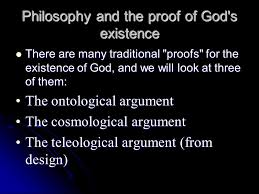
 

Proofs of God Existence of God research paper

Proofs of God Existence

Proofs of God Existence

Proofs of God Existence

Order Instructions:

Title:Proofs of God Existence of God)

Pages: 8 excluding the bibliography & title page

For the critique find a recent (last 25 years) peer-reviewed scholarly journal article of 10–20 pages on an area of theology covered in this course. Such journals are The Journal of the Evangelical Theological Society, Bibliotheca Sacra, Grace Theological Journal, and the Westminster Theological Journal and are NOT magazines like Christianity Today, Visions, etc., The Online Student Library Services at www.liberty.edu/informationservices/ilrc/library/

**DO NOT USE ANY OUTSIDE SOURCES

I. Introduction as a brief summary of the content of the article (1–2 paragraph). Include:

A. The author’s purpose, goal, context, question, and/or issue; indicate to your reader what the broader topic of the article is.
B. Can you identify the author’s thesis? HINT: compare the opening paragraph with the conclusion to identify what was promised vs. what was claimed by the author. NOTE: do not confuse an author’s purpose with his/her thesis. The purpose may tell why the author is writing, or what the goal might be, but a thesis takes a position or stance to fulfills that purpose or goal. Suppose an article’s purpose is to describe pre-Fall Eden, or clarify a distinction between physical and spiritual death. The thesis would be the position that takes a stance to achieve that goal: “The death of leaves occurred during photosynthesis in Eden prior to Adam’s sin, which is a kind of ‘death’ within pre-Fall Eden.” Locate that “position” statement.
C. The brief overview need be only a few sentences so your reader knows the article’s overall argument. Do not fill the JAC with in-depth summary. Leave space for the next component, which is more important if you wish to get full points.

II. Critical Interaction (2–paragraph)

A. “Critical” here does not mean to criticize, to find something wrong, or to dislike something. Instead, in academic writing it is to compare/contrast scholarly positions. So, just show how the article’s author compares/contrasts to the way Erickson or an Elwell article discusses the same issue (you may use other scholarly works, the textbooks are just a recommended pair of sources, but you may use others, too).
B. What strengths can you affirm or weaknesses expose through this process? This is how you make your voice heard in the interaction between these scholars.
C. When you reference the critiqued article, the one on the cover page, you do not need to use footnotes, you can just cite page #s in parentheses (p. 123). Other citations must use footnotes in the “Notes & Bibliography” style (chs. 16-17) of Turabian.

III. Conclusion (1 paragraph)

A. Note omissions that seem glaring, but be cautious. No one can say everything in an article. An OT scholar may not refer to NT texts, so it may be unfair to point that out
B. Questions you can raise or applications you can make are good here (e.g., how will it be useful in your paper; how your own theological positions may have changed, etc.) Bibliography On a new page, under “Bibliography,” list the three or more works cited by you: the article itself plus the two or more outside sources. Alphabetize this list. Follow the “Notes & Bibliography” style for Bibliography entries (the “B” examples in chs. 16-17 of Turabian).

Format using Turabian’s “Notes & Bibliography” style1 (see chs. 16-17 in Turabian): • Use Turabian footnotes; not endnotes, parenthetical citations (chs. 18-19), MLA, or APA. • Use 12-pt Times New Roman font (you may format “Footnote Text” style for 11 or 10 point font if you wish). • Double-space body text. However, single-space footnotes, Bibliography entries, block quotes, and headings (these then need an extra blank line after for visual separation; if you right click in any text and choos “Paragraph…” you can set spacing “After”). • Keep headings simple: Introduction, Critical Interaction, Conclusion, Bibliography would be sufficient (cf. Tur. ed. 8, pp. 391-92, or the Seminary Writing Guide). • Use 1” margins all sides; use left justified paragraphs, leaving ragged right margins; use a 0.5 in. first line indentation for body text paragraphs. • Omit extra spacing between paragraphs (MS Word has a default 8 or 10 pt space after paragraphs that must be set to 0). Any style in MS Word documents can be modified in the “Format” menu: Format > Style… > highlight “Normal” in the list of styles > Modify > Format > Paragraphs… to set spaces “After” each paragraph to “0.” • NOTE: “local guidelines” for the Seminary’s Writing Guide supersede Turabian 17.2 (http://www.liberty.edu/seminary/index.cfm?PID=28160). Just omit the reference that commercial databases such as ProQuest, EBSCOhost, etc., attach to journal articles. Cite as print articles (any PDF actually is a scanned print page).

SAMPLE ANSWER

Introduction

Different opinions relating either in favor of the existence of God or in opposition has remained a controversial element for a considerable period.  It is therefore essential to note that most of the affirmations that have existed in proving the presence of God are primarily based on the mysteries that are involved in nature and the origin of humanity and the universe. In as much as the existence of God remains an objective matter, Mander’s approach in proving his existence remains one of the efficient approaches geared towards removing the doubts that exist in the human mind. This paper therefore seeks to carry out a critique on the factors that prove God’s existence.

Thesis

The author’s thesis therefore provides the fact that God’s existence determines the reasons why the universe and its contents are present.

In his introduction Mander gives a depiction of his own existence and alleges that he is a thinking thing.  Mander therefore takes the opportunity of eradicating the element of doubt on the perception that his sensory experiences may not exist outside him but do exist inside him[1]. In the conclusion of the author provides a substantial factor that human beings may not exist independently considering the fact that they have been created by an infinite being that is eternal, independent and hold a higher power and intelligence[2]. The author in his conclusion therefore alleges that this infinite being remains the rationale behind the existence of humanity and everything surrounding him, a factor that points out to the fact that the being is God.

The author’s purpose in this paper is therefore aimed at establishing the validity of God’s existence amidst the different merging schools of thought that oppose this fact[3]. This therefore determines the fact that the goal of the author is in developing a ground that ensures a belief in God’s existence, a factor that has been supported by several literatures. This paper therefore provides a hypothesis that seeks to address:

  1. How we acquired the concept of God
  2. Where scientific laws find inclination on God
  3. Where the sense of right and wrong come from.

Zhang on the other hand believes that it is necessary to prove the existence of God which remains a crucial element in establishing the reasons why human beings and nature exist. According to this author, the desires of people has led them into a state of emptiness and lack, a factor that has seen humanity fail to notice the emptiness and lack, that would be filled by the presence of an ideal presence[4].  Zhang through this literature therefore seeks to provide proof on the existence of God.

Having assented to the fact that God exits, this author takes another view and determines to seek answers the question as to why human beings acquired the concept of God. In developing a response to this, Zhang also gives a description of three ideologies: adventitious, innate and factitious.  The concept of adventitiousness is determined by the knowledge that human beings gain through the process of life. The factitious ideas on the other hand are determined to be the ideas that we gain from our creative imaginations and lastly ran innate idea is considered as an idea that comes from within us. According to this author, this definition gives a clear depiction of the fact that the acquisition on knowledge possessed by human beings on the existence of God is something that human beings are born with and which God placed in every individual[5].

Descartes’ clear perception is therefore guided by the fact that God exists and this is as a result of his perfection. In justifying this Descartes’ gives an elusive illustration and mentions that in order for an individual to be considered a betrayer[6], there must have been a detection of some faults. Considering the fact that God is perfect ad infinite the element of God being a deceiver betrayer is unjustified.

  1. Critical Interaction

In the authors approach in proofing the existence of God, he takes a closer look at two things, the essence and his existence. Before having knowledge on something that exists one is always aware of the essence. This therefore means that in determining the essence of things it is required that a thorough understanding on the reasons why certain things exist and are not available is determined. This therefore gives a depiction of the manner in which human beings perceive things.

Mander’s views weighed upon the lenses of the arguments of Siniscalchi (2013) on the essence and existence of God tends to agree on some issues. Siniscalchi alleges that the existence of God is an element that may not be proved or disapproved. According to this author, the scriptures take stance in bridging this gap with the element of faith on the fact that God exists (pp.697). The author brings in context Hebrews 11:6 and states that scriptures confirm that anyone who comes closer to God needs to have some element of belief on the fact that God exists and rewards those who commit to seek Him. However, this scripture leaves a lot to be determined. In any case God exists as is claimed then chances are He would appear to prove his existence to the world which is sceptic about this factor[7]. However this would therefore means that if God revealed his existence to humanity, the element of faith would lose its true meaning.

Siniscalchi (2013), in his journal alleges that it is essential to denote that God is not a thing that anyone can be moderately interested in[8]. According to Siniscalchi, if God’s existence cannot be proved then there are no reasons why humanity is interested in proving his existence. This author therefore supports Mander’s views on the fact that human beings are empty and need a vacuum to fill the emptiness in their hearts. This emptiness can never be filled by any other thing but by God who created and authored our lives[9]. The knowledge on God’s existence may therefore be denied on intellectual grounds but the presence and existence of God in humanity and around human beings remains an obvious element. Considering the fact that different people through the face of history and in all civilizations and culture believe in this existence, there is a rationale behind it.

Siniscalchi therefore brings into light other logical arguments that support the existence of God. The author therefore argues that God is a being which cannot be conceived, a factor that depicts the fact that God’s existence if greater than his nonexistence[10]. This point therefore takes an ontological stand that explains the fact that if Go did not exist then there would have not been a greater being who would have been conceived, a factor that would contradict God’s definition. Mander’s views in line with this factor therefore tends to slightly vary considering the fact that this author believes that since the universe plays a significant role in life, then there is a initiator of the universe.

Desecrates gives an illustration by alleging that if the earth was situated closer to the sun, the world would have experienced numerous challenges considering the fact that the earth would not be a conducive place to live in since everything would die. This therefore provides a fact that there is a designer who figured out everything in the creation of the universe. According to Hunter (2015), God’s existence can be proved by the fact that everything and every effect in the face of the universe have causes. The universe and everything that exists in it according to Sousa are underpinned to have had a cause since they are effects[11]. This author therefore proves his point by supporting the idea of Siniscalchi in proving that there is a force behind the existence of everything and the cause is attributed to God.

Mander on the other hand takes a moralist argument in proving the existence of God by alleging that in every culture throughout the source of history, there is an element of law that determines the rights and wrong in the society.  As a result of this, human beings are aware of the rights and wrongs, a factor that has seen individuals avoid murders, thefts, lies and immoral actions rejected universally. This sense of right and wrong according to this author therefore emanates from God.

Having determined this, I believe the views of the authors can be tested by scripture in determining the fact that God exists.  It is essential to mention that the scripture mentions that people at some point will reject the word of God on the knowledge of God’s existence and choose to focus on lies, a factor that can be substantiated in this case[12]. As featured in Romans 1:25, Humanity will exchange the truth of God for lies and choose to worship created things rather than the true God who needs to be praised forever. It is therefore essential to note that people have no proper excuses on proving the existence of their creator considering the fact that God has invisible qualities. However, as scriptures determine in Romans 1:20, his eternal power and divine nature can be depicted and understood in order to make men find no excuse.

Conclusion

As determined in this study, different opinions relating either in favor of the existence of God or in opposition has remained a controversial element for a considerable period. This therefore provides the fact that most of the affirmations that have existed in proving the presence of God are primarily based on the mysteries that are involved in nature and the origin of humanity and the universe. It is therefore essential to mention that people tend to refute God’s existence as a result of the influences that have been wrought by science that seek to determine proofs on the existence of God. Humanity therefore forgets the fact that the creation of the universe and everything in it is a science that was authored by the same God. It is therefore essential to note that God remains the rationale behind the existence of humanity and everything surrounding him, a factor that points out to the fact that the being is God

This knowledge is therefore vital in the contemporary society since its shapes the community into realizing that humanity needs to be responsible for God and they need to live lives that reflect the true image of God. Considering the fact that God exists, we need to remain accountable to him with our lives and actions. If in any case we are influenced to believe that God does not exist, then we can do whatever pleases us without worrying about God’s judgment. It is therefore essential to note that even those who deny the existence of God still believe and have never found answers to the development of the universe.

Christians therefore need to consider that God’s existence can be felt in their everyday lives since God is spoken of every single moment. Even when his audible words may not be heard, but his presence can be felt and his leading as well. It is also essential for Christians to embrace the love of God and desire in his grace. This knowledge should therefore be shared with other Christians with the aim of strengthening their faith on God since several ideologies are emerging to challenge the existence of God.

References

Hunter, H 2015, ‘George Berkeley’s proof for the existence of God’, International Journal For Philosophy Of Religion, 78, 2, pp. 183-193, Academic Search Premier, EBSCOhost, viewed 5 February 2016.

Mander, W 2013, ‘On arguing for the existence of god as a synthesis between realism and anti-realism’, International Journal For Philosophy Of Religion, 74, 1, pp. 99-115, Academic Search Premier, EBSCOhost, viewed 5 February 2016.

Mizrahi, M 2012, ‘Jewish Survival, Divine Supervision, and the Existence of God’, Shofar: An Interdisciplinary Journal Of Jewish Studies, 30, 4, pp. 100-112, Academic Search Premier, EBSCOhost, viewed 5 February 2016.

Siniscalchi, GB 2013, ‘New Proofs for the Existence of God: Contributions of Contemporary Physics and Philosophy’, Heythrop Journal, 54, 4, pp. 696-697, Academic Search Premier, EBSCOhost, viewed 5 February 2016.

Sousa, D 2014, ‘Epistemic Probability and Existence of God: A Kierkegaardian Critique of Swinburne’s Apologetic’, Heythrop Journal, 55, 1, pp. 45-58, Academic Search Premier, EBSCOhost, viewed 5 February 2016.

Wee, C 2012, ‘Descartes’s Ontological Proof of God’s Existence’, British Journal for the History of Philosophy, 20, 1, pp. 23-40, Academic Search Premier, EBSCOhost, viewed 5 February 2016.

Watts, David. “New Proofs for the Existence of God: Contributions of Contemporary Physics and Philosophy.” Science & Christian Belief 24, no. 190-191. Academic Search Premier, EBSCOhost (accessed February 13, 2016).

Zhang, L 2014, ‘A Logical Reflection on the Modal Argument for God’s Existence’, Philosophical Forum, 45, 3, pp. 273-284, Academic Search Premier, EBSCOhost, viewed 5 February 2016

Introduction

It is essential to note that the scriptures were authored for everyone with the authors having a particular audience in mind. Fee and Stuart allege that the interpretation of the scriptures is required in determining its external relevancy and historical particularity.  This therefore depicts the fact that the Bible is a divine revelation that needs to be humanly communicated. An individual therefore needs to understand the meaning and the intent of the original writer by conducting an exegesis and use sound hermeneutic to evaluate the scriptures contemporary significance and apply that in life.

According to Fee and Stuart the best approach in the interpretation of the Bible would be the consideration of the textual and linguistic approach. They explain that the textual issues are primarily focused on determining the original text and its linguistic focus on an individual’s translation. Theories of translation on the other hand vary from scripture to scripture, a factor that requires the readers to think contextually. This paper therefore seeks to determine the manner in which scriptures can be read for all its worth.

Critical Analysis

In interpreting the epistles, it is essential to consider the element of cultural relativity that primarily focuses on determining what needs to be transferred to the first century from the transcendent truth. It is essential to note that a text may not mean what it wouldn’t have meant to its author or to the readers[13]. Additionally, when sharing the same situation with the original audience, it is essential to note that the message for us still remains the same. Through a careful exegesis, a reader can reveal the principles that may extend to the contemporary application of the scriptures. This therefore means that a reader needs to resist extrapolating too far from the intent of the writer.

In the fifth chapter of Stuart and Fee’s book the author takes a look at the narratives that gives a depiction of Gods story that is based on the historical events. The Biblical narratives give stories that have a timeless significance to the readers. Fee and Stuart therefore give the three levels of narratives in which they mention the top level that is considered as the metanarrative that comprises of the big picture of the redemptive history that begun from creation to the eschaton[14]. The second level is comprised of Gods approach in redeeming humanity through the major covenants. It is therefore essential to consider the fact that the first level comprises of the stories that consist of the characters, plot, and plot resolution that gives a depiction of the three caveats that are expressed through allegories that are full of hidden meaning that is intended to teach moral lessons to the readers.

The sixth chapter provides a hermeneutical suggestion on the elements of biblical precedence. The author depicts that the book of Acts is divided into six panels that are delineated by short summaries and statements. Each panel therefore briefly builds upon another by giving an overall thrust of the expansion of the Church into the Gentile community through the power of the Holy Ghost[15]. The theme of the books therefore remains in setting a path for the expansion of the church outside Jerusalem. The authors therefore allege that in interpreting this narrative, it is essential not to use an analogy that is based on the biblical precedents as the authority for contemporary practice. Additionally, Fee and Stuart also allege that biblical narratives always have illustrative patterns that can be seen as repeatable even when they are not normative.

On the Gospels, Fee and Stuart alleges that these are unique genres that are characterized by layers of context. Considering the fact that they were written decades after the main events recorded, the readers need to consider the historical context of the authors[16]. The context of Jesus can therefore be assimilated by taking a deep look at the first century of Judaism in Israel. The reader therefore needs to think horizontally by reading each periscope with the awareness of the parallels that are involved. On the other hand, the readers also need to think vertically by recognizing the historical context of the authors and Christ. The eighth chapter of the book gives an interpretation of the parables as they were used by Jesus. Fee and Stuart therefore alleges that the main idea in the parables is that they were designed to proclaim the kingdom by calling forth a response.

In the ninth and tenth chapter of the book, Fee and Stuart depict how to deal with the laws and prophets. In this, it is essential to consider the fact that the readers need to understand the nature and the role of the law in Israel in order to ask the relevant questions on how this can be applied under the dispensation of the new covenant. God’s law for Israel was therefore the approach used in binding the readers through a vassal relationship[17]. In this case, the Old Testament is comprised of civil and ritual laws that enforce the conduct of the public on religious practices that have to be renewed.

In as much as Christ renewed the potions of these ethical codes, it is essential for the readers to understand that these can be explicitly renewed and applied today. It is therefore essential to understand that the laws are covenant stipulations in which the roles of the prophets need to be focused on first[18]. The prophets served primarily as Gods spokesmen and the enforcers of the covenant. These books are therefore a collection of the spoken oracles that are presented in their unique chronological sequence. It is therefore recommended that in interpreting these books, there is a need to read the Biblical dictionary before understanding the prophetic books.

According to Fee and Stuart, the Psalms remain complicated in interpreting and understanding since they are considered as prayers to God within the ancient context. The element of Hebraic poetry is therefore drenched in the Psalms through an emotional language that is spoken from the heart. The authors of the Psalms therefore use the element of synonymous parallelism as a device that elaborates the ideas within the repeated textual unit[19]s. It is therefore essential to consider the fact that there are seven categories of the psalms that include: hymns of praise, laments, thanksgiving, salvation histories, creation and affirmation, the wisdoms and the songs of trust. This therefore gives the impression that each of these categories has a formal structure and serves a particular function within the culture of the Israelites.

The books of Provers, Ecclesiastes, and the Song of Songs are categorized as wisdom literatures that depict the right position with God as compared to intelligence. The book of Job therefore bases its theme on the element of the happenings of life[20]. On the other hand, the book of Ecclesiastes gives a similar idea that remains challenging to discern. Song of Songs is considered as a love literature that can be understood through allegories. In interpreting these books, it is essential to avoid taking verses out of their context and giving them meaning that was not intended by the authors.

Fee and Stuart also take a look of the book of Revelation that they consider complex considering the fact that its genre is multifaceted with a combination of prophecies, apocalypse and letters. The authors therefore give the characteristics of the apocalypse that include their dependency  on the Old Testament prophetic literatures, there approaches of including visionary literatures, the use of imagery in the books and the use of stylized literary genre[21]. The book of revelation therefore involves prophecies that are written by John on behalf of God. The book therefore entails seven letters that are addressed to seven churches with the central theme that aimed to show the manner in which the church and the state are in a collision and victory tends to belong to the state.

Conclusion

Fee and Stuart allege that the interpretation of the scriptures is required in determining its external relevancy and historical particularity.  This therefore depicts the fact that the Bible is a divine revelation that needs to be humanly communicated. The central element to consider when interpreting the scriptures is that the readers need to think in paragraphs as opposed to holding thoughts in verse in ascertaining the larger context. It is additionally essential to consider the fact that scriptures may not mean what the author never intended for the readers.

 References

Bergant, Dianne. 2015. “How to Read the Bible For All Its Worth.” Bible Today 53, no. 4: 256-257. Academic Search Premier, EBSCOhost (accessed February 21, 2016).

Briggs, Richard S. 2015. “Biblical Hermeneutics and Practical Theology: Method and Truth in Context.” Anglican Theological Review 97, no. 2: 201-217. Academic Search Premier, EBSCOhost (accessed February 21, 2016).

Galli, Mark. 2015. “The New Battle for the Bible.” Christianity Today 59, no. 8: 31-33. Academic Search Premier, EBSCOhost (accessed February 21, 2016).

Gordon D. Fee and Douglas K. Stuart, How to Read the Bible for All Its Worth, 3rd ed. (Grand Rapids, MI: Zondervan Publishing House, 1993), 21.

Samuel, Leonora. 2005. “Accentuation: A Tool For Interpreting The Text Of The Hebrew Bible.” Jewish Bible Quarterly 33, no. 3: 174-183. Academic Search Premier, EBSCOhost (accessed February 21, 2016).

[1] . Mander, W 2013, ‘On arguing for the existence of god as a synthesis between realism and anti-realism’, International Journal For Philosophy Of Religion, 96

[2] . Mander, W 2013,97

[3] . Mizrahi, M 2012, ‘Jewish Survival, Divine Supervision, and the Existence of God’, Shofar: An Interdisciplinary Journal Of Jewish Studies, 30, 4, pp. 110

[4] . Zhang, L 2014, ‘A Logical Reflection on the Modal Argument for God’s Existence’, Philosophical Forum, 45, 3, pp. 275

[5] . Zhang, L 2014, 276

[6] . Wee, C 2012, ‘Descartes’s Ontological Proof of God’s Existence’, British Journal for the History of Philosophy, 20, 1, pp. 25

[7] . Hunter, H 2015, ‘George Berkeley’s proof for the existence of God’, International Journal For Philosophy Of Religion, 78, 2, pp 185

[8] . Siniscalchi, GB 2013, ‘New Proofs for the Existence of God: Contributions of Contemporary Physics and Philosophy’, Heythrop Journal, 54, 4, pp. 696

[9] . Siniscalchi, GB 2013, 698

            [10] . Ibid

[11] . Sousa, D 2014, ‘Epistemic Probability and Existence of God: A Kierkegaardian Critique of Swinburne’s Apologetic’, Heythrop Journal, 55, 1, pp. 45

[12] . Watts, David. “New Proofs for the Existence of God: Contributions of Contemporary Physics and Philosophy.” Science & Christian Belief 24, no. 190-191

[13] . Gordon D. Fee and Douglas K. Stuart, How to Read the Bible for All Its Worth, 3rd ed. (Grand Rapids, MI: Zondervan Publishing House

[14] . Ibid. pp. 20

[15] . Bergant, Dianne. 2015. “How to Read the Bible For All Its Worth.” Bible Today 53, no. 4: 256-257.

[16] . Ibid. pp.21

[17] . Briggs, Richard S. 2015. “Biblical Hermeneutics and Practical Theology: Method and Truth in Context.” Anglican Theological Review 97

[18] . Ibid. pp. 201

[19] . Galli, Mark. 2015. “The New Battle for the Bible.” Christianity Today 59, no. 8: 31-33.

[20] . Ibid. pp 32

[21] . Samuel, Leonora. 2005. “Accentuation: A Tool For Interpreting The Text Of The Hebrew Bible.” Jewish Bible Quarterly 33, no. 3: 174

  1. We can write this or a similar paper for you! Simply fill the order form!

Chest Physiotherapy (CPT) Assignment Paper

Chest Physiotherapy (CPT)

Chest Physiotherapy (CPT)

Chest Physiotherapy (CPT)

Order Instructions:

SEE ATTACHED

SAMPLE ANSWER

Chest Physiotherapy (CPT) is one of the common exercises in paediatric units. It is mainly conducted by nurses, respiratory therapists, and respiratory therapists. CPT refers to manual percussion over the posterior and anterior lung fields. This is aimed at loosening secretions from the bronchial walls, facilitating the movement of secretions out of the airways through coughing. This helps clearance of the airways, which decreases difficulty in breathing thus facilitating gas exchange and reduces the length of hospitalization (Lisy, 2014).

Despite its increased application in the paediatric ward, there is insufficient information that supports the effectiveness of these interventions in management of asthma, pneumonia, and bronchiolitis or as a prophylactic therapy for the management of atelectasis. For instance, one study found that use of CPT to manage pneumonia is limited as they lacked defined inclusion criteria, and failed to demonstrate reduction of illness or fever.  Similar studies have been found in bronchiolitis. Additionally, CPT is associated with risks including, development of atelectasis, intraventricular haemorrhage, rib fractures and increased pain especially in post-operative patients (Makic, Rauen, Kimmith, and Fisk, 2015).

The healthcare providers have the responsibility to ensure that they deliver cost effective and evidence based care to all the patients. Evidence based research indicates that patient’s CPT tolerance, signs and symptoms must be evaluated before integrating CPT as a potential treatment intervention.  In patients with severe or unstable conditions, EBP supports the use of airway suctioning as the most effective strategy for airway clearance. Therefore, there is need to conduct thorough studies focusing on methodological aspects  using an appropriate sample size in order to identify  evidence that will justify  or critique the application of chest physiotherapy  in paediatric departments (Lisy, 2014).

References

Lisy, K. (2014). Chest Physiotherapy for pneumonia in children. American Journal of Nursing, 114(5), 16. doi:10.1097/01.NAJ.0000446761.33589.70

Makic, M.B., Rauen, C., Kimmith, J., and Fisk, A. (2015).  Continuing to challenge practice to be evidence based. Critical Care Nurse 35(2), 39-50. doi:10.4037/ccn2015693

We can write this or a similar paper for you! Simply fill the order form!


Evaluation of Epidemiological Problem Paper

Evaluation of Epidemiological Problem

Evaluation of Epidemiological Problem

Order Instructions:

REQUIREMENTS
This paper should clearly and comprehensively identify the disease or population health problem chosen. The problem must be an issue in your geographic area and a concern for the population you will serve upon graduation with your degree. The paper should be organized into the following sections:
1. Introduction with a clear presentation of the problem as well as significance and a scholarly overview of the paper. = HIGH RATES OF HIV/AIDS CASES IN ;’; COUNTY, FL
2. Background of the disease including definition, description, signs and symptoms, and current incidence and/or prevalence statistics current state, local, and national statistics pertaining to the disease. (Include a table of incidence or prevalence rates by your geographic county, state, and national statistics.)
3. A review of current surveillance methods and any mandated reporting or methods for reporting the disease for providers.
4. Conduct descriptive epidemiology analysis of the disease including who is more frequently affected and characteristics of the population that might help in creating a prevention plan. Include costs (both financial and social) associated with the disease or problem.
5. Review how the disease is diagnosed, current national standards for screening or prevention, and pick one screening test and review its sensitivity, specificity, positive predictive value, cost and any current national guidelines for conducting which patients to conduct this test on.
6. Provide a brief plan of how you will address this epidemiological disease in your practice once you are finished with school. Provide three actions you will take along with how you will measure outcomes of your actions.
7. Conclude in a clear manner with a brief overview of key points of the entire disease,
PREPARING THE PAPER
• Page length: 7-10 pages, excluding title/cover page
• APA format 6th edition
• Include references (MUST BE AT LEAST FIVE FROM 2011-2016)
• Include at least one table to present information somewhere in the paper.

SAMPLE ANSWER

Evaluation of Epidemiological Problem

The problem and significance- high HIV/ AIDS cases in Broward County, Fl

Every month, the department of health in Florida releases data related to the newly reported HIV/ AIDS cases in the entire state. A majority of the reports are organized using the counties breakdown. Broward County has for a long time been second to Miami-Dade as far as the infections are concerned. Between the January and the April of 2015, Broward County reported four hundred and three HIV infection cases (Tookes et al., 2015). Within this period in 2014, Klevens et al. (2016) noted that 328 cases had been tracked in Broward. Therefore, there was a 23% infections increase in 2015. During 2015’s first months, the county had reported one hundred and thirteen fewer cases, representing a 17% decrease compared to 2014 (136 cases) (Taveras, 2015). Taveras (2015) also indicated that by the close of April 2015, 18,317 people were believed to be living with the disease in Broward.

Background of the disease

Definition and description

AIDS is a potentially life-threatening, chronic disease that is caused by HIV. HIV interferes with the ability of the body to fight disease-causing organisms, therefore damaging the immune system. HIV is mostly transmitted sexually. It may also be spread through contact with blood that is infected, as well as from a mother to the child during childbirth, pregnancy, or breastfeeding. There is no cure for the disease (Collins, Friedland & Pickett, 2014). However, there are medications which dramatically slow down the disease’s progression.

Signs and symptoms

Two to four weeks following the infection, some people are likely to experience flu-like illness. Nonetheless, there are some who never feel sick during the stage. Some of the flu-like symptoms are mouth ulcers, swollen lymph nodes, fatigue, sore throat, muscle aches, night sweats, rash, chills, and fever (Collins, Friedland & Pickett, 2014). These symptoms might last from a number of days to weeks. Within this period, the infection never shows on the test but the people are highly infectious.

The signs and symptoms differ based on the stages that are acute/ primary infection, latency, and finally, AIDS. With the acute infection stage that lasts for a number of weeks, the symptoms are esophageal and mouth sores, malaise, rash, muscle pain, throat inflammation, swollen lymph nodes, and fever (Collins, Friedland & Pickett, 2014). During the latency stage, there are no or few symptoms, and it can last for two weeks to 20 years or more, based on the person. During the AIDS stage, there is a low CD4+ T cell count (less than two hundred per microliter), cancers, different opportunistic infections, and other conditions (Tookes et al., 2015).

Current prevalence and incidence statistics

In 2012, there were 18,030 people living with HIV/ AIDS in the county of Broward. In 2013, 804 new cases were diagnosed (Tookes et al., 2015). Moreover, in 2012, 249 people died from the disease (all-cause mortality). In 2012, 71% of the people suffering from the disease were men while 295 were women (Taveras, 2015). In the same year, 48% of those with the disease were black, 34% white, and 15% Latino or Hispanic (Tookes et al., 2015). Moreover, 62% of the HIV infections in men were as a result of gay sex, 5% injection drug use while 4% was from gay sex and injection drug use (Daniel-Ulloa et al., 2015). 73% of the cases in women during the same year could be traced back to heterosexual contact among women while 9% was because of injection drug use (Tookes et al., 2015).

Table of prevalence/ incidence rates by the geographic county, state, and national statistics

Fig. 1:  A graph comparing HIV/AIDS infections in Florida and Broward in 2014

 Current surveillance methods and mandated reporting for providers

Surveillance systems make use of the data related to HIV infection; implications resulting from activities such as voluntary counseling and testing, in addition to testing to screen donated blood or for diagnostic purposes (Daniel-Ulloa et al., 2015). Some of the objectives guiding the surveillance include assessing the epidemic’s magnitude, identifying most vulnerable or affected population segments, aid in resource allocation and policy formulation, and aid in prevention programs’ evaluation (Klevens et al., 2016).

After a healthcare provider realizes that a patient is positive, the testing site or clinic reports these results to the state health department, which then sends the information to CDC. If the partner-notification laws apply, the provider can inform the needle-sharing or sex partners. In some cases, the healthcare provider can inform a third party if there increased risk.

Descriptive epidemiology analysis

The frequently affected

HIV is transmitted through various bodily fluids including breast milk, vaginal fluids, rectal fluids, pre-seminal fluid, semen, and blood. People who engage in behaviors which ensure contact with the fluids are at risk. Some of these behaviors include having anal or vaginal sex without being on medications which treat or prevent HIV or without a condom, sharing injections and drug equipment with infected people, blood transfusion from an infected person, breast feeding, and mother to child transmission (Tookes et al., 2015). Sexually assaulted people are also at a high risk. People aged between thirteen and sixty four years are sexually active and, therefore, at risk. Some ethnic and racial groups such as African Americans, Latinos, Hispanics, and Asians are also at risk. Based on gender, women, the bisexual and gay men, as well as transgender people are at a higher risk. Other groups of people at high risk include the incarcerated, sex workers, healthcare workers, and the economically disadvantaged (Collins, Friedland & Pickett, 2014).

Characteristics of the population that can help in creating a prevention plan

Prevention plans are more viable in populations where infected mothers breastfeed without proper guidance; among the uneducated who lack information about different aspects of the disease; where drug abuse and sexual assaults are prevalent; high levels of sex workers and homosexuality; and where poverty is prevalent (Daniel-Ulloa et al., 2015). People engaging in these behaviors or activities are at a high risk of contracting the disease.

Social and financial costs linked to the disease

Considering that HIV/ AIDS is mostly prevalent among the poor people, the disease further imposes a fundamental financial burden on both families and patients. With the increasing accessibility and advent of antiretroviral therapy, the disease is presently acknowledged as a significantly chronic treatable condition with immense social and economic impacts. Direct costs are linked to monitoring, medications as well as medical care. There are also long-term financial costs where earnings are lost by the infected people who can no longer work. In addition, other members in the family have to chip in to promote efficient care provision (Collins, Friedland & Pickett, 2014).

HIV/ AIDS patients are isolated a lot and alienated in their communities, workplaces, and families. A lot of social stigma is connected to the disease, in addition to discrimination. The infected also suffer socially, mentally, and physically. The disease often results to breakups of families, particularly where one spouse was totally faithful, based on suspicion and mistrust (Daniel-Ulloa et al., 2015). The children from such families are also hurt emotionally, and this might affect their entire lives.

How the disease is diagnosed

HIV/ AIDS is diagnosed through HIV testing. Tookes et al. (2015) acknowledged that those unaware that they are infected mostly transmit a majority of the infections. There are different tests for the disease.

Current national standards for prevention or screening

CDC promotes the increased utilization of the intentional opt-out HIV screening, especially for patients aged between thirteen and sixty four years in all healthcare settings in which different other screening and diagnostic tests are performed routinely. All pregnant women should be tested (Taveras, 2015). Before the opt-out HIV screening is conducted, the patient should be informed about the intended HIV test, and he or she is permitted to defer or decline the test (Daniel-Ulloa et al., 2015). Based on CDC recommendations, the practitioners should first offer the patient specified information about the disease as well as offer a chance to defer or decline testing. The test results’ meaning should be discussed before and after the test.

A screening test

With a specificity of 99.9% and sensitivity of 99.9%, ELISA test is an excellent test. The positive predictive value of ELISA test is 91% (Daniel-Ulloa et al., 2015). As far as cost is concerned, the test is regarded as the least expensive and most effective. Other advantages include promoting accurate results. The test is also safe, simple to use, convenient, as well as superior in specificity and sensitivity. There are some national guidelines of the test. Patients are advised to be tested again after three months. The blood sample is normally tested for antibodies (Klevens et al., 2016). There can also be use of oral fluid, apart from saliva, that can be collected from the gums and cheeks. A urine sample might also be used, but is less accurate compared to an oral fluid or blood test. Confirmatory tests are also recommended after the test. The test can be performed on anyone willing to be tested, particularly those feeling that they have been exposed to viruses and other substances which might cause the infection. It can screen for both past and current infections (Taveras, 2015).

Plan for addressing the disease

HIV/ AIDS can be fought effectively through a testing and counseling campaign. The campaign can be developed with collaboration from different stakeholders including the government, private sector, and civil society (Taveras, 2015). This would go a long way in identifying and reaching many of the patients who require ARVs and reducing HIV infections. Regardless of the increased awareness creation including advocating for the use of condoms through mass media advertisements, HIV infection rate is rising, and the present generation is engaging in persistently risky behavior. Therefore, there is a great need to test and counsel people, considering that there are some people living with the disease but they are not yet aware. This campaign will involve having the healthcare providers take a prerogative of engaging their clients so that they are tested when attending the local healthcare facility for different services (Klevens et al., 2016). Before testing and counseling, the healthcare provider will have a role of explaining and reinforcing the significance of being aware about one’s status through being tested. This ideology focuses on the need of people to have a productive, long, and healthy life. The counseling will be founded on the idea that a single encounter with a HIV/ AIDS counselor lacks the power to totally transform the person’s behavior. Nonetheless, regular conversations around behavior in addition to an engagement with the person is without doubt valuable since it facilitates a change mindset that might affect future actions (Tookes et al., 2015).

Three actions

One of the actions that should be promoted during the testing and counseling sessions is creating awareness on how HIV/ AIDS is spread as well as what people need to do to guard themselves from the disease. In addition to being offered the information face-to-face, the patients will be given pamphlets and brochures that they can use for future reference. They will be permitted to carry more brochures and pamphlets in case they have people they can give to. While providing the people with information as well as the interventions they can use to manage their health and prevent HIV transmission, it will also be necessary to fast-track those in need into the treatment program. Therefore, this will be the second activity or action (Taveras, 2015).

The third action is encouraging all those visiting their local healthcare institutions to be tested so that they can be aware of their status. This will be after raising awareness on the issues surrounding the disease and demystifying the social stigma often attached to the disease (Tookes et al., 2015).

Measuring the actions’ outcomes

The first action will be measured or evaluated by assessing the extent to which people visiting the local healthcare center are informed on the transmission and preventive approaches. Since people will be allowed to carry the pamphlets and brochures to their friends and family, it is expected that many more people than those who were attended to at the healthcare institutions will have acquired the information. Definitely, the informed will cease engaging in risky sexual behaviors and take the necessary preventive measures, which will lead to a reduction in the newly diagnosed HIV/ AIDS cases (Carey et al., 2015).

The second action will be measured through the number of people diagnosed with the disease during the testing and included in the treatment program. It is expected that there will be some infected people who were not aware of their status that will be identified. People with high needs will also be referred to other programs (Carey et al., 2015).  Third, more people are expected to be tested voluntarily after being urged by the healthcare professionals and the need for regular testing emphasized.

Conclusion

From the foregoing discussion, it has been established that Broward County has a relatively high prevalence of HIV/AIDS. It has been established that male to male transmissions account for many of the new cases. Therefore, regular testing and counseling is recommended so that those infected can start receiving care and treatment as early as possible to avoid complications and slow down progression (Taveras, 2015). ELISA test is one of the screening methods that is highly accurate (Taveras, 2015). When implementing the campaign, carrying out regular evaluations would enable tracking progress and resource use. People should also be informed about the different aspects of the disease including the causes, signs and symptoms, need for regular testing and screening, proper prevention and managements, and the care that patients should receive. More specifically, preventive services should be emphasized on.

References

Carey, J. W., LaLota, M., Villamizar, K., McElroy, T., Wilson, M. M., Garcia, J., … & Flores, S. A. (2015). Using High-Impact HIV Prevention to Achieve the National HIV/AIDS Strategic Goals in Miami-Dade County, Florida: A Case Study. Journal of Public Health Management and Practice, 21(6), 584-593.

Collins, C., Friedland, B., & Pickett, J. (2014). A Rectal Revolution Takes a Village: Developing an Educational Video about Rectal Microbicides. AIDS research and human retroviruses, 30(S1), A94-A95.

Daniel-Ulloa, J., Ulibarri, M., Baquero, B., Sleeth, C., Harig, H., & Rhodes, S. D. (2015). Behavioral HIV Prevention Interventions Among Latinas in the US: A Systematic Review of the Evidence. Journal of Immigrant and Minority Health, 1-24.

Klevens, R. M., Jones, S. E., Ward, J. W., Holtzman, D., & Kann, L. (2016). Trends in Injection Drug Use Among High School Students, US, 1995–2013. American journal of preventive medicine, 50(1), 40-46.

Taveras, J. (2015). Integration of prevention, care and treatment in Broward County, Florida. In 143rd APHA Annual Meeting and Exposition (October 31-November 4, 2015). APHA.

Tookes, H., Diaz, C., Li, H., Khalid, R., & Doblecki-Lewis, S. (2015). A cost analysis of hospitalizations for infections related to injection drug use at a county safety-net hospital in Miami, Florida. PloS one, 10(6), e0129360.

We can write this or a similar paper for you! Simply fill the order form!

Comments on articles Assignment Paper

Comments on articles

Comments on articles

Comments on articles

Order Instructions:

Details:
To be uploaded

SAMPLE ANSWER

Comments

Article 1

The author of the article has duly defined the factors that favor incompetence that occurs in the care of patients with diabetes type 2. The article’s primary focus is the provision of care to patients with diabetes type 2, which has been shown to be a task that is faced with more challenges than not. For instance, the article has well described the attitude towards the care African American men get for the condition. The fact that the medicines offered affect the masculinity of some of the patients has led to the patients deciding not to undertake such medication (Hooker et al., 2012). The fact is the drugs affects one’s self-esteem. However, the author has achieved a sense of making the patients rethink their previous decisions. This sense can or could be delivered in a perfect way through a patient education in spite of the stressed workforce that offer health care. Thus, the evidence illustrated by the author has justified the key point of the article in their appending nature.

Article 2

The article talks about vaccination. The need for it and the importance of it. The author has succeeded in showing the impending need for the education of generations to come. After all one cannot see the need for a vaccine unless there is worry of contraction of the disease after a major outbreak. However, as mentioned by the author, it is possible that the process of vaccination of rather the practice of it saves lives apart from being cost effective. The cost-effectiveness comes in the concerning the hospital bills incurred for treating a disease that would rather have been prevented by a vaccine. Other than that, the particular instances that cause parents to refuse vaccination for their children are rather alarming (Healy et al., 2014). Due to these facts mentioned in the article. The author has achieved a given significance in educating people on the importance of getting vaccinated and all about the different vaccines that exist.

Article 3

Education makes people aware of terms and information that would rather have been oblivious to them. In such sense, it is essential to monitor a given education program by evaluating the effectiveness of the system used to implement such informative programs. For one to know what he or she is teaching has an audience that is attentive, and keen ton is learning the details of what is being taught. You have to give tests. Simple tests are suitable for such awareness programs. The tests only need to capture the factual information and the context in which the one being examined understood the subject. Such tests would be the probable effectiveness measuring tool. However, in any education program, feedback is critical (Tones et al., 2013). Not alone important but also significant. If the students don’t come back with feedback. Either in the form of seeking clarification, mere curiosity or fact-seeking questions. The system of delivering the program would not have been effective at all. Therefore, any feedback should be appreciated as it shows concern and interest in the subject being taught.

References

Healy, C. M., Montesinos, D. P., & Middleman, A. B. (2014). Parent and provider perspectives on immunization: are providers overestimating parental concerns?. Vaccine, 32(5), 579-584.

Hooker, S. P., Wilcox, S., Burroughs, E. L., Rheaume, C. E., & Courtenay, W. (2012). The potential influence of masculine identity on health-improving behavior in midlife and older African American men. Journal of men’s health, 9(2), 79-88.

Kim, J., Kwon, Y., & Cho, D. (2011). Investigating factors that influence social presence and learning outcomes in distance higher education. Computers & Education, 57(2), 1512-1520.

Sherman, L. D., McKyer, E. L. J., Singer, J. N., Larke, A., & Guidry, J. J. (2014). Understanding the essence and lived experience of self-care management among African-American men living with type 2 diabetes. Journal of Social Health and Diabetes, 2(2), 96.

Tones, K., Robinson, Y. K., & Tilford, S. (2013). Health education: effectiveness and efficiency. Springer.

We can write this or a similar paper for you! Simply fill the order form!
Project performance Assignment Available


Project performance
Project performance

Project performance

Project performance

Order Instructions:

A portion of the Ajax project has five tasks we are tracking with EVA.  Here is the status for this work period for those 5 tasks:
TASK 1.5
Task- 1.5.1 was budgeted at $755, so far we have spent out the door $824. I understand that it is 80% done.  This is the end of the 3rd week and it was supposed to be done in five weeks.
Task- 1.5.2 is 25% complete one full week into a 3 week task. The budget says $1,250 for this one.  We are out of pocket $800 so far for this puppy.
Task- 1.5.3 was done at the end of last reporting period. The planned 5 week time period for the task has passed.  It was actually completed it 2 weeks early!  The budgeted amount was $675, but it actually cost us $890 (Maybe that was why it went so fast -overtime?!.)
Task- 1.5.4 is 25% complete one full week into a 3 week task. The budget says $1,125 for this one.  We have spent so far I’m told $790 for this guy.
Task- 1.5.5 has not started yet.  We are about four weeks before we can start that one.  It is budgeted at $2550 and a duration of 3 weeks.

Some questions for you
1. Using EVA what are the PV, EV, and AC values for each Task and for the entire TASK 1.5 effort to date?

2.  What are the SV, CV, SPI, and CPI values for each Task and for the entire TASK 1.5 effort to date?

3.  What is your overall assessment for this effort at this time?

SAMPLE ANSWER

Introduction

According to Philipson & Antvik (2009) for many companies that are focused on improving project performance, there seems to be a lot of emphasis on earned value analysis (EVA) as the most crucial logical technique for utilization on projects with an aim of getting a better understanding and management performance. This is attributable to the fact that, in these techniques procedures are well written and there is also provision of some training (Project Management Institute, 2013). Humphreys (2011) reiterates that project managers’ use earned value analysis, with an expectation of the project management results will soon improve significantly.

Marshall (2014) reiterates that earned value analysis is considered to be an industry’s standard way for the measurement of a project’s progress, forecasting its completion date and final cost, and providing schedule and budget variances along the way. As a result, through integration of three measurements, it provides consistent, numerical indicators with which you can evaluate and compare projects (Abba, 2012; Devaux, 2014).

Defense Systems Management College (2007), note that the approach of earned value analysis is used to measure the extent to which the project work has been completed in a project with regards to each task at given point of performance and time. This analysis is often carried out through calculation of how much time, the work has taken as well as the resources that have been used, and the values obtained for both resources and time are compared to the planned values in order to determine whether the project is running ahead or behind schedule (Fleming & Koppelman, 2005). Similarly, the earned value analysis is also used to determine whether the resources utilized are more than initially planned, meaning that the project management has not been efficient with regards to resources (Fleming & Koppelman, 2005; Goodpasture, 2004). Formally, Earned value analysis may be defined as a tool to objectively measure project performance by integrating scope, time and cost data. Earned value management also provides a means to forecast future performance based on past performance (Goodpasture, 2004).

This report will provide an analysis of earned value based on key formulas and key metrics essential for the monitoring of a project when using earned value analysis. This will be in addition to a consideration of the common errors encountered in implementing EVA and corrective actions that are appropriate. An informed conclusion will be arrived at based on the carried out analysis from the perspective of EVA concepts and principles as well as project performance metrics, which is a cornerstone of earned value management.

Questions (Calculated values are within the PowerPoint file)

Using EVA, the PV, EV, and AC values for each are shown in the PowerPoint presentation. In addition, the SV, CV, SPI, and CPI values for each Task are also shown in the PowerPoint presentation. Furthermore, an overall assessment for this effort at this time based on the calculated performance metrics show that the project is not well managed. For instance, the schedule and cost efficiency of all the four tasks is relatively not very good whereby only Task 1 and Task 2 are ahead of schedule; while both Task 2 and Task 4 are behind schedule. All the four tasks are over budget with relatively large margins indicating that the actual costs for all tasks were above the planned values. SPIs show relatively good efficiency for schedule with ratio ranging from 0.67 to 1.33, while CPIs terrible cost efficiency with ratios of 0.73, 0.39, 0.76 and 0.36 for Tasks 1, 2, 3 and 4 respectively.

Conclusion

In conclusion, it is undoubtedly evident that earned value analysis can be used to analyze the progress of a project in order to succinctly know how effectively it is managed with regards to schedule (time) and resources (cost). This provides a comparison between the planned values and the actual values in order to gauge the extent of efficiency in project management. For example, the values obtained in the Ajax project show that the extent of efficiency was relatively not very good both in terms of time and resources. However, its implementation was still with an achievable range.

References

Abba, W. (2012). How Earned Value Got to Prime Time: A Short Look Back and a Glance Ahead. PMI College of Performance Management. Retrieved from www.pmi-cpm.org

Defense Systems Management College (2007). Earned Value Management Textbook, Chapter 2. Defense Systems Management College, EVM Dept., 9820 Belvoir Road, Fort Belvoir, VA 22060-5565.

Devaux, S. A. (2014). Managing Projects as Investments: Earned Value to Business Value. London, UK: CRC Press.

Fleming, Q., & Koppelman, J. (2005). Earned Value Project Management (3rd ed.). Newtown Square, PA: Project Management Institute.

Goodpasture, J. C. (2004). Quantitative Methods in Project Management. J. Ross Publishing. pp. 173–178.

Humphreys, G. (2011). Project Management Using Earned Value. Newtown Square, PA: Humphreys and Associates.

Marshall, R. (2007). The Contribution of Earned Value Management to Project Success of Contracted Efforts. Journal of Contract Management, 2007, pp. 21-331.

Marshall, R. A. (2014). The contribution of earned value management to project success on contracted efforts: A quantitative statistics approach within the population of experienced practitioners. PMI College of Performance Management. Retrieved from www.pmi-cpm.org

Project Management Institute (2013). A Guide to the Project Management Body of Knowledge. Newtown Square, PA: Project Management Institute. 2013. pp. 217–219.

Philipson, E., & Antvik, S. (2009). Earned Value Management: An introduction. Philipson Biz.

Project Management Institute (2005). Practice Standard for Earned Value Management. Newtown Square, PA: Project Management Institute.

Solomon, P., & Young, R. (2006). Performance-Based Earned Value. New York, NY: Wiley-IEEE Computer Society.

Stratton, R. (2006). The Earned Value Maturity Model. New York, NY: Management Concepts.

We can write this or a similar paper for you! Simply fill the order form!

 

Changing the constitution of the United States argument

Changing the constitution of the United States argument

Changing the constitution of the United States argument

Order Instructions:

These questions need to be answered for the paper please.

1- Statement of the issue – one or two sentences.
2- Review of the authors arguments – one or two paragraphs stating at least three major points made by each author.
3- Comparison of arguments – at least one paragraph contrasting what each author had to say.
4 – Your opinion – at least one paragraph explaining either
a) why you agree with one of another, or
b)why you disagree with all the authors.
5- Discussion Question – an open ended question that you derive from the readings.

This is the textbook name just in case you need to know or if you want to quote anything. “The Enduring Debate (Norton, 2014)

SAMPLE ANSWER

Changing the constitution of the United States is undeniably one of the most difficult processes as it was set by its framers with an intention of maintaining it stability by discouraging unwarranted alterations unless there is an almost universal agreement among the citizenry.
Statement of the issue

The main issue discussed in this chapter mainly concerns the difficulty of the process of changing the Constitution of the United States through ratification and approval.

A review of the authors’ arguments

A review of the arguments presented by the authors of these two chapters show a significant variation between the underlying issues and approaches that ought to be addressed in order to make sure that the Constitution stability is guaranteed. A critical evaluation of the arguments revives the long standing discrepancy among the Americans on how the constitutional change process should proceed to allow any ratification or approval. For instance, Sanford Levinson presents crucial arguments in support of the strict construction approach in making any amendments to the Constitution. The author makes various key points that not only highlight the need for the people’s power to make choices but also the strict procedures through which they have to be made. In fact, the three poignant point made by the author are: 1) in the attempts to make any constitutional changes, the people’s power to make informed choices must always be respected and carried out through the laid down strict procedures such as convention referenda or general elections clauses such as the one in the New York state constitution which allows the people to make a choice on whether they need a referendum after every 20 years; 2)  the people have to acknowledge institutional practices by not only adjusting to them but also adjusting to goals of institutional practices; and 3) the need to defend the framers compromises entrenched in Article V through stringent adherence to the strict approach to constitutional change, while giving an opportunity for amendments based on changing realities e.g. through courts.

On the other hand, Eric Lane and Michael Oreskes raise pertinent issues with democracy as the modality through which the Constitution must be changed. For example they discuss vital points on why democracy has been used by most governments across the world as a mob rule through which choices are forced down people’s throats. The authors also point that democracy in America is long overdue and its hindered by compromising where the majority will always have their way while the minority have their say without necessary action been taken. In addition, the authors point out that democracy is fragile because in pursuit of self-interests, there would be willingness to trample the democracy of others in the form of compromising and consensus which may be rarely achieved.

Comparison of arguments

A comparison of argument presented in the two sets of discussion, it is evidently clear that significant difference still exist on the appropriate approach to guide the process of constitutional change in America. For instance, Levinson supports the strict construction approach which makes it extremely difficult to make changes to the constitution while at the same time acknowledging other methods to achieve so with regards to the power vested on peoples to make their own choices. Alternatively, Lane and Oreskes point out the need for democracy to be in the forefront to initiate such changes through compromise and consensus. However, they also highlight critical issues that must be considered carefully since democracy is fragile and tendency for its use in pursuit of self-interest at the expense of others is also possible.

 My opinion

My opinion as to why I agree with arguments presented by Sanford Levinson on his support for the more rigid and strict construction of the Constitution is because this approach plays a critical role in making sure that the integrity and stability of the Constitution is maintained. It is due to the strict construction of the Constitution as discussed by Levinson that has made sure very few constitutional changes have been ratified and/or approved despite the numerous amendment proposals that have been received since its promulgation. Through this approach to constitutional change the Congress has been allowed minimal implied powers to always ensure that the government remains small and that it does not overstep its mandate by making unwarranted amendments to the Constitution in the disguise of democracy, which not only allow the majority to have their irrespective of the dissenting voices of the minority.

Discussion Question   

From the readings provided in chapter 10 and 11, it is highly imperative to consider the underlying issues that inform the quest of Americans to amend the Constitution with regards to changing realities and modalities of how the Constitution has guided policies of previous and current governments. Hence, this begs the discussion question that follows: “In the quest for compromise and consensus on the amendments required on the Constitution, what are the key issues that ought to be addressed to promote Americans’ connection with the Constitution rather than drifting from it?”

We can write this or a similar paper for you! Simply fill the order form!