Managerial accounting systems are quite complex in reality and require consideration of a wide range of issues, including how they must integrate with enterprise resource planning systems and financial reporting systems, and how managers and employees are evaluated and compensated based on performance.
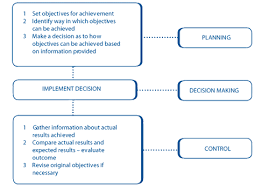
For this Discussion, you will focus on the core theoretical aspects of managerial accounting systems, which can be viewed in a relatively simple way: an optimal managerial accounting system captures, reports, and analyzes data in a way that allows users to identify the causes of deviations from expected plan outcomes. As you will see, this requires a close correspondence between the data and information used in planning, and that used in control.
To simplify this Discussion, it will be helpful to isolate components of plans, outcome measurements, and controls, and analyze them separately. For example, when discussing a planning-control feedback loop for revenues, you might examine revenue forecasting/budgeting, accounting measurements, and performance variance analysis individually.
Discussion—Week 6 (D-W6)
Participants:
By Day 5 of Week 6, respond to the following in precise, well-defined terms, and with reference to this week’s Learning Resources:
•Analyze how an organization’s forecasts, budgets, revenues, costs and cash flows correlate with one another. What additional data should be captured and reported in a managerial accounting system? Why?
•Analyze the role planning factors play in driving profits. Explain how data reported by the managerial accounting systems can be turned into information relevant for adjusting future plans. In other words, how is the data used in developing information required to operate an organization’s planning-control feedback loop?
Assignment #2 (2 pages)
Dynamic Adaptation of Managerial Accounting Systems
Organizations, their objectives, and their economic environment have been undergoing increasing rapid change in recent years and there is no theory or evidence to suggest that this trend will change. Accordingly, consider how such changes influence the optimal design of a managerial accounting system, and begin applying your qualitative and quantitative research skills conceptually to your knowledge of managerial accounting systems.
For this week’s Discussion, it is important that you maintain both a theoretical and managerial economic perspective on the topic. The research methods covered this week will allow you to explore factors normally considered outside the boundaries of managerial economics, so you can frame your Discussion without any meaningful loss of generality.
By Day 5 of Week 8, all students will respond to the following in precise, well-defined terms, and with reference to this week’s Learning Resources:
•Analyze at least two causal factors for changes in organizational objectives, revenues, costs, and cash flows, using managerial economic theory.
•Explain how qualitative research methods can be used for identifying causal factors driving revenues, costs, and cash flows.
•Explain how quantitative methods can be used for identifying causal factors driving revenues, costs, and cash flows.
•Describe how the causal factors driving revenues, costs, and cash flows affect the optimal managerial accounting system design.
Please complete both assignments individually / separately and also follow instructions
SAMPLE ANSWER
Managerial Accounting System Design
A Managerial Accounting System is a system used to gather the information that is necessary for the administration to evaluate the performance of various organizational resources while satisfying the organization’s strategies. An accounting system design involves the process of planning and implementation of an accounting system that is used to record, store and access the organization’s monetary resources to implement organization strategies.
This existence of such a system is meant for the better and efficient administration of the accounts of a business organization with the motive of attaining the objectives of the organization.A Managerial Accounting System provides financial reporting systems and enterprise resource planning systems of how employees and managers are evaluated and managed based on their performance.
The information in these systems is important to managers as well as the involved stakeholders since it is used for the effective decision-making process and accountability purposes. The accounting information available is essential in providing security information and predicting the economic growth(Ward, K. 2012). It is also used for performance evaluation based on quantifiable evidence.
Therefore, planning and control of Managerial Accounting Systems should predict contracts in the design process and provide a theoretical explanation of why such contracts are incomplete under property organizations. Management control is the process of assuring that the company’s resources are obtained effectively in the accomplishment of the organizational goals. Managerial accounting systems provide necessary material in which the outcome of the decisions are measured through managerial accounting. A cycle of data is then created through analysis of the reported results. The analyzed report is then developed for the purposes of strategic planning of the organization where factors such as finance, tax, and social contests are put into consideration.
Managerial accounting systems are used in the provision of relevant information. These results are reported and analyzed creating a cycle of information. The outcome of the decisions is then measured through supervisory accounting(Bedford, D., 2015). It is necessary for these decisions to be developed within the premeditated planning of the organization and take into account other factors.
A noteworthy subject of managerial accounting costs examination. Implementing such a system would prove to be quite costly. However, the debate of cost efficiency is in contention theory. A simplified example of an ideal managerial accounting system is revealed by the secondary school accounting system. Schools handle school fees by distinguishing between adjustable and stable costs(Cadez, S., & Guilding, C. 2012).They also reveal more details in their cost study. In an outdated costing model, there were single cost drivers, but this model is now considered inadequate for the current rapidly changing business environment.
Dynamic Adaptation of Managerial Accounting Systems
For the purposes of quality managerial accountability, Managerial Accounting systems have to be well adapted to the business entity to meet the user requirements. These systems need to have a credible functionality and well suited in their functionality.
A managerial accounting system must therefore adapt in the rapid changes of the organization. This is meant for the organization’s existence and survival in the nearby future and its continuous growth and expansion. The major causes for the dynamic adaptation of these systems include globalization, customer preference and the changes in technology. Due to these reasons, companies strive to make the existent systems adapt to their existing businesses(Becker, J., et al 2013) Organization which fail to adapt to these changes face extinction in the ever competitive market.
It is for these motives that businesses try to meet the needs of the stakeholders in their entities to be able to subsist in the long run. Therefore, this means that the goals of the employees and stakeholders must be met for credibility purposes and to ensure that the business meets the market needs. To elaborate this, the organization should attempt to counter the reasons highlighted previously to meet its goals.
Changes in technology must be realized and swiftly adapted to meet the ever growing customer needs. This entails strategies of changing or updating the existing systems with respect to technological advancement to cater for customer needs. The invention and application of the internet enables businesses to interact with the customers and other parties that are associated with the organization.
This is essential in creation of rapport between the organization and important individuals that contribute to the growth of the organization. Moreover, communication links should not only be existent but efficient in their functionality. It is vital that these systems support good communication especially within the organization to meet its objectives(Yigitbasioglu, O. M., & Velcu, O., 2012)
It is important to note that for the survival of any system, customer needs must be met. This is usually prompted by customer preference which is bound to change with time due to the diversification of user needs. Therefore the accounting system should be quite flexible to meet the changes for the organization to realize its goals and meet it objectives(DRURY, C. M., 2013). The system should be able to keep record of these changes and maintain its credibility with the organizational specifications.
Globalization tends to have an impact on such a system in society. Accounting plays a big role in the business which aims in achieving its priority goals. A Managerial Accounting System measures the events of an organization in monetary value and is essential in predicting the market trends .It is through this that business transparency is realize
References
Becker, J., Kugeler, M., & Rosemann, M. (Eds.). (2013). Process management: a guide for the design of business processes. Springer Science & Business Media.
Bedford, D. S. (2015). Management control systems across different modes of innovation: Implications for firm performance. Management Accounting Research, 28, 12-30.
Cadez, S., & Guilding, C. (2012). Strategy, strategic management accounting and performance: a configurational analysis. Industrial Management & Data Systems, 112(3), 484-501.
DRURY, C. M. (2013). Management and cost accounting. Springer.
Ward, K. (2012). Strategic management accounting. Routledge.
Yigitbasioglu, O. M., & Velcu, O. (2012). A review of dashboards in performance management: Implications for design and research. International Journal of Accounting Information Systems,Managerial Accounting System Design
We can write this or a similar paper for you! Simply fill the order form!
Need only Australian references.
Please follow the file attached below “Unpacking the essay”
If essay guidelines are not followed you will be getting the essay back for redoing Thanks
SAMPLE ANSWER
Health Care Ethics
Patients have the right to decide what treatments and medications they would consent to or reject (Learder, 2015). It is an ethical requirement that clinicians offer their clients an opportunity to decide on their health. Instruments such as the advance care directives are there to promote the autonomy of patients (Craig, 2012). People have the right to plan for the future of their health, and they would exercise it by outlining their wishes and expectations when they are still healthy. This paper focuses on the ethical aspect of granting patient their wishes. The paper will consider the perspective of a registered nurse and that of a physician. Both professionals play significantly in safeguarding the health of their clients (Australian Commission on Safety and Quality in Healthcare (ACSQHC) 2010). The essay will begin by describing the features of a legal consent and why it is necessary to respect choices that patients make. The writer will then evaluate the appropriateness of paternalism in making medical decisions. The paper will also describe the roles of healthcare practitioners in upholding patient autonomy and pursuing their (patients’) wishes. The paper will end by discussing the Australian healthcare system and the legal and professional guideline that direct practitioners. By the end of the paper, the writer hopes to demonstrate a thorough understanding of the application of ethics in healthcare setups.
The basics of a legal consent include allowing patients with competent mental capacity a chance to decide on what should be done regarding their health (Eagle, & Ryan, 2014, Pg. 353). The provision is imperative that patients may have their preferred type of care regardless of the preferences of other parties including healthcare practitioners. For instance, if mentally-abled patients choose not to undergo a surgical process, other people would not overrule the decision and have them undertake the procedure. That would be regardless of how helpful the procedure could have been. Legal consent may not be a priority in emergency situations, especially when patients are unable to express their wish. The advanced care directive is an example of legal tools applied in promotion the promotion of healthcare that is centered to the patient and based on the rights and autonomy (Scholl, Zill, Härter, & Dirmaier, 2014). The form applies to adults, and it entails writing down one’s wishes, values, and directions regarding their health (The Government of South Australia, 2015). Concepts addressed in the form include future hospital and residential care, accommodation, as well as decisions and their making. People can also appoint their preferred persons to make decisions on their behalf in times when they are unable to do so due to disease. The directive applies any time that one’s decision-making is impaired as a result of disease. For its legal validity, the directive must bear the sign of the patient and a witness who is to affirm that the subject made the directions at their will and that nobody compelled them to do so (Department of Health and Aging, 2014). The understanding of mental impairment includes situations when patients are unable to understand what they are told even with the help of interpreters (Townsend, & Luck, 2012). The concept also entails the inability of patients to comprehend the consequences of receiving or not receiving care. Occasions when patients cannot communicate their choices also entail an impairment of decision-making. The complete assessment of decision-making could be performed through tools such as Darzin’s capacity assessment (Department of Health and Aging, 2014).
Respecting patient’s autonomy is an ethical provision that sustains healthy interactions between healthcare practitioners and their clients. Ethical conduct requires clinicians to educate their patients on available options but allow them to make their decisions freely. The practice protects patients from procedures they may consider unfit for them hence promoting their satisfaction. The approach also ensures that clinicians pay attention to the understanding of patients concerning health. Patients can use their understanding of health to decide on how they would wish to live. Therefore, respecting patient choices would be an important aspect of shaping the lives of the clients. The move is also important during the provision of cultural diverse and competent care. Different cultures may have varied perceptions on health issues and patient may require upholding their beliefs. Promoting autonomy and respecting the choices that patients reduces chances of conflict between one’s culture and their maintenance of health. Patients are responsible for their health, and autonomy gives them to manage it as they wish.
Under some circumstances, clinicians may not have to respect patient choices. In most cases, patients would have to give satisfactory explanations to the decisions they make. Nursing practice entails promoting the wellbeing of patients, and decisions that may not lead to the objective could be overruled. For example, patients may opt not to take medications on such explanations as the medicines are not to their taste. Nurses would try to compel and push such patients to go against their wish. In so doing, the practitioners would still be promoting the wellbeing of the patients without necessarily respecting patient autonomy and choices. Nurses may also have to overlook patient choices if such patients opt to engage in practices that would impair treatment procedures. For instance, the practitioners may restrict patients from taking certain foods that could impair treatment irrespective of how much patients would be yearning for them. Practices such as alcoholism would also attract special attention and declination of patient autonomy. Alcoholics may insist on drinking while still undertaking treatment. If alcohol would impair such treatment, nurses would most reasonably overlook patients’ choices and apply paternalism. Physicians and pharmacists would also take the same approach regarding such situations. However, the professionals may uphold patient autonomy and explore alternative strategies such as changing medication regiments to ones that patient preferences would not alter. Though the selected alternatives may not be as effective as the firstling choices, the practitioners would have achieved from the perspectives of respecting autonomy and that of treating the patient.
Paternalism entails making decisions on behalf of other people for their own good. The literal meaning of paternalism is assuming a fatherly role and controlling systems for other people as a father would do to his family. In healthcare setup, paternalism would entail having the government, hospitals, clinicians, or other persons’ wishes prevail over those of the patients. Usually, paternalism goes against autonomy as patient choices may not be regarded in decision-making. There are various reasons when parties may need to apply paternalism. The government could for instance regulate people’s healthcare choices so that they meet certain financial considerations (Wilson, 2013). Governments may also apply paternalism when controlling health behaviours of their citizens. For instance, they could control the consumption of certain foods and practices such as smoking and alcohol use (Thomas & Buckmaster, 2010). Clinicians often apply paternalism when prescribing drugs to their clients. Often, prescribers indicate drugs to patient based on their (prescribers’) own reasoning. The practice often involves an assumption that prescribers are informed about all factors necessary for consideration during treatment. Though the paternalism is unavoidable in most such situations, it may not always give the correct implication. For instance, clinicians would tend to assume that patients would not afford unfunded drugs and prescribe cheaper regiments without necessarily consulting their patients. The practice may not be justified as patients would need to know that better medications are available and make their own decisions regarding whether they would cater for their associated financial spending (Dare, Findlay, Browett, Amies, & Anderson, 2010). Paternalism may be necessary under certain circumstances in the clinical setup. For instance, practitioners may apply the move when patients do understand neither the benefits nor the consequences of the available approaches. In such situations, clinicians would choose the best approach for their clients and administer treatment. Such an approach would apply to nursing and other healthcare professionals such as physicians and pharmacists. The presence of an ACD would minimise the necessity for paternalism. Clinicians would, for instance, consult the beneficiaries included in the ACD for their decisions regarding care for the patients of interest. The persons whom the patient prefers to make decisions on their behalf are most likely to do the will of the patient.
Professional ethics and codes of conduct direct clinical practitioners to facilitate the making of informed choices by patients (Consumers Health Forum of Australia, 2013). Various frameworks guide the process of making ethical decisions in nursing. Most of the frameworks are international while others are unique to Australia. In nursing, such guidelines include the nurses’ code of conduct, the code of ethics, professional boundaries, and competency standards. The code of ethics requires nurses to focus on human rights when delivering their services (Nursing and Midwifery Board of Australia, 2013a). So as to avoid conflicts regarding treatment practices for patients among the involved parties, clinicians should purpose to apply the provision of services included in the wishes of the patient s indicated in their ACDs. The code of professional practice entails maximisation of patient safety by requiring nurses to observe the law and meet create a reputable image to the community (Nursing and Midwifery Board of Australia, 2013b) Practices such as the use of life support machines, resuscitation, euthanasia, and organ donation would only be appropriate if the patient does not reject them in the ACD (Ebrahimi, 2012). Patients’ preferences would significantly influence the nature of care that nurses would offer. For instance, the practitioners would have to look for alternative methods of care if patients are against practices such as the use of life support machines and resuscitations. Physicians would also encounter the same and they would have to recommend care that does not contradict the preferences of their patients (Mendelson, n.d).
Conclusion
Ethical standards are crucial considerations in health care practices. Patients are entitled to care that values their beliefs and that which addresses their concerns. There are legal and ethical frameworks guiding nurses, physicians, and other clinicians on how to administer care that meets the ethical expectations of patients. Codes of conduct, professional ethics, and legislative guidelines in Australia ensure that clinicians do not overlook the wishes and concerns of their patients. Ethical conduct of clinical practitioners has tremendous influence on patient satisfaction and it would have significant impact on outcomes. It is always ethical to let the patient’s decisions concerning their health prevail over those of other parties. The role of clinicians would mostly be informing patients so that they can make choices from the information they get. Paternalism denies patient control over their lives. Though the aim of the practice is to offer the best to subjects, it may not always generate the best results. Before resolving to apply paternalism, clinicians should seek other approaches such as the ACD. Such mechanism would reduce the chances of legal and ethical questionings, and they would also facilitate settlement of disputes among interested groups such as patients’ families and the clinical team (Lawrence, Willmott, Milligan, Winch, White & Parker, 2012, Pg. 404). Nurses, physicians, pharmacists, and other clinicians encounter different situations that would require critical decision-making to determine the appropriate approaches to adopt. During such conflicting situations, clinical professionals should refer to ethical, professional, and legal frameworks (Nursing and Midwifery Board of Australia, 2013c; Nursing and Midwifery Board of Australia, 2014). Clinicians should ensure that they give satisfactory care to patients by paying attention to the concerns, beliefs, and values that their clients express (Oliveira, Refshauge, Ferreira, Pinto, Beckenkamp, Filho, & Ferreira, 2012). So as to have the necessary understanding of such factors, clinicians would have to establish interactive relationships with their subjects. Not only would healthy interactions yield desirable outcomes, but they would also enhance patient safety and minimise legal conflicts.
Dare, T., Findlay, M., Browett, P., Amies, K., & Anderson, S. (2010). Paternalism in practice: informing patients about expensive unsubsidized drugs. Journal of Medical Ethics, 36(5), 260-264.
Eagle, K. & Ryan, J. (2014). Potentially incapable patients objecting to treatment doctors’ powers and duties. Medical Journal of Australia, 200(6), 352-354
Ebrahimi, N. (2012). Ethics of euthanasia. Australian Medical Student Journal, 3(1).
Lawrence, S., Willmott, L., Milligan, E., Winch, S., White B., & Parker, M. (2012). Autonomy versus futility? Barriers to good clinical practice in end-of-life care: a Queensland case. Medical Journal of Australia, 196(6), 404-405.
Oliveira, V. C., Refshauge, K. M., Ferreira, M. L., Pinto, R. S., Beckenkamp, P. R., Filho, R. F. & Ferreira, P. H. (2012). Communication that values patient autonomy is associated with satisfaction with care: a systematic review. Journal of Physiotherapy, 58(4), 215-229
Scholl, I., Zill, J. M., Härter, M., & Dirmaier, J. (2014). An Integrative Model of Patient-Centeredness – A Systematic Review and Concept Analysis. PLoS ONE, 9(9), e107828. http://doi.org/10.1371/journal.pone.0107828
Townsend, R. & Luck, M. (2012). Protective jurisdiction, patient autonomy, and paramedics challenge of applying the NSW Mental Health Act. Australian Journal of Paramedicine, 7(4).
ITS REFLECTION ESSAY NOT ACADEMIC ESSAY. SO WE CAN USE “I” AND MY WORDS.
NOT TO EXCEED WORD LIMIT OF 550 WORDS.
5 REFERENCES REQUIRED, ONLY AUSTRALIAN JOURNALS AND ARTICLES. APA
Reflect on the above video scenario, observing the interactions between the nurse and Carla. Then answer the following 3 questions:
1. Using your knowledge and skills from previous weeks, analyse the questions asked (verbally, para-verbally) and non-verbal behaviours used in order to assess Carla’s level of risk as well as assist Carla to regain focus, take control of her emotions and ultimately calm down.
a. From your observations of the situation, what did the nurse do well?
b. From your analysis of the situation, what changes would you suggest for Carla’s risk management?
2. What approaches can you use within the assessment process to enhance collaboration and participation when clients like Carla are at risk?
3. Reflect on what you think may be the underlying cause for Carla’s behaviour.
SAMPLE ANSWER
Reflection Essay
Using your knowledge and skills from previous weeks, analyse the questions asked (verbally, para-verbally) and non-verbal behaviors used in order to assess Carla’s level of risk as well as assist Carla to regain focus, take control of her emotions and ultimately calm down.
From your observations of the situation, what did the nurse do well?
The nurse employed verbal, para-verbal, and non-verbal behaviors to assess Carla’s level of risk as well to help her regain control, focus, and emotions and to calm down. One thing that the nurse did well was collaborating with the client by engaging her in a constructive conversation. The nurse was able to observe the behaviour of the client and straight away found a way to engage her and to allow the client talk. Another thing that I feel that the nurse did well is offering herself to help the client manage her risk. This allowed the client to open up. The nurse listened actively by sitting squarely and facing the client, she was also in an open posture, she maintained an eye contact, she learned forward and was relaxed. I think this technique enabled the nurse to assist Carla take control of her emotions and focus and emotions.
From your analysis of the situation, what changes would you suggest for Carla’s risk management?
Managing risks in health facilities is one of the functions of nurses (Alaszewski, 2005). Risk management helps to deter occurrence of uncertainties. In this situation, I would suggest various changes of Carla’s risk management. One of the changes is to assign her a therapist that will help her to control her anger and to quit smoking. A therapist has the qualifications and the best skills and knowledge to assist her manage risk (McGivern & Fischer, 2012). Another change is to enable her vent out her anger, achieved by allowing her to speak her mind and through engaging her.
What approaches can you use within the assessment process to enhance collaboration and participation when clients like Carla are at risk?
To enhance collaboration and participation when clients are at risk within the assessment process, nurses can use different approaches. One of the approaches to use is to observe the client (Kleinsmann, Deken, Dong & Lauche, 2012). Observation allows the nurses to understand clients and their experiences hence are able to device suitable way of commencing or kick-starting engagement. For instance, the approach to engage an angry client is not the same with that client who is happy. It is also important to maintain good posture, maintain eye contacts and her hands should be still (Mihm, 2014). This creates a conducive environment for the client to open up (Van der Vegt, Essens, Wahlstrom & George, 2015). The nurse should also create time to assist the client. The nurse should therefore, listen actively to be in a position to respond appropriately to the questions and concerns of the clients.
Reflect on what you think may be the underlying cause for Carla’s behavior
Underlying cause of Carla’s behavior is lack of someone to give her hope and encouragement. Carla is undergoing or facing numerous issues. She is a smoker and has not been allowed to smoke until the time recommended. This situation is aggravated by the fact that she broke up with her boyfriend. She cannot talk to her boyfriend. Therefore, she has made it a routine to smoke as a strategy to end her anger.
References
Alaszewski, A. (2005). Risk, safety and organizational change in health care?. Health, Risk & Society. pp. 315-318. doi:10.1080/13698570500391166.
Kleinsmann, M., Deken, F., Dong, A., & Lauche, K. (2012). Development of design collaboration skills. Journal Of Engineering Design, 23(7), 485-506. doi:10.1080/09544828.2011.619499
McGivern, G., & Fischer, M. (2012). Reactivity and reactions to regulatory transparency in medicine, psychotherapy and counseling”. Social Science & Medicine 74 (3): 289–296.
Mihm, J. C. (2014). Implementation Approaches Used to Enhance Collaboration in Interagency Groups. GAO Reports, i-52.
Van der Vegt, G. S., Essens, P., Wahlström, M., & George, G. (2015). Managing risk and resilience. Academy of Management Journal. pp. 971-980. doi:10.5465/amj.2015.4004.
We can write this or a similar paper for you! Simply fill the order form!
You have to write about 2 business models and 2 marketing strategies that its provided on the file. just need a short introduction and 1000 words per 1 model/strategy. Total around 4000 words.
SAMPLE ANSWER
Introduction
Marketing strategy is a plan aiming at a goal of increasing sales and having a comparative advantage over the competitors. On the other hand, a business model is an actual representation of an organization of all interrelated architectural and financial designed by a business institution for both present and future guiding to reach a specific goal. Business models and marketing strategies nowadays are becoming more and more important in any business field. They are serving, as a core management discipline in the present world business is it in a financial or accounting organization. The thesis of this essay is to find out what are the characteristics of a good business model. It entails finding its importance in the field of business, the challenges that are faced when coming up with a business model. In addition, the discussion will discuss the diversified different types of marketing strategies. The importance of marketing strategies and what difference they bring in an organization will also be given.
Discussion
Business Models
SWOT Analysis
SWOT analysis has been defined by Yean Ying, Min & To Phuong (2009, p. 1105) as a strategy tool that is aimed at determining a company’s competitive advantaged. Ding-Hong, Tie-Dan & Chang-Yuan (2014, p. 68) argue that SWOT analysis is a tool that is aimed at analyzing a company’s strengths and opportunities against the threats and weaknesses. This tool is important as it can help practitioners determine the best ways possible to assist their organization to become competitive in the market. The motive behind this toll is to analyze a company’s prospects with paying attention to the bigger picture in mind (Everett 2014, p.58). For this tool to be certain effective information need to be acquired. This information ranges from internal to external factors that affect the business either positively or negatively Milosevic (2010, p.78). The internal information assists the practitioners to spot the strengths and weaknesses the firm establishes in its operations. The external factors are critical to ensuring that a company analyzes its threats and opportunities in the external environment.
Strengths are essentially factors that give a firm a competitive edge. Weaknesses, on the other hand, are factors or elements that are harmful if certain competitors to use them against the respective firm (Ying, Min & To Phuong 2009, p.1110). Opportunities are those favorable situations that can bring competitive advantages. Lastly, threats are unfavorable circumstances that tend to diminish the competitive advantage of a firm. The use of SWOT analysis best sits when assessing the services provided by a project. In addition, the tool is indispensable to determine the relationship between project stakeholders. In emphasis, the toll is indispensable in digging dip a problem in a company. The tool is applicable in intense situations that require the immediate solution to emerging issues. The emerging issues can include a drastic fall in profit (Ying, Min & To Phuong (2009, p. 1109). The tool can also be used to determine where change is possible. The effectiveness of the tool can be measured easily. The tool is effective if it clearly sports the strengths, weaknesses, opportunities, threats of a company. Furthermore, the performance of the tool is measured by the extent at which the recommendations given by the tool assist the organization to become competitive advantage (Ying, Min & To Phuong 2009, p.1106). In simper terms, the performance of the tool is determined by the extent at which the opportunities are exploited together will the strengths to outweigh the repercussions of threats and weaknesses.
The SWOT analysis is characterized with strengths and limitations. One of the strengths is that the tool is simple to perform. In addition, the tool has practicability (Everett 2014, p.79). A practitioner will find that collecting external and internal factors as well as comparing them to determine a firm’s competitive advantage is very simple. The other strength of the tool is that it is simple to understand. Notably, it gives all the four dimension of a firm using understandable format. Every factor is described individually (Ying, Min & To Phuong 2009, p.1115). It is being observed that the SWOT analysis tool is indispensable when identifying future goals. The tool assists practitioners to predict where the company will be in the future when it excels in manipulating its strengths and opportunities to fight its weaknesses and threats. Another observance pertinence of the tool is that it provides opportunities for further analysis. The tool allows the use of other models such as Blue Ocean Strategy and PEST analysis.
However, the SWOT analysis is short to limitations. Many critics argue that the toll is never serious. Its simplicity makes it a low-grade evaluation tool. One of its drawbacks is that it is cumbersome to read through. This is since it has excessive lists of strengths, threats, weaknesses, and opportunities. In addition, the tool is argued to have no prioritization of factors. In this regard, the tool is said to give each factor an equal measure. This is not true as Everett (2014, p.58) argue because some factors have more pressure on the firm than others. Another drawback of the tool is that it broadly describes its factors. This creates confusion in some cases. Ying, Min & To Phuong (2009, p.1105) argue that mush of what it is given by the tool are just opinions and not facts. Everett (2014, p.68) adds that a tool is a confusing tool since it lacks a recognizable method to distinguish between strengths, opportunities, threats, and weaknesses.
One instance in which SWOT analysis was used effectively was when Teys Australia was experiencing falling profits (Milosevic 2010, p.98). The top management carried a quick analysis to determine what was affecting the organization despite that the company is one of the biggest meat processing companies on the Australian land. The management got that its strengths include a strong brand, efficient production methods, and accessibility to global markets. The analysis also found that the firm had the weaknesses of vagaries of weather, animal disease outbreaks, fluctuating on major world currencies (Ying, Min & To Phuong 2009, p.1125). On top of that, the company found out that it had the opportunities to enjoy a larger market share in Japan and Indonesia. However, it observed that the threats ranged from the growth of the poultry industry, disease outbreaks, and climatic conditions. Therefore, it came to find that outbreak of diseases and climatic conditions were the major cause if decreasing profits. Thus is devised to use the government and its resources to do research to find cures for major cattle-related diseases (Milosevic 2010, p.145). Currently, the company is one of the major exporters of beef to Japan, Taiwan, and Indonesia. In conclusion, the SWOT analysis has fund four pillars of seizing and maintaining competitive advantage (Everett 2014, p.78).
Build on strengths
Minimization of weaknesses
Seizure of the opportunities
Counteract threats
PESTEL Analysis
The PESTEL model is the different version of the SWOT analysis. This is because it entirely deals with external forces. The PEST analyzes the political, economic, technological, and social factors in the external environment of a firm (Kader, Noor, Wilson & Mohammad 2014, p.67). These external factors are known to affect the activities and performance of a firm. The model engages in collecting and portraying information that deals with external factors which affect or might have affected the firm. The importance of this model is that it needs a firm to create both opportunities and threats for an organization. The practitioners need to know the instances when to use the tool (Gregorić 2014, p.562). These situations are best favorable when finding the current external factors that influence the organization.
The analysis is also applicable to identify external factors that may alter in the future. The other instance when the model is applicable is when the company wants to manipulate changes (opportunities) to shield against them (threats) better than competitors would do (Kader, Noor, Wilson & Mohammad 2014, p.68). The idea behind the analysis is that if a project is better placed than that of competitors, the company will be able to respond to changes more effectively. The political aspects can include both internal and external factors. The internal factors deals refer to those political aspects that are within the firm such as personal interest in the implementation of the projects. The eternal political factors include those factors that a firm cannot control such as governmental regulations. The economic factors include the macro and micro-economic events that relate to the function of an organization. The internal microenvironment engages in verifying the viability of an activity in the organization developments (Zalengera, Blanchard, Eames, Juma, Chitawo & Gondwe 2014, p.316). The macro-economic include the unavoidable government taxes, inflation, and unemployment. The sociological factor includes taking into consideration all events that affect the market and community socially. Technological factors involve taking into considerations all issues that affect the technology of the firm.
The performance of the PEST analysis can be evaluated by observing the extent at which a firm responds to the external factors (Kader, Noor, Wilson & Mohammad 2014, p.70). For instance, it assists a firm to product development. Carrying out a proper appraisal of the external factors, a firm can balance the outcome of each to see if it will unleash the product to the market. The other dimension in measuring the performance of the PEST analysis is by looking how an organizational change has been experienced developments (Zalengera, Blanchard, Eames, Juma, Chitawo & Gondwe 2014, p.326). For instance, when a firm wants to change one function of the department, the tool can be very helpful in identifying the hidden aspects that SWOT analysis, for instance, cannot find.
However, there are certain limitations and advantages associated with the PEST analysis. One of the advantages is that the tool is important it encourages the development of strategic thinking (Kader, Noor, Wilson & Mohammad 2014, p.72). It enables the concerned parties to think strategically on how to deal with a project. The other advantage is that it may raise awareness of the potential threats to a project. It also assists an organization to identify opportunities. Not only does the tool enable the form to identify opportunities, but it also assists the organization to exploit the opportunities (Zalengera, Blanchard, Eames, Juma, Chitawo & Gondwe 2014, p.346). In emphasis, it assists an organization to anticipate future difficulties to take actions on how to avoid or minimize them. Notably, one of the disadvantages is that the tool is entirely external. It only deals with external factors. It ignores the place of internal factors such as the place of the employee in the production line. The other limitation of the model is that it requires constant updating for it to remain relevant. The other observable feature of the model is that is based on assumptions. Much of what it says cannot be verified. Most of the recommendations given by the tool are rigid. It, therefore, becomes a problem for the projects of a firm to anticipate developments (Zalengera, Blanchard, Eames, Juma, Chitawo & Gondwe 2014, p.336). This is as far as the business environment is ever changing. The last noted disadvantage of the tool is that it allows its users to over-simplify the information that is used. Therefore, it creates the possibility of missing the most important data.
The use of the PEST analytical tool assisted a firm to a scenario. The tool was used by Wal-Mart Australia to identify its potential threats for the external environments (Kader, Noor, Wilson & Mohammad 2014, p.72). The supermarket observed that political factors such as heavy taxation and currency fluctuations. The supermarket also found that economic facts such as high inflation rate and higher consumer debt in Australia made to unable to diversify its operations (Zalengera, Blanchard, Eames, Juma, Chitawo & Gondwe 2014, p.366). In addition, the company realized that social factors such as an emphasis on safety by the Australians made it unable to unleash new products due to fear of rejection. The technological factor that Wal-Mart assessed was that ecological factors such as sustainability made to lose its role on sustainability. With that information in mind, Wal-Mart was able to differentiate the existing products (rebranding) to attract customer attraction (social factor) to make sales to counter heavy government taxes (political) (Shilei & Yong 2009, p.2097). In addition, by product differentiation, Wal-Mart was able to increase sales to diversify its operations (technological) to remain competitive in the market (economic).
Marketing strategy
Blue Ocean Strategy
Definition
This concept works based on developing uncontested market space rather than competing with substitute opponents selling similar goods or services in the market (Chan &Mauborgne 2011, p. 105). In other words in Blue Ocean marketing strategy, demand is created rather than competing over the limited demand, which makes competition eventually unnecessary. This explains the reason for the revival of circus industry despite the long-term decline of the industry, which now is doing incredibly well profit wise (Mohamed 2009, p.28). The concept is distinct to another model because it does not encourage direct competition with rival firms. Relatively, the model advice on the importance of using skill to create a strong image/brand. Čirjevskis, Homenko & Lačinova (2010, p.162) argues that the modern companies are not able to leverage their activities such that they want to achieve competitive advantage by using price strategies to outdo each other. The author attested that the most significant weapon to win in the market is the one that is focused on attracting as many customers as possible. Therefore, there is a need to come up with an innovative strategy to deal with the competition in the market.
Aims and Objectives of Behind Concept of Blue Ocean Strategy
The main objective of this concept is to enhance national development in nations worldwide by transforming local public sectors, states, low costs that cut across ministries, agencies, NGOs, and municipalities at large (Mohamed 2009, p.29). The model is important to ensure that most of the projects formulated by organization go through the implementation stage. The model assumes that a firm can best utilize the available resources to make it competitive in the market (Chan &Mauborgne 2011, p.107). The intention here is not to engage in cutthroat competition with rival firms, but to create a strong brand that other competitors can hardly challenge.
Requirements Favoring the Concept Usage
To discover the ‘Blue Ocean’ primarily the entrepreneurs should discover the five action frameworks to break the trade-off and eventually come up with a new curve. There are certain framework key questions that favor this concept usage (Mohamed 2009, p.38). One of the questions is related to elimination. Elimination, in this case, implies that the company identifies the factors that have existed in the organization that lowers its competitive advantage. In addition, the company needs to remove such factors. The other question relates to creation (Chan & Mauborgne 2011, p.115). In this particular occasion, the company identifies which products that can capture the market share in the market. The third question is associated to reduction strategies. Reduction entails that a company identifies what it should reduce below its level standard.
Measurement of ‘Blue Ocean’ Strategy performance
This strategy uses various approaches to measuring performances (Mohamed 2009, p.48). These approaches include developing a strategic canvas approach. It also gives a map of key performance indicators (KPI’s) which involves comparing one’s company with that of the competitors (Dr.Hilarly,2010), The straight forward approach. Blue ocean development analysis here uses (ERCC) grid meaning elimination, reduction, and rise (Chan & Mauborgne 2011, p.121). The above measures are important to ensure that a firm gauges the extent it has excelled in making its brand strong.
Strength of Blue Ocean strategy
A blue ocean strategy is a crucial tool used in diagnosing whether one’s business has developed a comparative advantage proposition and supporting business models. It has made most businesses grow at a high rate since they can be able to diverse their energy from irrelevant competitions. In addition, the strategy is simpler to use (Čirjevskis, Homenko & Lačinova 2010, p.172). The model gives some of the mechanisms that can be adopted by firms to make them competitive in the market. These include product differentiation and increased advertisements.
Limitations of blue ocean strategy
One of the limitations is that the model is unfeasible. The model is viewed as unfeasible since it is claimed no group was used since it is not stated how many companies failed as a result of using this strategy (Čirjevskis, Homenko & Lačinova 2010, p.171). It is argued that rather than Blue Ocean becomes a theory; it attempt to backup the already existing frameworks. This statement implies that Blue Ocean draws assist form other models such SWOT analysis and PESTEL analysis. The model has no any established methods of testing its recommendations. Another limitation of the model is that it is easily manipulated since each factor seems to contradict each other (Chan &Mauborgne 2011, p.127). The final limitation of the model is that is assuming that marketing success will come as just a matter of course. This is not true on the market situation. Gaining market share is a strenuous activity that takes a considerable time to perfect it.
Applications of Blue Ocean Strategy
China mobility is one of the instances the Blue Ocean strategy was implemented perfectly. China CEO Wang Jianzhou said that China market has been adapting the ocean market strategy, and that is why they have no worries of their rivals whatsoever, Starwood. In an interview Robin Pratt vice president, ‘six sigma’ said how they are taking systematically in applying the concept, TATA Motors (Čirjevskis, Homenko & Lačinova 2010, p.178). They have adopted the skills of differentiation and low cost as it is stated in Blue Ocean Strategy. Another instance where the application of the Blue Ocean strategy was effectively used was experienced by Casella Wines in Australia. The company decided to make new wines drinking rules (Chan &Mauborgne 2011, p.131). The final product that was unleashed was Yellow Tai. The brand became highly recognizable on the Australian land. However, the price remained the same even with the unleashing of the Yellow Wine.
Michael Porters Competitive Positioning Strategies
Definition of concept
The three porter’s generic strategies target as he had written in 1980 comprised of; cost leadership, differentiation, and focus. The basis of this concept is to describe how an organization or a company does to have a competitive advantage in the market (Grigore 2014, p.32). According to this strategy, a company has a choice of choosing one of the three or gain the risk of wasting its economic resources. Porter’s strategy was designed to combine and interact cost minimization strategy, market focus strategy and finally product differentiation strategy. According to Porter’s strategy, a company is comprised of major segments and there exists two major types of competitive advantage. One of the segments is oriented towards the minimization of costs (Lombana 2011, p.33). The other segment is designated to affect product differentiation. One requirement for a company to gain a competitive advantage is that it has to make an effort of picking a scope ahead of its competitors at least five times.
Aims and Objectives of Michael Porters Competitive Positioning Strategies
The aim of the model is to find the competitive rivalry in the market. By identifying the degree of competitive rivalry in the market, a company drafts mechanism on how to counteract it. The degree of rivalry may be high, for instance, due to the presence of high exists costs. The model also aims at observing the threat of new entrants. The company must be aware of the newcomers in the market to come up recommendations on how to deal with them (Lombana 2011, p.36). The threat of new entrants may be high due to government-driven obstacles. The other function of the model is to identify the threats of substitutes. The threat of substitutes is brought by such factors as brand loyalty, switching costs, and trends. The fourth factor of the model is the determination of the bargaining power of suppliers. Suppliers have power in the market when they are small in numbers (Grigore 2014, p.34). The last factor addressed by the model is the bargaining power of consumers. Consumers have power when the there are close substitutes, or there are different companies in the market that offer the same products.
Requirements and Conditions that Favor Competitive Strategy
This particular strategy works efficiently when the cost of production is quite costly. The model is mainly used when it comes in minimizing the cost. The model is also pertinent in a situation where the particular product is well developed, and no similar products can rival it due to its uniqueness (Grundy 2009, p.213). When a company focuses entirely on a particular segment that is demanded by customers, this leads to a quality product thus enhances loyalty to customers making it difficult to compete.
Approaches used in Measuring porters Competitive Strategy Performance
Cost Leadership Approach
This simply means that a company is enjoying more profit by producing at a lower cost and even if there is a price war, the company still gets profits while its rivals suffer losses. The company can have the privilege to enjoy this if there is accessibility to the capital required. When a company can obtain capital investment in both assets and raw material, this blocks other rivals since not many can afford such an investment. Furthermore, it ensures continuity in profit enjoyment, high level of expertise in the manufacturing process (Grundy 2009, p.223). This is meant to ensure that a company enjoys minimal cost because of the qualified and experienced workforce and efficient distribution channels. To attain a minimum cost possible, a company requires its means of transporting products.
Differentiation Approach
This approach mainly entails developing products that offer unique attribute and at the same time valued by consumers. Companies that enjoy this approach they have the following strengths; access to leading scientific research, high level of skills developed products and creative team (Grigore 2014, p.43). It also enjoys a strong sales team with the ability to communicate efficiently that markets products to the consumers.
Focus Approach
Here, a company concentrates on a particular narrow segment and tries to it’s best to perfect it so as to win the consumers loyalty thus able to beat their competitors of the similar product (Grundy 2009, p.225). By this, it considers itself to have performed.
Strengths of Michael Porters Competitive Positioning Strategies
With the help of this strategy, companies have been able to run their companies while producing at a minimum cost, which makes it not to collapse due to profits enjoyment. Companies have been able to lower price to powerful buyers (Grundy 2009, p.232). Companies can comfortably lower prices to defend substitutes without incurring any loss, customer loyalty. In addition, companies can discourage potential entrants in the market. The customers become more attached to differentiating attributes thus reducing threats on substitutes. Brand loyalty has been known to keep customers from potential rivals. A company can focus develops competencies (Grigore 2014, p.43). For instance, buyers have less power to negotiate because of fewer alternatives of similar goods, specialized products protect against substitutes. Finally, proper use of the tool can make rivals firms unable to meet differentiation-focused customer wants.
Limitations of Michael porters Competitive Positioning Strategies
Porters stated that use of more than one strategy would result in failure of the organization. Hence, there is no clear future direction trajectory. It is mentioned that differentiation strategy will be costly which clearly contradicts with that of cost minimization cost (Grundy 2009, p.236). Research writings of Davis state that companies were applying a hybrid strategy perform better than those adopting the generic strategy. Grundy (2009, p.237) challenged Porters by arguing that application of two strategies will result in more competitive. After eleven years, Porter revised his thinking and saw that hybrid strategy can exist (Grigore 2014, p.46). The two focal objectives of low-cost leadership and differentiation clash with each other leading to no direction. Porter had a primary belief in his concept about the invalidity of hybrid business strategy. He argued that the highly prone and turbulent market conditions would not allow the survival of concrete business strategies, since long-term establishment will depend on the ability and the quick responsiveness towards the market and environmental conditions.
Examples of How Concept have been appropriately used
Influencing and thinking in the United States of America and other countries towards health care deliveries (Grundy 2009, p.253). The strategy helps business managers and marketers to look at business powers between different types of departments and enhance the attractiveness and maximum profit.
Shilei, L. & Yong, W. (2009). Target-oriented obstacle analysis by PESTEL modeling of energy efficiency retrofit for existing residential buildings in China’s northern heating region Energy Policy. Vol. 37 Issue 6, p2098-2101
In preparation, submit an annotated bibliography of 10 or more resources you related to the topic of your Final Paper.
My Topic : ” How can managers use accounting information to make better decisions ?”
****** Instructions: Please submit all 10 annotated bibliography as it pertains to my topic ( see above) !!!!!!!
Please review the General Format of an Annotated Bibliography document located in the Weeks 2–3 Learning Resources.
For each entry, be sure to do the following as a minimum:
Include the full APA citation.
Discuss the scope of the resource.
Discuss the purpose and philosophical approach or methodology.
Discuss the underlying assumptions.
Relate the resource to the body of resources you have consulted in this course.
Discuss any evident limitations and opportunities for further inquiry.
Your annotated bibliography is due Day 7 of Week 3.
SAMPLE ANSWER
Topic: How managers can use accounting information in making better decisions
Briciu, S., Scorţe, C., & Meşter, I. (2013). The impact of accounting information on managerial decisions – Empirical study conducted in the hospitality industry entities in Romania. Theoretical & Applied Economics, 20(9), 27-38.
Briciu, Scorte and Mester (2013) conducted an empirical research which is based upon a survey carried out from November 2012 to January 2013. They administered online questionnaires to managers of 91 organizations in the tourism and hospitality sector. The findings revealed that the managers surveyed can use accounting information to determine the company’s funding needs. The managers analyze revenue to determine the amount of funds that would be available to finance future projects (Briciu, Scorte & Mester, 2013). The study’s limitation is that the questionnaire contained so many questions totalling 38 questions which called for maximum concentration of the study subjects and some managers lost patience while completing the questionnaire.
Dumitrana, M., Radu, G., Dumitru., & Jinga, G. (2010). The use of the accounting information in decision making in the hospitality business. International Journal of Contemporary Hospitality Management, 17(1): 39-50
Accounting information, managerial accounting information in particular, has been utilized and analyzed extensively in the context of manufacturing firms. Few studies have been done on the utilization of managerial accounting information in aiding the process of decision making in the hospitality sector. Dumitrana et al. (2010) sought to fill this gap in existing knowledge. They discovered that accounting information could be utilized by managers in budgeting. Managers utilize the continuous flow of accounting information related to overhead, investments, purchases and income to create budget for the following year. The weakness of their study is that the research was conducted in only 2 hotel organizations hence the findings cannot be generalized in other organizations and organizational settings.
Florin, B. (2014). Development of decision making by managers with financial and accounting information. Annals Of The University Of Oradea, Economic Science Series, 23(1), 837-844.
As per the author of this article, accounting information is of great importance in improving the effectiveness of the fiscal function and assists managers in making managerial decisions. As used in manufacturing, accounting information is employed by managers in deciding whether to purchase or to make – in buy or make analysis – a particular component which the company requires in order to make its primary product (Florin, 2014).
Gheorghe, D. (2012). The accounting information quality concept. Economics, Management & Financial Markets, 7(4), 326-336.
Good accounting information is able to respond to the requirements of an organization and help in managerial decision making. Accounting information in the form of fiscal reports can be used by managers to guide the future of an organization. Balanced scorecards, fiscal statement projections, and budgeting are some of the ways in which managerial accounting information is employed in providing information to assist managers in guiding the future of the organization. When managers focus on this data, they are able to make decisions which aim for constant improvement and are justified basing upon intelligent analysis of the company’s data (Gheorghe, 2012).
Lengauer, V., Mayr, A., & Parasote, S. (2011). The impact of accounting information on management’s decision-making process. The Accounting Review, 12(67): 511-525
In their study, Lengauer, Mayr and Parasote (2011) examined the impact that accounting information has on the decision-making process of a company’s management. The managers of a particular company known as Wexiodisk AB, a manufacturer of dishwashing machines, were interviewed. Their findings demonstrated that managers at the company utilize accounting information for budgeting purposes and to determine the funding needs of the company’s upcoming ventures.
Miculescu, C., & Miculescu, M. N. (2012). Quality of accounting information to optimize the decisional process. Annals Of The University Of Oradea, Economic Science Series, 21(2), 694-699.
Accounting information is valuable when used in a decisional process. In their study, Miculescu and Miculescu (2012) found that managers can utilize accounting information in determining what needs to be sold and how it should be sold – using the process of relevant cost analysis – and in determining whether to stop operations or increase product lines. Moreover, managers utilize accounting information to decide which consumers are less or more profitable so that marketing efforts could be focused on customers that are most profitable (Miculescu & Miculescu, 2012).
Scorţe, C., & Farcaş, M. (2013). The impact of accounting information on managerial decisions – Theoretical approaches. Annals Of The University Of Oradea, Economic Science Series, 22(2), 692-702.
In this peer-reviewed journal article, Scorte and Farcas (2013) conducted a literature review on accounting information as it is applied within the hospitality sector. They also carried out literature review on the topic of management accounting in this particular industry. Scorte and Farcas (2013) learned that accounting provides the information which is essential for monitoring, for establishing the extent of liability and the result produced at different places of work, which facilitates the detection of internal reserves, of uneconomic and unnecessary spending and of losses. This way, accounting information contributes to the fulfilment of strategic objectives. Managers in the tourism and hospitality industry also use accounting information in making appropriate financial and economic decisions. Furthermore, accounting information acts as an advisor which aids managers in determining the conditions wherein the company is operating at both macro-economic and micro-economic levels (Carmen & Mariana, 2013).
Silviu-Virgil, C. (2014). The importance of the accounting information for the decisional process. Annals Of The University Of Oradea, Economic Science Series, 23(1), 593-603.
In his qualitative research study, Silviu-Virgil (2014) reviews a number of books and articles which have looked into the topic of accounting information from a managerial decision viewpoint. The author found that accounting information is in actual fact the raw material for the process of managerial decision making. Managers can utilize accounting information to help attain organizational goals. Moreover, accounting information could be employed to aid in budgeting and in analyzing whether to purchase or make a component in-house.
Socea, A. D. (2012). Managerial decision-making and financial accounting information. ScienceDirect, Elsevier. Procedia – Social and Behavioural Sciences, 58(12): 47-55
In this journal article, Socea (2012) looks into the role played by fiscal accounting information in managerial decision-making. The author states that for fiscal accounting information to be of use for decision making, it should be comparable, dependable, relevant and intangible. The results of his study indicate that managers utilize financial accounting information in knowing what took place previously and to know what is the organization’s present situation. Furthermore, managers utilize fiscal accounting information in making visible the events which are not noticeable by everyday activities. It also provides managers with a quantitative overview of the organization over and above helping managers in preparing for future decisions and activities (Socea, 2012).
Tunji, S. T. (2012). Accounting information as an aid to management decision making. International Journal of Management and Social Sciences Research, 1(3):29-34
In his study, Tunji (2012) analyzes how accounting information helps in management decision making. Using survey research design, the author enlisted 55 participants and data was gathered from them with the use of a questionnaire. A number of hypotheses were developed. The findings indicated that managers utilize both non-fiscal and fiscal accounting information in aiding business decision-making. In particular, they utilize accounting information to monitor the organization’s performance, and to monitor the process of decision making. Since accounting information provides more timely information, managers also use it in improving the efficiency of operations.
References
Briciu, S., Scorţe, C., & Meşter, I. (2013). The impact of accounting information on managerial decisions – Empirical study conducted in the hospitality industry entities in Romania. Theoretical & Applied Economics, 20(9), 27-38.
Dumitrana, M., Radu, G., Dumitru., & Jinga, G. (2010). The use of the accounting information in decision making in the hospitality business. International Journal of Contemporary Hospitality Management, 17(1): 39-50
Gheorghe, D. (2012). The accounting information quality concept. Economics, Management & Financial Markets, 7(4), 326-336.
Florin, B. (2014). Development of decision making by managers with financial and accounting information. Annals Of The University Of Oradea, Economic Science Series, 23(1), 837-844.
Lengauer, V., Mayr, A., & Parasote, S. (2011). The impact of accounting information on management’s decision-making process. The Accounting Review, 12(67): 511-525
Miculescu, C., & Miculescu, M. N. (2012). Quality of accounting information to optimize the decisional process. Annals Of The University Of Oradea, Economic Science Series, 21(2), 694-699.
Scorţe, C., & Farcaş, M. (2013). The impact of accounting information on managerial decisions – Theoretical approaches. Annals Of The University Of Oradea, Economic Science Series, 22(2), 692-702.
Silviu-Virgil, C. (2014). The importance of the accounting information for the decisional process. Annals Of The University Of Oradea, Economic Science Series, 23(1), 593-603.
Socea, A. D. (2012). Managerial decision-making and financial accounting information. ScienceDirect, Elsevier. Procedia – Social and Behavioural Sciences, 58(12): 47-55
Tunji, S. T. (2012). Accounting information as an aid to management decision making. International Journal of Management and Social Sciences Research, 1(3):29-34
We can write this or a similar paper for you! Simply fill the order form!
Utility and relevance of operational management topics to the contemporary business environment
Order Instructions:
Evaluate the utility and relevance of any one of the operations management topics to the contemporary business environment.
you must demonstrate an understanding of the theoretical concepts and frameworks in the chosen operations
management topic, this assignment requires a critical evaluation/ analysis of a topic “very important”
I need more analytical material rather
than descriptive material, one or two diagrams if required only
Please ask the writer to send me a couple of topics to choose from and the structure of the research paper as well to confirm before starting.
SAMPLE ANSWER
Characteristics of quality:
• Performance
It includes the main attributes of the product. The features should conform to customer’s expectations and needs.
• Aesthetics
feel, smell, taste and appearance should be unique and customer oriented to have a high market penetration since the competitors are also trying to follow the same plan.
• Special features
special features such as extended warranty, specific customer design including specifications such as printing customers name on a t-shirt or the cup of coffee.
•Conformance
How well the product conforms to design specifications. The product should be of standard as per designer’s requirements and customers’ expectations. The way a product is designed translates to good or poor quality.
• Reliability
Consistency of performance. Customers expect that a product will meet their needs. When the product is reliable, the customers will be loyal leading to more production, new market entrance, and consequently a high market share in the dynamic market environment
• Durability
The useful life of the product. A durable product is a quality product. Customers always seek for quality products as they seek to increase their savings and reduce expenses. The customers always remain loyal to an organization that assures them of quality products.
• Serviceability and responsiveness–
After sale service is a form of quality assurance. Managers should ensure proper tools are in place to handle customer’s complaints.
• Consistency
Good quality products should always be present.
Quality management is not a one-time process and it’s influenced by many factors. It is therefore through total quality management that quality is assured. Every person in the organization has a role to play in bringing out all the needed quality features.
Masaaki (2015) also added that Quality is determined by design, conformance, ease of use, and after sale services:
Design quality:
It refers to the decision by designers to either include or exclude attributes in a product. The design of the product is the starting point for product quality. The size, shape, and place of the issue is determined in the design phase. Quality is assured when the designers seek customers view on products before designing. Another features in the design phase are the costs incurred in the production, availability of machinery, the time taken for design, safety. When the design phase is expertly handled, quality of the product will be assured, the poor quality design can cause the company a lot in terms of costs as well as image and market share. (Masaaki, 2015)
How easy it is to use the product:
Another feature of quality is the ease of use. The easier to use a product or service is, the higher the quality of the product. When designing the product, attention for the use of the product should be put in place. Consumers like products that are not complicated and time-consuming in terms of use. When there is no ease of use, an organisation will lose consumers, sales will decrease, will get return of goods, or even face legal problems as a result of injuries. Directions for use of the product, assembling, unpacking, maintaining, adjusting the product and what to do in case something goes wrong should be included. The easier to use a product is, the higher the quality of the product and the higher the chances of survival of the organisation in the modern market. (Masaaki, 2015)
After-sale services
Services that are offered to customers after the sale of the product are also determinants of product quality. Demonstration on the use of the technical products should be done by sales people or the technicians to avoid product failure or injuries. At times when a product fails, after-sale service is needed. The service can be in the form of repair of the product, replacement, recalling the product, adjustment or evaluation of service use. Consumers appreciate organizations that are dedicated to offering after sales services. To have after sale service is a good reputation of the company and it improves the image of the company. (Masaaki, 2015)
Benchmarking
Hoyle and David (2007), argue that if a company wants to meet the current market requirements, quality control managers have to benchmark themselves against competitors. Apple Inc being the second largest telecommunications company would have to compare its production strategies with Samsung Company. After benchmarking, the firm will need to come up with unique ways that will differentiate its products with the competitor. The steps used in benchmarking are:
Identification of the process that need improvement: Going through the phases a product goes through to identify the loophole that needs fixing. It might be design, production, or sales process. (Hoyle and David, 2007)
Match the need for improvement in the organization that is best at the process: Identify the organization that known for producing good results in the process that need to be improved
Research the organization
Gathering information the other organization uses for the process
Analyse the information
Assessment of the information is done to determine the most effective way to go about the improvement process
Improve process
Having come up with a strategy gap, assessment is made on how to go through the implementation of the new idea for quality improvement. To stand out in the market, expertise is needed so that the new idea brings out a unique form. Correct implementation leads to quality improvement and consequently better chances of outdoing the main competitors in the market.
High quality gives an organization a competitive edge and ensures that it remains profitable in the current market. Other advantages of good quality are;
Improvement in the company’s reputation in the market leading to high productivity.
The liability costs are minimized since the company can pay its debts.
Increase in customer loyalty and customer satisfaction that leads to increased sales and profitability. (Hoyle and David, 2007)
The main contributors for the total quality management are the senior managers. In the operations department, quality control managers come up with strategic plans for quality, implement tools necessary for quality improvement, guide and motivate employees.
We can write this or a similar paper for you! Simply fill the order form!
Personally, I would like to choose no ( 14 ) but I want you to choose before I decide.The attached is the assignment. please read all of them properly,
Corporate Social Responsibility (CSR) is a concept that has gained prominence in many companies including extractive ones. CSR is one of the business strategies that these companies are using to participate in the sustainability of the environment as well as the community. It is one way of giving back to the societies in which they operate.
In developed countries, the scenario is considerably different. Such countries have an already developed infrastructural and social sector. They are therefore involved in well-established CSR programs which have international set standards. These programs’ main aim is to enhance the competitiveness of these extractive industries in the international market. In addition, developed countries unlike the developing countries have readily adopted these CSR policies and strategies with great support from their government. An exemplary country with well-established CSR programs in its extractive industries is the Canadian gas and oil mining industries. This paper deliberates on whether extractive industries embrace CSR to best of their abilities and any performances variations in developing and developed countries. Development and definition of CSR are incorporated as well as critical examination of various literatures on the mining industry among many other aspects relating to the topic.
CSR and its Origin
According to McWilliams & Siegel (2001), the term Corporate Social Responsibility even though has been in the public domain for many decades, it became popular in the 1960s and is nowadays used indiscriminately in organizations more to further moral and legal responsibilities. Definition of the term CSR is both complicated and complex because of the context and nature of the problems. The complexity arises from the fact that CSR is intimately involved in the society, ecology, and economic systems that are high complex dynamic systems (Sheehy, 2015). Regardless of these complexities, in general CSR is defined as a form of corporate self-regulation entrenched in the business models of companies. Its main role is to act as a self-regulatory mechanism through monitoring business to ensure that they comply with the spirit of law, national or international norms, and ethical standards. Some firms that have implemented CSR have gone beyond compliance to engaging in acts that promote social good, and beyond the interests of the firm (Sheehy, 2015). CSR as well involves the corporate actions aimed at encouraging positive impact on the stakeholders including employees, consumers, investors, communities and others as well as impacting on the environment.
Literature review
According to Littlewood (2014), different people, ascribe different meaning to the term CSR. In 2001 European Commission Green Paper, CSR is defined as the concept where “entities integrate social and environmental concerns in their operations as well as their interactions and association with stakeholders on a voluntary basis” (Littlewood, 2014, p. 17). CSR in the mining industry therefore, ought to be on voluntarily basis if this defining is to go by.
Various institutions and initiatives have also been advanced to ensure that mining industries remain compliance and engage in social corporate responsibilities. Such initiatives include the International Council on Mining and Metals (ICMM) and Mining and Minerals Sustainable Development Project (MMSD) (Littlewood, 2014). Other initiatives include corporate reporting on companies’ websites and engaging with ISO 26000 social responsibility performance measurements, development of best practices, toolboxes, and guidelines relating to CSR issues such as mining community development and sustainability and mine closure among many others (Littlewood, 2014).
Despite the growth of CSR initiatives in industries, many questions remain about the role of mining in economic and social development remain unanswered (Du Venage, 2015). A good case is South Africa where despite discussion of CSR in the industry, there are still questions on the depth of the adoption and implementation and the extend this has impacted on the social and economic industry in South Africa.
According to Littlewood (2014), mining industry in Namibia contributes around 16 percent of the GDP and close to 50 percent of the merchandise exportation. This means that it is a central industry in the economy of Namibia. Mining began between 1884-1915 under the Germany colony. Copper mining started in 1906 in the northern region also known as German South West Africa at that time. Diamonds were also found in the South West in 1906. Mining since 1970 has become diverse in Namibia and more minerals such as gold and zinc are mined. Companies involved in mining have managed to deal with issues of community sustainability and viability after mining through their CSR. This has been done in different ways. The government also has laws that require compliance to legal requirement. For instance, after mining, all structures and buildings are removed as per the license terms (Littlewood, 2014).
According to Kirschke (2014), mining industries are impacting negatively on the lives of many people especially is DRC, a top cobalt and the sixth copper producer nation. Kirschke (2014) further argues that CSR activities of some of these companies are not working as expected and therefore what they do can be described as, “Greenwash”. He argues the companies have caused community displacement, and caused environmental wreckages.
According to Arko (2013), mining industry in Ghana has been in operation for close to one hundred years. The companies to a large extent have been doing well and this has enabled them to participate in corporate social responsibilities. They have supported the communities in different ways through CSR. Nevertheless, the support provided by these companies has been small and has not made any substantial differences. The Ghana Chamber of Mines reports of these expenditures exemplify this fact. The way forward, is to ensure that appropriate measures are in place to ensure that these companies participate in CSR (Arko, 2013).
Stakeholder in the mining industry such as the government, mining companies, civil society, international financial organizations among others have a role to play in the operations and CSR engagements of mining industries (Yakovleva & Vazquez-Brust, 2012). Mining companies have to develop plans that will ensure that they do not pollute the environment and contribute to climate change. They have as well to ensure that they support the welfare of the people in the community. The level of commitment of different countries when it comes to implementation of CSR has varied. These variations are because of different reasons such as the negative perception in relation to the industry, controversial nature of many mining investments, social and environmental externalities that for decades have been associated with the mining industry. Other reasons are the weak legislations and ability of states to monitor the activities of mining companies across the globe (Kirschke, 2014).
Basic components of Corporate Social Responsibility -extractive industries
Different extraction companies have adopted different CSR programs basing on the type of the environment they are based upon. A CSR program has to be formulated with regard to the situation at hand. A typical CSR program should encompass the main areas of the community including social, environmental and the economic factors of a community.
A CSR policy entails the approval of the company by the local community. Furthermore, an extractive company ought to be involved in the community activities, such as involvement in local charities as well as supporting the local growth and sponsoring the community events. Adopting a CSR program entails the consideration of the three aspects including people, the planet, and the profits. The deviation in the corporate motives from profits oriented operations to adopting the CSR program can be associated to the worldwide change in the conscience of the corporate (Kirschke, 2014). The deviation entails that the corporates exercise four particular responsibilities in addition to generating profits.
The main environmental factors that the policy should encompass include the sustainability of the environment through waste recycling as well as proper waste management strategies. Other approaches include provision of clean water for use, the establishment of renewable sources of energy and the recyclable materials. It is the role of the extractive industry to maintain an appropriate working environment as well decent social appearance.
As much as CSR strategy is aimed at the voluntary social responsibilities, it is also important to make sure that the economic aspects of the community are take account of. A good CSR program should seek to promote the economic status of the community and at the same time that of the extractive industry. The economic roles apply particularly to the developing countries that are in the verge of establishing development for their countries. For instance, an appropriate CSR strategy for extractive industry in developing countries is the establishment of infrastructure and improvement of the communication networks in the regions.
Requirements for CSR strategies and reasons for engaging in CSR
One s the strategies is sustainability whereby Corporates establish a foundation and come up with ways of avoiding harmful effects of the mining activities in the environment t they operate in. The CSR program should have the capability of sustaining the environmental as well as the economic aspects of the community. License is another important aspect as each extraction industry should be legitimate and should satisfy all the legal requirements. To prove the legitimacy the company should obtain a letter of approval accompanied with a license for operation.
In addition to the license for operation and sustainability, the CSR should also comprise of a moral obligation meaning that it has responsibility to do the right thing, uphold the ethical values pertaining to all the activities the company is involved in. The company’s long-term commitment to social responsibility is also important when ascertaining the well-being of the company to the commitment to CSR (Kirschke, 2014). The establishment of a good past relationship is important in ensuring that the extractive company is well acquainted to the CSR responsibilities.
In addition to the effectiveness of branding, companies have developed a new trend in enhancing their CSR programs. Companies with well-developed CSR programs are perceived more positively than those with poorly developed CSR programs. It is important to have a mission and vision that goes beyond the profit driven purpose. Such companies give the stakeholders as well as investors a warmer and better image and an impression that it will be easy to interact with (Arko, 2013).
Extractive corporations engage in CSR programs so as to have an easier time when dealing with the government regulations (Arko, 2013). The better the relationship a corporation will establish with the immediate society, the better the perception of that corporation in both the legal as well as in the public perspective. The participation of the extractive corporation in the society’s social responsibility will also bar the company from harmful activists that may launch against it. Lastly, one of the main benefits of CSR in the workplace is the appropriate working environment created for the employees as well as for the occupants of the society. CSR creates a sense of community and teamwork between the society, stakeholders, and generally the overall corporation(Kirschke, 2014).
Extend of CSR initiatives and level of performance in developed and developing countries
A number of international CSR initiatives and associations that promote CSR policies in the extractive industries include the United Nations global contact initiative where the extractive companies perform self-evaluations and report their performance in regard to the ten principles. Another international initiative is the Europeans commission strategy for CSR and sustainable consumption sustainable industrial policy (Miningfacts.org, 2015). The global committee on mining and metals is managed by the largest mining companies and comprises of a number of programs to improve sustainable mining. Extractive companies additionally, have started pursuing certifications such as ISO 14000 which is an environmental certification. SA 8000, which is a working standard certificate, and also AA 1000 which is accountability certificate (Miningfacts.org, 2015).
Canada
Canada is one of the developed countries that have embraced CSR programs in its extractive industry. The Canadian extracting industries has laid out a foundation to ensure that there is greater rationality in the advancement of the sector’s in the Canadian extractive sector is a well-defined strategy as pertains to other developed countries (Andrews, 2007). The CSR strategy for the enhancement of business and prosperity consists of four major provisions. Examples of CSR strategies implemented include promoting the industry, securing access to global markets, improving infrastructure among others.
The government of Canada has enhanced international performance guidelines for the Canadian extraction companies. Such guidelines include first, the social and the environmental sustainability for the mining projects with potentially harmful environmental and social repercussions (Miningfacts.org, 2015). Secondly, the guidelines on voluntary principles on human rights and security for projects involving public or private security forces (Miningfacts.org, 2015). The global reporting initiative for CSR is the other guideline for reporting by the mining sector. Canada has therefore, succeeded in its CSR initiatives in this sector.
Developing nations in Africa and Asia have also embraced CSR initiatives in extractive industry due to various reasons such as prevention of pollution, conserving environment, adhering to international codes, take advantage of the natural resources to achieve economic and social development as well as protect its environment among other reasons (Mzembe, and Downs, 2014). Most of the African countries have devoted their CSR efforts in protection of the environment, social economic development, and improvement of infrastructure (Smith, 2008). Various African countries that have adopted the concept of CSR include; Mali, guinea, Tanzania South Africa and Nigeria among others (Mzembe, and Downs, 2014).
South Africa
In the recent past, CSR has become globally popular accompanied by widespread management methodologies, technologies, and new ideologies. The impact of the CSR in South Africa has seen great developments with increased social responsibility and sustainability of the countries mining industries. The CSR initiatives in South Africa’s mining industry have resulted to increased communities growth as well as infrastructural development. The major impacts CSR in South Africa’s mining industry include; increased efficiency in the societal gains pertaining to the aspects energy and water usage. In addition, safeguarding of the environment has been more efficient following the establishment of CSR policies by the mining industries. Furthermore, safeguarding local employee’s safety has been more addressed (Mzembe, and Downs, 2014).
Advocates of CSR believe that CSR is a major breakthrough to solving majority of the social issues that the government has failed to address. In addition, they also argue that knowing that an institution is morally and socially responsible will attract more investors. However, the opponents of CSR argue that the most important goal of a business if profit generation and not social development. Other critics argue that corporate industries are not institutions meant for moral purposes (Mzembe, and Downs, 2014).
South Africa has played a major role in defining and enhancing the CSR initiatives. Nevertheless, for the CSR to be fruitful and to be properly executed in South Africa, it is important to lay emphasis on the liability and equality of businesses CSR practices. CSR is viewed as exclusively associated to big businesses which explains why there has been reluctance in smaller companies in complying with the CSR measures since they feel that their operations will go unnoticed (Bond, 2008).
Nigeria
Nigeria is one of the largest nations with the largest economy in Africa classified under developing economies. The country had enjoyed its oil and gas extractions that have contributed to its economic growth.
The country has various policies that companies must adhere to when engaging in their activities. CSR is one of the ways that oil and Gas Company give back to the society through their CSR initiative. In a study conducted by Gabriel (2007), most of the multinational companies in Nigeria dealing in gas and oil participate actively in the corporate social responsibility. The company contributes to the society through various as including, measures to curb environmental pollution, sponsorships, community services among many others (Watts, 2004). Many of the host communities in Nigeria have higher expectations in community development initiative. However, pressure from the community keeps on piling up because some of the companies do no keep their promise (Frynas, 2005).
Most of the community members are interested in the social projects that give them hope of a stable and prosperous future. The companies in Nigeria have as well embraced development initiatives to portray to the people how socially responsible they are. In some areas in the Niger Delta, they are marred with unstable environment as there is ethnic disputes and conflicts over oil revenues (Gabriel, 2007). Companies such as Shell and Oil have participated in the CSR to resolve the conflicts. Recommendations to solve the problems have as well been made. These recommendations includes, enhance further cooperation with the Nigerian government to ensure that the situation is peacefully resolved. There is also need to improve transparency in order to avoid human rights violations as well as resource exploitation. Shell has the duty to continue handling the situation to see if there would be any positive outcome.
It is therefore, evident that both developed and developing countries have embraced CSR initiatives in their countries to foster change and to achieve certain goals and aims. Countries such as Canada have put in place various measures to ensure that it protects its environment as well as contribute to social and economic development of their people. Most African countries such as South Africa and Nigeria have also embraced the concept of CSR and is transforming their them on different frontier. Even though, most developing nations have lagged behind on this area, the concept is gaining momentum on daily basis.
Conclusion
Creation of awareness is a major trend occurring in most extractive industries all over the world. Integration of the CSR programs with the functioning of the extractive industries has resulted to development of multiple benefits in both developed and developing countries. In addition, there has been contribution of the implementation of CSR policies by the international community. Some extractive companies in the developing countries however, have remained reluctant to adopting CSR strategies as a component of their conventional business. Most developed countries have successfully implemented CSR strategies to advance different interests. The developing countries such as Congo, South Africa and Botswana among others are in the process of putting in place such strategies to impact positively on the society, and environmental.
There has been great impact in integrating CSR into the business strategies of the extractive industries .The benefits of such integration has resulted to robust impact on both the appearance and the accomplishments of a company. Extractive industries all over the world continue to seek opportunities to comprehensively capture a greater proportion of the benefits of resources extraction and at the same time ensure that they develop the community that they operate in. Local governments should support their extractive industries so as to ensure that they in the best way reap the benefits that accompany the implementation of such. Upcoming small and medium sized industries should also be encouraged to adopt such strategies. Besides, large mining industries should be taught on the benefits that accrue the implementation of CSR industries.
References
Al-Tuwaijri, S. Christensen, T. and Hughes, K. (2004). The relations among environmental disclosure, environmental performance, and economic performance: a simultaneous equations approach, Accounting, Organizations and Society Journal, 29( 5-6), pp. 447-71.
Andrews, T. (2007).National Roundtables on Corporate Social Responsibility (CSR) and the Canadian extractive industry in developing countries. [Ottawa, Ont.: Foreign Affairs and International Trade Canada].
Asgill, S. (2012). The Nigerian Extractive Industries Transparency Initiative (NEITI): Tool for Conflict Resolution in the Niger Delta or Arena of Contested Politics? Critical African Studies 7:4-57.
Bayoud, N. (2012). Corporate Social Responsibility Disclosure and Organizational Performance: The Case of Libya, A Mixed Methods Study. Unpublished PhD Thesis, University of Southern Queensland.
Benomran, N., Haat, M., Hashim,, H., & Mohamed, N. (2015). Types and motives of corporate social responsibility and environmental reporting in Libyan companies. Internatioanl Journal of Finance &Sccounting Studies, 3(1). 1-17.
Boele, R., Fabig, H., Wheeler, D. (2001). The Story of Shell, Nigeria and the Ogoni People – Environment, Economy, Relationships: Conflict and Prospects for Resolution. Sustainable Development. 9:74-86.
De Witte, M., & Jonker, J. (2006).Management models for corporate social responsibility. Heidelberg. Frynas, J. (2005). The False Development Promise of Corporate Social Responsibility: Evidence from Multinational Oil Companies. International Affairs 81(3):581-598.
Gabriel, E. (2007). “Multinational oil companies’ CSR initiatives in Nigeria: The scepticism of stakeholders in host communities”, Managerial Law, Vol. 49 Iss: 5/6, pp.218 – 235
Haufler, V. (2010). Disclosure as governance: the extractive industries transparency initiative and resource management in the developing world. Global Environmental Polis, 10(3), 53-73
Heritage oil plc. (2012). Corporate social responsibility report 2012.
Hilson, G. (2012). Corporate Social Responsibility in the extractive industries: Experiences from developing countries. Resources Policy, 37(2), 131-137.
Miningfacts.org,.(2015). Corporate Social Responsibility & Mining – Mining Facts. org. Retrieved 8 October 2015, from http://www.miningfacts.org/communities/what-is-corporate-social-responsibility/
Mujih, E. (2012). Regulating Multinationals in Developing Countries. Farnham: Ashgate Publishing Ltd.
Mzembe, A., & Downs, Y. (2014). Managerial and stakeholder perceptions of an Africa- based multinational mining company’s Corporate Social Responsibility (CSR). The Extractive Industries and Society, 1(2), 225-236. http://dx.doi.org/10.1016/j.exis.2014.06.002
O’Faircheallaigh, C., Trebeck, K., Haley, S., Magdanz, J., Coumans, C., Howitt, R., …& Yakovleva, N. (2008). Earth matters: Indigenous peoples, the extractive industries and Corporate social responsibility. Greenleaf Publishing, Sheffield, United Kingdom.
Porter, M. E., & Kramer, M. R. (2006). The link between competitive advantage and corporate social responsibility. Harvard business review, 84(12), 78-92.
Slack, K. (2012). Mission impossible?: Adopting a CSR-based business model for extractive Industries in developing countries. Resources Policy, 37(2), 179-184.
Smith, G. A. (2008). Introduction to Corporate Social Responsibility in the Extractive Industries, An. Yale Hum. Rts. & Dev. LJ, 11, 1.
Watts, M. (2004). Resource Curse? Govern mentality, Oil and Power in the Niger Delta, Geopolitics 9(1):50-80.
We can write this or a similar paper for you! Simply fill the order form!
Imagine you are a service-disabled veteran and have made your hobby of building model airplanes into a small business that produces very small remote control aircraft capable of long sustained flights. You are ready to expand your business by competing for Department of Homeland Security contracts.
Write a two to three (2-3) page paper in which you:
1. Determine at least three (3) specific programs created by Congress that benefit your business.
2. Analyze the small-business programs created by Congress and provide details of how they will benefit your company over large multinational organizations that build aircrafts (e.g., Lockheed Martin).
3. Use at least three (3) quality resources in this assignment. Note: Wikipedia and similar Websites do not qualify as quality resources.
Your assignment must follow these formatting requirements:
• Be typed, double spaced, using Times New Roman font (size 12), with one-inch margins on all sides; citations and references must follow APA or school-specific format. Check with your professor for any additional instructions.
• Include a cover page containing the title of the assignment, the student’s name, the professor’s name, the course title, and the date. The cover page and the reference page are not included in the required assignment page length.
The specific course learning outcomes associated with this assignment are:
• Differentiate between business sizes and analyze the opportunities for small businesses.
• Evaluate common small-business preference programs.
• Use technology and information resources to research issues in contract administration and management.
• Write clearly and concisely about contract administration and management using proper writing mechanics.
SAMPLE ANSWER
Small Business Preference
Small business is responsible for many of the job opportunities that exist in the United States. Therefore it becomes imperative that the small problems be given a preference when it comes to certain matters in business. The Congress decided to come up with an initiative and passed specific laws that saw the incorporation of small business compete effectively with the large corporations for the business space. The small business act of 1953 states that a fair proportion of the federal contacts should go to the small business. Also congress set aside 23% of the contracts to go to small business while 5% would go to small disadvantaged groups. Additionally another 5% would go to women owned small business and the last 3% would go to historically neglected business zones. The small Business administration is in charge of all the above programs as permitted by the congress law (Calof, 2006).
The small set aside program is one of such programs implemented by small business administration. It is one of the most suitable socioeconomic programs that have been put forward by the Unite state. For example, only small business is eligible for contracting under such a program. Big business and firms who might have applied for the same contract are rejected since they do not meet the required set standards by the program. A business is considered to be small when it does not have more or close to five hundred employees and its revenue is way beyond $ 7 billion annually. Additionally the small business under this program are much likely to benefit from subcontracting as they are able to cut down or reduce on the costs required in the purchasing of certain items (Dachis,& Lester n,d). For example they are only required to cater for 50% of the total cost making it more favorable for them. In this case such a program provided will enable small companies to be able to contracts without fear of competition from the big companies such as Lockheed Martin
The second congress plan that favours small business is referred to as small disadvantaged business. The rules that fall under this category essentially lock out most of the large multinational countries. For example it requires that the business be identically small as put across in the small business acts and by the small business administration. Also it requires that the business be about 51% owned by the individuals who are socially disadvantaged in this case refereeing to either one being black American, Hispanic , native American or east pacific American (Maher, 2015). Furthermore, it classifies the disadvantage as either being physically handicapped in terms of gender or age and lastly that the net salary is less than $ 750,000 which categorically fits into the company I intend to model. Additionally such a program is provided if only you fall under specific categories as outlined by the law. In this case, the contract would fall under the transportation system.
The service disabled veteran program is the last law that exclusively falls within the scope. First I qualify because I am already a disabled veteran. The awards in this case are made at a fair market price and the contracting officer ensures that at least two or more service disabled officers can raise the required amount. A contract can also be awarded on a solo basis if the contracting officers realises that no two service disabled officers can raise the required amount to be given the contract. Basically, the contract has same features as the Historically Underutilised Business zones.
The above three laws shows the difference between small business and large business. It also shows the opportunities that are presented by the preference programs. Large companies are those which have a great number of employees and can therefore be comfortably be able to raise more revenue in this case greater than $7 billion. Because small programs cannot raise such revenues that are provided by an equal opportunity to be able to compete effectively in the market. The small preferences programs that have been put across reduce the monopoly that is normally a practise of the large corporations. The awarding of the specific contracts as seen from the above features follows strict management policy. A contract is only given to the small business provided it meets the set criteria that have been established by the various laws. Each contracting officer is required to follow the laid down stipulations in following the laws and if a small business is not identified in the process the contract is given to two small business owners who come together to join their business and raise the required funds.
In conclusion laws that have been enacted by congress promote an equal chance for competition between the small companies and the established large incorporation. Since majority of the people in the United States have smaller business the law serves to protect them against monopoly that is commonly associated with the large corporation. Lastly it is only fair enough for the small business to be protected to avoid their extinction in the market and also since they contribute to more jobs in the United States.
Dachis, B., & Lester, J. Small Business Preferences as a Barrier to Growth: Not So Tall after All. SSRN Electronic Journal. http://dx.doi.org/10.2139/ssrn.2609527
Maher, C. (2015). Social enterprise manager’s career path preferences. International Journal Of Globalisation And Small Business, 7(1), 59. http://dx.doi.org/10.1504/ijgsb.2015.069032
We can write this or a similar paper for you! Simply fill the order form!
Imagine you made your hobby of building model airplanes into a small business that produces very small remote control aircrafts capable of long sustained flights. You are ready to expand your business by competing for Department of Homeland Security contracts.
Write a two to three (2-3) page paper in which you:
1. Analyze how the federal act supports and favors your business over large multinational organizations that build aircrafts (e.g., Mitsubishi Aircraft Corporation).
2. Create an organizational chart that would best support working within the federal contracting system and explain the value of each position (i.e., internal contracting officer) to your proposed business.
3. Use at least three (3) quality resources in this assignment. Note: Wikipedia and similar Websites do not qualify as quality resources.
Your assignment must follow these formatting requirements:
• Be typed, double spaced, using Times New Roman font (size 12), with one-inch margins on all sides; citations and references must follow APA or school-specific format. Check with your professor for any additional instructions.
• Include a cover page containing the title of the assignment, the student’s name, the professor’s name, the course title, and the date. The cover page and the reference page are not included in the required assignment page length.
The specific course learning outcomes associated with this assignment are:
• Explain the basics of how and from whom the federal government buys what it needs.
• Apply the rules of federal government contracting.
• Compare the government’s key players and describe their main functions.
• Use technology and information resources to research issues in contract administration and management.
• Write clearly and concisely about contract administration and management using proper writing mechanics.
SAMPLE ANSWER
Rule of the Road
The American government is the world’s biggest purchaser of services and products. Purchases by civilian and military installations total almost $500 billion annually (Johns, 2015). Small firms countrywide can and need to make the most of contracting opportunities since such opportunities could actually be an essential revenue source that would help them in growing, innovating and creating employment opportunities. This paper provides an exhaustive analysis of how the federal act supports and favours the small business over big multinational corporations such as Mitsubishi Aircraft Corporation which build aircrafts. In addition, an organizational chart is developed which would best support working within the federal contracting system and the value of each position to my proposed business is explained.
Federal agencies by law are required to formulate goals of contracting in such a way that 23 percent of all government purchases are procured from small businesses. Additionally, there are contract goals established for small disadvantaged businesses, businesses owned by women, companies owned by disabled veterans and businesses situated in HUBZones. These government-wide goals are 5 percent, 5 percent, 3 percent and 3 percent respectively although they are at times not attained (Government Contracts USA, 2015). They are vital since federal agencies have a constitutional duty of reaching out and considering small firms for procurement opportunities. As such, it is up to the small business owners to market and match their business services and products to the federal agencies’ buying needs (Government Contracts USA, 2015).
Small business contracting is a top priority for President Obama. The President established an inter-agency taskforce that came up with suggestions for increasing small business contracting. Moreover, he signed the Small Business Jobs Act that increases the access of small business to contracting opportunities and levels the playing field (Johns, 2015). It is notable that these initiatives have really made a major difference. Within the last 2 years alone, the number of contracts which have gone to small firms has increased steadily. In 2014, nearly 23% of all federal contracting funds went to small companies (Johns, 2015).
The Office of Government Contracting has the function of creating an environment for full participation by women-owned, disadvantaged, and small firms in federal government contract awards. The Office of Government Contracting advocates for small businesses in the federal procurement (U.S. Small Business Administration, 2015). The mission of U.S. Small Business Administration (SBA) is to promote and stimulate economic development by way of providing help to new firms to get started and established businesses to expand and grow. The SBA could help small firms overcome significant barriers which they typically encounter when they try to win federal contracts. This is because the U.S. Small Business Administration works directly with other federal agencies and America’s major federal contractors to make sure that small firms actually get a fair share of subcontracts and contracts of the federal government (Government Contracts USA, 2015).
Organizational chart
There are various responsibilities and roles within the federal government as regards federal contracts.
Internal Contracting Officer (CO): individual who is in charge of negotiating or directing changes to Period of Performance, Statement of Work, delivery schedule, among others. The value of this federal government employee to my proposed small business is that he/she will authorize reimbursement of costs, that is, he or she is in charge of approving invoices. On the whole, a Contracting Officer has the role of awarding and administering the contract to my proposed business. The individual also has the role of terminating contracts, delivery orders, purchase orders, task orders and modifications. They also have role of obligating federal finances, and make findings as well as determinations. All these roles are subject to the Contracting Officer’s Certificate of Appointment (Federal Acquisition Institute, 2014).
Contracting Specialist (CS): with approval of the Contracting Officer, the person holding this role carries out procedural steps. The value of this federal government official to my proposed business is that he or she will carry out pre-award functions: the individual plans the acquisition strategy and prepares solicitation documentation. The individual will also perform contract award functions: this individual evaluates responses, negotiates terms of the contract, and prepares award documentation. He or she will also perform post-award functions: the individual modifies contracts, monitors performance of the contract, and closes out contracts (U.S. Department of Veterans Affairs, 2015).
Contracting Officer’s Representative (COR): the individual in this role performs specific contract management duties pertaining to technical oversight as well as administration of a given contract. The value of this individual to my proposed business is that he or she monitors technical progress. He or she also recommends changes in requirements to the CO. The COR will ensure that as a contractor, my small business actually meets the commitments of the contract. The federal employees in this role are typically the first ones to know when a given contract or program is underperforming (Federal Acquisition Institute, 2014).
Inspector: the person in this role has value to my small business since he/she has limited quality assurance responsibility of: determining whether supplies of my small business comply with the legal requirements and requirements of the contract; preparing correspondence, and reports of investigations or inspections; and making necessary suggestions for legal or administrative authorities. He or she also has the role of examining and testing the services or manufactured supplies of the contractor, including intermediate assemblies, components as well as raw materials. The inspector also inspects materials and equipment owned by the government which are in the contractor’s – my small business – hands in order to prevent irregularities such as theft, damage and waste (Federal Acquisition Institute, 2014).
References
Federal Acquisition Institute. (2014). Contracting Officer’s Representative. FAI.
Global Economic Environment and Marketing
A. Project question
A major multinational corporation has appointed you as an economic advisor. You are requested to compile a report regarding the macroeconomic environment in two countries where the firm operates and explain how it might affect the company’s economic activity.
B. Project specifications
1. You may choose to focus your analysis on any existing multinational firm.
2. The two countries must be chosen from section C below as follows: one country from List 1 and one country from List 2.
3. Your report must include:
a. A brief description of the company.
b. A comparative analysis of all major macroeconomic indicators (see section D below, excluding 5 and 7) for the two countries and their overall impact on firm’s economic activity.
c. An analysis of the market structure in which your company operates for the two countries.
d. An analysis of the monetary and fiscal policy for the two countries andtheir impact on the firm’s economic activity.
e. An analysis of the foreign trade policy (international trade agreements)for the two countries and its impact on firm’s economic activity.
1
C. Country Lists
List 1 List 2
Australia Brazil
Austria China
Canada India
Italy Mexico
Sweden Russia
D. Macroeconomic indicators1 to be analysed (the last available 10 years):
1. GDP growth rate
2. GDP per capita at constant prices
3. Inflation rate
4. Unemployment rate
5. Interest rates (Monetary Policy Rate)2
6. General government balances (% of GDP)
7. Balance of Payments (% of GDP)
8. Exchange rates (national currency/USD OR National Currency/Euro)3
1 We recommend that you use the IMF database to collect your data for most of these macroeconomic indicators.
2 Data available from the relevant Central Banks websites
3 ibid
2
E. Project 1 Submission Guidelines
Length 2,500 words, +/- 10% (excluding tables, graphs, footnotes and references)
Presentation Arial 12 fonts, 1 ½ spacing, justified text
References A minimum of 20 references using Harvard Referencing
System (textbooks, official data and information sources)
F. Marking criteria and weights
CRITERIA WEIGHTS
Brief description of the company and analysis of the market structure in which the company operates for the two countries
20%
Data collection, comparative analysis of major macroeconomic indicators and impact on firm’s economic activity
25%
Analysis of the monetary, fiscal and foreign trade policy for the two countries and their impact on firm’s economic activity
40%
Report structure, presentation and references 15%
SAMPLE ANSWER
With the increasing globalization, it is important for a business organization to understand all the macroeconomic factors that may affect their business operations in different nations. Understanding the macroeconomic environment of the nation in which a business operates is important for the organization to develop marketing and business strategies that will work successfully. Marketing strategy should either be standardized or localized to suit the specific market in which a business operates. There are different factors that may affect how a business operates such as interest rates, inflation rates, GDP and the level of unemployment. This paper will provide a detailed analysis of the macroeconomic environment of Canada and India and how these factors might affect Wal-Mart economic activities in these two nations.
Wal-Mart Company Overview
Wal-Mart Company is an American Multinational retail store founded in the year 1962 by Sam Walton. The company runs a chain of warehouse stores and discount department stores in different countries. The company headquarters is in Bentonville, United States. Walmart was incorporated in the year 1969 and began selling its shares to the public in 1972. The company operates in three trade sections Wal-Mart US, Sam’s Club, and Wal-Mart Superstores. The company has over 11,000 outlets in 28 different nations.
The Fortune Global 500 rated Wal-Mart stores to be the world largest company in terms of revenue and similarly it is rated the biggest private employer in the globe having about 2.2 million workers. Wal-Mart marketing strategy is selling quality products at low prices to improve the lives of their clients and both the clients and the community to save money and live a better live.
Wal-Mart Stores Inc. supply diverse assortment of products, services and brands in the market. Some of the products the company offers include beverages, dry and wet grocery, food, clothes, electronic accessories, furniture, clothes among others. The corporation offers a great selection of high-quality merchandise, welcoming services under their “Everyday Low prices” strategy. The industry in which Wal-Mart Stores operate is the retailing industry. In the retailing industry, companies offer merchandise and products for sale at a fixed location such as a store, online, or by mail.
Comparative analysis of major macroeconomic indicators in Canada and India
Canada is positioned as the 11nth major in the globe in terms of Nominal GDP and the 14nth largest when it comes to Purchasing Power Parity economy in the globe. Canada is part of Group of Seven (G7) as well as the Organization for Economic Co-operation and Development (OECD) and is among the globe wealthiest countries (Nicoletta et al., 2010). The Canada is a developed economy chiefly controlled by the service, logging and oil industry. The company also tops in the seafood and fishing industry as well as entertainment and software industry.
On the other hand, India is positioned as the seventh in when using Nominal GDP and 14nth in relation to Purchasing Power Parity (PPP) (Ahluwalia, 2012). India is among the newly industrialized countries. It is a member of BRICS having an average growth rate of 7% for the last twenty years. India economy is rated among the fastest growing major economies in the world after China economy. India boasts of a young population, healthy savings and investment rates, low dependency ratio and high globalization rate. The primary source of revenue in India is the service sector. In fact, India is the major exporter of BPO services, software services, and other IT services followed by agricultural and industry sector.
GDP Growth Rate: This economic metric measure the rate at which the nation’s Gross Domestic Product over a period of one year. In Canada, the GDP annual Growth rate has increased by 1% in the second quarter of 2015 as compared to the previous year (IMF, 2015). Ranging from 1962 to 2015, the GDP annual growth rate in Canada averaged 3.24%. The GDP highest value was 8.80% attained in 1962 and a record of -3.98% in the year 1982. Statistics indicates that the wholesale trade dropped by 0.4% and the retail sector increased by 0.7%. This poses a mixed impact for Wal-Mart as it engages in both wholesale and retail trade. Therefore, Wal-Mart should concentrate more on the retail sector in Canada. The average GDP from 1998 to 2015 is 1.6% with an unsurpassed high of 5.30% in 2009 and a record low of -1.70% in at the beginning of 2009.
In India, the GDP annual growth rate has also increased but at a rate of 2.06 in the second quarter of 2015 as compared to the previous year. The retail industry has been enjoying a high growth rate in India paltry because of the high population consisting of young people and working population (Mohan & Chitradevi, 2014). Therefore, India is a favorable market for Wal-Mart as most of its operations are in the retail sector of the economy.
GDP per capita at constant prices: This metric refers to the measure of the total output of a nation computed by dividing the Gross Domestic Product (GDP) with the sum of all the people in the country. This metric is paramount for indicating the relative performance of different countries. It is imperative to note that an increase in per capita GDP indicates positive economic growth.
According to International Monetary Fund, the value of GDP per capita at constant prices was 38184.62 Canadian Dollar in the year 2009(IMF, 2015). Canada GDP per capita income has been on the rise since 2009. Projections indicate that the GDP per capita income is expected to be 41765.85 by the end of 2015 which is an improvement by about 6,000 Canadian Dollar. This positive outlook indicates an increase in economic growth in real terms and, therefore, may present more opportunities for Wal-Mart because the people purchasing power has increased.
On the other hand, International Monetary Fund reported the GDP per capita at constant prices in India to be at 31464.97 Indian Rupee in the year 2009. International Monetary Fund project that this value will increase to 46723.21 by the end of 2015. This indicates that Indian economy is growing at a faster rate as compared to Canada. Therefore, Wal-Mart should concentrate on increasing its operation activities in India as compared to Canada.
Inflation Rate: inflation refers to the continued and persistent increase in the common level of prices of commodities and services in an economy. Inflation is felt greatly in the retail industry because an increase in inflation results in the decrease in purchasing power of the currency circulating in the economy. The inflation rate in Canada has been increasing gradually over the years. The consumer prices in Canada increase by 1.3% in the year that ended in August 2015. The inflation rate in Canada values at 3.19% in the period between 1915 and 2015. The highest inflation rate ever felt in 1920 which hit an unsurpassedhigh of 21.60% in 1920 and a record low of -17.80% in the year 1921 (Beers & Nadeau, 2014). This macroeconomic metric indicates that the cost of goods in Canada has been increasing over the years, and thus it is not favorable for Wal-Mart Supermarket. This trend is because of an increase in inflation rate results in the decrease in purchasing power of consumers.
The inflation rate increased by 3.66 percent year-on-year as at August 2015, a slight decrease from 3.69% increase in July this concurred with the market expectations. In fact, the inflation rate hit a record low this year in August; the current inflation rate is below the set target of the central bank that is 6%. This is a good indicator of a thriving economy and good news for the retail sector because decreasing inflation rate results in an increase in the purchasing power of the consumers.
From the above comparison, it is evident that India is favorable as compared to Canada in terms of the inflation rate. The inflation rate in Canada is on the rise while the inflation rate in India has been dropping significantly. Therefore, Wal-Mart should expand its operation in India to take advantage of the decreasing inflation rate and increasing the purchasing power of consumers living in India.
Unemployment rate: Unemployment rate also has an impact on the economy performance especially on the retail sector. Unemployment rate determines the consumption level in a country and marketers should understand the trends in their market before making an investment decision. The rate of unemployment in Canada increased from 6.80% to 7% between August and July 2015. The unemployment rate had an average of 7.73% over the last ten years with an unsurpassed value of 13.10% in December 1982 and a record low value of 2.90% in June 1966. This indicates that the changes in the level of unemployment is fairly balanced and does not fluctuate.
Consequently, the rate of unemployment in India has been declining over the last five years. The unemployment rate in India declined from 5.20% in 2012 to 4.90% in 2013 (Mohan & Chitradevi, 2014). The unemployment rate in India averaged 7.32 percent in the last 30 years with an unsurpassed value of 9.40% in 2009 and a record low of 4.90% in the year 2013. This trend indicates that the Indian economy can create employment opportunities annually to absorb the vibrant new workforce to the economy. Therefore, the purchasing power of individuals in India is high. As such, Wal-Mart should utilize these investment opportunities and invest in the Indian market as compared to the Canadian market.
Interest Rates: Interest rates refer to the cost of using an asset. That is the sum charged by a lender to a borrower for the exploitation of an asset. An interest rate is often expressed as a percentage of the principal value (Mohan & Chitradevi, 2014). Interest rates have different effects that ultimately reflect in consumption and investment in an economy. High-interest rates increase the cost of borrowing and thus may limit the expansion of Wal-Mart through the use of credit facilities. On the same note, the interest rate has an impact on consumption, an increase in interest rates result in a fall in consumption. Therefore, it may affect the volume sold by Wal-Mart in the Respective economies.
In Canada, the general interest rate is at 0.5% as at September 2015. This value is lower than the average interest rate of Canada which is 5.98%. This indicates that the cost of borrowing is low, and Wal-Mart can utilize the resource to expand their operations in the Canadian market. The consumption level is also high, and this may result in increasing demand for Wal-Mart goods and services in Canada.
On the other hand, the interest rate in India has been decreasing over the years the current interest rate is 6.75% as at September 2015.This value is slightly higher than the value of the average interest rate that is 6.71 in the period between 200 and 2009. The slight increase may be felt in the decrease in consumption level as the cost of borrowing has slightly increased and may result in fall in the general consumption in the Indian economy.
In terms of the General Government Structural Balance, the potential GDP in Canada was reported to be -2.04% of the potential GDP in the year 2009 (Beers & Nadeau, 2014). The International Monetary Fund projects that the General Government Structural Balance of the potential GDP to be 0.05%. The value of the general government structural balance comprises of asset prices movements, temporary financial sector, and expenditure items. The metric evaluates the government cyclically adjusted balance from nonstructural elements beyond the economic scope. On the other hand, the Indian government experienced a budget deficit of 4.50% of the GDP indicating that the government has to allocate more money for financing government activities in the country (Mohan & Chitradevi, 2014).
The Balance of Payments: refers to a financial metric that is sued to summarize a nation’s transaction with other nations. The balance of payment looks into the transactions between a nation’s residents and non-residents in terms of transfer of goods, services, income and financial claims. In Canada, the have a current account of -17398 CAD Million in the second quarter of 2015. This indicates that Canada is experiencing a current account deficit. However, the average value of the current account was valued at -1808.71 indicating that the nation current account has been improving. Canada international policies encourage foreign trade and foreign direct investment of multinationals in their region. These policies may prove beneficial, and Wal-Mart should seize the opportunity to invest in Canada.
Exchange rates also have effects on firms that export goods and import raw materials. A devaluation of currency is beneficial to multinational firms as it will reduce the exporting rates while an appreciation in exchange rates increases the cost of export. The Canadian Dollar has been trading at 1.30654 against the US Dollar. This indicates a moderate gain against the euro as the industrial production gained as a result of QE program. On the other hand, the Indian Rupee trades at 65.049 against the US Dollar indicating that the value of Canadian Dollar is higher compared to the Indian Rupee.
Recommendations and Conclusion
From the extensive research on the macroeconomic indicators in Canada and India, it is worth noting that investing in India is more profitable as compared to Canada. This notion is because India is categorized as one of the newly industrialized countries and one of the world’s fastest economies (Mohan & Chitradevi, 2014). Macroeconomic metrics indicates a moderate long-term economic growth prospective because of the Indian young population, low dependency ratio, decreasing interest rates and a positive GDP growth rate as compared to Canada.
The unemployment rate has been declining in India indicating an increase in Per Capita income. This trend is good as it will result in a rise in the general level of consumption as people purchasing power will increase. This is contrary to the Canadian unemployment rate that increasing over the years. The population is also low and thus the market share in the retail industry is lower as compared to India.
Therefore, Wal-Mart should focus on increasing its business operations to take advantage of the positive economic outlook for the Indian economy. The company has a potential of increasing its market share because of the high population in India. This population will provide market for the Wal-Mart goods and services and on the same note provide cheap labor and hence cut down cost of production.
Nicoletta Batini, Thomas Dowling, Grace Bin Li, Evridiki Tsounta (all WHD), & John Kiff (MCM). (2010, November 24). Selected Issues Paper; IMF Paper Issue. Retrieved from http://www.imf.org/external/pubs/ft/scr/2010/cr10378.pdf
Ahluwalia, I. J. (2012). India’s economic reforms and development: Essays for Manmohan Singh. Oxford University Press.
Burnett, K., & Newman, L. (2014). 2 Urban policy regimes and the political economy of street food in Canada and the United States. Street Food: Culture, Economy, Health and Governance, 46.
Beers, D., & Nadeau, J. S. (2014). Database of Sovereign Defaults, 2015 (Revised May 2015). Bank of Canada.
Mohan, C., & Chitradevi, N. (2014). IMPACT OF MACRO ECONOMIC FACTORS ON BANKING INDEX (CNX BANK) IN INDIA. International Journal of Trade & Global Business Perspectives, 3(1), 722.
We can write this or a similar paper for you! Simply fill the order form!