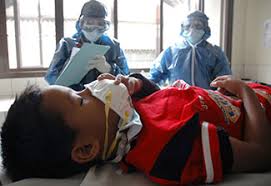
Traditional and Syndromic Surveillance
“While traditional disease surveillance often relies on time-consuming laboratory diagnosis and the reporting of notifiable diseases is often slow and incomplete, a new breed of public health surveillance systems has the potential to significantly speed up detection of disease outbreaks. These new, computer-based surveillance systems offer valuable and timely information to hospitals as well as to state, local, and federal health officials. These systems are capable of real-time or near real-time detection of serious illnesses and potential bioterrorism agent exposures, allowing for a rapid public health response. This public health surveillance approach is generally called syndromic surveillance, which is defined as an ongoing, systematic collection, analysis, and interpretation of ‘syndrome’-specific data for early detection of public health aberrations.”
—Yan, Chen, and Zeng (2008)
Information drives a public health official’s ability to predict disease outbreaks and trends. Increasingly, emerging natural and man-made threats are making the need for timely, accurate, and reliable information more urgent. As discussed previously, valuable information comes from a variety of data sources. A critical task for public health professionals is determining what might be considered “actionable intelligence”—how to gather it, how to validate it, and how to make sense of it.
To complete this Application Assignment, write a 2-page paper analyzing the practical ramifications of identifying, collecting, validating, and analyzing data for syndromic surveillance. Compare your analysis to traditional disease surveillance.
Your written assignments must follow APA guidelines. Be sure to support your work with specific citations from this week’s Learning Resources and additional scholarly sources as appropriate. Refer to the Publication Manual of the American Psychological Association to ensure your in-text citations and reference list are correct.
SAMPLE ANSWER
All countries require sensitive disease surveillance systems capable of detecting diseases early and monitor outbreaks. One such system is syndromic surveillance that has been developed recently. It is a complex technology tool developed for recording data from several sources with an aim of identifying the probability of a disease outbreak. It goes ahead to focus on non clinical information that indicates an outbreak. The information from various relevant sources is collected and analyzed to detect bioterrorism and alert the public on the same. Syndromic surveillance is influenced by the emerging threats of bioterrorism and the advancements in technology that allows the public health officials to analyze data from various sources for detecting cases of disease outbreak on time (Chen, Zeng & Yan, 2010).
Syndromic surveillance includes collection of information from various sources for analysis. One of these sources is monitoring of employees reporting absence from their work. Employee absence from their work is a useful tool of early outbreak identification or disease clusters such as influenza. The main advantage of this source of data for syndromic surveillance is its timeliness. For instance, in Netherlands, the start of influenza and respiratory syncytial virus was detected much earlier than laboratory confirmation. However, this method may capture seasonal aspects of employees’ absence that are not related to any infectious disease. This means that it may have low specificity (National Academy of Sciences (U.S.) et al, 2011).
School absenteeism is another source of syndromic surveillance data. It requires use of school records in order to identify absence of students. This method of data collection has been reported to help in early outbreak identification. It helps in understanding epidemiology of influenza in various communities by monitoring trends of school absenteeism. It has shown to be an effective method of timely detection of influenza prior one week to other systems. It has also shown a correlation between other traditional methods of surveillance such as validity of respiratory pathogens. This method has the ability to combine clinical data on students’ illnesses to make informed decisions on disease control measures, school closures, suspension of classes, and communication with parents. When this method is automated, collection of data on absenteeism requires minimal surveillance and allows public health officials to make use of limited resources effectively. Automated self reporting of diseases in university students provides an opportunity to avail information on self care and timing for return to schools. Although this method of data collection may be effective in some cases, it may be inconsistent in some schools and participation may vary from time to time. Likewise, the criteria for determining the absence of school absenteeism may greatly vary. This method may prove to be ineffective in schools that do not present the reasons for students’ absence. Therefore, reacting to every indication based on students’ absence would cause unacceptable cases of false alarms and hence inefficient use of public health resources (M’ikanatha, 2007).
The other source of information for syndromic surveillance is emergency department chief complaints. ED chief complaints refer to the records of patients’ reported symptoms and signs of disease at presentation. It typically consists of a brief statement entered into the electronic system in short phrases. It has been used in early identification of outbreaks of diseases at the start and the end of seasons of pathogens like influenza. This method is also used in mass gatherings and in monitoring and identification of novel threats. In some cases it is used to supplement data from other sources such as laboratory testing and sentinel physician consults. It has shown to be better than most methods of surveillances as it gives the real picture of the situation, and it detects clusters of diseases much earlier. For instance, in the case of H1N1 pandemic, alerts from ED data was detected about 7 days prior laboratory confirmation. However, this method may not be effective since not all patients use ED when receiving treatment. Additionally, data entry for ED chief is unformatted thereby reducing opportunities of automation for efficiency and effectiveness. This method relies on the specificity and sensitivity of the system and a variety of cases involved. Emergency and non emergence health records, pharmacy sales, and online resources are other source of data for syndromic surveillance that help in early detection of cluster of diseases or outbreaks (Zeng, 2011).
M’ikanatha (2007) confirms that syndromic surveillance is an overhaul of traditional surveillance system, which entails compulsory reporting of certain diseases to central health authority. This shows that traditional surveillance system relies solely on laboratory results to ascertain the probability of a disease outbreak. In case of a communicable disease such as influenza, the public health officials monitor the disease to detect any case of an outbreak. The traditional method is simple, but very slow. Although it can help in detecting a disease outbreak, it is not as effective as syndromic surveillance that detects outbreaks much earlier. Therefore, despite that syndromic disease surveillance is quite expensive and uses a complex of technology, it has proved to be more effectual than the traditional method. It can be used to detect outbreaks of certain infectious diseases on time and allow public health care to react. Early detection of outbreaks helps in saving many lives and managing outbreaks of communicable diseases.
References
Chen, H., Zeng, D., & Yan, P. (2010). Infectious disease informatics: Syndromic surveillance for public health and biodefense. New York: Springer..
National Academy of Sciences (U.S.)., Institute of Medicine (U.S.)., National Research Council (U.S.)., National Research Council (U.S.)., & National Academies Press (U.S.). (2011). BioWatch and public health surveillance: Evaluating systems for the early detection of biological threats. Washington, D.C: National Academies Press.
We can write this or a similar paper for you! Simply fill the order form!
This week, you select a disease or condition of interest (one that has multiple data sources) and elaborate on many of the data considerations you must take into account in monitoring the disease.
The disease or condition you select will be the subject of a disease surveillance system you create throughout the duration of this Project. As such, the portion you submit this week should serve as a preliminary plan for your surveillance system.
To complete this portion of your Scholar-Practitioner Project, write a 2- to 4-page paper that addresses the following:
Identify a disease or condition that will be the subject of your Scholar-Practitioner Project surveillance system.
Identify the population most at risk for the disease or condition you selected.
Describe the data that you will need to perform the surveillance on your selected disease/condition, including the primary and secondary data sources you will need.
Explain how you will collect information from these data sources.
Identify who is responsible for collecting and providing data.
Describe the aggregate record of data that you will use.
Explain how you will ensure the quality of the data collected
SAMPLE ANSWER
Surveillance Subject and Data Sources: Tuberculosis
Tuberculosis is a condition that is transmitted form one person to another. Commonly known as TB, it is an infectious disease that affects body organs and spreads out through the lymph nodes (Flynn, 2004). However, for most people that experience the condition, they do not shoe the symptoms but rather the disease causing organism stays inactive in the body for a very long time. However, the people that the symptoms show, they are severe and occur at the same time. Among the symptoms of the condition include high temperature, tiredness and fatigue, weight loss, night sweats, los of appetite and persistent headache (Flynn, 2004).
There are many groups of people that are at risk of contacting tuberculosis. Among the populations include people that are old and senior in the society. These people have their immune system weakened and they are more susceptible. Another group that is susceptible is babies because of the fact that their immune system has not developed well (Flynn, 2004). Additionally, people suffering diabetes and HIV are also weak in their immune system and as a result, they are at a higher risk of contracting the condition (Flynn, 2004). Other conditions that lead to the development of the condition include patients suffering from cancer, people that are suffering from autoimmune diseases and those that live in areas where they are surrounded by cancer patients (Flynn, 2004).
In conducting my surveillance, I will need vast data as a way of coming up with better results and effective findings. To start with, I will need information on the population that is more prone to developing the condition. In accordance, I will come up with the population that I will interview and collect data from. On the other hand, I will also need data on the causes of tuberculosis, how fast or slow it spreads and how much the persons suffering from the condition are able to respond to treatment and management of the condition.
In collecting data and information to use in my study, I will explore a number of factors before coming up with the final conclusion. For example, it is evident that the study I will conduct is a qualitative type of research. As a result, I will need to use qualitative methods of data collection and to some extent, merge them with quantitative formulas for effective results. In the surveillance and data collection, I will use interviews to collect data and ensure that it is effective in the surveillance. Through interview, I will have an assurance that the information I receive is from first hand source. As a result, the information will become more trusted and applicable in the study. Another method that I will used in collection of data and information is the use of libraries and other information centers like healthcare organizations and agencies. These two sources contain information that is vast and effective. In addition, the information contained in these two sources has been proofed and tested.
However, in my surveillance study, I will need assistance so that information is collected in the right frame and at the right time. As a result, I will engage my colleagues who have a similar interest as mine. However, I will divide them into groups that are manageable for use to come up with a plan that will cover all aspects of the surveillance. For example, some of us will get to the field to collect information from first-hand sources. Others will have to go and dig into the libraries and conduct other information searches that come up. As a result, my colleagues will proof very vital in my surveillance information collection process.
The data that we will collect will be placed in groups so that we can sample it easily. In the aggregate record of data, we will need information concerning all aspects of the data collection procedure. For example, the data that is for risk factors will be placed in a group while the data that is for the people that are at a high risk of contacting the condition will also be placed separately. For the data that will carry the symptoms, we will need to interview 100 participants for it to become enough. On the other hand, information from libraries and other information searches will be placed in a single group to aggregate the data to two types of groups.
In ensuring the quality of the data collected, we will place the information the two groups identified and sample it. In sampling the information, we will come up with a response on how the information is similar or different. As a result, the higher rate of similarity will show that the information is of quality and that it is effective for the surveillance process. However, if we realize that the information varies a lot, we will be forced to cancel the process and repeat it to see the likely outcomes. In conclusion, we will have a timed period to conduct the study and ensure that it is of quality. However, if the search for the information outdoes our data search, we will be forced to extend the period of the study so that we can complete it as needed
Public health officials use myriad data sources to collect information for disease surveillance. Because of the ease of access, the majority of this information comes from electronic data sources such as daily physician visits, frequency of ambulance use, and filling of pharmacy prescriptions. Because every piece of information a public health official receives is not an indicator of disease, it is critical to find the right data sources to detect events and trends.
Often, creative thinking is required to identify potentially useful data sources and the combination of variables that may be revealing. Of course, identifying the data sources is only half the battle. It is also critical to determine how reliable the data are and how they will be obtained.
By Day 4, post a brief description of the disease/condition you selected and the data sources you would use. Justify your selection of each of the data sources you identified. Briefly address the case protocol (if appropriate) for the data sources and describe how the accuracy of that data might influence the disease surveillance. Respond to a colleague from the other group (infectious or chronic).
SAMPLE ANSWER
Identifying Data Sources for a Disease: Tuberculosis
Tuberculosis is an infectious disease found in the lungs and spreads to all lymph nodes in the body (Möller & Hoal, 2010). People that suffer from the condition known as TB suffer silently because it has no symptoms (Möller & Hoal, 2010). The tuberculosis-causing bacteria can stay inactive for a prolonged period (Möller & Hoal, 2010). As a result, it goes unnoticed but it continues to weaken the immune systems just like in elderly people or in people that are suffering from HIV (Möller & Hoal, 2010). When present in the body, the bacterium causes death to organ tissues (Möller & Hoal, 2010). As a result, its effects are vast if they are left untreated.
Being one of the infectious diseases, TB has a surveillance system in place. As a result, there are many sources of data that are used to collect data for analysis and evaluation. Among the data sources that are trustable and that contain sufficient information is the Center for Disease Control website. The center has a collection of information from the greatest and most trusted physicians in the health sector. As a result, the information that it contains is rich and contains data that can help in coming up with relevant findings. In addition, it has offices worldwide and thus, more detailed and wide-range of information.
Another data source that I will apply to collect information concerning TB is the World Health Organization website. The organization is responsible for monitoring disease outbreaks, assessing the performance of health systems and maintaining world health. As a result, it contains information about TB in all aspects that one can think of and of all topics. Having offices and branches in most parts of the world, the information contained comes from various inputs to make a rich collection. Hence, the organization is good for my research.
Successful organisations lead change they don’t just manage it
Successful organisations lead change they don’t just manage it
Order Instructions:
See the attached file.
SAMPLE ANSWER
Successful organisations lead change they don’t just manage it
In the modern day climate of uncertainty in business, the ability of a company to change with the times is crucial to its survival. Wells (2010) suggests that one of the greatest concerns among business leaders, due to the sudden economic upheavals, is their organisation’s ability to react in time and be agile. He further suggests that for the company to engender these abilities within their organisational blueprint, they need to lead change from the top for maximum results. In a recent report released by Buck Consultants, it was found out that successful organisations are those that lead change, as opposed to just managing it (Wells 2010).
Every day, the businesses environment is always changing; it is necessary that change is properly handled for a firm to keep competing in today’s global market. However, identifying the need for change is not sufficient – a good business must be able to implement its change process effectively. Most big companies especially in the UK are making significant changes to their structures to cope with present and future challenges. In the survey by Buck Consultants in 2009, over two thirds of the sampled companies had implemented significant organisational change in the previous 12 months and almost all had plans for further changes in succeeding years. The study found that most frequent organisational changes in today’s business world involve:
Restructuring of the current workforce
Aligning the company in a new strategic direction
Streamlining current technology and processes
While most organisations are changing, it is notably with mixed levels of success. Only slightly over half (54%) of those surveyed admitted that the changes made over the previous 12 months were perceived as successful by the respondents. This means that almost half of all changes initiated by organisations fail to realise the intended results.
For the organisations found to be successful, the study found out that there were a variety of similarities and differences in the way these organisations implemented change. Through assessment of their different change programmes, and the outcomes of the survey, it was found that several common activities appeared to influence success. The three most common traits are:
Better preparation for change
Greater involvement of staff
Internal collaboration and teamwork
Oddly enough, the three seems to be aspects of a well led unit rather than a managed one. This implies that leadership is necessary for successful change. However, scholars have long attempted to differentiate between leadership and management.
Leadership and Management
It is crucial to distinguish the difference between management and leadership both of which are considered necessary for organisational success. While these terms are often used interchangeably, they are two distinctive and complementary processes. There is an interesting aspect to the ongoing debate surrounding the differences between management and leadership and it was first raised by Zaleznik (1977) in his article and more recently by Bennis & Nanus (1985) amongst others. Zaleznik questions if perhaps too many studies have been done at a small group level and leading too much of the theory focusing on management issues rather than leadership. Nevertheless, it is apparent that there are clear distinctions between the two, with leadership being seen as more outward looking and inspirational in driving change.
Yukl (1989) states that, “the essence of the argument seems to be that managers are oriented towards stability and leaders are oriented towards innovation; managers get people to do things more efficiently, whereas leaders get people to agree about what things should be done.” He states that leadership is more concerned with giving meaning, purpose and guidance to organisations whereas management is concerned with support, guidance and corrective feedback on a day-to-day basis by being task or people-oriented as is appropriate.
Management concerns itself with implementing the vision and strategy provided by the organisation’s leaders. However, there is a need for both functions in an organisation and in actual sense; leaders can become managers and vice versa judging from their approach and behaviour. Most literature suggests that managers can become better leaders by providing direction, vision, strategy and inspiration to the organisation and also by reinforcing the vision and values adopted over time. Kotterman (2006) notes: “the core activities of a manager and leader are simply different. The difference is one of focus, one outwardly focused, the other internally.”
Perhaps the greatest challenger of the notion that management and leadership can be interchangeable is Professor John Kotter of Harvard Business School. He states that leadership is different from management but not for the reasons most people think. He however clarifies that if either is missing in today’s competitive environment, the organisational success would be elusive. He highlights the common mistakes made as follows:
Mistake #1– Use of the terms “management” and “leadership” interchangeably. He states that this means people don’t appreciate the crucial difference between the two and the functions that each role plays in an organisational setting.
Mistake #2– Use of the term “leadership” to refer to persons at the top of company hierarchies while referring to those in the layers below them as “management” and then the rest being called workers, specialists, and individual contributors. He states that is very misleading.
Mistake #3– People thinking of “leadership” as involving only personality characteristics, what they mostly call charisma. He argues that few people have charisma, which could be wrongly interpreted to mean that few people can provide leadership.
He concludes with the following points:
Leadership isn’t mysterious or mystical.
It has nothing to do with charisma.
It is not dependent on exceptional personal characteristics
It is not for a chosen few (Kotter 2013)
Warren Bennis and Bert Nanus (1985) were of the opinion that leadership is one of the many assets that a successful manager must have. The main aim of a manager is to maximize the output of his/her organization by administrative implementation. This means that managers must undertake the following roles:
directing
organizing
planning
staffing
controlling
Leadership is considered an important component of the role of directing.
Conclusion
It is quite clear that most organisations do not have fundamental change capability, starting with leadership. While the current climate may pressure leaders to effect change quickly, they are more likely to benefit from more thoughtful considerations of the scope of change and their leading role in involvement of staff. In the modern world, few organizations have sufficient leadership (Kotter 2013). Unless organisations recognize that there is a distinction between management and leadership, all people will try to do when asked to lead is work harder to manage. This means that we might end up with under-led and over-managed organisations that find it increasingly difficult to operate in a dynamic world.
The Dutch Royal BAM group
The Dutch Royal BAM group is a construction company that is active in multiple states in Europe. Currently, the company operates in five markets including Netherlands, the UK, Ireland, Germany and Belgium. Compared to its competitors, the company enjoys top positions in these markets as it undertakes civil engineering and specialist construction projects in niche markets. The company’s administrative centre is in the Netherlands and it is listed in the country’s securities exchange. Apart from operating in the niche markets, BAM operated electrical services, private and public partnerships, sectors construction and mechanical services. The presence of the company in the five European nations does not mean that it only specializes in them. On the contrary, the company is active internationally where it has taken a number of active projects.
The company has a low turnover rate and currently employs around 25,000 people worldwide. These are both permanent and temporary workers who are utilized depending on the construction project.
The company’s balance sheet is a bit worrying as it indicates a risk that is represented by a growing number of receivables from public private partnerships meaning that the company is forced to pre-finance projects that it shares with the government. These PPP receivables substantially increase from 288 million to 406 million between 2011 and 2013. The risks however balance out with gains once the projects the company is involved in are successfully completed.
BAM’s share capital has substantially increased from €735 million to €833 million since 2012. This means that the company’s solvability has been improved. In 2012, BAM made a loss of €183 million but bounced back with a €47 million profit in 2013. The company undertook a strategy of employee reduction and also reduced its expenses which led to the profits that it made. Impairments also decreased from €366 million to €42 million in this period indicating that the strategy the company implemented was successful. The problem for the company’s seemingly weak financial position is the challenging nature of domestic markets which are only recovering from the global downturn especially in housing.
The fact that BAM is operating from a weakened financial position should be troubling for its leaders and managers alike. The former have a more long term outlook compared to the latter that focus on short term objectives. The main consideration for BAM should be the development of a sound strategy and complimenting it with a good work process. Leaders’ main challenge is thus how to actualize the strategy and the work process. One of the major hindrances to a successful strategy is the organizational culture. Organizational cultures should be formulated in a way as to foster motivation in employees so that they produce beyond their normal capacities. A second problem that needs addressing is technology that together with culture must complement each other in order for optimum outcomes to be produced. Other problems that leaders must address include the structure of the organization and its emotional intelligence.
Business growth is usually accompanied by success that leaders and managers seek to impart at its core and ensure that personnel repeat. Managers, in their clamour for repetition, will naturally add layers to the business structure which lead to a mechanistic organization. Bureaucratization of organisations leads to a rigid structure that curtails the business from adopting changes in the environment. Bunnell (2000) cites the example of Cisco, the successful information technology company as having a flexible structure that allowed it to assimilate changes faster and be ahead of the competition. While managers inevitable push organisations to become mechanic, leaders pull them to make them more organic where all personnel are empowered to contribute to decision making. There are organisations that have successfully kept business departments at low numbers and thus preventing them from curtailing their own growth. HP for example ensures that there are not more than 1000 employees in any department while 3M limits size of departments by requiring each to have less than $200 million in sales. Where such figures are exceeded, the company further breaks down that department.
While managers usually focus on having authority over subordinates, leaders on the other hand believe in having followers. BAM can benefit from this fact as its leaders will not keep employees without the right combination of knowledge, aptitude and skills. Constant appraisal of employees ensures that they are qualified, well equipped and motivated to function seamlessly within a team. Leaders are tactical meaning that they will entice their employees using rewards to influence and motivate (Gottfried 2011). BAM seeks to be a leader in niche markets meaning that it needs creativity and innovation not only to create a competitive advantage within those markets but also to come up with superior products that will define the industry. This can only be achieved by having highly motivated and qualified teams of competent individuals. Suggestions schemes, dual ladder systems, employee-of-the-month boards and bonuses are also some of the ways that leaders can ensure that they have motivated teams.
One fundamental difference between managers and leaders is that the former seeks to maintain a status quo while the latter challenges it (Mullins 2013). Thus, BAM leaders must ensure that there are no comfort zones in the company and that employees are continually challenged to identify need gaps in products and services and in turn plug them. BAM can benefit greatly from institutionalizing innovation. Companies like Cisco and HP got to the positions they enjoy in the global market system by continuously challenging the status quo in their respective industries at times when there were other bigger players. One way of challenging the status quo is by setting thresholds that require individual departments aspire to higher standards every year.
Leaders have the responsibility of rooting out any organizational policies or structures that may be a hindrance to progress. Therefore, there must be constant risk-taking in order to identify the areas where complacency might be rife. This does not however mean that unnecessary risks should be taken. Being a leader is a balance between ensuring measured progress and avoiding overeager decisions that will ruin the organization. Uncontrolled risk-taking can lead to the creation of ambiguities. There should therefore be effective information management tools that temper the management regime and ensure that there are adequate control measures for project milestones. BAM should learn that failure in certain projects is not kept from stakeholders of the organization but should be shared in order to ensure that the organization learns from its mistakes and does not repeat them. According to Paulson (2001), failed projects should be a source of pride for organisations as they indicate failed opportunities that should never be pursued again.
Collaboration is a very important process in leadership. The process starts with recognizing the contributions of employees within an organization. Consideration of their opinions not only leads to better ideas for innovation but also motivates them to challenge themselves. The next step in collaboration is ensuring that the organization is equipped with the right information. This gives management leeway to contract outside organizations where possible in order to have the opinions of experts including known innovators and qualified researchers. BAM must ensure that it possesses adequate and relevant information regarding the markets that it aspires to serve. The best information is sourced by experts. Thus leaders must have the inherent gift of recognizing the different talents in their human resources in order to get the most out of them.
Leaders unlike managers are more focused on the future of the company than its present. This means that they are constantly looking to create a competitive advantage that will benefit their organizations for a long time. This can only be achieved by having organizational intelligence which is the capacity for the organization to take advantage of an opportunity or adapt to a given environment by accessing, interpreting and manipulating information (McCall 2010). The intelligence that human resources possess can be collated to ensure that the organization takes reduces uncertainties and ambiguities. Tools for analysing competitors, for scanning environments and for forecasting on technology are some of the intelligent options that BAM should seek to employ in order to grow in international markets and also create opportunities in the markets it already operates in.
Recommendations
Leaders must create an organisational structure that is not bureaucratised but rather is organic in order to respond to changes in the environment.
Leaders should ensure that the organisation is grounded on a sound strategy that is complemented by work processes that communicate the ambitions of the business.
Organisations must ensure that they use intelligence in seeking out opportunities and capitalizing on them using specific tools for analysis, forecasting, and scanning.
The most important resources for any organisation are the human resources which must be valued. Collaboration must be sought to ensure that teams are made up of the most competent and motivated people to fill the various positions.
Leaders must ensure that they are not overeager in their risk-taking endeavours and instead are calculating and tempered. This can be done through ensuring benchmarks are used developed through scientific means.
References
Bennis, W. & Nanus, D., 1985. Becoming a Leader, Philadelphia, Harper Paperbacks.
Bunnell, D., 2000. Making the Cisco Connection — The Story Behind the Real Internet Superpower. America, New York
Gottfried, A. E., 2011. Motivational roots of leadership: A longitudinal study from childhood through adulthood, Leadership Quarterly, 22(3), 510–519.
Kotter, J. P., 2013. ‘Management is (still) not leadership’, available at:
United States has been for years accommodating various communities with different cultures. This interaction has resulted into the development of subcultures that have had tremendous effects on its members that believe in them. One of the subcultures is Otherkin, who believe that they are not humans, either in a spiritual or physical sense. The members of this subculture believe that they are mythical creatures such as elves or vampires trapped in human bodies or that they are a living incarnation of a fictional character, among other beliefs. The members of this culture also associate themselves with animals, plants and other concepts of nature. This subculture is mainly internet-based, and the oldest internet resource for otherkin is the Elven kind Digest. A University of Kentucky student started this mailing list for interested members and elves. The modern otherkin subculture emerged out of these Elven online communities in the 1990s. However, it is postulated that the otherkin subculture consists of other subcultures. These subcultures are, for instance, vampires, therians and draconic. However, although they considered as being part of the otherkin subculture, they are culturally different movements of their own, but often overlap in membership. The otherkin subculture’s members believe that they have supernatural powers that enable them to heal at a faster rate compared to normal humans, or to shift in space.Some members of the members argue that they have these supernatural abilities due to their 20/20 vision and their apparent lack of allergies. Otherkin, however is a not a cult, and it comprises of individuals from diverse religious beliefs, for example, Christians, Jews, Muslims and Pagans. Otherkin are often confused with furries, but the difference is that furries tend to wish to be a different culture while their counterparts believe that they are actually something different from humans.
We can write this or a similar paper for you! Simply fill the order form!
This is case study one name Monitor work operations which has two parts need one page for each thanks 500 words
SAMPLE ANSWER
Monitor work operations
Case Study A
Managing work overload within the hotel industry can sometimes be a daunting task, especially when the customers are many (Casado, 2011). The customers may end up complaining leading loss of customers. In order to handle such a large number of clients within their hotel, the manager needs to plan well into the afternoon. First, they should ensure that whatever is required within the hotel is availed in good time. This would help to avoid the last minute rush that would keep the customers waiting. In addition, the manager should prepare for the afternoon by ensuring that he properly informs the workers of the workload ahead of them. This would enable them to prepare both physically and psychologically in to handle the pressure that is ahead of them. In this engagement, the manager needs to talk with the employees and give them room to make suggestions on how they intend to handle the pressure.
In times of pressure, effective delegation of duties enables the manager to execute his plans in accordance to the work overload. The manager should delegate the duties among the worker such that he has maximum control of all the activities taking place at any particular time. Therefore, the manager should properly select the task to delegate and match it with the right person for the job. The highly skilled employees should be attached to areas that are very sensitive and require their expertise. The manager should also encourage leaderless groups and allow leaders to merge from the naturally in order to encourage decision making. During this urgent delegation, high risk and highly sensitive areas require maximum supervision and constant eye check to ensure that all operations run as planned.
The problem within this organization is that their restaurant is fully booked and the visitors are expected to arrive shortly and they are less prepared to handle them. The problem becomes more complicated when their expected visitors decides to extend their arrival time, which makes them to relax and focus on other duties. When more guests arrive, a lot of pressure is put on the workers and their ability to deliver quality service within a very short period. This makes most of their customers upset since they are unable to get quality food within reasonable time. Unable to wait any longer, the customers begin to walk out of the hotel, leaving them with possible losses as they will not be able to sell the hurriedly prepared meal.
Short term solutions call for the management to set priorities among the employees such that every one of them knows what to do at what time. They should also manage their time properly so that no food is presented at their table in the right time to avoid walk out of the customers. Long-term solution calls for the management to plan their work and hire enough employees in accordance to the expected workload of the business.
Case Study B
One of the housekeeping problems at Rockstone Hotel is that there are few staff to match the extensive workload in the hotel. Therefore, the two persons who are responsible for cleaning the hotel are not able to carry out their duties in required time. Another housekeeping problem at this hotel is that workload is not properly distributed, making Barney to relax most of the time between lunch and dinner. In addition, Betty, who acts as the manager of housekeeping services, is unable to organize things properly such that no problem is reported within the hotel.
In order to assess the staff workload and workflow, the manager should consider the length of time it takes the workers to complete their time (Larkin, 2009). If they take too long while working normally, then it is evident that the workers are overloaded.
The options available for Frank and Jossie to improve the situation at their hotel are to hire more able workers to help the already overloaded workforce. Another available option for these couples to improve the profitability at their hotel is to procure the services of an able housekeeping manager to organize operations in a professional manner.
Instructions
As a policy analyst you have been asked to calculate the elasticity of demand for university
courses. Questions 1 to 4 are based on the assumption that the universities that increased their
fees by 30% experienced an overall decrease in student applications of 3%.
1. What is the price elasticity of demand for courses at the universities that increased
their fees by 30%?
2. Is demand for these courses elastic or inelastic?
3. What factors do you think are responsible for this degree of elasticity?
4. Is tuition fee revenue likely to increase or decrease at these particular universities?
Questions 5 to 8 are based on the assumption that the 30% fee increase at the universities that
increased fees caused an overall increase in student applications of 8% at those universities
that did not increase their fees.
5. What is the cross-elasticity of demand for courses at universities that did not increase
their fees with respect to the price of courses at universities that did increase their
fees?
6. Are courses at different universities substitutes or complements?
7. Is demand for courses at the universities that did not increase their fees elastic or
inelastic with respect to universities that did increase their fees? What is the
importance of this degree of elasticity?
8. Finally, what are some of the factors that might cause the Minister for Education to
argue that changes in demand for course are not necessarily related to the fee changes?
Based on economic analysis of the above issue, prepare a 1,200 word report using the
following structure:
Purpose
Method
Results
Discussion
Recommendations.
Please ensure that you clearly define your terms and explain your results.
SAMPLE ANSWER
Elasticity of demand for university courses
Abstract
The purpose of elasticity is to measure the responsiveness of changes or the relationship that exists when price are changed and the quantity demanded of the products also changes or remains constant. The purpose of this paper is to show the relationship that exists when the fees chargeable to students are increased and the students’ applications decreases. The theory of elasticity and its relationship to the fee increment and student applications is analyzed to determine the rate of elasticity and whether the relationship is elastic or inelastic.
Introduction
The price elasticity of demand (PED) or (Ed) measures the responsiveness or compares the changes in the quantity demanded to the changes in prices while the Cross price (Ex) elasticity refers to the ratio or the rate of % change in the quantity demanded of a product or service to a given % change in the price of the other good or service. There are many factors that may be responsible for these inelasticity’s or elasticities other than the price factors that are not directly related to the quantities demanded which in this case is the fees being charged at the university and the rate of student’s applications.
Methodology
Elasticity explains or reflects the sensitivity or changes in a variable as compared to the changes on the other variable. The price elasticity of demand (PED) compares or measures the responsiveness of changes in the quantity demanded to the changes in prices. Price elasticities are in most cases negative but their signs are mostly ignored. When the calculated Price Elasticity of Demand (PED) is less than one (>1) then it’s inelastic. (Frank, 2008) It means that the overall changes in prices of the products sold have little effect on quantities of products demanded. (Melvin & Boyes, 2002) But when the Ed is greater than <1 then the overall changes in prices of goods or products sold have a large effect on the average quantities of goods demanded. The PED is said to be elastic. Ed represents the elasticity coefficient that is used to calculate the rate or degree of elasticity. (Kreps, 1990)
Results
To calculate the Price Elasticity of Demand for the University fee increment and its reactions,
the following formula is utilized to obtain the PED = %∆Q/%∆P i.e. the % change in the quantities demanded / the % change in the prices of products or goods. (Henderson, 2008)
The percentage change in the number of students is -3% while the fee increment was 30%
The price elasticity of demand is equal to %∆Q/%∆P = -3 %/30%
= 0.1
Ed = 0.1
The PED for the university courses is 0.1 i.e. it’s less than one hence the university courses are inelastic. Ed of 0.1 indicates that for every 1% of price increment, the number of students reduces by 0.1% or alternatively if the fee decreases by 1% then the number of student’s application also increases by 0.1%. (Colander, 2008)
The factors that are responsible for this inelasticity maybe other factors which are not directly related to the fees being charged at the university. The most probable cause maybe the marketing strategies that the university has adopted and the lack of publicity for the courses being offered at the institution. The marketing strategies maybe ineffective or there are other factors like the competitiveness of the qualifications being offered at the institution. (Frank, 2008)
The other factors maybe the presence of other colleges or institutions nearby or other substitute alternatives than going to that college. These substitutes maybe the availability of jobs or other alternative courses or job training that maybe available. Students are more likely to opt for other alternatives if the terms are favorable. The other reasons may be a recent increment of fees that may have resulted in negative reactions and the consumer’s ability to pay the fees.
The fee is likely to reduce in order to attract more students at the institution though it would not result in significant increase in student applications.
Cross price elasticity refers to the ratio or the rate of % change in the quantity demanded of a product or service to a given % change in the price of the other good or service.
Ex = %∆QA/∆PB
Cross Elasticity of Demand = Percentage change in the quantity demanded of service A/
Percentage change in the Price of service B
Ex for the university courses = 3%/8% = 0.38%
The percentage change in cross elasticity is positive which means that the universities are substitutes.
The cross elasticity is inelastic as the Ex is less than one i.e. 0.38. The importance of cross elasticity is that since consumers are more price-sensitive and switching to close substitutes is very easy if alternative goods or services are available, the cross elasticity will be helpful in determining the behavior of consumers or the students. (Henderson, 2008)
Discussion
Students are more likely to opt for other alternatives or substitutes if the terms at the respective university are unfavorable. The presence of alternatives and substitutes makes it difficult for the universities to act unilaterally as consumers evaluate their alternatives carefully when prices change. When the demand of services being offered is elastic then the consumers will be affected more with the price changes. The other reasons that may have contributed to the inelastic nature of the PED is that may be the university management may have had a recent increment of fees that may have resulted in negative reactions from the students also the consumer’s ability to pay the fees may have contributed to the inelasticity of demand.
The other factors maybe the change in income or the increased costs in fees maybe unaffordable to some students. These factors may have contributed to the inelasticity of demand for the university fees and student application. (Pindyck & Rubinfeld, 2001)
The factors that are responsible for this inelasticity maybe other factors which are not directly related to the fees being charged at the university. The most probable cause maybe the marketing strategies that the university has adopted and the lack of publicity for the courses being offered at the institution. These strategies maybe inadequate and ineffective. The university management should evaluate all its marketing strategies and involve professionals to develop its marketing communication strategies to promote its revenues.
Recommendation
The recommendation to the university management would be reduce the fees to the rates they were before the increment and also exploit other methods of increasing the student application processes. Though, the increment of the fees will have very little effect on the general application processes and also on the number of enrolment. The inelastic nature of the price elasticity of demand makes it difficult for the management to raise more revenues it would be better to engage the students on their needs in order to attract more student application. Other alternatives would be to adopt different strategies to market the institution and the courses available. (Heather, 2004)
Conclusion
The management of the university should exploit other methods of encouraging more student applications like offering special packages at reduced rates and conducting more promotional activities to create awareness of its academic calendar and the courses offered to increase its revenue instead of depending on increased fees to raise its revenues.
References
Colander, D. C. (2008) Microeconomics, 7th ed., Page 288 McGraw-Hill, 2008.
Frank, R. (2008). Microeconomics and Behavior (7th ed.) McGraw-Hill ISBN978-0-07-126349-8
Heather, K. (2004) Economics: Theory and Action. Harlow: Prentice Hall.
Pindyck, R & Rubinfeld, D. (2001) Microeconomics 5th ed. Prentice-Hall.
ASSIGNMENT 1 (30 MARKS)
Question 1 Total marks for Q1. (20 marks)
Financial statements of Nimbin Pty Ltd are presented below:
Nimbin P/L
Statement of Financial Position
As at 30 June 2013 and 2014
($000)
20142013
Current assets
Cash and cash equivalents $1,645 $2,110
Accounts receivables (all trades) 4,100 3,675
Inventories 7,000 6,930
______ _____
Total current assets 12,745 12,715
______ ______
Non-current assets
Property, plant and equipment 17,190 15,330
_______ ______
Total non-current assets 17,190 15,330
_______ _______
Total assets $29,935 $28,045
======= ======
Current liabilities
Payables $5,780 $5,990
_______ ______
Total current liabilities 5,780 5,990
_______ ______
Non-current liabilities
Interest-bearing liabilities 9,940 9,450
_______ _____
Total non-current liabilities 9,940 9,450
_______ _______
Total liabilities $15,720 $15,440
====== ======
Equity
Share capital $7,700 $7,700
Retained earnings 6,515 4,905
_______ _______
Total equity $14,215 $12,605
====== ======
Nimbin P/L
Income Statement
As at 30 June 2014
($000)
Revenues (net sales) $55,000
Less: cost of sales 35,100
_______
Gross profit 19,900
_______
Less: Expenses
Selling and distribution expenses 7,100
Administrative expenses 4,970
Finance costs 1,560
______
Total expenses 13,630
______
Profit before income tax 6,270
Income tax expense 1,908
______
Profit $4,362
=====
Nimbin P/L
Statement of changes in Equity
For the year ended 30 June 2014
($000)
Share capital
Ordinary (7,200.000 shares)
Balance at start of period $7,200
______
Balance at end of period 7,200
_______
Preference (250,000 shares)
Balance at start of period 500
______
Balance at end of period 500
______
Total share capital $7,700
======
Retained Earnings
Balance at start of period $4,905
Total income for the period 4,362
Dividends paid – ordinary (2,702)
Dividends paid – preference (50)
______
Balance at end of period $6,515
======
Additional information:
Payables include $5,620 (2014) and $5,730 (2013) trade accounts payable; the remainder is accrued expenses. Market prices of issued shares at year-end (2014): Ordinary $12; Preference $6.70.
Required:
Calculate the following ratios for 2014. The industry average for similar businesses is shown. (14 marks)
Industry average
Rate of return on total assets 22%
Rate of return on ordinary equity 20%
Profit margin 4%
Earnings per share 45c
Price-earnings ratio 0
Dividend yield 5%
Dividend payout 70%
Current ratio 5:1
Quick ratio (acid ratio) 3:1
Receivables turnover 13
Inventory turnover 6
Debt ratio 40%
Times interest earned 6
Assets turnover 8
Given the above industry averages, comment on the company’s profitability, liquidity and use of financial gearing. (6 marks)
Question 2 Total marks for Q5. (10 marks)
A local restaurant is noted for its fine food, as evidenced by the large number of customers. A customer was heard to remark that the secret of the restaurant’s success was its fine chef. Would you regard the chef as an asset of the business? If so, would you include the chef on the balance sheet of the business and at what value? (2 MARKS)
Accounting provides much information to help managers make economic decisions in their various workplaces. You are required to provide examples of economic decisions that the following people would need to make with the use of accounting information: (3 MARKS)
A manager of human resources
A factory manager
The management team of an Australian Football League (AFL) club
The manager of a second-hand clothing charity
c) Indicate the effect of each of the following transactions on any or all of the three financial statements of a business: (5 MARKS)
Statement of financial position
Statement of financial performance
Statement of cash flows
Apart from indicating the financial statements (s) involved, use appropriate phrases such as ‘increase total asset’, ‘decrease equity’, ‘increase income’, ‘decrease cash flow’ to describe the transaction concerned.
Purchase equipment for cash.
Provide services to a client, with payment to be received within 40 days.
Pay a liability.
Invest additional cash into the business by the owner.
Collect an account receivable in cash.
Pay wages to employees.
Receive the electricity bill in the mail, to be paid within 30 days.
Sell a piece of equipment for cash.
Withdraw cash by the owner for private use.
Borrow money on a long-term basis from a bank.
THE END
We can write this or a similar paper for you! Simply fill the order form!
External and internal forces that affect Ford Motor Company
Analysis of external and internal forces that affect Ford Motor Company
Order Instructions:
Assignment 3 Objectives:
1.Analyze the external forces that affect organizations
2.Analyze the internal forces that affect organizations
3.Describe the importance of an industry analysis
4.Describe the importance of benchmarking
5.Describe the importance of financials and the effects on the organization
Purpose:
This essay is designed to test your knowledge of the materials in Week 3.
Assignment Description:
Select a company of your choice and list the five major external forces that should be examined for this company that should be examined as part of an external audit.
Select 2 of the most influential forces on the business and describe why these forces are most influential.
Be sure to reference the five major types of external forces described in our text book readings (David, 2013) Strategic Management.
Parameters:
Write using APA 6th edition formatting, must have 3 external sources including the textbook and a minimum length of 350 words. See the essay grading rubric.
SAMPLE ANSWER
Ford Motor Company is a worldwide automaker whose headquarters is in Dearborn, Michigan. It is a business company that engages in selling automobiles and commercial vehicles whose brand is the Ford. Moreover, the company sells the most luxurious cars under the Lincoln brand. It is the owner of the Brazilian SUV manufacturer. The Ford Motor Company is the second largest automaker company in the U.S. and the fifth largest in the whole of Europe. The company is greatly impacted by both the external and the internal factors. External factors are factors that the company has no control over them while internal factors refer to those factors that the company can control. Some of the external factors that affect the company and should be examined as part of an external audit include; customers, competitors, labor environment, suppliers and partners and political factors. Among these five external factor, competitors and customers are the most influential in the Ford Company (David, 2013).
The Ford Motor Company faces competition from the General Motors Company which is also based in the United States and engages in sales of similar products as the Ford Motor Company. This factor greatly impacts on the company and forces it to enhance its customer services by providing delivery services, good warranties as well as generous prices. Failure to do so, the company may lose its customers to its competitor and reduce the company’s revenue. Customers also influence the Ford Motor Company because it always has to fulfill its customers’ needs and interests. A thorough analysis about the customers should continuously be carried out at the Ford Motor Company so as to be able to develop strategic plans. Ideally, a company needs to attract more customers and also retain the already existing customers through production of customer oriented products and services. Research shows that the more the number of customers the lesser the competition (Bartlett et al. 2013).
Internal factors that affect the Ford Motor Company include; personnel, accounting, technology and capital. The employees of Ford Motor Company influence the manner in which the company is managed. They also affect the performance rates of the company. Ford Motor Company regularly caries out trainings to its employees to ensure that they acquire the necessary skills. Capital is also an important internal factor because without capital the company cannot be able to access credits to pay its bills. In addition, technology is also an internal factor that greatly influences the performance and production of a company. Ford Motor Company uses complex and sophisticated technology (Longenecker et al., 2013).
Industry analysis is an important activity because it allows evaluation or assessment of the company’s performance. Analysis can be done on the accounts, the personnel, performance, production or even management. This enables c a company to note the effectiveness of each sector and make the necessary adjustments or improvements. Ford Motor Company has a monitoring and evaluation sector that monitors the progress of the company. Another important factor in a business company is benchmarking. This is where the performance of a company is compared to that of different organizations so as to learn whether improvements can be done (Longenecker et al., 2013). Benchmarking helps to improve the performance of a company. Financials in a business are important because they provide crucial information about the financial status of a company and therefore its success. Poor financials deteriorates the performance of a company while good financials improves the performance of a business (Wild et al., 2014). In conclusion, a company like Ford Motor Company is greatly affected by both the external and the internal factors. Moreover, industry analysis, benchmarking and financials play an important role in improvement of business.
References
Bartlett, C. A., Doz, Y., & Hedlund, G. (Eds.). (2013). Managing the Global Firm (RLE International Business) (Vol. 3). Routledge.
Longenecker, J., Petty, J., Palich, L., & Hoy, F. (2013). Small business management. Cengage Learning.
Wild, J., Wild, K. L., & Han, J. C. (2014). International business. Pearson Education Limited.
We can write this or a similar paper for you! Simply fill the order form!
Identify and assess the benefits that should be part of a core package and those benefits that should be part of a flexible package. Defend the use of such benefits and how they may be superior to others with regards to motivation.
The following conditions must meet in the essay:
1) I want a typical and a quality answer which should have about 1100 words.
2) The answer must raise appropriate critical questions.
3) The answer must include examples from experience or the web with references from
relevant examples from real companies.
4) Do include all your references, as per the Harvard Referencing System,
5) Please don’t use Wikipedia web site.
6) I need examples from peer reviewed articles or researchs.
Appreciate each single moment you spend in writing my paper
Best regards
SAMPLE ANSWER
A core benefit is a package that is known to include supplemental health products due to its great concern to everyone (Martocchio, 2010). The many benefits of core values entail an open public process that deals with the education of the different departments in an organization so that they understand the plans provided by the employer. This is best done by revising the plans submitted by the employer on labor recommendations done on the process in order to define and update the essential health benefits. Core values benefits by taking into account advances, effects of benefit regarding change in cost and also assists in balancing the cost and the comprehensiveness of the health benefits. Essential health benefits also include the hospitalization, laboratory services, prescription drugs, rehabilitative, devices, emergency services, ambulatory patient services, maternal and newborn care that come as core benefits.Essential health balance is a core rule that helps in the provision of health information on its importance to offer benefits that are equally compared to the ones offered by the benchmark plan.The benchmark plans include any of the large three national Federal Employee Health Benefits Program and the largest state employees’ health benefits plans options by enrollment(Ryan, Vanderbilt, Lewis & Madden, 2013). These plans are now providing benefits to the customers despite them clarifying that in the remaining states a selection should not be done.
Supplemental health benefits are best in offering of the health cost issue that can help employers in the saving of money and be able to offer benefits to their employees.Supplemental health insurance helps employees fill the gaps in lost coverage, hence, an important cost management tool to even employers (Martocchio, 2013).Core benefits in supplemental health are evident since, products do not automatically increase each year. Therefore, even at the loss of their jobs they are assured of taking coverage with their current employers at the same price.Employers can pass increased costs to their employees despite the health insurance cost trying to take a large share of their company whereby, this is possible due to the benefit attained from having a catastrophic coverage. The benefit to employees is that supplemental products do not have to cost them anything since they are now viewed as part of a core benefits package.
Core value brings out the benefit of the actuarial value which is calculated as the total average costs of the covered benefits that a certain plan on the table will be able to cover over a certain period of time (White, 2009).Accreditation is a core benefit and it entails the non-state-based market place accepting the existence health plans that should be accredited from an acknowledged accrediting entity.The market place has the access to be able to meet certain customer standards and the ability to realize the importance of time that is highly needed by the issuers to be able to obtain accreditation which is a core benefit on time. Other examples of core benefits include the housing that are either provided by the employer or paid for by the employee, group insurance either on health matters or even on dental ground, protection, reimbursement and the funding of education and other specialized benefits.The core benefits employees,though assuring them of economy, security, especially on the side of staff members and this helps in the increase of the work retention in return. This helps the employees to be rewarded by the organization management due to their commitment for the job (Lamy, 2010).
A pliable material is what makes up a flexible packaging material that retains the element of flexibility which improves the life of the employees. These materials include: grocery bag, flexible packaging materials, and flexible drink pouches that have a common characteristic of being flexible.These materials are of great benefit to the consumers since they are lighter and one does not tire from carrying them with consumers having an added appeal to their convenience.They have a variety of benefits that are economically friendly due to the less material that is used to create them (Beam, 2007).Less weighing material will always have fewer transportation cost incurrence and also the energy that tend to be wasted is less as compared to heavy packaged materials.When there is the use of less material there is benefit to the environment with less water and energy also being utilized in the creation of a flexible packaging. However, this is due to the less material which is also left in the landfills following the low weight of the material that is contained in the package.
On the other side, some flexible packaging materials can be frozen,heated and printings easily done on them, therefore, helping give the material better advantage as compared to other available material since it’s a preferable choice to many.Flexible packaging has another usefulness of ensuring food safety and also prolongs the shelf life: hence, ensuring that food remains clean and durable for the scheduled time (Stabb, 2007).
Many of the packaging materials can easily change their shapes and most of these materials are found in consumer, industrial and institutional products where they are even commonly used.Bags, over wrap that change their shapes are all said to be flexible since they are able to change their shape. Food industry contains a lot of products that are categorized as flexible packaged material comprising of beverages, baked food, coffee, cookies, frozen food, confections and breakfast product among others. There are other manufactured products that have been of great benefits to industries which mainly are: sporting goods, photography, household cleaners, electronics tobacco and toys (Beam, 2007). Flexible packaging materials are of different types and they include the high impact polyethylene, low-density polythene, biaxially oriented nylon and biaxially oriented polypropylene.
Customer has great benefit on the matters of the packaging design since it involves hand design process and the modeling process that are most preferred by most consumers.The various type of the design gives choice to both the designing team and the client to be able to decide on the most preferred design to be used for the customer’s product. Beam, McFadden & Stefano (2012) argues that, the appeal of the consumer also increases with increase of the tailoring of the consumers packaging material because this in return will help the competition edge of the company in the industry.The traditional flexible packaging materials have an obvious appeal and this is an advantage to the consumer who prefers using such flexible packages for his convenience. Several industries take advantage of the benefit that come as a result of the flexible packaging and so they compete hard to produce quality materials in order to dominate the market.
References
Beam, B. (2007).Employee Benefits. Kaplan Publishing; 8 edition
Beam, B.T., McFadden, J., & Stefano, K. (2012).Employee Benefits. DF Institute, Inc., d/b/a Dearborn Real Estate Education; 9th edition
Martocchio, J. (2010). Employee Benefits. McGraw-Hill/Irwin; 4 edition
Martocchio, J. (2013). Employee Benefits: A Primer for Human Resource Professionals. McGraw-Hill/Irwin; 5 edition
Lamy, L. (2010). Core-selecting package auctions: a comment on revenue-monotonicity. International Journal of Game Theory. Vol. 39 Issue 3, p503-510
Ryan, M., Vanderbilt, A., Lewis, T., & Madden, M. (2013). Benefits and barriers among volunteer teaching faculty: comparison between those who precept and those who do not in the core pediatrics clerkship.Medical Education Online. Vol. 18, p1-7
Stabb, J. (2007). Mortgage affinity programs can add value to employer benefit packages. Employment Relations Today (Wiley). Vol. 33 Issue 4, p15-19 https://doi.org/10.1002/ert.20125
White, J. (2009). Gap and Parallel Insurance in Health Care Systems with Mandatory Contributions to a Single Funding Pool for Core Medical and Hospital Benefits for All Citizens in Any Given Geographic Area. Journal of Health Politics, Policy & Law. Vol. 34 Issue 4, p543-583
We can write this or a similar paper for you! Simply fill the order form!
Total views: 32 (Your views: 3)
Tips and Tricks for Literature Searches
Time is a precious commodity, and as a doctoral student you are keenly aware of its value. You are expected to be thorough and exhaustive in your search for academic resources. These expectations don’t only exist so you can avoid duplicating existing research; they also empower and prepare you to contribute to the foundations of thinking and practice in your chosen area of interest. One key to meeting these expectations is to develop proficiency in online searching.
Share your tips and suggestions for finding relevant academic literature. These tips may relate to navigating particular electronic databases, applying general searching techniques, constructing search term queries, broadening or narrowing your initial search results, finding monographs and other resources, or other topics.
——————————————————————————–
With these thoughts in mind:
Post your two best tips by Day 3, giving priority to suggestions that have not been posted by your colleagues.
SAMPLE ANSWER
Tips and Tricks for Literature Searches
Having the right skills to navigate through databases and search engines in order to come up with relevant literature on a particular is a crucial necessity in developing a quality research. While the internet has a plethora of books, journals, newspapers, reviews, case studies, and even monographs, finding the correct resource that contains the most relevant information to a given topic is a daunting task (Boell, & Cecez-Kecmanovic, 2014). However, there are various tips and tricks that can be applied to ensure this exercise turns out successful.
The first step to getting relevant sources in any search engine or database involves identifying the key search terms, also referred to as the keywords. Eliminating such superficial words as conjunctions, transitional words, and even prepositions will help specify the search results (Sharma, 2013). While searching for sources, it is imperative that one starts with online databases, such as ProQuest, EBSCOhost, Emerald Insight, and Worldcat, among many others. These databases usually contain authentic sources that have been published by authors. To get better results, streamlining search options to peer-reviewed PDF sources may just play the trick, since most of these are journal articles that are current and authentic.
The most common tool that people use to conduct searches is the search engines such as Google, Yahoo!, and Bing among others. However, caution should be taken not to over-rely on these engines, since they give duplicate results, as well as those that are not authentic. When such results come up, one should avoid .com sites, YouTube, blogs, and online Wikis. Instead, it would be helpful to do an advanced search, and specify the year range, document type (PDF), and other specifications that differ from one search engine to the other. Summarily, one should look for those search results that capture at least three-quarters of the key search terms.