




Steady State and Homeostasis Research Assignment

Steady State and Homeostasis
              Steady State and Homeostasis

Steady State and Homeostasis

  1. Using your own words, compare and contrast the terms homeostasis and steady state. Provide an example for each as part of your discussion.
  2. Using your own words, compare and contrast the terms negative feedback and positive feedback in the context of control systems. Provide an example of each.

Due Friday

300 words in length and includes at least 1 scholarly reference. Students are evaluated on the ability to validate, support, and provide evidence for their responses. Each student must also submit at least two classmate and the professor postings which are at least 150 words in length. The goal of classmate postings is to provide a professional, scholarly, and honest evaluation of your classmate’s content. Students are encouraged to engage in dialogue by asking pertinent questions and stating why or why not they agree with their classmates post.

Student post 1:

Homeostasis describes a sustained, relatively balanced equilibrium internally while the steady state is defined as an unaffected physiological variable. At first read, homeostasis and steady state can seem like the same thing, but they are different. Since homeostasis is a maintained level, it is generally describing a “resting” situation, or what the levels are the majority of the time. There are all different control systems and organs working in our body to help regulate and maintain our internal levels. On the other hand, steady-state does not necessarily need to be a “resting” situation, but the physiological variable stays the same. An example of this is body temperature, which regardless of what the external factors are, stays basically the same, 98.6 degrees Fahrenheit.

In our body, we have control systems that are tasked with controlling physiological variables to a constant value. Most of the time, the body control systems are described as negative feedback systems. Negative feedback means that the body wants to bring values back to homeostasis, or the body does something because something else was done to it first. An example of this is when we need more air in our lungs during exercise, the body tells us to breath faster to bring in more air. I like to think of negative feedback as reactive while positive feedback is proactive. Positive feedback increases the original stimuli to make the action occur more. A common example of positive feedback is contractions during birth. Labor contractions are a biological oscillation and a positive feedback system is used to produce regular oscillation (Maeda, 2013). This positive feedback helps the body sense how the delivery is progressing and stimulate the contractions to increase regularly until the baby is born. Negative feedback is much more common in the body than positive feedback, but they both serve their purpose in helping the body perform under stressors.

Maeda, K. (2013). Uterine contractions in normal labor developed by a positive feedback and oscillation. Health and Medical Informatics, 4(3), 4–6.

Student Post 2:

Homeostasis describes how our bodies use organs, cells, or functions to maintain a balance. We are all like gymnasts on a balance beam, making little adjustments so we don’t fall off. For example, our body wants to maintain a relatively constant amount of water to maintain hydration for functioning cells. We excrete excess water through urine, sweat, and vapor. We feel thirst when water content needs to rise. I am sure we have all experienced those hot days where we go hours without urinating because the water leaving the body is not being replaced by liquid intake quickly enough. In the winter, people may feel much less thirsty because they are not losing water at as high of a rate. Steady-state describes something within us that remains constant as much as possible. The lesson this week notes cellular activities as examples, which also makes me think about our blood volumes as sitting at a steady state. The volume remains constant regardless of activity or if the body is at rest.

Negative and positive feedback can both be used to adjust to any deviations in the desired balance. Negative feedback is used to stop whatever is causing the departure from the homeostatic state. Blood glucose control is an example of this because when sugar (glucose) levels rise, the pancreas responds with insulin in order to stop that rise (stimulus). Insulin stops secreting once the blood glucose levels have returned to the desired homeostasis. Positive feedback aims at continuing whatever the event is causing the instability. An example is blood clotting because, when we have a bleeding wound, mechanisms are activated so that platelets are sent continuously (Shibeko ,Lobanova, Panteleev & Ataullakhanov, 2010) to the site until a clot is formed. The feedback aims to continue the bleeding (stimulus) until the problem is addressed. While both types of feedback can help keep us functioning, it makes sense that negative feedback is more common because normally we have to be able to stop something adverse happening internally.

Shibeko, A. M., Lobanova, E. S., Panteleev, M. A., & Ataullakhanov, F. I. (2010). Blood Flow Controls Coagulation Onset via the Positive Feedback of Factor VII Activation by Factor Xa. BMC Systems Biology, 4(1), 5.

Please make note that I will forward Professor’s post once you complete this portion and he forwards reply to your submission.

We can write this or a similar paper for you! Simply fill the order form!

Cyber Hygiene Essay Assignment Paper

Cyber Hygiene
                           Cyber Hygiene

Cyber Hygiene

Write a short reflection on it. Your work must (i) summarize the article, (ii) state why you find it interesting, and (iii) tie it into as many concepts from class as possible (iv) have the original article attached to it (no article, no credit). It must be at least 1 page long, typed, double-spaced, with complete sentences.

Cyber Hygiene

  • Passwords

○ Do not reuse your password everywhere!

○ Different passwords for banking and email

○ Use a long passphrase

○ Use a password vault

  • Social Media

○ What you post is FOREVER!

○ Don’t post while you’re on vacation

○ Limit the types of personal information

■ Birth month/date + year

■ Pet’s name

■ Grade school

■ First car

  • Free WiFi (YAY!)

○ Don’t use it if you don’t have to

○ Be careful of fakes

○ Use a VPN

■ TunnelBear

■ Windscribe

■ Speedify

Threats in the Digital Age (Is anything safe?)

  • Internet users: 4.2 billion (55% of the world)
  • Internet of Things (IoT): Estimated 20 Billion “smart” devices by 2020

Information Security

  • CIA Triad

○ Integrity

○ Availability

○ Confidentiality

Costs of Cyber crime

  • Lack of reported incidents
  • Willingness to disclose
  • Survey bias

Classification of Computer Crime

  1. Computer as a Target
  2. Computer as an Instrument of the Crime
  3. Computer as Incidental to the Crime
  4. Crimes associated with the prevalence of computers

We can write this or a similar paper for you! Simply fill the order form!

Lifespan development process Assignment

Lifespan development process
                  Lifespan development process

Lifespan development process

Directions: Be sure to make an electronic copy of your answer before submitting it to Ashworth College for grading. Unless otherwise stated, answer in complete sentences, and be sure to use correct English spelling and grammar. Sources must be cited in APA format. Your response should be four (4) pages in length; refer to the “Assignment Format” page for specific format requirements.

Respond to the items below.

Part A

Consider the lifespan development process and describe the following changes in the INFANT from content in your text and outside, credible sources. In your response, use resources in the last three years that support recent scientific findings, citing at least one specific example of a new discovery in each of the following areas:

  1. Physical changes
  2. Cognitive changes
  3. Nutritional needs/changes
  4. Sensory changes

Part B

Provide an explanation of the nature/nurture controversy as it pertains to each of the following. When providing your response, use at least two (2) evidence-based research resources from the last three years that support recent scientific findings, citing at least one specific example of a new discovery in each of the following areas:

We can write this or a similar paper for you! Simply fill the order form!

Social work practice Essay Paper Available

Social work practice
                 Social work practice

Social work practice

Theory Applied

After completing the readings for this unit, reflect on a social work practice you have observed in your work as a professional social worker. Describe a situation in which you observed a leader demonstrating transformational leadership characteristics; you may use a personal experience, if pertinent. Then answer the following:

  •     What was the situation?
  •     What transformational leadership characteristics were demonstrated?
  •     How did those characteristics impact the situation?
  • Describe a situation in which you observed a social work leader applying concepts of conflict theory.
  •     What elements of conflict theory were they applying?
  •     What was the outcome?

2: Diversity and Supervision

After reviewing the readings for this unit on clinical supervision, and recalling the readings from Unit 1 on transformational leadership, identify a situation in your social work practice where some aspect of diversity has been present between a supervisor and supervisee.

  •     Describe the situation.
  •     Identify a minimum of two RCQ techniques that could be used in the situation.
  •     Describe how you, as a supervisor, would use the techniques with the supervisee.
  •     Describe how transformational leadership skills could be used in the situation.

3:Clinical Supervision and Technology

As a social work professional, you will have the opportunity to use technology frequently in your practice. Consider how you might use technology within the context of social work supervision.

  •     What are the benefits and challenges of incorporating technology into clinical supervision?
  •     Describe ways that supervisors may use technology ethically.
  •     Describe unethical situations involving technology that could potentially occur in social work supervision.
  •     What is (or will be) the most difficult aspect of using technology as a supervisor?
  •     How might you address this challenge?

4: Group Supervision

Group and peer supervision is a popular method of supervisory support. There are benefits and challenges to using this method of supervision.

  •     Describe an occasion in which you participated in group supervision as a supervisee/participant. What was that experience like for you?
  •     What are the benefits and challenges of group supervision as a supervisor?
  •     What elements of diversity might influence the practice of a supervisor?
  •     What leadership skills might a supervisor use in group/peer supervision that advance social well-being?

5:Power and Leadership in Supervision

In the readings this week you have learned about different types of power. Consider the types of power (for example, legitimate, reward, coercive, et cetera.) that supervisors experience.

  •     In your view, which type of power is most beneficial in building and maintaining a successful supervisory relationship? Why do you think so?
  •     Provide an example of a time you have seen this type of power used successfully in supervision.
  •     Which type of power might most hinder the development of a successful supervisory relationship? How?
  •     Provide an example of a time you have seen this type of power hinder supervision.
  •     As a supervisor, how would you use power successfully to build and maintain relationships with others?

We can write this or a similar paper for you! Simply fill the order form!

Developing appropriate interventions

Developing appropriate interventions
     Developing appropriate interventions

Developing appropriate interventions

An important part of the skills you will improve in developing appropriate interventions is designing a treatment plan focusing on stabilization that is appropriate to the particular client treated.

In this assignment, you will create a treatment plan for stabilization based on the information provided in the vignette.

You are the crisis intervention counselor at the hospital where Alice is hospitalized. After obtaining the information mentioned in the vignette, use this template to design a 3- to 4-page treatment plan, with a focus on the stabilization of the client. Your assignment should be comprised of two parts as described below:

Your first part of the response should include how you will achieve the following:

The development of a therapeutic relationship, given the fact that Alice may not think she needs your services

The client’s physical and emotional well being

The establishment or restoration of a normal routine for the client

The second part of the response should include your treatment plan for the identified problem, behavioral description, long-term goals, short-term objectives, and therapeutic interventions.

Use the given template to complete both parts of your assignment.

All written assignments and responses should follow for attributing sources.

We can write this or a similar paper for you! Simply fill the order form!

Stakeholders in Sustainable Business Transformation

Stakeholders in Sustainable Business Transformation
  Stakeholders in Sustainable Business Transformation

Stakeholders in Sustainable Business Transformation

Assignment 3: Stakeholders in Sustainable Business Transformation (15%; 100 marks total)

Word limit Part A should be 600 to 700 words and Part B must be 2500words

  • Part B (Choose Hewlett-Packard (HP) as a topic for Part B.

Reference sheet should be at the end with 5 references as well as work should be cited.

Your progress

  • Introduction

In this module, we explored a number of broad forces that have significant influence on business, government, and society. In this assignment, you will focus on environmental issues and sustainable development as a growing force in business and society today. Decision makers integrating environmental and social issues and concerns with economic goals can face conflicting costs and benefits among these three elements of sustainable development.

In this assignment, you will examine some of the environmental, health and social costs and benefits associated with an economic development project. You will also examine one business or organization that is implementing sustainable development policies and initiatives.

Part A is a case study on the environmental, health, social, and economic impacts of the adoption of clean cookstoves in the developing world. Part B is a report examining a corporation or other organization that is transforming to more sustainable operations.

Part A

Read Discussion Case: Clean Cooking at the end of Chapter 9, and answer the following two questions.

  • Question 1: Describe the ways in which the widespread adoption of clean cookstoves will address the global environmental issues discussed in Chapter 9. (15 marks)
  • Question 2: Describe the ways in which the widespread adoption of clean cookstoves will address the issues of economic development and poverty discussed in Chapter 9. (15 marks)
  • Part B (Choose Hewlett-Packard (HP) as a topic for Part B.

Examine a corporation or other organization that is transforming to more sustainable operations. Analyze ways the organization is reacting to stakeholder influences and how the policies and initiatives of this organization, as well as technologies that they employ, are affecting stakeholders internally, externally, and globally. You should demonstrate your ability to incorporate and integrate your learning from all aspects of this module. Ensure that you include information from the course material, the readings, your journal, and your own research.

Choose from the following options:

  • Royal Dutch Shell
  • Interface, Inc.
  • Hewlett-Packard (HP)
  • A business or organization of your choice that is implementing sustainable development policies and initiatives. Please review the questions below to ensure the organization or business that you select is appropriate to the assignment deliverables.

Note

If you are not analyzing Shell, Interface, or HP), then, prior to beginning this report, you should email your Open Learning Faculty Member the name of your chosen organization to confirm that your choice is appropriate for this assignment.

After selecting an organization, write a 2,500-word, double-spaced report containing the following:

  • Section 1. External forces or influences: Identify three external factors that you think have influenced the company’s shift to more environmentally and/or socially responsible business management practices. Describe the ways in which these external factors influenced management actions and/or decisions or helped to transform the company. Provide evidence to support your observations. (30 marks)
  • Section 2. Internal forces or influences: Identify two internal factors that have influenced the company’s shift to more environmentally and/or socially responsible business management practices. Describe the ways in which these internal factors influenced management actions and/or decisions or helped to transform the company. Provide evidence to support your observations. (20 marks)
  • Section 3. Global impacts of sustainable development initiatives: Describe one real or potential global impact of the sustainable development initiatives of this company. Indicate the magnitude or significance of this impact in terms of its influence on global business and/or society. (10 marks)
  • Section 4. Harnessing technology for sustainable development: Describe (with examples) how this company is using the Internet and other technologies to assist its efforts to move toward sustainable business and development. (10 marks)

We can write this or a similar paper for you! Simply fill the order form!
Genogram Project Assignment Help

Genogram Project
                            Genogram Project

Genogram Project

This will in two parts. The first part is called the Genogram Project. This is part is building a diagram of “my fictional family”; in essence you will have to create one. I do have the information needed to create this Genogram document. I will upload the link for the GenoPro2018, this has to be used. {please only ones who are familiar with this, and can be able to do it only bid, thank you}. not sure on sources as of yet; nor pages of paper.

Building Your Family Genogram

Part I (GenoPro Genogram Software)

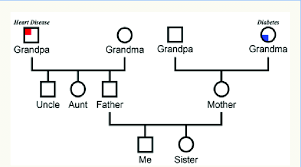
A genogram (pronounced: jen-uh-gram) is “a pictorial representation of family relationships across several generations. It is a convenient organizing device to help you identify family patterns or develop hypotheses about family functioning” (GenoPro.com). The genogram resembles a family tree; however, it includes additional relationships among individuals. This instrument facilitates the practitioner and his client’s identification an understanding of patterns in family history. The genogram also does a better job than a pedigree chart in mapping out relationships and traits.

Even though there are a plethora of books and websites on the subject of genograms, it is worth noting that Monica McGoldrick and Randy Gerson are responsible for its initial development and popularity in clinical settings. The structure of a genogram is by and large determined by the imagination and creativity of its author. Some of the most common features on a genogram are information related to the number of families, children in a given family, and the birth order of the family members—including the number of births and deaths.

Index Person: In constructing the genogram, identify yourself as the “index person” and complete the genogram on your family.

Focus: The focus of this genogram will be on family strengths and resilience, family patterns, rules or ways of being, and the overall health of the family. Of course, you should also address any issues and concerns that may be discovered; however, do not make the genogram problem-focused, even though this is typically how it is used in counseling.

Construction: You will submit your genogram through the assignment manager via GenoPro, found by clicking the “assignments” button. This submission will come in as a GenoPro document. You will also need to attach your narrative on an MS Word document. Make sure to include the following items:

  • Two preceding generations—that is, the genogram must include the index person, his/her parents, and his/her grandparents (three generations, in all). It would also be imperative that, in the event of the index person being involved in a marital or significant relationship, mention must be made of the significant other involved, including their immediate family such as their parents, siblings, and children. In the case where the index person is either a parent or a grand-parent, his/her children must be included in the genogram.
  • Use the symbols as illustrated within the GenoPro software to indicate the nature of many of the relationships among family members. Be sure to indicate yourself as the index person by drawing a double circle or double square around yourself. Do not forget to include the current date on your genogram.
  • Use the relationship lines to indicate significant relationships within the family system. Do not use the “normal” line provided by GenoPro. This only crowds the graphic and makes it difficult to read.
  • Include a legend at the bottom right corner of the genogram document. The legend must only include items represented on the genogram.
  • In order to make it easy to understand, ensure that there are notes on the genogram graphic regarding people, family events, etc., in their appropriate places (for example, on the side of a relevant person or generation). Even though this is not required for the successful completion of the assignment, it may be helpful to interview other family members about important areas of their family history. It would also be a good idea to include labels (a word or two will do) about each family member’s strengths—especially those that are either known by the index person or have a relevant connection to them.
  • GenoPro gives you the freedom you need to manipulate your genogram to allow enhanced viewing on a computer system. You can shorten or lengthen lines, move entire family units around to maximize space, and more. Your objective is to work with the graph to create a genogram that is easy to view and can be understood at a glance.

Analysis: Once you have completed your genogram, you will need to interpret your family map. Analyze the genogram and who you are in the context of the family based on race/ethnicity, culture, class, gender, spiritual tradition, family life cycle, etc.

Part 2 is a paper instructions below:

Part II (Microsoft Word document)

Written Narrative: After analyzing your genogram graphic following the guidelines above, state your interpretation of yourself in clear terms. Do this by writing a paper that describes the contributions that religion, gender, race, culture, etc., and your own unique family history have made to your personal identity. Do not forget to demonstrate your understanding of key concepts learned in this course. Apart from the quality of your written work, you will also be graded on your ability to widely, deeply, and accurately analyze and utilize theoretical concepts in describing your family’s interactional process.

Rest assured that this paper will be kept confidential. Be reminded that you are solely responsible for any information you choose to disclose in this project. Also note that you are under no obligation to reveal any information that you choose not to reveal.

The following outline must be used for your paper, using current APA format:

  1. Briefly introduce your family. Discuss the sociopolitical, cultural, economic, spiritual, etc. issues in your family. Do not spend a lot of time describing demographic details that can be observed on the genogram.
  • You can use first person in this narrative.
  • You will not need an abstract; however, you will need a cover page. A reference page must be provided if you use citations.
  1. Using the data gathered and the analyses you have made based upon your genogram and other resources, address the following questions:
  2. What do you understand about yourself within the context of this multigenerational family?
  3. How do the cultural, historical, and personal characteristic aspects of the information impact your understanding of the self?
  4. If at all, what are the family lifecycle-related issues in the past or present that have influenced your family and/or interface with question D?
  5. What intergenerational dynamics, patterns and/or themes that you have identified influence you (or others) in your current family? Jump to the last section of the present document, “Interpreting Genograms” and then draw a conclusion about your analysis.
  6. What areas do you need to work on in order to become a better spouse, parent, counselor, and godly person?

Conclude this part of the assignment with personal reflections on the development of this project. Were there any issues that came to light? What did you learn?

(At the present time, I do not know exactly how many pages are due to this project. But will inform once instructor let us know).

We can write this or a similar paper for you! Simply fill the order form!
Course Work on Plato and Descartes

Course Work on Plato and Descartes
           Course Work on Plato and Descartes

Course Work on Plato and Descartes

1) Q&A: Compose and answer two original questions based on the Week One required readings. Ask and answer one question that addresses the works of each of the following philosophers:

Plato (you may select any of the particular reading assignments by Plato from Week One). Plato, Euthyphro (entire): [ Introductory Notes on the Euthyphro from The Online Library of Liberty, Plato, Dialogues, vol. 2 : See pp. 88-115 for Jowett’s translation of the Euthyphro]. ◦Study Guide [supplemental reading]: Euthyphro: Introductory Notes .

  • Plato, Republic, Book IV, §437b-441e; Books VI-VII, §509d-521a [Excerpts can be found here: Plato, Dialogues, vol. 3 : Bk. IV, pp. 272-278; Bk. VII, pp. 351-360; and also here: Plato: Complete Works , Ed. John M. Cooper, Bk.IV, pp. 1099/1068-1104/1073; Bk. VII, pp. 1161/1130-1169/1138. [Please note that the three items below are for further study but not required reading.]

Descartes (consider here only Meditations I and II from Descartes’s Meditations on First Philosophy). Descartes, Meditations on First Philosophy: Preface; Meditations I-II, pp. 1-12 [ [You can find an in-depth analysis of Descartes’s philosophy and more of his work here: The Online Library of Liberty ].

Click on the title link above, “Week One Q&A Discussion & Critical Comment Forum” to create your Q&A threads. YOU SHOULD CREATE A NEW THREAD FOR EACH ONE OF YOUR TWO QUESTIONS. You will then return later in the week to post your critical comments INSIDE of the two Q&A threads of your choice (remember that if a Q&A thread already has two comment replies, you need to move on to another Q&A thread that has no more than one reply). This means you will be creating two original threads and responding to two threads (each by a different peer) each week to complete both parts of the assignment–the Q&A Discussion and the Critical Comments.

Please note that each Q&A post, including the question but not any citations, should be around 350-500 words, and posts with fewer than 250 words will not receive any credit. Also remember to proofread your work for stylistic, grammatical, and spelling errors before submission.

Each one of your two Q&A Discussion threads should be formatted as follows (remember…these are two separate threads):

First thread:

My first question is:

My answer to this question is:

________________________________________

Second thread:

My second question is:

My answer to this question is:

________________________________________

________________________________________

2) Critical Comments: Find a Q&A post that you would like to critique. After opening the thread and thinking about the question and the answer, post your critique. To do this, click on the blue “Reply”

button, then enter your comments in the editing window that opens. Following this procedure allows for a very clear layout in the continuing discussion. No special format is required for your critical comments. Please take the time to review these helpful guidelines on Writing a Critique of Another Person’s Argument.

Remember that your goal here is not simply to agree or disagree with your peers’ answers to their questions or to share some thoughts that the authors’ posts bring to mind from your own reading (although you may add such peer comments); what you should be attempting here is an analysis and evaluation of their entire Q&A and any argumentation they may employ in defending the view they put forward. Most students find it very challenging to critically evaluate either their own work or that of their peers.

Please note that each of your critiques should be in the range of 200-400 words to be eligible for full credit.

Additionally, you may wish to comment on someone else’s critique of a Q&A Discussion. This is highly encouraged and will enhance your learning experience in this assignment as well as interaction with your peers. To comment on someones Critical Comments or critique, this time, the reply button will be grey.

When both parts of this assignment are complete, you should have written somewhere between 1100 and 1800 words for both Q&As and critical comments. The overall goal of both parts of this assignment is to ignite a genuine philosophical discussion that both interests and challenges you.

We can write this or a similar paper for you! Simply fill the order form!

Computer revolution of the past hundred years

Computer revolution of the past hundred years
    Computer revolution of the past hundred                                                  years

Computer revolution of the past hundred years

These are the instructions to complete the assignment

This assignment should be submitted as one Word document. Don’t ZIP or PDF files. They will not be accepted!

Include a cover sheet and a reference page. The cover sheet is to include: your name, assignment number, course number, and the date. Points will be deducted for missing or incorrect cover sheet.

Include “all” references used to include the textbook in the last page of the assignment document.

DO NOT “Copy and paste”. Work that is not your own work constitutes plagiarism. You may quote sources but you must reference them properly. Make sure all work is in your own words unless properly quoted and referenced.

Use correct grammar, spelling, and punctuation. Points will be deducted for errors. Be sure to “Spell Check” and proofread.

Submit assignment via the Assignment Submission link. DO NOT attach assignments to an email – they will not be graded!

Write, write and write. This is a writing course and you need to prove that you understood each requirement. Comply with the number of pages listed.

I will grade your assignments and return them with comments.

These are the assignment requirements

What are devices in your home that appear to use computers or algorithms? Can you name at least one device for every room in your house? Describe one algorithm each device performs.

Think of a problem or task in your life that you wish had an algorithmic solution. How difficult is this problem to solve? What might an algorithmic solution require?

Discuss the social changes caused by the computer revolution of the past hundred years. What are the downsides to automating routine mental tasks? What are the upsides? Are there times when we might want to decide not to use a technical innovation? When and why?

Search the web for articles about the future of computing. Collect a list of new innovations in computing in the next few years. How will our daily lives change as a result?

Think about examples of abstractions we use with the computer on a regular basis. What are some metaphors provided by applications or your operating system?

Compare RAM with nonvolatile memory like the computer’s hard drive. List the features of each, and compare them with each other? Where they differ in design, why would the designers have made the choices they made?

Why might the MIMD model for parallel processing be preferred over the SIMD model?

This assignment should take between 5 to 7 pages not counting the cover page and reference page.

Additional Resources

Computational Tales: http://computationaltales.blogspot.com/p/posts-by-topic.html

This link reflects the work of Dr. Jeremy Kubica, software engineer, and manager at Google. Dr. Kubica has gathered a set of computer science concepts written as fairy tales in order to provide students with an accessible overview of key concepts before diving into technical details. These fun and quirky stories cover a broad range of topics, from algorithms and data structures to general programming concepts.

Careers in Computing: http://computingcareers.acm.org/

Algorithm: http://www.techterms.com/definition/algorithm

Charles Babbage: http://www.computerhistory.org/babbage/

Computing history timeline: http://www.computerhistory.org/timeline/

Early computing machines: http://learn.fi.edu/learn/case-files/hci.html

Web page and video that explains how flash memory works: http://computer.howstuffworks.com/flash-memory.htmhttp://www.youtube.com/watch?v=kNGvZGz7dmE

Intel has an online curriculum that talks about hardware and processor design, among other topics. While designed for K–12, it could be useful here as well: http://educate.intel.com/en/TheJourneyInside

The Computer History Museum has an online exhibit about supercomputers: http://www.computerhistory.org/revolution/supercomputers/10/intro

Download Berkley’s BIONIC software and become part of a MIMD: http://boinc.berkeley.edu

We can write this or a similar paper for you! Simply fill the order form!

The CEO’s Challenge Assignment Paper

The CEO's Challenge
    The CEO’s Challenge

The CEO’s Challenge

Assignment 1: The CEO’s Challenge

Due Week 3 and worth 150 points

You’ve just left an all-hands meeting at your company*. The CEO was very upset at the rise of shadow IT projects – a major indicator that the company’s internal information system has failed to meet its needs.

Because the current information system is inadequate, inefficient, and outdated, the CEO is inviting everyone in the organization to propose a new operational, decision support, or enterprise information system to replace it. The executives have allocated $5 million to fund the most promising idea.

This is your chance to make a difference in the company (not to mention your own career). Write your proposal as a memo that the entire C-suite will review. Include at least these points, in your own words, to be persuasive:

  1. Identify the main functions of your proposed information system and why they are important to the business.
  1. Describe what types of data your information system will hold and how data quality will be ensured.
  1. Explain how the old information system handles the functions you mentioned, the problems that occur, and why your information system will handle things better.
  1. Offer evidence of feasibility: Show that similar information systems have been built successfully and that they save more money than they cost.

The executives are busy, so keep your memo to 1-4 pages and avoid any extraneous content.

*You may use a current or former employer, but do not disclose anything confidential. Or, you can pick another organization if you are familiar with their internal (not customer-facing) information systems. You can disguise the organization and populate it with famous names. Made-up companies are problematic because of the amount of detail and realism they require.

We can write this or a similar paper for you! Simply fill the order form!