In this study (Renshaw et al, 2012 ); results indicated that there is a link to psychological stress and the need for intervention strategies for spouses of service members with symptoms of combat related PTSD.
This article shines light on the need for increased counseling opportunities for returning military personnel, it is important that a cohesive transition back into civilian or continued military life occurs not only for the service member but for the spouse and their families as well. This article is current and published within the last two years.
Additionally, the article is considered scholarly and credible in their research as it was retrieved from peer a reviewed journal, by author’s who are well- known researchers in this particular field of study.
In fact, the authors of this article, “Distress in spouses of service member with symptoms of combat-related PTSD: Secondary traumatic stress or general psychological stress?” (Renshaw et al, 2011, p. 465), conducted their research via a grant from The National Institute of Child Health and Human Development.
To have this award, the researchers must have research endeavors underway and all researchers are affiliated with major universities who conduct research of this magnitude on a regular basis.
In this article (Taft, Schumm, Jeremiah, Panuzio, & Proctor, 2008), discuss military wives stress reactions when their husbands were deployed. They further highlight how education and mental health care personnel can help to identify these stress symptoms for those who might be at risk of a mental health diagnosis.
With this knowledge, it allows for intervention prior to the symptoms becoming more psychologically damaging.
This article is of interest to professional counseling as the issue of stress and trauma to relationships can occur with spouses, who are deployed and those remaining at home.
With the intent to keep the family unit intact during and after deployments, it is necessary to implement early prevention strategies. Studies like this are helpful in recognizing these potential issues.
This article is current and published in the last five years from a scholarly, peer reviewed journal. In addition, the authors are considered experts in their field and are affiliated with the Veterans Affairs of Boston, Harvard Medical and the National Center for PTSD.
Wexler & McGrath (1991) study the relationship between trauma and stress syndrome in military wives whose husbands have been deployed. The goal of this study indicates a need for additional support and the opportunity for networking and groups of military wives to share experiences and explore different coping mechanisms.
Additionally, it suggests counseling for those who need more professional support (Wexler & McGrath, 1991, p. 517). While this journal article is twenty years old and may be considered aged documentation in some academic circles; the topic lends to the discussion of empirical research conducted regarding this theme.
In this light, it is considered viable to continued research of active combat of United States military action and those military personnel who have been exposed to active combat in deployment.
This article is considered scholarly and credible in their research as it was retrieved from peer a reviewed journal, based on an empirical study, endorsed by the American Psychological Association, and written author’s well- known researchers in this particular field of study.
Annotated Bibliography
Elizabeth Crisomia
Grand Canyon University: UNV 503
March 20, 2019
According to Blevins and Khanna (2016), screening students for substance abuse that is not alcohol may be difficult. This is because substances may include hard drugs such as cocaine and heroin.
Specific questions targeting specific drugs would likely result in informed and useful information in the collection of data. Their article revealed that substance use involves not only alcohol abuse but also binge drinking and the misuse of prescribed medicine.
While others may not be harmed from taking those drugs, others get negatively affected by the abuse of substances. Gaining critical knowledge of the prevalence of specific drug use would help in preventing associated health, behavioral, and social problems.
The article is a knowledgeable study since it is derived from the psychiatric time’s database. Therefore, the findings have a high likelihood of becoming valid and useful in the field of psychology.
The article provides relevant and critical information on how substance abuse significantly contributes to mental health problems. The information provided would further help in reducing the negative outcomes of substance abuse among students.
Chan, R. C. H., & Mak, W. W. S. (2016). Common sense model of mental illness: Understanding the impact of cognitive and emotional representations of mental illness on recovery through the mediation of self-stigma. Psychiatry Research, 246, 16–24. https://doi-org.lopes.idm.oclc.org/10.1016/j.psychres.2016.09.013
Chan and Mak (2016) sought to understand how self-stigma from the cognitive and mental perception of people in recovery affects clinical and personal healing of people.
Stigmatization may not only come from external factors but also internal elements such as personal beliefs as well. Their cross-sectional study showed that self-stigma has a significant role in enabling individual illness influence the recovery process in mental health illnesses.
As a result, the authors recommended management programs that were aimed at eliminating misconceptions, emotions, and related beliefs and perceptions of mental illnesses. The article is from the U.S. National Library of Medicine National Institute of Health.
The authors are also professors from the department of psychology in Hong Kong thereby making the information provided helpful in understanding how mental health treatment models could be improved.
Mental illnesses should be eliminated to promote effective recovery processes among affected individuals. Elimination of negative emotional energies among affected individuals is critical in towards developing self-management techniques in the recovery process of individuals.
Welsh, J. W., Knight, J. R., Hou, S. S.-Y., Malowney, M., Schram, P., Sherritt, L., & Boyd, J. W. (2017). Association Between Substance Use Diagnoses and Psychiatric Disorders in an Adolescent and Young Adult Clinic-Based Population. Journal of Adolescent Health, (6). https://doi-org.lopes.idm.oclc.org/10.1016/j.jadohealth.2016.12.018…
We can write this or a similar paper for you! Simply fill the order form!
The Nature & Purpose of the Assignment
In recent years, the field of psychology has received more attention in the general media than it had before. That is, many of our discoveries have been published in scientific journals or presented at professional meetings, but they rarely had the opportunity to enlighten non-scholars. With the newer popularity of psychological writing, more and more people have gotten the opportunity to learn about the field and how it applies to their lives. The response papers for our course are an opportunity for you to learn some of these lessons and write about them.
For these assignments, you will be selecting from a number of articles that I offer from “pop” (non-academic) sources. You will read the article and apply it to our course. The specific areas I expect you to address are below in the rubric, which I will use to determine your grade. I recommend using the three main content areas below as a beginning outline so that you are providing what I am asking for.
Each paper must be submitted before class on its due date or it will be considered late. Please upload it to the Turnitin link on our course’s BlackBoard site. I recommend doing so in enough time that you can run an Originality Report before your final submission; This allows you to see whether your wording too closely resembles the author’s or another source’s, constituting plagiarism.
These are all articles that I have read and found interesting for a number of reasons, and I hope that you will too. I will also periodically ask you to tell others in the class about your article so that they might have some benefit from it as well.
Grading Rubric
Article Summary (25%): Does the summary indicate sufficient comprehension of the article? Does the focus rest on the important elements that would enable someone who has not read the article to know whether it is worth reading?
Application to Course Material (25%): Does the student apply the article to material from the course or vice versa? Is the link between the article and the text clear and sensible?
Article Critique (25%): Does the student bring in sufficient personal perspective to offer a reasonable critique? Does the student offer a logical or evidence-based response to the article’s author? Is the degree to which the student agrees with the author clear and supported?
Writing Quality (25%): Is the writing college-level? Is the writing clear and free of grammatical errors? Does the student use appropriate word choices and demonstrate a command of the language?
short (2-3 pages, double-spaced, Times New Roman 12 pt. font) response to a “pop” article related to psychology. I will post the article on Brightspace, and you will submit your response electronically as a Word Document (DO NOT paste your response in the comment box – those files are unreadable and will lose 25% per week it is late) on Brightspace via the designated assignment link. More on this assignment soon. Your response paper essentially must contain two sections: 1) a reasonable summary of the article sufficient that it is clear that you read the entire article, 2) a thorough thoughtful expression of your thoughts, feelings, agreement/disagreement with the article’s position or that of the individuals portrayed within; relevance/connection to course material or discussions; how the article has or has not changed your perspective about the article topic; any other unique perspectives you have to offer in response to having read the article
Other tips for writing a better paper:
Use no more than 1 or 2 direct quotes (preferably none)
This is scientific writing, not story telling (so don’t be “flowery”)
If you know you struggle with writing, get someone to read your work before you turn it in (being careful not to get help with the content)
Make your point as clearly as possibleClarify which points are yours and which are the author’s
Use the article attached for writing the paper.
We can write this or a similar paper for you! Simply fill the order form!
Clockwork Orange’ and ‘Arkangel‘ both feature young central characters whose ability to feel and act has been interfered with by science and technology.
Clockwork Orange’ and ‘Arkangel’
Write an essay exploring why this is represented as dystopic in both films, even though the instigators (the State in A Clockwork Orange and the mother in Arkangel ) clearly think they are ushering in a utopic age where the safety of citizens is paramount.
Clockwork Orange’ and ‘Arkangel’
Make sure your analysis includes your assessment of the culture of control and surveillance we are currently living in and your thoughts on how effectively both films portray this particular message to their audiences.
We can write this or a similar paper for you! Simply fill the order form!
*Respond to an active shooter on campus of Ohio State University in Columbus, Ohio.
This requires minimum of 5 pages of core information as you can see you will have around 9-10 pages total with the cover page and index, etc.
EMERGENCY PREPAREDNESS PLAN PROJECT:
WHAT IS AN EMERGENCY PREPAREDNESS PLAN?
An emergency preparedness plan is a document developed to guide the administering of resources to prepare for, mitigate, respond to, and evaluate crises of all kinds, e.g., natural disasters, mass shootings, terrorist incidents, large-scale fires, incidents at nearby nuclear power plants. There is no set format or length, though the approach taken in this class is the development of a comprehensive plan on the assume that such a plan covers all aspects of any kind of shorter plan that to which a student may be required to contribute in the future. As an example, we will use the Regional Hazard Mitigation Plan Update of the West Texas Council of Governments, completed in July 2018.
Samples of various Emergency Preparedness Plans will be available on Blackboard for you to review. These examples serve as guides and tools to use as you work on your project.
THE COURSE ASSIGNMENT
This class culminates in the preparation of an emergency preparedness plan. Parts of this plan are written and discussed over the course of the semester, and Week 15 of the course is set aside to complete the plan. Students will be a jurisdiction or agency of interest for which a plan will be written, and students are encouraged to use for their plan a setting in which they envision working in the future or are already working in today. Examples of settings that creates plans are as follows:
• A state or local government entity or agency, e.g., city government, police department, fire department
• A federal agency required to respond to a crisis or assist in recovery
• A business or nonprofit agency planning for the continuity of operations during or after a crisis
• A nonprofit agency engaged in disaster relief, e.g., American Red Cross, Salvation Army, Samaritan’s Purse
Undergraduate students will create a plan dealing with a single hazard. Graduate students will create an “all hazards” plan.
There is no minimum page length or number of sources required for this assignment.
Please note, this project will be your final exam. Weeks 15 – 16 have been designated as work weeks for this project.
COMPONENTS OF THE PLAN
At a bare minimum, the plan will contain the follow components:
• Section 1: An introduction summarizing the background of the plan and the scope of authority of the sponsoring agency.
• Section 2: A summary of the planning process, including time frames for the development of the plan, hazard mitigation, and the ways in which stakeholders were incorporated in the process.
• Section 3: A profile of the jurisdiction or agency highlighting demographic, social, and economic factors.
• Section 4: A risk overview and description of hazards, including a thorough description of the hazard, the potential extent of the hazard, a summary of historical occurrences of the hazard, and the possibility for future events. In the West Texas plan, this work encompasses several sections as the the plan works through each identified hazard.
• Section 5: A mitigation strategy and actions, past and future. This work is also multiple sections in the West Texas plan.
• Section 6: Activities to maintain and update the plan.
Clark University Active Shooter Emergency Plan
Revised January 11, 2013
Clark University – Active Shooter Emergency Plan
Contents
Purpose………………………………………………………………………………………………………………………………… 3 Applicability ………………………………………………………………………………………………………………………….. 3 Attachments …………………………………………………………………………………………………………………………. 3 Definition ……………………………………………………………………………………………………………………………… 3 Roles and Responsibilities ………………………………………………………………………………………………………. 3
Clark University Police ………………………………………………………………………………………………………… 3 University Communications ………………………………………………………………………………………………… 4 Dean of Students ……………………………………………………………………………………………………………….. 4 The Dean of College and the Dean of Graduate Studies…………………………………………………………..4 Human Recourses………………………………………………………………………………………………………………. 4 Counseling Services ……………………………………………………………………………………………………………. 4 Incident Commander………………………………………………………………………………………………………….. 4 Physical Plant…………………………………………………………………………………………………………………….. 4 Emergency Communications Team……………………………………………………………………………………….4
Protocol ……………………………………………………………………………………………………………………………….. 5 Attachment A: Prior to an Active Shooter Event………………………………………………………………………… 6 Encountering or Coping with Threats and Violence…………………………………………………………………6 For an angry or hostile person. ………………………………………………………………………………………… 6 For a person shouting, swearing, or threatening ………………………………………………………………… 6 For someone threatening you or others with a gun, knife, or other weapon. ………………………… 6 General Safety Tips…………………………………………………………………………………………………………….. 6 Attachment B: During an Active Shooter Event …………………………………………………………………………. 7 Active Shooter Emergency Safety Guidelines ………………………………………………………………………… 7 General Guidelines to Remember:………………………………………………………………………………………..7 Immediate Action: ……………………………………………………………………………………………………………… 7 Unsecuring The Area ………………………………………………………………………………………………………….. 9 Law Enforcement Response ………………………………………………………………………………………………… 9 Clark Alerts: …………………………………………………………………………………………………………………….. 10 Attachment C Characteristics of an Active Shooter ………………………………………………………………….. 11
2 rev. 1/11/2013
Attachment A: Attachment B: Attachment C: Definition
Prior to an Active Shooter Event.
During an Active Shooter Event – Active Shooter Emergency Safety Guidelines. Characteristics of an Active Shooter.
Clark University – Active Shooter Emergency Plan Purpose
The purpose of the Active Shooter Emergency Plan is written to identify departments and their responsibilities in response to an active shooter event or a potential active shooter event (hostile armed person on campus). Applicability
This plan applies to Clark University Main Campus located at 950 Main Street, Worcester, MA 01610. Attachments
The following attachments to this Emergency Plan have been assembled from various Government, Police, and other documentation concerning Active Shooter safety guidelines. Because of the unpredictability of Active Shooter events, these are guidelines and should be used as such.
Active Shooter is defined as one or more subjects who participate in a random or systematic shooting spree demonstrating their intent to continuously harm or kill others. These situations are dynamic and evolve rapidly, demanding immediate deployment of law enforcement resources to stop the shooting and limit harm or loss of life to innocent victims.
Roles and Responsibilities Clark University Police
The Clark University Police Department’s prime responsibility is to protect the Clark University Community and will be the first responder to an active shooter incident. The actions taken for this type of incident will have the following objectives:
• Immediately engage the assailant(s)
• Evacuate the victims
• Direct affected individuals to medical care, interviews, and counseling
• Preserve the crime scene for investigation
The University Police will maintain and follow Clark University Police Active Shooter Protocols based on National, State, and Local Law Enforcement accepted practices and guidelines for dealing with active shooter incidents on campus.
The University Police is authorized to issue a Clark Alert immediately and directly to the Clark Community without consulting the Emergency Response Team Incident Commander when an active shooter on campus has been confirmed.
3 rev. 1/11/2013
Clark University – Active Shooter Emergency Plan
University Communications
• University Communications is responsible for ongoing communications relative to the event.
• Provide back up for issuing Clark Alerts and updating the Emergency Information Telephone
Lines and Emergency/Safety Website.
Dean of Students
• The Dean of Students is responsible for assisting in the recognition of students at risk.
• Should a threat present itself, the Dean will call together the Threat Assessment Team to review
the situation. The team will consist of the Dean of Students, the Chief of University Police, the
Director of Counseling Services, and any others who may be helpful in the situation.
• Assisting students after the event
• Coordinating the preparedness of the counseling resources available to assist all students in this
type of event.
The Dean of College and the Dean of Graduate Studies
• The Deans are responsible for assisting in the recognition of students at risk by notifying the school faculty of procedures concerning student’s behavior and how to register those concerns with the Dean of Students.
• Should a threat present itself, the Dean will utilize the Threat Assessment Team described above, to review the situation.
• Assisting students after the event Human Recourses
• Human Resources is responsible for assisting in the recognition of employees at risk. Should a threat present itself, the Director of Human Resources will utilize the HR Threat Assessment Team to review the situation. The team will consist of the Director of Human Resources, Chief of University Police, Employee Assistance Program (EAP) resources and others as required.
• Assisting employees after the event Counseling Services
• Counseling Services is responsible for providing assistance in the recognition of students at risk.
• Counseling Services is responsible for coordination of additional outside counseling services that
may be needed to assist students.
Incident Commander
??Activate the Emergency Response Plan Physical Plant
??Is responsible as necessary after the event, for the clean-up and restoration of facilities impacted / damaged in the course of any Active Shooter incident as soon as crime scene restrictions are removed.
Emergency Communications Team
??The Emergency Communications Team is comprised of staff trained to send out Clark Alerts and update the Campus Safety website. They may be contacted during an Active Shooter incident and instructed to initiate a Clark Alerts emergency message per the Safety and Emergency Communications Plan.
4 rev. 1/11/2013
Clark University – Active Shooter Emergency Plan
??The Business Manager is responsible for administering the Clark Alerts system. Protocol
Active shooter events cannot be predicted to follow any pattern and therefore the following protocol will act as a sequencing guideline for this type of situation:
• In the event that a notice is received, at the University Police Office either from a campus source, off-campus telephoned warning, or transfer from the Worcester Police Department of a 911 call that a:
• Gun or weapon has been found on campus.
• Person with a gun is on campus.
• Active Shooter – has fired shots on campus.
(University Police will be notified by the Worcester Police Department of any calls to 911)
• The University police will respond in the following way:
• If (Gun or Weapon) is found, the responding officer will follow appropriate protocol for
removal of weapon.
• If person with gun is on campus and is a danger to him/herself only, the responding
officer will follow appropriate protocol for the situation.
• If person with gun is a danger to others the responding officer will notify the dispatcher
to follow the University Police Active Shooter Protocol.
• Notify the Chief
• Follow Dispatcher protocol for Active Shooter.
• If it is determined immediately that an active shooter incident is occurring from the
phone call received, the Officer in Charge and the Dispatcher will follow the University Police Active Shooter Protocol.
• For Active Shooter on campus, the Dispatcher will immediately;
• Advise all officers to respond to the incident
• Will contact the WPD
• Will initiate the sending of a Clark Alert per Dispatchers Active Shooter Protocol
• The Incident Commander will activate the Emergency Response Plan and designate a location to assemble the Emergency Response Team.
• The Emergency Response Team and the Core Team will assemble at the Incident Control Center when it is safe to do so to coordinate recovery assistance to the victims and families, media information releases, and other appropriate action as necessary.
5 rev. 1/11/2013
Clark University – Active Shooter Emergency Plan
Attachment A:
Prior to an Active Shooter Event
Encountering or Coping with Threats and Violence
The following guidelines were taken from a United States Office of Personnel Management document on “Dealing with Violence in the Workplace”, which summarize the actions you should (or should not) take when encountering a hostile or threatening situation.
For an angry or hostile person.
• Stay calm
• Listen attentively
• Maintain eye contact
• Be courteous
• Be patient
• Keep the situation in your control
For a person shouting, swearing, or threatening
• Signal a coworker, that you need help (Use a duress alarm (panic button) or code words).
• Do not make any calls yourself.
• Have someone call the University Police (X7575)
For someone threatening you or others with a gun, knife, or other weapon.
• Stay calm
• Quietly signal for help (Use a duress alarm or code words)
• Maintain eye contact
• Stall for time
• Keep talking – but follow instructions from the person who has the weapon
• Do not risk harm to yourself or others
• Never try to grab a weapon
• Watch for a safe chance to escape to a safe area
General Safety Tips
• Whether working on campus or attending class, take ownership of making sure your location is safe
• Be aware of your surroundings (e.g. location of exits, doorways, windows, phones, etc.)
• Report suspicious persons to CUPD immediately
• Program SUPD dispatch (508) 793-7575 into your cell phone.
• Be aware of the blue campus emergency phone locations
6 rev. 1/11/2013
Clark University – Active Shooter Emergency Plan
Attachment B:
During an Active Shooter Event
Active Shooter Emergency Safety Guidelines
The following guidelines cannot cover every possible situation that might occur. Nevertheless they serve as an awareness and training tool likely to reduce the number of injuries or death if followed as soon as a situation develops.
Violent incidents, such as an active shooter, can occur on University grounds or within close proximity of the Campus with little or no warning. An active shooter is considered to be a suspect or assailant whose activity is immediately causing serious injury or death, and has not been contained. Active shooter situations are dynamic in nature and demand an immediate response to the situation by the community and law enforcement to stop the shooting and prevent further harm to the community.
In general, how you respond to an active shooter is dictated by the specific circumstances of the situation. If you should find yourself in an active shooter situation, try to remain calm — your actions will influence others, trust your instincts, and call x7575 (508 793 7575) as soon as possible.
The University Police along with local and state police have adopted accepted law enforcement response procedures to contain and terminate such threats as quickly as possible. The following guidelines taken from those sources will enable you to take appropriate actions for yourself and are intended for emerging or in progress situations.
General Guidelines to Remember:
• Remain Calm
• Trust Your Instincts
• Act Smart
• Make Good Decisions
• Take Care of Yourself
• Take Care of Others
Immediate Action:
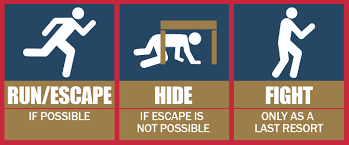
Shelter in Place (SIP) is a protective action to stay inside a building to avoid external hazards such as severe weather (such as tornado), hostile intruder, or a hazardous material release. When Shelter in Place is warranted, you will be appropriately advised by police, fire, safety or University officials via emergency notification system, University web site, or other appropriate means.
General Steps to Shelter in Place for an active shooter situation:
• Stay where you are or go into the nearest room with a door.
• Secure the immediate area. Whether a classroom, residence hall room, office, or restroom.
• If able, lock or barricade the door. Block the door using whatever is available: desks, tables,
file cabinets, other furniture, books, etc.
• After securing the door, stay behind solid objects away from the door as much as possible.
• If an assailant enters your room and leaves, lock or barricade the door behind him/her.
7 rev. 1/11/2013
Clark University – Active Shooter Emergency Plan
• If safe to do so, allow others to seek refuge with you.
• Take appropriate steps to reduce your vulnerability:
• ?? Close blinds or curtains.
• ?? Close and block windows.
• ?? Turn off radios and computers.
• ?? Silence cell phones.
• ?? Place signs in exterior windows to identify your location and the location of injured
persons.
• ?? Keep people calm and quiet.
• ?? After securing the room, people should be positioned out of sight and behind items that
might offer additional protection – walls, desks, file cabinets, bookshelves, etc.
• ?? Do not sound fire alarms. This may cause others to flee the buildings and put them at
risk.
• Wait for the “all-clear” message from authorities
Unsecured Areas. If you find yourself in an open area, immediately seek protection:
• Put something between you and the assailant.
• Consider trying to escape, if you know where the assailant is and there appears to be a
safe escape route immediately available to you. Escape routes may include the
surrounding neighborhood.
• If in doubt, find the safest area available and secure it the best way you can.
Call x7575 (508 793 7575). Program this emergency number into your cell phone. Be aware that the emergency telephone systems may be overwhelmed during this type of incident. All emergency situations should be reported to the campus enforcement by dialing X7575. You may hear multiple rings but stay on the line. Be prepared to provide the dispatcher with as much information as possible, such as the following:
• What is happening.
• Where you are located, including building name and room numbers.
• Number of people at your specific location.
• Injuries if any, including the number of injured and types of injuries.
• Your name and other information as requested.
Try to provide information in a calm clear manner so that the X7575 dispatcher quickly can relay the information to responding emergency personnel.
What to report. Try to note as much as possible about the assailant, including:
• What exactly did you hear – e.g., gunshots, explosions, etc.
• Specific location of the assailant.
• Number of assailants.
• Gender, race, and age of the assailant.
• Language of commands used by the assailant.
• Clothing color and style.
• Physical features- e.g., height, weight, facial hair, glasses.
• Type of weapons- e.g., handguns, rifle, shotgun, explosives.
• Description of any backpack or bag.
• Do you recognize the assailant? Do you know his/her name?
8 rev. 1/11/2013
Clark University – Active Shooter Emergency Plan
Treat the injured. The X7575 dispatcher will notify law enforcement and other emergency services such as EMS, Fire and Rescue. EMS, Fire and Rescue will respond to the site, but will not be able to enter the areas until the area is secured by law enforcement. You may have to treat the injured as best as you can until the medical personnel are allowed to enter the area that was involved. Remember basic first aid:
• For bleeding apply pressure and elevate. Many items can be used for this purpose – e.g., clothing, paper towels, feminine hygiene products, newspapers, etc,
• Reassure those in the area that help will arrive – try to stay quiet and calm. Unsecuring The Area
• The assailant may not stop until his objectives have been met or until engaged and neutralized by law enforcement.
• Always consider the risk of exposure posed by opening the door for any reason.
• Attempts to rescue people outside a secure area only should be made if it can be done
without further endangering the people inside the secured area.
• Be aware that the assailant may bang on the door, yell for help, or otherwise attempt to
entice you to open the door of a secured area.
• If there is any doubt about a threat to the safety of the individuals inside the room, the
area needs to remain secured until you receive an “all-clear” message.
Law Enforcement Response
University Police will immediately respond to the area, assisted by other local law enforcement agencies. Remember, help is on the way. It is important for you to:
• Remain inside a secured area.
• Law enforcement will locate, contain, and stop the assailant.
• The safest place for you to be is inside a secure room.
• The assailant may not flee when law enforcement enters the building, but instead may
target arriving officers.
Injured Person. Initial responding officers will not treat the injured or begin evacuations until the threat is neutralized and the area is secure.
• You may need to explain this to others in order to calm them.
• Once the threat is neutralized, officers will begin treatment and evacuation.
Evacuation. Responding officers will establish safe corridors for persons to evacuate.
• This may be time consuming.
• Remain in secure areas until instructed otherwise.
• You may be instructed to keep your hands on your head or drop to the ground.
• You may be searched.
• You may be escorted out of the building by law enforcement personnel – follow their direction.
• After evacuation, you may be taken to a staging or holding area for medical care, interviewing, or counseling.
• Once you have been evacuated you will not be permitted to retrieve items or access the area until law enforcement releases the crime scene.
9 rev. 1/11/2013
Clark University – Active Shooter Emergency Plan
Clark Alerts:
A Clark Alert message will be broadcast as soon as possible for this type of emergency situation. This message may be sent using any or all of the Clark Alerts communication methods (text message, email, voice message).
• Depending on the available information, the initial message may inform you of where the incident that is occurring. If no specific location is provided, the entire campus should be considered the area at risk.
• If you are inside the area described, you should follow the guidelines above.
• If you are not inside the area described, you should follow the guidelines to stay in place
and not come to the area involved.
• Communications, including the use of cell phones, land line phones, and the internet, of
a non-emergency nature, should be kept to a minimum during the event.
Once the incident has been resolved, you will receive an additional Clark Alert message to notify you of the incident status and provide further directions. In order to receive a Clark Alert message, be sure your Clark Alert contact information is up to date by visiting the Clark Alerts Updater channel on ClarkYOU (you.clarku.edu).
10 rev. 1/11/2013
Clark University – Active Shooter Emergency Plan
Attachment C
Characteristics of an Active Shooter
The following is a list of characteristics commonly associated with active shooter suspects. The list is compiled from descriptions of past active shooters and is not meant to be a comprehensive list describing all active shooters.
• Active shooters usually focus on assaulting persons with whom they come into contact. Their intention to cause bodily harm is usually an expression of hatred or rage rather than the commission of a crime.
• An active shooter is likely to engage more than one target. Active shooters may be intent on killing a number of people as quickly as possible.
• Generally the first indication of the presence of an active shooter is when he or she begins to assault victims.
• Active shooters often go to locations where potential victims are close at hand, such as classrooms, libraries, dining halls and gymnasiums.
• Tactics such as containment and negotiation, normally associated with stand-off incidents may not be adequate in active shooter events. Active shooters typically continue their attack despite the arrival of emergency responders.
• Active shooters are often better armed than the police, sometimes making use of explosives, booby traps, and body armor. Active shooters are not limited to the use of firearms in accomplishing their attacks on victims. They may use bladed weapons, or any tool that, in the circumstance in which it is used, constitutes deadly physical force.
• Active shooters may have a planned attack and be prepared for a sustained confrontation with the police. Historically, active shooters have not attempted to hide their identity or conceal the commission of their attacks. Escape from the police is usually not a priority of the active shooter.
• Active shooters may employ some type of diversion, such as smoke bombs or set off fire alarms.
• Active shooters may be indiscriminate in their violence or they may seek specific victims.
• Active shooters may be suicidal, deciding to die in the course of their actions either at the
hand of others or by a self-inflicted wound.
• Active shooters usually have some degree of familiarity with the building or location they
choose to occupy.
• Active shooter events or an active shooter may go inactive by going to a barricaded status
with access to victims.
11 rev. 1/11/2013
EMERGENCY PREPAREDNESS PLAN PROJECT: WHAT IS AN EMERGENCY PREPAREDNESS PLAN?
An emergency preparedness plan is a document developed to guide the administering of resources to prepare for, mitigate, respond to, and evaluate crises of all kinds, e.g., natural disasters, mass shootings, terrorist incidents, large-scale fires, incidents at nearby nuclear power plants. There is no set format or length, though the approach taken in this class is the development of a comprehensive plan on the assume that such a plan covers all aspects of any kind of shorter plan that to which a student may be required to contribute in the future. As an example, we will use the Regional Hazard Mitigation Plan Update of the West Texas Council of Governments, completed in July 2018.
Samples of various Emergency Preparedness Plans will be available on Blackboard for you to review. These examples serve as guides and tools to use as you work on your project.
THE COURSE ASSIGNMENT
This class culminates in the preparation of an emergency preparedness plan. Parts of this plan are written and discussed over the course of the semester, and Week 15 of the course is set aside to complete the plan. Students will be a jurisdiction or agency of interest for which a plan will be written, and students are encouraged to use for their plan a setting in which they envision working in the future or are already working in today. Examples of settings that creates plans are as follows:
• A state or local government entity or agency, e.g., city government, police department, fire department
• A federal agency required to respond to a crisis or assist in recovery
• A business or nonprofit agency planning for the continuity of operations during or after a crisis
• A nonprofit agency engaged in disaster relief, e.g., American Red Cross, Salvation Army,
Samaritan’s Purse
Undergraduate students will create a plan dealing with a single hazard. Graduate students will create an “all hazards” plan.
There is no minimum page length or number of sources required for this assignment.
Please note, this project will be your final exam. Weeks 15 – 16 have been designated as work weeks for this project.
COMPONENTS OF THE PLAN
At a bare minimum, the plan will contain the follow components:
• Section 1: An introduction summarizing the background of the plan and the scope of authority of the sponsoring agency.
• Section 2: A summary of the planning process, including time frames for the development of the plan, hazard mitigation, and the ways in which stakeholders were incorporated in the process.
• Section 3: A profile of the jurisdiction or agency highlighting demographic, social, and economic factors.
• Section 4: A risk overview and description of hazards, including a thorough description of the hazard, the potential extent of the hazard, a summary of historical occurrences of the hazard, and the possibility for future events. In the West Texas plan, this work encompasses several sections as the the plan works through each identified hazard.
• Section 5: A mitigation strategy and actions, past and future. This work is also multiple sections in the West Texas plan.
• Section 6: Activities to maintain and update the plan.
DUE DATES
In order to make this project more convenient and organized for students, this project will be broken down into three parts. Each assignment is part of your final project grade, which is worth 500 points. Points will be deducted for any late submissions.
We can write this or a similar paper for you! Simply fill the order form!
Answer these two questions both somewhat long, half a page each.. and NO SOURCES!!
1.)What were the three most substantial acts imposed on the colonists by the British and explain why.
2.) Whiskey Rebellion….explain what caused the rebellion as the events that took place and the significance of the end to the rebellion
Your assignment must follow these formatting requirements:
Be typed, double spaced, using Times New Roman font (size 12), with one-inch margins on all sides; citations and references must follow APA or school-specific format. Check with your professor for any additional instructions.
Include a cover page containing the title of the assignment, the student’s name, the professor’s name, the course title, and the date. The cover page and the reference page are not included in the required assignment page length.
We can write this or a similar paper for you! Simply fill the order form!
Briefly discuss the biography of Alexis de’ Tocqueville, John Stuart Mills and James Madison from the hyperlinks within the course.
Some people argue that the passage of Proposition 8 in California banning gay marriage was a form of majority tyranny. Others might argue that permitting gay marriages would be a form of majority tyranny because they are members of groups that believe that such marriages would be damaging to the society. What about the prospective employee who says that if someone refuses to hire him because he is an atheist then they are engaging in majority tyranny? The employer, on the other hand says if the law requires him to hire people who are atheists then he is a victim of majority tyranny. After reading, at least Chapter 4 of On Liberty, explain how these apparently conflicting views might be resolved.
(Along with information from”On Liberty” ; please include other relevant information from the online readings and hyperlinks within the unit that may support your response)
What mechanisms did Madison suggest to fight against majority tyranny? Include information based on the video “Federalist Papers 51” Discuss one of Madison’s famous quotations from “Federalist Papers 51 “If men were angels; government would not be necessary”. At the end of the paper write a paragraph discussing In what ways do majority tyranny operate today in the United States or throughout the world? Have you personally every felt pressured to conform to the expectations of others in order to fit in or be accepted? How did you handle it?
We can write this or a similar paper for you! Simply fill the order form!
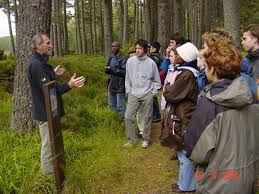
What describes an effective environmental education? Can one truly grasp the importance of that statement in a classroom? Or does one have to be immersed in a natural environment to comprehend the message? Life as we know it, all comes down to a cause and effect relationship, which contributes to the understanding of all environmental impacts. What we do today will affect our future, no matter how miniscule the task. Moreover, effective environmental education can be characterized by three words Awareness, Engagement, Adoption. Enlightening the uninformed of how their actions can trigger, an alleged ripple effect. Furthermore, an immersion into the natural elements allows the person to comprehend first-hand what is to be considered careless or a mindful act. Every human on this earth has a part to play when it concerns the environment, it all starts with an idea.
The Cause and Effect relationship allows one to truly comprehend their actions by analyzing their decisions. For instance, hypothetically I decide to litter, I throw my straw on the floor, eventually that straw would make its way into the ocean and lodge itself in a hungry sea turtle, causing severe injury to the turtle. My one miniscule decision converted itself into a detrimental conclusion all due to the fact, that I was not aware of what my environmental impact could transpire into. Moreover, effective environmental education can be characterized by three words Awareness, Engagement, Adoption. Awareness, is the fundamental aspect of environmental education. Enlightening all the uninformed of how wasteful mindsets are destroying our future. As of recently, there have been much talk regarding ocean pollution. Every year 8 million tons of plastic / waste is dumped into our oceanic fronts. Due to that fact, marine ecosystems have been attacked by certain weapons chemicals and microplastic, decimating aquatic life. Engagement, is the act of acquiring knowledge about what has been brought to light. Educating those who are eager for a better world as well as disciplining those who cannot comprehend their impact. Since, becoming aware of my actions I have taken it upon myself to immerse myself in the world of ocean pollution. Understanding how everyone at one point has had a wasteful mindset and how it correlates to ocean pollution. Going out to nature then seeing the ripple effect, a great example was going out southwest shores and witnessing the red algae bloom disaster. In addition, comprehending new sustainable ideas/views to combat wasteful mindsets. Adoption, is the trickiest aspect to environmental education. People are all about changing their habits but when it comes down to it, they do not succeed. Starting small is the key to adoption. Allowing one to grow everyday by their one act until eventually sustainable acts are as easy as breathing. Learning from the engagement and utilizing those ideas to be one with the earth. For instance, I have started small by recycling then reusing to eventually reducing, doing my civic duty for the earth. However, it made me want to do more, therefore, currently I am working on a sustainable, eco-friendly water bottle. A bottle that after a certain amount time one can put it into a compost and watch it biodegrade. Without becoming aware then engaging on the crisis of ocean pollution, I today would not be contributing to the cause.
We can write this or a similar paper for you! Simply fill the order form!
In the Introduction briefly identify the article and author(s) and briefly summarize their topic and thesis.
In the Analysis of the Article section: You must cover all of these questions.
• What is their topic, issue, and major & minor claims.
o Are they claims of fact, policy or value? Elaborate
o Are they relevant, recent, reliable, and accurate? Elaborate
o How do they support their main claims?
• What is the problem being addressed? Are the researchers addressing a misinterpretation, a gap, or a modification that needs to be made in how others have in addressing the topic or issue?
• Who are identified as important/touchstone thinkers on your issue and what makes them important?
• How do the authors build on and extend what others have argued?
• Do they make any concessions or acknowledge counter-arguments?
Then for the Research Relevance section analyze in terms of relevance to YOUR research. Some examples of things you might cover are (IN THIRD PERSON ONLY):
• What content can be used for your research paper?
• What are the areas of agreement and disagreement (from what you know) that may cause tension?
• What was profound or new in the article?
• What were the strengths in content?
• What keywords (theories, concepts) from the article can you use as the basis of section headings?
Describe in narrative fashion, not as a list.
Then conclude with a brief summary of your analysis of the articles overall effectiveness and relevance to your research based on the above consideration
Follow all APA guidelines for title page, running heading, page numbers, margins, spacing, citations, and reference page. One primary peer reviewed source must be used to create four APA in-text citations (direct quotes or paraphrasing). Level 1 and level 2 headings are also required.
We can write this or a similar paper for you! Simply fill the order form!
All you have to do is write a program that allows the user to populate two 2D arrays of integers (3 x 3 matrix) by calling the function InitMatrix. After the user has entered all the values, then call the function DispMatrix to display the two matrices. Then you can call the functions AddMatrices, TMatrix, and DetMatrix to calculate the addition of the matrices, the transpose of each matrix, and the determinant of each matrix respectively.
InitMatrix will take as argument a 2D array and the number of rows and have a void return type. It will prompt the user to enter 9 total values for a 3 x 3 matrix.
DispMatrix will take as argument a 2D array and the number of rows and have a void return type. It will display the contents of the 2D array. Hint: I suggest you use the setw() function to display the matrices nicely.
AddMatrix will take as argument two 2D arrays and the number of rows and have a void return type. It will add two 2D arrays and call DispMatrix to output the result.
TMatrix will take as argument a 2D array and the number of rows and have a void return type. It will switch the rows and columns and call DispMatrix to output the result.
DetMatrix will take as argument a 2D array and the number of rows and have an int return type. It will calculate the determinate of a 2D array and return the result as an int.
Here’s a sample run:
Please enter 9 integer values for the first matrix:
[0][0]: 6
[0][1]: 1
[0][2]: 1
[1][0]: 4
[1][1]: -2
[1][2]: 5
[2][0]: 2
[2][1]: 8
[2][2]: 7
Please enter 9 integer values for the second matrix:
[0][0]: 12
[0][1]: 4
[0][2]: 11
[1][0]: -3
[1][1]: 7
[1][2]: -9
[2][0]: 4
[2][1]: 8
[2][2]: 21
Practicum experience time log and journal template
Practicum – Week 1 Journal Entry
As a future advanced practice nurse, it is important that you are able to connect your classroom experience to your practicum experience. By applying the concepts you study in the classroom to clinical settings, you enhance your professional competency. Each week, you complete an Assignment that prompts you to reflect on your practicum experiences and relate them to the material presented in the classroom. This week, you begin documenting your practicum experiences in your Practicum Journal.
Learning Objectives
Students will:
Analyze nursing and counseling theories to guide practice in psychotherapy*
Develop goals and objectives for personal practicum experiences*
Create timelines for practicum activities*
* The Assignment related to this Learning Objective is introduced this week and submitted in Week 4.
In preparation for this course’s practicum experience, address the following in your Practicum Journal:
Review the media Clinical Interview: Intake, Assessment,& Therapeutic Alliance in your Learning Resources.
Select one nursing theory and one counseling theory to best guide your practice in psychotherapy.
Note: For guidance on nursing and counseling theories, refer to the Wheeler textbook in this week’s Learning Resources.
Explain why you selected these theories. Support your approach with evidence-based literature.
Develop at least three goals and at least three objectives for the practicum experience in this course.
Create a timeline of practicum activities based on your practicum requirements.
Note: Be sure to use the Practicum Journal Template, located in this week’s Learning Resources.
We can write this or a similar paper for you! Simply fill the order form!