

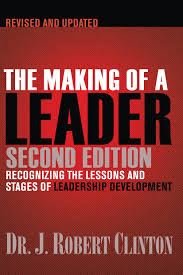
The Making of a Leader: stages of leadership

The Making of a Leader: stages of leadership

The Making of a Leader: stages of leadership

The Making of a Leader: stages of leadership

Order Instructions:

Please use the following format in preparing 4-MAT Book Reviews:

1. ABSTRACT. Summarize what you have read, boiling the book down into 400-600 words (no more than 2 pages). Prove you comprehend the readings by writing a no-nonsense summary. The abstract is not a commentary or listing of topics but rather an objective summary from the reader’s viewpoint. Abstract equals “boiled down.” This section should include a minimum of 2 footnotes to the text being reviewed.

2. CONCRETE RESPONSE. Get vulnerable! In no less than 250 words and no more than 1 page, relate a personal life experience that this book triggered in your memory. Relate your story in first person, describing action, and quoting exact words you remember hearing or saying. In the teaching style of Jesus, this is a do-it-yourself parable, case study, confession. You will remember almost nothing you have read unless you make this critical, personal connection. What video memory began to roll? This is your chance to tell your story and make new ideas your own.

3. REFLECTION. This is the critical thinking part of the review (not critical in the sense of negative, but in the sense of questioning). In no less than 250 words and no more than 1 page, describe what questions pop up for you in response to what you have read. Keep a rough-note sheet at hand as you read. Out smart the author by asking better questions than he/she raised in the book. Tell how the author could have made the book better or more appealing to those in your field of service. One way to begin this section is by stating what bothered you most about the book. This is not a place to provide an endorsement or affirmation of the book.

4. ACTION. So what are you going to do about it? In 400-600 words (no less than 1 page and no more than 2 pages) provide 2 actions that describe what changes you are going to make in your life, ministry, and/or work as a result of your reading. Actions should be measurable and reveal a commitment to specific time, specific people, and identified steps.

5. Please provide a Turabian style* title page, pagination, footnotes & Bibliography.

Book: Clinton, Robert J. The Making of a Leader: Recognizing the Lessons and Stages of Leadership Development. Rev. ed. Colorado Springs: NavPress, 2012. ISBN: 9781612910758.

SAMPLE ANSWER

The Making of a Leader: Recognizing the Lessons and Stages of Leadership Development

The review is based on Clinton and David’s, The Making of a leader: Recognizing the Lessons and Stages of Leadership and Development. In this book, he asserts that leaders (including those who are in the process of being leaders) require a spiritual roadmap so that God can guide them as they seek to develop their leadership gifts. The Christian leaders should allow themselves to be guided by the Holy Spirit so that they lead correctly. According to the bible, God is responsible for guiding man in the right path. I tend to conquer with the statement that “God develops leader overtime.” The author of this book has incorporated the study of various leaders. A baseline of six phases has been chosen by Clinton to develop a common course of a leader’s life. The significant parts of leader’s growth entail the growing stages. The six stages entail Godly foundations, Growth of inner life, maturing of the ministry, life maturing, convergence, and afterglow. These stages should be recognized enables leaders to the growth improvements as well as spelling out the trainings and visions.

When a leader is equipped with these outlines, he possesses the skills of finding and creating leadership, character, values, vision, and relational skills. Clinton asserts that the greatest challenge of leaders is the development of a godly character. It is essential for a leader to possess character since they are the representatives of God Himself. The author points out four processes are used by God to carry out an assessment of the characters of an upcoming leader. They include a check for integrity, check for obedience, and check for the word and ministry task. The character of a person is defined by who they really are it is of importance that a leader shows a good image to the world. He is like a ‘mirror’ hence should lead by example. Since leaders are supposed to follow what God instructs them, they should portray the image of His characters. They should be oriented in doing everything that pleases Him and look for ways of being like Him. The author has outlined the necessary tools for a person to be a great leader. Those tools are the components of the process outlined in the book. According to Clinton, he does not believe in the born leadership but believes that leadership skills are developed. “In the long haul, God is preparing you for convergence. He is conforming you to the image of Christ” (Clinton, 2012, p. 28).

Concrete Response

Clinton states that leadership is “a dynamic process in which a man or woman with God-given capacity influences a specific group of God’s people toward His purposes for the group.” The main theme of the book focuses on the current leaders and those who are in the process of being leaders. It addresses on various perspectives of leaders. As a leader, I have been challenged in number of ways concerning my leadership skills and how God is preparing me to be a great leader following his guidelines. The book addresses the leaders who are not certain of God’s call. When I began my leadership journey, I was wondering whether God is calling them to enter into Christianity or not. I found dilemma and it was not an easy to choose whether to hear God’s voice or to ignore it since it thought it might be some weird feelings within me. I also found out the book touches on the leaders who have begun to find out the opportunities that exist in the ministry of which I have experienced too. Besides, the issues of leaders who need more new challenges from the almighty God are also addressed in the book. The book also talks about the way for leaders who need guidance on the process of selection of leaders and development of new leaders. It also includes the discussion of issues dealing with those leaders who are at crossroads that is, facing challenges of taking major decisions. Leaders who are in need of knowing their progress level in an attempt to develop their leadership skills. It is because we leaders might be wondering whether what they are experiencing is normal for leaders

Reflection

So, I must acknowledge that Clinton has written the best book that has enabled me to think about my leadership strategies. It has also enabled me to find new ways of applying the skills acquired from the book. Besides, the book outlines the examples that are practical to the six phases that leaders encounter in their lives. More so, the questions are provided at the end of each chapter to that helps the readers in analyzing leadership skills.

However, various questions arise from Clinton’s book that concerns leadership. From the researcher’s point of view, one might ask, “Does Clinton’s framework derived from the study of biblical leadership or his own analysis that is based on the biblical and historical principles?” in comparison to the other deities such as the deity of Christ as well as Salvation by grace among others. It is not easy to come up with an answer concerning what the bible says about leadership stages. As far as research is concerned, the framework that was offered by Clinton might not have been analyzed and received a confirmation from an independent quantitative research. Therefore, as long as the materials in this book makes sense in a way or another, there are might be some items that challenge the rules.

The bible is the key guideline of Christian leadership and there were excerpts from the scriptures that are given in the book. However, Dr. Clinton failed to provide examples or plans that have a basis on the character outlines in the bible. A leader should know what God says through the bible for him or her to follow a biblical example. Therefore, Clinton’s research is okay but its basis should not focus on the end results of the research but on the model of leadership that was provided by Jesus Christ.

Application

Clinton has contributed greatly in portraying God’s approach of developing a great leader over time. In my view, it is essential for a leader to have this knowledge. As much as it might be discouraging when faced with difficult situations, it is also easy to be caught up in the moment. For one to have a spirit of perseverance on the difficult situation, he must acknowledge the fact that God is using every circumstance for the benefit of the leader in preparation. It is meant to ensure that the end result of him is a great leader. Clinton has uniquely contributed to these ideas in a number of ways. For instance, he has identified a number of ways through which God is involved in the processes. I have personally gained from this book in two ways. I have recognized the overall purpose of God. His main purpose is to look for ways of coming up with a person of character. God is looking for a person whose ministry comes from within but not from the activity he is engaged in. I have learned from experience and observation that ministering basing on a person’s skills and gifts that will be awarded as a result, does not have an impact that it was initially intended.

Therefore, God uses both positive and negative experiences as His tools of aligning the leadership candidates. The positive tools entail the encouragements and trainings that one gets in the process of becoming a leader among others. The negatives one are conflicts, isolation, backlash and crisis among others. It is good to acknowledge that all this happens for the sake of appreciating what kind of person you are becoming rather taking a critical consideration of your reactions.

Secondly, my lesson concerns the development of ministry philosophy. I believe most of the leaders stop at the first stage. It is a point whereby after adopting the philosophy of the people around them, they do not go ahead to think and reflect on ways of developing their own. However, I strongly believe that if one develops his or her unique philosophy of the ministry that is based on the experiences and convictions that he or she has developed it increases the level of significance and long term impact. It has been noted that a spiritual and moral authority accompanies those with this philosophy. The philosophies are built on both their churches and ministries at large.

References

Bentley, Wessel. ‘Christian Leadership In The Workplace – Introduction’. Koers 79, no. 2 (2014).

Clarke, Andrew D. A Pauline Theology Of Church Leadership. London: T & T Clark, 2008.

Clinton, J. Robert., Dr. The Making of a Leader: Recognizing the Lessons and Stages of Leadership Development. 2nd ed. Colorado Springs, CO: NavPress, 2012.

Diggins, Kristene. ‘NP Collaborative Practice And Servant Leadership’. Journal of Christian Nursing 32, no. 3 (2015): 144.

White, Ellen Gould Harmon. Christian Leadership. Washington, D.C.: Board of Trustees of the Ellen G. White Estate, 2005.

 We can write this or a similar paper for you! Simply fill the order form!


Marissa Mayer’s Challenge: Yahoo! Inc.

Marissa Mayer’s Challenge: Yahoo! Inc.
Marissa Mayer’s Challenge: Yahoo!          Inc.

Marissa Mayer’s Challenge: Yahoo! Inc.

Order Instructions:

The case you will analyze is, “Case 30: Yahoo! Inc.: Marissa Mayer’s Challenge.” In preparation for your case analysis, read “Guide to Strategic Management Case Analysis” in the text, which provides valuable advice on how to analyze a business case.

Your paper needs to include at least two charts, graphs, or visual aids to support your points.

I can scan over to you the Guide to Strategic Management Case Analysis.

SAMPLE ANSWER

Marissa Mayer’s Challenge

Introduction

Plagued with adverse management challenges, failed business strategies and evident loss of industry dominance,   Yahoo! Inc appointed Marissa Mayer to head the organization, in the hope that she would re-invent it to its former glory. Having worked as an executive at Yahoo greatest competitor Google, Mayer is expected to bring in her expertise to address the challenges at the organization. Mayer faced a significant number of challenges including the need to change Yahoo’s culture towards greater innovation, less bureaucracy and higher employee productivity; low financial performance in comparison with other players in the market; and the management of funds obtained from Yahoo’s sale of its share at Alibaba. Mayer was expected to steer the company towards a stable direction, having experienced a major leadership crisis leading to constant change of CEOs, especially within the last five years. This case study will address some of the challenges and problems that Mayer faces, with an objective of suggesting workable recommendation for Mayer and Yahoo.

Yahoo’s Background

The determination of two Stanford University students, Jerry Yang and David Filo, to find a means of tracking their favorite web pages on the internet marks the genesis of Yahoo Inc. In February 1994, Yang and Filo developed a list of websites and as the list got longer, they categorized them into subgroups for easier management. This was later followed by the development of the Yahoo! Website, which the pair came up with as a means to categorize their growing list and enable easy search of the websites. The search engine eventually gained popularity among friends and other students as a way of finding websites on the internet.

In the fall of 1994, the duo began considering the venture as a business opportunity, when the site eventually reached a millionth user hit. Having obtained venture capital to get the business going, Filo and Yang appointed Motorolla veteran, Tim Koogle to head the business as CEO. Yahoo recorded exceptional growth, providing the earliest World Wide Web online navigational guide; before using its platform to sell advertising space. In April 1996, the company went public and soon after expanded into Europe and Japan, forming Yahoo! Europe and Yahoo! Japan; which would ensure that the company offers its services to users worldwide.

By 2001, Yahoo was employing 3,000 people, making over $717 million in annual revenues and owned 24 global properties. Appointed in 2001, the new CEO Terry Semel led Yahoo into new ventures and the company consequently gained revenues from music, photo sharing, blogging and posting. Over the years, Yahoo continued to develop new products in line with market needs and competition. Yahoo mostly generated revenue from advertising space, listing fees and transaction fees.  Major products included Yahoo! Homepage, Yahoo! Finance, Yahoo! News, Yahoo! Sports, Yahoo! Shopping, Yahoo! Answers, Yahoo! Travel; all which are updated with content to ensure traffic to the website. Management of Yahoo’s global business is done geographically and consists of three segments including the Americas, Asia Pacific and Europe, Middle East and Africa (EMEA). To increase its reach, Yahoo had sites in forty five languages across sixty countries.

Problem statement

As Merissa Mayer enters Yahoo as the CEO, she is faced with various issues, which she must address to prove her ability to revolutionize yahoo. To begin with, Mayer comes into a company which has been managed by numerous CEOs and the biggest challenge remains giving a new and stable direction from the company. As the fourth CEO in 2012 alone, Mayer is faced with the challenge of establishing which direction Yahoo should take, having been steered to different directions by the various CEOs (Tsukayama, 2012).  There are high expectations that Mayer will turn the company around, given her expertise and pressure is therefore on her to deliver.

Yahoo faced stiff competition from new entrants, with Google proving to be the biggest threat. Combined with low economic times, Yahoo’s performance deteriorated and company even laid off some employees in 2008 and 2010. The company struggled with management crisis over the years, constantly changing the management in a bid to revive the company. Jerry Yang would later replace Semel as CEO in 2007 and later pave way for Carol Bartz, who was then followed by Tim Morse and Scott Thompson in quick succession.  Yahoo’s competiveness failed to improve despite the various strategies adopted by the various CEOs. It also faced a significant amount of internal politics and investor unrest that caused constant ripples in the organization’s operations. Microsoft made several attempts to acquire Yahoo but their bids were considered undervalued.

The financial performance of Yahoo has been declining over the years and while the company performed exceptionally well during its initial years, the share price has slowed down considerably over the years. This can be attributed to high levels of competition as well as lack of innovation in strategy, causing the firm to lose to competitors including Google and Microsoft.

The graph below indicates the stock price trend during the tenures of various CEOs in Yahoo’s history.

Essentially, Marissa Mayer is faced with various challenges including the following:

  • Enhance efficiency at the organization and change the corporate culture in order to promote performance
  • Deal with the high level of competition in the industry
  • Deal with redundant policies, processes and bureaucracy
  • Guide the organization into forming an identity; either work focus on being a technology firm or a media firm
  • Establish the best manner to invest the proceeds from selling half of its investment at Alibaba
  • Promote growth by targeting new markets

Alternative solutions

Marissa could begin by working on the organization’s culture to eliminate the redundant policies, processes and bureaucracy that threaten innovation and creativity. Beltrán-Martín and Roca-Puig (2013, p. 646) notes that employees are more likely to be flexible and innovative where they are given an open environment to work in and where their capabilities are not limited by bureaucracies. Mayer should encourage direct interaction with employees and ensure that each creative suggestion can be accommodated. In addition, she must instill a working culture that enables employees to be creative and proactive in their work in order to ensure that the company keeps up with other companies such as Google which fosters a creative culture Lowe (2009, p. 9). A change in culture would certainly face resistance as employees adjust to the new policies, hence the need to introduce change gradually.

Yahoo needs to focus on one strategy and excel on it as opposed to taking on a variety of products and having average or poor results. As much as diversification spreads risk for the company however, specialization is also considered effective because it allows the management to focus all its energies into enhancing success of the chosen product. Yahoo for example could focus on search and thus work towards marketing itself as a niche solution when it comes to search. The company could also focus on being a media company, and follow this strategy to excel in this field. While this strategy is effective in promoting a focused organization, it is apparent that the internet business is highly competitive and specialization may limit the organization’s earnings (Chickowski, 2008, p. 12-13). Furthermore, Yahoo already possesses skills and expertise in a wide array of internet solutions and it would be inappropriate to let go of all the investment they have made. In this regard, the solution would be to select a few number of businesses that are performing well and concentrate on these to bring more revenue to the company.

Mayer should leverage on the growing mobile platform to reach more users through Yahoo. Statistics indicate that more users than ever are accessing the internet through their mobile devices and this is expected to grow Fulgoni (2015, p. 116). This is indicated in the graph below.

Source: eMarketer, Dec 2014

The best solution would be to create content that correlates with what mobile users search for online. While this solution promises better user reach, it is important for Yahoo to realize that that every other internet-based organization is eyeing this strategy as a means to promote business, hence the need to be very innovative in their approach Chickowski, 2008, p. 13).

Mayer should use her strengths at search, acquired from Google to promote Yahoo’s performance in this sector. Mayer headed the Google’s search business for a significant number of years and therefore possesses the right skills of knowing what users want to see on the internet. She should then guide the organization into adopting the right skills to promote content development and thus increase traffic to Yahoo. This would not only increase the amount of advertising revenue but it would eventually lead to an improvement in the company’s share price. This approach like the any other means that the organization must face competitors, through coming up with innovative strategies to create a niche.

Mayer needs to increase the quality of the workforce in order to realize better organizational performance. It is clear that the industry has become highly competitive and the productivity of workers at Yahoo is questionable as indicated in the in the case study. This also includes providing extensive training for staff and research to ensure that the company possesses knowledge on the most current trends. In order for this alternative to work, Marissa must be willing to sacrifice some of the inefficient hiring policies as well as ineffective workers. This may create unrest within the company if now well executed.

Proposed Solution and Recommendations

The above suggested solutions present highly valid strategies that Mayer could adopt in creating a more productive Yahoo. The most suitable solutions based on the discussion above would be to change the organization’s culture, encourage innovation and productivity among employees and focus on mobile technology as an avenue to gain a niche in the online market.

As Mayer undertakes a change in Yahoo’s culture, promoting an innovative culture for employees should be a major priority. By allowing employees to be creative, eliminating irrelevant policies that limit innovation and maintaining an open door policy, Mayer could soon transform Yahoo through the employees’ potential (Tampu, 2015, p. 45). In an online study conducted by Ideacomb in 2012, it was established that talent management to a significant extent determines the innovation level in any industry. The report further established that most employees were not comfortable with the idea of the CEO being the only one responsible for innovation and would therefore desire to participate. Based on the responses obtained from the survey, employees are motivated to be more productive and innovative when they are recognized by the management and when they are given an opportunity to participate in the innovation process. The graph below is an indication that allowing employees to be innovative is a source of motivation.

Source: http://www.slideshare.net/spadeworxsoftware/role-of-hr-in-fostering-innovation-a-survey-report

In order to promote productivity, Mayer should go ahead with her plan to review all new hires to establish their potential and ensure that they will deliver quality work for the organization. In addition, she should ensure that the level of commitment among employees in the company is increased considerably within the organization. To achieve this, employees can be put under performance programs, aimed at assessing their contribution to the performance. Through this program, Yahoo will ensure that only the productive employees are maintained while inefficient ones are eliminated.

The mobile user platform promises great potential for Yahoo and Mayer should consider this as the next business for the organization. This involves identifying the content that mobile users are interested in, and thus work towards tailor-making the internet experience to suit mobile users. Through creating new applications and focusing on social media as a medium for reaching mobile users, Yahoo could transform into a media company that will derive significant gains from the mobile user population. Social media is a particularly fertile ground in reaching mobile users and Yahoo could create content that targets users of popular social sites such as Facebook, Twitter, YouTube, Pinterest, Reddit, Tumblr, Foursquare, LinkedIn and its photo sharing social media platform Flickr and among others. The traffic created could then be used to sell advertising space, thus earning the company its former glory.

References

Beltrán-Martín, I., & Roca-Puig, V. (2013). Promoting Employee Flexibility through HR Practices. Human Resource Management, 52(5), 645-674. doi:10.1002/hrm.21556. Retrieved from http://eds.a.ebscohost.com/ehost/pdfviewer/pdfviewer?sid=67571c8c-5251-4647-bc1e-145075417de0%40sessionmgr4005&vid=0&hid=4210

Chickowski, E. (2008). Battle of the brands. Baseline, (82), 12-14. Retrieved from http://eds.a.ebscohost.com/ehost/pdfviewer/pdfviewer?sid=257fd6bd-d2af-44a2-bf6b-9752b1df843f%40sessionmgr4001&vid=0&hid=4210

Fulgoni, G. M. (2015). The Rise of the Digital Omnivore. Journal of Advertising Research, 55(2), 115-119. doi:10.2501/JAR-55-2-115-119. Retrieved from http://eds.a.ebscohost.com/ehost/pdfviewer/pdfviewer?sid=44ade5f6-634e-44d2-aafc-5987e30315b7%40sessionmgr4002&vid=0&hid=4210

Lowe, J. (2009). Google Speaks : Secrets of the World’s Greatest Billionaire Entrepreneurs, Sergey Brin and Larry Page. Hoboken, N.J.: Wiley. Retrieved from http://eds.a.ebscohost.com/ehost/ebookviewer/ebook/bmxlYmtfXzI3NDk2NV9fQU41?sid=df826849-030e-4a53-8d02-4f9ee3ba8b0a@sessionmgr4002&vid=5&hid=4210&format=EB

Shirokova, G., Berezinets, I., & Shatalov, A. (2014). Organisational change and firm growth in emerging economies. Journal for East European Management Studies, 19(2), 185-212. Retrieved from http://eds.a.ebscohost.com/ehost/pdfviewer/pdfviewer?sid=4d2e14ae-a4b8-4cd4-97c6-0c1b7c618e37%40sessionmgr4003&vid=0&hid=4210

Tampu, D. L. (2015). Impact of human motivation on employees performance. Internal Auditing & Risk Management, 10(1), 43-53. Retrieved from http://eds.a.ebscohost.com/ehost/pdfviewer/pdfviewer?sid=a98a3732-d91e-487e-974d-5e953e88c03a%40sessionmgr4004&vid=0&hid=4210

We can write this or a similar paper for you! Simply fill the order form!
Leadership theories Research Paper Available

Leadership theories
Leadership theories

Leadership theories

Order Instructions:

Order Request.
Submit an 8-page comprehensive scholarly analysis. 7 day work request.
Topic-: The role leadership plays in shaping an organizational culture.

To prepare:
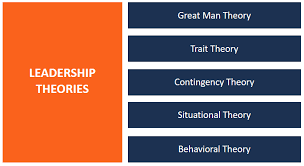
1. Reflect on leadership and leadership theories. Transformational, Transactional, Situational theories.
2. Begin searching for scholarly references about the relationship between leadership and organizational culture.
3. Reflect on the leadership characteristics and skills that are useful in promoting a healthy organizational culture.
4. Consider the leadership styles that promote a healthy organizational culture.
5. Think about the impact on organizational culture of how a leader responds to specific situations, such as crises.
5. Reflect on how a leader might use power to promote a healthy organizational culture and how a leader can promote ethics in a healthy organization.
The “To prepare” is intended to aid in your reflection upon how the various leadership theories and other topics throughout the organizational leadership course relate to organizational culture.
However, you are free to analyze other facets of the relationship between leadership and organizational culture.
Submit an 8-page comprehensive scholarly analysis of the role leadership plays in shaping an organizational culture.
Your paper must contain ten scholarly resources. These can be a combination of the Learning Resources used throughout this course and new scholarly resources.
Your paper should strictly adhere to the APA Course

Thanks

SAMPLE ANSWER

Leaders are very important in running of any organization. They perform different critical organization roles that help in giving a sense of direction to enable an organization attains its long-term goals. Leaders help others in the organization to complete different task amid motivating each and every member to perform better (Tyssen, Wald & Spieth, 2013). Effective leaders often provide the vision and motivation to help attain a particular goal and objective. Many scholars agree with the notion that the definition of leadership is non-trivial in nature and that it depends on the broader conceptions of leadership (Komives, Dugan & Owen, 2011). On the other hand, Organization culture can be termed as a system of shared assumptions, beliefs and values that dictate the way people behave in an organization. The above mentioned shared beliefs have a strong control of the individuals in the organization and often dictate their mode of dress, action and how they perform their duties.

This paper discusses the role leadership plays in shaping the culture of an organization. The paper begins with a reflection on the different leadership and leadership theories, important leadership characteristics, and skills as well as leadership styles that promote a healthy organizational culture. It continues to look at the relationship between organization culture and how a leader responds to specific situations. And finally, how leaders might use the powers bestowed upon them to culture and promote a healthy organizational culture.

Leadership Theories

There are different approaches to leadership. Understanding the different leadership theories can help us to understand the different conceptions concerning leadership and the impact of leadership in an organization. There are quite some leadership theories and conceptions put forward by different scholars over the years.

Transformational Leadership Theory

Transformational leadership is based on the foundations of creating a vision and inspiring change to the people under the leader. In a transformational leadership situation, the leader is held responsible for the role of identifying the needed change (Pless & Maak, 2012). The leader conceptualizes the vision to provide direction and change through inspiration and implementing the change in unison with other committed members of the organization. Transformation leaders help enhance the morale, motivation and job performance of those below him/her by using different mechanisms. The conception of transformational leadership is founded based on the following different components;

Inspirational Motivation: transformation leadership promotes a consistent vision, mission, and goals of the group. Transformational leaders provide direction by coming up with a clear vision and articulating their ideologies to provide a sense of meaning and challenge to their followers (Blomme et al., 2015).

Intellectual Stimulation: Transformational leaders motivate and encourage others to be creative and innovative. Transformational leaders always encourage followers to come up with new ways of doing things and provide leadership opportunities for members to learn. Such leaders are often ready to change their ideas if they found them ineffective.

Individualized consideration: Transformational leaders often offer support and encouragement to individuals. They act as mentors and approve innovation and creativity among group members.

Idealized influence: Transformational leaders are often trusted and respected by their followers. Therefore, they idealize these notions bestowed on them because they often serve as role models. Such leaders often exhibit high standards of moral conduct.

Transactional Leadership Theory

Transactional leadership center of attention is the exchanges between leaders and the group. Transactional leadership is based on the behavioral approach to leadership founded upon a system of rewards and punishments (Tyssen et al., 2013). This system provides a way in which leaders can accomplish organizational goals such as completion of tasks, motivation, supervision and group performance. Leaders focus on the direct behavior of members and their efforts towards achievement of organizational goals, they emphasize on rewards and focus on means to improve organizational efficiency.

Situational Leadership Theory

Situational leadership is founded based on the contingency leadership theoretical framework. This theory suggests that leader’s effectiveness is based on the leader’s character traits about the diverse situational factors (Komives et al., 2011). Therefore, each type of task necessitates different leadership style. Hence, a good leader has to adapt his or her leadership to the specific goals and objectives to be attained in the situation. According to this theory, education, aptitude to take responsibility, and goal setting are imperative for a leader to be successful. The decision made by the leader is based on the leadership style of the leader and the maturity level of the followers. This decision follows dictates the leadership behavior that may include:

Telling: characterized by high leadership style and low supportive behavior of the followers.

Selling:  The leader exhibits high leadership style and the follower’s exhibit high, supportive behavior.

Participating: the leader exhibits low leadership style, and the followers have high, supportive behavior.

Delegating: both the leader and followers exhibit low directive and supportive behavior respectively.

Theoretical Concept of the Relationship between Leadership and Organization Culture

Culture is the medium by which an organization expresses its personality to the employees. The key concept of culture is founded based on the values that are not visible but are shared by individuals even when membership of the organization changes (Tsai, 2011). These shared values and norms enable the employees to channel energy on organizational priorities and provide a backbone for behavior and decision-making. An organization requires visionary leadership to drive change and improve organization performance. Some of the core values that define effective leadership include initiation, consideration and charismatic nature of the leader.

There are quite some scholars who researched on the relationship between leadership and organization culture. According to Moynihan et al (2012), leadership and organization, culture is strongly connected and shares a symbiotic relationship. Leaders play an imperative responsibility in shaping and upholding of the organization culture. Leaders mobilize attention towards the new vision. However, it is the organization culture that bestows authenticity on that vision.

According to Norhtouse (2015), great leaders often adjust their leadership behavior to be geared towards accomplishing the mission of the group resulting in motivation and employee satisfaction. A good relationship between leadership and employee result in a greater contribution to organization communication and teamwork. Therefore, motivating and encouraging each of the group members to work towards accomplishing the mission and objective assigned by the organization resulting in job satisfaction.

The functionality of organization culture is also indispensable for business success and development. Management role is also important to organization culture as it determines the leadership style depending on managerial decisions and orientation to internal policies or market policies (Stone, 2012). Leadership styles help influence on managerial decisions and determine employee reactions to such decisions. Leaders are also the communicators of change, they conceptualize vision and oversee the change process towards new and better organization and corporate culture.

Leadership Characteristics and Skills that Promote a Healthy Organization Culture

For leaders to be effective in their role in promoting a healthy organization culture, they should possess certain characteristics that help foster motivation, promote shared values and team spirit and teamwork (Dubrin, 2015). Some of the leadership qualities and skills include;

Passion for their work: Good leaders are often passionate about their work and take it to be their responsibility because of the importance attached. Such leaders motivate the employee to develop into a more productive human resource by sharing the passion and enthusiasm towards work. Appreciating employee’s performance often results in motivation and a healthy organization culture.

Good communication skills: Management ought to utilize open communication channels to create and maintain a positive corporate culture. Leaders ought to communicate effectively with staff at both higher and lower levels in the company. Leaders should be able to explain clearly tasks and project to the staff. On the other hand, they should communicate the importance of the projects to administrators serving as a bridge between different dimensions in the organization (Cummings & Worley, 2014).

Integrity: Leaders must be worthy of trust from their followers. Therefore, leaders should be honest and always striving towards making the right decisions for the company. Integrity in leaders creates an air of trust and help to promote a healthy corporate culture.

Flexible and Adaptable: Leaders should be flexible and adaptable to adapt to changes and situations within the workplace. They should always be ready for change and be able to help his/her followers accept and adapt change.

Decisive: Leaders are always relied upon in organizations to make a decision that are logical, correct and in a quick manner. Leaders should, therefore, understand the different dimension, scope of work, financial constraint and any other important factors that will enable them to make quickly committed and analytical decision.

Leaders Impact to Situations such as crises and Organization Culture

In a situation where an organization is facing serious crises, leadership is essential to help in providing direction through this phase to help attain organizational sustainability. It is paramount that leaders cannot simply repeat practices that have been accepted to be good leadership as this may have led to failures that resulted in crisis or inadequate respond to the crisis (Northouse, 2015). Therefore, leaders should conceptualize the situation and use leadership skills to steer the organization out of the crisis. That is the leader should utilize their cognitive power, available resources and precise strategies to help solve the crisis. It is imperative to note that crises often attract the attention of each and every individual in the organization. Therefore, a leader’s reaction in such a situation communicates much about the organization’s norms, values, and culture (Blomme et al., 2015). Thus, crises situations tend to bring out the core values of the organization and reflect the organization personality. The way in which leaders and other people in the organization respond to crises create new norms, values, and way of working, and reflects on the organization shared values. Crises generate attention and emotional involvement during the entire process. Because of these notions, crises expose deeper values of the group and thus the levels of culture are put into public scrutiny. Therefore, it is up to the leaders in the organization to influence organizational culture to promote strong moral and ethical behavior, and foster the creation of new organizational norms and values (Pless & Maak, 2012). Leaders are looked upon at this point to help in mentoring others, teach and coach the members into working towards solving the crisis in the best manner possible.

Ways in which Leaders Can Use Power to Promote Healthy Organization Culture

Leaders steer the organization using different styles, the level of skill, influence and characteristics. There are different bases of power that can be utilized by leaders to exert their influence. There exist five bases of power that are mostly used by leaders that are, expert, referent, reward, coercive, and legitimate power (Tyssen et al., 2013). Most leaders today believe in the notion that their groups can utilize varying bases of power. Leaders should utilize the bases mentioned above of power even when doing so with respect to servitude and humility. Leaders should seek to establish the moral nature of valuing the opinions of others rather than pushing their ideologies. Such leadership framework promotes ethical frameworks and corporate culture founded on moral high ground.

Quality leaders should instill and promote ethics in healthy organizations. Ethics in the business context can be termed as a company’s attitude and conduct towards stockholders, customers, employees and community as a whole (Komives et al., 2011). Ethical Standards and practices are paramount as it is the fabric that keeps an entity from disintegrating. It is imperative to note that unethical behavior often results in losses and cause problems in the organization and also the entire industry in which the organization operates.


As such, it is critical for organization leaders to instill ethical framework to the organization and on the team by team basis. Leaders can achieve the goals mentioned above by establishing and creating a clear and open communication in the workplace. The management should also diversify the employees amid encouraging team building exercise to promote cohesiveness of the organization. Quality leadership implies that one should be able to monitor internal factors and diagnosing deficiencies in different groups within the organization. Leaders should also be ready to take remedy action that may lead to negative changes in the organization (Tyssen et al., 2013). More than often communication factors may delineate a leader connection activities with team members in terms of managing conflicts, promoting collaboration, coaching and commitment to objectives. Such leadership styles result in overall team effectiveness, organization performance, and organizational health.

References

Tyssen, A. K., Wald, A., & Spieth, P. (2013). Leadership in temporary organizations: a review of leadership theories and a research agenda. Project Management Journal44(6), 52-67.

Komives, S. R., Dugan, J. P., & Owen, J. E. (2011). The handbook for student leadership development. John Wiley & Sons.

Pless, N. M., & Maak, T. (2012). Responsible leadership: Pathways to the future. In Responsible Leadership (pp. 3-13). Springer Netherlands.

Blomme, R. J., Kodden, B., & Beasley-Suffolk, A. (2015). Leadership theories and the concept of work engagement: Creating a conceptual framework for management implications and research. Journal of Management & Organization21(02), 125-144.

Tsai, Y. (2011). Relationship between organizational culture, leadership behavior and job satisfaction. BMC health services research11(1), 98.

Moynihan, D. P., Pandey, S. K., & Wright, B. E. (2012). Setting the table: How transformational leadership fosters performance information use. Journal of Public Administration Research and Theory22(1), 143-164.

Northouse, P. G. (2015). Leadership: Theory and practice. Sage publications.

Stone, K. B. (2012). Four decades of lean: a systematic literature review.International Journal of Lean Six Sigma3(2), 112-132.

Dubrin, A. (2015). Leadership: Research findings, practice, and skills. Cengage Learning.

Cummings, T., & Worley, C. (2014). Organization development and change. Cengage learning.

We can write this or a similar paper for you! Simply fill the order form!
Politics and Leadership in Today’s Society

Politics and Leadership in Today’s Society

Politics and Leadership in Today’s Society

Order Instructions:

Using feedback from your professor and classmates, revise Part 1 and develop the solution and identify the advantages of the solution. Note: The disadvantages or challenges with your answers will be in Part 3.
Write a six to eight (6-8) page paper in which you:
Provide Part I: Revision of A Problem Exists (3-4 pages)
1. Revise, using feedback from the professor and classmates, your Persuasive Paper Part I: A Problem Exists.
Develop Part 2: Solution to Problem and Advantages (3-4 pages for 6-8 pages total)
2. Include a defensible, relevant thesis statement clearly in the first paragraph. (The thesis statement may need to be modified to reflect added information and purpose of this part.)
3. Explain a detailed, viable solution that supports your thesis. This should be one or two (1-2) paragraphs.
4. State, explain, and support the first advantage (economic, social, political, environmental, social, equitable, ethical/moral, etc.) to your solution. This should be one or two (1-2) paragraphs.
5. State, explain, and support the second advantage (economic, social, political, environmental, social, equitable, ethical/moral, etc.) to your solution. This should be one or two (1-2) paragraphs.
6. State, explain, and support the third (and fourth if desired) advantage (economic, social, political, environmental, social, equitable, ethical/moral, etc.) to your solution. This should be one or two (1-2) paragraphs.
7. Use effective transitional words, phrases, and sentences.
8. Provide a concluding paragraph / transitional paragraph that summarizes the proposed solution and its advantages.
9. Develop a coherently structured paper with an introduction, body, and conclusion.
10. Use one (1) or more rhetorical strategies (ethos, logos, pathos) to explain advantages.
11. Support advantage claims with at least three (3) additional quality relevant references. Use at least six (6) total for Parts 1 and 2. Note: Wikipedia and other Websites do not qualify as academic resources.
Your assignment must follow these formatting guidelines:
• Be typed, double spaced, using Times New Roman font (size 12), with one-inch margins on all sides; citations and references must follow APA or school-specific format. Check with your professor for any additional instructions.
• Include a cover page containing the title of the assignment, the student’s name, the professor’s name, the course title, and the date. The cover page and the reference page are not included in the required assignment page length.
Note: Submit your assignment to the designated plagiarism program so that you can make revisions before submitting your paper to your professor.
The specific course learning outcomes associated with this assignment are:
• Recognize the elements and correct use of a thesis statement.
• Recognize the use of summary, paraphrasing, and quotation to communicate the main points of a text.
• Analyze the rhetorical strategies of ethos, pathos, logos in writing samples and for incorporation into essays or presentations.
• Correct grammatical and stylistic errors consistent with Standard Written English.
• Prepare a research project that supports an argument with structure and format appropriate to the genre.
• Revise drafts to improve clarity, support, and organization. Recognize how to organize ideas with transitional words, phrases, and sentences.
• Incorporate relevant, properly documented sources to substantiate ideas.
• Write clearly and concisely about selected topics using proper writing mechanics.
• Use technology and information resources to research selected issues for this course.
Click here to view the grading rubric for this assignment.

SAMPLE ANSWER

Politics and Leadership in Today’s Society

Introduction

When the name politician is mentioned, we tend to think immediately of a person who holds some honor. On several occasions, we may think they are people who may hold a criminal record. It is common for many politicians to be surrounded by many controversies. When election time comes, they are seen begging for votes among people and trying to change the general public opinion about them. They also give many promises that often give false hopes to the citizens. However, after the election, citizens end up being disappointed with their hopes shattered. The politicians go back to their offices until the next elections (Wald & Calhoun-Brown, 2011). The citizens realize they were right about the political leader. They also realize, however, that political views and socialization can be altered, as it is not permanent. This paper aims to provide solutions the problems associated with politics and politicians. The paper also critically merits of the provided solutions to challenges that are brought about by the political environment. It specifically concentrates on the social, economic and psychological effects of the solution to problems associated with elections and politics in the society. The citizens are most affected by such leaders. It is, therefore, their responsibility to share their opinion with family, classmates, students, colleagues and other members of society.

Rhetoric analysis can be described as a form of criticism that employs the principles of rhetoric to examine the interactions between any text, its author, and an audience. Rhetoric analysis can be applied to almost any kind of text, images, essays, advertisements, photos, poems and even web pages. When applied to any literary works rhetoric analysis changes its perception from esthetic works to an artistically structured instrument of communication.

It is unfair to blame the corruption on the politician alone. The rot is widespread within the hierarchy of leadership and politics. The political hierarchy may consist of an individual who only thinks of how to better the lives of his subjects. The individual is then promoted, and their thinking broadens. They then realize that being merely in that position makes them corrupt. When dealing with the issue of corruption we should first assess our behaviors and thinking. This way we shall have realized that corruption is not in the leadership hierarchy but is within us. Just as murder is punished by death, corruption should also be punished by death (Tate 2010). Corruption handles the misery most people in countries with corrupt leaders suffer. As a result of corruption, most services that are a right for citizens are not offered or are offered badly and inefficiently. The best solution to corruption and embezzlement would be to make the corrupt individuals return all the stolen money. Another workable solution will be to incite the masses to elect out all the leaders and elect fresh faces into political offices. Policies and laws against corruption should be implemented (Bernstein, 2013).

Several questions and thoughts people have been whether they are trying to offend others or if their belief in something is strong. The answers to these questions are targeted on whether or not to hold their tongue in political and democratic debates. The thoughts and speech may be hindered if it will offend someone else or be in vain. This situation, however, falls for people rather than their leaders who in most cases do not care about the repercussions their words will have. A correct form of political correctness is not generalizing an individual as people regardless of their religion, race or even gender. The younger generation today is outspoken and very intelligent. They are more aware of their rights and are less afraid to offend others who may care less. They make all proud as the future of today’s politics has a bright light of hope. Political leaders that will emerge from this generation will be less in control as the electorate will be more aware and outspoken on what they want and require from their leaders. The media and social groups can help pass this information to people who are not politically aware (Tate 2010).

Benefits of implementing the solutions

A close examination of China’s anti-corruption rhetoric gives an indication on how corruption is conceptualized. It also explains how the importance of fighting corruption is put across to the masses and how public visions are inspired. It explains how desired actions are recommended (Bernstein, 2013). A rhetorical perspective, therefore, enables us to understand better the making of China’s anti-corruption policy and its contents. The making of the current anti-corruption policy, however, takes place mainly in the context of reform.it has been well-noted that the market-driven reform since 1978 is accompanied by an increase in cases of corruption.  This observation appears in new and complicated ways and reaches unimaginable and moral ways while encouraging people to make more money illegally to enrich themselves. Most officers and members of the political elite are restrained from badly portraying the government’s image by ridiculously trying to make money. Enacting these policies and laws is the most beneficial of all solutions. The laws are permanent and do not favor anyone, for this reason, everyone can be charged with corruption. This solution also encases other solutions that are aimed at fighting corruption (Tate 2010).

The death of all politicians that are corrupt would not the answer to this problem. A suggestion that a more realistic way to punish corrupt politicians was to make them pay back all the money they have embezzled and have their assets frozen. This suggestion would prove efficient as the money would go to more productive activities in the affected economies. There are clear benefits for taking up this solution as there would be visible economic growth from the recovered funds. Having all the politicians ejected and fresh faces elected was also a beneficial solution. It is advantageous, as the new politicians will not have people to encourage them to become corrupt. Ensuring the political system remains free of corrupt individuals would mean that the levels of corruption in the government remain low (Bernstein, 2013).

Conclusion

Some of the solutions have proven to be a difficult task to accomplish. Making of the anti-corruption laws and bill goes through a range of processes each of them symbolized by different ideologies of corruption and fresh policy measures. However, the important goal remains unchanged.  Within the steps of making these laws, the rhetorical strategies have also evolved. Changing the political mindset of people is a task aimed at gaining political correctness in society. The media, social groups, and schools can help spread this new and improved mindset to the society. An educated and knowledgeable society makes good political decisions.

References

Bernstein, R. J. (2013) The Abuse of Evil: The Corruption of Politics and Religion since 9/11.Cambridge Polity.

Brownlee, J. (2012). Democracy prevention: The politics of the U.S.-Egyptian alliance. Cambridge [England: Cambridge University Press.

Rosati, J. A., & Scott, J. M. (2011).The politics of United States foreign policy.Boston, MA: Wadsworth, Cengage Learning.

Tate, K. (2010). What’s going on?: Political incorporation and the transformation of black public opinion. Washington, D.C: Georgetown University Press.

Wald, K. D., & Calhoun-Brown, A. (2011).Religion and politics in the United States. Lanham, Md: Rowman& Littlefield Publishers.

We can write this or a similar paper for you! Simply fill the order form!
Politics and Leadership in Today’s Society

Politics and Leadership in Today’s Society

Politics and Leadership in Today’s Society

Politics and Leadership in Today’s Society

Order Instructions:

Using your thesis statement and research, present the problem that needs to be addressed with your proposed solution. Note: Your solution, advantages, and challenges, will be in Parts 2 and 3.
Write a three to four (3-4) page paper in which you:
1. Provide an appropriate title and an interesting opening paragraph to appeal to your stated audience (appeal with logic, ethics, or emotion).
2. Include a defensible, relevant thesis statement in the first paragraph. (Revised from Assignment 2)
3. Describe the history and status of the issue and provide an overview of the problem(s) that need to be addressed. This should be one or two (1-2) paragraphs.
4. Explain the first problem (economic, social, political, environmental, complexity, inequity, ethical/moral, etc.) and provide support for your claims. This should be one or two (1-2) paragraphs.
5. Explain the second problem (economic, social, political, environmental, complexity, inequity, ethical/moral, etc.). and provide support for your claims. This should be one or two (1-2) paragraphs.
6. Explain the third problem (economic, social, political, environmental, complexity, inequity, ethical/moral, etc.) and provide support for your claims. This should be one or two (1-2) paragraphs.
7. Provide a concluding paragraph that summarizes the stated problems and promises a solution.
8. Develop a coherently structured paper with an introduction, body, and conclusion.
9. Use effective transitional words, phrases, and sentences throughout the paper.
10. Support claims with at least three (3) quality, relevant references. Use credible, academic sources available through Strayer University’s Resource Center. Note: Wikipedia and other Websites do not qualify as academic resources.
Your assignment must follow these formatting guidelines:
• Be typed, double spaced, using Times New Roman font (size 12), with one-inch margins on all sides; citations and references must follow APA or school-specific format. Check with your professor for any additional instructions.
• Include a cover page containing the title of the assignment, the student’s name, the professor’s name, the course title, and the date. The cover page and the reference page are not included in the required assignment page length.
Note: Submit your assignment to the designated plagiarism program so that you can make revisions before submitting your paper to your professor.
The specific course learning outcomes associated with this assignment are:
• Recognize the elements and correct use of a thesis statement.
• Recognize the use of summary, paraphrasing, and quotation to communicate the main points of a text.
• Analyze the rhetorical strategies of ethos, pathos, logos in writing samples and for incorporation into essays or presentations.
• Prepare a research project that supports an argument with structure and format appropriate to the genre.
• Recognize how to organize ideas with transitional words, phrases, and sentences.
• Incorporate relevant, properly documented sources to substantiate ideas.
• Write clearly and concisely about selected topics using proper writing mechanics.
• Use technology and information resources to research selected issues for this course.
Click here to view the grading rubric for this assignment.

SAMPLE ANSWER

Politics and Leadership in Today’s Society

Introduction

When the name politician is mentioned, we tend to think immediately of a person who holds some honor. On several occasions, we may think they are people who may hold a criminal record. It is common for many politicians to be surrounded by many controversies. When election time comes, they are seen begging for votes among people and trying to change the general public opinion about them. They also give many promises that often give false hopes to the citizens. However, after the election, citizens end up being disappointed with their hopes shattered. The politicians go back to their offices until the next elections (Wald & Calhoun-Brown, 2011). The citizens realize they were right about the political leader. They also realize, however, that political views and socialization can be altered, as it is not permanent.  This paper aims to study the problems associated with politics and politicians. The paper also critically evaluates the challenges that are brought about by the political environment. It specifically concentrates on the social, economic and psychological effects of elections and politics in the society.

The thinking process of politicians is no different from ours as they have come from among us. This statement provides the first major problem associated with politics. Citizens tend to think that politicians have a special way of thinking. They are questioned by quotes from a thinker like Tom Stoppard, who said that democracy is not in the voting but rather in the counting (Brownlee, 2012). Alexis de Tocqueville once said that the health of democracy in a society is measurable by the constitutional functions performed by individual citizens. This way we shall have realized that corruption is not in the leadership hierarchy but is within us (García, 2009). Politicians have played a big role in making citizens believe that they have a different thinking process than themselves. This challenge is psychological and is the hardest to eliminate in the society.

Political correctness usually fails the freedom of speech granted by the first amendment to the constitution. The main problem with this stand is that people often overlook their position to be politically correct. It is impossible to speak our minds openly if we are not willing to offend others. People usually think of ways that may end up hurting or offending others even if they don’t intend to cause any harm. It may seem like people today think of various ways in a manner that nitpick offensive things to others. These offensive ways may be in terms of pictures, speech or even billboards that may be termed by people as offensive. Citizens should have the ability to speak freely without any discrimination. They should also be able to think in a free manner without the concern of being politically correct. There is a very large disparity between being a good, fair, caring person, and being what others call being politically correct. It is a common belief that people are caring and, therefore, cannot intentionally want to hurt each other. However even, the most caring person will at some point end up offending someone from their point of view. The result of people being so frightened of being politically incorrect is them not being able to think or speak freely. The questions of what will happen to democracy and political openness will then arise (Rosati & Scott, 2011).

Several questions and thoughts people have been whether they are trying to offend others or if their belief in something is strong. The answers to these questions are targeted on whether or not to hold their tongue in political and democratic debates. The thoughts and speech may be hindered if it will offend someone else or be in vain. This situation, however, falls for people rather than their leaders who in most cases do not care about the repercussions their words will have. A correct form of political correctness is not generalizing an individual as people regardless of their religion, race or even gender. The younger generation today is outspoken and very intelligent. They are more aware of their rights and are less afraid to offend others who may care less. They make all proud as the future of today’s politics has a bright light of hope. Political leaders that will emerge from this generation will be less in control as the electorate will be more aware and outspoken on what they want and require from their leaders (Storey, 2010).

The second major challenge is the existence and influence of political parties. From the very beginning of political affiliations, political parties have been a controversial factor in the society. Political parties have in equal measure strengthened and weakened many countries and their political framework. They have taken part in many negative purposes as they are aimed at shifting political focus in countries (Rosati & Scott, 2011).By taking an example of the American political landscape, there was a huge debate on the first couple of political parties, the Federalists, and the Anti-Federalists. After the ratification of the Constitution and under the leadership of Thomas Jefferson, the Anti-Federalist changed their name to Democratic-Republicans. However, the Federalist Party ended soon after the 1812 war. The Democratic-Republicans began to argue over policies. These arguments led to the defection of Andrew Jackson and his sympathizers forming the Democrats. Those against Andrew Jackson and his policies formed the Whigs. Policies on slavery ended the Whig party, and the Republican Party was formed. Republicans were anti-slavery whereas the Democrats were pro-slavery. The two parties had people with different ideologies and objectives and have battled since then in American elections. Both have had an equal share in the leadership of the country through Congress representation and the presidency (Brownlee, 2012).

Corruption is an endemic issue in developing countries around the world. Incidences of social unrest that have been fuelled by recent protests have resulted for the calls to end impunity. Many social and public officers have been linked to being the main perpetrators of incidences of corruption. The fight against corruption led by the government has been limited to a rhetorical approach has proved to be a little lukewarm and has only managed to control specific social groups. When talking about tackling corruption in developing countries, the issue is often limited to words. It has involved the design and implementation of institutions that have increased bureaucracy has resulted in solved nothing (Rosati & Scott, 2011). During Mexico’s presidential transition, Enrique Peña, and his team put forward a reform initiative that had in mind creating a National Anti-Corruption Commission. However, this institution has not been implemented. While the initiative remains inactive in Congress since last February, it has not been supported by the presidency. Instead, President Peña seems to have the idea that corruption is a cultural issue, as he stated a few weeks something that would perhaps explain his lack of enthusiasm for implementing his proposal. The truth is that the present situation requires not only the three branches of government to act, but to do so in a blunt and convincing way. Given the current credibility of institutions, this will be a massive challenge (Storey, 2010).

Conclusion

It can be stated that political leadership and representation is centered in democracy. Based on political leadership, most citizens have their opinions towards politicians and political parties. The influence of political parties is a major challenge, as people tend to affiliate themselves with them rather than the leaders the society needs to represent their needs. Corruption is the biggest challenge that comes with politics. The thinking process and political correctness of the citizens influence the type of leaders in the society. Solutions for these challenges have been found and are being advanced in some of the most affected areas.

References

Brownlee, J. (2012). Democracy prevention: The politics of the U.S.-Egyptian alliance. Cambridge [England: Cambridge University Press.

Garcia, B. L. (2009). Latino politics.Cambridge: Polity.

Rosati, J. A., & Scott, J. M. (2011). The politics of United States foreign policy.Boston, MA: Wadsworth, Cengage Learning.

Storey, W. (2010). US government and politics. Edinburgh: Edinburgh University Press.

We can write this or a similar paper for you! Simply fill the order form!
 

Management and leadership development

Management and leadership development

Management and leadership development

Order Instructions:

Management and leadership development
This week’s Key Concept Exercise asks you to think about and discuss how leaders and managers are developed in organisations. Rather than simply considering the strategies and techniques that are used, you are asked first of all to think about how management and leadership are conceptualised.

Use some of the ideas from this week’s reading about the nature of management to frame your thoughts and responses.

Next, reflect on your own learning and particularly on how organisational arrangements for talent development have helped or hindered you.

To prepare for this Key Concept Exercise:

•Consider the nature of management.
In an approximately 830 word response, address the following issues/questions:

•Analyse how management and leadership are conceptualised in a number of different ways.

•How are leadership and management talent developed in your organisation?

•Is learning underpinned by a normative ‘management by numbers’ approach and/or is the political, social and economic context in which managers operate acknowledged?

•How are you learning to become a better manager, and how has the underlying approach of your organisation helped or hindered your development?

SAMPLE ANSWER

Management and leadership development

In real life, the practices of leadership and management have been interpreted and defined in different terms. This diverse definition of the two practices, makes necessitate the need to understand the meaning of the two practices Boyatzis, (2008). Thus, in this paper I will uniquely explore different conceptualization of management and leadership practices. In agreement with Nienaber, (2010), most of the concepts are misleading and have neither a basis nor foundation. Besides, I will look into different techniques or procedures that are employed by institutions in leadership and management development.

First thing in conceptualization, there is a need for understanding the real meaning of the terms leadership and management before embarking on any form of misleading perception. A good example of this is portrayed in the classical management theory, which illustrates with examples the technical perception Nienaber, (2010). This scholar explains how there is a dominating idea of the role played by the managers in an institution, which are planning, coordinating, and controlling. Thus, it makes the managers take credit for the ordered organization environment.

Secondly, there is the political perspective on management, which stresses on the ideas of the plurality of interest groups, and their research lies in finding out the sources of power and conflict in an institution set up. This makes the institution look like a political arena where the managers seek to understand which side in the organization power rest. The third is critical perspective which is nowadays referred to as the labor process school of thought. This perspective underpins the wear out of the society that the managers should develop Canals, (2014).

The last but not least perspective is that view management as a social practice. Herein, the management is in a messy state and no chronological order like in the classical perspective case. This makes the organization’s management tasks to be carried out by different people.

On the question of leaders and managers development, my institution adopts different development strategies to execute this task. The first frequently used method is practice-based learning. Learning from experience (during the work), is considered as the most essential and crucial way that leaders and managers are developed. This is because it creates room for questioning the underpinned assumption and also new thoughts and ideas to emerge Boyatzis, (2008). This makes the person learning gain a lot of experience through participation, which is better compared to reading books or manuals.

The second leadership and management development strategies that the company utilizes are training events. These are conducted in the form of workshops that equip the participants with theories, models and ideas that are considered best practices Canals, (2014). At the end of the workshop, there are set objectives to be achieved, and in most cases, they are set to assess the understanding of the participant. In addition to this, the organization can sometimes offer job promotions, which call for leadership and management development. Through this opportunity is created for the development process.

In case of leadership and management, the learning process is underpinned by the normative ‘management by number’. This means that those in leadership and management posts seek to find the source of power and conflict in the organization Casey, (2013). This move helps them to secure their position in the organization. This also helps them pass some of the agendas that are in their favor. Besides, it makes them stronger in competing for the limited resources in the organization and also use the authoritative power to allocate resources.

On the other hand, the political, social, and economic context of the managerial operation are well acknowledged in the society. The managers of firms play a vital role not only at the economic level but also at political and social level Chin, et al. (2013). They participate in the important development of the society in ensuring that there exists a corporate social responsibility, through upholding the organization’s objectives and core values. Politically, in most cases, they help in swaying power from one political party to the other. Thus, this makes them acknowledged in the society.

In my learning process of becoming a manager, I have adopted the coaching strategy for my leadership and management development. This has helped in covering some areas that could have been hard to get from published literature. This has been a result of a one-one talk with experienced managers, and they have been bombarding me with long time gained experience. In addition, it has been an excellent approach since most of these managers talk out of the experience and not necessarily learned theory.

This method has been of great help since most of them have gained confidence in the competence in management and leadership skills. They have also introduced me to other possibilities that can assist in achieving my goals in leadership and management journey. Thus, I strongly agree that this strategy for leadership and management development is helpful for it impacts direct knowledge from the horse’s mouth (firsthand information).  Not to mention, how the mentors have recommended other seminars and workshop that has also improved my management skills.

Reference

Boyatzis, R. E. 2008. Competencies in the 21st century. Journal of management development, 27(1), 5-12.

Canals, J. 2014. Global leadership development, strategic alignment and CEOs commitment. Journal of Management Development, 33(5), 487-502.

Casey, C. 2013. 2 New Organizational Cultures and Ethical EmploymentPractice 1 A CriticalDiscussion. Business Ethics in Theory and Practice: Contributions from Asia and New Zealand, 13.

Chin, M. K., Hambrick, D. C., & Treviño, L. K. 2013. Political Ideologies of CEOs The Influence of Executives’ Values on Corporate Social Responsibility. Administrative Science Quarterly, 58(2), 197-232.

Nienaber, H. 2010. Conceptualisation of management and leadership. Management Decision, 48(5), 661-675.

We can write this or a similar paper for you! Simply fill the order form!
Disciplines of Extraordinary Spiritual Leaders

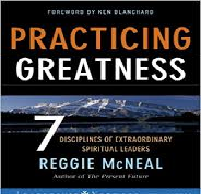
Disciplines of Extraordinary Spiritual Leaders Order Instructions: Book Review; McNeal, Reggie. Practicing Greatness: 7 Disciplines of Extraordinary Spiritual Leaders. San Francisco: Jossey-Bass, 2006. ISBN: 9780787977535

Disciplines of Extraordinary Spiritual Leaders

Please use the following format in preparing 4-MAT Book Reviews:

1. ABSTRACT. Summarize what you have read, boiling the book down into 400 words (no more than 2 pages). Prove you comprehend the readings by writing a no-nonsense summary. The abstract is not a commentary or listing of topics but rather an objective summary from the reader’s viewpoint. Abstract equals “boiled down.” This section should include a minimum of 2 footnotes to the text being reviewed.

2. CONCRETE RESPONSE. Get vulnerable! In no less than 250 words and no more than 1 page, relate a personal life experience that this book triggered in your memory. Relate your story in first person, describing action, and quoting exact words you remember hearing or saying. In the teaching style of Jesus, this is a do-it-yourself parable, case study, confession. You will remember almost nothing you have read unless you make this critical, personal connection. What video memory began to roll? This is your chance to tell your story and make new ideas your own.

3. REFLECTION. This is the critical thinking part of the review (not critical in the sense of negative, but in the sense of questioning). In no less than 250 words and no more than 1 page, describe what questions pop up for you in response to what you have read. Keep a rough-note sheet at hand as you read. Outsmart the author by asking better questions than he/she raised in the book. Tell how the author could have made the book better or more appealing to those in your field of service. One way to begin this section is by stating what bothered you most about the book. This is not a place to provide an endorsement or affirmation of the book.

4. ACTION. So what are you going to do about it? In 400-600 words (no less than 1 page and no more than 2 pages) provide 2 actions that describe what changes you are going to make in your life, ministry, and/or work as a result of your reading. Actions should be measurable and reveal a commitment to specific time, specific people, and identified steps.

5. Please provide a Turabian style* title page, pagination, footnotes & Bibliography

Disciplines of Extraordinary Spiritual Leaders Sample Answer

Book Review

McNeal, Reggie. Practicing Greatness: 7 Disciplines of Extraordinary Spiritual Leaders. San Francisco: Jossey-Bass, 2006. ISBN: 9780787977535.

Summary

Spiritual leaders in most cases do not desire or aim for greatness because they fear that they would seem to be lacking humility. Even so, greatness in spiritual leadership is what all of us really need – in our businesses, churches, in the social sector and in all sectors of society. The crucial question is: in what way do good spiritual leaders become great spiritual leaders? Basing upon his broad experience as a mentor and coach to numerous spiritual leaders across an extensive range of ministry settings, McNeal in this text assists spiritual leaders to know that they would self-select out of or into greatness. The author illustrates the way that great spiritual leaders are deliberately and consciously dedicated to 7 key spiritual disciplines; that is, habits of mind and heart which shape their competence as well as character.

These 7 are (i) discipline of aloneness – the deliberate practice of soul-making seclusion and meditation. (ii) The discipline of belonging – fortitude and willpower to foster relationships and to live in community with other people, who include friends, mentors, and family. (iii) The discipline of decision-making – understanding the aspects of good decisions and learning from failures.[1] (iv) Discipline of mission – this entails enjoying the authorizations of sustaining the sense of God’s purpose for the spiritual leader’s life and leadership. (v) The discipline of self-development – an enduring, lifetime dedication to growing and learning, as well as building on one’s own strength. (vi) The discipline of self-management – this entails handling difficult temptations, expectations, emotions, physical well-being as well as mental vibrancy. (vii) The discipline of self-awareness – this is one very significant body of information that a spiritual leader has.[2] All in all, this text goes further than just simple clichés and inspirational thoughts to be an imperative resource for spiritual leaders who are aspiring to move from being merely good enough leaders to becoming great leaders who bless other people.

Concrete Response

This text has triggered a particular personal life experience in my memory. In this book, McNeal points out that spiritual leaders who are genuinely great actually do not whatever they do for themselves. They also never do what they do in order to gain recognition as great leaders. For spiritual leaders, their end game is about expanding God’s kingdom.[3] This paragraph in the book has triggered an experience in my mind that involved ministry work that I did roughly 14 months in which my goal was not to be recognized as a great leader, but rather to expand God’s kingdom. Expanding the kingdom of God basically entails bringing other people into the kingdom of God and with them their institutions, organizations and families.[4]

To me, expanding the kingdom of God included evangelism among other things. I developed kingdom life in the church, and exported it to the world through every Godly means possible. As a spiritual leader, I helped expand the kingdom of God by establishing relationships with people. I allowed the Holy Spirit to draw people to Christ through me. In essence, my life groups acted as a net for collecting the people who interacted with me. Furthermore, during that time, I utilized community activities, entertainment, educational programs and businesses in reaching individuals who did not yet follow Christ. Christians are generally part of the kingdom of God. The Lord wants us not just to represent his kingdom, but also to expand the borders of its kingdom. It is notable that the work of expanding the kingdom of God included representing God’s kingdom to members of the public.

Reflection

One of the 7 disciplines that Reggie McNeal has pointed out in the book is self-development, which entails a lasting devotion to learning and growing, as well as building on one’s own strength. However, the author has not specified how a good spiritual leader will learn, who to learn from, and what will the spiritual leader learn and grow in? McNeal could have made this book better and more appealing to those in my field of service by stating explicitly how spiritual leaders are learners and how they can learn instead of merely saying that self-development is a lasting devotion to learning and growing; he should have been more specific. The author could have pointed out various ways that spiritual leaders can learn for instance by setting a goal of reading no less than 1 book on a weekly basis, or by listening to sermons or podcasts while having a long drive. The author could have expressed clearly how spiritual leaders can maximize their time in learning and growing. A lot of people fail to maximize their time and do not manage themselves and therefore they miss out on growth. The other question that pops up in my mind after reading this text is: if a good spiritual leader does not choose greatness, does it really mean that he will die prematurely as the author puts it? According to McNeal, a spiritual leader faces the option of greatness. As many others have done, he or she can choose to settle for less, but this means that he or she would die a premature death, adding that the spiritual leader will rob other people the chance of living a better life.[5] This sounds scary to a good spiritual leader who may feel forced to choose greatness or die. McNeal could have put his point across in a different way that is less frightening to good spiritual leaders.

Action

As a result of reading this text, the actions that I am going to do in my life are as follows: first, I will practice greatness by developing some disciplines. In the next 2 years, I will develop self-awareness by recognizing what I am good at and what I am not good at, and understand how to maximize my strengths. Moreover, by developing self-awareness, I will get to know why I react to things in a particular way, why particular things draw my attention, why I am prone to particular sins, or why some individuals rub me the wrong way. This action will entail a commitment to my close friends and family members since I would need to know from them why some of them at times rub me the wrong way. The second action is about enhancing belongingness. It is notable that the discipline of belongingness typifies the ability of a great leader to enjoy significant relationships which actually cultivate and develop his or her life.[6]  Even though leadership is lonely, it does not necessarily have to be as lonely as some leaders at times make it seem. In the next 16 months, I will develop and nurture relationships although this may take a considerable amount of effort, time and work, and it might be difficult and hurt along the way; to be a great leader I would need to thrive. I will need to belong in my family as well as marriage considering that this is actually the lifeblood for a married spiritual leader.

Disciplines of Extraordinary Spiritual Leaders References

Malphurs, Aubrey. Being Leaders: The nature of authentic Christian leadership. . San Francisco: Jossey-Bass, 2010.

McNeal, Reggie. Practicing Greatness: 7 Disciplines of Extraordinary Spiritual Leaders. San Francisco: Jossey-Bass, 2006. ISBN: 9780787977535.

[1]  Reggie McNeal. Practicing Greatness: 7 Disciplines of Extraordinary Spiritual Leaders. (San Francisco: Jossey-Bass, 2006), 12.

[2]Ibid, 19

[3] Ibid, 8

[4] Aubrey Malphurs. Being Leaders: The nature of authentic Christian leadership. (San Francisco: Jossey-Bass, 2010), 22.

[5] Reggie McNeal. Practicing Greatness: 7 Disciplines of Extraordinary Spiritual Leaders. (San Francisco: Jossey-Bass, 2006), 32.

[6] Ibid, 15

Leadership theory taxonomy Paper

Leadership theory taxonomy
    Leadership theory taxonomy

Leadership theory taxonomy

Order Instructions:

A 1-page taxonomy that follows the Leadership Theory Taxonomy Template available in this Module’s Learning Resources to the Assignment Part 1 – Module 2 link.
A 4- to 6-page (not including cover page or references) Leadership Theory Taxonomy paper that explains in detail each theory listed in the taxonomy, by synthesizing multiple scholarly references and examples. This paper will be submitted to the Assignment Part 2 Turnitin – Module 2 link. Be sure to include the following in your paper:
Five peer-reviewed scholarly resources in addition to those offered by the Learning Resources
Specific examples of two of the four theories drawn from experiences or scholarly literature
Work that adheres to APA style

SAMPLE ANSWER

Leadership theory taxonomy

Over the number of years, leadership has continuously evolved giving rise to the different types of leadership positions. The leadership theory taxonomy studies the behavior, traits and ability of a leader to play the important role that the society expects them to play. The various leadership theories are defined by the various unique characteristics and they vary considerably. In this study, three types of leadership’s taxonomical theories are going to be explored. The three include transformational, situational leadership taxonomy, contingency and leader- member exchange.

Transformational leadership theory

Transformational leadership refers to the mode that goes beyond the normal running of day-to-day operations in any business organization. It depicts the leadership of the future whereby the leader is more interested in creation of a vision for the company. Transactional leadership runs or provides a mechanism to run the day-to-day operations without much focus on the future goals of any company (Patrulescu, n.d ). The transformational style was coined in the year 1973 by Downtown. It puts more emphasis on providing motivation or morale for their employees, understanding their problems and looking at the bigger picture of trying to solve such problems. It also places high regard to the employees of a given company and urges them to put more focus on the good of the group rather than the individual interests. Additionally the leader serves to motivate and inspire those under them, at the same time providing them with an opportunity to make solo individual positions regarding several types of issues (Sarros& Santora, 2001).

The common four features that describe the transformational leaders are referred to as the 4is. They include intellectual stimulation, inspirational motivation, individual consideration and idealized influence. Transformational leaders are open-minded and tend to agree with most of the employees wishes. They area also extraverts and conscious of the surrounding climate that their employees face. A perfect  example of a transformational leader was Nelson Mandela. Nelson managed to inspire confidence in the people of South Africa in abolishing apartheid in South Africa .similarly Martin Luther King Junior similarly managed to abolish discrimination between the whites and blacks providing them with equal opportunities in the united States. Meanwhile Nelson Mandela urged forgiveness between the native compatriots of south Africa and the Boers who had racially segregated  them. The followers since they looked upon the leader they agreed to let by gones and embrace each other thanks to the leader (Sarros& Santora, 2001).

Situational leadership  theory

Situational leadership charges leaders to change basing on the various conditions or circumstances. The four main leadership characteristics  that define the leadership  are delegative, supportive, directing  and coaching role. The delegative role allows the leadership to assign powers or specific job details to other employees to act on their behalf in making certain conditions or situations. The delegative style of leadership is considered as one of the highest form of leadership position. Supporting leadership form allows the individual leader to consciously partner with their employees or subjects in assisting  them to achieve their various roles or goals.. the leaders in this case act more as consultants  assisting  the employees  where  some matters may be difficult or complex (Graeff, 1997)..

The coaching mode of leaders requires both directive and supportive principles from the leader. The leader is supposed to teach the employee about key aspects concerning their jobs. The employees or followers of the leaders might not have particular knowledge concerning a given subject. Therefore , the mode that leader, uses ultimately defines whether the followers would understand the said concepts. It becomes imperative that leaders  become more supporting in assisting the employees. The leader should direct the employees or followers to acquire the basic knowledge and skills. Finally yet importantly, the directive method employed in situational leadership is used in providing supervision. Situational leadership is much more of an adaptive  mod of leadership practiced by most leaders throughout  the world( Nye, 2013).

Contingency theory

Similar to the situational theory, contingency theory defines circumstances between leadership styles and different situations. The success of the leader depends on the task structure, subordinates and the power position. The task structure requires every aspect of the task to be organized clearly. The leader power position provides the leaders with an option of firing the employee in case they do not meet the organizations goals or objectives. The leader has the option of hiring new employees. The leader’s member relationship in the structure would determine the success of the leader. A closer relationship between the leader and the members results in a higher chance of success. The best way of organizing a given organization is in the managing the task ahead. The contingency structure puts more emphasis on using  different managing practices in different organizations

Leader-member theory

Leader- member exchange theory  puts more emphasis  in the  communication structure between the leaders and their subordinates. The more and closer the relationship between the leaders and the subordinates the more the higher of success in an organization. By having the leader –member theory, the members know the exact roles they are to play in the company in realizing the set objectives. The leader in this case provides a better organizational climate  due to the close relationship. A better communication structure  results in provision of  solutions to the problems that affect the organization. Leaders have an important role in building  this communication barriers and the only way  to enhance this communication  is via breaking the normal communication barriers (Sherman,2002).

Leaders –member exchange theory has three important roles. Role taking, role making  and routinisation of the roles. Role taking involves the leader’s ability in assign new roles to every new member that joins a specific team. Role making  involves the assigning the members in a given group. The in-group recognizes employees or composed  of members who have proved their loyalty and trust to the leader(Antonakis, & House, 2014). They are  provided with unrestricted opportunities  in doing most of the task since they are completely trusted. People in this group have a similar personality to the leader. The out-group is composed of employees who have shown distrust or have been not loyal to the leaders. The communication structure is a little bit broken and the members of the group are a restricted  access. Finally yet importantly, in daily company routines, in-group members tend to rely on the  leaders  and would want to maintain a good impression to their leaders. Out-group members have a lot of distrust for their leaders and never carry out activities in the right manner (Antonakis & House, 2014)..

In conclusion, the different taxonomical theories underlying the various types of leadership ultimately defines the type of leader in any organizational setting and climate. Additionally, the leaders who are the forefront of maintaining the image of the company should choose one of the methods to lead their organization.

References

Antonakis, J., & House, R. (2014). Instrumental leadership: Measurement and extension of transformational–transactional leadership theory. The Leadership Quarterly, 25(4), 746-771.

Graeff, C. (1997). Evolution of situational leadership theory: A critical review. The Leadership Quarterly, 8(2), 153-170. https://www.doi:10.1016/s1048-9843(97)90014-x

Hesselgreaves, H., & Scholarios, D. (2014). Leader-member exchange and strain: a study of job demands and role status. Human Resource Management Journal, 24(4), 459-478.

Nye, J. (2013). Transformational and transactional presidents. Leadership, 10(1), 118-124. https://www.doi:10.1177/1742715013512049

Patrulescu, C. Comparison and Contrast of Trait-Based, Situational and Transformational Leadership Theories. SSRN Electronic Journal. https://www.doi:10.2139/ssrn.2132126

Sarros, J., & Santora, J. (2001). The transformational‐transactional leadership model in practice. Leadership & Organization Development Journal, 22(8), 383-394. https://www.doi:10.1108/01437730110410107

Sherman, J. (2002). Leader Role Inversion as a Corollary to Leader-Member Exchange. Group & Organization Management, 27(2), 245-271. https://www.doi:10.1177/10501102027002005

We can write this or a similar paper for you! Simply fill the order form!
Authentic christian leadership Audit

Authentic christian leadership

Authentic christian leadership

Order Instructions:

You will submit 9-page paper during this course that contain a personal analysis pertaining to the various leadership audits stemming from the Malphurs textbook readings. Each paper must contain a 1-page introduction, 1 page per audit, and a 1-page conclusion describing 2 personal action points stemming from the analysis. A current Turabian style title page, pagination, footnotes, and bibliography are also required.

Module/Week 4 includes the following audits:

Christian Leader: p. 173
Servant Leader: p. 180
Credibility: p. 182
Spiritual Gifts: p. 184
Natural Gifts: p. 191
Passion: p. 193
Character Audit (men/women): pp. 195/198

SAMPLE ANSWER

Introduction

The term audit is often used in or within the context of an in-depth financial investigation. In its more common occurrence it usually take a significant period of time where the investigation is done following a predetermined pattern. The main aim in a financial audit is to see if the custodians of an organization’s  resources. The basis of the audit is usually the comparison between the standards that have been set and the actual performance on the ground. A leadership audit is based on similar principles since this involves the assessment and appraisal of an individual’s leadership capabilities and qualities. Leadership is of course the ability to lead people who are in one form of organization or another. The concept of leadership is abstract unlike financial record keeping which will be done through the comparison of numerical values. The abstract nature of leadership means that there is a degree of flexibility in its analysis. Usually the concerned parties conduct a leadership audit based on an already existent value system, specifically the relevant aspects of the value system. Another unique aspect about a leadership audit that separates it from the conventional audit is the fact that it is best carried out retrospectively since an individual is best placed to judge his or her collection of attitudes, strengths and weaknesses relevant to their ability to lead. Leadership audits can therefore be based on[1] religious principles, legal principles or ethics that apply in a given area of human interest such as academia,politics or other career areas. A leadership audit is an invaluable tool when there is an impending strategic change around the corner. This is because it provides a logical and accurate pointer about the capacity an existent leader has, something that can be compared to the challenge or task ahead. Leadership audits are not done to determine whether change will take place or not. On the contrary they are done so that individual leaders know exactly where they are so that they figure out what to be more alert about, which areas they need to urgently improve and also the strengths they can capitalize on. This exercise details a leadership audit that I am conducting on myself based on principles of Christian leadership as discussed in the course.

Christian Leadership

Christian leadership is basically the tendency or ability of a leader to exemplify christian principles through his or her leadership. As a christian leader myself, the values that are manifested in the depiction of various leaders in the Bible need to be clearly seen in the way I carry out my responsibilities as a leader. I scored 15 in this area, indicating that I am above average with regard to being a Christian leader. Christian leadership for me is layered and it first of all begins with who I am as a person, secondly it is manifested in my professional life and ethics, third, Christian leadership needs to be very clear in the way I interact with other people in the workplace, mainly those who are my subordinates.

As an individual I need to be completely blameless without having any possible blame or issue that would bring me into disrepute. This is a case of the proverbial ‘putting my house in order.’ To the best of my knowledge I believe I have no problems in as far as my personal life goes. I live my life based on christian principles and this means that I hold firmly to honesty, sensitivity and also affirmatives. The one area that I however feel I need to work on is that of being steadfast when it comes to moral dilemmas in the wake of public pressure. My spiritual convictions mean I have to make decisions that stay on the ‘straight and narrow.’  I always work to ensure my obedience to scripture is based on my fear of God and not a fear of fellow human beings. This keeps me accountable even in private.

As a worker I always strive to ensure that I am following the rules that the organization has set. This way I show those who have been placed under my leadership a proper example and also show them that I have faith in the rules. Being transparent also key to my christian leadership since it shows that I have nothing to hide and this helps to create an environment of transparency. Being transparent also keeps me alert and more accountable for my actions[2].

Servant Leader

The concept of servant leadership was best exemplified by Jesus as he established his ministry here on earth two millennia ago. The term servant-leadership is somewhat of a moron given the fact that leaders are often the ones being served in society. Jesus’ best illustration of being a servant leader was when he washed the feet of his disciples, something that would be taken as the severe lowering of the status that a leader has relative to the members of the group. In this area I scored 12 and that is indicative that I am doing well in the area of servant leadership. For me servant leadership refers to looking for ways where I can serve those I am leading and add value to their lives instead of merely issue instructions.

The desire to offer service is something that I have had for a long time and it enables me to have the initiative to make things better wherever I am. As a result, I find myself having an urge to lead so that I can make things better for everybody involved whether it is in an informal setting or a formal one.

In the instances that I have been in a position of leadership, I strove to ensure that the needs of the major stakeholders are clear and well known. Once this is done, I had to weigh the different needs and give priority to the ones that were most pressing. This necessitates the need for dialogue and compromise since there is the ever present reality of needs clashing. Some of these needs are my own and as a servant I need to keep them aside for the sake of the greater good. I have noted that I tend to achieve greater success in instances where I keep personal interests aside. I think this is because in such a situation I have a much clearer focus on  the people that I am working with. I have the capability to better leverage on the strengths of my subordinates and also be sensitive about the challenges they have. I also don’t have any qualms about working alongside those I am leading since this is how I get an opportunity to demonstrate to them specifics about their tasks. If they have any challenges that are specific to their responsibilities, I will easily pick up on them and work towards a way forward[3].

Credibility

Being credible is basically being believable from the perspective of others. Gaining the trust of people is not something automatic. It is more of a journey whereby the level of trust gradually increases. I say this because I also tend to be skeptical of people I don’t know and it takes some considerable amount of time before I can trust them. I scored 17 in credibility, a sign that this aspect of my leadership is also above average. I am also particularly aware of the fact that people tend to have difficulty placing their trust in leaders and this therefore obliges me to be more deliberate about how I tender my duties as a leader. The best way for a leader to be viewed as credible is for him or her to be first of all trust-worthy as a person and second within their position of leadership.

The only platform that I have for my credibility to be manifested is through the interactions I have with other individuals. I believe that honesty is something that everyone should have and that the truth should always be told without its potential consequences being a determinant of whether it needs to be said or not. As a result I do my best to avoid being economical with the truth especially when the temptation to do so is great. Examples of this are when I have to express my displeasure about an offense that a friend or relative has committed against me. Another example is when I have to correct somebody about a potentially sensitive aspect of their person. With respect to social issues of public interest I must admit that I have lacked in credibility since it is at times more convenient to appear to be on the fence about a matter than to take a side which will be more controversial. I do this under the guise of seeking political correctness but the truth of the matter is that I need to be more credible and concise about the beliefs I have. These views however need to be expressed in respect so as not to raise ugly arguments with those of a contrary belief.[4]

Spiritual Gifts

Spiritual gifts are abilities given to us through the Holy Spirit’s workings. These gifts are very important in that they enable a person to better minister to others by enhancing his or her abilities. Spiritual gifts in the context of leadership are mainly those that have an inter-personal manifestation as they are supposed to enable the leader better relate with others and inspire them towards a desired direction or goal that has been set. Besides the interpersonal component which will be emphasized in the course of my leadership, these gifts should also be manifested in my administrative capacity as an overseer of the affairs of a larger group. My score for spiritual gifts was 19 and this shows above average manifestation of these gifts in my leadership.

On a personal level the gift of leadership makes me visionary and capable of imagining a suitable or desirable future of any formal/informal, spiritual/secular or academic group I find myself operating in.  I easily find myself asking myself about the reason we are together in a specific group and furthermore how we can maximize on the strengths we have to achieve the goals. If the goals have not been defined, I always encourage the rest of the members to be clear and specific about the goals that need to be achieved. I am very respectful of those I am managing and this makes it easy to see the potential they have within the group. Being a good administrator helps me to understand those I am working with better and assign them responsibilities that they will best carry out. I am also well placed to effectively pair people up into solid teams. Charisma is another spiritual gift that I have. With respect to  the leading of heterogeneous groups of people with different cultural backgrounds and ethnicity, charisma  makes it easy to break the boundaries and relate with everybody. I also get to act as a central figure connecting people who may ordinarily have difficulty interacting[5].

Natural Gifts

Besides the spiritual gifts that have been mentioned above, I also have natural gifts which are important in helping me  to lead effectively. These natural gifts include creativity, problem solving and intellect. All of these have a bearing on the way my leadership is manifested. My score in this area was 9 and this shows that a key strength area for me is the presence of natural gifts.

Being creative means that I thrive on the development of ideas in the different areas of life that interest me. I am regularly thinking of alternative ways of doing things and this is commonly referred to as the practice of ‘thinking out of the box.” As a result of this, my ideas tend to stand out from the existent ones, something very important when one needs to rectify a problem that has been existent for a long time due to inadequate resolution strategies being applied. Creativity ensures that redundant approaches to solving problems are eliminated and instead replaced with objective oriented techniques. I find that creativity helps me a lot in being progressive as a leader. The groups that I lead are always making progress and improvements to the members and to the task or tasks at hand. Another natural gift that helps me in problem solving is my intellect and ability to effectively analyze situations that are ahead of me for problem solving. Intellect enables me to mentally cross reference several variables at once and establish the kind of relationship they have with each other. Understanding problems better means solving them better. The application of the above gifts in combination leads to the coverage of greater ground without an acute increase in the demand for resources or the faculties of the members of a group. It is also key in motivating people since the human psychological reward mechanism is result based where people can easily account for their energy and effort[6].

Passion

There are two main forms of motivation that an individual can have. These are intrinsic motivation and extrinsic motivation. Intrinsic motivation comes from within and is dependent on the person’s state of mind and their collection of thoughts. Extrinsic motivation on the other hand is based on external factors that will act to boost the morale of the individual. With respect to passion being manifested in my leadership, it is more of a subjective issue. My score for passion was average and this means that there are things I seriously need to improve on.

The degree of passion I have tends to depend on the specific project being worked on and the degree of involvement. When I am involved in something that grants me some responsibility and autonomy, I will easily be passionate about it. Responsibility for me is important since it keeps me on my toes in that I have to deliver certain things within my responsibility and this makes me feel like an important part of the team. Autonomy enables me to manage the tasks at hand with relative mental freedom. The combination of these two therefore greatly boosts the level to which I am passionate about work.

There are however instances when the degree of passion I have wanes. This will take place when I am in a situation of strictly following the lead of another person and relying on them for any action I take. When such a scenario arises, I tend to be severely demotivated and disinterested since the contribution being made appears to be on behalf of another person rather than my own.

Character Audit

An audit of my leadership will be incomplete if I don’t include my qualities as a man and how they reflect on my ability to lead and guide others. From the audit I scored 45 which indicates that my character is above average. The key strength that I have as a man is not being dependent on the major detractors that stop men from being at their best with respect to their leadership. My main strengths are the fact that I have a good support base in that I relate well with the members of my family at home and that sets the pace for my relations with other people. I am accustomed to an environment where everybody is treated with love and respect and it reflects in my interactions with other people away from the family context.

The reputation I have in my immediate community is a good one and this is due to the fact that I have generally had positive relations with most people who know me. I have stayed in the same neighborhood for a long time and people recognize me and know me for engaging in honest dealings. Some people have seen me growing up and the improvements that I have made since childhood are noticeable, specifically with regard to how I present myself.

I however do have a weakness and it is in my temper. It is not an explosive temper but I easily get frustrated when I am working under pressure. During such times I will be passive aggressive in my expression of myself and this can really put off those working in close proximity to me. In as much as it is not very pronounced, it remains to be impatience and I therefore need to do something about it so as to improve on my character and  consequently my leadership[7].

Conclusion

From the leadership audit I conducted, I found out that based on different aspects of my character and value system, I am rank as an above average leader. There are however two main areas that I seriously need to work on so as to ensure my leadership is all rounded and effective. These are my passion and also my patience.

A combination of the audit and introspection pointed my attention to these two areas and as such I feel I need to put in place deliberate measures that will enable me convert these weaknesses into strengths.

With respect to the issue of passion, I need to train myself to be a follower lest I let my pride have the better of me. If I don’t learn how to follow, I cannot be an effective part of the team since I also have those who are senior to me and their position is just as crucial as mine. Also not being passionate can show my subordinates or those I am leading a bad example.

About patience, the best way to go about it is for me to purposefully seek to work with people who have in the past made me impatient. Instead of avoiding them or putting them off, I need to compromise and give them a chance, in the process training myself to have greater control of my temper. This way I will become a man of great character.

Improving on these two areas will be of benefit to me as well as anybody who will be under my leadership.

[1]          Malphurs, Aubrey. Being leaders: The nature of authentic Christian leadership. Baker Books, 2003 p173

[2]          Malphurs, Aubrey. Being leaders: The nature of authentic Christian leadership. Baker Books, 2003 p 173

[3]          Malphurs, Aubrey. Being leaders: The nature of authentic Christian leadership. Baker Books, 2003 p 180

[4]          Malphurs, Aubrey. Being leaders: The nature of authentic Christian leadership. Baker Books, 2003182

[5]          Malphurs, Aubrey. Being leaders: The nature of authentic Christian leadership. Baker Books, 2003 p 184

[6]          Malphurs, Aubrey. Being leaders: The nature of authentic Christian leadership. Baker Books, 2003 p 193

[7]          Malphurs, Aubrey. Being leaders: The nature of authentic Christian leadership. Baker Books, 2003 p 1959

We can write this or a similar paper for you! Simply fill the order form!
Leadership and learning Essay Paper

Leadership and learning

Leadership and learning

Order Instructions:

This is a good opportunity to learn from your fellow students. The identification of learning needs takes place in many different forms, and the approach taken will depend on the size and sector of the specific organisation so there should be plenty of examples of different types of organisational practice. Remember that even if you work in a small organisation with no formal process for identifying needs, that process will still unfold in an informal and unstructured way. Your responses to the questions posed may take a little longer than those of students whose organisations have formal performance appraisal systems or competency frameworks.

Consider your own experience. Think of the methods and techniques of identifying learning needs used by your organisation or an organisation with which you are familiar.

SAMPLE ANSWER

Leadership and learning

TM.COLL.W4

Organisations regardless of their size or their sector have to identify their learning needs to adjust for them to achieve their goals. Many methods for identifying learning needs are available for different organisations to help them understand their operations. This paper deliberates on the method and techniques used to identify learning needs in my organisation.

One of the methods used to identify learning needs is through document research. The organisation on various occasions analyses different documents such as business plans, budget documents, quality control documents, appraisals, evaluation reports, goal statements, work reviews, personal development plans, scheduling and staffing reports, customer complaints, critical incidence reports and other business documents among others. Through this research, the organisation is able to identify gaps and areas of strength hence, enables it to strategies on improving its operations (Cipd.co.uk. 2006).

The organisation also use interviews to identify learning needs of parties involved. Interviews take on different forms such as open communication between various people such as managers, supervisors, subject matter experts, colleagues, and other employees. These interviews help in eliciting mixed opinions and information that allows the organisation to identify areas that require improvement. When conducting interviews, it is however important to put to consideration, the cultural diversity of interviewees and to communicate clearly (Cipd.co.uk. 2006). Listening is also a key skill required during interviews to ensure success.

The organisation as well uses observations to identify learning needs. The managers and supervisors watch the way certain tasks or jobs are performed and through this, they learn something that may require adjustment. However, this is unreliable method because the parties being watched may tend to adjust the way they behave especially when they know they are under watch or scrutiny by another person (Augustine-Shaw, 2015).

The organisation as well use surveys to identify its learning needs. The organisation usually sends questionnaires to employees on various occasions asking them different questions pertaining to how they view the operations of the organisation and what they need to be improved (Defence. Gov. au. (2015). The questions as well can be on what the employees feel their learning need among many others. Using questionnaires is cost effective and it allows many people to participate in identifying learning needs.

Experts are as well utilized in identifying learning needs. These experts have in-depth knowledge and skills on functioning of the organisation and performance evaluation. They therefore, help the organisation to establish areas that require urgent attention (Stuebing, Fletcher & Branum-Martin, 2014). The organisation also embraces group discussions in identifying learning needs. Employees together with their supervisors form groups that deliberate on the various aspects that affect them as well as areas they perceive require adjustments. Group discussions are appropriate since they enable employees to raise their issues affecting them (Hr. guide. com., 2015).

Other techniques that the organisation utilizes include,  review of work samples, focus groups, and consultations with people in key positions and use of information boxes designated in various strategic positions in the organisation. These methods and techniques play a critical role in conveying information that helps to identify different learning needs.

In conclusion, organisations face many issues and challenges. Due to changing trends and way of lives, they must always remain abreast with the changes. Therefore, it is prudent to adopt suitable methods and techniques to identify their learning needs to remain competitive. These methods are appropriate but should be utilized on various occasions and situations as deems appropriate to ensure achievement of their goals and objectives.

References

Augustine-Shaw, D. (2015). Leadership and Learning: Identifying an Effective Design for Mentoring New Building Leaders.  Delta Kappa Gamma Bulletin, 8192), 21-30.

Cipd.co.uk. (2006). 4 identifying learning needs in organisations. Retrieved from:             http://www.cipd.co.uk/NR/rdonlyres/BAE22874-1D3C-4912-BBD9-            1C14803E8A44/0/1843981645sc.pdf

Defence. Gov. au. (2015). Chapter 13 Part 1 Section 2 – Methods for Identifying Learning and      Development Needs. Retrieved from:           http://www.defence.gov.au/dpe/pac/DWRM/DW_13_01_02_ln_identify.htm

Hr. guide. com.(2015). Needs Analysis: How to determine training needs. Retrieved from:             http://www.hr-guide.com/data/G510.htm

Stuebing, K., Fletcher, J., & Branum-Martin, L. (2014). Evaluation of the Technical Adequacy     of Three Methods for Identifying Specific Learning Disabilities Based on Cognitive   Discrepancies. School Psychology Review, 41(1) 3-22.

We can write this or a similar paper for you! Simply fill the order form!