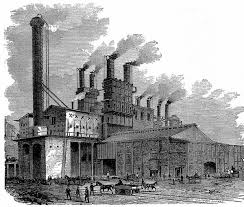
Take a look at the 1793-1857 timeline attached. For this assignment, pick one of the events identified on the timeline and discuss how that event prompted a change in national philosophies or ideals (attached). In addition to discussing a specific event from the timeline, take into consideration how the nation’s views had evolved to the point of the event you choose. Below are the steps you will need to take in order to successfully complete this assignment.
Step 1: Choose an event.
Choose an event from the timeline attached that interests you the most. Your research will surround this event.
Step 2: Conduct research.
Conduct research around the event you chose. For this assignment, you are required to utilize at least one source from the CSU Online Library. Your source can either revolve around the event you chose or it can focus on the philosophies and ideals before/after your event, whichever supports your writing more. Note that you may not find an article specifically addressing both the event you chose and the philosophies surrounding it; in most cases,you will need to use your critical thinking skills to infer the information. You may use more sources if you would like, but those sources cannot include Wikipedia, biography.com, history.com, or other encyclopedias.
Step 3: Plan and reflect.
Reflect on the change in American life before and after the event you chose. Once you have completed your research, you should sit back to think about what it means to see if you notice any trends and to have a better sense of what you want to convey in your writing. Although it is not required, you may want to develop a short outline to help you organize your thoughts and ideas. Use some of the following prompts to help guide you:
?Ask yourself about how historical figures and groups related to your event were shaped by this time period and environment.
?Ask yourself how the lives of the people around before and after the event were impacted.
?Ask yourself what qualities, ideals, and philosophies you would most like to emphasize, and make sure the facts that you present support it.
?Find the perfect anecdote to demonstrate these qualities.
Step 4: Write your assignment.
Your final assignment should include a title page, a minimum of two pages of content, and a reference page. As you are writing, be sure to keep the following in mind:
The introduction should engage the reader and clearly present a summary of the main points that clarify your point of view. The introduction should also include a thesis statement.
The quality of your writing should demonstrate critical thinking.
Organization should clearly present points arranged to illustrate your opening points.
Writing should be clear and concise with no spelling,grammatical, or punctuation errors.
APA formatting guidelines should be used for this assignment.
DISCUSSION 1 Confidentiality Agreements
Research the Internet or other resources and find a minimum of two confidentiality agreements. Based on your available resources, evaluate the agreements. Comment on the important elements they cover and that you should consider in your own agreements. Are there any specific concerns related to your industry, product, or service?
DISCUSSION 2 Associates
Do you anticipate needing associates? Even if you do not see an initial need for associates, respond to the following:
• Where would you look for associates and how would you recruit them?
• What kind of training do you believe is necessary to provide ongoing skills development?
• How would you fund the training and recruitment?
• What kind of incentive programs would you consider to keep key personnel on board?
We can write this or a similar paper for you! Simply fill the order form!
No sources really needed in this assignment- off of the questions provided(own thinking).
The foundation of heteronormativity is the assumption that everyone is naturally heterosexual. This assignment is designed to get you to identify how this way of thinking is pervasive in our society. It does this by flipping the script and asking heterosexuals questions that LGBT individuals are sometimes asked about their homosexuality.
The first step for completing this assignment is to look at the questions below. YOU SHOULD NOT ANSWER THEM. We are not asking you to tell us about your sexuality. Instead, you should think about why we do not question heterosexuals in the same ways we question homosexuals.
1. What do you think caused your heterosexuality?
2. When and how did you first decide you were a heterosexual?
3. Is it possible your heterosexuality is just a phase you may grow out of?
4. Is it possible your heterosexuality stems from a neurotic fear of others of the same sex?
5. Isn’t it possible that all you need is a good Gay lover?
6. Heterosexuals have histories of failures in Gay relationships. Do you think you may have turned to heterosexuality out of fear of rejection?
7. If you’ve never slept with a person of the same sex, how do you know you wouldn’t prefer that?
8. If heterosexuality is normal, why are a disproportionate number of mental patients heterosexual?
9. To whom have you disclosed your heterosexual tendencies? How did they react?
10. Your heterosexuality doesn’t offend me as long as you don’t try to force it on me. Why do you people feel compelled to seduce others into your sexual orientation?
11. If you choose to nurture children, would you want them to be heterosexual knowing the problems they would face?
12. The great majority of child molesters are heterosexuals. Do you really consider it safe to expose your children to heterosexual teachers?
13. Why do you insist on being so obvious and making a public spectacle of your heterosexuality? Can’t you just be what you are and keep it quiet?
14. How can you ever hope to become a whole person if you limit yourself to a compulsive, exclusive heterosexual object choice and remain unwilling to explore and develop your normal, natural, healthy, God-given homosexual potential.
15. Heterosexuals are noted for assigning themselves and each other to narrowly restricted, stereotyped sex-roles. Why do you cling to such unhealthy role-playing?
16. How can you enjoy a fully satisfying sexual experience or deep emotional rapport with a person of the opposite sex when the obvious physical, biological, and temperamental differences between you are so vast? How can a man understand what pleases a woman sexually or vice-versa?
17. Why do heterosexuals place so much emphasis on sex?
18. With all the societal support marriage receives, the divorce rate is spiraling. Why are there so few stable relationships among heterosexuals?
19. Considering the menace of overpopulation, how could the human race survive if everyone were heterosexual like you?
20. There seem to be very few happy heterosexuals. Techniques have been developed with which you might be able to change if you really want to change. Have you considered trying aversion therapy?
21. A disproportionate number of criminals, welfare recipients, and other irresponsible or antisocial types are heterosexual. Why would anyone want to hire a heterosexual for a responsible position?
22. Do heterosexuals hate and/or distrust others of their own sex? Is that what makes them heterosexual?
23. Why are heterosexuals so promiscuous?
24. Why do you make a point of attributing heterosexuality to famous people? Is it to justify your own heterosexuality?
Remember to respond to all of the prompts below in your assignment. After reviewing the questions you should write a 1-2 page response where you answer the following prompts:
1. Have you ever heard any of these questions asked about or of LGBTQ individuals?
2. What did this exercise bring up for you? What did you notice while participating in this exercise? How did you feel?
3. How did this exercise highlight assumptions around heterosexuality being the “norm”? What does this exercise reveal about heteronormativity in our society?
The criteria we will use to grade this assignment include:
Grammar and spelling
Organization
Addresses prompts in the thoughtful way
Paragraph development (1-2 pages)
We can write this or a similar paper for you! Simply fill the order form!
The essay must be written in American Sociological Format (ASA) format. The rubric and guidelines will be in the attachments for this essay order.
Purpose: You must now complete the final phase of the writing process by integrating your annotated bibliography research and any feedback received into a final essay. The central aim is to synthesize and integrate your research into a coherent and empirically supported argument.
Topic: This topic examines the intersection between inequality and criminal justice. Inequality can be inequality of class, race, gender, religion, sexual orientation, and so on. Criminal justice refers to the intersection of one of these topics with some elements of the criminal justice system, such as police, courts, border security, sentencing, corrections, parole, and so on. You should focus on ONE topic (for example, race and sentencing, gender and policing). The aim is for you to choose an axis of inequality and discuss how it interacts with a component of the criminal justice system. You are to make a clear argument in the form of a thesis statement and then support your argument with the material located through your research (library and scholarly database searches). More information will be provided in lecture.
Structure: You are free to structure the paper in any way that helps you to convey your argument more effectively. Headings and sub-headings may be used if appropriate.
Document Parameters: The paper must be 8-pages (12 font, double spaced, 1 inch margins), excluding cover page and references. Failure to adhere to these parameters will result in penalty. Don’t get creative with the font, margins, or spacing.
Sources: Be sure to cite all sources appropriately. For this assignment you must have a minimum of eight (8) sources. See Annotated Bibliography assignment for source criteria (I recognize that this is two more sources than for the annotated bibliography but the source criteria remains the same). You are of course free to use more than eight sources.
Due Date: Essays must be submitted via the course website by the beginning of class on March 19, 2019. The penalty for late assignments is 2% per day late calculated on a 24 hour turnover beginning after the start of class. Papers more than 7 days late will receive a grade of zero.
Evaluation: The paper is worth 35% of your final grade. See evaluation criteria and grading scheme below.
Criteria Novice Competent Proficient
Organization
Introduction
20% Introduction is not developed. Does not provide general subject matter, a thesis statement or an outline. Introduction is superficially developed. Presents a thesis statement and rough outline of the paper. Introduction is thoroughly developed introducing the general subject of the paper and narrowing down to the thesis statement (argumentative statement). Thesis statement is followed by an outline of the subsequent sections of the paper.
Body
40% Body has no shape and shows no attempt at organization. Paragraphing is haphazard and no transitions are used. No attempt is made to use data to back up points made in the paper. Body has no discernible shape and shows superficial organization. Paragraphs contain more than one idea. Transitions are superficial. Data is used sparingly throughout the paper. Body has clear shape that demonstrates organization. All paragraphs contain one main idea and supporting sentences. Appropriate transitions are used. Arguments are supported with appropriate data
Conclusion
10% Restates ideas in intro Restates ideas in intro, provides summary of main argument and unique or interesting observations. Presents ideas in the intro. in a fresh way. Provides main summary of the argument made, any unique observations and suggestions for future research/policy suggestions
Grammar, spelling, punctuation
10% Mistakes prevent the reader from following the paper. Shows many mistakes in these areas. Shows little or no grammar, spelling and/or punctuation errors.
Sentence structure
10% Uses all simple sentence structures. Uses varied sentence structure. Uses mature and varied sentence structure.
Referencing
10% ASA style is not utilized. ASA in style is used inconsistently throughout. ASA style is used consistently throughout.
Grade Range 0-59% 60-76 77-100
We can write this or a similar paper for you! Simply fill the order form!
Individual Exercises explain the mistake. Here are six misconceptions about critical thinking habits of mind or critical thinking skills. Write a brief explanation of why each is wrong.
1. Calling on people to be systematic means that everyone must think the same way.
2. Critical thinking habits of mind are always positive.
3. People with a strong desire to be analytical have the skill to foresee the consequences of options and events.
4. People who have not taken a course in critical thinking cannot have strong critical thinking skills.
5. Critical thinking is applying the six critical thinking skills in their proper order one after the other.
6. Self-monitoring and self-correcting are unnecessary skills when your ideas are right in the first place.
Reflective Log
Mark Twain is reported to have said, “ I have never let my schooling interfere with my education”. Connect that sentiment with “The experts worried that school might be harmful!
Should K-12 schooling be designed to prevent students from learning to think critically for themselves? Why or why not?
We can write this or a similar paper for you! Simply fill the order form!
Based on the videos, describe the impact of pesticide resistance on the environment and subsequently human health.Are there alternative strategies to pesticide use for controlling pests/vectors of disease?
Provide explanations and support for your answers.
Healey, B. J., & Walker, K. T. (2009). Chapter 11: Ergonomics. In Public health/environmental health: Introduction to occupational health in public health practice. Hoboken, NJ, USA: Jossey-Bass.
Institute of Medicine. (2000). Chapter 3: The changing workforce. In Safe work in the 21st century: Education and training needs for the next decade’s occupational safety and health personnel. Washington, DC, USA: National Academies Press.
Montano, D. (2014). Chemical and biological work-related risks across occupations in Europe: A review. Journal of Occupational Medicine and Toxicology, 9: 28-41.
Painter, J. A., Hoekstra, R. M., Ayers, T., Tauxe, R. V., Braden, C. R., Angulo F. J., et al. (2013). Attribution of foodborne illnesses, hospitalizations, and deaths to food commodities by using outbreak data, United States, 1998–2008. Emerging Infectious Diseases, 19(3): 407-415.
In regard to a choice a friend has made, ask, “Why do you decide to do that?” After the friend gives his or her initial response, ask that she or he elaborates so that you can understand his or her thinking. In your log, explain why you decided to ask that friend about that particular decision, describe the context within which your conversation occurred, and write down the questions you used to get a full and accurate understanding of your friend’s reasoning. Then write your friend’s response as fully as possible. Capture not only the option chosen, but the other options considered and the reasons leading to rejecting those options and selecting the option chosen. Carefully analyze what your friend said, but do not evaluate. In your log, map the decision your friend made, showing the reasoning process as objectively and fair-mindedly as possible, whether you agree or disagree with it. In fact, go out of your way not to reveal your evaluation of your friend’s decision. Individual Exercises Analyze and map the arguments in these quotes: 1. “Swimming is a great workout. When you swim you use all your muscles.” 2. “If it weren’t for how much it costs and how big it is, I’d buy that TV for our bedroom.” 3. Why did Billboards stop listing older albumsonits “Billboard 200” web page? Simple—it’s about money. The recording companies make money selling the most popular new albums. There is no money for them in the old releases people can download from iTunes. 4. “Michael Jackson was truly the ‘king of pop.’ Just look at all that he achieved. He was a pop sensation by the time he was 11 years old. His album, Thriller, was the best-selling album of all time. He started out in show business when he was only 5, and he performed for more than 40 years. And he had millions of fans all over the world.” 5. “People believe that small class sizes are essential for better learning. I’m not convinced. I say that a good teacher with a large group can be just as effective as a lousy teacher with a small group.” 6. “AstudyintheSanMateoCountyschoolsofsecond grade students’ reading and math skills shows that Share a draft of the map with your friend and explain to your friend how to interpret it. Listen to your friend’s comments about the accuracy of your analysis as it is revealed in the draft decision map you made. Note in your log all the amendments or revisions your friend wants to offer. Make another draft of the decision map in your log and compare the two side by side. Reflect on what you learned by allowing your friend to view and comment on your analysis. Did your friend change his or her story, add more reasons in favor of the selected choice, add more reasons opposed to rejected choices, ask you to remove argument strands that looked like weak reasons, or ask you to bolster argument strands that looked flimsy? Using the Holistic Critical Thinking Scoring Rubric from Section 1, add a final part to your reflective log in, which you permit yourself a few evaluative comments on your friend’s decision making.Individual Exercises Analyze and map the arguments in these quotes: 1. “Swimming is a great workout. When you swim you use all your muscles.” 2. “If it weren’t for how much it costs and how big it is, I’d buy that TV for our bedroom.” 3. WhydidBillboardstoplistingolderalbumsonits “Billboard 200” web page? Simple—it’s about money. The recording companies make money selling the most popular new albums. There is no money for them in the old releases people can download from iTunes. 4. “Michael Jackson was truly the ‘king of pop.’ Just look at all that he achieved. He was a pop sensation by the time he was 11 years old. His album, Thriller, was the best-selling album of all time. He started out in show business when he was only 5, and he performed for more than 40 years. And he had millions of fans all over the world.” 5. “People believe that small class sizes are essential for better learning. I’m not convinced. I say that a good teacher with a large group can be just as effective as a lousy teacher with a small group.” 6. “AstudyintheSanMateoCountyschoolsofsecond grade students’ reading and math skills shows that Share a draft of the map with your friend and explain to your friend how to interpret it. Listen to your friend’s comments about the accuracy of your analysis as it is revealed in the draft decision map you made. Note in your log all the amendments or revisions your friend wants to offer. Make another draft of the decision map in your log and compare the two side by side. Reflect on what you learned by allowing your friend to view and comment on your analysis. Did your friend change his or her story, add more reasons in favor of the selected choice, add more reasons opposed to rejected choices, ask you to remove argument strands that looked like weak reasons, or ask you to bolster argument strands that looked flimsy? Using the Holistic Critical Thinking Scoring Rubric from Section 1, add a final part to your reflective log in, which you permit yourself a few evaluative comments on your friend’s decision making. M05_FACI9661_03_SE_C05.indd 108 24/12/14 7:50 AM 7. 8. students from classes averaging 15 to 20 students scored significantly higher than students from classes averaging 25 to 35 students. A second study looking at the same test scores for fourth and fifth grade students in the Fresno County schools showed the same results. Kids from the schools with average class sizes around 30 had significantly lower scores, on average, than did kids coming from schools with class sizes around 17. Three other studies, all of them conducted several years ago in Los Angeles, San Diego, and Anaheim, reported similar findings. So, it is reasonable to conclude that average class size makes a difference when it comes to elementary school students’ test score results in math and reading.” “Everyone knows that if we ever needed change in Washington DC, it is now. And, everyone believes that change is possible. So, elect me! I can bring the change we need in Washington DC.” “The university’s anti-bias policy goes too far. I agree that campus clubs should be open to anyone. But the part of the anti-bias policy that says that leadership positions in those clubs must be open to anyone is the problem. What about religious clubs. Should a Palestinian be permitted to hold aleadership position in the campus club for Jewish students? If a conservative Christian fellowship club wants to ban gays from leadership positions, it should have the right to do so without being kicked-off campus.”14 9. “Nobodyreallybelievesinclimatechange.Youcantell that by how people act. Political leaders don’t pass the legislation needed to change our nation’s dependence on carbon-based fuels. Cities do not require solar heating in all new construction. We keep building condos along the ocean in places that will flood as the sea levels rise. We pave over our farms to build suburbs. Instead of wearing a sweater, we keep the thermostat too high in the winter. Instead of taking off our suit jackets, we keep office buildings too cold in the summer.” 10. “Manyfamilieswhohavepetdogsalsohavechildren. Julio and Teresa have a cute pet dog named Bowser. I know because Teresa was talking about Bowser and how he loves to put his paws on the windowsill and bark at the passing cars. I overheard her telling Arnold about Bowser and the cars last week. So, long story short, Julio and Teresa probably have a couple of kids, too.” 11. “I need a break! It’s been nothing but nonstop work since last Thursday. I didn’t even get a weekend. My parents visited unexpectedly, and that was majorly stressful.” 12. “So, let me get this right. You’re Harvey’s sister’s husband. And you’re saying that Harvey is actually my uncle. So, this makes his sister my aunt. And, I guess that makes you my uncle, too. Wow.” 13. “A 2014 study in the Journal of Urban Health linked Missouri’s 2007 repeal of gun permit background checks to an increase of 60 murders per year statewide. During the same years homicide rates nationally decreased. Homicide rates involving guns remained steady in neighboring states where laws were not changed. Other possible explanations for the increase in gun related homicides in Missouri, such as incarceration rates, were ruled out statistically. Therefore, gun control regulations save lives.15 14. The new store manager called the staff together and said, “Looking at our marketing, I think we need to make some changes. First, the display in the store window looks like something out of the 1980s. It’s dated and shabby looking. Second, our in- store signage isn’t colorful. There are no pictures of happy people. The signs are so small they are hard to read. And they are positioned in places that make them unnecessarily hard for our customers to find. Third, we have to do something about our Web site. 15. 16. 17. 18. 19. When was the last time it was updated—2008? It is clunky, confusing, wordy, and has lots of out-of-date information. Our phone number on the Web site is wrong, for heaven’s sake! Finally, our newspaper ads are a total waste of money. Why are we paying graphic designers and printers to produce things nobody pays any attention to? We keep printing 10 percent coupons in those newspaper ads but we have not had any customers bring in a coupon from one of those ads in over three months.” “Everyone has two biological parents. Each of them in turn had two biological parents. So, it must be true that in our grandparents’ day there were four times as many people as there are today!” “I was about to register online for music updates, but decided not to. The thing was that if you registered they gave you an e-mail account. You couldn’t use any of your existing e-mail accounts. And the last thing I wanted was one more e-mail account. It takes too much of my day to check the three I already have.” Frontline, the PBS documentary series, describes how for-profit colleges are changing how Americans think about higher education. The PBS website highlights the May 4, 2010 Frontline broadcast, “College Inc.” with “The business of higher education is booming. It’s a $400 billion industry fueled by taxpayer money.” Analyze and map the arguments and counterarguments as presented in that PBS documentary for the claim that the for-profit college12. “So, let me get this right. You’re Harvey’s sister’s husband. And you’re saying that Harvey is actually my uncle. So, this makes his sister my aunt. And, I guess that makes you my uncle, too. Wow.” 13. “A 2014 study in the Journal of Urban Health linked Missouri’s 2007 repeal of gun permit background checks to an increase of 60 murders per year statewide. During the same years homicide rates nationally decreased. Homicide rates involving guns remained steady in neighboring states where laws were not changed. Other possible explanations for the increase in gun related homicides in Missouri, such as incarceration rates, were ruled out statistically. Therefore, gun control regulations save lives.15 14. The new store manager called the staff together and said, “Looking at our marketing, I think we need to make some changes. First, the display in the store window looks like something out of the 1980s. It’s dated and shabby looking. Second, our in- store signage isn’t colorful. There are no pictures of happy people. The signs are so small they are hard to read. And they are positioned in places that make them unnecessarily hard for our customers to find. Third, we have to do something about our Web site. 15. 16. 17. 18. 19. When was the last time it was updated—2008? It is clunky, confusing, wordy, and has lots of out-of-date information. Our phone number on the Web site is wrong, for heaven’s sake! Finally, our newspaper ads are a total waste of money. Why are we paying graphic designers and printers to produce things nobody pays any attention to? We keep printing 10 percent coupons in those newspaper ads but we have not had any customers bring in a coupon from one of those ads in over three months.” “Everyone has two biological parents. Each of them in turn had two biological parents. So, it must be true that in our grandparents’ day there were four times as many people as there are today!” “I was about to register online for music updates, but decided not to. The thing was that if you registered they gave you an e-mail account. You couldn’t use any of your existing e-mail accounts. And the last thing I wanted was one more e-mail account. It takes too much of my day to check the three I already have.” Frontline, the PBS documentary series, describes how for-profit colleges are changing how Americans think about higher education. The PBS website highlights the May 4, 2010 Frontline broadcast, “College Inc.” with “The business of higher education is booming. It’s a $400 billion industry fueled by taxpayer money.” Analyze and map the arguments and counterarguments as presented in that PBS documentary for the claim that the for-profit college business is booming and that its boom is being fueled by taxpayer money. The 2012 historical film Lincoln, includes a scene where President Lincoln explains why he wants the Thirteenth Amendment passed by Congress before the end of the Civil War. If you can get access to the film, which is enjoyable in its own right,
locate that scene and write down the arguments pro and con that the characters articulate. Then map those arguments.
The long running Showtime series Penn&Teller: Bullshit!
examines the arguments for some of the most cherished urban myths, popular misconceptions, and “Internet in our culture. The show is definitely not PG. There is always a dollop of vulgarity and sexual
explicitness to these broadcasts. But each show does make an argument, not necessarily a strong argument, but an argument nevertheless. In the case of show 10 of season 8, “Vaccinations” (August 28, 2010), Penn and Teller argue that the anti-vaccination movement is, well, not to put too fine a point on it, thoroughly mistaken
We can write this or a similar paper for you! Simply fill the order form!
• What is the artifact? What is it made of?
• Where do you find it in society?
• Who uses it? An individual or a society?
• What is the function of this artifact in society? What is its significance?
Critical Thinking Questions
¥ In order for this object to exist, what else needs to exist within the society that created it? In other words, what historical context allows this object to exist?
¥ What does this object say about the people who made it? What do they value?
¥ What does this object tell you about the social rank, status or class of the individual that used it? What does it say in general about people of that rank, status or class?
¥ Is there is a difference between the people who used it, those whom it was used upon, or those who created it?
World History specific:
• How does this artifact ease or problematize global connections?
• Does this artifact connect or disconnect people from their culture or others’ culture?
• Does this artifact represent a specific kind civilization? How? Why? At the expense of other civilizations?
• Does this artifact follow a migration pattern?
• Does it embrace the geography of its culture or region?
For the second half of this rather long chapter, our authors begin with a discussion of the difference between adult organized and peer play. Within adult organized sports the actions of the players are regulated. There is a strong emphasis on order. Kids wait to be told what to do by the adults, and spontaneous behavior is equal to “horsing around.” The kids get to make very few decisions and carry out the decisions of adults. The athletes are closely supervised and the kids may stop playing if the coach is not around. In peer play games, the players rely on informal rules to regulate the game. Kids make consensual decisions and there are few rules. Instead of focusing on winning, the kids’ focus is on action, personal involvement, keeping the game close, and reaffirming friendships. The peer games are often voluntary, flexible, and based in consensus. What youth sports or activities best fit within these descriptions? Are there adult sports that act as peer play? (Hint: The adult activities that I can think of are often strongly associated with California.)
Moreover, when looking at youth sports, we are often told that youth sports build character, but is this true? This is tough to say, however, researchers have attempted to measure sports affect on “life skills.” Life skills are conceptualized as psycho-social abilities that enable individuals to deal effectively deal with the demand and challenges of everyday life. Specifically, researchers have examined how sport participation may assist kids develop responsibility, self-confidence, leadership skills, self-esteem, and the ability to make decisions. Alternatively, researchers have examined youth sports to see if they may hamper the child’s social development. Sadly, we do not have many conclusive studies, because many of the studies do not test for causation, but correlation. We may find that young athletes are more likely to have x characteristic, but it is difficult to know if that characteristic played a role in pushing the kids to join a sport, in tandem with sport participation, or if that characteristic developed during sport participation. (Note: I recently set up a study to see if an after school program actually improved self-esteem, self-efficacy, and so on, but the after school program backed out of the study due to the intensive work that was needed to actually test for causation.)
While causation for life-skills is difficult and there aren’t as many studies done as we would like, researchers have found evidence to support the notion that developing sport competencies and skills positively influences a child’s self evaluation and their social esteem among their peers. Research has consistently shown that young sports participants score higher on a variety of test that measure mental health. Moreover, we can think of our own experiences in high school. Often for boys the most “popular” guys on campus are athletes. Interestingly, this doesn’t carry over to university, even at the big sport schools (we will read more about this when we read the Adlers’ book Blackboards and Backboards).
Despite the benefits of organized youth sports, young athletes face many issues during their participation as well. First, adult intrusions into the sports can be a problem. This is most obvious when it comes to adult violence at games or practices. Second, some parents and coaches may be living out their own sport dreams through the young athletes. Adults may see the youth’s accomplishment as their own, which may encourage the parents to place pressure on the kids to perform. Moreover, while kids used to switch sports with the seasons, today, we see more kids being pushed to specialize within a single sport. College coaches are recruiting from middle-schools, which may put tremendous pressure on our young athletes. Traveling teams or club teams may place a great deal of pressure young athletes (and financial pressure on families). Traveling teams are attractive because the traveling teams often offer better coaching, players play on well-kept facilities, there is year-round training, and there are opportunities for elite competition. However, within this world there is often little regard for anything but winning. Within these leagues, the youth often must abandon other sports, and travel with their team year round. Family lives must be re-centered around youth sports and some families relocate or send their children off to sport academies. Interestingly, my university is not far from Cooperstown. It is amazing how many families come out here for youth baseball games during the summer. It is an amazing part of our summer economy and raises housing costs in an area of the US that would otherwise be affordable.
Youth may also have their education disrupted in favor of their sport. When young athletes must practice for eight hours a day or travel on a regular basis it may interfere with their ability to go to school. Some families turn to tutors or sports academies. However, in my research on skateboarders, I saw many of the young (working class) skaters simply drop out of school in order to pursue a career in skateboarding. Athletic careers do not last forever and many will never make it big, so the lack of an education may hinder life chances as the athlete ages. Injury is another significant risk in youth sports. Heavy participation and overtraining result in a greater likelihood of being injured. As our book points out, some doctors are seeing younger athletes come in for serious surgeries. In addition, in some youth sport worlds, wining is everything. The young athletes’ win-lose records may define them. Adults and one’s peers may shower winners with prestige and honor, while the losers suffer disdain and ridicule ( back when the Simpsons were funny there was an episode where Bart and Lisa play hockey that perfectly describes this situation https://youtu.be/3SS_q5NbK5o?t=1m5s ).
The question is how do encourage young people to be active, but avoid overburdening them with pressure? As many of you mentioned on Tuesday, childhood has changed for contemporary youth. Kids are spending a great deal of time indoors, watching TV, playing video games, and clicking around on the Internet. The indoor childhood has become more common in the past 10 years. There have been declines in spontaneous outdoor activities such as bike riding, swimming, and touch football. Due to the indoor docile lifestyle of contemporary youth, we see childhood obesity increasing. How do we combat this? How do we encourage sport for young people while not placing too much pressure on them and assist them in avoiding unnecessary injuries? How do we combat a growing number of hyper involved parents, sport academies, and other organizations that profit from the current system? How do we retain the best aspects of youth sport and avoid the worst?
PART 1
QUESTION :
For the second half of the chapter, I want you all simply to respond to the chapter and maybe answer some of the questions above. There are portions of the chapter that I didn’t cover in this “intro,” such as a Bill of Rights for Young Athletes, Sports Academies (I mentioned them but I didn’t go into detail), Youth Olympic Games, etc., you should consider commenting on these sections.
PART 2
REPLY BACK TO FOLLOWING POST:
“I believe one of the most important steps to encourage kids to be more active is to let them try a variety of sports and outdoor activities. That way they can choose which activities they enjoy most. It also provides children the satisfaction of making their own choices and not feel like they are being forced to do something that they don’t enjoy. When it comes to the indoor childhood, it should be the parent’s obligation to monitor the time that is spent indoors and on electronic devices. In my home my son is only allowed a minimal amount of time on electric devices. On the weekends he must go play outside. At first it was a struggle, he would say that outside was boring but we told him that he had to spend at least an hour outside. Now we can’t get him to come in the house. When it comes to trying to keep the best aspects of youth sport and avoid the worst, that is a very tough subject to tackle. I currently have a 10 year old son, and the pressure that come with playing sport now is pretty tough. As a parent I always want him to do his best, especially when playing on a club team. When it comes to parents they need to make sure to have open communication. My son took an entire year off from sports, as hard as it was at the time it was something that we decided as a family. The child needs to feel like the parent is making the best decisions for their happiness and allow the child to provide input.”
We can write this or a similar paper for you! Simply fill the order form!
The Leadership Self-Assessment Quizzes are an important component of the Written Exercise for this module. The quizzes are intended to reveal certain personality traits and leadership behaviors that you may not be fully aware of. By no means are these quizzes regarded as “all knowing” of your leadership skills, and thus the results should not be taken as the end, but rather as the beginning, of the self-assessment process. You are expected to critically analyze the results and not just accept them at face value.
Take the following Leadership Self-Assessment Quizzes in the text:
This is the final self-assessment component of your Final Project (Leadership Self-Reflection Portfolio). Complete Leadership Skill-Building Exercise 15-2 and then submit the written report discussing your interpersonal skills checklist and attitudes toward mentoring as viewed in quizzes 15-1 and 15-2.
Submit a written report (not to exceed 1,000 words)
that covers both of the portfolio building
skill- building exercises. The report should also
incorporate your findings and conclusions from the
self- assessment quizzes in this module, and from personal reflection.
We can write this or a similar paper for you! Simply fill the order form!