Critical Response Essay – Harry Potter and the Sorcerer’s Stone
In this class, you will produce a short critical essay on each of the literary works we explore; the first will be on the novel: Harry Potter and the Sorcerer’s Stone.
An essay performing literary criticism is one which argues for interpretation of a text. If you are writing a short essay on a long work (as we are doing here), this inevitably means picking only specific sections in the text to discuss. You should assume that your reader has already read the literature and knows the basics, allowing you to skip a lot of summary and get to the business of talking about meaning. Essays which simply summarize the plot will not be considered passing work.
A strong essay will include the following elements:
• An introduction which establishes the text that you are writing about and the key question about the text that you’ll be trying to answer with your essay. Every introduction should FINISH with a clear thesis statement that answers your key question. A thesis in a literary analysis is a statement of meaning, interpreting the point of the text.
• A series of body paragraphs which point out specific details from the text, incorporating quotes from the text, and discuss what those details mean in a way that helps prove the thesis. It is wise to begin each paragraph with a topic sentence that indicates a particular section of the book and how it helps prove the thesis. Then, discuss that section in a bit more detail, using quotations, and follow up by explaining what you see as the meaning of those details in terms of how they prove your thesis. Be very careful about over-summarizing. Remember, your reader is familiar with the book; you are trying to impress the reader by noticing things that they might have missed and understanding meanings/messages that they might have failed to grasp.
• A conclusion which restates the thesis and offers some closing thoughts about the significance of the work.
MLA format is expected for in text citation of quotes and bibliography.
While I want you to feel free to take up any topic you want with this essay, if you struggle to come up with an idea, consider these questions/prompts:
• HP is a coming-of-age story and a fairly traditional hero’s journey. In what ways does Harry change over the course of the narrative, how does he do so, and what does this say about human development and transition into adulthood?
• What social systems and frameworks exist within the world of the novel, implicit or explicit (consider the sorting hat, but also consider the trio of heroes and the roles they take on). How does one arrive into their role? What is the message implied in these systems?
• Identify an important symbolic image or object within the story – it may be frequently recurring (such as Harry’s scar) or merely appearing in one or two scenes (such as the Mirror of Erised). What does it mean? What ideas/values are associated with it, and how do you know? Use the symbol and your interpretation of it to branch off into a greater discussion of the theme/message of the literature.
• Choose an underlying theme that you see in the novel (qualities being hidden within, how our personal history shapes our experience, class politics, etc) and argue for what meaning/message the text has about that theme.
General tips
1. Mention the author, title, general themes, and thesis in your intro statement, but don’t use examples in it.
2. Explain how the literary techniques convey ideas, but don’t define literary terms in your essay. (i.e. you can talk about symbols or metaphors, but don’t define the words “symbol” or “metaphor” – I already know what they mean).
3. Work all quotes smoothly into grammatical sentences that explain how and why the quote supports your thesis. Don’t begin paragraphs with quotes.
4. Don’t discuss the fact that you are writing a paper. Just state your points and prove them.
5. Don’t repeat “in the story” over and over. Your professor knows the context already.
6. Use topic sentences in each paragraph. The topic sentence should link the examples in the paragraph to your general thesis/point.
7. Write in the present tense, even if the literature was written in the past tense.
8. Print out your paper and read it slowly before handing it in. Read it out loud if possible.
9. Don’t say “I” in the essay, and say “the reader” or “the audience” instead of “you.”
Rubric:
Introduction establishes the text you are talking about and the central question guiding your essay: /20
Thesis statement appears at the end of the introduction, answering the central question by interpreting the meaning of the literature: /20
Body paragraphs incorporate strong and interesting details to discuss from the text while avoiding needless summarizing of full plot: /25
Body paragraphs offer thoughtful interpretation that supports thesis statement: /25
Quotations are cited using MLA format: /20
Includes MLA formatted bibliography entry: /20
Essay is clearly proofread/polished: /20
Total: /150 :
We can write this or a similar paper for you! Simply fill the order form!
Students in groups conceptualize any one community service that benefit others or society. It requires students to conduct a full cycle including:
Identify what community’s needs of the time and tie together with students’ strengths
Plan the activity – take an approval from the course instructor
Plan and conduct interesting activities during your community service
Write a report and provide evidences: reflect on the process and outcomes and how it benefitted the society. What could have been done better?
Ideas or Examples for Community Service:
Helping Special needs Children in schools or universities
Helping Senior Citizens in old age home
Helping Animals and the Environment
Helping the Hungry and/or Homeless
Promoting Community Enhancement
Now that you know what your options are for community service, you can take the following steps to start getting involved:
1. Look over your interests: Which service seem most appealing to you? Were they mostly in one particular category, like special needs children or the environment? If so, that’s a good starting place for choosing specific organizations to contact.
2. Figure out how much time you can devote to community service: Are you available for two hours every week? Are you not free on a regular basis but can volunteer for an entire weekend now and then? Think about transportation as well and how you’ll be able to get to different locations. Knowing this information will help you choose which community service projects to pursue, and its helpful information for volunteer coordinators to know.
3. Do some research to see what projects you can do in your community: You can also contact the place where you’d like to perform your community service, such as a particular animal shelter or nursing home, and ask if they take volunteers.
4. Start volunteering! If you find a service you can start on your own with the help of your group members. If you want to do a project where you’ll need more resources or people, check around your community to see if a similar program already exists that you can join. If not, don’t be afraid to start your own! Many organizations welcome new volunteers and community service projects.
Guidelines:
Rationale and Outcomes: (2 Marks)
Thoughtful selection of an organization/service.
Well defined project outcomes.
Creativity in Services: (6 Marks)
How creative and innovative activities you have designed to serve the target community / Service.
Minimum requirement is 6 hours Face to face service.
Evidence: (3 Marks)
Provide Evidences of all the activities of 6 hours that you will spend in your service. It could be pictures, short videos, notes, concrete outcomes etc. (At least provide three evidences)
Reflections on Outcomes: (6 Marks)
Present critical analysis of how you will achieve your learning outcomes.
Explain what are the challenges you faced during your service?
How would you do things differently next time?
Individual Accountability: (3 Marks)
Each member describe his / her role in the entire project and mark the level of contribution on a scale of 1 – 10 (1: Lowest – 10: highest). This page will be signed by all the group members.
Submission Details: Write maximum 1500 words on the above mentioned guideline plus a cover page.
Please use APA style referencing, 12 fonts, 1.5 spaces, Times New Roman etc.
Deadline: February 10, 2019 (To be submitted through Black Board) Only One member from a group will submit the paper in the blackboard.
We can write this or a similar paper for you! Simply fill the order form!
This project is designed around the hypothetical situation set out above. It contains three parts: Project 1 draft situational analysis, Project 2: draft intervention analysis, and Project 3 evaluation process analysis. The completed project shows the student how the OD worker would apply the OD process and tools to effectuate change. Each project is a phase of the OD report which will be presented in its totality to David Chin in Week 7. It is a PowerPoint Slide presentation with audio talking points. As you progress through the class weeks you will begin to collaborate with your classmates as to how to create the best answers to the case study. The project crafting allows for two draft projects (1 and 2) whose feedback from faculty you will use in the final presentation. Each project is worth 20 points for a total of sixty points.
Pigs R Us is a second generation, family-owned Richmond-based company with about 400 employees. It slaughters, manufactures, and sells pork food products. Pigs R Us (PRU) is a low-tech, hands-on, “bricks and mortar” type of company with solid brand recognition, an impeccable reputation for high quality and ethical standards. The processes used in manufacturing are with the highest ISO 2002 standards, and the plant is maintained immaculately. The personnel are comprised of an older work force (average employee age is late 40s). There is little staff turnover, though lately there have been a diverse group of younger workers joining the company. There has been an impressive record of speedy state and federal new-product approvals, and solid working relationships with their large and small customers.
The company prides itself on the close “southern family,” culture of the business. The company logo features a pig with a smile on its face surrounded by small pictures of some of its oldest serving employees. The organization’s structure is “old-fashioned”. It is hierarchical with rigid management divisions and reporting policies. Research, manufacturing, and sales and marketing operate in traditional fashion, with employees reporting to supervisors or mid-level managers. By the 1990s, sales and distribution grew from Richmond into a regional market, establishing a competitive advantage throughout the US South. Despite downward economic times in the US and the South, the pork business does well. This is due largely to the fact that Pork is one of the cheaper meat products and there is a variety of ways it can be prepared.
Owned by the Morris family for the last 60 years, Pigs R Us is a key player in the Richmond based food industry. Various Morris family members sit on the board of charities throughout the city and it is not unusual to see the name at society events. Further, the Company sponsors its own Little League Team and has built a recreation center and assisted living facility for the elderly, guaranteeing space for all former 20+ year veteran workers of the company for free. So, it was no surprise, that the whole community was devastated when it was announced by the Morris family that Vance Morris the CEO of Pigs R Us was killed while driving back from a Pigs R US board meeting. The plant closed for a week to show respect and to determine how it would function until the family could make its succession decisions.
Vance Morris was the only son of James and Kathleen Morris. Vance took over the business 10 years before when his father had a heart attack and died. Fresh out of graduate school when his father died. He took over the business that he had known well much to the pleasure and keen eye of the workers. Vance made some marketing changes that allowed for the growth of the company and with the help of the employees brought the plant into its current state. Vance had just gotten married the year before to a young Richmond artist he had met at one of his charity benefits. He had no heirs and no plans for succession as he was in his mid-thirties and had just gotten married. While Vance had cousins in the area they were all professional people who knew nothing about business or pork. The workers could only surmise that the company would be sold, but speculation as to whom it might be did not include someone from out of the city.
Before the deal was announced publicly, John’s widow, Arleen, reported to the workers that a Chinese company, Shanghou (SHU), would be buying Pigs R US. Mrs. Morris assured the workers that the SHU promised not to cut workers’ wages and benefits, and to keep the current management team in place. She said that SHU also promised to keep Pork R US headquarters in Richmond. Arleen assured the workers that SHU promised that there would be no changes for the first year and that almost everything would remain the same. From her talks with SHU, Arleen is a bit worried about future changes that SHU may implement.
SHU is a large manufacturer and distributor of food and beverages with, headquarters in Hong Kong. Manufacturing plants operate in mainland China, and the company has additional offices in Europe and Australia. By acquiring the smaller, well-respected Pork R US, SHU aims to diversify and expand its consumer base by including tailor-made pork products globally to meet market projections of a customer upsurge in sustainable, non-beef meats in the next decade. Given SHU’s current availability of telecommunications software and hardware, the deployment of the Pigs R US refrigeration trucks should not be an insurmountable issue.
Many PRU employees, especially the older workers and some of the older managers, are dispirited about the acquisition, and anxious about working for foreigners, downsizing, less face-to-face interaction, language differences, and more electronic systems that are to be put in place. Some of the of the more experienced workers are considering to move or consider an early retirement due to the ongoing rumors about the acquisition. To make matters worse, recent news media have printed stories about tainted food made by other companies in China. Employees fear loss of product quality and damage to PRU’s reputation as well as the loss of the family southern culture that was their pride and joy.
SHU has told PRU workers that for now, most employees will be retained. However, all employees will be evaluated, and reassigned to teams as the new flat structure is put in place. The new CEO is Harvard-educated Daniel Chinn. He supports increasing the company’s competitive edge by discovering and developing existing individual potential through group collaboration and team synergy. Ever since his days as a brilliant, hard-driving MBA student; he has been known to be an enthusiastic supporter of job training and career growth. Like many of SHU’s employees, David is in his early thirties. He speaks four languages and is ambitious, self-directed, tech-savvy, accustomed to working remotely, and experienced with a culturally diverse staff. David is eager to make his newest acquisition a success. He wants to move forward on the integration of “Pork R US’ workers into SHU because Chinn believes they are the “greatest asset have a rich knowledge base and experience can be tapped into to bring the company success.” Chinn is concerned about the mix of culture and how his ideas of incorporating artificial intelligence and more robotics into the manufacturing processes will be received by management and the workers at the newly acquired plant.
Scenario
The student will use the following situation that has evolved because of the buy out to complete each section of the project. Additional facts will be added to phase two and three of the project to allow students to complete a typical OD process analysis.
Daniel Chinn is anxious to keep the “southern family” culture of Pigs R Us but at the same time wants to use the most modern of manufacturing techniques. He decided that the best way to do this was to start a pilot change operation in the packaging area to demonstrate to the workers the effectiveness of technology. He bought and set up for use 3D printers in the packaging room. The printers were able to create reusable shipping materials and operate in conjunction with the product conveyor for fast and easy. packaging. He brought in two trained 3D printer operators from China to handle the work along with two robots that would move the package material and create shrink-wrapped pallets for loading on to the trucks.
The current packaging department employs 5 workers on day shift and 3 newer workers on the night shift. All day shift workers are in their early fifties and have been working for Pigs R Us all their lives. John Mellon, the lead line man, exemplifies the group. He is 53 years old. He has a family of three children most all are grown. One works in the business with him as the manager of accounting department having gotten a college degree unlike his father. John rarely travels out of state and has never been abroad. He is not terribly familiar with technology. He has a Smart TV but his children have set it up for him to use Netflix.
When the new employees arrived, the packaging staff tried to get to know them but had little in common and found it hard to communicate with them. The new workers ate together at lunch and always with food they brought with them despite offers of food brought in by the older employees to show their “southern roots”. Things are strained between the groups because the older employees thought they were being snubbed and many are uncertain as to the customs and language unable to communicate their real feelings. This all operated to create a schism among the workers which escalated into job performance and employment commitment issues when the six-month results from the 3D/Robot pilot showed the following success in favor of new technology.
Measurable Factors Day Shift
Standard
3D Printing
Cost
5.56
5.01
Time
2.36
2.69
Quality Control Problem Ratio (per 500 units)
1
8.75
Training Time (per hour)
30
25
Shipping Problems/Damage (per 10,000 units)
1
0.4
Production Problems (per 10,000 units)
0.2
0.4
Total Number of Pieces Produced per year
375,000
525,000
Measurable Factors Night Shift
Standard
3D Printing
Cost
5.56
4.98
Time
2.36
2.27
Quality Control Problem Ratio (per 500 units)
1
5.75
Training Time (per hour)
30
25
Shipping Problems/Damage (per 10,000 units)
1
0.35
Production Problems (per 10,000 units)
0.2
0.23.5
Total Number of Pieces Produced per year
375,000
645,000
The results showed such a marked process improvement with the added benefit of creating materials that were sustainable. The immediate reaction among the older workers was fear for their jobs. The new workers suddenly were the enemy. Chinn was pleased with the new process and indicated that the 3D printing approach would be continued. The word of the decision spread among the families in the company and the “southern family” culture was now closing ranks on the newcomers both in the packaging room and in the other departments thus confirming their fears when news of the buyout surfaced.
Phase Two: Draft Interventions Analysis
Purpose:
The purpose of this project is for the student to use a real-life situation to apply the theories and concepts used to identify and solve organizational development problems. The student will be asked to create a full report for CEO David Chin on the challenges resulting from the changes in the packaging department of Pigs R Us a recent acquisition of Pinyin foods. They will do this in three stages: the situational, intervention and evaluation analysis. The report will be comprised of a composition of all three phases of the project in the form of a PowerPoint presentation with accompanying voice over transcript.
This phase of the project students will examine the OD interventions and tools used to stage and effective intervention(s) based on the phase one needs analysis.
Outcomes:
Identification of OD theories and concepts.
Application of OD theories and concepts.
Understanding of how application of OD principles will enhance a manager’s ability to encourage organizational effectiveness
Identify the skills and tools a manager can use to encourage sound OD design within an organization.
Identify the tools and OD concepts related to intervention.
Demonstrate the understanding of the purpose and use of intervention with the application of the tools and concepts to the case scenario.
Enhance communication skills using new technology and writing.
Instructions:
Using the case scenario and company profile located in the content area of week three create an 10-12 slide PowerPoint outlining your recommendations for diagnosing the situation that now faces the company. Be sure to include the following concepts for discussion:
Identification of structural strategy to be used in the case scenario.
Identification of technological strategy to be used in the case scenario.
Identification of behavioral strategy to be used in the case scenario.
Explanation of how each strategy is best suited for use in the case.
Identification of the challenges managers face with resistance to change.
Application of the understanding of how to manage change resistance in general and to this case.
Required Slides:
Create a slide(s) which Identifies structural strategy to be used in the case scenario.
Create a slide(s) which Identifies technological strategy to be used in the case scenario
Create a slide(s) which Identifies behavioral strategy to be used in the case scenario
Create 3 slides, one for each group of strategy, that explain how each group of strategy selected is best for the company.
Create a slide(s) that describes how the strategy will work together to make an effective intervention for change.
Create a slide(s) which explains the challenges facing leadership when dealing with resistance to change.
Create a slide(s) that recommends and describes how management should handle the resistance to change in this case scenario.
Create a slide(s) that summarizes the intervention process, skills and challenges that change creates in its implementation.
Before you begin writing the paper, you will read the following requirements that will help you meet all requirements. Use the following link to learn how to create a PowerPoint: How to Create a Voice Over PowerPoint for Dummies
Step #1
Preparation for Writing the Slides, Notes and Talking Points
Read the grading rubric for the assignment. Use the grading rubric while writing the paper to ensure all requirements are met that will lead to the highest possible grade.
Third person writing is required. Third person means that there are no words such as “I, me, my, we, or us” (first person writing), nor is there use of “you or your” (second person writing). If uncertain how to write in the third person, view this link: http://www.quickanddirtytips.com/education/grammar/first-second-and-third-person.
Contractions are not used in business writing, so you are expected NOT to use contractions in writing this assignment.
You are expected to paraphrase and NOT use direct quotes.
You are expected to paraphrase, which can be learned by reviewing this link: https://writing.wisc.edu/Handbook/QPA_paraphrase2.html.
You may not use books as source material
All in-text citations should provide the page number or paragraph number.
STEP #2
How to Set Up the PowerPoint
The PowerPoint cannot exceed 12 slides.
The presentation should be professional in appearance. Consider using graphics to help illustrate your points.
The slides should contain short complete sentences highlighting the main point that will be discussed in detail in the audio talking points.
In the notes for every slide of the entire PowerPoint presentation place reference lists for those cited within the slide. Nothing else is required.
Be sure to use in-text citations in the slides.
Slides should flow in terms of organized ideas and presentation should follow the directions.
Step #3
Review the PowerPoint
Read the PowerPoint to ensure all required elements are present.
Use the grading rubric to ensure that you gain the most points possible for this assignment.
Proofread the paper for spelling and grammatical issues, and third person writing.
Read the paper aloud as a first measure;
Use the spell and grammar check in Word as a second measure;
Have someone who has excellent English skills to proof the paper;
Consider submitting the PowerPoint to the Effective Writing Center (EWC). The EWC will provide 4-6 areas that may need improvement.
Step #4
Creating the Audio Talking Points
The talking points should be 3-4 pages in length exclusive of the reference page.
The talking points should elaborate on the slides and explain in detail their import.
The talking points should be grammatically correct and double spaced.
The talking points is to contain in-text citations that match those in the slide.
The talking points also contain in-text citations for all discussion especially for those points of explanation that are not referenced in the slides themselves.
The talking points are meant to represent everything the points made in the voice over presentation of the PowerPoint.
The talking points should flow in the same organization and pattern as the slides and be clearly and concisely worded.
The talking points should have a reference page that includes the slide references where appropriate as well as the additional references unique to the discussion.
Step #5
Submit the paper in the Assignment Folder (The assignment submitted to the Assignment Folder will be considered a student’s final product and therefore ready for grading by the instructor. It is incumbent upon the student to verify the assignment is the correct submission. No exceptions will be considered by the instructor.). Remember the pledge regarding academic dishonesty; do not let lack of time tempt you to take risky short cuts.
NOTE: All submitted work is to be your original work. You may not use any work
from another student, the Internet or an online clearinghouse.
You are expected to understand the Academic Dishonesty and Plagiarism Policy, and know that it is your responsibility to learn about instructor and general academic expectations with regard to proper citation of sources as specified in the APA Publication Manual, 6th Ed. (Students are held accountable for in-text citations and an associated reference list only).
We can write this or a similar paper for you! Simply fill the order form!
Select one of the following books and write a 3 -4page book review, double spaced, 12-point font, Times New Roman, 1inch margins. All books are available in local bookstores, online and in libraries.
–Immortal Life of Henrietta Lacks ($9.59);
-There are No Children Here (13.99 -$15.36);
-Momma Might Be Better off Dead ($13.87-$14.60);
-Evicted ($10.55); -The Spirit Catches You and You Fall Down ($10.20);
-and Hillbilly Elegy ($12.91)
Students should follow the instructions and rubric for the assignments. A draft of your book Review will be required, and counts for 5% of the final project grade, see syllabus for due date. Please prepare five slides related to your book review that you may use to present to the class about your topic area. The slides will also count for 5% of your final project grade. Do NOT try to find someone else’s review of one of the books and copy or paraphrase it yourself. If you plagiarize you will receive a zero for the entire assignment. You must read the book yourself in order to do well on the assignment. I will run your assignment through a plagiarism checker after you turn it in. Additionally, I have enabled the Turnit In Feature in ICollege, so you should be able to see your plagiarism scores as well.
Resources: Purdue Owl Lab How to write a book review
Questions to consider when reading the book and writing the book review:
1. In what ways are social, environmental, and behavioral determinants represented in the book?
2. How do the determinants have a direct health impact on the main characters in the book?
3. Who is the author? Are they qualified to write a book like this? Why or Why not?
4. What were the main points/themes of the book? Who do you think the audience is/was for this book? 5. Make sure to cite all outside sources and to use correct APA formatting.
6. Make sure to include page numbers.
We can write this or a similar paper for you! Simply fill the order form!
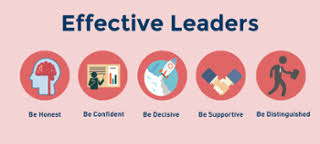
Effective leaders apply various leadership tactics
Effective leaders apply various leadership tactics
Effective leaders apply various leadership tactics depending upon the contexts in which they find themselves. Consider the leadership tactics, traits or models your find yourself drawn to as a leader. Why are you drawn to these particular tactics, traits or models? How do these inter-connect with your personal moral, ethical or religious beliefs? Do you think the personal, moral, ethical or religious beliefs of leaders interfere with their ability to effectively lead? Why or Why not?
This is a discussion question: no cover page, no # page, no running head, no abstract.required.
Use at least three (3) quality references Note: Wikipedia and other related websites do not qualify as academic resources.
We can write this or a similar paper for you! Simply fill the order form!
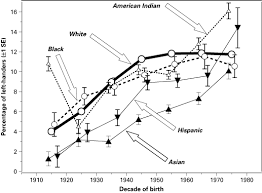
Intersection of biology and culture in expressions of left- and right-handedness
Intersection of biology and culture in expressions of left- and right-handedness
PURPOSE: To explore the intersection of biology and culture in expressions of left- and right-handedness.
SKILLS/OBJECTIVES: After completing this assignment, you should be able to:
Provide clearly expressed opinions and factual information through written and oral communication.
Apply concepts of anthropology to contemporary global and social issues and your own behaviors.
In your exploration of course topics, you will also begin to work within the following discipline-specific knowledge areas:
Construct an informed opinion on how the body reflects values and beliefs of the wider society to which it belongs.
TIME TRACK: On average, this short paper assignment should take about 1 to 1 1/2 hours to complete.
DUE DATE: Throughout the term you are expected to complete 8 activity assignments. This assignment is due no later than 11:59pm EST on FEB 11, 2019.
GRADE: This activity assignment is worth a possible 30 points toward your Activity Assignments final grade. Please see the grading rubric for expectations in performance for this assignment.
STEP 1: Activity Background
Viewpoints on Handedness
TASK: Review the section in your assigned textbook reading (p. 35-36) on handedness. Then read the following article concerning handedness in Japanese culture and society.
ARTICLE: Lefties Push Back Against Japan’s ‘Righteous’ Spin (URL link) (Links to an external site.)Links to an external site.
TASK: Try the following actions using the opposite hand to the one you usually use.
Write out your name, date of birth and the courses that you are taking.
Drink a glass of water, use a fork or spoon, or try using a pair of scissors.
Put a key into a door lock.
Use a remote control or your phone.
Once you have completed these tasks, you are ready to move on to STEP 2.
STEP 2: Critical and Reflexive Thinking
Constructing an Informed Opinion
This activity is your chance to communicate in writing your personal viewpoint and learning experience related the article and activities in STEP 1 and the ideas and values contained therein. In this step, you are expected to compose a well organized, clear and concise response that presents your informed opinion about your experiences and understandings on handedness.
Critical thinking is the objective analysis of facts to form a judgment. Critical thinking is self-directed, self-disciplined, self-monitored, and self-corrective thinking. It entails effective communication and problem solving abilities, as well as a commitment to overcome our inability to differentiate between self and other, and the judgement of another based solely on our own values and standards.
The act of being reflexive means that you are acknowledging the effect that your position in the world – economically, socially, culturally, geographically, and so on – has on yourself. It is a reflection on the past and current situations and conditions that have brought you here and molded you and your mind. It is a reflection on the way you think and why you think in this way.
Critical thinking and reflexivity are what we use to construct informed opinions, or our views formed about something based on fact or knowledge.
TASK: Given what you have learned from your reading and activities, respond to the following questions:
Can you read what you wrote using the opposite hand to the one you usually use? How long did it take compared to writing with your usual hand? Do you think you could improve with practice?
Describe how it felt using the opposite hand to the one you usually use in the other activities (e.g., keys, utensils, phone)? Do you think it would be easier to improve in these tasks with practice? Why or why not?
Think about your own experiences with handedness when compared with those discussed in the article on Japanese culture and the posted comments. Why do you think we still emphasize handedness in everyday activities or simple objects such as scissors or vending machines?
Briefly explain what you think handedness tells us about the power of culture as a means to control our bodies.
Take a bit of time to think about your response – organize your thoughts and opinion statements before you start writing. Include your own voice by evaluating evidence and considering critical questions about cultural control and classification of our bodies.
Please keep in mind that there is no right or wrong answer to these questions, and you will inevitably use your own opinions, beliefs, and experiences in answering each question.
FORMATTING YOUR WORK: Please use the following guidelines in formatting your answers.
Answers should be written in as a list OR in short paragraph form depending on the type of response needed. Papers should be no longer than 1 to 1 1/2 pages in length.
Each response should include the question number at the start followed by your answer.
Do not include the questions in your work, only your answers should be submitted.
Use standard one-inch margins and 12-point font in .doc or .docx file format for submission.
Please use proper grammar, sentence structure and spelling.
All opinions and responses submitted must be your own work and in your own words.
Once you have completed your written work, you are ready to move on to STEP 3.
STEP 3: Submitting Your Work
Getting Graded
TASK: Before submitting you work for grading, read over your work one last time and consider the following:
Are there any obvious grammar and/or spelling errors?
Are the concepts in your opinions and response statements organized and understandable to others?
Have you fully answered the questions?
Did you follow the correct formatting for the assignment?
After consideration, please submit your work using the link provided on this page.
Questions?
If you have any questions about the assignment or encounter any problems during submission, please contact the professor or your graduate teaching assistant (GTA) for assistance. For questions concerning make-up or late assignments, please review your syllabus prior to contacting your professor or GTA.
Click on the “Next” and “Previous” buttons at the bottom of these pages to navigate through this module.
Rubric
ACTIVITY 3 RUBRIC
ACTIVITY 3 RUBRIC
Criteria Ratings Pts
This criterion is linked to a learning outcome Q1 Writing Activity
Experiential Task 5.0 Pts
Full Marks
Accurately expresses foundational knowledge and experience pertaining to specific task 3.0 Pts
Standard Met
Expresses limited foundational knowledge and experience pertaining to specific task 0.0 Pts
No Marks
No submission OR Expresses no relevant foundational knowledge and experience related to specific task 5.0 pts
This criterion is linked to a learning outcome Q2 Tool Activity
Experiential Task 5.0 Pts
Full Marks
Accurately expresses experience and comparison/contrast with a specific task 3.0 Pts
Standard Met
Expresses limited reference to experience and comparison/contrast with a specific task 0.0 Pts
No Marks
No submission OR Expresses no reference to experience and comparison/contrast with a specific task 5.0 pts
This criterion is linked to a learning outcome Q3 Emphasize Handedness
Comparative and Self-Reflection 10.0 Pts
Full Marks
Accurately expresses foundational knowledge pertaining to specific issues; critical thinking and problem solving skills well developed and clearly evident in synthesis, logic and reasoning 7.0 Pts
Standard Met
Expresses limited foundational knowledge; some critical thinking and problem solving skills evident 0.0 Pts
No Marks
No submission OR Expresses no relevant foundational knowledge; critical thinking and problem solving skills not evident 10.0 pts
This criterion is linked to a learning outcome Q4 Diet and Habitat Use
Concept and Information Synthesis 10.0 Pts
Full Marks
Accurately expresses foundational knowledge pertaining to specific issues; critical thinking and problem solving skills well developed and clearly evident in synthesis, logic and reasoning 3.0 Pts
Standard Met
Expresses limited foundational knowledge; some critical thinking and problem solving skills evident 0.0 Pts
No Marks
No submission OR Expresses no relevant foundational knowledge; critical thinking and problem solving skills not evident 10.0 pts
Total points: 30.0
We can write this or a similar paper for you! Simply fill the order form!
Start the activity following the instructions on the activity sheet, Surface Currents of the Oceans. When you have completed the activity and only then come back and answer the questions about the activity for credit. Before working on the activity you should look at the YouTube link on the Coriolis Effect.
How does Ekman transport affect the net transport direction of surface waters relative to wind direction?
What is the direction of ocean currents off of the east coast of the United States?
What is the direction of ocean currents in the North Pacific Ocean at around 40∞N, 170∞W?
Describe the function of ocean currents in the distribution of heat on Earth.
Which direction (clockwise, counterclockwise) do the major ocean gyres turn in the Northern Hemisphere?Which direction do they turn in the Southern Hemisphere?
We can write this or a similar paper for you! Simply fill the order form!
Once there, scroll down and click on the “VoD” next to the title “The Sea Floor”. The video will start automatically. Please answer the questions below as you watch the film.
1.) Oceans cover _____ % of the earth’s surface.
2.) What type of rock is the ocean floor made of?
3.) What is the difference between the continental shelf, slope and rise?
4.) Where does the sediment that makes up the continental rise come from?
5.) What is an abyssal plain?
6.) Why does rock get older as you move away from a mid-ocean ridge?
7.) Scientists know that new lithosphere is constantly being created at the mid-ocean ridges. However, the Earth is not getting larger in size. This means that lithosphere is getting recycled elsewhere. Where is the older lithosphere going?
We can write this or a similar paper for you! Simply fill the order form!
In her article, Colleen Becker writes about the “sebmerged state.” What is this? What are some examples of how the “submerged state” benefits middle class and wealthy people in the United States? Why do you think these benefits are not viewed as welfare by the general public? How do you think Americans feel about welfare and welfare recipients? Why do you think that is?
Use at least three (3) quality references Note: Wikipedia and other related websites do not qualify as academic resources.
We can write this or a similar paper for you! Simply fill the order form!
In 2016 Parliament passed a motion rejecting” the Boycott, divestment and sanctions (BDS) movement, which promotes the demonization and delegitimization of the state of Israel“, and the government to “condemn any and all attempts by Canadian organizations,, groups or individuals to promote the BDS movement, both here at home and abroad.
The movement 2005 manifesto calls for boycott, divestment and sanctions against Israel “until it complies with international law and universal principles of human rights.”
Specifically the movement calls for the non-violent punitive measures to be maintained until Israel ends “its occupation and colonization of all Arab lands and the wall” and recognizes “the fundamental rights of the Arab-Palestinian citizens of Israel to full equality,” and protects “the rights of Palestinian refugees to return to their homes and properties.
Essay Question: As a student of Middle Eastern history and a Canadian do you agree with the governments support of Israel’s policies in the region (between 1948-1987) and Israel’s continued occupation of territory acquired through war?
The question seeks to have you explore Israel and the Arab worlds conflict throughout the 20th century as means of forming your conclusion about the conflict. It demands you to take sides. (In the Essay please take Arab-palestinians side) In the conclusion discuss why you agree with the government policy and explain why, and if you disagree discuss what alternative policies you wish the government explore.
The essay is a historical essay. Please have a good thesis statement. Also please provide events, date, name, effective analysis and historical judgement to support thesis and content. Ie. Refugee problem, Six day war, Yom Kippur War, Camp David Accord, Oslo Accord.
We can write this or a similar paper for you! Simply fill the order form!