Personal Worldview and Research Mindset in Business
Personal Worldview and Research Mindset in Business
Order Instructions:
Personal Worldview and Research Mindset in Business ( my post !!!)
My worldview has been molded and expanded over the course of my lifetime by many different influences. My family, friends, coworkers, teachers, and even strangers have made impacts on my life that have in one way or another changed how I view society and the world around me. The three main components that help to form my worldview are Ethics, Human Nature, and God, because they molded my thoughts, experiences, education and lifetime decisions.
I feel the strongest aspect of my worldview is my great sense of ethics. They help to guide my actions and decisions on a daily basis. Ethics to me lay the foundations of a person’s character. My mom always said which I do believe, that a person with good character will by default have a strong set of moral values and their morals will help that person to make ethical choices in their lives. My moral values have been learned from many different influences throughout my lifetime. Moreover throughout it all, my philosophy still is “never give up” you can’t and won’t give up.
Over the course of my lifetime I have become very successful on influencing the behavior of others. With this being said, my worldview appears to be compatible with the advocacy and participatory worldview. A participatory/advocacy worldview holds that formal knowledge and creates a sense of intellectual weakness among ordinary people (i.e., those who have either chosen or been denied access to higher education), making them surrender to or look up to the formally educated for guidance to promote their lives.
References
Mayoux, L. (2005). Participatory action learning system (PALS): Impact assessment for civil society development and grassroots-based advocacy in Anandi, India. Journal of International Development, 17(2), 211-242. doi:10.1002/jid.1211
Question 1 (posted by colleague Simon)
Listening to Dr. Michael Patton’s video and reading through your personal worldview and research mindset in business, my mind recalls the fact that theory sounds like there is no evidence to prove the point otherwise. When you talk about ethics, one thinks of the systems of moral principles and rules of conduct recognized in respect to a particular group which sound very much theoretical. The question then is how do we prove these theories?
Research is about testing a theory about something which is referred to as deductive theory and in your post my follow up question seeks to find out that theory in the real sense that you intend your research questions to address.
Just like in your post, James Simon passionately talks about values and beliefs and he indicates that he follows these up with a questioning process.
Reference:
Laureate Education, Inc. (Executive Producer). (2008). Theory. Baltimore: Executive Producer.
Question 2 posted by James
Listening to Dr. Michael Patton’s video and reading through your personal worldview and research mindset in business, my mind recalls the fact that theory sounds like there is no evidence to prove the point otherwise. When you talk about ethics, one thinks of the systems of moral principles and rules of conduct recognized in respect to a particular group which sound very much theoretical. The question then is how do we prove these theories?
Research is about testing a theory about something which is referred to as deductive theory and in your post my follow up question seeks to find out that theory in the real sense that you intend your research questions to address.
Just like in your post, James Simon passionately talks about values and beliefs and he indicates that he follows these up with a questioning process.
Reference:
Laureate Education, Inc. (Executive Producer). (2008). Theory. Baltimore: Executive Producer.
please answer each colleague individually wit one reference in regards to my post.
SAMPLE ANSWER
Response to Simon
Several theories have been proposed by scholars in a bid to explain various occurrences and behaviors in the society. In fact, the very foundation of must scientific researches is based on theoretical perspectives, which do not have any basis or evidential proof (Newborn, 2001). As an individual, I have been fixated on theories that explain social phenomena, otherwise referred to as worldviews. For instance, I have personally grown to like Abraham Maslow’s Hierarchy of Needs theory, which provides logical view of the various needs human beings have in a chronological order. This is the theory I would like to prove.
Ordinarily, If I were to prove Maslow’s theory, and provide evidence that it works, I would engage in an actual study, involving live participants. Basically, conducting a research is the best way to establish the truth about an hypothesis. I would involve participants in a study with detailed questionnaires, augmented with a systematic study of behaviors. Of course, my research will be guided with specific questions, addressing the salient points that would facilitate the establishment of proof of the hypothesis proposed by the theorist (Newborn, 2001). Using general connotations such as societal ethics does not hold any evidence, but identifying real life examples of the application of the said theory does.
I beg to differ your perspective that is instigated by Dr. Michael Patton’s video, that theories have no evidence to prove them. I, on the other hand, believe that theories and worldviews are actually the only logical explanations to the various phenomena in a unique society. However, to ensure that this claim is substantiated, it is imperative that one engages in either a qualitative or quantitative research, summing up into a deductive theory.
Reference
Newborn, M. (2001). Automated theorem proving: Theory and practice. New York: Springer.
Response to James
Several theories have been proposed by scholars in a bid to explain various occurrences and behaviors in the society. In fact, the very foundation of must scientific researches is based on theoretical perspectives, which do not have any basis or evidential proof. As an individual, I have been fixated on theories that explain social phenomena, otherwise referred to as worldviews. For instance, I have personally grown to like Abraham Maslow’s Hierarchy of Needs theory, which provides logical view of the various needs human beings have in a chronological order. This is the theory I would like to prove.
Ordinarily, If I were to prove Maslow’s theory, and provide evidence that it works, I would engage in an actual study, involving live participants. Basically, conducting a research is the best way to establish the truth about an hypothesis (Gao, Goto, & Cheng, 2014). I would involve participants in a study with detailed questionnaires, augmented with a systematic study of behaviors. Of course, my research will be guided with specific questions, addressing the salient points that would facilitate the establishment of proof of the hypothesis proposed by the theorist. Using general connotations such as societal ethics does not hold any evidence, but identifying real life examples of the application of the said theory does.
I beg to differ your perspective that is instigated by Dr. Michael Patton’s video, that theories have no evidence to prove them. I, on the other hand, believe that theories and worldviews are actually the only logical explanations to the various phenomena in a unique society. However, to ensure that this claim is substantiated, it is imperative that one engages in either a qualitative or quantitative research, summing up into a deductive theory.
Ford Motor Group is a multinational public company that’s based in Michigan in the USA. Its shares are traded in NYSE under the initial F. It majors in automotive production and its current Executive chairman is William C. Ford, Jr. while the CEO is Mark Fields. The ford Family owns 2% of the company while the employees number about 181,000. It has a market capitalization of $54.65 Billion and its shares are currently trading at $14.09 dollars with a yield of 3.5%. (Luenberger, 1997) Ford has outstanding shares numbering 9 million while the market prices of its shares are currently costing 14.1 which amounts to a total of $126.9 million in outstanding stock valuation.
Part One
The directors of Ford Motor Group have impeccable academic backgrounds and experience that warrant their positions. The executive management of the Ford board as at the end of July 2014 were Richard A. Gephardt, Ellen Marram, Stephen Butler, Kimberly Casiano, Edsel Ford, Mark Fields (CEO & President, Homer Neal, Antony F. Earley, William Clay Ford Jr., the executive chairman, James P. Hackett, John L. Thornton, Gerald L. Shaheeen, James H. Hance, Jr., William W. Helman John C. Lechieter, James H. Hance and Jon M. Huntsman.
Mark Fields, the current CEO and President was initially appointed as the America’s President of operations in the year 2012. (Adams, 2008) The board is mostly concentrated in running the operations of the company from the head office. Almost 50% of its annual turnover is achieved in North America while the rest are from South America, Europe, Asia, pacific and Africa. The duties of each director are not included in the reports together with the salaries of other senior staff. The academic background for the senior positions office holders is not available on the 2013 annual report. The performance of Ford Motor Group has not been very impressive and it was expected that it would have more financial problems in the current financial period. However, Ford has endured hard times before and it’s expected that it will come out of financial woes on its own.
Part Two
The net assets turnover for Ford decreased by 2.5% in the year 2013 as compared to a 50% increase in the year 2012. GM registered a decrease of 13% in its net assets turnover in the year 2013 while in the year 2012 it experienced an increase of 6.5%. (Vance, 2003)
Dupont Analysis
The following is the Dopont model breakdown for Ford and GM. The profit margin for Ford amounted to 13% of sales for both 2013 and 2012. The return on Equity was 27% in 2013 while in2012 it was 36%. The profit margin on sales for GM amounted to 12% in 2013 while in 2012 it was 7%. The ROE for GM amounted to 13% and 17% respectively for the years 2013 and 2012 respectively. The return on assets amounted to 3 and 4% respectively. The earnings per share for Ford in 2013 and 2012 were 1.54 and 1.48 respectively while the dividends per share amounted to 0.4 and 0.2 respectively. Both companies are heavily leveraged and Ford is the one that has the highest concentration of debt compared to GM.
The interest expenses for Ford increased by 16.3% in 2013 while in 2012 it had decreased by 12.7%. The interest expense for Ford in the year 2013 and 2012 were 829 million and 713 million respectively. GM interest expenses decreased by 31.7% in 2013 while in 2012 the expenses decreased by 9.4%. The interest expenses for 2013 and 2012 were 334 Million and 489 Million respectively
The net assets turnover for Ford’s decreased by 2.5% in the year 2013 as compared to a 50% increase in the year 2012. GM registered a decrease of 13% in its net assets turnover in the year 2013 while in the year 2012 it experienced an increase of 6.5%. The dividend per share for Ford in 2013 and 2012 was 0.4 and 0.2 respectively. This represented a return of 22% to the shareholders in 2013 while in 2012 it was 23%.
Ford Motor Group
2013
2012
2011
Current Ratio
Total Current Assets/Total current liabilities
2.11
2.32
2.26
Quick Ratio
TT C/ Assets – inventories /TT/ C Liabilities
1.98
2.18
2.15
Receivable turnover
Annual credit sales/average receivables
Inventory Turnover
Cost of goods sold/Average inventory
17.00
17.51
19.87
Asset turnover
Sales/Average total assets
0.75
0.73
0.76
Dividend yield
Div per Share / Current Share price
Dividend cover
EPS/ Dividend per Share
Net assets turnover
Net assets / total sales
1.24
1.27
0.85
Times interest earned
EBIT/Annual Interest Expense
9.45
11.83
11.63
Debt to total Asset
Debt/Assets
0.57
1.03
0.56
Book value per share
Interest cover
EBIT/Annual Interest Expense
9.45
11.83
11.63
Profit margin on sale
GP/sales
0.13
0.13
0.14
R.R return on assets
EAT/Total Assets
0.04
0.03
0.11
R.R com stock equity
Profit after taxes/Shareholders equity
0.27
0.36
1.35
Earnings per share
Profit after taxes-pref div)/No. of comm O/S
1.54
1.48
Payout Ratio
cash dividends/income
0.22
0.13
0.00
ROE
Return On Equity (ROE)
0.27
0.36
1.35
ROA
Return on average Assets
0.04
0.03
0.11
Ford has low average but a relatively stable financial performance as compared to GM very high and very low performances that are unpredictable. Ford has a better growth trend thatis fairly predictable.
The dividend earnings growth trend has been calculated on average per year. There are financial periods where the dividend pay rate and amounts are similar has the growth trend is not reliable as the average would be very low. The general average however is 5%.
The growth rate number is logical as it reflects the general performance on the ground. The major problems with the calculation are the constant figures payable as dividends reflects a constant growth trend and the calculations reflect a zero growth trend. The company pays dividend as shown in the table above. It would be fair assume a constant growth trend for Ford Company.
Part four
Stock Options for Employee compensation for the year 2013
Fair value per stock option
2013
2012
2011
5.03
5.88
8.48
Assumptions made
Annualized Dividend yield
3%
2%
–
Expected volatility
52.20%
53.80%
53.20%
Risk free interest rate
1.50%
1.60%
3.20%
Expected stock option (yrs)
7.7
7.2
7.1
Company stock options as at December 31 2013 (millions)
Outstanding options
Exercisable options
Shares
weighted av life yrs
weighted av Exc price
Shares
weighted av life yrs
Range Prices available in $
1.96 -2.84
15.5
5.2
2.16
15.5
2.16
5.11 – 8.58
23.2
3.1
7.29
23.2
7.29
10.11 – 12.98
29.1
5.3
12.58
19.1
12.56
13.07 – 16.64
11.3
2.8
13.86
9.8
13.71
Total stock options
79.1
67.6
These options are company specific and they are payable on the range of prices available and the average years the employee has spent in the company. The share prices are weighted as shown on the table above. (Garrison, Noreen & Brewer, 2009)
The stock options would have to be provided for as their prices are usually provided for employees only and not for the general investors.
Part Five
The beta for Ford Motor Group according to yahoo business finance is 0.88. The current risk free market rate is 0.03%. The rate of risk premium is the amount that the expected asset’s rate of return is extra or exceeds the market risk free rate of interests. The risk premium for trading companies is the company stocks or their expected rate of return less the risk free rate of return.
Capm =
rf + β (rm -rf)
rf = risk free rate
3.00%
β = Beta
0.880
rm = return on the market
5.00%
Capm =
4.76
The average Capm rate is equal to 5% as calculated in the excel formula which is attached. The expected return for Ford Motor Group is 5%. (Reilly & Brown, 2011) Using the model, the rate of return is 4.76%.
The cost of equity using the capital asset pricing model = Risk Free Rate + Beta * Market Risk Premium = 3+0.88*3= 11.64 (French, 2003)
Ford has outstanding shares numbering 9 million while the market prices of its shares were costing 14.1 which amounts to a total of $126.9 million. (Black, Jensen and Scholes, 1972)
The Capital Asset Pricing theory suggests that the cost of capital depends largely on how the asset was initially. The cost of the debt capital, the cost of the equity capital and the weighted average of the two depending on the debt and equity financing represents the actual cost of capital.
Part six
Ford Calculations
2013
2012
2011
Dividend yield
Div per Share / Current Share price
0.11
Dividend cover
EPS/ Dividend per Share
0.11
Net assets turnover
Net assets / total sales
1.24
1.27
0.85
Times interest earned
EBIT/Annual Interest Expense
9.45
11.83
11.63
Debt to total Asset
Debt/Assets
0.57
1.03
0.56
Book value per share
Interest cover
EBIT/Annual Interest Expense
9.45
11.83
11.63
Profit margin on sale
GP/sales
0.13
0.13
0.14
R.R return on assets
EAT/Total Assets
0.04
0.03
0.11
R.R com stock equity
Profit after taxes/Shareholders equity
0.27
0.36
1.35
Earnings per share
Profit after taxes-pref div)/No. of comm O/S
1.54
1.48
Payout Ratio
cash dividends/income
0.22
0.13
0.00
ROE
Return On Equity (ROE)
0.27
0.36
1.35
ROA
Return on average Assets
0.04
0.03
0.11
Part Seven
Capital Structure
Interest payments that are payable by lenders are all deductible from the ones or a company’s taxable income while the payments to shareholders as dividends are not. Most tax systems encourage the companies to use debt financing instead of equity. (Black, Jensen and Scholes, 1972) The higher the rate of interest the higher the incentives. The interest expenses for Ford increased by 16.3% in 2013 while in 2012 it had decreased by 12.7%. The interest expense for Ford in the year 2013 and 2012 were 829 million and 713 million respectively. GM interest expenses decreased by 31.7% in 2013 while in 2012 the expenses decreased by 9.4%. The interest expenses for 2013 and 2012 were 334 Million and 489 Million respectively. (Bodie, Kane, Marcus, 2008)
The capital structure for Ford is mostly made up of borrowed money. In 2013, the long-term debts amounted to $114, 688 million while in 2012 and 2011 the debts amounted to 105, 058 and 99488 respectively. The total stockholder equity amounts to $26,383 Million and $15,947 million for the same period. Ford Company is highly levered and it needs to cut down on borrowing. General Motor’s long term debts amounted to $6573 Million and $3424 Million for the year 2013 and 2012 while the total stockholders equity amounted to $42,607, $36,244 and $38120 for the years 2013, 2012 and 2011. Gm is relatively levered. (Markowitz, 1959)
The credit ratings for Ford currently are CCC+ from S & P performance of CC in 2012. Ford managed to pay its 9.9 Billion debts in the year 2014 and it helped to boost its credit rankings. Ford credit rankings place it in front of GM and Chrysler and they are currently fitting hard to avoid bankruptcy petition. According to Modigliani and Miller (1958) the cost of equity capital is mostly determined by the asset’s cost of capital and not the other way round.
Ford has outstanding shares numbering 9 million while the market prices of its shares were costing 14.1 which amounts to a total of $126.9 million. The Capital Asset Pricing theory suggests that the cost of capital depends largely on how the asset was initially financed (Bierman & Smiddt, 1966). The cost of the debt capital, the cost of the equity capital and the weighted average of the two depending on the debt and equity financing represents the actual cost of capital. (Black, Jensen and Scholes, 1972)
Some theories of the Capital assets pricing model, have been applied in relation to heterogeneous beliefs (Merton, 1987) and risk free lending rate elimination (Black, 1972)
Ford Executive Summary
Ford Motor Group is a Gross Profit 7.9% in 2013 as opposed to 2012 when it decreased by 5% from the previous year. The GP for General Motors on the other hand increased by 70% in the year 2013 while in the year 2012 it decreased by 43%. The net profit for Ford for the same period increased 26% in 2013 while in 2012 it decreased by 72%. GM registered a 13.7 % reduction in 2013 while in 2012 it registered a further reduction of 32.7%. The total shareholder’s equity for Ford increased by 65.5% in 2013 while in 2012 it increased by 6%. General Motor’s shareholders equity increased by 17.6% in 2013 while in 2012 it decreased by 4.9%. In 2012 Ford Motor Group reduced its total liabilities by almost 70% while GM increased its total liabilities by 15.6% in 2013. The sales revenue for Ford increased by 10% in 2013 while GM sales for the same period increased by 2.1%. Ford total sales revenues increased from $133,559 million in 2012 to $146,917 million in 2013. GM sales for the same period were 152256 million and 155427 million from the same period respectively. The interest expenses for Ford increased by 16.3% in 2013 while in 2012 it had decreased by 12.7%, GM interest expense decreased by 31.7% in 2013 while in 2012 it decreased by 9.4%. (Bodie, Kane, Marcus, 2008)
The ratios for Ford also indicate that the liquidity ratios are above average for all the years for Ford Motor Group. The current ratios were 2.11, 2.32, 2.26 for the years 2013, 2012 and 2011. The quick ratios also indicated a positive trend. The Times interest earned for the year 2013 for ford were 9.45, 11.83 and 11.63 for the years 2013, 2012 and 2013. The interest cover for the same period indicated the same results like Times interest earned. (Drucker, 1999)
The ford Family owns 2% of the company while the employees number about 181,000. It has a market capitalization of $54.65 Billion and its shares are currently trading at $14.09 dollars with a yield of 3.5%. (Ross, Westerfield & Jaffe, 2013) The net assets turnover for Ford decreased by 2.5% in the year 2013 as compared to a 50% increase in the year 2012. GM registered a decrease of 13% in its net assets turnover in the year 2013 while in the year 2012 it experienced an increase of 6.5%. The dividend per share for Ford in 2013 and 2012 was 0.4 and 0.2 respectively. This represented a return of 22% to the shareholders in 2013 while in 2012 it was 23%.
Ford Motor Group has a great potential to return to great profitability and also be able to pay off all its outstanding debts. The Current ratios and the quick acid test ratios indicate that Ford Motor Group is has a stable liquidity and with the right leadership it would be able to make more profits like the earlier years. Given all these factors I would definitely invest my money in Ford Motor Group but I would be cautious besides I would also be requiring a plan on how the management of the company would be proposing to settle the huge loans that it owes several financiers. Ford may be earning some profits but it has a lot of debts that are four or five times its total equity.
References
Adams, S. (2008) Fundamentals of business economics. Financial Management (UK), 46–48. Retrieved from Business Source Premier Database.
Bierman, H. and Smidt. S. (1966).The Capital Budgeting Decision—Economic Analysis and Financing of Investment Projects. New York: Macmillan Company
Bodie, Z., Kane, A., Marcus, A. J. (2008). Investments (7th International Ed.) Boston: McGraw-Hill. p. 303.
Black, F., Jensen, M.C. and Scholes, M. (1972) “The Capital Asset Pricing Model: Some Empirical Tests,” in Studies in the Theory of Capital Markets. Michael C. Jensen, ed. New York: Praeger, pp. 79–121
Black, F. (1997) “Capital Market Equilibrium with Restricted Borrowing.” Journal of Business. July, 45:3, pp. 444–55.
Drucker, F. (1999) Management Challenges of the 21st Century. New York: Harper Business.
Fama, E. F, French, K. R (2004). “The Capital Asset Pricing Model: Theory and Evidence”. Journal of Economic Perspectives 18 (3): 25–46.
financial problems and make effective business decisions. New York: McGraw-Hill.
French, C. W. (2003). “The Treynor Capital Asset Pricing Model” Journal of Investment Management 1 (2): 60–72.
Garrison, R., Noreen, W. & Brewer, P. (2009) Managerial Accounting, McGraw-Hill Irwin.
Higher Education.
Khan, M. (1993) Theory & Problems in Financial Management, Boston: McGraw Hill
Luenberger, D. (1997). Investment Science. Oxford University Press
Modigliani, F. and Miller, M. (1958) “The Cost of Capital, Corporation Finance, and the Theory of Investment,” AmericanEconomic Review, June, 48:3, pp. 261–97.
Markowitz, H. (1959) Portfolio Selection: Efficient Diversifications of Investments. Cowles Foundation Monograph No. 16. New York: John Wiley & Sons, Inc.
Merton, R. (1997). “An Intertermporal Capital Asset Pricing Model.” Econometrica, September, 41, pp. 867–87.Merton, R.C. 1987.
Reilly, F. & Brown, K. (2011) Investment Analysis and Portfolio Management, (10th Edition) South-Western College
Ross, S. A., Westerfield, R. W., & Jaffe, J. (2013) Corporate finance (10th Ed.) New York: McGraw-Hill Irwin.
Vance, D. (2003) Financial analysis and decision making: tools and techniques to solve
We can write this or a similar paper for you! Simply fill the order form!
Real Estate Multiple Listing & State Patrol Ticket Processing System
Order Instructions:
Read chapters 7 and 8 of the text and the case studies at the end of these chapters.
Answer the questions about the following case studies at the end of chapter 7 and 8
• Real Estate Multiple Listing
• State Patrol Ticket Processing System
Suggestions and Guidelines:
• Use your own words and Thoughts. Plagiarism and/or cheating will result in a grade of Zero.
• Give short answers to each question (not more than 3-4 lines)
• Total page length (not more than 3 pages, 300 words per page)
• 1-inch margins, Double spaced, 12-point, Times New Roman font
SAMPLE ANSWER
Refined domain model class diagram.
Information Changes
Price changes previous information
Corrections or indicating that the house is sold.
Listing Information
Address, year built, square feet, number of bedrooms, number of bathrooms, owner name, owner phone number, asking price, status code.
Additional information
House information, the Agent who listed the house information, the real estate office the agent represents
Use case diagram with a CRUD analysis
A CRUD matrix is referred to as a table that shows links between the various processes, data and resources of a given system. It involves the creation, reading, updating and deletion of an operation on the data or resource. The creation of the listing is done by the help of the real estate agents. The information collected is used in the making of a list book, which is then verified by the agents and the homeowners. Any mistakes that are found are then corrected and updated in the list book while irrelevant information is deleted.
Activity diagram
As mentioned above in the diagram, listing the houses is important in that it helps in supplying information about the houses on sale to prospective buyers. It also helps to ensure that houses are classified according to various categories and price ranges. Listing information verification is also important in that it ensures correct information is put in the listing book while information updating and correction ensures that the information is accurate and timely.
System sequence diagram
State Machine Diagram
State Patrol Ticket Processing System
RFP outline – State Patrol Ticket processing system
Project Description
To record driver violations, to keep records of the fines paid by drivers and to notify the court that a warrant for arrest should be issued when such fines are not paid in a timely manner.
Technical and Infrastructure Requirements.
The requirements that pertain to the design of the project include internal servers to store all the collected information, ticketing machines for the officers to use in issuing out the tickets.
Functional Requirements verification of financial responsibility and insurance, production of driving record reports from the tickets and accident records for insurance companies and also the issuing, suspension and renewal of driver’s licenses
Logical and physical design can be accomplished using either the traditional structured approach or the object-oriented approaches to systems development. However, because in using the object oriented approach, key objects and classes of objects are designed in the new or updated system. Because of this, it is important to record this in the RFP.
Matrices for evaluating RFP responses
Weight (High = 5 , Low = 1 )
Requirements
Availability of experienced staff
5
Developmental cost
5
Expected value of benefits
5
Length of time until deployment
2
Low impact on internal resources
5
Requirements for internal expertise
5
Minimal organizational impacts
3
Performance record of the provider
5
Level of technical support provided
5
Warranties and support services provided
5
Total
45
List of vendors to whom the RFP should be sent include the court, the insurance companies, the service providers, and the members of the esteemed police force.
References
John W. Satzinger, R. B. (2010). Systems and Analysis Design in a Changing World. New Mexico: Cengage Learning.
We can write this or a similar paper for you! Simply fill the order form!
Write 300 words about the law and journalism using the information attached to the order.
SAMPLE ANSWER
Law and Journalism
Law structures the manner in which people interact within a set of social norms. This way, law is a defining aspect for communities and it determines who belongs. Law is a very important societal aspect because it reflects the aspirational norms and rules of the community it regulates. It only maintains legitimate authority if it can play its role effectively. Journalism faces similar problems because its professional projects becomes increasingly blurred and aligned with business. Law has an upper authority on journalism because it regulates the amount of information that should be conveyed on media and dictates the scope of a journalist’s work (Breit, 2014).
According to the General Principles of the Press Council, news and comments should be presented in a manner that is fair and respects the privacy and sensibilities of people, although this does not mean that some matters which are on the public record or significantly in the public interest should be omitted. Privacy Principles require journalists to ensure when gathering news, they do not cause undue intrusions on the privacy of people and that public members caught up in newsworthy events should not be exploited (The Sydney Morning Herald, 2014).
The media faces numerous challenges, with the conventional business models thrown into turmoil by new media platforms. Although from the outsider perspective, there has been a minimal number of cases of journalists being persecuted for contempt of court, from the insider perspective there are many issues that deserve professional security and reflection. There are career consequences that arise from journalists being persecuted for contempt of court and having a criminal record. Breit (2011) notes that media publications have received massive criticism for the traumatizing of victims of crime, inserting pressure on proceedings, affecting the impartiality of jurors and undermining the confidence of the public in the judicial system.
References
Breit, R. (2011). Professional Communication: Legal and Ethical Issues, 2nd ed. Lexis Nexis, Butterworths: Australia.
Introduction;
1. Say which act you are researching
say which company you have chosen and why like eg like Vodafone , Coles , Woolworths any company of our choice.
what are the companies policies in brief mention.
2. Explanation of act i.e Australian human right commission act 1986 brief summery do not copy and paste.
who is the act designed to protect and what are the powers.
3. How does the act promote diversity in work force, give examples.
4. diversity within the company you have chosen.
Summary of companies diversity and their policy.
explanation in details of how act promote diversity example – mention any diversity program
5 conclusion
Summary of point 2,3,4 stated above.
also provide recommendations.
6. Must be referenced font style Arial .
size – 12 life spacing 1.5 heading in bold, text not bold.
SAMPLE ANSWER
Australian Human rights commission Act 1986
Introduction
The study is aimed at evaluating the act that was enacted in Australia in 1986 concerning the rights of human beings. To aid on the research of this paper, Woolworths Australia has been chosen as the company in focus. Woolworths Australia was chosen because of the fact that its employment policies and employee codes of conduct were easily available. It was also chosen because of its dynamic employee policies and the inspirational example it has shown for equal opportunity employment by its inspirational employment of people with disability, of different races, genders, and ages.
Background information of Woolworths Company
The company operates under clearly outlined rules and regulations that govern how they do their employee recruitment. In this code of conduct, employees are expected to demonstrate high degrees of integrity, trustworthiness, and honesty at all times. They are also required to put their best foot forward when they are representing the company even outside the working hour. In addition, each employee is required not to engage in immoral behaviors like drug abuse especially when they are at work. As a general rule, employees are required to use decent language, behave in a decent manner and should not misuse company resources such as the standard issue employee discount cards. In this digital year, they are also required to respect their fellow colleagues and not harm then in any way by posting any malicious comments about them or the company online.
The Australian Human Rights commission
The Australian Human Rights Commission Act was created in order to promote equal rights and an acceptance of equal and fair treatment in the workplace. It was also mandated to ensure the compliance of international covenants and declarations in which Australia is signatory to. Its major role was to handle discriminatory complaints in Australia as covered by the federal anti-discrimination legislation. Furthermore, the acts covered included the act that protects people being discriminated on the basis of their race, sex, disability or age. The commission was also mandated, however, with limited power to investigate and to conciliate complaints of employment discrimination as covered by the ILO Convention Concerning Discrimination in respect of Employment or Occupation.
The Act was, therefore, necessary to protect vulnerable people against discrimination on the basis of age, color, race or nationality, religion, sex and sexual orientation, pregnancy, marital status, social origin, criminal record, medical record, physical, mental, intellectual, or psychiatric disability, and impairment of any kind, political opinions or even trade union activities.
The act that protects the rights of human beings in Australia does so through the encouragement of people from diverse backgrounds working together in several ways: It contains within itself very strong provisions that support a diversified workforce and promotes the reflection of the entire diverse Australian community in the workplace (Australian Human Rights Commission Act, 2014). The section on the promotion of employment equity also goes on to explain the need for the establishment of a diverse workforce. With regard to the fulfillment of this Act, Woolworths limited is also committed to providing equal opportunities for all employees in the workplace free from bullying, discrimination, and harassment.
Woolworths Limited role in protecting Human Rights
Woolworths limited offers equal employment opportunity to everyone is always in the forefront championing for the protection of the rights of human beings. This is enhanced by the company’s employment handbook which outlines clearly how each employ has to behave at the work place concerning race, age, color, sex, sexuality, religious beliefs, political opinions and disability. The company also opposes discrimination in any way including discriminatory harassing and bullying behavior such as body language, gestures, verbal humiliation and even sexual harassment. Physical molestation and the use of vilifying behavior such as inciting hatred and inciting others to have contempt about other workmates attributes is strictly prohibited and may result in disciplinary action and even termination of employment. The company also ensures that every employee at Woolworths work by the principles of anti-discrimination with no fear of retribution should any complaint be made on the grounds of discrimination.
Woolworths as a company is very strict in its rules and regulations and ensures that the right of every worker is protected. The fact that the company has put effective anti-discrimination strategies in place is a good practice, which is good for business as it improves employee productivity and fosters a cohesive workforce. It also helps to build the morale of the workforce and adds to the bottom line, thereby building the reputation of the company. A discrimination-free work environment also ensures that employee turnover is reduced and the best people are gotten for the job (Australian Human Rights Commission Act, 2014).
Conclusion
From the study, it is very clear that each human being is treated with the utmost respect that they deserve. For instance, in a recent Australian census report that was conducted in 2011, it was noted that many Australians have native origins abroad with more than fifty percent arising from Europe and ten percent from Asia. In the 2011 census, 21.5 million Australians were male, which represented 49.4 percent of the population, while 50.6 percent represented the female gender. The census also noted that of all the population, the original Australians being of Aboriginal and Torres Strait Islander decent made up of 2.5 per cent of the population. In a different 2012 disability survey, it was estimated that nearly 4.2 million Australians who represented twenty percent of the population had a disability.
Furthermore, Australian Human Rights Commission Act has ensured that discrimination at the workplace is reduced as much as possible in Australia. This has been done through provision of strict rules that encourage gender equality at the work place. As a representative measure, it is expected that in the Woolworth workforce, for example, should have a balance between the genders with half of the workforce being male and the other half being female. Out of a population of one hundred employees, twenty should be employees with a disability and at least three should be of aboriginal or Torres Strait Islander decent.
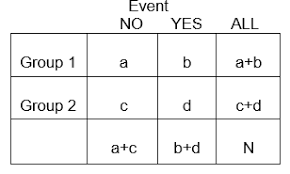
Variable relationships are very important in quantitative research. They tell researchers what effect different variables have upon one another. One of the easiest ways to display relationships between variables is through a cross-tabulation (cross-tab). A cross-tab is simply a chart that shows frequency or distribution of one or more variables for every category of another variable. Stated another way, a cross-tab is a joint frequency distribution of observations on two or more sets of variables. These statistical observations can be presented by numeric frequency, percentages, or both, depending on which is most useful given the specific data context.??For this Application Assignment, perform a cross-tabulation on the data provided in the handout “Week 10 Dataset” such that property crime is displayed as a rate per student population. Though Excel is not the only software that can be used to perform a cross-tabulation, it is used here because it is a widely available program. The handout entitled, “Cross-Tabulation in Excel” contains instructions on how to complete the task in Excel using two different methods.??The assignment (2–3 pages):
• Using Excel, perform a cross tabulation on the data provided in the Week 10 dataset.
• Explain what you can conclude from the output of the cross tabulation.
• Include your outputs in your Application Assignment document. (Copy and paste them from Excel into your Word doc.)
Support your Application Assignment with specific references to all resources used in its preparation. You are to provide a reference list for all resources, including those in the Learning Resources for this course.
Note: Please use the course text as one of the references for this assignment, AND the other articles on the attached files sent by email.
SAMPLE ANSWER
The Pivot table below, shows the total crimes and various categories of crimes committed in each college and totals for all the colleges. The information could help college authorities to know which crimes recur frequently.
College
Sum of Crime Total
Sum of Forcible Rape
Sum of Aggravated Assault
Sum of Arson
Sum of Property Crime
Abalone University
35
5
12
1
17
Franklinville College
4
0
2
0
2
Marie Louis College
14
2
4
0
8
Robert Long College
9
0
1
0
8
Simon State
42
3
5
1
33
Grand Total
104
10
24
2
68
Table I
(Jelen, 2010)
The pivot table below shows student enrolment and the number of crimes committed in each college
Table II
College
Sum of Student enrolment
Sum of Crime Total
Abalone University
10486
35
Franklinville College
989
4
Marie Louis College
2301
14
Robert Long College
3467
9
Simon State
20573
42
Grand Total
37816
104
(Jelen, 2010)
Table III
College
Sum of Student Enrollment
Sum of Crime Total
Crime total as a percentage of student enrollment
Abalone University
10486
35
0.33%
Franklinville College
989
4
0.40%
Marie Louis College
2301
14
0.61%
Robert Long College
3467
9
0.26%
Simon State
20573
42
0.20%
Grand Total
37816
104
The pivot table below shows the grand totals of all the categories of crimes, crime totals and student enrolment arranged in a descending order
Table IV
College
Sum of Student Enrolment
Sum of Crime Total
Sum of Forcible Rape
Sum of Aggravated Assault
Sum of Arson
Sum of Property Crime
Simon State
20573
42
3
5
1
33
Abalone University
10486
35
5
12
1
17
Robert Long College
3467
9
0
1
0
8
Marie Louis College
2301
14
2
4
0
8
Franklinville College
989
4
0
2
0
2
Grand Total
37816
104
10
24
2
68
(Jelen, 2014)
The pivot table below indicates the various categories of crime totals, student enrolment, and various categories of crimes as a percentage of the grand total in each category.
Table V
College
Sum of Student Enrollment
Sum of Crime Total
Sum of Forcible Rape
Sum of Aggravated Assault
Sum of Arson
Sum of Property Crime
Abalone University
27.73%
33.65%
50.00%
50.00%
50.00%
25.00%
Franklinville College
2.62%
3.85%
0.00%
8.33%
0.00%
2.94%
Marie Louis College
6.08%
13.46%
20.00%
16.67%
0.00%
11.76%
Robert Long College
9.17%
8.65%
0.00%
4.17%
0.00%
11.76%
Simon State
54.40%
40.38%
30.00%
20.83%
50.00%
48.53%
Grand Total
100.00%
100.00%
100.00%
100.00%
100.00%
100.00%
(Jelen, 2010)
Report of findings
Table I above shows the total crimes committed in all the colleges which was 104 in total.It also shows the total number of crimes committed in each category of crimes. Table I shows that property crimes were higher than all other crimes at 64 followed by aggravated assault at 24, then forcible rape at 10. The least number of crimes committed at the colleges was arson at only 2 incidences. College administrators can therefore put in place measures to address property crimes which are likely to recur more frequently than the other categories of crimes. Table II shows the relationship between student enrollment and the number of crimes committed. From Table II, it can be observed that the higher the student enrolment the higher the numbers of crimes are committed. For example Simon State with a student enrolment of 20,573 recorded the highest number of crimes at 42 whereas Franklinville College with an enrolment of 989 had only 4 crime incidences. However, this information could be misleading judging by the percentage number of crimes per student enrolment as shown in Table III. Marie Louis College which had a student enrolment of 2301 has a higher percentage of crime occurrences at 0.61% as compared to Simon State which had 0.20% but with a higher student enrollment of 20,573. Franklinville College has a crime incidence ratio of 0.40% to student enrollment. If the same ratio at Franklinville College and Marie Louis College was applied to Simon State, then Simon State would have recorded higher crime incidences than the 42 incidences recorded. The problem of crime is more severe in Marie Louis College than in the colleges with higher enrollment.
Table IV shows the college arranged in an ascending order depending on the crime rates and student enrolment. At the top of the table is Simon State which had the highest number of student enrolment and the highest incidences of crimes followed by Abalone University and so on. The last college is Franklinville College which had the least student enrolment and the least number of crimes recorded. Table V presents the percentage number of crimes, student enrolment and various categories as a total for each category. From the table Simon State had the highest number of student enrolment at 54.40% whereas Franklinville College had the least at 2.62%. Simon State also recorded the highest incidences of crime at 40.38% whereas Franklinville College recorded the least number of crimes of the total crimes recorded in all the colleges at 3.85%.Abalone university recorded the highest number of forcible rape, aggravated assault and arson crimes as compared to other colleges at 50.00% of all crimes committed in these crime categories. Simon State recorded the highest number of property crimes of all other colleges at 48.53%. Abalone University administrators should check forcible rape, aggravated assault and arson because they are more likely to recur. Simon State should focus more on tackling property crime to bring down crime incidences within its precincts.
This is the second question of four questions in the comprehensive exam toward PhD program. I have already sent my information and all four questions at once, but in case you may need it again, can be forwarded.
Four questions are pasted below, please respond to the second question and when doing so please pay attention to the informative papers that have been sent for previous question:
Question 1: Theory
Theories play a vitally important role in guiding research and organizing and making sense of research findings. In spite of the great importance of theory-building and theory testing within your field of specialization, there is no generally accepted conception of what a theory is. Because your dissertation must contribute to theory, you must have a clear understanding of the variety of conceptions of theory, types of theories, and ways of contributing to theory and be able to justify how, exactly, your study contributes to theory.
Part 1
Using Gelso (2006), Harlow (2009), Stam, H. (2000, 2010), Wacker (1999), and five additional peer-reviewed articles from your specialization, discuss scholarly views on the nature and types of theory. Compare and contrast at least three views of what constitutes a theory, including the view you will use in Part 3 of this question. Be sure to distinguish theory from related concepts, such as hypothesis, paradigm, model, and concept.
Part 2
Using Ellis & Levy (2008), Harlow, E. (2009), and five additional peer-reviewed articles, review the scholarly literature on the relationship between theory and research and the ways research (quantitative and qualitative) can contribute to theory. Discuss at least three ways research can contribute to theory.
Part 3
Pick a theory (in one of the views of what constitutes a theory that you identified in Part 1) of current interest directly related to the topic area of your dissertation. A theory is currently of interest if there are articles published on it in the past five years. Using at least 10 published, peer-reviewed research articles:
1. Explain how the theory adds or may add to our understanding of your field and/or research topic.
2. Discuss and analyze the literature on two areas of controversy or unanswered questions related to the theory.
The structure of your paper should be as follows:
Title page
Body (10-15 pages, no more or less; APA Style; use appropriate headings for organization of the paper)
References (APA Style)
Learning Outcomes:
1. Compose a theoretically sound and conceptually rich essay that demonstrates knowledge of fundamental subject areas of a student’s academic discipline and specialization.
Question 2: Practical Application
Your dissertation research must contribute to theory. Your research and the theory to which it contributes may or may not have a practical benefit or application. There is no doubt, however, that there is a theory in your dissertation topic area that does have a practical application.
Part 1
Referencing at least five peer-reviewed journal articles or scholarly books, discuss views on the relationship between theory and application or practice. How can a theory guide or inform practice? What are the issues involved in translating theory into practice? Be sure to keep in mind the various conceptions of theory you discussed in Question 1.
Part 2
Referencing at least five peer-reviewed journal articles, fully describe a theory of current interest in your topic area. A theory is currently of interest if there are articles published on it in the past five years. This theory may or may not be the same as the one you examined in Question 1, Part 3. Describe a current view of the theory, not the founder’s view or a classic view. Your answer should be no more than three pages long.
Part 3
Identify at least five scholarly articles (published in the last 5 years) that address how the theory you discussed in Part 2 has actually been applied. (Draw on your response to Part 1 in order to define what you mean by an application of a theory to an actual problem or situation.) Critically evaluate the appropriateness of the uses to which the theory has been applied. Consider, for example: Are the applications premised upon an accurate understanding of the theory and its scope? Do the applications “go beyond” what the theory claims? Is the reasoning linking application and theory sound?
The structure of your paper should be as follows:
Title page
Body (10-15 pages, no more or less; APA Style; use appropriate headings for organization of the paper)
References (APA Style)
Learning Outcomes:
2. Critique existing research and design a methodologically sound approach to research in the student’s academic specialization(s).
Question 3: Research
The ability to read, understand, critique, and integrate research studies and to design a study to address a gap in the research literature is a vital tool for a doctoral student. As you write your dissertation, you may be reading hundreds of studies, many of which you will evaluate as part of a coherent literature review.
Select five empirical articles from peer-reviewed journals that:
• you consider critical to your understanding of your area of dissertation research
• all address a particular phenomenon and attempt to contribute to theory about it
Part 1
1. Describe each study, including:
• the research problem, questions, or hypotheses
• the research purpose
• type of design and elements of the design (e.g., sample, data analysis, operationalization of constructs)
• threats to validity and if and how they were addressed
• the findings and their implications
2. Critically evaluate each study: Does the author make a compelling case for the meaning and significance of the findings?
Part 2
Write a literature review that explains what is known and not known about the phenomenon based on a critical evaluation of the five studies.
Part 3
Develop a research question that addresses one of the unknowns you identified in Part 2 and sketch a quantitative or qualitative study that can answer the question about what is unknown and contribute to theory (in some sense of theory you discuss in Question 1).
Address:
• the research purpose
• type of design and elements of the design (e.g., sample, the type of data you need to collect and how you will collect it, data analysis)
• the strengths and weaknesses of your envisioned design and methods
• quantitative: threats to validity and how your design will address them
• quantitative: the constructs you will measure and what you will do in order to determine how to operationalize them (you need not identify specific measures)
• qualitative: your means of ensuring the quality of your findings
• justification for why your chosen design and methods are more appropriate for your research question than alternatives you have considered
• your methods of data analysis
• how the data you collect will enable you to answer your research question and contribute to theory
Draw on the additional resources for this course for guidance in understanding the concepts (e.g., internal validity, threats to validity, and operationalization) needed to address this question.
The structure of your paper should be as follows:
Title page
Body (10-15 pages, no more or less; APA Style; use appropriate headings for organization of the paper)
References (APA Style)
Learning Outcomes:
3. Apply relevant theory and research from the student’s specialization coursework to real life situations where he or she solves specific problems and discusses implications.
Question 4: Ethics
As you know, scientific research must be conducted in accordance with ethical principles. The ethical principles of research are defined in:
The National Academy Of Sciences, National Academy Of Engineering, and Institute Of Medicine Of The National Academies have a more detailed and comprehensive set of ethical guidelines for scientific research:
Committee on Science, Engineering, and Public Policy (U.S.), National Academy of Sciences (U.S.), National Academy of Engineering., & Institute of Medicine (U.S.). (2009) On being a scientist: A guide to responsible conduct in research, (3rd ed.). Washington, D.C: National Academies Press. http://www.nap.edu/catalog.php?record_id=12192
Write a paper in which you discuss how you will ensure that all aspects of your doctoral research, from literature review to conducting research, to writing the dissertation manuscript will be done with care and integrity and will meet the ethical standards of scientific research. Reference the two publications above and at least five additional peer-reviewed articles.
You must justify all the steps you will take to ensure the ethical integrity of your dissertation project and not simply describe standard practice. You must show that you have your own clear set of ethical principles and that you know how to apply them to your work. You must do more than just paraphrase ethical guidelines. You must explain specifically how you will apply published ethical guidelines and concepts to what you will do in your research (as you envision it at this point).
Be sure to address the following:
• Plagiarism
• Risk assessment
• Informed consent
• Privacy and confidentiality
• Data handling and reporting
• Mistakes and negligence
• Working with a Mentor
• Northcentral University requirements for IRB approval
Conclude your paper with your thoughts on the following statement:
Ethical scientific researchers have a commitment to all who are touched by their research—participants who share their lives and time, mentors and advisors, reviewers, future readers, and supporters and cheerleaders on the journey—to take care and do their work well.
The structure of your paper should be as follows:
Title page
Body (10-15 pages, no more or less; APA Style; use appropriate headings for organization of the paper)
References (APA Style)
Learning Outcomes:
4. Integrate knowledge of ethical practices with principles of professional practice as it applies to specific scenarios within the student’s academic discipline and specialization.
SAMPLE ANSWER
Comprehensive Exam: Question 2
Part 1
Relationship between Theory and Practice
The association existing between practice and theory happens to be an extensive discussion in various scholarly literatures that cover diverse disciplines or fields of study. According to Aertsen, Jaspaert and Van-Gorp (2013), the systematic nature of any theory is often focused on the provision of an illustrative or explanatory leverage on a given issue by offering descriptions of innovative characteristics of events/phenomena. A theory can also provide predictive utility. In relation to this, there exist three influential notions/views/opinions that hold theories to be (1) instruments of performing things in the world; (2) reducible to observables; and (3) statements concerning existing things or events. All academic studies are dependent on theory. A theory offers a model for evaluation, enhances the establishment of academic discipline/filed in an efficient manner, and is required in the applicability aspect of real world issues. As such, theory acts as a driving force towards the accomplishment of practice and research. Apart from its application is social disciplines, theory possess a revealing and practical connections to medicine, physics, biology, chemistry and other life disciplines as it contributes to significant practice, predictions and discovery explanations.
Brownlie, Hewer and Ferguson (2009) argue that the most common/famous assertion or statement is that nothing happens to be as practical as a good theory. A good theory serves as a baseline in which appropriate/best practices can be established. Despite a good theory being significant in the realization of an informed practice, and continual maturity and improvement of a discipline, it also possesses the ability to improve the practice and comprehension/understanding of practitioners. On the contrary, many scholars have continued to debate and discuss various controversies that are associated with the association between practice and theory in relation to the perceived gap between these two aspects. These scholars discuss such controversies in two dimensions, which are the viewpoint of practitioner and academic viewpoint. Chan, Chan & Liu (2012), claim that practitioners are often asking the question concerning the necessity of theories and when they can be used by such practitioners. In relation to this, the academic happens to be guided and propelled towards thorough and increasingly relevant/applicable theoretical contributions/donations that may contradict the practitioners’ demands. According to Chan, Chan & Liu (2012), a theory is the reality, and its pursuit by academicians is based/grounded on its revelatory and explanatory potential, which has the ability to invoke themes within extant literature that can result into overall shift in paradigm. According to Hatlevik & Katrine (2012), theories have claimed that in applied disciplines of leadership and management, theoretical propositions/proposals should be inspired or drive by the appropriateness of the practice for the advancement and progression of knowledge within a continuous cycle.
A research-driven theory possess a direct relevance to practice, and is beneficial to the discipline/field. However, what comprises a theoretical donation/contribution within the field or discipline of study can act as another source of contention among academicians. In relation to this, a theory-practice association is considered a communication relationship. Sammut (2014) argues that engaged scholarship, which is considered a remedy to perceived or real gap, requires a more mode of query or investigation to convert information offered by practitioners and scholars into actions with the aim of addressing issues involved in a given discipline. Even within, methodological, theoretical and contextual situations, the use of a range of methods in testing theories informs practice, and yields substantive and valued knowledge. In relation to this, it can be argued that a theory yields research, and research produces and refines theory.
Ragozzino & Moschieri (2014) argue that there is often a tension between practice and theory. These two distinct realms are connected to each other via a process of application and abstraction. To describe this relationship/association by way of theory, it can be argues that practice reterritorializes theory and theory deterritorializes practice. As a result, this interaction can lead to a practice that is becoming a theory, and a theory that is becoming a practice. Furthermore, to describe this association by way of theory, it can be noted that practice happens to be an applied theory and theory happens to be an abstracted practice. Sammut (2014) claims that there exists an age-old issues/problem with the association/relationship between practice and theory in that individuals who are specialized in practice always argue that those specialized in theory are separated or detached from the real/actual world, which is the world of practice. On the other side, individuals who are specialized in theory always claim that those individuals who have specialization in practice lack fundamental understanding or comprehension of what they do. As such, the conflict between pro-theory and pro-practice individuals often leads to contradictory and incongruous practices.
Suddaby (2014) argues that, there exist a third group of persons that embody or embrace the becoming, the application/abstraction process. Individuals that belong to this category act as conduit in that they bridge the two worlds (pro-practice and pro-theory worlds). In relation to this, there exists a given art to explaining or describing the core of theory using words of an individual who practices. On other hand, there exist a given art to joining the essences associated with practices and submitting it to individuals who theorize. As such, building or establishing this bridge serves an act of creation, building or opening of space.
Suddaby (2014) claims that the relationship between practice and theory can be termed as dichotomous. In relation to this, the view of practice and theory as independent/dichotomous association between the mind and spirit, and the phenomenal world traces its roots in the ancient universe/world. For Plato the universe of appearances refers to the phenomenal world, which is understood or comprehended by belief and imagination. According to Ragozzino & Moschieri (2014), such a world needs to be separated or distinguished from the higher, abstract and intelligible world that is grasped via thinking, intelligence and knowledge. In relation to this, it can be argued that the Platonic views led to the ascendency of deliberate and careful observation of the phenomenal universe over the philosophical reflection. Moreover, Platonic views contributed to the establishment of a platform on which enlightenment, and the scientific, industrial and information revolutions were accomplished or attained. As a result, science, empiricism and technology displaced philosophy as primary methods through which the phenomenal universe and nature of human cognition, mind, being and feeling could be comprehended.
Issues Involved in the Translation of Theory into Practice
The association existing between practice and theory happens to be crucial in that practice informs theory and theory informs practice. However, there exist several issues, assumptions and controversies surrounding the translation conversion of a theory into practice. In the real sense, the gap between practice and theory is considered a knowledge transfer issue/problem. The initiation of information and dialogue between practitioners and scholars is a suitable method of addressing the perceived misassumption and divide between practice and theory. According to Chan, Chan & Liu (2012), engaged scholarship promoted the appropriateness of research for practice apart from its contribution to the progression of knowledge in a given domain. As such, this argument can be employed in addressing the issue of knowledge production. In addition, to claim that the knowledge of practice and theory are separate does not amount to the statement that these two elements act as substitutes to each other. However, it can be argued that practice and theory complement each other. Taking into consideration the association between application/practice and theory, a framework of four stages that explains the association between the two elements has been developed. The first phase of this model focuses on the conceptual establishment stage, which offers an initial comprehension and description of the dynamics and nature of a problem, phenomenon or issues that happens to be the focus of a theory. The second stage involves the operationalization process, which takes into consideration the explicit link between the conceptual establishment stage and practice. The thirds stage/phase involves the disconfirmation or confirmation aspects. This phase takes into consideration issues such as implementation, planning, evaluation and design of appropriate studies and research agendas to disconfirm and confirm theoretical framework, which is central to theories. Consequently, the last stage involves the application process, which tests or evaluates the theory via learning and experience from the real world context. In relation to this, practice is evaluated with the aim of certifying the relevance and significance of theory. This undertaking is executed with the aim of improving problem solving and action. According to Aertsen, Jaspaert & Van-Gorp (2013), the continuous or constant refinement and improvement is founded on the learning acquired from the application stage as theory can never be compete.
Part 2
Theory of Current Interest in My Topic Area
My topic area focuses on the investigation of the effect that the prevailing construction worker wage has on the expenses or costs of constructions of affordable housing for various seniors within California in relation to the employees’ wage rate of market construction. Taking that my topic area focuses on one of the significant role of the HRM, which is the determination of salaries and benefits of employees, the most probable theory of interest within my topic area is neo-institutional theory (Csaba, 2009). Neo-institutional theory exists among the principle theoretical perspectives that are employed in understanding organizational behaviors as studied or investigated in other organizations or as influenced by other organizations, and wider social pressures or forces, especially broader cultural beliefs and rules. Early or initial scholars/academicians focused on the theorization and documentation of the manner in which the construction of wider cultural rules and beliefs comprised actors, and enhanced organizational isomorphism, which involves the growing or increasing similarities of firms within a given field or discipline. Consequently, the scope o coverage of the theory was extended to account for the change and transformation of institutions or organizations alongside the heterogeneity of practices and actors in fields (Goldmann, 2011). Taking this aspect into consideration my topic area aims at ensuring that the current practices of the HR, which seem to embrace low construction worker wage, within the construction industry. In relation to this, my study focuses on ensuring that there is a transformation in the prevailing construction worker wage within construction industry. As such, neo-institutionalism happens to be relevant to my topic area. Being that neo-institutionalism focuses on the change and transformation of institutions several strands of views and theorizations have emerged concerning this theory. Most of these theorizations are related to the perspective of institutional logics. While neo-institutionalism is associated closely with informed debates and ideas in management and sociology, this theory draws or borrows most from social and cognitive psychology, political science, anthropology and economics.
Current Views of the Neo-Institutional Theory
Taking into consideration the evolution that that the neo-institutionalism theory has undergone, different scholars have established different views concerning the three traditionally/conventionally recognized forms of neo-institutionalism. These forms include the sociological, historical and rational choice. Besides, there has been a fourth development of a fourth view of neo-institutionalism, which is the discursive neo-institutionalism. According to Gruchy (2011), the three form of neo-institutionalism (sociological, historical and rational choice) share one thing in common in that they are effective in explaining the aspect of continuity, as opposed to change. Hasselbadh & Kallinikos (2009) argue that in all the three forms of neo-institutionalism, which are employed in analyzing organizations, the primary role of institutions is serving as constraints. In relation to this, political RI (rational choice institutionalism) focuses on rational actors/agents who pursue their interests by following a logic or judgment of calculation in political institutions or organizations, which are considered systems/structures of incentives. On the other hand, HI (historical institutionalism focuses on the aspect of detailing improvement of political institutions, which are explained as regularized designs/patterns and routinized practices that are subject to a judgment of path-independence. SI (social institutionalism) focuses on social actors who act in accordance to a sense/judgment of appropriateness in political organizations or institutions, which are described as culturally-framed and socially-constituted norms and rules.
Scholars have also made advancements in including views of institutionalism that transcend the political arena. As a result, a new view of neo-institutionalism, which is the discursive neo-institutionalism, has been developed. According to Junker (2011), discursive institutionalism is a common instrument among academicians/scholars who employ discourse and ideas in explaining political change or transformation within organizational/institutional context. Hatlevik & Katrine (2012) argue that scholars who take discourse and ideas seriously should be considered discursive institutionalists. Discursive institutionalism has been associated with many names such as ideational institutionalism, constructivism institutionalism and ideational turn among others. According to Ragozzino & Moschieri (2014), discursive institutionalism happens to be an umbrella concept/idea for the vast series or range of functions within political science, which take account or records of the substantive content of views and interactive processes by which process or procedures are exchanged and conveyed via discourse. In relation to the substantive dimension/aspects of discourse and ideas, discursive institutionalism (DI) academicians/scholars consider views about what ought to be and what is at various levels of generality. Goldmann (2011) argue that the ideas of what ought to be and what is should be focused on moving from policy views. Other scholars have also focused on the aspect of paradigms or programmatic ideas. Consequently, other scholars have also considered aspects of what ought to be and what is as deeper philosophical views. According to Hatlevik & Katrine (2012), various types of ideas/views with the inclusion of cognitive views that are justified in term of necessity and interest-based logics should also be considered in the determination of aspect of what ought to be and what is. Taking these arguments into consideration, it is clear that various scholars have conflicting views concerning the theory of neo-institutionalism.
Part 3
Appropriateness of the Uses to Which Neo-Institutionalism has been applied
The systematic nature, which is associated with a theory, focuses on the provision explanatory or descriptive leverage on an issue. As such, theory contributes significantly to explaining innovative characteristics of an event. Besides, the systematic nature of a theory allows it offer predictive utility. According to Csaba (2009) and Goldmann (2011), theory that is inspires or motivated by research has a direct relevance to beneficial discipline and practice. In relation to this, the neo-institutional theory can be applied to various disciplines or fields. This theory can be applied in five different areas of practice. Gruchy (2011) employed neo-institutional model in examining human resource management practices (HRM practices). This application was done in relation to multinational corporations that operate in nations such as Russia, Finland and U.S. The application of the neo-institutional theory in addressing issues involved in the HRM practice is often common in organizations that associated with the pressure and social influence to adopt best practices. In relation to this, it can be argued that employee development act as a significant source of competitive advantages to firms, which makes it significant for companies/firms to adopt appropriate HRM practices. Taking this aspect into consideration, the neo-institutional isomorphic processes offer three separate or distinctive definitions/explanations (1) normative as a result of the dissemination of professional patterns of organizations (2) coercive as a result of the government policies/regulations and (3) mimetic where firms imitate or copy other firms. It is vital to note that neo-institutional theory does not provide a lens for generic/broad organizational construct, but offers a lens for addressing institutional pressure. In relation to this, there are two controversial issues that are associated with the study conducted by Gruchy (2011). These issues are explicit despite the researcher identifying local institutional forces from the subsidiaries of the multinational corporation investigated in the study. The first controversial issue is that HRM practices are not championed or defined by any professional agency to warrant the presence of normative pressure. The second controversial issue is that the adoption of best HRM practices is not under appropriate regulation or is not regulatory. As such, it can be argued that neo-institutional theory helps in the comprehension of the determining factors of HRM practices. However, in the study executed by Hasselbadh & Kallinikos (2009), the theoretical constructs/buildups of the neo-institutional theory do not justify the event/phenomenon investigated in the research. In relation to this, the differentiation of the normative, coercive and mimetic influences presents problems.
Hatlevik & Katrine (2012) borrowed from neo-institutional theory to offer an in-depth understanding of the agents or factors that shaped how the policies of the human resource can be adjusted in relation to the externally imposed UK policy against age discrimination. In relation to this, the researcher’s theoretical lens addressed two factors. The first approach involved the examination of the UK’s policy on HR regulations, while the second approach focused on the investigation of other forces, which impact on the introduction of policies, apart from the legislation.
Evaluation of the Appropriateness of Uses to which Neo-Institutionalism Has been Applied, and the Researchers’ Accurate Comprehension of the theory and its Scope
Researchers have succeeded in demonstrating an appropriate use or application of the neo-institutionalism theory. As a theoretical perspective, the neo-institutional theory employs or uses three isomorphic pressures in analyzing forces to which the HRM is subjected. These pressures include mimetic, normative and coercive forces. Taking into consideration the perspectives of researchers, the convergence of these three forces can be described or explained within the HR (Csaba, 2009). The first point of convergence is the coercive force introduced by the legislation of UK against age discrimination. The second point of convergence is the mimetic force introduced by agencies such as the Age Positive and Employers’ Forum on Age. The third point of convergence is the normative force from professional networks like the Chartered Institute of Personnel and Development. As such, the study Goldmann (2011) focused on the investigation of how coercive pressure or force from new policy introduced by the UK government was viewed within firms in the UK. This goal was accomplished by focusing on the natural attitude associated with individuals with stereotypes and diverse agendas. Despite the neo-institutional theory being restricted to the study of the effects of isomorphic forces within firms, Goldmann (2011) identified that organizational aspects such as preexisting values, complexities, diverse stakeholders, interest groups and sectorial distinction complicate and delay the execution of legislations associated with HRM practices.
Despite the internal elements/factors associated with firms, the neo-institutional theory helps in the examination of events/phenomena within the theory’s proposition, with proof from the three isomorphic pressures. On the other hand, there exists a gap or need for further research on what comprises the definition of pre-existing circumstances and other internal values of HR within the context of the neo-institutional theory. Taking into consideration the views or perspective of the neo-institutional theory, Gruchy (2011) established a case study that can be employed in understanding how external and internal organizational factors determine the organizational actions. Gruchy (2011) focused on the identification of the aspect of regulation in terms of Sarbanes-Oxley Act, which comprises a force that encouraged/motivated the top managers to initiate or implement a change within ABC international. Interactions and communications with professional publications and associations comprised the normative influence. Although Gruchy (2011), could not discover the existence or presence of mimetic isomorphism, the assessment of the generators of pressures within the context of neo-institutional theory offered to separate effects. The first effect was associated with the coercive pressure of Sarbanes-Oxley that motivated top managers to mandate/command top-down information security that is related to changes across the whole/entire company. The second effect is associated with the provision of significant source of views concerning the security practices, policies and technologies that can be adopted by managers.
Whether the Researchers go beyond the Scope of Neo-Institutionalism, and Whether the Reason/Judgment Linking Theory to Application is Sound.
Despite the fact that neo-institutional theory does not describe how companies are supposed to handle conflicting demands, Gruchy (2011) employed the buildup dual influence from internal management and internal force in positing such conflicting interactions/association. Nevertheless, despite such as view being founded on assumption, it offers future research opportunities. Gruchy (2011) employed the neo-institutional theory in conducting a research/study with the aim of investigating the functions of institutional mechanisms, and moderating functions of social network systems and cultural values in dispersion/diffusion of global/universal work value within the realm/context of multinational firms or multinational organizations. Furthermore, the research proposed that the normative and regulative institutional processes have the likelihood of diffusing global work values in more efficient manner among the members or subsidiaries of the MNOs (Multinational Organizations). However, the coercive and regulative institutional processes are enacted rules and laws in specific environments that enhance certain forms of behavior or restrict others. In relation to this, the support of the regulatory or coercive force as experienced in Junker, (2011) study. According to Hatlevik & Katrine (2012), multinational organizations should incorporate the shared universal work values for them to create a working environment, where employees have the ability to coordinate their activities and communicate their views with the aim of reaching similar goals. However, approach is not applicable to or practicable with multinational organizations’ subsidiaries that are located in various cultures. Csaba (2009) offers a different perception about the international research/study involving the dispersion/diffusion of normative or coercive institutional pressures or forces with the globalized context due to jurisdictional preferences. In like manner, Goldmann (2011) hypothesized that leadership traits/characteristics, openness to cultural diversity, performance orientation and customer orientation are work values that can result into the transpiration/leaking of the global work environments. Such arguments cannot be generalized within the realm, of neo-institutional theory or the practicability of isomorphism as a result of the differences existing in institutional context nations. As such, such claims are considered an attempt to move beyond the theoretical proposal/proposition. Besides, the researchers’ reasoning/judgments have contributed significantly to the linking of linking of theory and application in a sound manner.
References
Aertsen, T; Jaspaert, K., & Van-Gorp, B. (2013). From Theory to Practice: A Crisis Simulation Exercise. Business Communication Quarterly, 76(3) 322-338.
Brownlie, D; Hewer, P., & Ferguson, P. (2009). Theory into Practice: Mediations on Culture of Accountability and Interdisciplinarity in Marketing Research. Journal of Marketing Management, 23(5/6) 395-409
Chan, A; Chan, K., & Liu, K. (2012). A Triadic Interplay between Academics, Practitioners and Students in the Nursing Theory and Practice Dialect. Journal of Advanced Nursing, 68(5) 1038-1049.
Csaba, L. (2009). From Sovietology to Neo-Institutionalism. Post-Communist Economies, 21(4) 383-398
Goldmann, K. (2011). Appropriateness and Consequences: The Logic of Neo-Institutionalism. Governance, 18(1) 35-52.
Gruchy, G. (2011). Neo-Institutionalism, Neo-Marxism and Neo-Keynesianism: An Evaluation. Journal of Economic Issues, 18(2) 547
Hasselbadh, H., & Kallinikos, J. (2009). The Project of Rationalization: A Critique and Reappraisal of Neo-Institutionalism in Organization Studies. Organization Studies, 21(4) 697
Hatlevik, I., & Katrine, R. (2012). The Theory-Practice Relationship: Reflective Skills and Theoretical Knowledge as Key Factors in Bridging the gap Between Theory and Practice in Initial Nursing Education. Journal of Advanced Nursing, 68(4) 868-877
Junker, J. (2011). Theoretical Foundations of Neo-Institutionalism. Journal of Economics & Sociology, 27(2) 197-213.
Sammut, K. (2014). Transformative eLearning Theory and Coaching: Application in Practice. International Journal of Evidence Based Coaching & Mentoring, 1(8) 39-53.
Suddaby, R. (2014). Editor’s Comments Why Theory? Academy of Management Review, 39(4) 407-411.
Ragozzino, R., & Moschieri, C. (2014). When Theory Doesn’t Meet Practice: Do Firms Really Stage their Investments? Academy
We can write this or a similar paper for you! Simply fill the order form!
Why do you think competency-based management of rewards is the least popular area of use
The following conditions must meet in the paper
1) I want a typical and a quality answer which should have about 1400 words.
2) The answer must raise appropriate critical questions.
3) The answer must include examples from experience or the web with references from relevant examples from real companies.
4) Do include all your references, as per the Harvard Referencing System,
5) Please don’t use Wikipedia web site.
6) I need examples from peer reviewed articles or researches only.
Appreciate each single moment you spend in writing my paper
Best regards
SAMPLE ANSWER
Management and Rewards
Competences have largely been defined as an individual’s characteristics that act as basic prerequisites of work behavior. They revolve around values, knowledge abilities, work style personality, and attitudes. The importance of competences in recruitment, training, coaching, and skills appraisal cannot be underestimated (Ilhaanie, 2010). This fact does not mean that competences are easy to institute and manage. In order for an organization to be successful, the competences of individual workers must be superior, updated, and focused on improving value of the assigned organization. This paper develops an argument that tends to explain why competency-based management of rewards are the least popular area of use.
When organizations chose to eliminate activities that do not add value, they achieve lean operations. This strategy can be complemented by implementing a competence-based reward system (Ilhaanie, 2010). This system uses an employee’s competencies critical to the successful performance of individual roles, to determine the value of their work output.
A competence-based reward system will reward employees for their knowledge, skills, behavior and other characteristics important for organizational success and personal performance and not basically the work activities they perform (Holton, Coco, Lowe & Dustch, 2006). When an organization chooses the competence-based reward system, it must ensure the environment is right for its success. The organization must, thus, make known to the employees the knowledge and skills that are valued by the organization and which it handsomely rewards.
When the standard of competent performance is determined, it makes it clear to employees what training development will be valued. Thus the Human Resource department will points out the training and development resources that will bring the employees to the level desired by the organization (Holton, Coco, Lowe & Dustch, 2006). For example, when a programmer skills set are measured against a lead programmer required competencies, it could emerge that the programmer lacks Advanced Business Application Programming (ABAP). The organization’s Human Resource Department will set in motion strategies to address this. One of which could be to enroll the programmer for ABAP training.
Proponents of Competence-based reward system point out that when it is designed to be the strand that runs between an employees’ pay grade and rewards to particular levels of competence provides objectivity in determining grades. A programmer with a proficiency in system and architectural languages should get a higher pay that one who has just system language. When this is the case, employees learn to associate personal development expectations with level of pay. The organization reinforces their employee behavior that support its mission and business priorities.
When an organization relies on a competence-based reward system, its recruitment strategy will borrow heavily from competence performance standards that link individual career progression and pay. This strategy will be perceived by employees as fair (Ilhaanie, 2010). To employees the ability to differentiate between job grades and titles makes them more confident in the organizations performance expectations. For example, a programmer may recognize that particular management, technical, analytical and communication skills required to obtain a promotion. This could make the employees satisfaction with the system given they view it as adequately addressing promotion and pay increases appropriately. This will benefit the organizations employee recruitment and retention efforts.
Competence-based reward systems do have some challenges, which make fuel critics’ view of the strategy. Given that employees are rated using a general criteria instead of specific accomplishment, these systems could introduce subjectivity in to the evaluation process (Shippmann, Ash, Carr, Hesketh, Pearlman, Battista, Eyde, Kehoe, and Prien, 2000). No two people can interpret leadership or ability to multitask in the same way thus it is possible to have inaccurate ratings.
This strategy, given the subjectivity of the evaluator, could be perceived as promoting favoritism. When an employee perceived him / herself as being more valuable than another, then discovers the other employee remuneration is higher, they could draw the conclusion that they are victims of unfair treatment (Ilhaanie, 2010). Unfortunately, the feeling of unfairness will more often than not result in dissention. This does not add value to the organization nor does it contribute its mission or goals.
Another challenge of competence-based reward system is the realization that establishing the specific competencies that actually result in improved productivity or job performance (Shippmann, Ash, Carr, Hesketh, Pearlman, Battista, Eyde, Kehoe, and Prien, 2000). For example, when a customer experience representative increases the number of enquiries handled in a day, it would be extremely hard to point out whether, the improvement is as a result of improved ability to multitask or increased attention to details thus helping resolve more issues.
In the development and implementation phase of the competence-based reward systems, they can be very complex and labor intensive (Hondeghem and Vandemeulen, 2000). This coupled with the financial investment that must accompany these systems – to cover training and support, could make the systems dear especially when compared to other reward systems.
With the rapidly changing environment, organisations are forced to move towards more responsive and flexible management models. Most organisations seek change in an effort to increase their performance. Competence-based management of rewards has emerged as one of the change strategies that have achieved the desired objective (Tett, Guterman, Bleier, and Murphy, 2000). Despite the competence-based management of rewards system being multifaceted and complex, its basic tenets are concerned with performance, view work as the context in which competencies are revealed, focus on people as opposed to jobs, emphasis on the need of behavioural evidence and reveal that there are several types of competencies that must be considered.
For most organisations, Compensation-based management of rewards has been introduced in the context of major trends or changes. This could include the changing role of managers, down or rightsizing or changes in organisations’ Human Resource practices (Kim and Hong, 2006). When the organisation sets out to develop a more inclusive method of selection, development, assessment or rewarding, it finds Competence-based management of reward to be the most ideal since it is more responsive.
Despite the benefits associated with competence-based management of reward, its implementation in the private and public sector has been selective. Organisations that have embraced competence-based management of reward have tended to focus mainly on management and senior and technical staff (Ulrich & Beatty, 2001). These organisations exhibit a high sensitivity to the competence-based management of rewards. They use both organisational and job variable as a source of competence, which aligns the strategy to the macro-level and personal orientation of competence. Indeed, organisations that embrace and implement competence-based management of reward are fully aware of the major benefits for employers, managers and organisations.
Competence-based management of reward can promote a better understanding of the requirements necessary to achieve high performance and personal development. For this group of employees, competence-based management of reward takes on a motivational role (Fleishman, Wetrogan, Hulman and Marshall-Mies, 1995). To managers, the benefits will be more technical. It offers to managers a more comprehensive tool for decision making and determining criteria in order to effectively manage selection, evaluation and development. It also offers managers a superior frame of reference to manage people.
It offers organisations better instrument for use in undertaking conventional HR practises. This is in addition to facilitating the match with people and enabling benchmarking in competence identification (Virtanen, 2000). When the organisation considers the benefit to be gained by aligning and linking individuals to its goals and values – strategic value, it gains more than having to adopt a more functional approach. Organisation must perform correctly the inference process from itself to competencies and their respective verification levels to derive the full benefits. Similarly, the same is true for its understanding of what competencies are and how best to exploit them for the benefit of the organisation.
Organisations describe Human Resource role as being predominately administrative and less strategic. Fundamentally, the changing role and competencies or HR professional is aimed at increasing effectiveness of HR practice (Gratton & Truss, 2003). It should not be lost that competence-based management of reward is not the best approach. It is the management, which if taken seriously, will provide the organisation a good pretext to experiment new practices and retain the most adequate. Generally, they are good instruments that reduce the knowing-doing gap. For the private organisations, compensation-based management of reward greatly enhances their conservativeness while nurturing innovation and experimentation with management practices and strategies.
Gratton, L. & Truss, C. 2003. The three-dimensional people strategy: Putting human resourcespoliciesinto action. The Academy of Management Executive, 17(3), pp.74-86.
Hondeghem, A. & Vandemeulen, F. 2000. Competency management in the Flemish and Dutchcivil service. The International Journal of Public Sector Management, 13(4), 342-353.
Holton, E. F., Coco, M. L., Lowe, J. L & Dustch, J. V. 2006. Blended Delivery Strategies forCompetence-Based Training. Advances in Developing Human Resources, 8(2), 210-229
Ilhaanie, A. G. A. 2010. Competence-Based Human Resources Practise in Malaysian Public Sector Organisation, African Journal of Business Management, 4(2), 235-241.
Kim, P. & Hong, K. 2006. Searching for effective HRM reform strategy in the public sector:Critical review of WPSR 2005 and suggestions. Public Personnel Management, 35(3), 199-215.
Shippmann, J., Ash, R., Carr, L., Hesketh, B., Pearlman, K., Battista, M., Eyde, L., Kehoe, J.,& Prien, E. 2000. The practice of competency modelling. Personnel Psychology, 53, 703-740.
Tett, R., Guterman, H., Bleier, A., & Murphy, P. 2000. Development and content validation ofa “Hyperdimensional” taxonomy of managerial competence. Human Performance, 13(3), 205-251.
Ulrich, D. & Beatty, D. 2001 From partners to players: extending the HR playing field. Human Resource Management, 40(4), 293–307.
Virtanen, T. 2000. Changing competences of public managers: Tensions in commitment. The International Journal of Public Sector Management, 13(4), 333-341.
We can write this or a similar paper for you! Simply fill the order form!
Information Management Assignment: Sky High Airlines Report
Order Instructions:
The Assignment is a term paper for Logistics, Procurement and Supply chain management for Sanford university.
I need to submit it on 9 Nov 2014 and I am not a native english speaker so i need a paper that does not look plagiarized.
The total word is 1750. However, i will manage 100 words. Please use UK English Harvard business style APA 6
SAMPLE ANSWER
Information Management Assignment: Sky High Airlines Report
Introduction
Technology has become one of the strategies for attaining competitive edge in many companies. It is however important that companies carry out in-depth evaluation and analysis of technologies before adopting to overcome challenges inherent. This report provides an analysis and recommendations concerning introduction of an integrated booking system based on that of Fresh Air (South African airline) into Sky-High Airlines. The report outlines ways in which the new IT strategy will benefit Sky High Airlines. It as well identifies key challenges of Sky High Airlines transitioning to this integrated system. A detailed recommendation for effective implementation of the strategy is as well discussed.
Overview of Sky-High Airlines
The airline market share has reduced due to increased conglomerates of airlines focusing on low costs strategy. This competition has threatened Sky-High Airlines that provides luxury travel at a premium price to rethink its corporate strategy. Various options have emerged to counter the competition. Acquisition of Fresh Air by Sky-High Airlines to expand the market to South Africa is motivated by its leading booking system based upon open source technologies. The chief information officer of the company as well as CEO believes this technology is a source of competitive advantage. Some quarters such as CEO believe that the Sky-High Airlines should not adopt IT since its unnecessary expense that will cost too much money hence it should focus on traditional efficiency techniques and redundancies.
Ways new IT strategy can benefit Sky High Airlines
Significant number of research studies has linked firms’ investments in IT with overall competitive advantage as they pursue superior performance. Adoption of technologies in the operations of the companies remains an area of opportunity that Sky High Airlines need to take advantage of.
Integrating the booking system will benefit Sky High Airlines in many ways. The company will incur fewer costs in implementing the technology, as it will build on the already established open source system of Fresh Air. The fact that Fresh Air has a system in place; it will not cost a lot for the company. Furthermore, the time it will take to implement the technology will be reduced allowing the company to accrue the benefit relating to the technology (Orlikowski, 1992).
The firms’ competitive ability to create and capture value through positioning in the industry is improved. SHA stands a chance of competing favorably in the market courtesy of the technology. SHA will improve efficiency in its bookings, as customers will not have to experience delays in their bookings. The increased customer base is going to boost the profitability of the company making it compete effectively in the current market (Feller, Finnegan, Fitzgerald, & Hayes, 2008).
This integration will allow SHA to complement its previous accumulated resources, as the company will unlock its value from the existing underlying investments. This will allow the airline an opportunity to remain competitive in the market as it will accrue profits from the reduced resource utilization (Drnevich & Croson, 2013).
According to the flexibility-based theories, the firm has the ability to quickly respond to changes in an effective manner which ensures that there is improvement in the efficiency (prices minus cost). By SHA adapting to this technology it will improve in its efficiency hence the firm will minimize its costs of engaging in business. Customers will be able to use this technological platform to book their tickets easily. Flexibility will as well increase effectiveness by enabling them to seize every opportunity that will help it accrue extra ordinary profits. Through this booking system, customers will be able to make enquiry easily and well as follow up, on their progress without necessarily having to appear at the airplane physical premises
Key challenges of Sky High Airlines transitioning to an integrated system
Even though the company will accrue some benefits as a result of transitioning to an integrated system, there are a number of challenges the airline will encounter.
One of the challenges is resistant to change. Various stakeholders hold varied opinions about adapting to this new technology. For instance, the CEO is not supporting this technology because of fear of increased cost. Such resistant will impact on the transitioning making the process long.
Another key challenge is selecting the most appropriate system that will better meet the expectations of the company. There are various software packages available in the market that the company can adopt (Feller, Finnegan, Fitzgerald, & Hayes, 2008). The two options to choose from is packaged and open sources software. Packaged software offers rich propositions in terms of broad and diffuse implications and in generation of energy. Such software are selected through a linear model of activities that includes identifying the user needs, evaluation of software on the basis of needs and then selecting the most suitable package. Open source software on the other hand are produced/created by a consortium of experts and are not sold these two options have their advantages as well as drawbacks and therefore, it would require the company to agree on the best modality something that may take quite some time delaying the process of transitioning (Samoladas, et al., 2012). The users at their own wish use free/open source software; they can copy and redistribute the software and can as well modify it to suit their own use.
Recommendations on effective implementation of the strategy
Implementing the strategy in the correct way will ensure that it succeeds. This however will require SHA to take adapt to appropriate strategy.
The company will have to create a conducive environment whereby all the stakeholders agree and support the integration process. A section of the stakeholders has indicated some resistance and this is likely to be an impediment. To avoid such, they should be made to understand the benefit of integrating to the new system through practical demonstrations on how the system works (Drnevich & Croson, 2013). They should as well be convinced through examples of the companies that have embraced the technology and how it is working for them. This will help to increase the level of resistance.
It is also recommended that the company carry out a SWOT analysis about packaged and free open source software to adapt to before making an appropriate decision. Even though open sources software is preferred, its strength, weaknesses, and threats and opportunities must be highlighted and assessed. This will ensure that the best decision is reached making the process of implementation easy and successful.
To implement the project well, it requires that the company come up with a defined process of strategic systems integration planning (SSIP) that will provide basis on the successful integration of the new technology. This is a cost-effective approach that allows better decisions making and improve the productivity of the system. Once SSIP process is in place, it is then easier for the company to implement and integrate new IT the deliverables as they are easily defined, resources and assigned (ArcView Associates, LLC, 2009).
The first step is managing the SSIP and organizational change. This is the initial step but continues in the other phases and if well deployed it continues throughout the life of an enterprise. At the start, the scope, work plans, tracking and reporting of the program are established to manage the introduction of the SSIP to gain executive-level support and commitment. It is also important to define the project team for the initial SSIP phase. The team will be required to carry out various functions such as to manage the project, manage the process change and organizational change and ensure commitment through organization communication and executive communications. In SHA, the combined team of IT from all the branches of the airline, business representatives and customers must have insight in the business process (ArcView Associates, LLC, 2009).
The second phase is assessment of the current IT and business environments. The teams will review the current IT environment and business environment. They must engage leaders to understand the business direction, competitive situation, industry trends, and customer segments. To have a clear understanding of what the future has in store for the technology.
Internal IT environment require assessment including the data center telecommunications infrastructure, physical system architecture and infrastructure, deployed systems, applications users, application interfaces, and development process, access security, QA and test processes, databases and IT organization and management function among many others (ArcView Associates, LLC, 2009).
The industry trends should as well be assessed with attention focus to those that could affect current environment. The company is also required to consider and assess the IT solutions for their competitors. This will ensure that it avoids technology that is not going to be productive to their company.
The third phase is identification of opportunities and issue. Appropriate methodology should be adopted to develop process models may include high-level views and detailed data flow diagrams among many others (Basahel & Irani, 2009). Functional areas, process, functions, and inert process relationships should be defined. The model will be used in identifying the areas with gaps and to assess the maturity level of the new technology.
The fourth phase is development of an IT strategic plan that will provide an IT strategic direction (ArcView Associates, LLC, 2009). The plan with include application architecture, information architecture. IT team organizational structure and resources as well as technology strategy. The strategic vision is defined then reviewed and strategic options assessed putting into consideration the IT objectives, resource requirements limitations and business priorities of SHA .
The last phase is development of an IT tactical plan that will help in supporting the implementation of this technology (ArcView Associates, LLC, 2009). Various issues that could be an obstacle from IT, perspective or business are deliberated and amicable solution provided. Capacity of the SHA to accommodate this changes in process and business in IT facility while it serves its customers and operated effectively are considers and deliberated on. Other issues that SHA would assess include, impact of external entities, whether deliverables and priorities will be redefined, financial trade off, improved business processes and competitive level among others.
The development plan should illustrate the overall costs, benefits risks and impacts. It should as well show the alternatives of deployment considered and provide schedule for the required developments projects and migrations. By adhering to these recommendations, integration process will be smooth and SHA will be able to achieve its plans.
Marketing opportunities
The airline has an opportunity to expand and accrue higher prices through marketing initiatives. To ensure that the company remains competitive in the market, it should adopt the following strategies. One is use the internet to market its services, second is to improve its services to attract more customers and lastly is for the company to increase its adverts on traditional media such as television, radio and print media. Internet has become widespread and many potential customers will be able to access to the company services through platforms such as social media, blogs and twitter among others. Improvement of services provided is yet another important market strategy that will help the company attract more customers who require value for their money. Using traditional media such as TV and radio will as well increase information supply in the public domain triggering increase in number of customers. These marketing ideas rhyme with the goals and future objectives of the organization of remaining competitive in the market. The company, through these marketing strategies will capture huge market base making it achieve economies of scale that will enable it gain a competitive edge. Increased number of customers’ presents an opportunity to the company to increase its branches and improve its services. It will be able to provide better services to the customers and carry out a growth strategy by expanding in other areas.
Assignment Brief Part B
Before handling this assignment, my knowledge on open source software was limited. I could not imagine that various software were available free of charge on the internet. As a business oriented individual, it is important to seek for more information pertaining to the requirements to start a business. This information is accessible through various platforms on the internet. Some of these sources are credible and provide in depth information on the best strategies, technologies, or networks to adopt in doing a business.
In any business, it is required that people innovate and use their skills and knowledge well to impact positively on their business. Regardless of the fact that open source software is available, it is not always that this software will work in an entity. It is therefore important to evaluate the organization needs and capability before adopting such software.
Through this assignment, I must attest to the fact that my level of knowledge about open source software has increased. I can now operate and even manage a company IT system smoothly to help it in attainment of their goals and objectives.
I have identified various issues that pertain to this assignment. One is that, it is possible to get grants and assistance to help already existing businesses to innovate and grow to achieve their success. This is an opportunity that many people lacks and if they can get such assistance, it is likely to improve the kind of software they adopt. It is also important for business to seek for advices and support to enable them engage in their businesses well. This support and advice widens the scope of thinking of the people in the business and as well may impact on technology.
References
ArcView Associates, LLC. (2009). Strategic systems integration planning.
Basahel, A., & Irani, Z. (2009). Evaluation of strategic information systems planning (SISP) techniques: Driver perspective, European and Mediterranean conference on information systems, Crowne Plaza Hotel.
Drnevich, P., & Croson, D. (2013). Information technology and business-level strategy: toward an integrated theoretical perspective. MIS Quarterly, 37(2): 483-509.
Feller, J., Finnegan, p., Fitzgerald, B., Hayes, J. (2008). From peer production to productization: A study of socially enabled business exchanges in open source service networks, Information systems research, 19(4): 475-493.
Orlikowski, W. (1992). The duality of technology: Rethinking the concept of technology in organizations, Organization Science, 3(3): 398-427.
Samoladas, I et al., (2012). Exploring the quality of free/open source software: A case study on an ERP/CRM system. Department of Informatics, Aristotle University
We can write this or a similar paper for you! Simply fill the order form!
Day 5 respond to two of your colleagues’ postings, giving priority to those that have fewer than two responses so far. In your responses, be sure to address the following:
•Address the content of each colleague’s statement, as well as his or her alignment to the worldview types noted in the course text.
•Pose a follow-up question to each colleague for further Discussion.
•Link each colleague’s posting to other colleagues’ postings or to other course materials and concepts, where appropriate and relevant.
•Include proper APA citations for the course text, readings, and any external sources consulted in the preparation of your posting.
Colleague #1 ( Simon)
My personal worldview and research mindset
Research is the testing of a theory about something with the hope that such theory can be confirmed. Theory can also emerge from data that has been collected particularly when we are not beginning with constructs. Research helps in providing the needed information to avoid guesswork. Guess work brings about a lot of inaccuracies, which are avoided once a good piece of research work is done on a provided problem statement. The approach in the research design could be qualitative, quantitative or a combination of the two. In my own worldview opinion, a combination of qualitative and quantitative approaches is a better option to be able to gain close to accurate information. In choosing the combination approach, the key purpose or objective is to come up with procedures that aid in translating the theoretical aspects into practice (Creswell, 2009, p.5). The four worldviews or paradigms of Postpositivism, Constructivism, Advocacy/participatory and Pragmatism are aimed at providing a broad understanding from which one can chose a worldview of their choice or a combination of the above as well.
The worldview research approach I prefer is that which encourages more open-ended questioning as the researcher listens carefully to what people say or do in their life settings in this case referred to as social constructivism (Creswell, 2009, p.8). Qualitative research being alluded to here is exploratory and used when the researcher does not know the important variables to examine. My background affects the way I look at research with a search for the truth that works using mixed methods research for better problem understanding. Of course it has to be noted that the research problem or issue being studied determines the choice of the research design. My personal experience is that of making up close observation that is best realized through the qualitative approach.
Qualitative approaches that I have narrowed down to and that I prefer in my worldview, give room for being innovative, creative and encourage critical thinking as well as being open minded with a passion that leads to a study of a lot of literature while paying attention to detail. In the video, it was suggested as well that one begins qualitative to develop a phenomenon, develop some hypotheses about that phenomenon from a qualitative work that can later be tested quantitatively. Regardless of whether qualitative or quantitative method is used, it should be noted that research is an engaging and tedious process, which calls for good planning, being methodical, designing and being one’s own skeptic. A character of humility is helpful to give room for others to criticize my work.
References:
American Psychological Association. (2010). Publication manual of the American Psychological Association (6th ed.). Washington, DC: Author.
Creswell, J. W. (2009). Research design: Qualitative, quantitative, and mixed methods approaches (3rd ed.). Thousand Oaks, CA: Sage.
Laureate Education, Inc. (Executive Producer). (2008). Theory. Baltimore: Executive Producer.
Colleaque #2 ( kevin)
Personal Worldview
I am a serial entrepreneur striving to break out of the job class into the business class of society through innovative, disruptive technology commercialization. Through God’s grace, I have trained in multiple industries from software, photography, and transportation to arrive at a skill set capable of handling the responsibility of leadership over employee’s lives and families. The doctoral program will complete my educational background and bring the recognition necessary to secure the quality management staff and knowledgeable funding stream for a successful startup corporation.
My worldview closely resembles the postpositivist worldview, due to my search for knowledge through trail and error methods of accepting and rejecting a hypothesis. In addition, I strongly rely on scientific data and evidence to shape a refinement to the original hypothesis, but can see an intuitive leap through the raw data, which is where my idealism side manifests. Critical realism is my true worldview, which sees tendencies and searches for the underlying general cause to the phenomenon, rather than an observable positivist solution (Bisman, 2010). Many answers are unobservable, but still hold firm in the face of challenging arguments and I seek to add to the knowledge using this research method.
***** please answer each colleague individually along with 2 references each !!!!!
SAMPLE ANSWER
Personal Worldview
Colleague #1 Simon
It is good that you understand what research is and the purpose it serves. In addition to this, you need to be aware that research not only confirms theories, but also enables us to come up with new ones, adjust or accept existing theories, or nullify the theory altogether (Merrian, 2009). We also avoid guess work about what we are researching on because research uses scientific principles to come up with reliable conclusions in all fields. It is through research, you should be aware, that discoveries are made and unsolved problems find answers. Being conversant with the various research designs is useful if you are to select the most appropriate one for your kind of study. Apart from the three approaches you have mentioned, you should also be aware of advocacy/participatory research, whose main goal is to bring a positive impact upon the life of the research subject (Creswell, 2009 ). Your choice of a combination of quantitative and qualitative approach, also called pragmatic approach, is appropriate since it is more flexible since you may apply the techniques that are used in both qualitative and quantitative research methods. The mixed method approach to research is also most ideal because it appreciates the facts that each method has its own limitations, and so employing both methods somehow neutralizes the likely biases. It also has the benefit of triangulation, which allows for the use of data from various sources. Worldviews are important and helps in appropriately selecting the type of research design. Social constructivism, as a world view, regards human being as living in different social realities and researcher’s goal in this case is to gain an understanding about what is being researched, as opposed to making predictions (Neuman, 200). The most preferred method of research by most social constructivists are qualitative methods, but to avoid bias because of its subjective nature and inability of generalization of results, mixed method increases research credibility. There are several questions few questions though that you need address. What research approach would you use to ensure accuracy and that you conclusions are not biased? How would you know that your theories are accurate?
Colleague #2 Kevin
Positivism worldview relies heavily on scientific evidences and this is especially suitable for you. Positivists view the world realistically and apply a great deal of science in testing of hypothesis. Your real world view is, however, critical realism, which is a pragmatic approach. Post positivists require that you carefully observe and measure objectively the reality existing in the environment (Silverman, 2010). The most appropriate research design in this case is quantitative research, since it is best suitable for your worldview preference. There is however more freedom of using other research techniques as you may prefer, as long as you meet your intentions. The data you collect here also needs to be subjected to statistical analysis. Unlike social constructivism, critical realism possesses explicit values, which are very precise. You need to know that you need to have a hypothesis, and not necessarily one hypothesis, but several of them can be used, and you need to establish their relationships through examining the variables, since your research relies on quantitative research method (Borg, 2004). Some questions worth considering here include what data collection method would you use for your research? What reasons would you have for your preferred data collection method? And finally, what types of questions would you include in your questionnaire?
References
Borg. B.L. (2004) Qualitative Research Methods.Boston: Pearson.
Creswell, J. W. (2009). Research design: Qualitative, quantitative, and mixed methods approaches (3rd ed.). Thousand Oaks, CA: Sage.
Merriam, S.B. (2009). Qualitative research: A guide to design and implementation. San Francisco: John Wiley and Sons.
Neuman, W. L. (2000). Social research methods: Qualitative and quantitative approaches (4th ed.). Boston: Allyn and Bacon.
Silverman, D. (2010). Doing qualitative research (3 ed.): Sage.
We can write this or a similar paper for you! Simply fill the order form!