This essay is intended to get you thinking about the use of budgeting in an organisation. There are many different types of budgets. This week, you will consider different budgeting approaches such as flexible, zero-based and rolling budgets in organisations.
Consider the following questions:
•Consider the value of budgeting for an organisation.
•Consider the different budgeting approaches.
•Consider the behavioural aspects of budgeting.
•Consider different budgeting approaches in an organisation.
•Consider how the budgeting approaches may differ among various organisations, such as a Fortune 500 company, a small business or a non-profit.
•What are the characteristics of a budgeting system among the various organisations?
•What are some of the ethical issues related to budgeting and the successful implementation of a budget?
Address the following issues/questions:
‘I don’t need a budget; I run my own business so it’s all in my head. Bothering with a budget would just be a waste of time and money!’
Do you agree or disagree with this point of view? Discuss the value of budgeting for organisations of all sizes and types in terms of effective resource management. Explain what characteristics of a budgeting system are most likely to contribute towards its successful implementation and how a lack of these might result in ethical problems.
Also,
1)The answer must raise appropriate critical questions.
2) Do include all your references, as per the Harvard Referencing System,
3)Please don’t use Wikipedia web site.
4)I need examples from peer reviewed articles or researches.
5) Turnitin.com copy percentage must be 10% or less.
Note: To prepare for this essay please read the required articles that is attached or sent by email.
Appreciate each single moment you spend in writing my paper
Best regards
SAMPLE ANSWER
MFR.COLL.W5
Budgets are among the most important tools for business success and therefore I do not agree with the statement construing that there is no need for a business owner to have a budget. Even where the owner knows everything about his business, budgets promote proper planning and documentation of organizational income and expenditure. They ensure that the business expenditure is optimal through an analysis of all budget items and that the business is making the best possible profit out of the resources invested. Besides this, budgets create other forms of value for the business as discussed in this paper.
A budget is a planning tool and having one ensures that the business can effectively manage its income to cater for expenditure in order to realize desired profitability. Herrmann-Nehdi (2011, p. 97) notes that a budget gives an overview of the company’s income and expenditure and that through budget analysis, the business can choose priority areas to focus on to improve returns.
A budget to a large extent informs decision making in organizations. Herrmann-Nehdi (2011, p. 104) argues that it is easier to make a decision based on a budget because the budget consists details of all the financial resources of the organization and how they will be spent. Accordingly, the management is always aware of what the business is capable of at any particular time in terms of finances. In addition, the management can easily revise the budget to accommodate new developments by determining various courses of action meant to free some financial resources; such as cost cutting, outsourcing and utilizing credit facilities among others. This can only be accomplished if there was initially a budget detailing the cost of various activities.
Budgets are useful in designing business focus by identifying products that are profitable for the business and comparing them against unprofitable ones. This way, the business can choose the product that provides maximum benefits and whose budget is sustainable.
Budgets play the role of keeping expenditure within the limits specified by the business. This means that the likelihood of overspending or allocating excessive resources to a product are eliminated; thus saving business owners a significant amount of cash (Hollensen, 2011, p. 87). Without a budget, there are high chances of unplanned expenditure which often impact the organization’s profitability potential.
Effective budget implementation is to a large extent enhanced by various characteristics of a budgeting system. The budgeting process is however impacted by ethical issues as established in the section below.
Budgets create some form of certainty for the business; which helps managers to predict and control future operations. Hollensen (2011, p. 90) notes that since budgets are prepared at the beginning of the financial period, they guide the organization and employees on what to expect during the year. Ethical issues emerge from poor budget management which may lead to significant errors, which often mislead employees and may be detrimental to the organization. This is especially so when companies engage management consultants who may not take the budget making seriously. Some are even known for duplicating previous budgets they have developed for other companies and giving them to others without considering the strategic objectives of the organization.
A budget is meant to create a sense of ownership in the business process by allowing employees to share the management’s goals. This way, employees can effectively implement the budget to promote the organization’s overall objectives. Ethical issues often arise when budgets appear restricting or when the management imposes a budget that is overbearing on the implementers (Lafley and Roger, 2013, p. 63). This will not only lead to poor execution but the employees may also feel like the management has no concern for their welfare. This is especially so in the modern work place where the organization is expected to promote employee welfare as part of their ethical obligations (Hollensen, 2011, p. 9).
Budgets should always represent what is anticipated to happen in the correct manner in order to ensure that the implementers do not find themselves in a compromising position when budget estimates do not align with the estimates. Carreras, Mujtaba and Cavico (2011, P. 8) notes that an inaccurate budget can lead to ethical issues as they encourage managers to fabricate budgets to align it with the forecasts; leading to budgetary slack. An example would be a situation in which managers budget higher expenditure and lower revenues. This results in unfair rewarding of the managers for apparently exceeding their targets, which is considered inappropriate for any business (Santosuosso, 2013, p. 4). This therefore calls for accuracy as a budgeting system characteristic in order to promote effective implementation.
Finally, a budget should flexible in order to accommodate business uncertainties and therefore allow an organization to go ahead with plans that are considered strategically important. Where budgets are not flexible, ethical issues are likely to emerge as executors use the rigidity of the budget as an excuse not to execute strategy (Carreras, Mujtaba and Cavico, 2011, p. 9-10). This not only impacts the organization but it could also lead to poor business reputation and loss of confidence of customers.
References
Carreras, A., Mujtaba, B. G., & Cavico, F. J. (2011). Don’t Blame The Budget Process: An Exploration Of Efficiency, Effectiveness, And Ethics. Business and Management Review Vol. 1(3), 05 – 13. Retrieved from http://www.businessjournalz.org/articlepdf/BMR_1304.pdf
Herrmann-Nehdi, A. (2011). Creativity and strategic thinking: The coming competencies. Lake Lure, NC: Herrmann International, Hollensen, S 2011, Global Marketing. A Decision-Oriented Approach, 5th Edition, FT Prentice Hall, London.
Lafley, A.G. & Roger M. (2013). Playing to Win: How Strategy Really Works. Harvard Business
Capstone Project
Professional Development Plan
Write a Professional Development Plan: You will want to refine your three year professional development plan based on insight from your new knowledge and your colleagues. Include the following areas:
1. career goals
2. involvement in professional organizations, and
3. continuing education (formal & informal).
SAMPLE ANSWER
Capstone Project
A professional development plan assists an employee in defining their career goals, educational goals, and objectives. It enables the employee to determine how far in his/her career he wants be in a certain period of time. Also, it enables him/her to have a direction in his /her career. For an employee to know develop a professional development plan one can decide to ask his/her fellow employee to asses them. After being assessed by a fellow employee then he can develop his own assessment. Then he/she can assess what the department and organization needs. Finally, he should record his progress after developing his professional development plan (Alsop, & Alsop, 2013).
Career goals
It is very important for every employee to set career goals. This is because they enable him/her how far he is with his career and know what to do incase he/she finds out that there is no career progress (Duke. 2015).
To increase my knowledge and skills in my profession by reading new journals concerning my field, interacting with other professionals in my field to know what is new so as to enable me grow as a professional.
To ask for a salary increase. Or look for a better job which will pay me a salary worth my job description.
To try and find a job which I feel satisfied in terms of salary, working environment/condition rewards etc.
To work in a stable company so that I don’t feel threatened about losing my job.
To work in an environment which promotes team work.
So that I can keep up with the competitive job environment I will join professional bodies in my field, go for as many workshops as possible so as to keep myself updated with everything that is happening in my field.
Also I will do most of my professional courses and join university for my post graduate degree program.
Professional development plan is very important because it enables one to be able to have a career direction.
References
Alsop, A., & Alsop, A. (2013). Continuing professional development in health and social care: Strategies for lifelong learning. Chichester, West Sussex: Wiley-Blackwell.
Evaluating Vision and Mission Statements at Pepsi Co
Evaluating Vision and Mission Statements at Pepsi Co
Order Instructions:
Dear Admin,
CASE STUDY ((Evaluating Vision and Mission Statements at Pepsi Co))
Consider the mission and vision statements for Pepsi Co (http://www.pepsico.com/Company.html) and then answer the questions included below:
1)Evaluate the mission and vision statements of Pepsi co against the theoretical purpose of such statements.
2)How effective are they in linking strategy with individual performance?
3)We can argue, with important support, that the mission and vision statement of a firm should be linked to individual performance. How do we get from a mission and vision statement to individual performance?
4)To what extent are the mission and vision statements developed using the environment, the managerial philosophy of the firm, the public image sought by the organization and/or the self-concept of business adopted by the leadership and stockholders? Is culture an influencer?
Also,
1)The answer must raise appropriate critical questions.
2)Do include all your references, as per the Harvard Referencing System,
3)Please don’t use Wikipedia web site.
4) I need examples from peer reviewed articles or researches.
5)Turnitin.com copy percentage must be 10% or less.
Appreciate each single moment you spend in writing my paper
Best regards
SAMPLE ANSWER
Introduction
Pepsi Co is one of the leading brand names within the soft drinks industry operating in Australia. The company’s has expanded its products into international markets such as the United States of America, Japan, and Eastern Europe among other states. Pepsi Co in its pursuit for penetration into different markets with different products and brands has begun the process of acquiring fast-food joints such as Kentucky Fried Chicken, Taco Bell, and Pizza Hut (Gjurovikj, Pp. 482-488, 2013). These restaurants are being used by this company to capture clients and influence them into drinking the company’s beverages.
This paper therefore seeks to undertake a study on this company’s vision and mission statements and how this apparatus relate to the theoretical functions and purposes of the company. Also effective will be how the company links its strategy with the performances of individuals and how the company gets its vision statement into a developed state that links the environment and other aspects of the organization.
Pepsi Co’s Mission and Vision Statement against its theoretical purpose
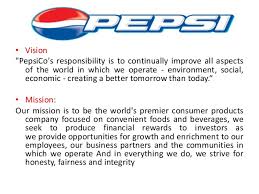
Pepsi Co’s mission statement involves its approaches that are geared towards increasing the value of its shareholders investments through sales growth, wise investment of its resources and cost controls (Gjurovikj, Pp. 482-488, 2013). The company also believes in the fact that it core success lies upon offering value and quality to its customers and consumers by providing products that are wholesome, safe, efficient, economical, and environmentally sound through a fair return to its investors while also ensuring that the safety standards and integrity are strictly adhered to wholistically.
The company in its mission and vision statement categorically focuses and pursues avenues of not only achieving profits and success, but also considers the welfare of its company’s stakeholders and its end consumers (Matwiejczuk, Pp. 265-275, 2013). It is imperative to also realize that the company links its mission and vision statements into its achievements that can be gained through their sales growth, wise investment, and through the control of costs. The vision and mission statements of this company therefore define its nature as well as what it stands for, a factor that gives the authentic image of its operation in achieving its purposes in the market.
Linking the Companies Strategy with Individual Performance
Pepsi Co companies strategy as indicated in their mission and vision statements is not only in achieving and making goals like to maximize on their profits and improving services for its people but one that motivates its staff in understanding the companies mission and vision. Through this, the staff members are motivated to get involved in achieving the set goals in a collective approach that incorporates all the individual performances into achieving targets (Matwiejczuk, Pp. 265-275, 2013). In pursing the mission and visions of the company, there has to be individual performances incorporated. For instance, when PepsiCo decides to achieve an increase in its market share by 10% on its products, it can quickly think of using advertisements, exports of its products to other markets, promotions, the improvement of the quality of its brands and reducing the prices of its beverages. However, when the staffs who act as the individual performers are not involved in this process, the company is likely to face hitches in its initiatives however how good strategies they have.
Visions and Mission Statements into Individual Performance
It is significant to realize that before an organization the like of Pepsi Co’s mission and vision statements can have an impact on an individual performance, it is vital that the companies employees embrace the values that the organization upholds with the aim of making them understand their employee mission and treat it as integral within the business (‘Pepsi Co Case Study’ Pp. 1-5, 2007). By just publishing some feel-good statements in the name of a mission and vision statement on the employee’s handbooks does not necessarily infer that the employees have understood the essence of the companies’ mission.
It is critical that employees take the ownership of the mission and vision statements as it is their own and that describes their job description, a factor that makes it simpler to communicate and conduct the mission of the organization in every sphere of the employee’s responsibilities (Sarmiento, Shukla, & Izar-Landeta, Pp. 64-76, 2013). In the event that a company desires to achieve success in its processes, they should develop employee mission and vision statements and communicate them accordingly in order to affect their individual performances and standards. The mission and vision statement have the impact of affecting the performance of individuals since they act as performance standards. In order to determine individual performances and how the mission and vision affects then, it is important that the employees of a company quantify the missions and visions of a company.
The Extent in which the Mission and Vision Statements are Developed
The mission and vision statements of Pepsi Co are developed through the use of environment and some other key functions on the corporate responsibility levels. In this account, the company pursues and maximizes on the potential market opportunities that open doors for it, a factor that forces the company to reflect on ways on reaching such markets (Sipek, Pp. 22-25 2015). The company has showed commitment to social responsibilities through developing a mission that supports sustainability, in delivering growth by investing in a future that is health by protecting the environment.
The company for instance has launched recycling machines which recycles waste products in different areas such as kiosks, gas stations, public parks, stadiums and so on. This is in line with the advancements the company makes in the participating in Corporate Social Responsibility. Culture also plays a role in influencing the company’s ethical position. This infers to the manner in which people manage, behave and think in approaching their businesses daily. The company’s operations are therefore affected by this mores and norms
Conclusion
Pepsi Co today is considered a leading brand name within the soft drinks industry operating in Australia. The company’s has expanded its products into international markets such as the United States of America, Japan, and Eastern Europe among other states. Pepsi Co’s mission statement involves its approaches that are geared towards increasing the value of its shareholders investments through sales growth, wise investment of its resources and cost controls (Zenger, Pp. 52-58, 2013).
The company in its mission and vision statement categorically focuses and pursues avenues of not only achieving profits and success, but also considers the welfare of its company’s stakeholders and its end consumers. Pepsi Co companies strategy as indicated in their mission and vision statements is not only in achieving and making goals like to maximize on their profits and improving services for its people but one that motivates its staff in understanding the companies mission and vision. It is therefore significant to realize that the functions and operations of the company are guided by its mission and vision statements.
References
Gjurovikj, Ab 2013, ‘Knowledge Management As A Competitive Advantage Of Contemporary Companies’, Proceedings Of The International Conference On Intellectual Capital, Knowledge Management & Organizational Learning, Pp. 482-488,
Matwiejczuk, R 2013, ‘Logistics Potentials in Business Competitive Advantage Creation’, Log Forum, 9, 4, Pp. 265-275,
‘PepsiCo Case Study’ 2007, PepsiCo Case Study: Taking Advantage Of Changing Market Conditions, Pp. 1-5,
Rowan, C 2013, ‘The World’s Top 100 Food & Beverage Companies: Repositioning For A New Global Environment’, Food Engineering, 85, 9, Pp. 64-76,
Sarmiento, R, Shukla, V, & Izar-Landeta, J 2013, ‘Performance Improvements Seen Through The Lens of Strategic Trade-Offs’, International Journal of Production Research, 51, 15, Pp. 4682-4694,
Sipek, S 2015, ‘A Global Vision: Leading PepsiCo’s Learning Evolution. (Cover Story)’, Chief Learning Officer, 14, 3, Pp. 22-25,
Zenger, T 2013, ‘Strategy: The Uniqueness Challenge’, Harvard Business Review, 91, 11, Pp. 52-58,
We can write this or a similar paper for you! Simply fill the order form!
Business Communication Research Studies Order Instructions: I want two pages with college grammar
W6 Assignment “Research Studies”
Business Communication
Research Studies
Please answer both parts of the question:
Business Communication Research Studies
Part 1
Prepare a one-page description of your plans to solve the problem for one of the following research studies. Use the following headings for the problem:
Statement of the Problem
Research Method and Sources of Information (BE SPECIFIC)
Nature of Data to Be Gathered and Analyzed
Hypothesis or Hypotheses to Be Proved or Disproved (if feasible)
Here are some ideas to get you started:
a. Investigate a problem occurring on your campus (e.g., declining enrollment in some majors, increasing tuition, delayed financial aid payments, the high cost of textbooks, or closed classes) or in a job or student organization position you hold.
b. Superior Foods, Inc., is considering adding organic versions of its frozen vegetables in an effort to establish itself as a leader in this fast-growing market. To increase its available supply of organic produce, management recognizes the need to assist local growers in adopting organic farming methods. The first step in this process is to recruit experts in organic farming to design and implement training.
c. Rainbow Pool and Spas initiated a website to provide answers to frequently asked questions and product-update information. Customer response has been outstanding, freeing up the company’s toll-free telephone lines for calls about more technical, nonrecurring problems—a primary goal of the service. As a marketing manager, you are considering the possibility of starting a corporate blog and a microblogging site on Twitter to strengthen your relationship and communication with customers.
d. As branch manager of a bank, you are faced with the task in a sagging economy of reassuring customers of the solvency of your institution. Your current strategies for casting a positive light on negative performance indicators don’t seem to be effective.
Part 2
Select the most effective graphics means of presenting the following data. Justify your decision.
a. Data showing the growth in the number of companies offering employees paid time for volunteerism over a five-year period
b. Data showing the number of downloads from iTunes by media type (music, books, and TV segments) for the past quarter
c. Data showing the percentage of organizational projects that are delayed, on time, or ahead of scheduled
. Growth in credit card debt over the past four years by state
e. Data showing the relationship of the functional areas of a company from the CEO to the vice presidents to the line supervisors
f. Predicted unemployment rate in regions of the U.S. for the year 2015
g. Instructions for conducting interrogations of employees suspected of committing fraud
h. Figures comparing the percentage of warranty claims of a company’s three product lines for the past four quarters
i. Data showing the number of people utilizing the portfolio option of a financial investment firm’s website. The data should depict the number of portfolios opened by investors in five age categories during each of the past four quarters.
j. Graphic tracking the progress of a product development team working on a new refrigeration product for a 2013 launch date
Business Communication Research Studies Sample Answer
Business Communication
Part 1
Statement of the Problem
Leaders in university students’ bodies provide an opportunity for the young people to prepare for future leadership roles in the government and other institutions. However, leadership at this level does not lack issues and wrangles that affect the performance of student leaders (Harper, 2013). Lack of communication and conflict of interest is a major problem that I have experienced in my role as a leader in the university. Some of the leaders have vested interests that they pursue despite committing their skills and efforts to the welfare of the students (Asmawi, Zakaria, & Wei, 2013). There is as well poor communication among leaders something that has made it difficult to execute the mandate of the office and to agitate for the issues and concerns of the students.
Research Method and Sources of Information
Research method that the study will adopt is qualitative. The researcher will gather information using structured interviews to establish the problem under study. Therefore, the sources of information will include sampled student leaders. Furthermore, the researcher with gather information from secondary sources such as books, journals, and manuscript and news article to find insights on the topic of leadership.
Nature of Data to Be Gathered and Analyzed
The nature of the data to gather and analyze is descriptive. The information will be coded to allow analysis. Descriptive information is as well easy to understand hence, the reason for using the same.
Hypothesis or Hypotheses to Be Proved or Disproved (
The three hypotheses that will need approval or disapproval are:
The cause of poor communication is the lack of effective leadership
Leaders at the university have not put at heart the plights of their fellow students
Vested interest contributes to the conflicts and wrangles frequently experienced among student leaders
Part 2
There are different ways of presenting data using graphs. Some information is understood better if presented in different forms and therefore it become prudent to make a decisive decision about the kind of graph to present a specific type of information (Ruiz & Mario, 2013).
Line graphs are appropriate in presenting the growth of companies that offer employees paid time for volunteering over a period of five years. The reason why they are appropriate is that they are easy to visualize and draw. They are as well show how fluctuations have been over the five years making it easier for the users to gain deeper insights into the situation.
Effective graph for (b) is the pie chart. Using a pie chart will help to provide the percentages of iTunes download by various segments. It is a good way of summarizing information to enhance easy understanding.
Pie charts are as well appropriate for showing the percentage of delayed, on time and ahead of schedule projects. They provide a good summary of such projects hence it becomes easy to understand the information.
Data on growth in credit card debt by the state in the last five years can be presented using a table. The tabular form will provide this information well and this will make it easier to trace the growth.
Flow charts are appropriate to illustrate relationships that exist between the CEO, the vice president, and the line supervisors. They are effective because, they enhance understanding of the relationships that these three have. An individual can easily trace the relationship by observing the flow chart diagram.
To predict unemployment, the best graph to use is line graph because they display data variables as well as trends to help in making predictions about information not yet recorded (Mas.ncl. 2015).
A time schedule is appropriate when providing instructions for carrying out interrogations of those employees suspected to have involved in a fraud. It will clearly provide the time lines to perform very specific tasks hence, ensure time management (Mas.ncl. 2015).
The best graph for (h) also comparing warranty claims for three companies is the use of histograms. They will provide an easy way to compare the three companies warranty claims.
For (i), the best form to present such information is a table. A table will provide a succinct summary on the portfolios opened by every age category in the last four quarters.
For (j) progress of a product development, a line graph is the most appropriate. It will show the stages or the progress over a certain period hence enhance easy tracking.
Business Communication Research Studies References
Asmawi, A., Zakaria, S., & Wei, C. (2013). Understanding transformational leadership and R&D culture in Malaysian universities. Innovation: Management, Policy & Practice, 15(3), 287-304.
Harper, S. (2013). Who said leadership was easy? Industrial Management, 55 (6), 20-25.
Ruiz, E., & Mario, A. (2013). Is It Possible to Apply Multidimensional Graphical Methods in The Teaching and Learning of Economics? Contemporary Economics, 7(4), 123-138.
Note: To prepare for this essay please read the required articles that is attached then answer the following questions:
Topics
•The importance of performance management
•Reward systems and their purpose
•The role of performance management
•Characteristics of a good system
•Integration with other HR activities
Which features of the system implemented at Network Solutions correspond to what were described in the selected weekly reading as ideal characteristics? Identify characteristics that are missing from the system at Network Solutions.
Added thoughts:
In your essay consider the topics for discussion this week. Our text lists a number of key characteristics such as strategic congruence; encourage a thorough and continuous evaluation process; results will be used to make important decisions; expectations of employees are clearly communicated; discriminates among high, average, and low performers; encourages ongoing communication between manager and employee, etc. What might be the most important? Can these characteristics be weighted as to what is most important, second, etc?
Also,
1) The answer must raise appropriate critical questions.
2) Do include all your references, as per the Harvard Referencing System,
3) Please don’t use Wikipedia web site.
4) I need examples from peer reviewed articles or researches.
5) Turnitin.com copy percentage must be 10% or less.
Note: To prepare for this essay please read the required articles that is attached
Appreciate each single moment you spend in writing my paper
Best regards
SAMPLE ANSWER
Introduction
Competitive pressures that exist in the international business environment are compelling most companies to adopt new and progressive ways of managing human capital. Strong emphasis is being placed on performance management systems (Pulakos, 2004).
Performance management entails joint teamwork between management and employees in reviewing, monitoring and planning overall work objectives and its contribution to organization development.
Effective performance management results in clear job classification and enumeration of responsibility and employee expectations. Performance management enhances productivity for both individuals and group while also developing individual employee capabilities that makes it possible for employees to realize their full potential through effective feedback systems. Performance enables the organization to integrate the organization goals and the employees expectations by aligning the company’s core values, strategies and goals together with the employees goals (Hillgren & Cheatham, 2000).
Performance management provides a basis for making critical human capital decisions for example decisions on pay increment and reward systems while also improving effective communication between the management and the employees.
Performance management is a critical tool in successful companies and other high performing companies and it’s also one of the most important responsibilities for managers.
Performance management can be used for decision making mostly relating to promotions, transfers or pay increases or for development purposes and which relates to job training, evaluations and mentoring.
Reward System
Reward systems are applied to motivate employees to be more productive and committed to the company’s goals and objectives. Reward systems are mostly classified into two basic categories. These are financial and non financial reward systems. Financial or extrinsic rewards relate to individual merit which is solely dependent on performance while non-financial rewards (intrinsic) include development, recognition, career guidance and other forms of schemes that target non financial benefits to employees. The debate is basically whether the two systems draw the same effect on employees or if one of them is better that the other but main role of good reward system is to motivate the employees to continue working hard for the organization, boost their morale encourage them to be more productive (Lado & Wilson, 1994).
The role of performance management
The role of performance management is to provide the basis for decision making both in other decision making efforts and developmental purposes. Performance management assists in making decisions that affect the employee pay structure and bonus compensation while developmental performance involve staff training, transfer, promotions and development training (Hillgren & Cheatham, 2000).
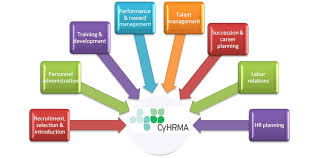
Performance management is practically the foundation of HR human capital management. It provides the policies and procedures for hiring and terminating the services of the employee including the procedures for promoting and review of salaries and other staff remuneration. The performance management system (PMS) coordinates the functions of the HR department regarding staff performance.
Characteristics of a good Performance Management system
Strategic and Context Congruence
The major characteristic of a good performance management system is that it must contain staff input in order for it to attract the cooperation of all the staff in the organization. The goals of the organization and those ones of individual employees should be aligned so as ensure that the company is moving in the right direction for the interest of both parties i.e. the organization and also the employees besides it should also be and be congruent with the norms that are based on the culture where the organization is located (Pfeffer, 1994).
Thoroughness, Practicability and effectively communicated
The performance management system should include all employees. The performance measures that are applied in performance management should be practical and acceptable to all employees. Performance management should utilize performance measures that are consistent, reliable, free of errors and effective. The performance management systems should be perceived as fair by the employees in terms of practicability in order for it to acceptable by all the employees. The system should also have adequate system of communication together with an inclusive way of communicating with all the employees.
Meaningfulness and Reliability
Employee evaluation should regularly take place at specific intervals and which employees ae aware of. Performance management system should also provide the skills necessary to develop the evaluators as the results of the exercise are used to make critical management decisions hence they should be accurate and reliable.
Efficiency
The PMS should be able to identify the effectiveness of the system for the behaviors of the employees. Systems that result in staff ineffectiveness should be re-evaluated and adequate steps taken to reverse any negative effects on the system.
Acceptability and Fairness
The whole system should not only be fair but must also be perceived to be fair by the employees. For the employees to be effective, they should have the right attitude in order for the to be productive and effective.
Correctability
The system should have a process that they can appeal to incase of unjust reactions from the management. The process will create more trust for the system among the employees. Employees whose services have been terminated can seek redress and appeal against decisions that may be seen as unjust.
However, the whole system should have effective checks and balances to ensure that before the management takes drastic action against employees then all the channels have been exhausted. For example, before the services of an employee is terminated several warnings must have been communicated to the employee including sessions of counseling, retraining, transfers to other departments and termination should be the last option.
Integration with other HR activities
The functions of performance management system and human resource activities actually overlap. Performance management is more involved in performance of the employees and the methods of evaluating and measuring the output of the employees compared to the expected performance. Employees are constantly evaluated to ensure that their productivity is at par with the management’s standards (Schuler, 1992).
Human resource department major roles of staffing and development of manpower including staff promotion, transfers, terminations and reward system are effectively managed under a good performance management system. Innovative human resource management systems include systems of performance management. Traditionally the human resource department was mostly concerned with personnel duties in most organizations but currently the major functions include getting the right employees for different jobs while at the same time providing training, experience, motivation and also ensuring that the employees have the right attitude for the job and is well oriented with the requirements of the employment environment (Collis & Montgomery, 1995). The relationship between the employer and the employee can be described as related to principal-agent relationship and the human resource obligation is to ensure that the relationship has competitive advantage over other competitors just as much as the functions of performance management are supposed to be bring out the best from individual employees.
References
Collis, D.J., 7 Montgomery, C.A. (1995) competing on Resources: Strategy for the 1990’s, Harvard business Review, pp. 118 -128
Lado, A. A. & Wilson, M.C. (1994) Human Resources Systems and Sustained Competitive Advantage; A Competency-based Perspective, Academy of Management Review, 19, 699 – 727.
Pfeffer, J. (1994) Competitive Advantage through People, Boston: Harvard Business School Press.
Schuler, R.S. (1992) Strategic Human Resource Management: Linking People with the Needs of the Business, Organizational Dynamics, 22, 19 – 32.
Hillgren, J.S., & Cheatham, D.W. (2000). Understanding Performance Measures: An Approach to Linking Rewards to Achievements of Organization Objectives, Scottsdale, AZ: Worldatwork.
I am writing to apply for Operation Manager Job in relation to the advertisement made in the local job website due for a career in this successful Microfinance institution.
I am a focused and highly industrious citizen in Business Management. As outlined in the job specification, I will focus on all the details that revolve around micro finance. Part of the subjects that I will deal with is Relationship oversightwhich includes the effect of the technology and economic trends on consumption, savings and wealth.
It would beagreat opportunity to work in your company as it will help nurture my skills in the market, am available any time for interrogation or verification.
I appreciate your time and hope to hear from you soon.
Yours Sincerely.
RESUME
CAREER DESCRIPTION
I am an ambitious, organized, focused and ready to learn and goal oriented young professional eager to overcome stiff competition to achieve the best possible results in my work.
I am also committed to continuouspersonal development, am creative and innovative with strong personal integrity and work ethics. I have excellent communication and interpersonal skills and also leadership and team work skills.
ACADEMIC QUALIFICATIONS
I am currently pursuing my degree certificate in Business. Besides, I have pursued studies in financial management and public leadership.
WORK EXPERIENCE
Worked with financial institutions where I dealt with
Growing high quality small micro enterprise portfolio.
Managing all client financial relations.
Referees
Principle
School of business
Interview questions
What are your short-range goals?
I am passionate about continuous human interaction and the satisfaction that comes as a result of offering help. I love serving people and therefore I want to part of this company in serving people since I think you guys are doing a great job.
Where do you want to be five years from now?
I am not sure about what the future holds for me. However, am certain that this position will offer me an opportunity and experience in guiding me to make an informed decision.
What special skills do you have?
I have financial skills besides management skills which I believe will help me become more productive in this position.
What kind of job are you most interested in?
I am interested in a job that directly impacts on the lives of other people. Consequently, this will help me work diligently knowing very well that am touching someone’s life somewhere.
What characteristics do you feel are most important for this job?
Leadership
Good leadership will ensure respect and results from both within and outside the business fraternity.
Hard work
So as to realize profits, the position requires dedication.
What is your greatest strength?
Performing well under pressure
I work well under pressure so as to satisfy needsof customers who are the first priority.
What is your major weakness?
I am a perfectionist. I always want to achieve the best in everything that I do.
8. What were your most important achievements in your last position?
I managed to reform performance of the organisation I worked for from a loss making institution into a high profit making institution.
9. Tell me about yourself.
I am pursuing a degree in financial accounting. In addition, I have managed to study business management and leadership.
10. Why do you want to work for this company?
This company stands out as the best financial institution. Over the last five years, it has attracted public interest because of its good customer care relation and service delivery.
11. What kind of recommendation do you think you’ll get from your previous
employer?a very successful leader in my leadership capacity. This is because, over my tenure as an employee in this company, I increased its annual turnover.
12. How do you feel about overtime?
Overtime is one way of encouraging and motivating employees work even within extra hours. It is therefore a good way of increasing production in a company.
13. How long would you stay with us?
I think this is the peak of my career and the beginning of good things. I am here to stay and deliver services to the people.
Why should we hire you?
I am a qualified accountant with a lot of passion in delivering service. My hard work record speaks for itself. If you hire me, I believe I will propel this company to greater heights.
15. Define the following:
Cooperation
Cooperation is the process by which a group of people work together in harmony so as to achieve a common objective.
Responsibility
Responsibility is a situation whereby people within a given organization or institution is answerable in whatever thing they engage in.
Challenging
Challenging is the process by which someone engages in new fields with the main aim of exploring new ways of doing things(Yate & Yate,2012.14).
i have done the Title Page and Executive Summary and Table of Contents, can u help me to finish the following parts?
the topic is PROMOTION PLAN of YUMYUM BLUEBERRY MUFFIN
thanks
SAMPLE ANSWER
PROMOTION PLAN
Promotion refers to raising the awareness of the customer about a brand of products, creating sales and generating loyalty to the particular brand of goods (Hanssens et al., 2014). In this promotion plan, we aim at creating sales, brand loyalty and making customers aware of the YumYum blueberry muffins. The promotion plan has various aspects that have been incorporated into the plan over an extended period of business years. In today’s world, it is customary in the enterprise community for one to execute a well-structured and laid out promotion plan. This can be achieved by gaining insight into many business aspects. The crucial business issues include sales, target market among other things. A promotion plan is a fundamental element of the marketing mix. The marketing mix has four essential elements which include Promotion, price, place and the product (Hanssens et al., 2014). There is also the element of the production mix that goes hand in hand with the marketing mix.
The blueberry muffin is a snack. A snack is usually taken when one is hungry but has no way or does not want to take a full meal. Snacks have become part of the modern people eating routines. Snacks are popular because they are tasty, light weight and takes a little time to eat. Thus, the blueberry muffin, which is a baking product, will have a larger market share if marketed well. After successfully promoting the product I believe it is going to achieve optimum if not maximumsales that haveneverbeenachievedbefore with anyothertype of muffin.
I have analyzed our competitors in the market. The results of the analysis gave me many insights on what competitive advantage we have over our competitors concerning this new product. The muffin has a richer taste, and the customer will know it is yummy just by looking at it.
I went to a cake shop just to have an idea of the target market for the muffins.
The target market that I realized is a wide variety of people mostly offices and schools. The most foreseeable target was moms, especially moms with birthdays and small gatherings. I learned from the little research I did by visiting some cake shops to have an idea of just who they were serving.
The location is also another factor when promoting this type of product. If the selling point for the muffins is located near schools, offices and neighborhoods,then sales for the product would rise greatly. Setting of a shop at precise locations near the target markets is an excellent way to promote the blueberry muffin as this will amount to more and more sales of the product.
Sales promotion can be done by creating sample tasting points in busy malls. It is a good way of promoting sales by giving a taste of the product and then let the consumer decide for himself or herself(Yu & Y. C. (2013).When the client is pleased, it will prompt him or her to buy the product. Then they may even tell their friends about the product. As we now there is no greater way of advertising than word of mouth.
Coming to the advertising part, some advertising methods can be used. The most appropriate include television and radio commercials and online advertising. Television commercials are one of the best way of promoting a product. It is so because a visual message is better than only audio. Also considering the impact of the internet in the business market, online advertising will serve the promotion of the product greatly.
Considering the promotional budget of 550,000 dollars, the promotion of the product is going to be successful following the set plan.
In conclusion, a good promotion plan like the one above needs to be implemented carefully as the food industry is a delicate one and very lucrative. Publicity must be positive, any adverse publicity may result in the lowering of sales thus hindering the success of promoting the Yum Yum Blueberry Muffins.
References
Hanssens, D. M., Pauwels, K. H., Srinivasan, S., Vanhuele, M., & Yildirim, G. (2014). Consumer attitude metrics for guiding marketing mix decisions. Marketing Science, 33(4), 534-550.
Yu, Y. C. (2013). Performance of Food and Beverage Department Promoted through Promotion plan. IJACT: International Journal of Advancements in Computing Technology, 5(6), 160-166. http://www.globalcis.org/ijact/ppl/IJACT2487PPL.pdf
We can write this or a similar paper for you! Simply fill the order form!
Imagine a product that might solve a common problem in your industry of interest. Write a sales letter using Monroe’s Motivates Sequence, TARGETING a potential buyer of the product. The letter should be written in standard business format using clear, concise and compelling language, and professional writing skills. In a paragraph following the letter, explain your approach in terms of word choice, audience focus, addressing potential opposition to your product, and your appeals
Despite advancement in information technology, survey show that companies lose billions of dollars in online advertisements. Some of these companies close down because of huge losses resulting from huge expenditure on advertisements. I wonder how comfortable they are out of business or making losses.
Utilization of traditional forms of advertisements requires both financial and human labor. This form of advertisement therefore requires huge investments instead of helping companies generate profits.
Resistance to accept and adopt new technology caused tremendous losses in a company in our state last year. I am here to ensure that you are not part of next year’s statistics.
Every company needs to make profits and reduce on expenses. Change is gradual. It is adopted progressively until it becomes a norm. A rival soft drink company lost over 2 billion dollars as a result of traditional marketing strategies. The online application technology am introducing is cheaper and will save you more than 10 billion dollars annually. A soft drink company in my state is currently using the application and has doubled its annual turnover.
Continue using this old technology for your online advertisements and you will collapse the company due to losses. Consider yourself being nominated the best Company in the region if you adopt this new application.
I have organized a company tour after tea break. Everyone is invited to come with us. Your opinion will really help us identify areas that need immediate improvement. If you will be unable to attend this morning, I have left some pamphlets and business cards. Feel free to call me with inquiries, concerns, and contributions (Livingston, 2010.23).
if the markets price is kept below the equilibrium price by a regulation what does the demand and supply model predicts about the gap between quality demanded and quantity supplied? if in the real world there is a gap between quality supplied does it necessarily imply that a regulation is keeping the market price below the equilibrium price.
SAMPLE ANSWER
Demand and Supply Models
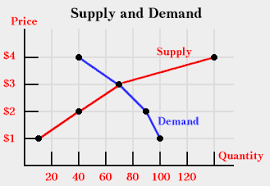
Market price is among the factors that affect the demand and supply of goods in a business environment. Usually, low market price would mean that more consumers are able to purchase a product and therefore, the demand of the product would be relatively high. With time however, changes may be noted in the relationship as demand would eventually decrease as more consumers get the product. Supply of the product may be inadequate with the increased demand. Therefore, a situation would arise where the demands starts at a high figure but decreases, and supply on the other hand would start at a low figure and increase with time.
Lee noted that demand is increased with reduced prices (Lee, 2015, Pg. 5). The gap between quantity demanded and quantity supplied would progressively decrease so as to approach a state of equilibrium. The opposite would happen with high market price. With reduced market price, the market would abruptly increase but upon reaching a certain threshold, it would be maintained constant and with time it would start decreasing. Demand and supply would always tend toward equilibrium. When either of them is increased, the other would be decreased and vice versa. In this case, low market prices increase the demand but lower the supply of the commodity. Therefore the two would take opposite trends as they approach each other.
In most situations, the rate at which supply of a commodity is reduced is the inverse of the rate at which demand is increased. It should be noted that tendency to withhold the market price by a regulation would eventually hurt supply. Such a regulation is necessitated by a situation of too high demand while supply is still at normal levels. In such a case, consumers need a commodity and the commodity is available at the market but most likely, the price is too high and does not confer with supply and demand.
I will email you other related documents later.
Please do the assignment.
Thank you for the discount.
SAMPLE ANSWER
Berkshire Hathaway International Insurance Company
Abstract
Berkshire Hathaway International has succeeded in branching itself enormously since its beginning. The company started as a textile company, and currently is has been able to dominate almost every sector in the business world. The focus of this paper is to address the impacts that can result when a new CEO replaces Warren Buffett. The paper will address how the new CEO will ensure that the success of Berkshire Hathaway is sustained. The paper conclude by emphasizing that a succession plan is a crucial aspect to ensure that investments are fostered as well as making sure that subsidiary companies are controlled effectively. The succession plan will revolve around HR branding, selection for the future, and creating a culture for the future.
Introduction
Who will become the next CEO (chief executive officer) at Berkshire Hathaway remains one of the million-dollar questions being asked by many corporatists. This is after Warren Buffett (the now CEO of Berkshire Hathaway) announced in 2010 that his position will be succeeded by team composed of senior CEO and approximately four key investment managers. He critically pointed out that, the newly selected managing team would have each of its members being responsible for an impeccable part of the company’s investment portfolio (Avolio, Fred, & Todd 2009). By the fifth month after Warren announced the statement, Berkshire Company gave that Todd Combs, who was then manager at Hedge Fund Castle Point Capital, would become one of the investment managers. Four months later, the company suggested that the fifty years old Ted Weschler (from Peninsula Capital Advisors) would also join the team of investment managers. The bigger question was who was to become the CEO, and Warren gave a slight relief to most Americans by giving a suggestion that, the CEO had been internally chosen, but was publicly unnamed. This was a suggestion that received a lot of criticism from business analysts who contended that the succession plan by Buffett lacked an exit-strategy, and that it often leaves a firm with lesser long-term alternatives. Therefore, the critics try to recommend successful CEOs should not be allowed to choose their successors. Therefore, the following paper will engage in portraying how a succession plan for Berkshire should look like by discussing several issues involving business process. A flow chart demonstrating an organizational chart with possible development career paths from a low-/entry-level position will conclude the discussion.
Part 1
Berkshire Hathaway HR branding
Recruitment strategy
HR branding involve all those processes aiming at altering human resource practices of company such as training recruitment, and compensation to perfect succession planning. Based from the stressed indication that the next CEO will come from the top-most portfolio companies, the most indispensible recruitment strategy for this position as well as for the investment managers is the use of poaching. Poaching can only be perfected if referrals are used together. Already, candidates for the position of Berkshire Hathaway’s next chief executive embrace the leaders of GEICO, and BNSF BNSF, and Berkshire Hathaway Reinsurance,. Considering this factor, what remains is just to confirm the best among the three to succeed Buffett. Using referral on poaching, several qualitative aspects of the candidate will be given by those who know each one of them. Even before interviews are scheduled to capture the personalities of the candidates, getting their attributes from the board at Berkshire will guarantee that next CEO of the Berkshire Hathaway will be of the employee’ most preferred candidate (Sosik & Jung 2010). Borrowing from the fact that Buffett is one of the most inspirational leaders, the next CEO therefore ought to have extra personal values. Such characters as longevity, frugality, and benevolence can only be observed and given by those nearest to the person (candidate). These qualities, which have made Buffett, excel in insurance, selling cars, and selling houses ‘are needed by the incoming CEO to exemplify the same’ (Bennis & Joan 2010). The efficacy of poaching is that it reflects the generic skill set of an applicant, which is not specific to the company. Poaching is more readily productive to the apprentice model (which gives promoting somebody within the organization to CEO level) as it is disastrous in practice. This is because the former CEO keeps mentoring the new CEO. Bennis & Joan (2010) and Sosik & Jung (2010) gives that the apprentice model creates the impression that the new CEO is still incompetent to handle the position thereby undermining his authority. The other reason why poaching is the best recruitment strategy is that Berkshire Hathaway is changing its business to consumer branding. Berkshire Hathaway under Buffett’s management has been re-branding the energy companies, certain insurance holdings, and real estate brokerages using the Berkshire Hathaway name. Therefore, launching a consumer brand with a global target will attract celebrity endorsement. The rationale behind celebrity endorsement on Berkshire products is meant to assist consumers to absorb that the brand is all about borrowing some qualities from their celebrities.
Diversity and legal consideration
Although poaching seems to be the best strategy for recruitment at the Berkshire Hathaway for the excellent succession planning, the method most of the times lead to lack of diversity and management issues at the workplaces. This is because practices such nepotism, which is the preference for hiring a relative of the current employee and decrease diversity in an organization is felt. Diversity at Berkshire therefore should aim at getting the right candidate who can add intellectual diversity and cultural opulence to personal attributes correlated to the HR branding. This condition of non-diversity is most likely to develop at Berkshire Hathaway as it is projected that Buffett is more likely to pick his son (Howard Buffett) as his successor (Sosik & Jung 2010). Taking into focus that Warren is eying his son to be his successor, it might raise many legal issues. Therefore, legal considerations have to be put in place to promote diversity at Berkshire Hathaway as far as HR branding is concerned. Relevant employment laws and standards strive to ensure that human rights are protected at work places irrespective of color, race, religion, or any other personal attributes. The laws also aim at guaranteeing equal treatment of candidates during recruitment with outlining legal rights of employees.
It can be stressed that legislations does not necessarily entails compliance to the laws, but nurturing a culture of acceptance in the workplace. Therefore, any appointment and recruitment should be approved and welcomed by all the concerned parties. Considering that there are mild conflicts with Berkshire of who will be the next CEO and investment managers, legal considerations have to be taken with keen. The Employment Equity Act, for instance, can help Berkshire to see that it gets the right candidate to be the CEO of the company (Sosik & Jung 2010). Other ACTS that can work for Berkshire Hathaway comprises of Equality Act 2010, Work and Families Act 2006, and Equality Act 2006. These Acts unanimously gives provisions that underline the prohibition of discrimination in employment (comprising recruitment and selection methodology) to aspects of race, nationality, sexual orientation, and religion and belief. Talking about sexual orientation is a sensitive matter towards Berkshire HR branding. This is because it clearly gives that the next CEO will automatically be a man (Avolio, Fred and Todd 2009, p. 432). This is against legislation regarding recruitment, which prohibits such kind of selection. Both males and females should be treated fairly and equally. For that reason, Berkshire can attract and retain the best candidate who is most competitive during this process of HR branding. Moreover, to fulfill a responsibility to treat candidates ethically and confidentially, the company should make available a search environment that respects the dignity and rights of all people. Berkshire should also put aside all personal agendas, biases, or political statements to give a justified evaluation to each candidate. Taking into account there is rivalry at the company regarding the successor of Warren Buffett, all the recruitment members should disclose all conflicts of interest to each other. Berkshire Hathaway can only achieve its goal in getting the right candidate by its members representing the company as a whole rather than group stakeholder.
Part 2: Selecting for future legal and ethical concerns in succession planning development
Selecting for future entail consolidating those products from HR branding to a common pool where a company will have ample time to pick the next successors easily. A successful succession planning will promise that the board at Berkshire Hathaway will have a better understanding and absorption of the skills and competencies mandatory to lead the company. Apart from this importance, the board will also enjoy a massive position in deciding whether to choose an insider or an outsider to head the company. On top of that, succession planning will assist in determining the ideal qualifications that are needed one to be the next CEO of Berkshire Hathaway international (Bennis and Joan 2010). In short, a successful succession planning provides the board with insights in making informed decisions among prospects and dilates its portfolio of alternatives. However, legal and ethical issues arise during succession planning. One of the ethical issues that arises is that a lack of board preparedness.
The lack of board preparedness Bennis and Joan (2010) can be correlated to the emotions prevail during succession planning. By now, there are minor conflicts and disagreements over who will be the next CEO to succeed Warren Buffett. Although there is an announcement that the CEO has been determined, failure to name him has raised many confrontations between board members. Some of the board members feel that Warren is making his appointment based on emotions or feelings rather than on competencies. The board also suggests that Buffett might be silent all this period about his successor due to the main precipitation of his son becoming his successor. Warren Buffett on his side feels that immediately he leaves his position and hands it to another person, detrimental effects will prevail (Avolio, Fred and Todd 2009, p. 445). That is why he is reluctant to quit his position. The board has been trying acting in response to non-ending media pressures and financial analysts’ inquiry. Therefore, out of emotions, the members will end up choosing a famous person rather than engaging in a holistic examination of particular traits, experiences, and competencies related for the post.
The second ethical issue that can arise from succession planning is a critical lack of knowledge regarding what works and what does not work. This can be given by the actions of Berkshire Hathaway projecting that the next CEO will come out of their portfolio companies. These types of CEO are known as prior CEO. What the board believes is that prior CEOs have massive experience during their tenure as heads of other companies. The board also has in mind that prior CEOs have a perpetual excellence in creating shareholder value, and have already established communication connections with investors and security analysts. However, the ethical issue that can arise from such picking is that rather than prior CEO performs better as expected, they result to become worse and act no better. On the other hand, Bennis & Joan (2010) legal issues present themselves in succession planning. One of the legal issues involves employment contracts. In simple terms, any existing employment contract at Berkshire Hathaway must be honored to avoid any employment law disputes after succession. Considering that Berkshire is going to a management alteration, which is one CEO and three to four investment managers, it must take into considerations the provisions given in contracts. Another legal issue, which can also be mirrored in the mirror of unethical factor, is unlawful age discrimination. From a legal perceptive, succession planning should be based on merit. Avoidance of unlawful age discrimination promotes diversity. The tendency of companies filling their replacement with people based on gender race, and nationality can lead to allegations of discrimination.
Skills and talent for a CEO at Berkshire Hathaway
Getting the impeccable replacement for Buffet remains a difficult task for Berkshire Hathaway’s board to decide. Investors, suppliers, customers, and every member of the company focus on the outgoing Warren. Therefore, there is need to capture a CEO with outstanding qualities to perfect the position held by Buffett (Lombardo & Robert 2009). Not only should the board focus on getting the right candidate at this current time, but also to set grounds at which future leaders should encompass. The skills and talents for a successful succession planning should comprise both short and long-term objectives, but not on replacing position. One of the distinguished skills that can be also a talent is the ability to be innovative. This skill is needed in the long-term, as the world today is becoming more and more globalised. Taking into account that Berkshire Hathaway is turning to consumer brands, the next CEO ought to have the skills needed to market these brands in the form of celebrity endorsement as this has become the more stylish, recommended, and accepted forms of advertising consumer brands (Weldon 2008). The modern globalised business is characterized with ‘increasing inflation and robust technological improvement’ calling Berkshire Hathaway to be faced by the rapidly business setting (Birdi, Clegg, Patterson, Robinson, Stride, Wall & Wood). The next CEO and investment managers at Berkshire Hathaway must exemplify the skills and talent to innovate on a continuous basis and deliver a variety of characteristics in the upcoming consumer brands and services in the field of insurance and house as well as car selling. The CEO will demonstrate the skills to anticipate the future and design a set of unsullied methodologies to affectively and efficiently address change and realize profitability in the long-term.
Being an indispensible risk taker is another skill needed for the short term and long-term realization of Berkshire Hathaway international goals. This entails that the prospective CEO must exemplify the ability to calculate risks after engaging in a deep evaluation of probabilities correlated with the profit and losses’ realizations of the decisions made. The next CEO of Berkshire Hathaway must dance to the tunes of the company developing the quest of owning the full of a company. Failure to possess this skill will make the company to lag behind against its competitions (Birdi, Clegg, Patterson, Robinson, Stride, Wall & Wood 2008, p. 469). However, a point of concern is that the ability to take risks should not jeopardize the survival or the overall profitability of an organization, but should be twisted toward increasing the profits of a firm.
The most essential skill that guarantees that a CEO will be productive at this time and in the future is being optimistic by nature. Being optimistic by nature is itself a talent. A CEO therefore must demonstrate the ability to think outside the box and design and formulate strategies that can efficiently solve the problems faced by Berkshire Hathaway. At the same time, the optimistic CEO must inspire the juniors and struggle hard to get through harder times. The ability to take action goes hand in hand with being optimistic (Sosik & Jung 2010). This is because it is when chasing a positive impact that CEO results to unleash an action. Taking action entails taking timely calculated action based on environmental aspects at work. However, this skill is restrained to impulsiveness. Therefore, the next CEO or investment managers at Berkshire Hathaway must not be impulsive, and an action must be constructed after careful thought and analysis. On other explanation, the action should not only be designed strategically to address change, but also on accepting those strategies in a way that they collectively foster the profitability of the company.
The prospective CEO at all cost must exhibit communication effectiveness. No business whatsoever can excel if there exist no convivial communication between CEO, employees below him, investors, and customers. Therefore, a CEO must effectively demonstrate the ability to communicate effectively with fellow employees while at the same time expands ideas and suggestions put forward by his associates. Having excellent communication skills is being correlated to inherence. Birdi, Clegg, Patterson, Robinson, Stride, Wall & Wood (2008) argue that CEO must be an open-minded person with ideas, and accept proposals fronted by the team members, rather than entirely focusing on proposals designed only by him. Communication with diverse people such as investors and other varied stakeholders requires an excellence in vocabulary skills. Having excellent vocabulary promises effective communication with employees that have diverse cultural values as in Berkshire Hathaway.
Humility as well as controlled emotion forms one of the immaculate skills for an effective CEO. Although CEOs should be aggressive in achieving goals, it should not be extended in losing temper when unpleasant issues arise in an organization. Nevertheless, a CEO should not remain rigid in behavior and fall short in pointing out failures that may arise. In short, a CEO should be placed at equilibrium when emotions are on focus (Saba & Martin 2008). This means that the officer should not be angered by small mistakes, but on the other hand, the CEO should not be overexcited by small wins. Rather, the CEO should exemplarily know how to appreciate employees and head them toward the right direction, which ultimately allows them to achieve the corporate aim of Berkshire Hathaway.
How interviews will be conducted
Interviews for a CEO are distinct to those conducted to any other employee of an organization. This is because CEOs are the top-most employees to oversee the operations of a firm. Hence, a comprehensive interview that will address personality issues, cultural richness, and intellectual multiplicity should be enhanced. Getting an excellent CEO at Berkshire Hathaway can only be perfected if structured interviews are conducted. The benefit of conducting this type of interview is that it gives precision and accuracy. This is because the questions asked during the interview are connected to job-related competencies, thereby enabling prediction on the job performance of the candidates (Caldwell. Dixonl, Joe Jonathan & Gaynor 2012, p. 178). Berkshire also ought for a structured interview due to legal considerations associated with it as when they are conducted; they are more likely to be legally defensible. Asking the same questions to all candidates during the interview enhances objectivity. Fairness is also enhanced as one of the ethical considerations as finally consensus on a final evaluation is reached. The following steps give insights about how an interview should be conducted:
Before the interview-, the interviewer should decide what kind of questions to be asked during the interview. Job descriptions, competency profiles, as well as merit criteria should be reviewed at this step (Lombardo & Robert 2009). Information should be made available to the candidates before the interview, giving the location for the interviews, welcoming interviewees for the interview, and arrange matters of accommodation if needed.
During the interview-, the interviewer introduces the interviewer not limited to the format of the interview, expected questions, and recording of the responses. Follow-up questions should be used question after question to enable the interviewer to elicit more data necessary to assess the applicant’s qualifications (Sosik & Jung 2010). Thanking of the interviewee after the interview comes last at this step, as well as giving an opportunity for the interviewed person to ask question.
After the interview- interviewer (s) analyses each candidate’s performance against the qualifications required to perform at that position. By reviewing the responses, interviewers are able to reach a consensus that the best candidate fits the vacancy.
Job descriptions and the flexibility needed for succession planning
Job descriptions provide the flexibility needed for successful succession planning. Job descriptions aim at bringing together the right people and the right job in which possibilities are endless. One of the ways in which job descriptions lead to flexibility in succession planning is by providing comparative analysis. Job descriptions aim at getting the right person for the complete understanding of its supply chains. This can only be realized if the recruiters exhibit the availability of talents and through the organization’s ability to attract these talents. Another avenue in which job descriptions achieves flexibility in succession planning is by talent planning (Chopra & Kanji 2010). Job description has to make a company to be engaged in talent planning whether at division, a unit, or corporate level. Job description aims at retaining good talents in an organization because in the modern day scarcity of talent and cost prevails. The first part of talent planning is talent identification, which mainly deals with looking for skills and competencies necessarily for a transfer. The second part engages the combination of comparative analysis and talent identification to show that the more the scarcer a talent is, the more effort should be garnered to retain and train internally. The third part of talent planning that is an amicable factor in flexibility in succession planning is scenario planning, primarily indispensible to future planning. The more possible future directions given to managers, the more talents are identified and nurtured in a pool of talents (Cameron & Robert 2011). The third way in which job description leads to flexibility in succession planning is by the creation of a pool of talents. Because a company cannot be able to detect and establish what kind of talents it needs over a period, it needs to emerge itself in construction, maintenance, and modification of a pool of varied candidates with a variety of skills. Therefore, the three approaches will make sure that job description satisfy its role in making succession planning flexible.
Part 3: Establishing a Culture and Structure for the Future
Training programs that must be in place and will they be conducted by internal or external providers
After a company has selected the best for future, the remaining thing to do is to establish a culture that there is a repetition of such practice. This is done by considering such aspects as training programs, performance appraisals, and compensation methods. For Berkshire Hathaway, the type of training program depends on the position of the employee. Taking into focus that the trending topic now is on CEO and investment managers, the type of training needed is of concerned. Types of training programs that is appropriate for this group is leadership and management training programs. Leadership training programs will be most appropriate for the next CEO of the company. Having Warren Buffett as a mentor to the upcoming CEO will encompass internal training with internal providers. Internal providers will act as a supervisor to the new CEO to train him or her to identify employee-training needs. Management training programs are also mandatory to the new CEO. The coming CEO, if coming out of the portfolio company, has the skills on how to manage an organization (Connors & Smith 2011). What remains is just introduction to the existing HR departments at Berkshire Hathaway. Management training programs should be provided by internal providers to ensure that the newly recruited CEO have an orientation to the general Human Resources Department in order to continue with the already started succession planning.
How performance reviews can be used for succession planning and training?
Performance reviews, succession planning, and training are intertwined. What this point means is that performance review/appraisal provides a suggestion of employees with leadership prospective as well as with development demands. Therefore, a CEO at Berkshire Hathaway ought to develop programs and interventions, which either offers employees with training or an opportunity to regenerate their skills. Thus, Chopra & Kanji (2010) performance appraisal works as an input to succession planning by spotting those employees with varied or specific competencies that Berkshire Hathaway knows that it will need in the future due to actions of turnover or retirement. In addition, performance appraisal strives to highlight the external factors influencing the demand of new skills. One recommendation to perfect performance appraisal on succession planning is by standardizing the appraisal, to be reviewed, assessed, and analyzed to underline competencies and development demands across all departments at Berkshire Hathaway (Jones-Burbridge 2012, p. 47). On matters of training, performance appraisal gives the CEO with an indication of the gaps between training and development by giving specifics where employees are scoring low on matters concerning the misapplication of technology. This immediately becomes the target area for creation and implementation of training programs, which progressively strive to amplify employee competencies and output.
Which performance review methods would best support succession-planning strategies?
Future oriented performance appraisal method is best for succession planning strategies. One of the methods under this group is management by objectives, which predominantly rates performance against the achievement of goals set by management. It has an advantage of evaluating managerial positions as those of CEOs. Apart from management by objectives, psychological evaluation comes vital when the future target of a company like Berkshire Hathaway is concerned. It is normally done on terms of unstructured interviews, psychological tests, or a depth discussion with supervisors. This type of performance evaluation method majorly focuses on emotional, motivational, intellectual attributes affecting performance of employees. The final performance evaluation method that is useful in succession planning is 360-degree feedback (Martin & Lombardi 2009). The future of Berkshire Hathaway is very important and CEO can implement this method with summarizing performance information on an individual from such stakeholders as supervisors, peers, customers, and team members. The advantage of these appraisals is that every employee is an appraiser to his or colleague. Inter-personal skills, team building capabilities, and customer satisfaction are some of the attributes analyzed by 360-degree feedback.
Compensation strategy and succession planning
Apart from training, compensation strategy becomes one of the indispensable tools in succession planning. Compensation strategy helps to create the effective and competitive firm, and the wrong setting of it destroys a company within the shortest time possible. Direct financial compensation is the ultimate compensation strategy that can best suit succession planning. Increase in direct financial compensation help to induce employees to stay longer in a company. Pay on performance falls under this group and it calls for an increase performance (Lombardo & Robert 2009). Non-financial compensation strategy can also work best for succession planning. This is because, even though there is no monetary value connected to it, the employee feels appreciated by the company. Berkshire Hathaway, for instance, in implementing its succession plan, should create job responsibilities that hold importance to the employees. Employees on this type of scheme are provided with more autonomy as well as provision of prompt and constructive feedback to the employee.
How might affirmative action considerations affect training and development strategies?
A diversified workforce is known to be the one that comprise three principles: affirmative action, equal employment opportunity, and diversity. A company as Berkshire Hathaway will find its training and development strategies being affected by affirmative action considerations. Berkshire Hathaway may be compelled to observe affirmative action to create diversity at the workplace (Algera and Marjolein 2012). Affirmative action will force Berkshire to introduce more training or complex development strategies to accommodate affirmative action. Training and development strategies that can be used to train and develop male trainees cannot work the same to their female counterparts. Therefore, a diverse workforce means diverse training and development strategy (Luthans & Bruce 2009, p. 293). The process of hiring a strong pool of women, minorities, and people with disabilities calls for extensive training and development requirement. This is opposed to well-trained personnel who will only need orientation to the setup of an organization, and start working. Apart from training programs, follow up after training also become expensive when affirmative action is put into consideration.
Summary
Succession planning has been seen as the process by which a business prepares for the unknown future. The future can in some of the times be emergency as the when death of a CEO occurs or a CEO becomes disabled. Hence, there is need to nurture skills and talents and assemble them in a pool so that when such emergencies occur, a company is not caught unaware. Training of employees is very important, and above all, compensation strategy conquers all in motivating and retaining employees. What brings lagging behind in succession planning is the issue of affirmative action, which dictates equality to all people including people with disabilities and women. However, when a smooth succession planning is perfected, a company is promised development.
Berkshire Succession plan
Business and succession detail
Business name: Berkshire Hathaway international
Business structure: Corporation
Current Owner: Warren Buffett
Planned succession type: a CEO who will work together with four other investment managers will replace Warren Buffet. He will be partially removed from the business, and will act as a mentor to the new CEO.
Successor details: the successor will come from one of the portfolio companies. Another prospective successor of warren Buffett will be his son.
Succession timeframe: immediately
Restrictions: the successor will be restrained by Berkshire Hathaway’s principles and policies
Proposed organization structure
Warren Buffett’s successor (CEO)
Todd Combs (investment manager)
Ted Weschler (investment manager)
Vacant (investment manager)
Vacant (investment manager)
Donald Wurster Senior executive management
Randy Zuke (manager)
Bev ward (office manager)
Dick Dalzell (operation manager)
Rob Cunningham (director information and technology)
Forrest krutter (secretary)
Kevin Jackson (network support)
Jennifer Tselentis (assistant controller)
Joe Rieck (treasurer)
Joahnne Manhart (executive assistant tax and internal)
Rebecca Amick (director internal audit)
Skill retention strategies:
The new administration employees will be introduced in a concept of skill retention atmosphere by mentoring and coaching. Roles and responsibilities will be allocated on the type of skills one possesses. Performance appraisal will be done to ensure that current skills still match with the business.
Training programs:
The possible successors will be introduced to leadership and management training programs. External providers will be invited to add more skills on the ones acquired internally through coaching and mentoring. Rather than the company has one vice person, that four investment managers will replace position.
Analysis of the chart
CEO is the top-most officers who make decisions affecting the whole of the firm. In addition, they set goals for the firm and direct the company to achieve its goals on top of managing the daily-to-daily activities of the firm (Chopra & Kanji 2010). The best form of recruitment on this level is internal as due to succession planning, the person to succeed CEO is already chosen or projected. The type of skills and training required for the CEO is both leadership and management training. This form of training should be reinforced by communication skills to perfect the roles at this position.
Investment managers, on the other hand, have the responsibility to carry out the goals set by the CEO. They also have the mandate to assist and motivate the first line mangers to accomplish the objectives of the firm. Middle level managers still need leadership and management skills and training (Luthans & Bruce 2009). They can be poached from other firms or being promoted from first-line managers. Due to succession planning, middle level managers strive to become CEOs one day.
First level managers or first line managers foresee the daily management of line workers. They interact with employees on a daily basis and report to middle level managers. It is very advisable to do internal recruitment to first line managers. They can be promoted from line positions such as clerical and production levels. The production level comprises those employees who execute roles from first line managers. The best avenue to recruit members of this level is by external recruitment (Lombardo & Robert 2009). College recruitment, use of professional bodies, and use of Social media can be used to absorb the qualified personnel to do clerical and production jobs at this level.
Annotated bibliography
ALGERA, PUCK M., AND MARJOLEIN LIPS-WIERSMA. (2012). Radical Authentic Leadership: Co-creating the Conditions Under Which All Members of the Organization Can be Authentic. Leadership Quarterly 23/1: 118-131.
Abstract: Recently, in response to ethical challenges and loss of meaning within business, leadership theory and research has seen a proliferation of literature on ‘Authentic Leadership’. In this paper we argue that Authentic Leadership (AL), in the way it is currently theorized, is in danger of not reaching its stated objectives. We systematically address the “paradoxes” and shortcomings in current theory and suggest an extended focus Leadership Annotated Bibliography Page 18 of study. To do so, we draw on four existential authenticity themes: 1) inauthenticity is inevitable; 2) authenticity requires creating one’s own meaning; 3) authenticity does not imply goal and value congruence, 4) authenticity is not intrinsically ethical. We systematically pursue the implications of these themes for the future b of Authentic Leadership theory and propose a more radical form of AL in which the focus of study shifts from the individual leader to understanding the conditions under which all members of the organization behave authentically. We suggest this is more likely to achieve the objectives of Authentic Leadership theory. [Copyright by Elsevier]
AVOLIO, BRUCE, J., FRED, O. WALUMBWA., AND TODD, J. WEBER. (2009). Leadership: Current Theories, Research, and Future Directions. TheAnnual Review of Psychology 60/1: 421-449.
This review examines recent theoretical and empirical developments in the leadership literature, beginning with topics that are currently receiving attention in terms of research, theory, and practice. We begin by examining authentic leadership and its development, followed by work that takes a cognitive science approach. We then examine new-genre leadership theories, complexity leadership, and leadership that is shared, collective, or distributed. We examine the role of relationships through our review of leader member exchange and the emerging work on followership. Finally, we examine work that has been done on substitutes for leadership, servant leadership, spirituality and leadership, cross-cultural leadership, and e-leadership. This structure has the benefit of creating a future focus as well as providing an interesting way to examine the development of the field. Each section ends with an identification of issues to be addressed in the future, in addition to the overall integration of the literature we provide at the end of the article. [ABSTRACT FROM AUTHOR]
BENNIS, W., AND JOAN, G. (2010). Learning to Lead: A Workbook on Becoming a Leader. Philadelphia, PA: Basic Books.
Leading an organization is different from managing it. Managers want to be efficient. Leaders want to be effective. If you want to develop your leadership skills, the first step is Learning to Lead … Using wisdom from the world’s best leaders, helpful self-assessments, and dozens of one-day skill-building exercises, Learning to Lead invites you to discover the joy of leadership”. From www.Amazon.com
BIRDI, K., CLEGG, C., PATTERSON, M., ROBINSON, A., STRIDE, C. B., WALL, T. D., & WOOD, S. J. (2008). The impact of human resource and operational management practices on company productivity: A longitudinal study. Personnel Psychology, 61, 467‐501.
Authors investigated the merits of human resource and operational management practices with 308 companies over 22 years.
Empowerment positively impacts organizational productivity, as well as the adoption of teamwork and extensive training (beyond simply job training).
Operational practices (e.g., TQM) did not did not relate to organizational productivity.
CALDWELL. CAM, ROLF, DIXON., LARRY FLOYD., JOE CHAUDOIN., JONATHAN, POST. AND GAYNOR, CHEOKAS. 2012. “Transformative Leadership: Achieving Unparalleled Excellence.” Journal of Business Ethics 109/2: 175-187.
The ongoing cynicism about leaders and organizations calls for a new standard of ethical leadership that we have labeled ‘transformative leadership.’ This new leadership model integrates ethically-based features of six other well-regarded leadership perspectives and combines key normative and instrumental elements of each of those six perspectives. Transformative leadership honors the governance obligations of leaders by demonstrating a commitment to the welfare of all stakeholders and by seeking to optimize long-term wealth creation. Citing the scholarly literature about leadership theory, we identify key elements of the six leadership perspectives that make up transformative leadership. It also suggest leaders who exemplify each perspective, describe the ethical foundations and message of each perspective, and offer ten propositions that scholars and practitioners Leadership Annotated Bibliography Page 6 can use to test the dimensions of this new transformative leadership model. [ABSTRACT FROM AUTHOR]
CAMERON, KIM, S., AND ROBERT E. QUINN. (2011). Diagnosing and Changing Organizational Culture: Based on the Competing Values Framework. San Francisco: Jossey-Bass/John Wiley & Sons.
The Third Edition of this key resource provides a means of understanding and changing organizational culture in order to make organizations more effective. It provides validated instruments for diagnosing organizational culture and management competency; a theoretical framework (competing values) for understanding organizational culture; and a systematic strategy and methodology for changing organizational culture and personal behavior. New edition includes online versions of the MSAI and OCAI assessments and new discussions of the implications of national cultural profiles.
CHOPRA, PARVESH, K., KANJI, GOPAL, K. (2010). Emotional intelligence: A Catalyst for Inspirational Leadership and Management Excellence. Total Quality Management & Business Excellence 21/10: 971-1004.
Although a centuries-old phenomenon, emotional intelligence has received an enormous amount of attention and popularity in various academic and non-academic circles during the last two decades. Emotionally intelligent abilities, capacities and skills are increasingly becoming significant and inevitable almost in all works of life ranging from effective leadership, building teams, to the globe-spanning network of communication, development of human potential and performance, social skills and economic and political life. In this dynamic and complexly integrated international economic system, tomorrow’s leaders will have to facilitate others to develop their own leadership, skills, and potential with the help of emotional intelligence. Nevertheless, there still exists continuing debate among researchers pertaining to the best method for measuring this construct of emotional intelligence. Keeping this in view, the present paper aims to introduce a new measure, based on a holistic and system modeling approach, to conceptualize and measure the phenomenon of emotional intelligence. It develops, constructs, and validates a model that conceptualizes and measures the phenomenon of emotional intelligence by constructing and using a latent variable structural equation model within the certain boundaries of the psychosocial system. It will provide us with a measurement or index of emotional intelligence at individual level. An emotional intelligence index will indicate the extent to which a particular individual or a group of people is emotionally intelligent and which areas lack this intelligence, if any. Strengths and weaknesses of various components of the model will also indicate characteristics at a certain level in order to pinpoint what exactly an individual or group of individuals requires to improve its emotionally intelligent capabilities. [ABSTRACT FROM AUTHOR]
CONNORS, ROGER., AND TOM, SMITH. Change the Culture, Change the Game. (2011). (Roger Connors & Tom Smith.)
Based on an earlier book, Journey to the Emerald City, this fully revised installment captures what the authors have learned while working with the hundreds of thousands of people on using organizational culture as a strategic advantage.
JONES-BURBRIDGE, JO ANN. (2012). Servant Leadership. Corrections Today 73/6: 45-47.
Participants usually walk away with an awareness of the values of servant leadership and develop skills to practice the principles of servant leadership. Since research has shown that servant leadership actually works for individuals and for group settings, how does one ask followers and subordinates to display the characteristics of a servant leader? […] the notion of servant leadership has evolved over time to mean that the servant leader not only cares about what he or she does, but also about his or her followers.
MARTIN, K., SABA, J. & LOMBARDI, M. (2009 December). The 2009 HR Executive’s Agenda: Driving Business Execution and Employee Engagement. Aberdeen research report available online at www.Aberdeen.com
The data from this report is a compilation of surveys and interviews with more than 400 HR Executives and line of business managers. This report compares Best‐in‐Class companies, which is based on employee performance, engagement and retention, to Laggards in those areas. Some highlights include:
42% of Best‐in‐Class (BiC) organizations expect a budgetary increase for HCM (includes processes, programs, and technology) in 2009.
BiC are 55% more likely than all other organizations to anticipate a budgetary increase for HCM in 2009.
Core competencies have been defined for all job roles in 59% of BiC compared to only 26% of laggards.
79% of BiC formally review or assess the effectiveness of the organization’s HCM strategy at least once a year compared to 55% of laggards.
48% of BiC utilize executive/leadership development services compared to 28% of laggards.
LOMBARDO, MICHAEL, M., AND ROBERT, W. EICHINGER. (2009). FYI: for Your Improvement: A Guide for Development and Coaching, 5th ed. Los Angeles, CA: Korn/Ferry Company.
FYI For Your Improvement™ 5th Edition is an easy-to-use development tool that features a chapter of actionable tips for each of 67 Leadership Architect® Competencies, 19 Career Stallers and Stoppers and 7 Global Focus Areas. (PUBLICATION ABSTRACT)
LUTHANS, FRED AND BRUCE J. AVOLIO. (2009). The Point of Positive Organizational Behavior. Journal of Organizational Behavior 30(2): 291-307.
SABA, J. & MARTIN, K. (2008 October) Succession Management: Addressing the Leadership Development Challenge. Aberdeen Group research report available online at www.Aberdeen.com
This report was compiled from a survey of over 310 organizations looking at how they develop their leadership pipeline and how they implement best practices to improve leaders in key positions. The study breaks the participants into 3 specific groups (Best‐in‐Class, Average, and Laggards) based on Percentage of key vacancies filled by internal candidates, job performance successors, bench strength, and employee engagement.
Best‐in‐Class organizations are 40% more likely to focus on developing a leadership pipeline across all levels of the organization.
Best‐in‐Class are 64% more likely than the industry average and more than twice as likely as laggards to have a formal process for identifying high potential workers.
59% of Best‐in‐Class organizations have established clear linkages between leadership development programs and overall business objectives.
Best‐in‐Class organizations are 178% more likely than other organizations to utilize gap analysis or competency variance tools to compare candidates when determining promotion readiness.
SOSIK, J.J. AND JUNG, D.I. (2010). Full range leadership development: pathways for people, profit, and planet. New York: Psychology Press.
The Full Range Leadership Development (FRLD) model has become the premier leadership research paradigm. This book is written with the objective of demonstrating how ordinary people in all walks of life have used FRLD to achieve extraordinary results of developing people to their full potential, boosting company profits, and creating sustainable business practices. [FROM PREFACE]
WELDON, D. (2008 August) Strategies in Workforce Planning: Using Talent Acquisition and Performance Management Programs to Meet Tomorrow’s Business Needs. Aberdeen Group Research Report available online at www.Aberdeen.com
The data in this report was compiled from survey responses from over 200 organizations from various industries and geographies. The organizations were broken into 3 classes (Best‐in‐Class, Average, and Laggard) based on employee retention, workforce capacity utilization, employee performance, and skills ability.
Best‐in‐Class companies are two times more likely than Laggards to form partnerships with local colleges, universities, and other training institutions to help develop worker’s skills and capabilities.
71% of Best‐in‐class companies understand the core competencies required in key job roles compared to 55% of industry average companies.
We can write this or a similar paper for you! Simply fill the order form!