For this assignment, you will visit a local historical site and write a brief (1000 words) paper about it. Your paper should provide a description of the site you are visiting, a historical narrative of the site (i.e., what happened there – was a famous person born there? Was it important during some historical period?), and provide historical context for why the site is important enough to be preserved. In order to provide historical context, you should be able to relate it to important class concepts that you may find in lectures, the textbook, or other readings. No outside research is necessary for this assignment, although if you decide to use information from outside lecture and/or the textbook you should cite it. If you are writing about a recent landmark (created/relevant after 1940), you might want to read ahead.
SAMPLE ANSWER
Visiting Local Historical Site
This paper provides a historical narrative of the Adobe Avila, the historical significance of the adobe and the manner in which it turned out to be a historical monument. The Avila Adobe is attached to various historical happenings, and marks different economic, political, and social changes in the California from the nineteenth century up to the 20th century.
The Avila Adobe is a historical residence built by Francisco Jose Avila in 1818. It is characterized as the oldest standing residence in Los Angeles. Francisco Avila died in 1832, after which his second wife and their two children continued to live in the house. The house has been registered as California Historical Landmark. The house has its location in the paseo of historical Olvera Street, which is part of a California State Historic Park known as Los Angeles Plaza Historic District. The whole historic district is listed as a Los Angeles Historic-Cultural Monument as well as in the National Register of Historic Places (Office of Historic Preservation).
In 1846, the U.S. declared war on Mexico, whereby the U.S. took control of Alta California. On July 14, 1846, U.S. Navy Commodore landed at Monterey and declared victory over California. The Commodore Robert F. Stockton proceeded to Los Angeles where he declared the city as won over without much struggle. However, the Pueblo de Los Angeles did not capitulate easily and they revolted against the U. S. Navy, which ultimately led them to win the Siege of Los Angeles. In October, the Commodore was compelled to return to the U.S. through San Diego. Following the loss of the Battle of San Pasqual, the Navy moved back toward Los Angeles, whereby they participated in the Battle of Rio San Gabriel in January 1847. Stockton and his team managed to quell the Mexican resistance after two days in the battle, after which they entered the Battle of Mesa.
The news of the advancing U.S. troops resulted to many inhabitants in Pueblo, including Maria Encarnacion, flying away to other places to seek refuge. Encarnacion Avila’s husband had died and she did not have a man to protect her family, so she moved to stay with a nearby relative, leaving her house in the control of a young boy. The young boy had been instructed to ensure that the shutters and the doors were closed. On January 10, 1847, the U.S. troops landed at Pueblo with a marching band fanfare, luring the boy in charge of the Avila Adobe to open the doors. The troops were drawn to the house because of its spaciousness as well as lavish furnishings. Accordingly, they decided to use the Villa as temporary headquarters. Following the end of the hostilities a few weeks later after the signing of the Treaty of Cahuenga, the troops ended up vacating the house (Kielbasa, J. R. Avila Adobe).
In 1850, Avila’s youngest daughter, Francisca, got married to a German native called Theodore Rimpau. Following the death of Encarnacion in 1855, Francisca and her husband stayed in the house up to 1868. The house had grown so old in structure which made the Rimpaus to vacate it. Over the following few years, various family members rented the house. It later turned into a boarding house. An earthquake occurred in 1870, which caused more damage to the structure and caused the house to fall into ruins. Consequently, it was condemned by the City of Los Angeles in 1928 (Office of Historic Preservation).
During the early twentieth century, an English woman called Christine Sterling moved to Los Angeles and immediately took interest in the cultural history of the city. In 1926, Sterling started working on the project to transform the skid row ruin of the old plaza area into a Latin-American cultural center. She sought out the assistance of the Los Angeles Times owner and publisher, Harry Chandler, who produced various articles for purposes of generating public attention to the project and raising funds for restoration. Nevertheless, after two years, the funding recorded miserable failure. Despite the fact that Sterling encountered overwhelming chances and even seemed to lose the cause, when she became aware of the 1928 condemnation of the house, she acted promptly to have an impact on the wrecking ball. After tracking down the ownership of the house, she found out that Miss Sophia Rimpau was the owner, who agreed to rent it to Sterling for a nominal amount. Sterling then called out news reporters to cover a story about the restoration of the adobe and Olvera Street. Through the campaign, Sterling obtained great support and she raised enough funds to purchase the adobe (El Pueblo De Los Angeles).
Florence Dodson de Shoneman was one of Sterling’s benefactors. He was charged with providing furnishings for one whole room in the adobe. Sterling saw to it that necessary renovations were undertaken in order to save the adobe from being demolished. She also went to plead with the city council to rescind the order to demolish the adobe. In addition to the council fulfilling Sterling’s request, the chief of police also extended his help by sending prison inmates to assist in cleaning up the plaza area. The Avila Adobe eventually got restored to its original glory. By March 1930, several transformations had happened to Olvera Street that it was no longer a skid row but a Mexican-style marketplace (Office of Historic Preservation).
Christine Sterling continued to reside in the adobe, although she made it open for student and group tours. The adobe was acquired by the State of California in 1953 and included in the El Publo de Los Angeles Historic Park. Sterling maintained her residence until her demise in 1963. The adobe sustained several major damages following the 1971 Sylmar earthquake. The city council closed the house in the bid to achieve a five-year, $120,00o restoration plan. A memorial of Christine Sterling was set up at the rear of the adobe. Up to date, the adobe has been open to tours since 1976.
The Avila Adobe house is now a historic house museum. From the large house it used to be, it now only has seven rooms left. Through restoration, it has been possible to come up with an idea of what the original house used to look like. The family room was the largest, with a general area for social gathering, entertainment and dining. The major business hub was Francisco’s office room. The living room was a spacious room reserved for special occurrences such as baptism or wedding. The other rooms included a kitchen, a sleeping quarter for the parents and another for their daughters. The courtyard was used for cooking, while sanitation was also outdoors. Most of the original adobe’s furnishings were outsourced from countries involved in Avila trading (Estrada, 2009). When I visited the site, noticed that the structural walls of the adobe were comprised of sun baked adobe brick, with a thickness of about 2 feet. The adobe was surrounded by shops and restaurants to serve the neighborhood, and many people walked around Olvera Street. Amusing and exciting Mexican songs could be heard in the neighborhood. Tourists were served food with a great Mexican smell. Candles in the adobe also had a Mexican scent. At the time I got into the adobe, it was slightly humid and dark, and I could feel particles of dust flowing through my nostrils.
There are two central aims of assessment via presentations. Firstly students have to engage in serious in-depth research on a, for most of them, novel topic. Aim is that the research can be done in a way, which allows the production of well-written supporting documents from which then a presentation can be derived. Secondly the presentations challenge students to deliver in a concise and appealing matter. Each student required to give one 20 minute (maximum) presentations
Critical Essay – 2, 500 words
Assignment Topic
CHINA THE NEW JAPAN.
Students have to engage in serious in-depth research on a specific topic from the course content. It is advised that the topic of the essay is in some relation to the presentations. Thus module leader and peer feedback can be taken into consideration. It is important that students learn to use a variety of high quality academic resources, including monographs, academic journals and databases. Students will learn how to write in a good academic style including correct referencing, citations and working with secondary sources. Novel ideas in research are strongly encouraged. Students will learn how to organise their overall workload, find solutions how to organise the time between research and writing and meet deadlines.
Assessment Criteria
– Viable research question/hypothesis
– Clear organisational structure
– Application of appropriate theoretical and methodological framework
– Excellent research skills
– Identification of relevant scholarly debates
– Clear, appropriate and critical application of theory to practice
– Persuasive communication of appropriately academic arguments
– Broad literature base
– Good understanding of the academic literature, including demonstrated capacity to provide relevant evidence
– Critical analysis
– Demonstrated understanding of how to reflect and the need to do so
It is strictly forbidden to use any free collaborative web-based encyclopedias such as Wikipedia, ask.com etc. Non-compliance results in a severe deduction of marks.
The essay should demonstrate that you are able to do independent research using the available academic literature (periodicals, monographs) and assess it critically and analytical. It is not recommended to use textbooks and non-academic online resources.
SAMPLE ANSWER
China the New Japan
Introduction
The paper evaluates the current economic power that China wields across the world; however, it equally establishes whether China’s rosy performance on the global stage will dwindle away just like Japan’s economic boom disappeared as a result of financial malpractices. Moreover, the article looks at some of the failures that led to the falls of Japan’s economic boom, while at the same time demonstrate that China has adopted the same policies that led to Japan’s demise. By and large, the paper outlines the historical performance of both economies with respect to their macro-policies. Political systems that have shaped the vibrancy that may have shaped both economies over time are also deliberated. Technology is another factor that features prominently in this paper. Ultimately, the paper adopts a critical analysis to argue facts home.
Learning from Japan’s Mistakes
The issue of whether or not China will become the next Japan is hard to tell. This is largely informed by the vitality of markets, so anything is expected. Three decades after a severe economic slump, Japan has lost its financial status to China. Regardless of the convoluted historical connection, China has imitated Japan in its strategy of economic growth. For instance the proper strategy of opening markets that presented a basis for internal foreign investment. Deng believed that such an attempt could contribute to the loss of management by Chinese Communist Party (CCP) following several years of economic decline and political anarchy. To adopt failed economic policies of Japan is a gravest of mistakes that China is doing. The world of finance is unpredictable and China may be in for serious financial woes if it does not take caution. While Japan seven decades ago, utilized a considerably low-wage workforce to produce goods so as to get foreign exchange for expanding the economy, it led to the overproduction of products which lacked the buyers. In this new age, China may take advantage of cheap labor and Taiwanese firms’ technology to establish industries and train employees with the sole goal of developing the economy. However, the overproduction of products may turn around to hurt the economy instead.
In this perspective, China’s real economic growth started with opening up markets to a level that politics permitted following its total grasp of Japan’s three and a half decades development from a conflict-loser to an economic giant (Zheng & Hu, 2006). Whereas, Japan was a nation that made efforts to grow from poverty to development, China was an agrarian economy that should take cautiously before attempting to emulate Japan holistically.
On the other hand, China could learn from strategies that worked for Japan. In any given stock market, the investor’s goal is being propelled back to the commencement of the biggest bull markets. For instance, envisage being in the United States two decades ago with full understanding regarding the way technological bubble could span out or 100 years back with a similar understanding of such a bubble. On Japan, there was a pre-bubble market, which is important to understand in this respect. This is followed by the nation remarkable economic development in the 1950s and 60s that was as a result of a strong exporting mechanism that contributed to a growth of more than 9% p.a during that period.
The Fate of the Economic Bubble
In addition, Japan was in a position to reach a pre-war gross domestic gross product (GDP) rate in 1955, and it had a spectacular short period when the number of the Bank of Japan increased to more than 15% p.a (Breton, 2015). Obviously, this was worrying- during the onset of the 1960s there were inadequate investment infrastructures (currently, it appears strange but previous Japanese spend less on transport facilities among others), overcapacity in iron and steel sector; and taking chances that the nation could be forced into liberalizing business activities (Zheng & Hu, 2006). However, the economy continued to soar; GDP increased by roughly 8% annually for the better part while the world was a little worried.
However, the main issue is for the goal of being wealthy there was no point going to Japan in the 50s and 60s. This is because; to a certain degree the stock market overlooked economic growth. Economic growth declined to about 4.2% in the 70s to 80s. On the other hand, the stock market increased suddenly. It increased four times in the beginning then the decades and ten times subsequently. Japanese stock market was out of control following its overreaction to American suspension of the gold guideline by “insistently printing money” to lower the yen while pumping credit into financial institutions. Any particular stock market where million business accounts are opened on a regular basis and has reached 100% within a year deserves being viewed with suspicion. In that view, all these bring into perspective China, a nation where economic development is collapsing; stock market as increased two times within a year with the decline.
In addition, a country where foreigners significantly underestimate the stock market regardless of its position in the global economy; liberalization initiatives are in progress and where the population prints money. While it can be that China is different from Japan, it’s in debt as well as an appalling corporate structure. The scenarios in both nations recognized, however, Japan’s stock market was rather terrible in the 70s and shareholders were poorly treated, as such there was nothing good about such market. Japan was able to attain a booming bull market that resulted into one of the well-known and largest bubble with no approval of shareholder value. China may follow suit. Nevertheless, this does not suggest that one goes overboard and invests in China’s stocks. Although, if China follows Japan’s trend, then investors have to deal with volatility, then there about 800% to go (Chenggang, 2015).
Stock market volatility in Japan acted as a platform for a breakthrough, though features that can be expected in a nation which is at a point of economic crisis. This does not imply trite, but in a global context; Japan is not the next Greece; rather it’s the third biggest economy worldwide. Moreover, its largest financial institutions are at the same level as the United States. It is also a worldwide power in business as well as business finance. While Japanese yen has a reserve status, it has two out of six biggest corporations worldwide and about 71 biggest 500, outshined by only United States and ahead of China, with about 46. Furthermore, even combining largest corporation in the Asian region with China’s, the total cannot outshine Japan’s. If Japan takes a risky economic approach, it provides a significant effect on other nations globally, because the worldwide growth relies on Asia.
Japan has already presented an approach that historians will write as the momentous international currency conflict since 1930. Japan believes that it is a leader in all areas. There is a likelihood of enormous economic challenges as the country attempts to address their issues, and unfortunately, the challenges will not be restricted to Japan. These will be the actual assessment of neo-Keynesianism theories. Japan will continue printing, monetize and expanding significantly.
Japan and China Economic Situation Evaluated
Following the collapse of the largest economic bubble in 1989, Japan continues to be mired in a two and a half non-recovery. In 2011, the nominal GDP was similar to 20 years before. Approaches to assessing nominal GDP demonstrates limited growth, however when compared China, its growth has been paltry. You can find other ways to measure nominal GDP that indicate limited growth; but compared to the US and China, nominal growth in Japan has been insignificant. Such lack of increase takes an extraordinary significance since when determining a nation’s debt to GDP, nominal GDP is regarded as the denominator. In cases where GDP is increasing while the economy is constant, the debt to GDP can increase at a remarkable rate.
In the recent past, Japan’s immeasurable and increasing debt was unsustainable, and low confidence in its finance adversely affected the economy. Major problems increased following Abe’s government efforts to drag the country from several years’ deflation using aggressive economic as well as financial stimulus (Valentine, 2014). Furthermore, the government unveiled USD 109 billion to spend and to depend on the Bank of Japan to acquire its asset, a technique considered as spend and print (Du, Fang & Jin, 2014). Much as the government’s bond has been stable, the debt to GDP increased to about 245% something that is not only considerably high but also strange (Du, Fang & Jin, 2014). There are about two years of growing an economy. On one hand, a country can increase its working people or enhance productivity on the other hand. Japan lacks the option of growing its working people, and it’s essentially intricate to an industrial market to increase productivity. If the population is in reality reducing while productivity increase is below 1%, the actual GDP increase is impossible (Hsieh & Klenow, 2009).
Besides facing enormous trade surplus for several decades, it’s currently witnessing massive trade deficits. If a country runs into at trade and economic deficits, requires private investment to fill the difference or central bank to print more money. In essence, this is an accounting identity, there are other options. Deficit massive monetization means using all the available savings. However, Japan should grow so as to address its monetary and financial mess. Implicitly, there is a desperate need for additional exports, because its elderly population cannot provide substantial increase in consumer expenditure. If anything, Japanese aging population are hoarders as well as savers (Dobrzański, 2014). The Abe administration and Bank of Japan purposed to ensure that inflation was at about 2%. With a nominal GDP increase at 3.6%, Japan was still in deflation. The country has been attempting to generate inflation for about two years. To get an inflation of 2%, it’s necessary to increase the price of its imports. However, the challenge is that Japan imports approximately 16 percent of its GDP, which implies that to achieve an inflation of 2% then its currency should reduce by roughly 15 to 20 percent on a yearly basis. The yen has significantly reduced in the recent past.
Even though, this has to be done yearly, on business-weighted basis will all its business partners. On the other hand, as China growth declines after years of significant historical rates, the slowdown as well as stock market slump is leading to more uncertainty regarding the worldwide financial backdrop.
China’s Plummeting Economy
According to the Asian Development Bank, China growth has been growing at 7% in the last 25 years. However, pundits are concerned about the real GDP, which is likely to be lower compared to official reports. On the other hand, other analysts project the real GDP to be more at about 4-5%. Observers are also taking into account the country’s reducing use of copper, oil and other products and the declining demand for electricity- as a further depiction of a falling economy. China is largely significant to the well-being of the worldwide economy, for example, it contributed almost 40% to the global economic development (Du, Fang & Jin, 2014). However, the decline in the Chinese product demand is influencing a broad spectrum of firms as well as countries that supply China with raw materials. According to a previous study demonstrates that the present worldwide growth in GDP of 3.3% can decline to about 0.5% China’s demand decreased considerably (Chenggang, 2015). The economic crisis in China is partly a result of its attempt to change from several years of growth reliant on exports, manufacturing and savings to the economy driven by rapidly increasing middle-class consumers.
Also, this change is directly impacting the economy of United States. Although, heightened concerns regarding China’s economic growth with other emerging markets have contributed to notable volatility in stock markets. The decreasing of materials could be adverse to the economic outlook of US. In spite of the increasing middle-class population, China’s growth has been weak particularly household that industrial. Without doubt, Chinese GDP share attributed to private use has been reducing for many years while 35 percent of GPD is low compared to other nations with related income levels. Additionally, its private use lags behind other fast developing markets like Japan. Scores of scholars allege that the administration must provide minimum growth of 7 to 8 percent to avoid adverse challenges to CPP political interests’ (Zheng & Hu, 2006). The failure to maintain this minimum growth proves to be risky in industry closing, joblessness, public demonstrations, which many experts believe that the CPP considers the risk to its influence as well as control. Regardless of the investment boom a few years ago, China’s economic development began to fall steadily, to the degree of less than 7-8 percent steady revenue.
According to Zheng, Hu, & Bigsten, (2009) China is a country that has witnessed necessary monetary resources (energy, food, and raw material) while declining supply of public facilities (education, health care, and housing). Ironically, such inadequacies have been minimized as growth occurred; continuous growth strangely is likely to enhance the demand for resources, assuring their long-term shortage in future. China’s large financial institutions have been recapitalized by capital infusion by the administration before going public. Financial institutions led to corporations, municipalities, enterprises among others. The administration issues reserved debt while non-government borrowings, depict debts of other establishments, municipalities and households, has increased remarkably. China’s total debt was approximately USD 28 trillion, nearly three-fold its yearly economic productivity. Of these funds, nevertheless, the non-governmental debt was roughly 227 percent of the GDP; from 116 percent eight years ago (Guo & Jia, 2005). Like Japanese growth period, substantial leverage was used in the economy via the financial institutions. Leverage, though, is associated with the risk that designated by the institution’s management and endorsed by regulators.
In spite of the significant growth in the institutions loans during a declining growth, Chinese financial institutions have reported reduced non-performing loans instead of increasing, as a percentage of the overall asset. Like contemporary China, the Japanese economy was previously seen to be an economic citadel that would only challenge the United States. Its rapid economic rebound and development following the destruction suffered in WWII was dubbed as the Japanese Miracle. Japan’s economic vibrancy implied the nation’s Corporation had the ability to procure some notable American assets such as the Rockefeller Center and the Pebble Beach golf course. Such dealings brought about animosity against Japanese investors. Before long, an overflow of equity and the simmering real estate alongside the economic slump and price deflation ushered in an era of Japan’s Lost Decade. Japan’s historical financial uncertainties paint an exact picture of where China’s economy could be heading. However, the Japanese story may not necessary spell doom the China’s.
Socio-economic Variables between the two countries
Regarding surface area, Japan is tiny in comparison to China, with one of the highest living standards than China. While Japan’s internal markets are more flooded, China has unsaturated markets (Du, Fang & Jin, 2014). The living standards in China come with more opportunities regarding improvement, which implies more prospects for national fabrication and sell of household gadgets. An aging Japanese populace is another limiting factor that limits the country’s capacity to gyrate the economy. Moreover, China and Japan have rather dissimilar economic post-war histories. While Japan was an industrialized economy that soared after the Second World War, China was then an agrarian economy. At the present, China is experiencing internal migration where millions of people move into the city for employment.
Conclusion
In reality, China is really faced with a completely different issue. To use Japan as a case study is to look in the wrong direction, except the fact that a nation can only grow is fast as the rate with which its population and technology grow (Dobrzański, 2014). Nonetheless, irrespective of all the market frills, capitalist economy, and China’s central government and autocratic at its best has entered the unfamiliar territory, in a bid to ensure it puts the economy under control. With strong facets of a command-and-manage economy, China can turn around pieces as opposed to Japan. In the end, China can overcome the challenges that led to the fall of Japan now that they manufacture substandard and less durable products. In a nutshell, it translates into a never ending demand for products that seem to wear out so fast.
Bibliography
Akerlof, G. A. 1970. ”The market for ”lemons”: Quality uncertainty and the market mechanism.” The quarterly journal of economics84 (3): 488−500.
Breton, T. R. 2015. Human capital and growth in Japan: Converging to the steady state in a 1% world. Journal of The Japanese And International Economies, 3673-89.doi:10.1016/j.jjie.2015.03.001
Corsetti, G., P. Pesenti and N. Roubini. 1999.”What caused the Asian currency and financial crisis?“ Japan and the world economy11 (3): 305−373.
Demirgüç-Kunt, A. and E. Detragiache. 1998.”Financial liberalization and financial fragility. Working “ World Bank Working Paper98/81.
Dobrzański, P. 2014. The government’s role in Asia-Pacific market economies. Japan vs. china. Research Papers Of The Wroclaw University Of Economics / Prace Naukowe Uniwersytetu Ekonomicznego We Wroclawiu, (370), 138. doi:10.15611/pn.2014.370.10
Du, J., Fang, H., & Jin, X. 2014. The “growth-first strategy” and the imbalance between consumption and investment in China. China Economic Review, 31441-458. doi:10.1016/j.chieco.2014.09.002
Durdu, C. B., E. G. Mendoza and M. E. Terrones. 2009. ”Precautionary demand for foreign assets in Sudden Stop economies: An assessment of the New Mercantilism.” Journal of Development Economics89 (2): 194−209.
Eichengreen, B. and C. Arteta. 2002.”Banking crises in emerging markets: presumptions and evidence.” Financial policies in emerging markets: 47−94.
Falcetti, E. and M. Tudela. 2006. ”Modelling Currency Crises in Emerging Markets: A Dynamic Probit Model with Unobserved Heterogeneity and Autocorrelated Errors.” Oxford Bulletin of Economics and Statistics68 (4): 445−471.
Gelos, R. G. and S.-J. Wei. 2002.”Transparency and international investor behavior, National Bureau of Economic Research.” NBER Working Paper9260.
Guo, Q. and Jia, J. 2005. “Estimates of total factor productivity in China: 1979‐2004”, Economic Research Journal, Vol. 40 No. 6, pp. 51‐60.
Hsieh, C.T. and Klenow, P. 2009, “Misallocation and Manufacturing TFP in China and India”, The Quarterly Journal of Economics, Vol. 124 No. 4, pp. 1403‐48.
Stiglitz, J. E. 2000. ”Capital Market Liberalization, Economic Growth, and Instability.“ World Development28 (6): 1075−1086.
Tornell, A. and F. Westermann. 2002.”Boom-bust cycles in middle income countries: Facts and explanation.“ National Bureau of Economic Research.
Valentine, S. V. 2014. The socio-political economy of electricity generation in China. Renewable and Sustainable Energy Reviews, 32416-429. http://www.doi:10.1016/j.rser.2014.01.017
Whalen, C. J. (2001). ”Integrating Schumpeter and Keynes: Hyman Minsky’s Theory of Capi-talist Development. “ Journal of Economic issues35 (4): 805−823.
Williamson, J. and M. Mahar. (1998). ”A survey of financial liberalization.“ In Essays in Inter-national Finance 211. Princeton. University International Economic
Zheng, J. and Hu, A. 2000. “An empirical analysis of provincial productivity in China:1979‐2001”, Journal of Chinese Economic and Business Studies, Vol. 4 No. 3, pp. 221‐39.
Zheng, J., Hu, A. and Bigsten, A. 2009. “Can China’s growth be sustained? A productivity perspective”, World Development, Vol. 37 No. 4, pp. 874‐88.
We can write this or a similar paper for you! Simply fill the order form!
This week’s paper is a place for you to reflect on the work you have done to this point and to tie up any loose ends. Begin by framing your learning process in this course and sharing any new knowledge you have gained about yourself as a doctoral student and your approach to the doctoral study process.
• Critically reflect on your problem statement and the topic (EFFECTS OF HRM PRACTICES ON EMPLOYEE PERFORMANCE) you have chosen for your individual doctoral study. In what ways can you limit the negative impact of your own biases, assumptions, and attitudes on your study? How will you identify your biases?
• Evaluate the ethical considerations on conducting and documenting research as a scholar-practitioner.
Problem Statement
Employee performance is finding out whether a person carries out his assigned task to the letter. It is done through job evaluation in the designated job station. For effective employee performance, human resource management is an essential to achieving this intent. The term Human Resource Management is defined as the overall supervision and monitoring of employees in an organization for the achievement of the organizational objectives and realization of employee performance (Batt & Colvin, 2011).
It is important to note that employee performance has an impact on the overall performance of an organization. The implementation of human resource management provides a means through which employers can monitor the input offered by their employees and provide a basis for the administration of the workforce needed for the achievement of the organizational goals.
References
Batt, R., & Colvin, A. J. (2011). An employment systems approach to turnover: Human resources practices, quits, dismissals, and performance. Academy of management Journal, 54(4), 695-717.
SAMPLE ANSWER
Reflecting on Bias
In the current situation, most organizations are bent towards human resource management practices that help control employee input to drive employee performance to its optimum level. However, what most human resource managers don not realize is the impact these management practices have on employee performance. All management practices have been realized to be biased at some point to a specific level (Paauwe et al., 2013). Each practice having its type of bias that affects the employee performance in various ways. The overall organizational performance is dependent on the identifying these biases and working towards reducing their impact on employee performance (Batt et al., 2011). Then and only then, would Human resource management practices have a good bearing on the employee performance and the overall performance of the organization.
This paper will focus on the different ways to identify these biases, prevention methods or reduction of their impact on employee performance. By accomplishing that, there will be formed a moral ground for Human resource practices that have an ethical aspect to managing individual employee performance. Biases caused by management practices may take different forms. The different forms of biases include emotional bias, cultural, religious among others.
In an organization that has employees that have a diverse culture, it is given that at some point there might be a form or cultural biases when it comes to HRM practices. For instance, during recruitment and hiring or selection of new employees. The Human Resource Management personnel conducting the exercise might be biased to choose a certain individual over the other due to the individual’s cultural background. Reason being that they belong to the same culture or at some point a realization that they share the same beliefs. The selection process is then said to be biased on the basis of cultural affinity. Therefore, the organization may find itself hiring persons from the same cultural background. The result of this kind of action might have its toll on employee performance in a negative way.
Another issue that could form some biasness in the recruitment and selection of employees is the personal traits and character (Paauwe et al., 2013). A professional employee ought not to bring his or her personal feelings to work to prevent distractions of any kind that might affect employee performance. Therefore, some individuals will have personal feelings about a certain person looking for a position in the organization. The applicant may be chosen on the basis of character traits and not job qualification, experience, and skills. The chosen applicant may not even be suited for that profession. Eventually, there will be biases on the side of the likeness of work and other things that directly affect employee performance. Once something like this ensues. Employee performance is affected. Sometimes it may be for better or for worse. However, it is good to keep a professional air of things in a work environment. Thereby ensuring that employee performance is not affected in any way by some negative biases due to some HRM practices.
In conclusion, the reason for evaluating and consistently managing employee performance is to create a sustainable competitive advantage that would last in the long term. This can be achieved by reducing or eliminating biases due to tome HRM practices. By ensuring this, Human Resource Managers can steer the overall organizational performance to meeting the strategic business goals of the organization and making their organization successful.
References
Batt, R., & Colvin, A. J. (2011). An employment systems approach to turnover: Human resources practices, quits, dismissals, and performance. Academy of management Journal, 54(4), 695-717.
Marescaux, E., De Winne, S., & Sels, L. (2012). HR practices and HRM outcomes: The role of basic need satisfaction. Personnel Review, 42(1), 4-27.
Naidu, S., Pathak, R. D., & Chand, A. (2014). 11. Towards a double triangle model of socially desirable HRM practices and firm performance in small-island developing states. Corporate Social Responsibility and Human Resource Management: A Diversity Perspective, 192.
Paauwe, J. A. A. P., Wright, P. A. T. R. I. C. K., & Guest, D. A. V. I. D. (2013). HRM and performance: What do we know and where should we go. HRM and performance: Achievements and challenges, 1-13.
We can write this or a similar paper for you! Simply fill the order form!
Please do the literature review as discussed.
Thank you very much,
Pantiva
SAMPLE ANSWER
Table of Contents
Section 1: Foundation of the Study……………………………………………………………..
1
Background of the Problem…………………………………………………………………
1
Problem Statement……………………………………………………………………………
2
Purpose Statement…………………………………………………………………………..
2
Nature of the Study………………………………………………………………………….
3
Research Question………………………………………………………………………….
4
Interview Questions…………………………………………………………………………
4
Conceptual Framework……………………………………………………………………..
4
Definition of Terms…………………………………………………………………………
5
Assumptions, Limitations, and Delimitations………………………………………………
6
Assumptions……………………………………………………………………………..
6
Limitations………………………………………………………………………………..
7
Delimitations………………………………………………………………………………..
7
Significance of the Study……………………………………………………………………
8
Contribution to business practice………………………………………………………..
8
Implication of social change……………………………………………………………..
9
A Review of the Professional and Academic Literature……………………………………
9
Human Resource Management…………………………………………………………….
10
Human Resource Strategies………………………………………………………………..
10
Employee Productivity……………………………………………………………………
10
Company Productivity……………………………………………………………………..
11
Transition and Summary……………………………………………………………………
11
References……………………………………………………………………………………..
13
Background of the Problem
Profitability in many organizations is below envisaged levels due to a lack of knowledge about effective usage of human capital among their HR professionals (Lawler &Mohrman, 2013). In Thailand, organizations that fail to implement the necessary HR strategies by their recommended HR professionals often record the lowest profits or no profits and collapse within 2 to 4 years of their existence (Becker &Huselid, 2014). Zaugg and Thom (2013) asserted that employee productivity and the subsequent profitability of many organizations could be increased through the adoption of appropriate human resource management (HRM) strategies and adjust to the fast- changing labour market. The company productivity is directly linked to the employee’s productivity. If the employees are motivated and are given the freedom to express themselves in a way that corresponds to the operations of the company’s efforts will result to improved company performance.
Inefficiency as far as HR departments are concerned leads to insolvency or financial distress of companies. Organizations have efficiently played a role in improving the nature and the operations that are undertaken by the human resource (HR) professionals. The HR professionals’ role is to ensure that the employees are effective in increasing the company profitability and productivity (Wright et al., 2014). The creations of sustainable HR strategies are essential for improved employee productivity and continued profitability in organizations in Thailand (Pfeffer&Veiga, 2014). For instance, firms in Thailand have adopted HR strategies such as motivation and ranking of position. This strategy helps the employees to work excellently so that they can get the reward and at least get promoted to a certain position. In return, the employees’ productivity and the company’s profitability increase since the two are directly linked to one another.
Problem Statement
More than 50% of small and medium-size enterprises (SMEs) business leader in Thailand fails to utilize strategic human resource management (HRM) practices to manage employee productivity (Platonova et al., 2013). HRM practice accounts for over 80% of employee productivity in SMEs (Platonova, Hernandez & Moorehouse, 2013). The general business problem is that lack of HRM strategies to manage employee productivity could affect SMEs profitability (Chahal, Jyoti, & Rani, 2016). The specific business problem is that some SMEs business leaders in Bangkok, Thailand lack HRM strategies to increase employee productivity.
Purpose Statement
The purpose of this qualitative multiple case study is to explore human resource management (HRM) strategies that small and medium-sized (SMEs) business leaders use to increase employee productivity. The target population consists of SMEs in Bangkok, Thailand. I will interview five business leaders from SMEs who are successful in implementing HRM strategies to increase employee productivity in their perspective organization. The implication for social change stems from its design to help businesses to implement strategies to increase employee productivity. Employee productivity could increase business profitability, which could foster growth, resulting in employment opportunities for local communities.
Research Question
What HRM strategies that SMEs business leaders use to increase employee productivity?
Interview Questions
What HRM strategies you use to increase employee productivity?
What are the challenges you face while implementing HRM strategies?
How do you overcome such challenges?
How do you know that you are successful in implementing HRM strategies?
What else could you share that is pertinent to your HRM strategies that we have not covered for increasing employee productivity?
Nature of the Study
There are three types of research method: a) qualitative, b) quantitative, and c) mixed method (O’Brien et al., 2014). In a qualitative method, a researcher seeks to understand the event from the perspective of those who are experiencing the phenomenon (Vaismoradi et al., 2013). Quantitative researchers use statistical method that gives numerical results to provide additional data sets for analysis (Blau et al., 2013; Gherardi&Perrotta, 2014; Wolgemuth, 2014). In this study, I will be interviewing participants to understand the particular occurrence from their perspective. There will be no statistical analysis of numerical data. Therefore, I chose qualitative method over quantitative method. Mixed method, researchers use both qualitative and quantitative methods (Yin, 2014). The mixed methodology is not suitable for this study since the quantitative method is not viable.
There are many designs to choose from under qualitative method. In ethnographic design, a researcher collects ideas, histories, insight, and assumptions in cultural settings (Symons & Maggio, 2014). In narrative design, a researcher collects data in a storytelling format to find the research outcome (Benson, 2014). The purpose of this study is to explore HRM strategies to increase employee productivity. Both ethnographic and narrative design is not suitable for my research because I am not collecting data in a story telling from the participant’s point of view or in cultural settings. The phenomenological design is suitable for the study that plans to explore the lived experiences of the participants (Wagstaff& Williams, 2014). In this study, I do not plan to capture the lived experience of participants in a general setting, and for this reason, the phenomenological design is not appropriate.
I will use a multiple case study design for this study because it offers in-depth information about a particular matter that would not be likely to get from other designs. The case study is exploratory in nature that integrates multiple data collection techniques and helps to develop common factors inherent in the collected data (Gherardi&Perrotta, 2014; Yin, 2014). The multiple case studies will allow me to interview select SMEs business leaders from multiple companies to understand their perspective on the phenomenon under study.
Conceptual Framework
The Ulrich model is the conceptual framework for this study. Ulrich and Yeung (1989) developed the Ulrich Model in 1989. The Ulrich Model views the human resource process in terms of talent acquisition, compensation and benefits, training and development, leadership, organizational design, and HR development (Brockbank et al., 2013). The model connects HR strategy, goals, objectives, and processes into an operating model (Brockbank et al., 2013). The central objective of this model is to explain the relationship between the competency of HR professionals and the performance of the organization (Huselid et al., 2014). This framework is applicable to the study, as it will help me to understand how SMEs business leaders integrate HR strategies, HR goals and objectives, and HR process in their overall business strategy to increase employee productivity and business profitability.
Definition of Terms
The following defined terms are specific to the study topic. These definitions help the reader to understand the study as a whole.
Cognitive Orientation: Cognitive orientation describes the different ways an individual may go about the thinking process (Wolgemuth, 2014).
Competency Model: This is a set of expectations within organizations that are used to serve as benchmarks for exemplary performance and increased productivity (Wolgemuth, 2014).
Competency: Competency describes the ability someone’s to do something effectively or successfully (Huselid, Jackson & Schuler, 2014).
Effectiveness: It’s the potential of an organization to make use of its asset to generate cash inflow that exceeds its cash outflow (Yeung, Woolcock& Sullivan, 2013).
Human Capital: Human capital is the skills, knowledge, and experience possessed by an individual and includes education, experience, knowledge, and skills (Wright, Dunford& Snell 2014).
Management: It is the capability of a firm’s management to formulate and attain challenging objectives, take change and decisive practices, outdo the competitors and motivate other to execute efficiently (Weatherly, 2013).
Managerial Competencies: These are the motives, skills, as well as attitudes necessary for a job, including characteristics such as problem-solving, communication skills, the ability to work as a team, and customer focus (Weatherly, 2013).
Practices: Practices describes the ability to perform or carryout a particular method, custom, or activity regularly or habitually (Wright, McMahan & McWilliams, 2014).
Strategy: Strategy describes a policy or a plan of action designed to attain a major or overall aim of an organization (Yeung, Woolcock& Sullivan, 2013).
Sustainability: Sustainability is logical development based on the balance of economic, social, and environmental outcomes to provide benefits to multiple stakeholders (Huselid, Jackson & Schuler, 2014).
Assumptions, Limitations, and Delimitations
Assumptions
An assumption is acknowledged as accurate or confident to happen without having any proof, (Baranyi, Csapo, & Sallai, 2015). Making sure that the study is complete, there are several underlying assumptions. The first assumption is that during the interview process the researcher should obtain continuous feedback from the research participants. Secondly, during this study, women HR professionals are termed as considerate since they are looking for ways to increase the profitability of their organizations. The third assumption is that the research participants would provide perspectives or ideas that would assist other HR professionals a not only focus on their industry and business alone but also think global and act the same time act local. This assumption made on the premise that the research participants will articulate how to use HR management strategies to increase organizations profitability.
Limitations
A limitation is the limiting circumstances or rule and restrictions, (Souba, & Souba, 2016). There is a limit of the study by the selected location of study, and there is a possibility of research participants unwilling to share or holding back information. For the mitigation of this limitation particularly the lack of willingness to open up and memory, the interview questions focused on specific issues followed by probing questions to seek for clarifications to ensure that short answers but on point according to the research questions obtained. The five research participants are the other limitation of the study only focused on two medium sized businesses in Bangkok, Thailand.
Delimitations
Delimitation is the choices which the researcher makes for the research which is under the management of the researcher, (ZHANG, & ZHANG, 2013). The researcher must rationalize these delimitations in a research proposal. To mitigate the limitations of the study several delimitations established concerns the research participants, data, as well as the geographical area of the survey. For instance, the study included participants from two HR organizations that seemed to help organizations to manage their employee’s productivity. The data collection included interviews with the SMES businesses, and the reviews documented. The geographical area provided a reasonable representation of areas in Bangkok, Thailand.
Significance of the Study
Contribution to business practice
The creation of sustainable human resource management strategies is necessary for the continued profitability of SMEs in Bangkok (Pfeffer&Veiga, 2014). The business profitability is dependent on employee productivity (Ahmad et al., 2015; Becker &Huselid, 2014). The human resource management strategies highlight HR activities within the organizations, both large and small to remain sustainable (Becker &Huselid, 2014; Yeung et al., 2013). Organizations that integrate HRM strategies are efficient in utilizing its human capital and ultimately displaying high profits and growth (Huselid et al., 2014; Martina et al., 2013; Platonova et al., 2013). In essence, the findings of this study could contribute to effective business practice in three ways. First, the study results will provide HR operational, procedural, and process strategies that successful SMEs use to increase employees productivities. Second, the study may help businesses to identify HRM software and other business intelligence tools that successful SMEs business leaders use to remain profitable. Lastly, the study findings may act as a precursor for future research in strategy formulation to increase business productivity.
Implication of social change
The study results will lead to HRM strategies that are effective in the workplace to increase employee productivity which could lead to business profitability. Effective HRM strategies would make employees satisfied with their job and hence, lower employee turnover for the company resulting in a reduced unemployment rate in the society (Gherardi&Perrotta, 2014; Wolgemuth, 2014). (Wright et al., 2014). Moreover, employee productivity could increase business profitability. Profitability fosters business growth, which could result in employment opportunities for local communities.
A Review of the Professional and Academic Literature
The purpose of the qualitative is to explore human resource management (HRM) strategies that small and medium-sized (SMEs) business leaders use to increase employee productivity. To come up with comprehensive findings and results of the dissertations, various resources were used. They were arranged in the Zotero software. Seventy articles were researched as far as literature review is concerned, ninety seven percent of the articles were peer reviewed and ninety three percent are in accordance with limited time period required by the Walden University Chief Academic Officer (CAO) agreement. I limited myself to case studies and peer review to acquire the necessary information that I needed to answer to the research questions formulated and more so get to review the into detail about the human resource management strategies that SMEs business leaders use to increase productivity.
The central research question of the study was as follows: What HRM strategies that SMEs business leaders use to increase employee productivity? In this section, the topic to discuss covers how organizations in Bangkok, Thailand uses or link the human resource management with employee’s productivity that yields to company’s productivity. The subsections include (a) human resource management, (b) human resource strategies, (c) employee productivity, and (d) company productivity.
Human resource management
The primary role of human resource management is to hire and fire employees. However, this changes as per the organizational environment and the nature of the firms operations. In an organization, the human resources play with the company’s operations and they tend to waste time even if they are working. To ensure productivity, the human resource management department imposes human resource strategies such as motivation of workers to ensure productivity. Doing so, they must come up with various HR mechanisms and strategies that are flexible and easily adoptable by the employees, ((Yeung, Woolcock& Sullivan, 2013).It makes it easier for the human resource to comply with the strategies and yield efficient productivity n terms of company’s productivity. In return to this, the organization will increase on its core competencies, gain a competitive position in the market that is resulted by a bigger market share in the market arena as compared to the competitors. This makes the company profitable with a strong financial position.
Human resource strategies
The imposed plans of the human resource management tend to motivate the staffs to work a little bit harder to ensure efficiency and efficiency of the company’s operations. The strategies imposed should be flexible and adoptable to change depending with the nature of the business environment both internal and external. Also, the strategies must comply with the demand and supply of what is been produced by the employees and what is needed by the company from the human resources. If the strategies imposed by the HR management department are not in accordance with the taste and preference of the employees, it is difficult to force them to comply. On the other hand, if they are in accordance with their demand, they will comply and changes will be identified in their productivity together with the company productivity, (Huselid, Jackson & Schuler, 2014). Some of the strategies that are imposed are motivations. Through motivations, the employees may compete fairly for the betterment of attaining the award set for the winner or the group of employees. The results of this are to increase the employee’s productivity.
Employee productivity
If the strategies imposed by the HR management department are not in accordance with the taste and preference of the employees, it is difficult to force them to comply. On the other hand, if they are in accordance with their demand, they will comply and changes will be identified in their productivity together with the company productivity, (Huselid, Jackson & Schuler, 2014). It is with no doubt that employee’s productivity is directly related to the human resource strategies. When a company fails to impose good human resource strategies, it means that the probability that the employee’s productivity will be high is less than 0.5 and vice versa. When employees are well catered for, it guaranteed that they would reciprocate by working in an effective and efficient manner for the development of the firm’s operations. When the employees work excellently, the company profitability will increase since the organization market share and the competitive position will gradually develop (Jakob et al., 2013).
Company productivity
When the HR mechanisms and strategies are flexible and easily adoptable by the employees, ((Yeung, Woolcock& Sullivan, 2013) It makes it easier for the human resource to comply with the strategies and yield efficient productivity n terms of company’s productivity. In return to this, the organization will increase on its core competencies, gain a competitive position in the market that is resulted by a bigger market share in the market arena as compared to the competitors. This makes the company profitable with a strong financial position.
Company productivity is a result of increased or improved employee’s productivity. When the staffs work increases, they develop the organization’s competences at a minimum hurdle rate. With this, it means that the company operation cost is less hence huge profits. Furthermore, improved employee’s productivity creates opportunities for the firm to operate globally and this increases the firm’s competitive position and financial position.
Transition and Summary
The central research of this study is What HRM strategies that SMEs business leaders use to increase employee productivity? The section covered some key elements in the study and those are the Problem Statement, Purpose Statement, Nature of the Study, Research Question, Conceptual Framework, Significance of the Study, and Literature Review sections.
Human capital shows a significant proportion of expenses in organizations that subsequently reduce their profits (Platonova et al., 2013). Research shows a lack of profitability strategies that are unique to the utilization of human capital (Platonova et al., 2013). Organizations perform better when their human capital is aligned to their needs (Becker &Huselid, 2014). The review of the literature on the practices of HR professionals and organizations’ profitability has shown that in order for effective management of the human resources there is need for organizations to ensure implementation. It entails the implementation of innovative human resources management practices that are angered in the efficiency, competencies, and willingness of the HR professionals (Ahmad, Kausar & Azhar, 2015).
The organizations which are in forefront at implementing such practices with commitment and dedication, attains competitive advantage over their competitors. it is because such practices influence other variables such as financial performance, job satisfaction, employee turnover, employee commitment, among others positively. Therefore, lead to overall organizations’ performance, productivity subsequently resulting in increased profitability (Platonova, Hernandez & Moorehouse, 2013). The findings from the study could provide HR professionals with a better understanding of the strategies that are effective to increase the employee productivity.
The knowledge could facilitate HR professionals to enhance the profitability potential in their organizations. The literature review provided an understanding of the processes, social constructs, and motivations that are unique to human resource management. In Section 2, there is a description of a qualitative method research approach, including the populations and sampling, data collection, data analysis, and reliability and validity. The information in Section 3 presents the doctoral study findings, including applications to professional practice, implications for social change, and recommendations for future research.
References
Ahmad, A., Kausar, A. R., &Azhar, S. M. (2015). HR professionals’ effectiveness and competencies: A perceptual study in the banking sector of Pakistan. International Journal of Business and Society, 16, 201-220.doi:10.10843/985206306293668
Becker, B. E., &Huselid, M. A. (2014). High performance work systems and firm performance: A synthesis of research and managerial implications. Research in Personnel and Human Resources Management, 16(3), 53-101.doi:10.1177/0149206306293668
Benson, P. (2014). Narrative inquiry in applied linguistics research. Annual Review
Blau, D., Bach, L., Scott, M., & Rubin, S. (2013). Clark Moustakas (1923–2012): Scholar, teacher, colleague and friend. The Humanistic Psychologist,41(6), 97–99. doi:10.1080/08873267.2013.752695
Brockbank, W., Ulrich, D., & Beatty, R. (2013). The professional development: Creating the future creators at the University of Michigan Business School. Human Resource Management, 38, 111-118.doi:10.4236/jssm.2008.13029.
Brockbank, W., Ulrich, D., & James, C. (2014).Trends in human resource competencies. Ann Arbor, MI: University of Michigan School of Business.
Chahal, H., Jyoti, J., & Rani, A. (2016). The effect of perceived high-performance human resource practices on business Performance: Role of organizational learning. Global Business Review, 17, 107-132.doi:10.1177/0972150916631193
Gherardi, S., &Perrotta, M. (2014).Gender, ethnicity and social entrepreneurship: Qualitative approaches to the study of entrepreneuring. In E. Chell& M. Karata-Özkan (Eds.), Handbook of research on small business and entrepreneurship.130–135.
Huselid, M. A., Jackson, S. E., & Schuler, R. S. (2014). Technical and strategic human resource management effectiveness as determinants of firm performance.Academy of Management Journal, 40, 171–188.doi:10.2307/257025
Lawler, E., &Mohrman, S. (2013). HR as a strategic partner: What does it take to make it happen? Human Resource Planning,26(3), 15-30.doi:18.1077/653920630793668
Martina, K., Hana, U., & Jiri, F. (2013). Identification of managerial competencies in knowledge-based organization.Journal of Competitiveness, 4(1), 129-142.doi:10.1465/813206306293668
Mohrman, S., Lawler, E., & McMahon, G. (2014).New directions for the human resources organization. Los Angeles: University of Southern California.
Pfeffer, J. (2013). The human equation: Building profits by putting people first. Boston: Harvard Business School Press.
Pfeffer, J., &Veiga, J. F. (2014). Putting people first for organizational success. Academy of Management Executive, 13(2), 37–48. doi:10.1097/5369206306293668
Platonova, E. A., Hernandez, S. R., &Moorehouse, R. B. (2013). Innovative human resource Practices in U.S. hospitals: An empirical study. Journal of Healthcare Management, 58(4), 290-303.doi:10.1108/JKM-08-2013-0300.
Ramlall, S. (2013). Measuring human resource management’s effectiveness in improving performance. Human Resource Planning,26(1), 51-63.doi:10.1177/7149206306293875
Ulrich, D., & Beatty, D. (2015). From partners to players: Extending the HR playing field. Human Resource Management, 40(4), 293-308.doi:10.1095/9879206306293987
Vaismoradi, M., Turunen, H., &Bondas, T. (2013). Content analysis and thematic
analysis: Implications for conducting a qualitative descriptive study. Nursing and
Health Sciences, 15, 398-405.doi:10.1111/nhs.12048
Wagstaff, C., & Williams, B. (2014). Specific design features of an interpretative
Wolgemuth, J. R. (2014). Analyzing for critical resistance in narrative research. Qualitative Research, 14(2), 586–602. doi:10.1177/1468794113501685
Wright, P., Gary McMahan, McCormick, B., & Sherman, S. (2014). Strategy, core competence, and HR involvement as determinants of HR effectiveness and refinery.Human Resource Management,37(37), 17-31.doi:10.1113/9749206306293986
Wright, P., McMahan, G., & McWilliams, A. (2014). Human resources and sustained competitive advantage: A resource-based perspective. International Journal of Human Resource Management,5(2), 301-326.doi:10.1080/09585199400000020
Wright, P., McMahan, G., Snell, S., &Gerhart, B. (2015). Comparing line and HR executives’ perceptions of HR effectiveness: Services, roles, and contributions. Human Resource Management, 40(2), 111-123.doi:10.1177/8769206306293991
Wright, P. M., Dunford, B., & Snell, S. (2014). Human resources and the resource-based view of the firm.Journal of Management,27(3), 701-721.doi:10.1177/014920630102700607
Yeung, A., Woolcock, P., & Sullivan, J. (2013). Identifying and developing competencies for the future.Human Resource Planning,19(4), 48-58.doi:10.1180/98920630629986
Yin, R. K. (2014).Case study research: Design and methods. Thousand Oaks, CA: Sage.doi:10.1111/j.1540-4781.2011.01212_17.x
Zaugg, R., & Thom, N. (2013). Excellence through implicit competencies: Human resource management organizational development knowledge creation. Journal of Change Management, 3(3), 199-212.doi:10.1177/1169206306293753
We can write this or a similar paper for you! Simply fill the order form!
U.S. free trade diplomacy with Australia and Singapore
U.S. free trade diplomacy with Australia and Singapore
Order Instructions:
American Politics & Foreign Policy
COMPARATIVE CASE STUDY ASSIGNMENT
This assignment asks you to employ a basic method of analysis common to the study of politics: the comparative case study. The comparative case study allows an analyst to compare two or more cases using standard questions and criteria. The paper will therefore require you to present an argument sustained across two different cases.
This basic analytical approach is a common and useful tool in many professional and academic research contexts, such as business, law, NGO work, government, and across the social sciences. It can be a valuable tool in your academic and professional career.
Topic: Explain U.S. foreign policy in two “cases.”
Task: Sustain an argument (thesis statement) using two cases of U.S. foreign policy decisions or behavior. You must develop a causal explanation based on what you are learning in the unit, and your own thoughts and insights. Some suggested approaches are:
Presidents are meaningfully constrained by public opinion in foreign policy decisions due to…..?In reality, Congress has been unable to check or balance Presidential foreign policy decisions since
1965 because….?Special interests such as economic actors or ethnic influence groups can dominate U.S. foreign
policy on issues important when….
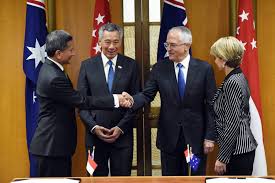
Some possible pairs of cases are: U.S. relations with Indonesia under Suharto and under Yudhoyono; U.S. use of force in the Bosnian and Kosovo conflicts; U.S. relations with Canada and Australia; U.S. free trade diplomacy with Australia and Singapore; U.S. policy towards Africa under G.W. Bush and Obama…
Description: The essay should utilise following general format (or something similar):
. i) introduction and thesis statement ?
. ii) introduction of the cases chosen and rationale for their selection/utility ?
. iii) detailed examination of the cases based around the thesis statement; ?
. iv) discussion and synthesis of the results of the analysis for both cases; ?
. v) conclusion. ?
It is advisable to choose cases (that is, specific decisions or events in U.S. foreign relations) which and have clear relevance to the concept you choose. It is not necessary to include all aspects or details of a given case in your paper. Rather, you should focus on providing a “structured, focused comparison”1 of the two cases to examine one clear-cut proposition/argument. This means asking the same question (argument), using basically the same analytical approach (same kinds of evidence), across both cases.
1 Alexander L. George and Andrew Bennett. 2005. Case Studies and Theory Development in the Social Sciences. Cambridge, Mass.: The MIT Press.
You should limit your cases to a reasonable time period to make the analysis manageable. Narrow and precise cases are usually best.
Conclusion. You must state your conclusion clearly and concisely at the end of the paper, introducing no new information.
Formatting: 1.5 spacing, 11 or 12 point font. ?Word count: 2,500 words (excluding reference list). Papers outside the grace period of 10% over
or under this word count will attract a penalty of 5% per 100 words.
Writing and Referencing: Grammar, spelling, and correct citation format are all important aspects of writing a good paper and will be considered in the final grade. You may use in-text (such as Harvard) or footnote referencing style, but whichever one you choose must be used correctly and consistently.
Your essay will be assessed on its focus around a defensible thesis argument, appropriate scope, justification of cases, analytical rigour, clarity of expression, ability to keep to the word limit, evidence of research skills, evidence of reading, critical analysis, and correct citation of all sources and quotations.
It is actually due in 4 days time so if it were completed any sooner that would be greatly appreciated ! Cheers.
SAMPLE ANSWER
Comparative Case Study: U.S. free trade diplomacy with Australia and Singapore
An essential function of the American government is basically to carry out relations with over 180 other countries globally. Foreign policy determines the way the United States will conduct relations with other nations. U.S foreign policy is how the country interacts with other countries and creates standards of interaction for its corporations, organizations, as well as individual citizens. It is aimed at furthering particular goals (Pickering, 2011). In this comparative case study, standard questions and criteria are used in comparing two cases. An argument is presented with the use of 2 cases of U.S. foreign policy behaviour. In particular, the cases which are compared in this comparative case study are United States free trade diplomacy with Singapore and Australia. Thesis statement: the specifics of the United States free trade agreement with Australia is more or less the same as that of the agreement between the United States and Singapore since the United States in both Agreements seeks to further certain goals. America seeks to ensure greater access of American products into the Australian and Singaporean/Southeast Asian markets and allow American products to be more price-competitive within these markets when competing with local suppliers or suppliers from other countries.
U.S free trade diplomacy with Singapore and Australia
These cases were chosen since they are aimed at increasing trade between America and Singapore and between America and Australia. In essence, increased trade results in the creation of more jobs in America and it provides more opportunities for American companies. The United States shares a lot of strategic and fiscal interests with both Australia and Singapore. Just like with Australia, the United States has a longstanding relationship as well as essential investment and trade relationship with Singapore (Evans & Welch, 2015). The United States recognizes that competitive and open markets are important drivers of wealth creation, innovation and economic efficiency. America also recognizes the significance of liberalization of trade in services and goods at the multilateral level and understands the increasing significance of investment and trade for the economies of Australia, Singapore and other countries in the Asia-Pacific region (Maynes, 2010). As such, these cases were selected also because examining and analyzing them will help to shed more light on how America’s Free Trade Agreement with Australia contrasts or differs with the FTA agreement it has with Singapore. Moreover, examining these cases would provide important insight and expand knowledge on how the United States benefits from these agreements and how it advances America’s foreign policy.
Examination of the cases
S free trade diplomacy with Australia
America has implemented fourteen free trade agreements with twenty nations around the globe. Free trade agreement (FTA) negotiations between Australia and the United States were finalized in the year 2004. Given that the FTA went into force in 2005 January, the FTA between Australia and America has resulted in a 104 percent rise in the United States trade surplus with Australia (Naoi & Urata, 2013). The FTA between America and Australia not only ensures greater access of Australian products into the American market, but it also improves the prospects for Australian investment and trade, as well as services. It also enhances the investment and regulatory environment between America and Australia, and fosters increased business mobility (Desker, 2010).
It is worth mentioning that America imported goods worth $9 billion from Australia and exported products worth $26 billion in the year 2013 (U.S. Department of State, 2015). Under the US-Australia FTA, the majority of Australian products get into America duty free and also free of merchandise processing fee, and almost all Australian goods would be exported to America free by the time the FTA is totally implemented by 1st January, 2022 (U.S. Customs and Border Protection, 2015).
Through the elimination of duty, the Australia-U.S Free Trade Agreement allows apparel and textile exporters from the United States to be more price-competitive within the Australian market when they compete with local suppliers as well as with suppliers from third world countries who have no duty benefits. By eliminating various non-tariff barriers, the Free Trade Agreement further opens the Australian market to goods from the United States (Aggarwal, 2013). It is notable that the Free Trade Agreement presents considerable benefits in an extensive variety of service sectors. It also serves to facilitate American investments through a stable business environment and predictable access. American companies, for the very first time in a number of sectors, would be permitted to compete for Australian government’s purchases on a fair, unbiased basis (Evans & Welch, 2015). American vendors can bid on contracts to supply to the territory, state and commonwealth government entities. The Commonwealth Government of Australia would get rid of its industry development programs, which stipulated that suppliers satisfy various prerequisites as conditions of their contracts (Aggarwal, 2013).
Under this Free Trade Agreement, duties on qualifying American apparel and textile goods that are exported to Australia have been removed or would be removed through gradual decreases over a set time period, on or before 1st January 2015. Every qualifying travel product is duty-free and all qualifying Australian footwear are free of duty with the exception of seventeen particular fabric/rubber and protective/plastic footwear items (Naoi & Urata, 2013). The Free Trade Agreement between America and Australia is a mutual tariff elimination accord. This means that qualifying travel goods, footwear, apparel and textile products imported into America from Australia are subject to similar duty rates as those for qualifying American exports to Australia. In order to make the most of the elimination or reduction of duty, goods have to qualify as originating products under the Agreement terms. Generally, the goods should have adequate Australian or American processing or content in order to meet the criteria (Aggarwal, 2013). Rules of Origin for Apparel and Textile Goods: the products should contain only Australian or American inputs. Even so, products that contain inputs from other nations may also qualify if they satisfy certain conditions specified in the FTA rules of origin. The rules for apparel and textile goods are commonly termed as yarn forward, which demands that the production of the yarn and every other operation forward take place either in America or Australia, although the fibre might come from another country. There are also Rules of Origin of Footwear and Non-textile travel products. For qualifying products where the Free Trade Agreement tariff benefits are requested, the importing company has to make a claim of reference. The importer has to state in writing that the product being imported actually qualifies as originating (Harris & Robertson, 2011).
The FTA between Australia and America has measures for ensuring that the originating products are not subject to fraud, for instance transhipment. Claims for preferential treatment under the Agreement are considered a declaration whose honesty and truth might be audited or confirmed by American and Australian custom officials. In case a preference has been claimed and the customs officials find out that the products do not qualify, the duty benefit would be lost and fine may be imposed (Harris & Robertson, 2011).
S free trade diplomacy with Singapore
The FTA between Singapore and America was signed in May 2003 in Washington, DC. It entered into force in the year 2004. Since then, the United States trade surplus with Singapore has increased by over 800% to $12.7 billion. The export of American goods to Singapore was worth $30.6 billion whereas imports from Singapore were worth $17.8 billion in 2013 (U.S. Department of State, 2015). The FTA between Singapore and America has allowed exporters from both countries to benefit from tariff concessions. It has also helped both countries to attract investors and increase in competitiveness. It is worth mentioning that this FTA describes the obligations and duties of the Unites States and Singapore regarding a number of areas including customs procedures, services and goods, the environment, movement of people, as well as protection of intellectual property. Furthermore, it outlines the guidelines that can be used to settle disputes (Parinduri & Thangavelu, 2013).
The main aim of the United States-Singapore FTA is essentially to facilitate trade between these 2 nations through the elimination or reduction of tariffs. Exporters from either party could benefit from cost-savings in the following sectors: textiles, processed foods, information technology and electronics, chemicals and petrochemicals as well as precision instruments (Singapore Government, 2015). The Agreement also allows Singaporean suppliers to take part in many tenders of services and goods conducted by the government of the United States. Likewise, American suppliers can participate in tenders conducted by the government of Singapore. Singaporean suppliers are allowed to take part in procurement activities of nearly 100 federal entities in 37 states across America.
In the FTA, both the United States and Singapore also reached an agreement that each of them would take steps to execute Phases 1 and 2 of the APEC Mutual Recognition Arrangement (MRA) for Conformity Assessment of Telecommunications Equipment as regards the other country. In the Asian region, Singapore was the first nation to operate an MRA on telecommunication equipment certification with America (Singapore Government, 2015). It is worth mentioning that the Mutual Recognition Arrangement facilitates direct entry of telecommunication equipment into the market of either party without requiring extra testing and certification. Examples of these telecommunications equipment include Asymmetric Digital Subscriber modems, Wireless Broadband Access equipment, radio pagers and telephones (Singapore Government, 2015).
This FTA offers 100 percent coverage of Singaporean domestic exports to America and the elimination of tariffs. Under this Agreement, the United States and Singapore would each gradually remove its custom duties on the other party’s originating goods according to Annexes 2C (Singapore Schedule) and 2B (US Schedule). Originating goods refers to goods which are entirely produced or obtained within the territory of Singapore and/or the United States and have met the prerequisites stipulated in Annex 3A (Wolff, 2015). Annex 3C of the FTA provides a listing of products which are considered as re-manufactured products that are also considered to have come from America or Singapore. In addition, the two countries would not maintain or implement a merchandise processing fee for originating products. The importing individual or organization has to make claim for preferential treatment. The information with regard to the qualification of the products as originating goods should be submitted to the importer by the exporter. The exporter in Singapore must verify that the products actually came from Singapore. Both countries would not introduce a new customs duty or increase an existing customs duty on imports of originating goods, other than as allowed by the FTA, subject to Annex 2A. The Agreement has also facilitated the elimination of non-tariff obstacles hence the cost of doing business would be kept low and exports would become more competitive (Parinduri & Thangavelu, 2013).
The Singapore-United States Free Trade Agreement has been helpful in increasing exports from the United States, improving the competitiveness of America globally, securing presence of the United States in the Southeast Asia region, and providing a standard of free trade which serves to encourage a high degree of liberalization. In Singapore, conducting a business has become more transparent, cheaper, faster and much easier. The Agreement has provided American exporters and companies with more access to Southeast Asia, one of the largest markets globally, where there are lots of opportunities (Wolff, 2015). Other than binding all Singapore tariffs for American products at zero, the U.S-Singapore Agreement has increased export opportunities for some manufacturing sectors in America, such as the ones that make medical equipment and instruments, chemicals, pharmaceuticals, photo equipment, microelectronics and certain textiles. In addition, with few exemptions, Singapore has accorded considerable access to its investment and services market. Singapore has also increased opportunities for government procurement as well as protection of intellectual property. What’s more, the Free Trade Agreement provides for revolutionary collaboration in fostering labour rights and the environment (Parinduri & Thangavelu, 2013). Singapore was America’s tenth biggest export market in 2010 at more than $28 billion. This represents an increase of 31 percent over the previous year 2009. The main exports from America to Singapore are in the following sectors: medical devices, oil and mineral fuel, machinery, spacecraft and airplane, and electrical machinery (Aggarwal, 2013).
Discussion and synthesis of results
The results show that in both the Free Trade Agreements between America and Australia and between America and Singapore, the United States seeks to further certain goals. For instance, the Agreement between the United States and the two countries would remove or gradually reduce tariff barriers on originating goods, and eliminate a merchandise processing fee for originating products. The Australia-U.S Free Trade Agreement furthers the U.S foreign policy goal of allowing American apparel and textile exporters – that is, textiles made in America – to be more price-competitive within the Australian market when they compete with the local Australian suppliers in addition to suppliers from other countries such as Thailand, India, China, or Malaysia who have no duty benefits. Besides eliminating tariff barriers particularly duties, the Free Trade Agreement between America and Australia also removes non-tariff barriers which helps to further open the Australian market to Made-in-the-United States products (U.S. Department of State, 2015). Furthermore, through this Agreement, America seeks to attain the goal of creating more employment opportunities in the United States and benefit American exporters especially companies in America which produce goods that qualify as originating goods.
Similarly, the Free Trade Agreement between the United States and Singapore is aimed at achieving the foreign policy goal of facilitating trade between America and Singapore. In addition, the United States uses this Singapore-U.S FTA to accomplish the foreign policy goal of increasing exports of good that originate from the United States. Furthermore, the United States achieves the foreign policy goal of improving the competitiveness of America internationally, securing America’s presence in Southeast Asia, and providing a standard of free trade which in fact promotes a high degree of liberalization. Equally important, the Agreement helps to achieve America’s foreign policy objective of providing exporters and companies based in the United States with more access to the market of Singapore and the rest of Southeast Asian region, which is regarded as one of the largest markets worldwide with plenty of business opportunities. Moreover, the Agreement between the United States and Australia and the one between the United States and Singapore advance the foreign policy goal of enabling American suppliers to participate in tenders conducted by the governments of Australia and Singapore.
Conclusion
To sum up, in the FTA between America and Australia and between America and Singapore, the United States seeks to achieve the foreign policy goal of facilitating trade between America and Australia and between America and the Southeast Asian nation of Singapore by removing or decreasing tariffs, and removing non-tariff barriers. American exporters can benefit from cost-savings when they export various originating goods to Australia and Singapore. American companies that produce the following types of products can particularly benefit: chemicals, precision instruments, information technology and electronics, medical equipment and instruments, pharmaceuticals, photo equipment, microelectronics and certain textiles. Through these Agreements, America is able to realize the foreign policy goal of improving the competitiveness of America worldwide. In addition, the United States, through these Agreements, seeks to accomplish the objective of creating more jobs in America and benefit American exporters that export originating goods to Singapore and Australia.
References
Aggarwal, V. K. (2013). U.S. Free Trade Agreements and Linkages. International Negotiation, 18(1), 89-110. doi:10.1163/15718069-12341246
Desker, B. (2010). In defence of FTAs: from purity to pragmatism in East Asia. Pacific Review, 17(1), 3-26.
Evans, K. J., & Welch, J. M. (2015). Official Eyes on History: Digital Access to Foreign Relations of the United States. History Teacher, 48(3), 505-515.
Harris, R. G., & Robertson, P. E. (2011). Dynamic Gains and Market Access Insurance: Another Look at the Australia–US Free Trade Agreement. Australian Economic Review, 42(4), 435-452. doi:10.1111/j.1467-8462.2009.00557.x
Maynes, C. W. (2010). Bottom-up foreign policy. Foreign Policy, (104), 35.
Naoi, M., & Urata, S. (2013). Free Trade Agreements and Domestic Politics: The Case of the Trans-Pacific Partnership Agreement. Asian Economic Policy Review, 8(2), 326-349. doi:10.1111/aepr.12035
Parinduri, R. A., & Thangavelu, S. M. (2013). Trade liberalization, free trade agreements, and the value of firms: Stock market evidence from Singapore. Journal Of International Trade & Economic Development, 22(6), 924-941. doi:10.1080/09638199.2011.616934
Pickering, T. R. (2011). Foreign Affairs Challenges, Priorities, and Policies. American Foreign Policy Interests, 30(5), 266-274. doi:10.1080/10803920802435252
Its important that the writer use in text citations for this paper to support the comments
The writer will have to read each of this post and react to it by commenting, analyzing and supporting with relevant articles. The writer will have to read carefully before giving constructive comments or criticism on the post. The writer should write a one paragraph of at least 150 words. APA and in text citation must be use as each respond to the 4 article must have in text citations. The writer will have to use an article to supports his comments and criticism on each of the article. Address the content of each post below in a one paragraph each, analysis and evaluation of the topic, as well as the integration of relevant resources. The writer cannot just say “I agree or disagree” the writer must constructively support and use relevant sources to support his point why expanding on the article.
Details for the paper will be send via email title comments 7
SAMPLE ANSWER
Article 1: Doctoral Study and Scholar Practitioner Model
Well established healthy relationship between leaders and their followers is being emphasized in this article. The basis of corporate influence is seen to be closely intertwined with the prowess and the character of its leadership. According to the author the pursuance of professional training for practice rather than for academic purposes will have a significant effort in changing organizational leadership; empowering staff/ employees and improving cooperation between leadership and the ones who are described as their followers. The author’s claims are in line with that of Uhl-Bien, Riggio, Lowe and Carsten in their 2014 study. The author claims that the doctoral study will better how he/ she will associate and relate to followers/ the ones he/she leads. This claim is rational since better academic qualification enables one to understand people more; to learn how to meet their needs and on how to satisfy them. This will have a direct effect on positive outcomes in an organization. With further education, leaders will be in good position to develop better and effective strategies (Price & Vugt, 2014).
Article 2: Doctoral Study Impact on Improvement in Management & Business Practice
The author claims that the kind of leadership an organization keeps will determine environmental climate within the organization and the performance of its employees. The claim that completion of a doctoral study will help the business leaders to lay in better and more effective strategies is supported by Price and Vugt (2014). According to Zhu, Avolio and Walumbwa (2009) transformational leadership will have a positive and critical role in improving relationships among employees. Through transformational leadership the leadership and workforce will work together for the common good of individuals which will enable the organization to attain its goals. Transformational leadership will empower employees, work relationships which will see development of efficient business practices. Cooperation between leadership and employees achieved through transformational leadership will ensure that an organization achieves desired profitability. Transformational leadership is necessary for an organization to achieve global competitiveness, being economically viable and in the achievement of a social change. Yes, transformational leadership will ensure the development of effective and up to date strategies (Northouse, 2013).
References
Northouse, P. G. (2013). Leadership Defined. In L. Shaw, P. Quinlin, & M. Stanley (6th Ed), Leadership: Theory and Practice (pp. 185-217). Thousand Oaks, CA: SAGE Publications.
Price, M. E., & Vugt, M. V. (2014). The evolution of leader – follower reciprocity: the theory of service – for – prestige. Front Hum Neurosci, 8, 363.
Uhl-Bien, M., Riggio, R. E., Lowe, K. B., & Carsten, M. K, (2014). Followership theory: A review and research agenda. The Leadership Quarterly, 25(1), 83-104. http://doi:10.1016/j.leagua.2013.11.007
Zhu, W., Avolio, B.J., & Walumbwa, F.O. (2009). Moderating role of follower characteristics with transformational leadership and follower work engagement. Group Organization Management. 34, 590-619. http://doi:10.1177/1059601108331242
We can write this or a similar paper for you! Simply fill the order form!
Why European and American airlines try to operationalize their governments to protect their markets against Middle East carriers
Over the last fifteen years, the big three carriers from the Middle East comprising Qatar Airways, Etihad and Emirates have expanded to become 3 of the most highly regarded global carriers in the world. Over the recent past, carriers in Europe and the United States have raised complains that the Middle Eastern airlines get unfair subsidies from their respective governments (Noakes, 2015). This paper seeks to evaluate the reasons why airlines in the United States and Europe are trying to operationalize their governments to protect their markets against carriers from the Middle East.
Through various agreements between the American government and governments of Qatar and the United Arab Emirates, the Middle Eastern trio commonly referred to as ME3 have increased their presence considerably within the American market. Even so, Delta, United and American Air Lines which are the 3 largest carriers in America and commonly referred to as the US3 assert that the Middle Eastern trio’s lavish spending and explosive expansion are due to billions of dollars on unfair subsidies from their governments. At the moment, Delta, United and American Airlines want the federal government to cancel those agreements which allow the Middle Eastern trio to encroach on their territory (Unnikrishnan & Flottau, 2015). In the year 2014, Etihad Airways expanded to nearly 15 million travellers, with Emirates carrying 3 times more travellers and US3 carried 34 times more travellers (Ball, 2015).
While labour unions and carriers based in the United States initiate a campaign in opposition to alleged subsidies for the Middle Eastern trio, the debate is already in progress in the European Union. The major players in the transport policy are seeking a new agreement with Middle Eastern countries aimed at regulating government subsidies, but Qatar and the United Arab Emirates along with their airlines are strongly against this effort (Dunbar, 2015). For many years, airlines based in Europe have lobbied against the ME3. These Gulf carriers affect a considerable part of the European airlines networks. As Etihad’s investment into Italy’s flag carrier Alitalia demonstrate, European airlines face the Gulf carriers not just on long-range services, but also inside Europe. As such, the ME3 are facing more pressure and scrutiny.
The European Commission (EC) seeks an authorization from EU countries to negotiate with the Middle Eastern countries regarding the issue of unequal competition. This process was instigated by Lufthansa Group and Air France KLM in 2014 in a letter in which, along with their subsidiaries, they demanded that competition with the Middle Eastern trio has to be more equitable and fair. The transport ministers of Germany and France made a joint proposition that until fair competition is ensured, ME3 airlines must not be given more traffic rights into the EU (Flottau & Unnikrishnan, 2015). The two transport ministers also stated that European airlines, in spite of significant adaptations which they have made, have continued to lose their share of the market to the Middle Eastern carriers on numerous destinations including Eastern Africa, Oceania, Southeast Asia and the Indian subcontinent (Flottau & Unnikrishnan, 2015). They noted that there is an urgent need to act and pointed out that the current situation decreases the attractiveness of EU hubs, harms the European airlines very much, and significantly threatens EU’s connectivity with the rest of the world.
The German and French transport ministers suggested that a response may be a wide-ranging air transport agreement with the Qatar and the United Arab Emirates if some specific conditions are satisfied fully. The conditions to be met are as follows: a guarantee of fiscal transparency, competition that is fair, exhaustive and full provisions on subsidies, unfair competition and practices, over and above giving the European Commission and EU countries proper means of action besides the standard dispute-settlement methods in case of nonconformity to or disobedience of these stipulations (Walker, 2015). They added that the opening of EU Markets would be slow and restricted. In an exhaustive air service agreement, only 3rd and 4th freedom rights should be covered and additional traffic rights to the Middle Eastern trio would be associated with a positive progression or development of the competitive environment. The 3rd and 4thfreedom of the air dictum cover the rights of to move traffic from and to the home nation of the carrier. However, the business model of the Middle Eastern trio is developed largely on connecting traffic and beyond – 6th freedom – and therefore the condition is very likely to be unacceptable to the Gulf countries and their carriers (Flottau, 2015). A proposition such as this one has been suggested by Richard Anderson, who is the Chief Executive at Delta Air Lines. He stated that new agreements between the Gulf countries and the United States have to prevent the Middle Eastern trio from offering flights which do not end in the United States or their home countries (Flottau & Unnikrishnan, 2015). This suggestion is equal to a prohibition on connections, which is in fact the exact business model under which airlines in Europe and the United States are operating.
Unbalanced and unfair competition with airlines from the Middle East
An important reason that makes US-based and EU airlines to operationalize their governments to protect their markets against carriers from the Middle East is the unfair competition from heavily-subsidised ME3 carriers. The United States, European and international carriers operate internationally under various Open Skies treaties which are aimed at lessening protectionism and freeing up competition. The intention is essentially to expand global cargo and passenger air travels through the elimination of government interference in commercial airline decisions with regard to pricing, capacity and routes (Aguinaldo, 2015). For nearly fifteen years, the Gulf airlines have been party to Open Skies treaties and the ME3 have aggressively expanded into the American market over the last 10 years, all set to compete with award-winning service and large fleets of new airplanes. With their international business threatened, airlines based in the United States argue that competition with the Gulf airlines has now turned out to be inherently unbalanced and unequal.
The US3 want their government to freeze the growth of the Middle Eastern trio into the American market and to negotiate once more the Open Skies treaties with United Arab Emirates (UAE) and Qatar. The Partnership for Fair and Open Skies, the lobby group which represents the US3, stated that the Middle Eastern trio have been given an estimated $42 billion over the last 10 years in subsidies from the Qatar and United Arab Emirates governments (Open Skies Partnership, 2015). The Middle Eastern trio are wholly dependent on taking traffic from other carriers through subsidizing for instance subsidized marketing, product levels or pricing (Open Skies Partnership, 2015). In essence, airlines in the United States are not concerned about Middle Eastern airlines flying domestic routes around America. Actually, the ME3 are only configured for long-haul international flying. What the US3 are looking to protect are their important international air travels out of and into the United States. Therefore, the US3 are seeking a new agreement. It is worth mentioning that any re-negotiation of Open Skies treaties may have sweeping business as well as diplomatic ramifications (Francis, 2015).
As said by the Partnership for Fair and Open Skies, ME3 airlines have been given $12 billion in shareholder advances and interest-free loans, in addition to $8.79 billion in loans from their governments in the past few years. Additionally, they have been given slightly over $11 billion grants and inequity infusions, plus an extra $9.5 billion in wage savings from labour costs that are below the market as well as other subsidies (Open Skies Partnership, 2015). Every time that a carrier based in the United States loses an international route to ME3, there would be a loss of 800 jobs in America (Dunbar, 2015). European and U.S-based carriers assert that subsidies for instance cheaper access to airports, interest-free loans from their governments, and cheaper access to services like ground handling and fuel make it not possible to compete for profitable international travellers. The Chief Executive Officer of American Airlines stated that there is adequate evidence which suggests that the governments of the United Arab Emirates and Qatar are going against the aviation trade treaties between the United States and these two Middle Eastern nations by giving huge subsidies to Emirates Airlines, Qatar Airways and Etihad: these subsidies are in amounts so high that are in fact record in the history of global trade (Dunn et al., 2015). Airlines in Europe are also disturbed. Transport ministers of Germany and France arranged for the European Union (EU) executive commission to espouse a strategy aimed at ending subsidies to the Middle Eastern trio. The initiative was backed by officials in Austria, Sweden, Belgium and the Netherlands.
There are quite a few things which make which the Middle Eastern airlines particularly unique. Firstly, of all the government-owned carriers in the world, Qatar, Etihad and Emirates are expanding in a disproportionate manner in comparison to their respective growth in Gross Domestic Product and populations. Not so many years from today, these three airlines would have more widebody jets than all carriers in the United States put together, in spite of the fact that Qatar and the United Arab Emirates have a population which is less than four percent of the United States (Baker, 2015). Secondly, these three carriers are not playing fair and their behaviour is actually destructive to other airlines. In essence, the long-term business model of the Middle Eastern trio is to run rival carriers out of markets as much as possible, and to do so at whichever cost, even if it means losing billions of money in the process (Flottau & Unnikrishnan, 2015).
U.S and European carriers seek to protect the profitable transatlantic routes
Another major reason as to why airlines in the United States and Europe are trying to operationalize their governments to protect their markets against carriers from the Middle East is that they are seeking to protect the highly lucrative transatlantic routes from new competitors. The US3 want restrictions on the destinations and routes which foreign airlines may fly into America. Over the past few years, carriers from the Gulf region have expanded into cities across America with direct air travels from their respective nations of origin. This growth has largely been met with slight resistance. In 2013, nonetheless, Emirates Airlines started to operate air travels between Milan, Italy and New York City: air travels that come from outside the domestic market of the airline. This a major source of the conflict (Bart, 2015).
Any air travels from the Gulf region with a stop in Europe allow the airline to sell flight tickets on the portion of the trip between America and Europe. In essence, this is a game-changing development given that transatlantic flights are highly lucrative and competitive and increased competition on the transatlantic routes would certainly be troublesome and worrying. The entrance of the Middle Eastern trio – which are very deep-pocketed and accomplished carriers – could actually be catastrophic and disastrous not just for U.S-based airlines, but also for their European alliance partners (Dunbar, 2015). Most of the transatlantic air travels are controlled by U.S-based airlines along with their Skyteam, Star Alliance, and Oneworld partner carriers based in Europe. Increased competition from the Gulf carriers on the transatlantic routes would surely lead to a decline in profits for US3 and the European airlines flying these routes such as Lufthansa, British Airways, and Air France.
Unlike U.S and European carriers, Middle Eastern trio not motivated by profits
The other reason is that airlines in the United States and Europe are trying to operationalize their governments to protect their markets against carriers from the Middle East because the big carriers from the Middle East are actually not financially motivated. They seek to increase their market share but not to make a profit. Etihad Airways, Emirates Airlines and Qatar Airways are not really motivated by profits and to increase shareholder value like other airlines. Every aspect of the operations of these three Persian Gulf carriers is run so as to create a loss and increase share of the market in order to develop the country and not the carrier (Francis, 2015). There is one particular thing which makes the ME3 unfair: it is not that these airlines have lower costs of staffing owing to where they are situated. It is also not because they have lower costs due to their location. Rather, these three airlines employ dirty tricks and have unfair advantage since they have almost unlimited access to interest-free capital and all aspects of their supply chain and operations are interlinked. The conspiracy between these airlines and their governments does not allow for transparency, which has the intention or result of giving these 3 carriers an unfair advantage in the marketplace (Baker, 2015). For instance, the President of Emirates Airlines, Sheikh Al Maktoum, is also the Chairman of Dubai Airports, he is Dubai Civil Aviation Authority’s President, over and above being dnata President. This is something that really presents a conflict of interest, particularly considering that the business organization is not motivated by money.
Furthermore, the landing fees at Dubai Airports are actually lower than the costs incurred in providing them. In other words, Dubai Airports lose money with each aircraft that lands there (Dunn et al., 2015). This is something a typical airport in Europe or America cannot justify. In Dubai however, Dubai Airports understands that Emirates Airlines benefits the most when landing fees are subsidized. Moreover, when a single person is in charge of the airport, the carrier, as well as the civil aviation authority, he can do virtually anything. Furthermore, when a passenger flies via an airport facility, there is usually a passenger facility surcharge. In essence, some constituent of the plane ticket cost will go to the airport facility for having utilized their terminal. Almost every airport in the world charges this passenger facility surcharge to both travellers who connect at or originate from an airport. Even though this fee could be different depending on whether the traveller is connecting or originating, each traveller is charged at least some amount. Nonetheless, at the Dubai, Doha and Abu Dhabi airport facilities, this does not happen. Facility fee is charged only to travellers who terminate at or originate from these cities (Noakes, 2015). The reason for this is that most travellers who travel on Qatar, Etihad and Emirates airline carriers are connecting, whereas most of the travellers on other carriers who fly to the airports in these cities are terminating at or originating from there. For instance, between Boston and Tokyo via Dubai, a passenger does not pay any kind of Dubai passenger service fees. However, if a passenger is terminating in or originating from Dubai, then he or she will be required to pay about $20.40 in passenger service fees.
Although ME3 do not care about profit making, they are essentially having foreign airlines subsidize operations at their hubs. There is also the fact that Emirates Airlines faced a $2.4 billion fuel hedge loss which the government of the UAE took care of. The fact is that under this system, other carriers just cannot compete with the Middle Eastern trio. This is not particularly about the fact that Qatar, Emirates and Etihad are fully owned by their governments. This is also not about routes, aircrafts, or service. It is about the fact that these 3 carriers are not financially motivated at all: making a profit does not motivate them (Ball, 2015). For this reason, European and US-based airlines cannot just compete with these ME3 carriers which are losing billions of dollars annually. European and US-based airlines cannot compete with the service without regard for their shareholders.
As per the Financial Times, the accusations against Emirates airlines comprise $1.9 billion of savings from the carrier’s non-unionized employees, $2.3 billion of savings from very low airport fees, and a $2.4 billion of fuel hedging loss. The boss of Emirates denies the accusations stating that cheap ground-handling and labour costs are not government subsidy but rather, they are a reflection of the Dubai government’s commercial savviness (Aguinaldo, 2015). Etihad is accused to have been given capital injections amounting to $6.3 billion, interest-free loans of $4.6 billion without obligation of repayment, in addition to extra committed subsidies of $4.2 billion from the government of Abu Dhabi. It is claimed that Qatar Airways was given interest-free loans by the government of Qatar amounting to $7.7 billion in addition to reduced debt-interest charges amounting to $6.8 billion because of sovereign guarantees (Bart, 2015). As a result, the Middle Eastern trio enjoy obvious fiscal advantages over their European and American rivals, which provides them with a safety net that allows them to operate unprofitable services for the purpose of gaining market share.
Long-range jets would bring much more capacity than needed by the demand
There is also the assertion by European Union and American carriers that very big jets for instance the long-range Airbus A380s would bring a lot more capacity into the United States and the European Union than is in fact warranted by destination and origin demand. The U.S.-based carriers claim that the Middle Eastern trio are adding capacity to the United States which outstrips the demand by far, since there is very little destination and origin traffic between the United States and United Arab Emirates and Qatar (Flottau, 2015). This denotes that the Middle Eastern trio are siphoning traffic from EU and US airlines to Asia and beyond at a scale with which the American and European carriers are not able to compete because of unfair subsidies from Qatar and UAE governments.
In the United States, James Hogan and Tim Clark, who are the CEO and President of Etihad and Emirates respectively, strongly defended their points of view in various meetings where US-based carriers and their unions pushed to reduce the access of ME3 to the United States. These 3 Gulf airlines are calling for the government of the United States to start consultations with the United Arab Emirates and Qatar governments. Until a resolution is reached, airlines based in the United States assert that no new ME3 airline capacity to America should be permitted. Even so, critics argue that this condition abrogates the open-skies agreement (Noakes, 2015). On the whole, airlines in Europe and America cannot effectively compete with carriers which benefit from significant subsidies from their governments. Nonetheless, the boss of Emirates Airlines stated that the airline only ever got $10 million from the UAE government as seed capital in the year 1985 and that its explosive growth on the international arena is as a result of a combination of the Gulf region’s geographical good luck at the midpoint of West and East as well as the pro-aviation policies of the government of Dubai (Dunn et al., 2015).
Conclusion
In conclusion, airlines in the United States and Europe are operationalizing their governments to protect their markets against Persian Gulf carriers due to unfair competition from these carriers which are very much subsidized by their respective governments. The Middle Eastern trio have been given over $41 billion in the last 10 years in subsidies which gives them unfair advantage over US and EU carriers. Moreover, the Middle Eastern carriers are actually not motivated by making profits. They are operated so as to create a loss and increase share of the market in order to develop the country and not the carrier.
References
Aguinaldo, J. (2015). Disputing the Open Skies. MEED: Middle East Economic Digest, 59(36/37), 32-33.
Baker, M. B. (2015). U.S., Persian Gulf Carriers In Open Skies Spat Over Funding Allegations. Business Travel News, 32(5), 12.
Ball, L. (2015). Outlook stormy as U.S. open skies debate rages. Air Cargo World, 105(3), 20-21.
Bart, J. (2015). Emirates CEO goes on offensive. USA Today.
Carey, S. (2015, February 24). U.S. Airlines Clash Over Rivals From Persian Gulf. Wall Street Journal – Eastern Edition. pp. B1-B5.
Dunbar, M. (2015). Big 3 carriers aim to rollback US Open Skies. (Cover story). Canadian Travel Press, 47(26), 1-14.
Dunn, G., Yeo, G., Russell, E., & Pilling, M. (2015). US big three accusations spark open-skies debate. Airline Business, 31(2), 14.
Flottau, J. (2014). Defining Fairness. Aviation Week & Space Technology, 176(41), 35.
Flottau, J., & Unnikrishnan, M. (2015). France, Germany Protest Gulf Carrier Encroachment. Aviation Week & Space Technology, 177(11), 1.
Francis, R. (2015). North Texas officials, airlines seeking new talks. Fort Worth Business Press, 27(22), 7.
Noakes, G. (2015). Sky strategies. Buying Business Travel, (75), 56-59.
Open Skies Partnership. (2015). U.S. airlines, unions reveal evidence of $42 billion in subsidies and benefits by Qatar and the UAE to their state-owned carriers. PR Newswire US.
Unnikrishnan, M., & Flottau, J. (2015). Lobbying Against Gulf Carriers May Be To No Effect. Aviation Week & Space Technology, 177(17), 1.
Walker, K. (2015). A Dangerous Debate. Air Transport World, 52(4), 5.
We can write this or a similar paper for you! Simply fill the order form!
Campaign objectives and consumer insight of Lorna Jane yoga pants
Order Instructions:
Since i did finish other parts of the project so far, so only thing the writer need to do is consumer insight and campaign objective.
I will send all the information in the files and just follow my concept and idea that i provided. Also, the requirement for those 2 parts. All of them including in my files.
SAMPLE ANSWER
Campaign objectives and consumer insight of Lorna Jane yoga pants
Campaign objectives
There are several objectives for the advertisement campaigns for the Lorna Jane wear yoga pants line. These targets include developing awareness about the Eunoia line of yoga pants among the people of Sydney as an independent line of clothing. The campaign is also aimed at reaching 30 percent of the target population, which is Sydney within three months of advertisement. The attainment of the objective should be timely and precise.
The campaigns should also increase improve the attitudes f the people of Sydney about the brand, from zero percent to 20 percent. This objective should be attained by use of the natural background and the desirable models to be featured in the campaign ads. The slogan should also be made clear in all advertisements it would be significant in popularising the brand and improving the attitude of viewers of the campaign ads.
The advertisements should also show the fashion sense of the yoga pants to the potential clients as a way of increasing the attitudes of people. The slogan of the line, which is fashionably well minded, peace & beauty, eco-sexy, the beauty of the mind, natural fashion, naturally wild should be able to help achieve this aim. Campaign ads should be able to connect all the aspects captured in the slogan statement. This would blend the fashion sense of the yoga pants, natural beauty of the customers, and the outgoing nature of the young adults of between 18 and 25 years of age.
The campaigns should also enlighten the customers about the various colours and types of yoga pants under the new brand name. All the different colours of the yoga pants that signify the various parts of the slogan would be featured in the ads, while worn by a beautiful model. The ads should create a sense of choice among the viewers (Park, H, Jeon, J, & Sullivan, P 2015)..
The campaigns should highlight the strengths of the new line of yoga pants. Views of the campaigns should be able to identify the uniqueness of the material that the new yoga pants will be made of. Viewers of the ads should be able to tell the advantages of the Eunoia brand over the other brands.
Consumer insight
The target clientele are women who are interested in maintaining their body fitness body fitness. This means that the clients would majorly be female youths between the age of 18 and 25 years old who are either fit and would like to remain that way or are unfit and would like to become fit and sexy. The brand would majorly be sold in Sydney where there is a hug population of youths. The youths in Sydney are also influenced by the pop culture which influences ladies to have a youthful look.
It is a positive thing that fitness is what drives motivation to perform yoga and therefore buy yoga pants. This is because with the popularity of pop culture in Sydney, more and more women are conscious of their looks and therefore generate a long term market for products to do with yoga. The brands have a variety of categories in terms of colors and sizes to ensure that all the potential clients can get a pair of yoga pants (Carroll, A 2009).
85 percent of participants of yoga in Sydney are women. It is more likely that investments in yoga outfit for women would be less risky than the investment in outfits for men. In the total number of people who participate in yoga in Australia, 56.6 percent attended practice one or two times every week. 24.1 percent attended practice more than three times per week while the rest were not consistent. From these statistics, it is clear that the consumers need a more durable material for the yoga pants. A line of yoga pants that would be of high quality may be need by consumers. Yoga sessions also take a considerable amount of time each day of practice.
In a typical day in Sydney, about 46 percent have to work for longer hours and therefore prefer to engage in yoga in their free time because of the lack of enough time to engage in other physical activity and the calming nature of yoga.
The target market for the Lorna Jane line of yoga wear is mostly the youths. This class of people is fashionable and needs a sense of freedom. Therefore, Eunoia line of yoga pants is expected be favorable and marketable to the target group due to the lines ability to capture al the aspects of youth fashion (Park, H, Jeon, J, & Sullivan, P 2015).
The consumers should buy the yoga pants from authorized dealers of the Lorna Jane brand and other countrywide stores and malls. The yoga pants will also be available in online stores for the busy people of Sydney to purchase from their offices and homes.
The media to be used to communicate with the potential clients would majorly be social media such as facebook. This is because of the popularity of the social network. Other media for advertisement would include television and magazines. Most of the people who attend yoga also have smartphones and other internet enabled gadgets such as PCs and tablets. It is therefore easier and cheaper for the line to be advertised through social media (LaPointe, P 2012).
The campaign ads should reach at least 30 percent of the population of Sydney city to achieve the objectives of the advertisement. This may be achieved by advertisements being done at least two times between seven and nine o’clock in the night. Facebook ads should be updated as frequent a hourly due to the high number of times youths log in to facebook (Smith, S 2013).
The key challenges of communicating with the target audience may be the high expense of TV ads in terms of costs per ad. Therefore, to reduce on the cost of TV ads, the ads would be short and precise.
Bibliography
‘Effect of an office worksite-based yoga program on heart rate variability: A randomized controlled trial’ 2011, BMC Public Health, 11, 1, pp. 578-582, Academic Search Premier, EBSCOhost, viewed 14 October 2015.
LaPointe, P 2012, ‘Measuring Facebook’s Impact on Marketing’, Journal Of Advertising Research, 52, 3, pp. 286-287, Business Source Complete, EBSCOhost, viewed 14 October 2015.
Smith, S 2013, ‘Conceptualising and evaluating experiences with brands on Facebook’, International Journal Of Market Research, 55, 3, pp. 357-374, Business Source Complete, EBSCOhost, viewed 14 October 2015.
Park, H, Jeon, J, & Sullivan, P 2015, ‘How does visual merchandising in fashion retail stores affect consumers’ brand attitude and purchase intention?’, International Review Of Retail, Distribution & Consumer Research, 25, 1, pp. 87-104, Business Source Complete, EBSCOhost, viewed 14 October 2015.
Carroll, A 2009, ‘Brand communications in fashion categories using celebrity endorsement’, Journal Of Brand Management, 17, 2, pp. 146-158, Business Source Complete, EBSCOhost, viewed 14 October 2015.
We can write this or a similar paper for you! Simply fill the order form!
Paper instruction : Tennis serve
Descrition of the Motor skill : Beginning Phase, Middle Phase, Final Phase( Anatomical analysis:Muscle participation and form of contractions. )
*NO Websites and online database (wikipedia) are accepted; Google scholar web search preferred.
*No Instruction No conclusion needed. Just directly talk about the subject in detail.
SAMPLE ANSWER
Anatomical Analysis of Tennis Serve
The Beginning Phase
The stage involves player’s preparation for the serve. Different muscle activities take place in four phases. At the initial phase, there is minimal involvement of the shoulder and scapular muscles (Kovacs & Ellenbecker, 2011, Pg. 506). The player proceeds to the release phase where there is little activation of the left erector spinae but increasing participation of the right erector spinae muscles. Trunk stabilization is crucial at the stage and lower trunk muscles are activated to stabilize the lumbar spine. Muscles activated include rectus abdominis and internal and external oblique muscles. In the third phase, the player generates potential energy by properly positioning the feet. The foot-up and foot-back techniques are the commonest techniques, and they involve knee joint extensor muscles to a significant extent. In the foot-up technique, the posterior compartment of lower limb muscles offers upward and forward drive for the player. On the other hand, the anterior compartment offers stability for rotational momentum (Kovacs & Ellenbecker, 2011, Pg. 506). The same events occur in the foot-back technique, but there is more contraction of the knee joint extensors than in the foot-up technique. The third phase also involves a lateral rear tilt of the pelvis and the shoulder. The activity generates angular momentum for lateral flexion of the trunk. For right-handed servers, the ipsilateral erector spinae muscle activation is higher than that of contralateral erector spinae (Kovacs & Ellenbecker, 2011, Pg. 506). The left lateral erector spinae plays significantly in lateral flexion of the trunk during the third phase. Iliocostalis and longisimus dorsi are also active during the phase. They contract unilaterally to flex the lumbar vertebral laterally. The fourth phase begins with the activation of serratus anterior (Kibler, Chandler, Shapilo, & Conuel, 2010, Pg. 747). The upper trapezius muscle is then activated resulting in acromion elevation and stabilization of the scapular. The activation of the lower trapezius later enhances scapular stabilization and elevation of the acromion (Kibler et al., 2010, Pg. 747). The deltoid and supraspinatus are also activated to depress the head of the humerus and control external rotation.
The Middle Phase
The phase involves acceleration, and muscle activity exceeds the one in the beginning phase (Kibler et al., 2010, Pg. 747). For the internal humeral rotation, activated muscles include the serratus anterior, latissimus dorsi, subscapularis, and pectoralis major (Kovacs & Ellenbecker, 2011, Pg. 507). The first phase of the middle phase ends with the activation of the gastrocnemius, vastus medialis, and vastus lateralis. Both the trunk and legs coordinate to generate the greatest kinetic energy for the middle phase. The last stage of the middle phase involves minimal extension of the knee, wrist, and elbow joints. Rectus abdominis participates actively during this phase (Chow, Park, & Tillman, 2009). The phase also involves increased activation of rectus abdominis and external oblique muscles that are mostly involved in trunk flexion. Internal oblique is mostly activated during twisting of the trunk.
The Final Phase
The stage involves deceleration and follow-through. The infraspinatus is activated, and it contributes as an assistive muscle for humeral deceleration and distraction of the shoulder joint (Kibler et al., 2010, Pg. 747). The posterior rotator cuff is also activated together with biceps brachii, serratus anterior, latissimus dorsi and deltoid. The right erector spinae is also more active than the left erector spinae during deceleration. Deactivation of the anterior deltoid precedes that of other muscles. During the final phase, internal rotation and horizontal adduction are not needed. The serratus anterior and upper trapezius muscles are the next on the trend and their deactivation occurs as the acromial elevation decreases (Kibler et al., 2010, Pg. 747). The deactivation of infraspinatus occurs as humeral rotation decreases. Complete restoration of posture results following the activity of the lower trapezius for the scapular, supraspinatus and teres minor for the humeral head, and posterior deltoid for the upper arm (Kibler et al., 2010, Pg. 747).
References
Chow, J. W., Park, S.-A., & Tillman, M. D. (2009). Lower trunk kinematics and muscle activity during different types of tennis serves. Sports Medicine, Arthroscopy, Rehabilitation, Therapy, and Technology : SMARTT, 1, 24. http://doi.org/10.1186/1758-2555-1-24
Kibler, W. B., Chandler, T. J., Shapilo, R., & Conuel, M. (2010). Muscle activation in coupled scapulohumeral motions in the high performance tennis serve. British Journal of Sports Medicine, 41(7), 745-749.
Kovacs, M., & Ellenbecker, T. (2011). An 8-Stage Model for Evaluating the Tennis Serve: Implications for Performance Enhancement and Injury Prevention. Sports Health, 3(6), 504–513. http://doi.org/10.1177/1941738111414175
We can write this or a similar paper for you! Simply fill the order form!
In the topic it says “a country of your choice” preferably to make it Ukraine (if not enough information, choose another country)
An Introduction (about 170 words) should provide a general background to the topic at the beginning. This should be followed by the main body where you need to present your analysis and /or discussion. The essay should show evidence of reading from at least 15 sources – including books, academic journal articles, newspapers / magazines and websites. Refer to the module handbook for recommended reading sources. It is OK to use some sources more extensively than others. Do not include charts and graphs in the core-text of the essay. These can be included in an appendix section at the end of the essay; however you need to cite them when you refer to them in the core-text. The Conclusion (about 170 words) of the essay should summarize the analysis / discussion and provide concluding statements.
3. Reading and Resources
3.1 Essential Reading (Purchase Recommended)
Hill, Charles W.L. (2014) International Business: Competing in the Global Marketplace (Global Edition). New York: McGraw-Hill.
OR
Daniels, J.D., Radebauch, L.H., and Sullivan, D.P. (2014) International Business: Environments and Operations. Pearson.
3.2 Supplementary Reading
Morrison, J (2011) The Global Business Environment: Meeting the Challenges, Palgrave Macmillan
Cavusgil, S-T, Ghauri, P., Knight, G., and Riesenberger, J. (2013) International Business, Global Edition, Pearson
Joshi, R. M. (2009): International Business, Oxford University Press.
Dunning, J-H & Lundan, S-M (2008) Multinational Enterprises and the Global Economy,
Edward Elgar
Piggott, J. & Cook, M. (2006) International Business Economics: A European Perspective, Palgrave Macmillan
Note: See Reading Resources (Library List) on Study Direct for a more detailed reading guide.
3.3 Other Reading
Students should complement their reading through consulting relevant journals, websites, magazines and newspapers, for example:-
Journals
Harvard Business Review
International Business Review
Journal of International Business Studies
Journal of World Business
Management International Review
Newspapers / Magazines
Financial Times
The Economist
The Wall Street Journal
Business Week
Strategy+Business
2
Websites
CIA (World Factbook)
IMF
UN Global Compact
UNCTAD
World Bank
World Economic Forum
Multinational companies operate in different nations having different political backgrounds. Such companies often face different political risks such as insurrection, expropriation, corruption, and prejudicial actions not in favor of multinationals operating in the country (Sadgrove, 2015). Political risk can be termed as the risk that a host country will approve political verdicts that may have negative effects on the multinational’s objectives or revenues. Political risk is a reality and often varies in extent and nature from one nation to another. A political risk may be as a consequence of policy adjustments by the ruling government to alter the controls put in place with respect to exchange rates and interest (De Grauwe, 2013). Political risks may also be an outcome of actions of legitimate governments. For example controls on outputs, activities, prices, currency, and remittance restrictions. However, it is imperative to note that political risk may also arise from events that are beyond government control. Such as terrorism, labor strikes, extortion, war, and revolution.
However, this paper discusses political risks that exist in Ukraine giving examples of such risks. On the same note, the paper provides ways in which firms can deal with those political risks they may face in a foreign country.
Ukraine is located in Eastern Europe. The country is bordered by Russia, Belarus, Poland, Hungary, Romania, and Moldova. The country is headed by a president put in place according to the constitution and democratic voting. The country GDP is USD 177.4 billion ranking number 55 in the world according to World Bank. However, Ukraine economy had been exposed to high risk even before the beginning of a series of conflicts and political crisis that happened in 2013/2014 (Overseas Business Risk, 2015). The country economy went into chaos after the suspension of an IMF funding program in the year 2011. This crisis has resulted in macroeconomic imbalances such as fiscal deficit and account deficit. The country’s foreign exchange reserves have been declining fast because of recurrent central bank intervention to protect the quasi-fixed exchange rate, financing of fiscal deficit and protection of capital flight. The Ukrainian economy has faced recession since mid-2012.
Since 2014, the Ukrainian government forces have been in conflict with separatists found in the eastern part of Ukraine. The country is also involved in a serious dispute with Russia, which has seriously hampered the economic crisis in Ukraine (TRINDLE, 2015). The foreign exchange reserves have continued to dwindle regardless of the massive international support, the balance of payment has also continued to persist, and the recession in Ukraine has seriously deepened, the country is planning to do a sovereign debt restructuring during this financial year.
The Eastern European nations are also undergoing transition. These nations are attempting to upgrade their political, legal and economic framework to merge with the European Union standards. However, Ukraine economic growth in the recent years has been hampered by the recession, economic upheavals, and bureaucracy. The country’s economic growth is expected to increase though the political risk existing is still high.
Key Political Risks
The level of bureaucracy and legal system in Ukraine is high. Therefore, it is cumbersome for the organization to establish their firms in the nation (Overseas Business Risk, 2015). On the same note, enforcement of contracts is tied bureaucracy and political influence making it more cumbersome to operate a business in Ukraine.
The president of Ukraine proposed an economic and political reform dubbed “Ukraine 2020.” The reform is supported by most of the western government as well as the International Monetary Fund (Wolczuk, 2014).. The project seems ambitious yet it is unpopular and may prove to be difficult when implementing the reform.
There is an ongoing violence between the government, pro-Russian separatists in the Southern, and Eastern part of the country. This violence has seriously hampered the government operations as well as the economic growth. Currently, there is a ceasefire but because of the consistent violations of the cease-fire has resulted in the marginalization of government power and reduced soldier’s morale (TRINDLE, 2015). It is clear that the ongoing political and economic instability is not going to stop shortly. The Russian government seems not to respect the cease-fire order. Therefore, it may result in a further economic recession and widening the gap existing in the political environment of Russia.
Ways in Which Multinationals can minimize political Risks
There are various factors that multinationals must consider before entering a new foreign market. There are three broad categories that define international trade. That is the foreign direct investment, international licensing and technology, and trade (Terpstra et al., 2012). A firm should consider these categories before making a choice of entry. It is also important for a firm to consider the capital resources, nature of its products or services. As well as a number of risks the firm is willing to take before making the most appropriate choice of entry.
A multinational company should also consider political risks and develop ways to mitigate such risks before entering into a foreign market. There are quite some measures that can be adopted even before investing in a foreign market. Firstly, a firm should conduct research to understand the domestic and international affairs of the potential foreign market (Curlb, 2012). Some of the critical areas that should be researched are political stability of the nation and strength of its institution. The firm should also find out if there are any religious or political conflicts, minority rights, and ethnic composition. It is also paramount to consider other factors such as relations with neighbors, recognition of international law, membership with the international organization as well as border disputes (Bremer, 2015). The company can obtain the mentioned information above by conducting research. However, they can find such information from insurance companies, international business consulting firms, international chambers of commerce, foreign embassies as well as international businesspeople.
Multinationals can also negotiate terms of compensation with the host nation. This strategy helps to establish a legal basis for taking action in future in the event that something happens that may disrupt the firm activities (Howes, 2013). Therefore, a firm can take a legal course to defend its position or claim compensation for any damage that might have occurred due to political risks in the host country. Such strategy can be fruitful because most nations respect agreements they made with multinationals because of their respect for international law and they have to honor the agreement (Jervis, 2015). The government may also provide insurance coverage to foreign firms as a strategy to encourage foreign direct investments and international trade in a country. However, this strategy may not work because the legal systems in most countries may not be advanced and is prejudiced against foreign companies. With time, a new government may be born who may not honor contracts entered by the previous governments.
Another possible solution is purchasing a political risk insurance cover after entering a nation that is considered risky (Curlb, 2012). A multinational company can approach an organization that are experts in selling political risk insurance and buy a policy that will cover all the adverse risks that may occur in the course of business. The premium that the company can pay is dependent upon many factors such as a number of risks insured, the country, cost of doing business and the industry in which the firm operates. Political risk insurance can cover the following types of political risks such as political violence for example insurrection, terrorism, civil unrest, war, and revolution. Secondly is insurance against confiscation of assets or governmental expropriation. They also cover business interruption, the frustration of contracts as well as inconvertibility of currency among another risk that a firm may face in a global market.
Multinationals often use political risk insurance to boost their confidence of trading in markets that is seen to be risky as compared to the home market. Political risk insurance enables multinationals to focus their energy on the commercial aspects of trade leaving the political risk insurance provider to take care of any potential losses and gather for any damages resulting from any political risk.
In conclusion, political risk is one of the risks that business faces in the international setting. With increasing globalization, political risks are taking new dimensions. In the contemporary economies, states have to deal with real and perceived income inequalities. Nations also focus on solving challenges resulting from high sovereign debts. The government may also take actions meant to promote state-owned companies, build trade barriers among other public policies (Jervis, 2015). Multinationals may face challenges that may lead to loss of revenue or disruption due to political risk. Therefore, firms should always consider the potential consequences that may arise due to political risks even before entering a foreign market. Ukraine is not left out in this case. The country has been in recession since the year 2012 after IMF stopped providing funding. The country is also facing numerous political differences that result in political imbalance making business it hard to do business operations.
Some of the key political risks that a multinational firm may face in Ukraine include high bureaucracy and corruption in the Ukraine government that may make it hard for multinationals to set up operations (Overseas Business Risk, 2015). Secondly is political unrest in the country and reforms that may hinder business operations. However, a multinational can still invest in the country because high risks often result in high profits. But still, the firms wishing to invest in Ukraine should develop effective strategies that may help to mitigate any risk that may result due to political unrest.
References
Sadgrove, M. K. (2015). The complete guide to business risk management. Ashgate Publishing, Ltd..
De Grauwe, P. (2013). Design Failures in the Eurozone: Can they be fixed?.LEQS Paper, (57).
Jervis, R. (2015). Perception and misperception in international politics. Princeton University Press.
Terpstra, V., Foley, J., & Sarathy, R. (2012). International marketing. Naper Press.
Bremmer, I. (2015, June). Managing Risk in an Unstable World. Retrieved October 17, 2015, from https://hbr.org/2005/06/managing-risk-in-an-unstable-world
Curlb, S. (2012, August 27). Political Risk Can’t Be Avoided, But It Can Be Managed. Retrieved from http://www.forbes.com/sites/steveculp/2012/08/27/political-risk-cant-be-avoided-but-it-can-be-managed/