For this essay (entry) it is required to maintain a weekly journal, documenting important aspects of leadership they encounter over the duration of the module. Entries into the journal may include examples of leadership personally witnessed or insights gained through readings or class discussions.
1)I want 2 entries each one is around 100 words, and each entry is in separate word document.
2)Entries should be placed in a journal.
3)Entries should be based on your learning experience after reading the attached files.
4)You are free to follow your own format as long as it is logically structured.
5)Note: To prepare for this essay please read the required articles that is attached.
SAMPLE ANSWER
Aspects of Leadership Journal Entry
Entry W8
Leaders must be in a position to take leadership of an entity and help spearhead reforms that will lead to achievement of the set goals. To achieve this, the leaders are expected to possess skills and knowledge that will enable them to lead the rest of the people. When offering training in leadership, it is important that the right candidates enroll, learning challenges should be created and mentoring services must be available. The training should as well provide experiments to ensure that they develop leadership competency (Allio 2005). The training should as well focus on developing self-knowledge and skills in critical thinking and rhetoric thinking. A leader is also expected to reflect on their leadership styles and actions to understand the way forward. Acton-observation –reflection models allows one to learn from the experiences as they think about the same, this enables a leader o make adjustments of the actions hence can provide superb leadership. Assessment of leadership allows a leader to identify areas that need improvement hence promotes quality leadership.
Watch the film and write a 3-4 page paper about of the film answering the three questions below:
1. What was it about (what country, what population, what was the issue)?
2. What did you learn? This is not a summary of the film. I want to know what you learned about the world, about social change.
3. How you can connect what you learned from the film to what you have learned in a class on social change? (I have attached a few PowerPoint) Use specific examples of things we have read in the text or that we have discussed in class.
This documentary film was recorded in Pakistan and it features the quest for justice by a teenager who sought to pursue justice for her rape by four men. The documentary sheds light on the plight of women in Pakistan and more specifically those who have fallen victim to rape or gang-rape. The issue that this story highlights is the fact that the victims of rape are condemned to suffer in silence since the odds are against them both from a socio-cultural perspective as well as from a legal point of view. The challenge being highlighted here is the obstacles that exist between the women and young girls who fall victim to rapists and legal redress.
2. I learnt several things about social change. The first thing I learnt is that social change often results from the existence of inequalities that exist in any given society. In this context there is a clear imbalance between men’s rights and women’s rights. While they have an equal stake in he culture and legal system, women have a smaller chance of benefitting from the existent regulations since men have all the power to manipulate the regulatory framework to suit their needs. This is indicative of other situations where the more influential members of a given society such as the elites conspire to leverage existent legislation to suit their selfish needs and this often places another party on the receiving end. The offended or injured party are the ones who often clamor for social change.
Something else that I learnt about social change is the fact that the need for it is usually more evident from the outside, usually by an individual or group of people who have experienced or witnessed first-hand the benefits of a given change. In this context the girl’s struggle to ensure rapists are punished appears to be more important to foreign journalists who want to share the story, an indication that the local media still has to toe the line, or does not really see the benefit that this social change will bring.
Social change is seldom a government priority as the government tends to reflect the will of the people. For change to be effected effectively, the threshold of people who are in favor of the change needs to exceed the resistance of those who are keen on holding on to the existent way of doing things. This is unfortunately where many social change initiatives get stuck, those who desire the change will often lack the means to win enough people over. At times the sociological term used is political will whereby individual in leadership positions have the final say on what will actually become of a proposed social change. These leaders may be elected officials, state officials or also religious leaders.
Last but not least, I learnt that social change is a continuous process that is bound to fail at different stages of its life cycle. The failures are partly attributed to the resistance to change by key decision makers. In other instances obstacles to change arise in the form of personal threats to the main drivers of change and this happens when one or more of the members of the ‘establishment’ feel that the status quo will be upset if the change is successful. Such individuals will go to extreme lengths to ensure that the ‘balance’ they enjoy is not done away with. In such instances the continuity of the initiative will involve the drivers of the social change doing so at their own risk.
I also learnt that social change needs to be considered in subjectively according to the context within which it is being proposed to function. While change is important and there exist examples of strategies which have worked elsewhere, it is necessary for any given social change to be understood with particular attention being allocated to the stakeholders who are going to be affected both directly and indirectly.
Last but not least, I learnt that social change needs to be presented through the emphasis of what its benefits will be in comparison to an existent situation which is retrogressive. This helps to drum up support for it and at the same time a bottom up approach is more ideal since this places more pressure and responsibility on the leadership to facilitate the necessary change. This requires a vast deal of resources which are at times inaccessible or unavailable in some parts of the world. As such many social change projects in impoverished regions are carried out by foreign aid organizations.
3. The first similarity between the content of this documentary and what we have learnt in class is the definition that I got of social change. Under ‘definitions of social change’ the second definition is given as “A process by which society becomes something different while remaining in some respects the same.” From the context of this film, it is clear that the aspect that the girl and her family intend to change is the manner in which this community treats victims of rape. The society will still remain the same in that traditional gender roles are unlikely to change in the wake of the success of their effort.
Something else that the film’s content had in common with the material that was given in class is with respect to the source of the social change. The specific topic being referred to here is ‘Clashes over resources and values’ as one of the sources of social change. In the documentary film the clash is between the value systems held by the men who raped the girl and the girl’s family. The men feel that girls have significantly less rights compared to men like themselves who can have their way and manipulate the system to get away with their actions. Not just through the rape but also in ways like forced marriages and also honor killings which in effect exonerate the men from any wrong doing. The girl and the family on the other hand believe that girls and women need to enjoy the right to self-determination and also protection from the state through the issuing of punishments for acts such as rape and other forms of sexual violence. The two value systems contradict one another this the manifestation of a need for social change.
There is also a clear manifestation of fascism in this society since there has been little if any evidence of a collected effort being made by independent community based groups to come to the defense of the girl. The only evidence of people coming together was when the community wanted to have her killed for losing her virginity before marriage or when the religious leader testified about conducting the marriage (PBS, 2013).
Q1. I would rather have a savings account that paid interest compounded on an annual basis (Cornett, Adair, & Nofsinger, 2013). The reason for this is because for the monthly basis the interest is more likely to be higher than that of an annual basis.
Q 2. An amortization schedule is a detailed table showing regular payments that an individual pays over time for a mortgage. It is used in determining the amount of an outstanding loan at different times and adjusting the amount of loans so as to be in line with the expected monthly payments.
Q3. The early years are more use full in reducing taxes than the late years since in settling the loan during early years, and then it means that the time of the compounding factor is minimized. Therefore the overall interest will be low as compared to when you could have paid it in the later years.
Q4. The difference between an ordinary annuity and annuity due is in the difference between their payment periods and time in relation to the period that is being covered by the payment. In ordinary annuity, payments are made at the end of the covered period unlike in annuity where payments are made at some regular intervals of time.
Summing them up, ($594.1 + $705.8 + $838.53 + $995.9 + $1183.34 ), we will have $4317
Finding the average for the five years, ($4317/5) we get 863.537, and this is the future value of a $500 annuity payment for the period of five years at an interest rate of nine percent.
At eight percent interest:
A=P( 1 + 1/r)^n
Where;
P = $500
r = 8%
n = 5
1st year= $500(1+0.08)^1= $540*1.08 = $583.2
2nd year=$500(1+0.08)^2= $583.2*1.664 = $970.45
3rd year=$500(1+0.08)^3= $629.9*1.25971 = $793.43
4th year=$500(1+0.08)^4= $680.2*1.36049 = $925.5
5th year=$500(1+0.08)^5= $734.66*1.46933= $1079.5
Summing them, ($583.2 + $970.45 +$793.43 + $925.5 + $1079.5) we will have $4352.04
Finding the average for the five years, ($4352.04/5), we get 870.41, and this is the future value of a $500 annuity payment for the period of five years at an interest rate of eight percent.
Summing them up, ( $605 + $ 732.05 + 885.115 + $1,071.79 + $1296.54 ) we get $4590.50.
Finding the average for the five years, ( $4590.50/5), we get $918.099, and this is the future value of a $500 annuity payment for the period of five years at an interest rate of ten percent.
Summing them up, ($931.61 +$769.58 + $636.097 + $525.91) we will have $2863.197
Finding the average for the four years, ($2863.197/4) we get 715.8, and this is the present value of a $700 annuity payment for the period of four years at an interest rate of ten percent.
At nine percent interest:
A=P( 1 + 1/r)^n
P = $700
r = 9%
n = 4 years
1st year= $700(1+0.09)^4=$988.12*0.917=906.12
2nd year=$700(1+0.09)^3=$906.52*0.842=763.3
3rd year=$700(1+0.09)^2=$831.67=0.772=642.05
4th year=$700(1+0.09)^1=763*0.7508=540.204
Summing them we will have, ( $906.12 + $763.3 + 642.05 + $540.204 ) = $2851.67
Finding the average for the four years ( $2851.67/4), we get 712.92, and this is the present value of a $700 annuity payment for the period of four years at an interest rate of nine percent.
At eleven percent interest;
A=P( 1 + 1/r)^n
P = $700
r = 11%
n = 4 years
1st year = $700(1+0.11)^4 = $1062.65, $1062.65*0.901= $957.45
2nd year = $700(1+0.11)^3 = $957.34, $957.34*0.812 = $777.36
3rd year = $700(1+0.11)^2 = $862.47, $862.47*0.731 = $630.47
4th year = $700(1+0.11)^1 = $777, $777*0.659 = $512.04
Summing them up we get, ( $957.45 + $777.36 + $630.47 + $512.04) = $2,877.323
Finding their average for the four years, ($2,877.323/4), we get $719.33075, and this is the present value of a $700 annuity payment for the period of four years at an interest rate of eleven percent
Reference
Cornett, M., Adair, T., & Nofsinger, J. (2013).M:Finance.McGraw-Hill/Irwin; 2 edition
We can write this or a similar paper for you! Simply fill the order form!
Answer the following questions:
1. Would you prefer to have $100 today or $100 one year from now? Why?
2. How can compounding build wealth over time?
3. How can compounding increase debt over time?
4. Based on your responses to Questions 2 and 3, how can compounding both build wealth and increase debt? Is compounding a power or a curse?
SAMPLE ANSWER
Q1. Would you prefer to have $100 today or $100 one year from now? Why?
Based on the two offers above, I would prefer $100 from now and not $100 a year from now. The reason for me choosing the $100 today is based on the concept of time value of money. Within the one year period, the $100 taken today can be invested to earn interest and the potential of earning power. On the other hand, the $100 given one year from now has no potential to earn interest over time and it can never be invested (Cornett, Adair & Nofsinger, 2013). In addition, the $100 given one year from now may have a reduced value that makes it less worth with its true value when the same amount is taken. Taking $100 today eliminates the possible risks involved in taking the same amount of money in one year time.
Q2. How can compounding build wealth over time?
Compounding has the potential of building wealth over time since it affects the time value of money, such as the interest rates over time and these interest rates are added to the principal amount to increase its value. For example, if the $100 invested such that the order receives 110% per year, the value of the $100 will be $110 in one year period. When the same amount of money is invested for several years to come, the income will grow as explained in the chart below.
Q3. How can compounding increase debt over time?
Apart from increasing the value of wealth, increases the value of debts over time since it constantly increases the value of the principal amount. This means that the value of debt will continue to grow on the yearly basis at a faster rate in the same magnitude it grows in wealth creation.
Q4. Based on your responses to Questions 2 and 3, how can compounding both build wealth and increase debt? Is compounding a power or a curse?
Based on the above responses, compounding is not a curse, but a power by which companies can increase their wealth by issuing more shares. In addition, compounding will make more lenders have more loans from the company that when paid in full will increase their wealth tremendously (Cornett, Adair & Nofsinger, 2013).
Cornett, M., Adair, T., & Nofsinger, J. (2013). M:Finance. McGraw-Hill/Irwin; 2 edition
We can write this or a similar paper for you! Simply fill the order form!
ASSIGNMENT: Analysis of Ground Rules
1. Think of a time that you were on a team that was not only effective but was a pleasure in which to participate. Write a description of this team and its task, paying particular attention to the behavioral expectations for which the team members held each other accountable-these might be spoken or unspoken. List these ground rules and describe how the rules helped the team perform and work well together.
2. Also, think of a time you were on a team that was not effective and was frustrating. Write a description of this team and its tasks, including the spoken or unspoken ground rules that describe the expectations for behavior on this team. Examine the possibility that some members held ground rules that others did not. How was this was a source of tension? Analyze how this difference in what is expected of team members caused conflict and damaged performance. What effect could discussion of ground rules as a method of team learning have had for this group?
Reference
Senge, P. M., Kleiner, A., Roberts, C., Smith, B., & Ross, R. (1994). The fifth discipline fieldbook: Strategies and tools for building a learning organization. New York: Doubleday. ISBN: 0385472560
SAMPLE ANSWER
Good team work scenario
I consider a team that was developed to lead a corporate social responsibility (CSR) event for my organization the most efficient team I have ever participated in. I had a pleasure working in this team, where each member played by the set ground rules and was always accountable to other members. The team consisted of six individuals among them the chairman, secretary, accountant and team members including myself. The role of the team was to identify a suitable CSR activity that the organization could undertake in a bid to increase publicity. The team was also responsible for organizing the event including the budget and coordinating CSR activity. CSR is considered to be of great significance in modern times and this team therefore aimed at coordinating the most impactful event possible. Accordingly, there were various behavioral expectations and ground rules that each member adhered to during the process.
To begin with, time keeping was highly valued and each member was expected to arrive on time. This not only ensured that the meetings could begin on time and end as scheduled but also gave the team adequate time to discuss the agenda at hand without the possibility of postponing issues. This ensured that the planning process took minimal time and the event was done on the scheduled date without any major mishaps.
Secondly, each meeting ended with particular tasks that every individual was expected to perform and report on during the next meeting. The meeting would therefore begin with a report of the progress made by each team member, who was also responsible for identifying any challenges, possible solutions and alternative courses of action if any. This helped the team greatly because through sharing of responsibilities and tasks, objectives were achieved faster and fewer meetings were necessary. In addition, responsibilities aimed at meeting a common objective fed into the shared vision and ensured that the job was done.
Though not written, every member of the team was expected to bring forth any kind of information which they considered helpful to the planning process and also point out areas where they thought the team was making the wrong moves. This can be linked to team learning, which as indicated by Senge, et al (1994), helps team members to share knowledge, skills and experiences with each other and conduct meaningful discussions aimed at doing things better. This ground rule ensured that the team avoided possible mistakes and that decisions taken were made with adequate information; hence reducing the chances of failure.
Poor team work scenario
The company had been undergoing a decline in profitability for about a year and the management believed that a more reliable service delivery strategy would address the issue. Accordingly, a team consisting of 10 members was formed to design a service delivery strategy that would ensure that the company can attract more customers and hence improve profitability. The role of the team was to identify gaps within the service delivery system at the company and come up with solutions that would ensure that customers received high quality services. Unfortunately, this team was not only ineffective but equally frustrating, considering that the strategy took three months to complete and not one and a half months as earlier intended.
To ensure smooth running of the team, each member was assigned tasks, which were expected to be done within a given time and reports submitted to the chairperson of the team before the next meeting. Each member was expected to show commitment to the team through attending all meetings or providing adequate reasons for not attending; in which case they would have to forward their contributions to the chairman on the day’s agenda as well as findings from previous assignments. Possible disagreements were to be addressed systematically until a common solution was established. Time keeping was also expected to be strictly adhered to.
It is however regrettable that a majority of team members did not meet the ground rules as set. Consistent failure of some members coming late often led to delays and meetings objectives either went unmet, meetings would end late and members who planned their time effectively would end up being inconvenienced. In addition, there were many cases of absence, which would at times lead to postponement of meetings. Lateness and absence caused major conflict and tension during the first few meetings, such that members who were previously inconvenienced ended up missing consecutive meetings because of fear of additional time wastage. This greatly damaged performance and consequently caused the team to take double the time in preparing the new strategy.
There were major disagreements, which unfortunately ended up unresolved most of the time because no protocol was followed to address them or the team members could not agree. This can be blamed on the differences in opinions, where each member had their own suggestions on how the issue at hand should be addressed. Other team members feared that the new strategy would change how they work, including extended working hours, and thus opposed the proposed changes. Senge, et al (1994) links such behavior to mental modes, noting that mind-sets, beliefs, values and assumptions play a significant role in how people think and act. Where there is no shared understanding, conflicts may occur and thwart the process of change.
A discussion on ground rules as a method of team learning would have been highly appropriate for this team and thus improved its performance. Discussions at the initial stages of team formation will ensure that each team member is aware of the ground rules and agrees to them, such that they can be effectively held responsible for failure to adhere. This way, conflicts can be avoided and compliance improved significantly. The team members must however ensure that the ground rules are maintained by pegging consequences for non-compliance. Examples include fines, additional responsibilities and other forms of penalty. This will ensure that discussions on ground rules are respected and thus ensure team objectives are met effectively.
Reference
Senge, P. M., Kleiner, A., Roberts, C., Smith, B., & Ross, R. (1994). The fifth discipline fieldbook: Strategies and tools for building a learning organization. New York: Doubleday. ISBN: 0385472560
We can write this or a similar paper for you! Simply fill the order form!
Building an Organization that Recognizes Everyone’s Uniqueness
Case study: Building an Organization that Recognizes Everyone’s Uniqueness
Order Instructions:
Please see attachments
SAMPLE ANSWER
Building an Organization that Recognizes Everyone’s Uniqueness
Case study
The chosen case study is about the Herman Miller Company, a Michigan-based company that produces high-class and innovatively designed office furniture. At Herman Miller, team-learning practices were used to support change in the organization through valuing and appreciating the uniqueness that each member of staff brought to the organization. Herman Miller Company made an effort to understand diversity and to assist individuals work together more effectively. A number of workshops were held to talk about pertinent issues on diversity.
Several managers from Herman Miller attended a seminar to learn skills and concepts of diversity, quality, and change. The organization also designed workshops that are focused on offering a process for common understanding as well as creating a common language. The discussions were kept personal and gross generalizations and gross stereotypes were avoided. According to Hunt (n.d), the pattern of thinking and expression of every person is unique and if everybody wants to work effectively, then they have to learn to communicate with those who have dissimilar patterns. During one exercise, a group of African Americans, or a group of men was pulled out and placed inside a circle to discuss their experiences as others listened. Such an exercise helped to create awareness and to convey issues of the group. In workshops, the subject of gender balance was also covered. It is imperative to avoid to stereotype since women and men are not different when talking. In the workshops, Herman Miller’s staffs talked about the differences in communication styles between men and women and this was effective in supporting change in the organization (Hunt, n.d).
The useful methods to experiment with my organization include holding workshops that focus on offering a process for mutual understanding as well as creation of a common language, and to encourage Latino women and Native Americans who work in the company to come forward and talk about their experiences as others listen. This will help to create awareness of their experiences and to bring to light issues that they face. The other method to experiment is to hold a meeting to discuss differences in communication styles between male and female employees in my organization. This will help to improve communication between men and women and avoid stereotyping basing on gender.
Two questions that I have about this assignment are:
How does this assignment help in understanding issues of gender in the workplace?
How does this assignment bring to light ways of resolving issues regarding stereotyping different groups of people
References
Hunt, M. (n.d). Building an Organization that Recognizes Everyone’s Uniqueness. Team Learning.
We can write this or a similar paper for you! Simply fill the order form!
The difference among mediation conciliation and arbitration
The difference among mediation conciliation and arbitration and how these are used in labor disputes
Order Instructions:
explain the difference among mediation conciliation and arbitration and how these are used in labour disputes
SAMPLE ANSWER
The difference among mediation conciliation and arbitration and how these are used in labor disputes
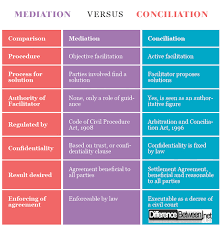
Mediation, conciliation, and arbitration are alternative dispute resolution (ADR) methods that have proven, in some cases, to be more expeditious, private, and economical than litigation. Nevertheless, these three methods differ in their effectiveness when applied in labour disputes.
Mediation involves the use of a neutral and impartial third party to facilitate the process of dispute resolution between the parties involved (Sourdin, 2002). The neutral and independent third party does not make the final decision for the parties, but only facilitates the negotiation process by laying down the issues, needs and wishes of the parties. Arbitration, on the other hand, is a dispute resolution method which involves an independent and impartial third party who makes a decision that is final and binding on the parties involved. Unlike mediation which is voluntary and non-binding, arbitration limits the control of the parties over the final decision. Lastly, conciliation involves the use of an impartial third party who attempts to build a positive relationship between the parties involved in a dispute, drives their negotiations, and directs them to a satisfactory decision. Conciliation is less adversarial than arbitration. However, conciliation differs with mediation in the sense that the conciliator greatly influences the actual resolution of the dispute. The conciliator exhibits more power on the parties and he is perceived as an authority figure responsible for proposing the best solution for resolving the dispute.
Mediation, arbitration, and conciliation pursue the same objectives which include reduced congestion in courts, fair outcomes, prompt hearing, and access to justice (Sourdin, 2002). Conciliation and mediation aim at maintaining the existing labor relationship and rekindling the lost power balance between the parties to a labor dispute. Mediation has proven to be the best ADR method in the United States due to the fact that it gives the parties a chance to make settlements which are economical, practical, and durable
Discuss how a court will determine whether there has been a wrong dismissal and the remedies that the court can award for wrongful dismissal
SAMPLE ANSWER
Wrongful dismissal
Wrongful dismissal involves the termination of an employee’s contract of employment in a manner that breaches the terms of employment contract. In the US, there is no specific law that establishes the factors for determining whether or not there is a wrong dismissal. Courts have, however, established acts that constitute wrongful dismissal (Sealy & Hooley, 2009).
The courts have established that an employer does not need to be nice or even rational to the employees. Employees can be dismissed for various reasons as long as they are not prohibited by public policy or law. According to the ‘employment-at-will’ doctrine, an employer is not bound to maintain a relationship with the employee and he or the employee, may end it any time. A claim on wrongful dismissal may be based on various grounds including: breach of contract claims, violation of freedom of speech, refusal to provide necessary work leave, whistleblower or retaliation claims, sexual harassment, public policy violations, and discrimination. Discrimination on grounds of age, gender, medical condition, disability, sexual orientation, national origin, religion, and race is the most common ground for wrongful dismissal on which many employees file their claims.
The remedies that may arise from the claim of wrongful dismissal include monetary compensation for the wrongfully dismissed and/or reinstatement of the dismissed employee. The remedy is intended to put the plaintiff employee back to the position in which he was prior to the wrongful dismissal. Compensation may be in terms of damages in terms of salary and benefits lost in the course of the wrongful dismissal. Additionally, the wrongfully dismissed employee may be awarded punitive damages, damages for suffering and pain, attorney fees, and any other remedies.
Reference
Sealy, S. L. & Hooley, R. J. A. (2009). Commercial Law: Text, Cases and Materials. OUP.
We can write this or a similar paper for you! Simply fill the order form!
Differences between agent, employee and independent contractor
Differences between agent, employee and independent contractor
Order Instructions:
explain how the court will determine whether a person is an employee, an independent contractor, or an agent.
SAMPLE ANSWER
Differences between agent, employee and independent contractor
The differences between an employee, agent and independent contractor are established by various factors such as the degree of skill used in performing the job, the mode of payment, the regularity of the work in the company’s business, whether the work forms part of the ordinary business of the principal, and the tools and materials used in doing the job (Megerdomian, 2010).
While the agent and employee work under the control and direction of the principal, an independent contractor acts as a separate and distinct entity. Thus, an independent contractor provides service in accordance with his own control and direction. Employers do not determine the manner, means and details of the job done by independent contractors. However, an employee does not act as a separate and distinct entity but works in the employer’s business, under the direction and control of his employer.
An employer is also distinguished from an employee in line with the mode of payment. An employee is on the employer’s payroll and receives regular payment. However, an independent contractor receives payment by the job done. Another difference is that an independent contractor uses his own tools and materials in carrying out his work while an employee uses tools and materials provided by the employer.
An agent is a person acts in accordance with the authorization of the principal. The authority may either be actual, apparent or ratified. An agent may operate either as an independent contractor or an employee who provides service for the principal on a regular basis. Nevertheless, a fully independent third party is capable of being an agent without having any status of an independent contractor or employee.
For this essay (entry) it is required to maintain a weekly journal, documenting important aspects of leadership they encounter over the duration of the module. Entries into the journal may include examples of leadership personally witnessed or insights gained through readings or class discussions.
1)I want 2 entries each one is around 100 words, and each entry is in separate word document.
2)Entries should be placed in a journal.
3)Entries should be based on your learning experience after reading the attached files.
4)You are free to follow your own format as long as it is logically structured.
5)Note:To prepare for this essay please read the required articles that is attached.
SAMPLE ANSWER
Week 7 Journal Entry
Relationship between leadership and culture
Nowadays, business is becoming more and more global and interlinked by means of communications technology as well as increased geographic accessibility. Therefore, the impact of culture becomes increasingly significant for leadership. I have learned that the relationship between leadership and culture could be understood in various ways. At the basic level for instance, good leadership requires the leader to have the knowledge of other cultures. Leaders need to not only recognize, but also acknowledge the distinctions between cultures and respond aptly. Having an understanding of other cultures can certainly assist leaders of business organizations to work with difference and aid communication between dissimilar ethnic groups.
Moreover, I have learned how various cultures around the world perceive leadership behaviours in other cultures. Cultures of Southern Asia and the Middle East score highly in self-protective behaviours such as ensuring both the security and safety of a leader, and score low in participative leadership behaviours which entail involving other people in decision-making as well as implementation. Conversely, Latin America, Latin European, and Anglo culture clusters score low in autonomous leadership behaviours and high in value-based/charismatic leadership.
Journal Entry 1:
Journal Entry 2:
Cultural differences that affect leadership practices: the UK and Saudi Arabia
Culture plays an essential role in improving leadership practices and sticking to infringing cultural practices may result in negative impact on the organization. I have learned the way the United Kingdom compares with Saudi Arabia in terms of how cultural differences affect leadership practices. In Saudi Arabia, religious activities and festivals have a major influence in leadership practices and help in ensuring that leaders actually have good skills for guiding and leading their people (The Hofstede Center 2015). In Saudi Arabia unlike in the United Kingdom, male dominance is valued and most business leaders are male. In the UK, both women and men are valued equally and many women hold leadership positions in business organizations.
Outstanding personalities of leaders
I have also learned how to describe the personalities of various leaders using the three theories of Allport’s Trait Theory, Eysenck’s Personality Theory and Freud’s Tripartite Theory of Personality. For instance, Sir Richard Branson Personality could be evaluated using Freud’s Tripartite theory of personality into 3 constituents: superego, the ego, and the id.