Cartoon description: Man ordering at a restaurant: “I’ll have the monster triple burger with cheese and giant fries…oh..and a diet cola. I’ve got to watch my weight!”
Please make every effort to complete your primary post by Wednesday night. In addition to your post, you’re required to make at least two substantive replies to your classmates’ posts that show you’ve engaged with the post to which your are replying.
PART 1: Look at the above cartoon. What is this saying about how we eat? I’d like you to discuss the typical diet of people in the U.S. or another MDC compared to a less developed country (LDC) you choose (for example, U.S. compared to Haiti). How does diet differ among regions (i.e. urban-to-rural, south-north-east-west, poor-to-wealthy communities, etc)? Why does it differ? Are there “S.P.E.E.C.H. reasons? Use material from Chapter 6, web research, life experience and other information to back your position.
PART 2: Do diseases only impact an individual – or can they impact a community or population? Give an example and some details about a disease outbreak in your area, past or present, real or potential. How can local policies or local public health systems reduce risk to their community? Use material from Chapter 7, web research, life experience and other information to back your position.
SAMPLE ANSWER
Diet and Disease
Part 1
The description of carton clearly demonstrates the kind of foods that we eat. Most of us eat fast foods and foods that have lots of fats and cholesterol. Cheese, burgers, giant fries and cola are processed foods and this makes a larger percentage of our diet. The diet of people in different countries or social economic status differs (Yaktine & Murphy, 2013). For instance, the diet of people in the U.S. is different with that of majority of people that comes from less developed countries such as Haiti. For instance, the typical diets of a person in US will include fries, processed foods such as chicken, cookies with less vegetables whereas diets of a person from Haiti will consist of more local foods such as carbohydrates, and vegetables.
Diets therefore will differ in terms of the regions where people are living. The diet in urban center is different from that of rural areas. In urban centers, people are busy and therefore tend to take more of fast and processed foods as opposed to rural areas where they consume raw food products from their farms. Wealthy communities as well take different kinds of diets from those people from poor communities. Rich people have the capability to choose the foods they want depending on their own interests while poor people are forced to eat diets within their reach. I think there are no S.P.E.E.C.H reasons explaining this.
Part 2
Diseases not only impact an individual but they impact on the community and can as well impact on the entire population. An outbreak in a region will affect individuals as well as entire community. For instance, the outbreak of Ebola in West African countries such as Liberia impacted on individuals, community and population at large. Individual succumbed to death as communities were forced to stay indoors and avoid coming in contact with people.
People were restricted to exchange handshakes as a mechanism to avoid spread. People therefore failed to attend to the workstations and this made many of them to face challenges in providing for their family. The government as well incurred huge costs in its interventions.
Public policies or public health systems are essential and can help to reduce risk to their communities. They do this by creating awareness about such outbreaks to the community to ensure that they take appropriate measure to prevent further infections and spread of the diseases.
I am applying for Master in Human resource management. I have a bachelor degree in the following: mass communication from Faculty of information in the University of Ain Shams.
I have 3 years working experience as a cabin crew in the international airline.
I like you to help me in writing a Motivational statement around 830 words. And the conditions of the Motivational statement as the following:
The program you are applying for must be mentioned in the statement.
Break the statement into two parts:
1. How your work and/or academic experience are relevant to the programme you are applying for.
At least one paragraph of the statement should indicate why you feel you are professionally/academically qualified to be admitted and successfully complete the programme.
More specifically:
Demonstrate how you expect your experience to help you prepare for the program.
Give examples of how you have dealt with tasks at work relevant to the subject area and how you think this experience will be applicable to your studies.
Describe your professional progression from the start of your career to date and explain the skills you have gained throughout this period.
Provide specific examples which relate to particular modules of the program.
2. What is your personal motivation to study the programme you are applying for.
In this part of the motivational statement, the candidate has to present their motivation to study the master programme.
More specifically:
Why this program of study is important you?
What you hope to gain from the program?
What will make you a good student?
What your career plans are and how the program will help you achieve your career goals?
What aspects of the program appeal to you?
Thank you for helping me
Best regards,
SAMPLE ANSWER
Motivational Statement
Part 1
Education is critical, as it remain the source of light and knowledge. I cherish education and this has enabled me to study hard whenever the opportunity comes in my way. I am keen on achieving my dreams and this propelled me to apply for Master Course in Human Resources Management.
I believe that my academic and work experience makes me a suitable candidate for the course. I do feel I have met the minimal requirements to allow me pursue the coursed. I have already pursued a bachelor degree in Mass Communication from the Faculty of Information in the University of Ain Shams. This opportunity has enabled me to acquaint myself with various communication strategies that organizations adopt. I have as well managed to acquaint myself with knowledge on the structures and the functioning of an organization. Furthermore, working as a Cabin crew in one of the international airlines has enabled me to put into practice my communication skills. The three years at the airline have shaped my understanding on the operations of an organization. I have as well gained more skills and experiences in working with multiple people from various cultural groups. I therefore believe that these backgrounds have given me an opportunity to shape my skills and knowledge about operations of an organization. Pursuing this course, will therefore not be a challenge to me.
The experience gained will prepare me for the program in many ways. The experience has increased my level of confident in the way I respond to issues. I have therefore, gained more confident in pursuing the course because I now understand the value of the skills I will acquire through the course. The experience has as well enabled me to interact and socialize with people from different entities. I have as well learned about the operations and management of organizations and therefore, I believe that I have adequate knowledge about the course. For instance, at my work place, I have shown exemplary performance in the way I plan and render my services. I have shown commitment and worked well as a team member. On various occasions, I have received awards and recognition for being devoted and organized in the way I execute my duties. Time management is yet another area that I have done exemplary well. I believe that my devotion and my keenness when it comes to time management will be of profound value as I pursue this course.
I developed interest in this area while in high school. I had passion of transforming people live in the roles I play. I pursued degree in communication to learn more about the art of communication. I believe that communication is critical in any society. The opportunity to work at an airline enabled me to learn many things pertaining to the management and other issues relating to work and employee-employer relationships. One of the things I learned at the work was problem solving and decision-making. The task required me to think quickly and think smart something that enhanced my skills in thinking. I also improved my socialization skills especially through working with people from various communities across the globe.
Part 2
Studying this course was not a decision made in single day. This has been my dream for years since I was in high school. I was motivated to study in this line because, it was going to give me an opportunity to serve the people better. I do believe that human resource managers have the responsibility of ensuring that employees receive better treatment to enable them perform their duties well.
The program is therefore important to me in the sense that it will improve my level of skills and knowledge in dealing or managing human resources at an organization. The course as well will enable me fulfill my aspirations and ambitions in life. I have a dream of pursuing education to the highest level and this course will enable me move near to my dream.
The program as well will enable me to be a resourceful person in the society. I will be in a position to influence positively on the society in many ways. I will provide mentorship and guiding services to many youth in the community. I will also empower the community members through such programs.
I know the value of learning and as well the responsibilities of a student. As a student, I have always remained focused in my learning and studies. Understanding the reason for pursuing the course will definitely make me to remain steadfast during my course studies. I am a good time manager and this will enable me to attend to all learning sessions. I am also disciplined and organized. Having worked in a multicultural environment, I believe I will be a good team player and will work well with my fellow colleagues and professors as I pursue the course.
My career plans are to work in a vibrant and challenging environment in future. I like challenging tasks and environment. I also plan to pursue doctorate degree upon completion of my master’s degree in Human Resource Management. The program is important requirement to give me a competitive advantage to get an opportunity to work in a challenging environment as well act as a stepping-stone when it comes to pursuing doctorate degree. Some of the aspects of the program that appeals to me are that, it is offered at considerable cost and flexibility in the schedules of attending to classes. This therefore, will give me an opportunity to attend to other things as I pursue the course.
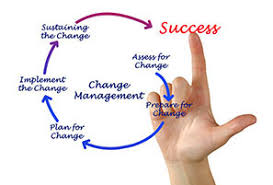
Identify and assess the process of planning and managing change within an organization. What role should HR play in change management?
The following conditions must meet in the essay:
1) I want a typical and a quality answer which should have about 1400 words.
2) The answer must raise appropriate critical questions.
3) The answer must include examples from experience or the web with references from relevant examples from real companies.
4) Do include all your references, as per the Harvard Referencing System,
5) Please don’t use Wikipedia web site.
6) I need examples from peer reviewed articles or researches.
Appreciate each single moment you spend in writing my paper
Best regards
SAMPLE ANSWER
Change Management
Overview
The following exercise takes a critical look at various concepts associated with change management as well as the manner in which they are handled in the strategic management of organizations (Hannan and Freeman, 1984). Change is an crucial part of the daily administration of organizations. The style in which it is administrated has a profound bearing on the success or failure of the organization in meeting its key objectives. These include profit making, service delivery and the quality of its products among others.
Introduction
The term ‘organizational change’ refers to the all of the processes and procedures that come up when a business entity or similar organization experiences transformation. Transformation in this context may be widespread across the organization or highly localized. Organizational Change can be manifested rapidly, in volatility or with a lot of discontinuity. These types of change are manifested differently in different organized institutions and they therefore result in different challenges that require careful handling for the organization’s success. This necessitates the initiation of proactive strategies by the management of these organizations since this helps to steer clear of unmanageable problems. The alternative to strategically managing change is reacting to the impacts of the transformation and this tends to weigh heavily on the management as well as the organization.
With rapid change the transformation takes place within a relatively short period of time giving the members of the organization a small window of time to prepare and or adjust to these changes. Rapid change occurs frequently in an organization (Cunningham et al, 2002). Circumstances that can lead to this type of change management include a high rate of economic growth or alternatively a relatively quick rate of obsolescence for technology.
Volatile change on the other hand is associated with uncertainty in that it can either be a big change or a small one depending on highly subjective variables. Volatile change is mostly occasioned by external market forces but on rare occasions this can be the result of forces within the organization.
A critical question at this juncture is whether human resource managers are adequately equipped to handle the different forms of change that the organization may experience. This question arises from the different ways that change manifests itself in organizations.
Non- continuous organizational change is quite unpredictable in nature as it follows trends that are akin to fashion. There is no logical way of foretelling the direction the organization will take by analyzing past performances or records. The timing of such chances is also impossible to predict. Consumer preferences are a common contributor to this type of organizational change. The fact that they are unpredictable in nature means that it is challenging for the organization’s decision makers to know the appropriate amount of resources to allocate as they ensure the desired results are achieved.
This concept fits well within the Strategic Management Process
The above manifestations of organizational change are all dealt with through dynamic strategic management. The reason for this is the fact that they all represent a turbulent organizational environment which is characterized by the rapid, volatile and or discontinuous change. These categories of change will at times occur independently and in other instances they will take place in combination or succession. Despite the changes it is crucial for the management of the organization to see to it that the different objectives set for specific departments as well as the entire organization are realized. Through the application of strategic management the administrators of the organization are charged with ensuring that the work of the organization stays on course so as to ensure satisfaction for the different stakeholders. These stakeholders have different interests. The owners of the organization will demand profits. Customers on the other hand will require goods and or services to their specifications. The employees will need remuneration for their work. The government will require the organization to meet its legal obligations such as being licensed and meeting the set quality and safety standards. The local community on the other hand will anticipate the goodwill of the company through Community Social Responsibility. At times these demands change and it is the duty of the manager to ensure that they are met by the organization. Mere reaction to change is not sufficient and it is therefore necessary for decisions to be made based on reason and the consideration of several variables. This process is what constitutes strategic management and this therefore justifies the inclusion of the different types of organizational change concepts under it (Amburgey et al, 1990).
Models used to assess the roles, impacts and implications of rapid, volatile and non-continuous organizational change
Two models that can be used in the analysis of the above changes are ‘strategic cross functional management’ and the ‘Enterprise Strategy’.
Strategic cross functional management is a strategy that takes full advantage of the organization’s functional excellence. What this entails is the realization of the functional significance of the different components of the organization mainly the personnel and the departments (Levinthal and March, 1981). This means that their significance needs to be looked at with close attention being given to the manner in which they add value to the organization. When changes occur the members of the organization will be aware of how these changes will potentially affect them and this will enable them to adjust appropriately to ensure their functionality within the organization remains uncompromised unless it is being improved. The same applies to departments within the organization.
With enterprise strategy a given plan of action that has been decided upon is adapted to suit the needs of the organization as opposed to forcing the organization to align itself to the solution at hand. When this strategy is applied the changes that are taking place within the organization will be dealt with using solutions that have been tailored to the subjective needs of the organization. It proactive measures are to be implemented the most important factor to be analyzed will be how appropriate they are for the organization and not how well they will be put into action to counter the impacts of change.
The Responses of Human Resource Management Officers to discontinuous change
Chief Executive Officers of the various organizations that exist in today’ world economies need to respond to discontinuous change through the application of dynamic strategic management. The reason for this is that discontinuous change in nature is nearly impossible to predict. This means that the specific aspects of the organization’s processes that change will be different each time. As such it is impossible for the Human Resource Management Officer of such an organization to be rigid in his or her approach to discontinuous organizational change. Dynamic strategic management will enable this officer to effectively adapt his or her leadership to specific problem at hand (Kanter, 2003).
With this approach to leadership the Human Resource Management Officer will be able to effectively analyze the change that has arisen. The diligent analysis of the problem will lead to the formulation of logical approaches to specific problems. Having an in-depth understanding of the change the organization is undergoing or needs to undergo will empower the different organizational actors to make relevant changes instead of using a trial and error approach. A Human Resource Management Officer who embraces dynamic strategies will also be inclined to regularly monitor the performance of the organization in the wake of the changes taking place.
A critical question that arises from this however is whether critical the HRM will be capable of focusing on a stable work force while at the same time maintaining a focus on mitigating the destabilizing impact that organizational change always threatens to bring about.
Conclusion
From the above it is clear that the management in any organization needs to be careful in the way it handles change. The main reason for this is that change is unavoidable and it has the capacity to make the current operating environment troublesome. In such situations grave errors can be made by human resource personnel who are aiming to resolve the challenges albeit while having a minimal understanding of the problems associated with change. If the executive managers however take up dynamic management as part and parcel of their approach to organizational change, the organizations will improve from the inside out since these principles are applied at the root of the problem (Armenakis et al, 1993).
References
Amburgey, T. L., Kelly, D., & Barnett, W. P. (1990, August). Resetting the Clock: The Dynamics of Organizational Change and Failure. In Academy of Management Proceedings (Vol. 1990, No. 1, pp. 160-164). Academy of Management.
Armenakis, A. A., Harris, S. G., & Mossholder, K. W. (1993). Creating readiness for organizational change. Human relations, 46(6), 681-703.
Cunningham, C. E., Woodward, C. A., Shannon, H. S., MacIntosh, J., Lendrum, B., Rosenbloom, D., & Brown, J. (2002). Readiness for organizational change: A longitudinal study of workplace, psychological and behavioural correlates. Journal of Occupational and Organizational Psychology, 75(4), 377-392.
Hannan, M. T., & Freeman, J. (1984). Structural inertia and organizational change. American sociological review, 149-164.
Kanter, R. M. (2003). Challenge of organizational change: How companies experience it and leaders guide it. Simon and Schuster.
Identify and assess the process of planning and managing change within an organization. What role should HR play in change management?
The following conditions must meet in the essay:
1) I want a typical and a quality answer which should have about 830 words.
2) The answer must raise appropriate critical questions.
3) The answer must include examples from experience or the web with references from
relevant examples from real companies.
4) Do include all your references, as per the Harvard Referencing System,
5) Please don’t use Wikipedia web site.
6) I need examples from peer reviewed articles or researchs.
Appreciate each single moment you spend in writing my paper
Best regards
SAMPLE ANSWER
Planning and Managing Change
Change is imperative in any organizations and managers should understand the appropriate strategies to employ to institute change. People or stakeholders welcome change differently. Some may resist change while others adopt change easily. The significance of change plays tremendous role on the manner with which change is received. It therefore requires proper planning and management. This discussions, identifies and assess the process of planning and managing change within an entity. It also delineates on the roles of HR in change management.
Change involves moving from known to unknown and this may affect people worth, competencies and coping abilities. Many members in an entity may not support change unless they are convinced on the value of the change. This requires good planning in creating readiness and overcoming resistance. To create readiness, the change agents need to understand the reason for the change (Clardy, 2013). The change should have some benefits to the entity in short and in long run. In planning, appropriate strategies should be adopted. People should understand and see the need for changes. One of the strategies is to sensitize the organizations to pressurize the members to accept change. The other strategy is to identify the discrepancies between the current and the desired/expected sates and lastly is to convey credible and positive expectations for the change (Atkinson, 2014). People want to understand how the change will affect them. If they perceive that, the change is positive and of value, it then becomes easy to persuade them to accommodate the changes.
In organization, resistance to change comes from three areas including, political resistance, technical and cultural resistance. Cultural resistance takes the form of procedures and systems that promote status quo that promotes conformity of existing norms, values and assumptions. Political resistance arises when the changes in organization threatens powerful stakeholders while technical resistance emanates from procedures and consideration relating to costs. Change initiatives therefore, focuses on leadership, culture, process, strategic and quality (Elida-Tomita, 2010). The entity should therefore have understanding of the specific change initiative when planning for the change. In planning and managing changes, it is important to create a vision that provides a limelight of what the change is going to bring in future. The vision describes the purpose and core values that can hide the organization as it envisions its future on which change is directed. Vision encourages commitment as it creates a common goal and compelling rationale for why change is required and worth. Clardy (2013) identifies seven functional requisites for effective change management; increasing readiness for change in the entity, management approval, preparation of leaders, motivating employee for change, putting into operation change interventions, validation of change process and embedding change in the organization. If these are considered, success in change process is guaranteed.
Change as well requires enough support hence it becomes important to develop political support to institute the changes. Various political dynamics requires considerations when instituting this change and include carrying out assessment of the change agents’ power, identifying the key stakeholders that the change will affect and those that will implement the change (Geldenhuys & Veldsman, 2011). It is also essential to identify influencing stakeholders to use them to support the implementation of the changes.
Managing this transition is also very critical. Implementing changes involves movement of one state to another often-desired future state. At this stage, it is important to understand major activities involved in this transition that includes activity planning, commitment planning and change management structures. Activity planning entails making road map for change. Appropriate activities required to make the change happens are cited and integration of discrete change takes place. Commitment planning requires identification of key people that will help formulate strategy to gain support (Wilson, 2014). Changing management structures should be created to help in mobilizing and promoting change
Change requires to be sustained to ensure achievement of the goals and objectives. For this to occur, it requires provision of resources for change, building of support systems, development of new skills and competencies, reinforcement of new behaviors and staying on the course.
Human Resource plays a critical role in change management. Human resources are viewed as the facilitators, architect and designers of changes in an organization. They have a key role in participating in all programs that pertains to change (Wilson, 2014). They play a role of planning as well as implementing changes in an entity. They participate in the planning processes whereby they evaluate various viewpoints before deciding on the most important one. They strategically forecast initiatives and directions in an entity to help in the development of business strategy for the directions and initiatives (Wilson, 2014). HR as well determines the specific action points and elements that execute the actions to trigger the change. In change process, they also identify the performance targets for the various action points and establish appropriates communication plans for the process of changed.
HR as well acts as agents of change in an organization. As agents of change, they provide impetus suitable for conducting change at every level of an organization. They align the top management with the rest of employees, provide appropriate structured framework for change, identify and establish working change management processes and influence the process of change through communication (Christensen, 2014).
HR as well are expected to build positive relationship at the work place. They must provide solution to problems as they arise and manage any conflicts, resistance and risks through proper and coordinated effective communication. Various organizations have gone thorough change process and succeed by adopting to appropriate strategies in planning and management of the change processes. Examples of these organizations include, Pepsi, Apple. Inc., and many others.
In conclusion, change is inevitable in any entity. Change initiatives may include leadership, process, and cost, cultural or strategic change. This requires proper planning and management. HR plays a key role in change planning and management as they provide insights on the best way forward. Successful change process must as well consider all the stakeholders.
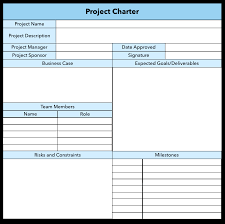
Project Charter for the St. Dismas Assistance Living Facility
Project Charter for the St. Dismas Assistance Living Facility
Order Instructions:
Scope statement and work breakdown structure (WBS) for this project.
Bonnie:
please give me your email
Richard Cordor:
Project scope statement and a work breakdown structure. Develop a project charter for the St. Dismas Assistance Living Facility Case Study. You should develop a Scope statement and work breakdown structure (WBS) for this project. Include the standared title page, introduction, scope statement, WBS and conclusions. That is the instruction.
SAMPLE ANSWER
Project Charter for the St. Dismas Assistance Living Facility
Purpose of Project Charter
The purpose of this project charter is to develop a project charter for the St. Dismas Assistance Living Facility Case Study.
The project charter for the St. Dismas Assistance Living Facility project charter documents and tracks the necessary information required by decision maker(s) to approve the project for funding. The project charter should include the needs, scope, justification, and resource commitment as well as the project’s sponsor(s) decision to proceed or not to proceed with the project. It is created during the Initiating Phase of the project.
The intended audience of the project charter for the St. Dismas Assistance Living Facility project charter is the project sponsor and senior leadership.
Project and Product Overview:
The living facility that is intended for development is for St. Dismas church. The facility is to provide residence for the church leaders who have been renting living premises for a very long time. This has been too expensive for the church. The living facility is intended to commence being constructed as soon as possible when the funds are made available. The facility is intended to be put up within the church compound and will take a period of 18 months. The total amount expected for the project is $1.5M
Justification
The facility will be very useful for both church members and church leaders. St. Dismas church has a total population of 300,000 church members who need spiritual nourishment from their leaders. The leaders and the spiritual providers therefore are required to be within the church premises so that they can be accessed by the church members so easily. Therefore, development of this living facility will have so much impact to St. Dismas church members and the society as a whole.
Scope
Objectives
The objectives of the St. Dismas Assistance Living Facility project are as follows:
To construct a five storey building for accommodation of the church leaders
To furnish the living facility with all the necessary furniture
To buy more land for further development
High-Level Requirements
The following table presents the requirements that the project’s product, service or result must meet in order for the project objectives to be satisfied.
Requirement
I Requirement Description
Land ownership
The land is present. However, the builder and house design are selected separately.
Construction and design requirements
All works and practices in relation to the construction must be completed:
(Schwalbe, 2009).
Major Deliverables
The following table presents the major deliverables that the project’s product, service or result must meet in order for the project objectives to be satisfied.
Major Deliverable
I Deliverable Description
Issuance of required permits
This are very necessary since no construction can take a place without them
Contractor’s scope of work and Schedule of Values
This is the definition of the worl plan
Subcontractor and Material Suppliers
This involves the delivery of all the builing materials.
(Heldman, 2011).
Boundaries
The project work will not include construction of pavements and the block fence. In addition, it is not automatic that the contractor’s contract will be renewed in case of any other form of construction.
Duration
Timeline
The designing of the project would take a period of two month, construction work until its completion a total of 16 month from December 2014 to 2016 March.
Assumptions, Constraints and Risks
Assumptions
The living houses are being constructed to provide accommodation to the church leaders. The assumption is that the church leaders are having challenges in getting accommodation.
Constraints
There might be time constraints especially in finishing the construction within the scheduled time. This is due to changes in weather patterns which are unpredictable.
Risks
The approval of the construction by the government authorities might delay the project work. A possible mitigation strategy would be to schedule requirement sessions with the partners as early as possible.
Project Organization
Roles and Responsibilities
This section describes the key roles supporting the project.
Project Role
Project Responsibilities
Project Sponsor
Person responsible for acting as the project’s champion and providing direction and support to the team.
Government Monitor
Government employee who provides the interface between the project team and the project sponsor.
Contracting Officer
Person who has the authority to enter into, terminate, or change a contractual agreement on behalf of the Government.
Project Officer
A program representative responsible for coordinating with acquisition officials on projects for which contract support is contemplated.
Project Manager (This could include a Contractor Project Manager or an FTE Project Manager)
Person who performs the day-to-day management of the project and has specific accountability for managing the project within the approved constraints of scope.
Business Steward
Person in management, often the Branch Chief or Division Director, who is responsible for the project in its entirety.
Technical Steward
Person who is responsible for the technical day-to-day aspects of the system including the details of system development.
Security Steward
Person who is responsible for playing the lead role for maintaining the project’s information security.
(Anderson & Forest Products Laboratory 2002).
Stakeholders (Internal and External)
The stakeholders are the church members and other related churches.
Project Charter approval
The undersigned acknowledge they have reviewed the project charter and authorize and fund the St. Dismas Assistance Living Facility project. Changes to this project charter will be coordinated with and approved by the undersigned or their designated representatives.
Signature:
Date:
Print Name:
Title:
Role:
Conclusion
This project charter will provide a comprehensive guideline towards implementing the above named project work.
References
Anderson, L. O., & Forest Products Laboratory (U.S.). (2002). Wood-frame house construction. New York ; Hong Kong: Books for Buisiness.
Heldman, K. (2011). Project management jumpstart. Hoboken, NJ: Wiley.
Schwalbe, K. (2009). Introduction to project management. Boston, Mass: Course Technology.
We can write this or a similar paper for you! Simply fill the order form!
United States has been for years accommodating various communities with different cultures. This interaction has resulted into the development of subcultures that have had tremendous effects on its members that believe in them. One of the subcultures is Otherkin, who believe that they are not humans, either in a spiritual or physical sense. The members of this subculture believe that they are mythical creatures such as elves or vampires trapped in human bodies or that they are a living incarnation of a fictional character, among other beliefs. The members of this culture also associate themselves with animals, plants and other concepts of nature. This subculture is mainly internet-based, and the oldest internet resource for otherkin is the Elven kind Digest. A University of Kentucky student started this mailing list for interested members and elves. The modern otherkin subculture emerged out of these Elven online communities in the 1990s. However, it is postulated that the otherkin subculture consists of other subcultures. These subcultures are, for instance, vampires, therians and draconic. However, although they considered as being part of the otherkin subculture, they are culturally different movements of their own, but often overlap in membership. The otherkin subculture’s members believe that they have supernatural powers that enable them to heal at a faster rate compared to normal humans, or to shift in space.Some members of the members argue that they have these supernatural abilities due to their 20/20 vision and their apparent lack of allergies. Otherkin, however is a not a cult, and it comprises of individuals from diverse religious beliefs, for example, Christians, Jews, Muslims and Pagans. Otherkin are often confused with furries, but the difference is that furries tend to wish to be a different culture while their counterparts believe that they are actually something different from humans.
We can write this or a similar paper for you! Simply fill the order form!
This assignment is in 2 sections and each section need to have a minimum of 4 references at the end of that section, meaning the writer will have to provide 2 reference list one each at the end of the section. I have also included the document that is needed to complete section B. The writer must pay attention to details and respond t all questions in detail.
The Evolution of the Role of the NP
SECTION A (2 pages minimum)
The Evolving Role of the NP
The role of the NP has evolved dramatically over the course of the last 50 years. The evolution of the role is impacted by changes in legislation affecting licensure, credentialing, scope of practice, and educational requirements. Choose a legislative issue related to the role of the NP and describe this for your colleagues. How does this issue impact the scope of practice for NPs? What changes might this issue catalyze? Describe the implications of the DNP credential in regard your selected issue.
Include a minimum of 4 reference at the end of this section.
SECTION B (2 pages minimum)
The Consensus Model/LACE
The Consensus Model was developed with the idea of uniform regulation of NPs across the United States. Review the document Consensus Model for APRN Regulation: Licensure, Accreditation, Certification and Education (NCSBN, 2008). The document will be uploaded in the file section for the writer.
Evaluate the proposed model. What are the strengths and weaknesses of the Consensus Model? Consider the implications, as well. How might this model impact competition and/or collaboration between NPs and physicians in the U.S. health care system?
Include a minimum of 4 reference at the end of this section.
Resources
Textbooks, read the following:
Advanced Practice Nursing: Emphasizing Common Roles
• Chapters 1, 6
Please review the following web resources:
• Are Nurse Practitioners the Solution to Shortage of Primary-Care Doctors? (PBS, 2011)
• Nurse Practitioner World News: The 5 NP Political Issues and the One Solution (O’Grady, 2009).
• Consensus Model for APRN Regulation: Licensure, Accreditation, Certification and Education (APRN Consensus Work Group & the
• National Council of State Boards of Nursing APRN Advisory Committee, 2008)
• American Association of Colleges of Nursing (AACN) Resources and information on Doctor of Nursing Practice (AACN, 2011)
SAMPLE ANSWER
The Evolution of the Role of the NP
SECTION A: The evolving role of the NP
The chosen legislative issue is the expansion of the scope of practice of the Nurse Practitioners (NP). The scope of NPs should be expanded and NPs actually qualify for independent practice – they should be allowed to practice independently without being supervised or directed by a physician. NPs are registered nurses with a postgraduate degree in nursing – commonly a master’s degree. In many states, scope-of-practice laws give Nurse Practitioners the ability to carry out various primary care services which might be delivered whenever people make an initial approach to a nurse or physician for treatment and continuing care for chronic illnesses (Cassidy et al., 2014).
With an envisaged shortage of primary care as the population continues to increase and as millions of Americans become newly insured beginning the year 2014, it is imperative to expand the role of NPs in a lot more areas and to permit them to deliver a broader range of acute as well as preventive healthcare services (Vestal, 2013). Some groups of physicians are against the expansion of NPs’ scope of practice because of concerns over safety of patients. This controversy mostly plays out in state capitals, in which legislators and medical boards determine scope of practice for professionals who are not physicians, such as NPs. In addition, there are concerns and worries at the national level that bear on the ability of NPs to be reimbursed for the care they deliver (Cassidy et al., 2014).
NPs are essentially prepared in master’s degree programs and they are typically team-trained together with medical students and they share similar course work, patient rounds, in addition to other on-site clinical experiences. Studies have indicated over and over again that NPs, within their level of training, provide cost-efficient, quality treatment of common diseases as well as management of minor chronic disorders. Studies have also shown that NPs are as competent as doctors in carrying out a common endoscopic screening test for cancer of the colon (Yee et al., 2013).
The chosen issue impacts the scope of practice for Nurse Practitioners in that it advocates for the expansion of the scope of practice for NPs. The change that this issue may catalyze is allowing nurse practitioners to practice independently to the full scope of their capabilities without being under supervision of physicians. In essence, the critical shortage of primary care providers might actually make the appointment of a physician hard to come by (American Association of Colleges of Nursing, 2014). Some states are attempting to fill the shortage of doctors in primary care with nursing staffs that have advanced degrees in family medicine. This calls for relaxing of old medical licensing limits, understood as scope of practice laws, which are preventing these NPs from playing the lead role in the delivery of basic health services. They should be allowed to work without a supervising doctor (Vestal, 2013).
A Doctor of Nursing Practice (DNP) is basically designed for nursing staffs who are seeking a terminal degree in nursing practice. DNP-prepared nurses are properly equipped to execute fully the science developed by nurse researchers. For the selected issue, the implication of the DNP credential is that DNPs will help in designing and providing care for diverse populations. This is necessitated by the quick expansion of knowledge underpinning practice, countrywide concerns regarding patient safety and the quality of care; the complexity of patient care; as well as shortages of faculty and personnel (Yee et al., 2013).
Cassidy, A., Aiken, L. H., Bodenheimer, T. S., Agres, T., Schwartz, A., & Dentzer, S. (2013). Health Policy Brief: Nurse Practitioners and Primary Care. Health Affairs.
Yee, T., Boukus, E. R., Cross, D., Samuel, D. R. (2013). Primary Care Workforce Shortages: Nurse Practitioner Scope-of-Practice Laws and Payment Policies. National Institute for Health Care Reform, 13.
SECTION B: The Consensus Model – LACE
The Consensus Model for ARPN Regulation is essentially the product of considerable work carried out by the ARPN Consensus Work Group and the NCSBN APRN Advisory Committee. It is a consistent model of regulation for the future of advanced practice nursing and was actually designed for the purpose of aligning the interrelationships amongst licensure, accreditation, certification, as well as education (LACE). The 4 main roles of advanced practice registered nurse as specified in the Consensus Model document include the following: certified nurse-midwife; certified nurse practitioner; clinical nurse specialist; and certified registered nurse anesthetist (American Association of Colleges of Nursing, 2013).
Strengths and weaknesses of the Model: it is expected that the clarity and consistency resulting from this regulatory model would benefit individual nursing staff members and enhance patient care. The uniformity that is anticipated to be produced from this model may enable advanced practice registered nurses to practice to the full extent of their licensure and education (Summers, 2011). Additionally, the more consistent system would offer opportunities for nursing staffs through the likelihood of ease of mobility across state lines. As implementation of the Consensus Model is carried out in every state across the country, it would ensure that the advanced practice registered nurse profession keeps on growing and meeting the demands of changing healthcare (American Nurses Credentialing Center, 2014).
Moreover, the model also ensures the scope of practice of APRN is used to its fullest extent. Equally important, the Consensus Model will also ensure that accreditation, licensure, education, as well as certification are uniform throughout all states in America for advanced practice registered nurses (American Nurses Credentialing Center, 2014). The other benefits of the Conceptual Model are as follows: it ensures public safety; it increases access to healthcare; it advocates appropriate scope of practice; and it facilitates mobility of advanced practice nurses. The Model is basically designed to raise the responsibility of advanced practice registered nurses and increase satisfaction with work through opportunities to practice more autonomously (American College of Nurse-Midwives, 2014). Even though this Model consists of several highly positive recommendations and is believed that it would provide benefits to nurse practitioners and advanced practice registered nurses, it has actually created a very dynamic environment wherein there are opportunities for improvements and setbacks if misinterpreted.
The Consensus Model might impact competition and/or collaboration between physicians and NPs in America’s healthcare system considering that it provides APRNs with opportunities to practice independently with doctors. It impacts competition between physicians and APRNs since APRNs will also launch their own practice in an effort to address the problem of doctor shortage thereby competing with physicians for clients and patients. The Model establishes various standards which are aimed at protecting the public; improving access to quality, safe advanced practice registered nurse care; and improving mobility. American Nurses Credentialing Center (2014) pointed out that the Consensus Model emphasizes that advanced practice registered nurses should be licensed as autonomous practitioners. It also claims that APRNs do not have any regulatory requirement for direction, collaboration, or supervision. The Model impacts collaboration in that it does not foster the collaboration of a qualified physician with nurse practitioners. In essence, it stipulates that advanced practice registered nurses are not required by law to collaborate with physicians, and not to be supervised or directed by physicians (Summers, 2011).
References
American Association of Colleges of Nursing. (2013). APRN Consensus Process. AACN
Assignment tittle – Source and use information on the hospitality industry Again case study has two parts each one on 1 page thanks and photos 500 words
SAMPLE ANSWER
Hospitality industry
PART I
There are several employment opportunities for hospitality students that entail working in hotels, resorts and clubs, food and beverage industry, catering, facilities management, logistic management, travel and tourism, management consultancy among others (Casado, 2011). They can also work in the entertainment and leisure places such as casinos and theme parks. The roles and functions of persons who work in this industry include event planning and organization, housekeeping, bartenders, facility maintenance, management, marketing, and human resources. The hospitality management is highly interconnected with other industries such as tourism and aviation industry. This is because a good number of persons who utilize hospitality services are tourist and these persons need to fly from one zone to another. The hospitality industry is also interrelated with other industries such as banking and finance, transport, communication among others since their customers need to travel, communicate, and provide financial exchange for their quality services they are being offered. According to Costello and Hogan (2002), the hospitality commercial sector is highly profitable due to a good number of readily available customers. The location of the hospitality industry has a huge role to play in determining the levels of profits and losses realized by the organization. Professionalism is highly needed in this industry since most customers are very sensitive to the nature of the treatment and luxury they are offered.
The hospitality industry is also affected by some legal issues such as consumer protection law that protects the consumers from exploitation the hospitality providers (Larkin, 2009). The law also bases upon the providers of hospitality services the duty of care for all their customers to prevent possible harm. Since hospitality industry brings about people from all corners of the world, the law demands equal employment opportunity to guard against any possible discrimination against any jobseeker in the industry. This is also facilitated by the provisions of anti-discrimination that protects anybody from being exploited in the hotel industry (Hall, 2000).
The hospitality industry is also influenced by a number of ethical issues that guards against how operations are being conducted (Wellace, 2005). Confidentiality is one of the ethical issues that require that some issues needs to be kept secret. The hospitality industry also suffers from commissioning procedures that affects the number of customers that visits their areas of business at any one time. In some cases, especially during the holidays, the hotel industry suffers from overbooking, leading to lots of stress and strain in the manner in which they conduct their businesses. There is also the ethical aspect of price wars between the industry players that may determine the levels of profits or losses realized by the firm. In order to compete effectively, some players resort to free gifts to their customers and this may have negative effects on other players. The ethical aspect of tipping and product recommendations also affects the number of visitors who frequent any hospitality industry.
PART II A
Maitre ‘D is a very important person in the hospitality industry who is responsible for establishing a connection between the dining halls and the kitchen. Therefore, this person is involved in supervision of the waiting staff, welcoming guests, and ensuring that all the customers are well satisfied with their services. The employment opportunities for Maitre ‘D includes restaurants, lodges, hotels, cruise ships among others. The product he is responsible to make includes mixing salads, boning fish, and flambéing food. The potential clients of Maitre ‘D include everyday customers and important visitors (Patterson, 2008).
PART II B
In organizing a birthday party, I will ensure that all the invited members are well served with invitation cards to make it formal. I will try to define the dressing code and the time they are expected to arrive in the occasion. I will host the visitors in a premier location where they can feel comfortable and experience nature. A good variety of foodstuffs will be provides so that the entire visitors have a taste of whatever they want. I will then organize for entertainment through live performance of music so that everyone can have a pleasant experience.
References
Costello, H & Hogan, I. (2002). Codes of ethics in Hospitality and tourism. International Journal of Hospitality Management 2 (4) 243-268
Casado, M.A. (2011). Housekeeping Management. Wiley, end edition
Hall, J. (2000). Ethics in Hospitality Management. Prentice Hall
Pattersn, T. (2008). Ethical dilemma in the hospitality industry, Journal of Travel Research, 36 (4) 47-56
This is case study one name Monitor work operations which has two parts need one page for each thanks 500 words
SAMPLE ANSWER
Monitor work operations
Case Study A
Managing work overload within the hotel industry can sometimes be a daunting task, especially when the customers are many (Casado, 2011). The customers may end up complaining leading loss of customers. In order to handle such a large number of clients within their hotel, the manager needs to plan well into the afternoon. First, they should ensure that whatever is required within the hotel is availed in good time. This would help to avoid the last minute rush that would keep the customers waiting. In addition, the manager should prepare for the afternoon by ensuring that he properly informs the workers of the workload ahead of them. This would enable them to prepare both physically and psychologically in to handle the pressure that is ahead of them. In this engagement, the manager needs to talk with the employees and give them room to make suggestions on how they intend to handle the pressure.
In times of pressure, effective delegation of duties enables the manager to execute his plans in accordance to the work overload. The manager should delegate the duties among the worker such that he has maximum control of all the activities taking place at any particular time. Therefore, the manager should properly select the task to delegate and match it with the right person for the job. The highly skilled employees should be attached to areas that are very sensitive and require their expertise. The manager should also encourage leaderless groups and allow leaders to merge from the naturally in order to encourage decision making. During this urgent delegation, high risk and highly sensitive areas require maximum supervision and constant eye check to ensure that all operations run as planned.
The problem within this organization is that their restaurant is fully booked and the visitors are expected to arrive shortly and they are less prepared to handle them. The problem becomes more complicated when their expected visitors decides to extend their arrival time, which makes them to relax and focus on other duties. When more guests arrive, a lot of pressure is put on the workers and their ability to deliver quality service within a very short period. This makes most of their customers upset since they are unable to get quality food within reasonable time. Unable to wait any longer, the customers begin to walk out of the hotel, leaving them with possible losses as they will not be able to sell the hurriedly prepared meal.
Short term solutions call for the management to set priorities among the employees such that every one of them knows what to do at what time. They should also manage their time properly so that no food is presented at their table in the right time to avoid walk out of the customers. Long-term solution calls for the management to plan their work and hire enough employees in accordance to the expected workload of the business.
Case Study B
One of the housekeeping problems at Rockstone Hotel is that there are few staff to match the extensive workload in the hotel. Therefore, the two persons who are responsible for cleaning the hotel are not able to carry out their duties in required time. Another housekeeping problem at this hotel is that workload is not properly distributed, making Barney to relax most of the time between lunch and dinner. In addition, Betty, who acts as the manager of housekeeping services, is unable to organize things properly such that no problem is reported within the hotel.
In order to assess the staff workload and workflow, the manager should consider the length of time it takes the workers to complete their time (Larkin, 2009). If they take too long while working normally, then it is evident that the workers are overloaded.
The options available for Frank and Jossie to improve the situation at their hotel are to hire more able workers to help the already overloaded workforce. Another available option for these couples to improve the profitability at their hotel is to procure the services of an able housekeeping manager to organize operations in a professional manner.
Instructions
As a policy analyst you have been asked to calculate the elasticity of demand for university
courses. Questions 1 to 4 are based on the assumption that the universities that increased their
fees by 30% experienced an overall decrease in student applications of 3%.
1. What is the price elasticity of demand for courses at the universities that increased
their fees by 30%?
2. Is demand for these courses elastic or inelastic?
3. What factors do you think are responsible for this degree of elasticity?
4. Is tuition fee revenue likely to increase or decrease at these particular universities?
Questions 5 to 8 are based on the assumption that the 30% fee increase at the universities that
increased fees caused an overall increase in student applications of 8% at those universities
that did not increase their fees.
5. What is the cross-elasticity of demand for courses at universities that did not increase
their fees with respect to the price of courses at universities that did increase their
fees?
6. Are courses at different universities substitutes or complements?
7. Is demand for courses at the universities that did not increase their fees elastic or
inelastic with respect to universities that did increase their fees? What is the
importance of this degree of elasticity?
8. Finally, what are some of the factors that might cause the Minister for Education to
argue that changes in demand for course are not necessarily related to the fee changes?
Based on economic analysis of the above issue, prepare a 1,200 word report using the
following structure:
Purpose
Method
Results
Discussion
Recommendations.
Please ensure that you clearly define your terms and explain your results.
SAMPLE ANSWER
Elasticity of demand for university courses
Abstract
The purpose of elasticity is to measure the responsiveness of changes or the relationship that exists when price are changed and the quantity demanded of the products also changes or remains constant. The purpose of this paper is to show the relationship that exists when the fees chargeable to students are increased and the students’ applications decreases. The theory of elasticity and its relationship to the fee increment and student applications is analyzed to determine the rate of elasticity and whether the relationship is elastic or inelastic.
Introduction
The price elasticity of demand (PED) or (Ed) measures the responsiveness or compares the changes in the quantity demanded to the changes in prices while the Cross price (Ex) elasticity refers to the ratio or the rate of % change in the quantity demanded of a product or service to a given % change in the price of the other good or service. There are many factors that may be responsible for these inelasticity’s or elasticities other than the price factors that are not directly related to the quantities demanded which in this case is the fees being charged at the university and the rate of student’s applications.
Methodology
Elasticity explains or reflects the sensitivity or changes in a variable as compared to the changes on the other variable. The price elasticity of demand (PED) compares or measures the responsiveness of changes in the quantity demanded to the changes in prices. Price elasticities are in most cases negative but their signs are mostly ignored. When the calculated Price Elasticity of Demand (PED) is less than one (>1) then it’s inelastic. (Frank, 2008) It means that the overall changes in prices of the products sold have little effect on quantities of products demanded. (Melvin & Boyes, 2002) But when the Ed is greater than <1 then the overall changes in prices of goods or products sold have a large effect on the average quantities of goods demanded. The PED is said to be elastic. Ed represents the elasticity coefficient that is used to calculate the rate or degree of elasticity. (Kreps, 1990)
Results
To calculate the Price Elasticity of Demand for the University fee increment and its reactions,
the following formula is utilized to obtain the PED = %∆Q/%∆P i.e. the % change in the quantities demanded / the % change in the prices of products or goods. (Henderson, 2008)
The percentage change in the number of students is -3% while the fee increment was 30%
The price elasticity of demand is equal to %∆Q/%∆P = -3 %/30%
= 0.1
Ed = 0.1
The PED for the university courses is 0.1 i.e. it’s less than one hence the university courses are inelastic. Ed of 0.1 indicates that for every 1% of price increment, the number of students reduces by 0.1% or alternatively if the fee decreases by 1% then the number of student’s application also increases by 0.1%. (Colander, 2008)
The factors that are responsible for this inelasticity maybe other factors which are not directly related to the fees being charged at the university. The most probable cause maybe the marketing strategies that the university has adopted and the lack of publicity for the courses being offered at the institution. The marketing strategies maybe ineffective or there are other factors like the competitiveness of the qualifications being offered at the institution. (Frank, 2008)
The other factors maybe the presence of other colleges or institutions nearby or other substitute alternatives than going to that college. These substitutes maybe the availability of jobs or other alternative courses or job training that maybe available. Students are more likely to opt for other alternatives if the terms are favorable. The other reasons may be a recent increment of fees that may have resulted in negative reactions and the consumer’s ability to pay the fees.
The fee is likely to reduce in order to attract more students at the institution though it would not result in significant increase in student applications.
Cross price elasticity refers to the ratio or the rate of % change in the quantity demanded of a product or service to a given % change in the price of the other good or service.
Ex = %∆QA/∆PB
Cross Elasticity of Demand = Percentage change in the quantity demanded of service A/
Percentage change in the Price of service B
Ex for the university courses = 3%/8% = 0.38%
The percentage change in cross elasticity is positive which means that the universities are substitutes.
The cross elasticity is inelastic as the Ex is less than one i.e. 0.38. The importance of cross elasticity is that since consumers are more price-sensitive and switching to close substitutes is very easy if alternative goods or services are available, the cross elasticity will be helpful in determining the behavior of consumers or the students. (Henderson, 2008)
Discussion
Students are more likely to opt for other alternatives or substitutes if the terms at the respective university are unfavorable. The presence of alternatives and substitutes makes it difficult for the universities to act unilaterally as consumers evaluate their alternatives carefully when prices change. When the demand of services being offered is elastic then the consumers will be affected more with the price changes. The other reasons that may have contributed to the inelastic nature of the PED is that may be the university management may have had a recent increment of fees that may have resulted in negative reactions from the students also the consumer’s ability to pay the fees may have contributed to the inelasticity of demand.
The other factors maybe the change in income or the increased costs in fees maybe unaffordable to some students. These factors may have contributed to the inelasticity of demand for the university fees and student application. (Pindyck & Rubinfeld, 2001)
The factors that are responsible for this inelasticity maybe other factors which are not directly related to the fees being charged at the university. The most probable cause maybe the marketing strategies that the university has adopted and the lack of publicity for the courses being offered at the institution. These strategies maybe inadequate and ineffective. The university management should evaluate all its marketing strategies and involve professionals to develop its marketing communication strategies to promote its revenues.
Recommendation
The recommendation to the university management would be reduce the fees to the rates they were before the increment and also exploit other methods of increasing the student application processes. Though, the increment of the fees will have very little effect on the general application processes and also on the number of enrolment. The inelastic nature of the price elasticity of demand makes it difficult for the management to raise more revenues it would be better to engage the students on their needs in order to attract more student application. Other alternatives would be to adopt different strategies to market the institution and the courses available. (Heather, 2004)
Conclusion
The management of the university should exploit other methods of encouraging more student applications like offering special packages at reduced rates and conducting more promotional activities to create awareness of its academic calendar and the courses offered to increase its revenue instead of depending on increased fees to raise its revenues.
References
Colander, D. C. (2008) Microeconomics, 7th ed., Page 288 McGraw-Hill, 2008.
Frank, R. (2008). Microeconomics and Behavior (7th ed.) McGraw-Hill ISBN978-0-07-126349-8
Heather, K. (2004) Economics: Theory and Action. Harlow: Prentice Hall.
Pindyck, R & Rubinfeld, D. (2001) Microeconomics 5th ed. Prentice-Hall.
ASSIGNMENT 1 (30 MARKS)
Question 1 Total marks for Q1. (20 marks)
Financial statements of Nimbin Pty Ltd are presented below:
Nimbin P/L
Statement of Financial Position
As at 30 June 2013 and 2014
($000)
20142013
Current assets
Cash and cash equivalents $1,645 $2,110
Accounts receivables (all trades) 4,100 3,675
Inventories 7,000 6,930
______ _____
Total current assets 12,745 12,715
______ ______
Non-current assets
Property, plant and equipment 17,190 15,330
_______ ______
Total non-current assets 17,190 15,330
_______ _______
Total assets $29,935 $28,045
======= ======
Current liabilities
Payables $5,780 $5,990
_______ ______
Total current liabilities 5,780 5,990
_______ ______
Non-current liabilities
Interest-bearing liabilities 9,940 9,450
_______ _____
Total non-current liabilities 9,940 9,450
_______ _______
Total liabilities $15,720 $15,440
====== ======
Equity
Share capital $7,700 $7,700
Retained earnings 6,515 4,905
_______ _______
Total equity $14,215 $12,605
====== ======
Nimbin P/L
Income Statement
As at 30 June 2014
($000)
Revenues (net sales) $55,000
Less: cost of sales 35,100
_______
Gross profit 19,900
_______
Less: Expenses
Selling and distribution expenses 7,100
Administrative expenses 4,970
Finance costs 1,560
______
Total expenses 13,630
______
Profit before income tax 6,270
Income tax expense 1,908
______
Profit $4,362
=====
Nimbin P/L
Statement of changes in Equity
For the year ended 30 June 2014
($000)
Share capital
Ordinary (7,200.000 shares)
Balance at start of period $7,200
______
Balance at end of period 7,200
_______
Preference (250,000 shares)
Balance at start of period 500
______
Balance at end of period 500
______
Total share capital $7,700
======
Retained Earnings
Balance at start of period $4,905
Total income for the period 4,362
Dividends paid – ordinary (2,702)
Dividends paid – preference (50)
______
Balance at end of period $6,515
======
Additional information:
Payables include $5,620 (2014) and $5,730 (2013) trade accounts payable; the remainder is accrued expenses. Market prices of issued shares at year-end (2014): Ordinary $12; Preference $6.70.
Required:
Calculate the following ratios for 2014. The industry average for similar businesses is shown. (14 marks)
Industry average
Rate of return on total assets 22%
Rate of return on ordinary equity 20%
Profit margin 4%
Earnings per share 45c
Price-earnings ratio 0
Dividend yield 5%
Dividend payout 70%
Current ratio 5:1
Quick ratio (acid ratio) 3:1
Receivables turnover 13
Inventory turnover 6
Debt ratio 40%
Times interest earned 6
Assets turnover 8
Given the above industry averages, comment on the company’s profitability, liquidity and use of financial gearing. (6 marks)
Question 2 Total marks for Q5. (10 marks)
A local restaurant is noted for its fine food, as evidenced by the large number of customers. A customer was heard to remark that the secret of the restaurant’s success was its fine chef. Would you regard the chef as an asset of the business? If so, would you include the chef on the balance sheet of the business and at what value? (2 MARKS)
Accounting provides much information to help managers make economic decisions in their various workplaces. You are required to provide examples of economic decisions that the following people would need to make with the use of accounting information: (3 MARKS)
A manager of human resources
A factory manager
The management team of an Australian Football League (AFL) club
The manager of a second-hand clothing charity
c) Indicate the effect of each of the following transactions on any or all of the three financial statements of a business: (5 MARKS)
Statement of financial position
Statement of financial performance
Statement of cash flows
Apart from indicating the financial statements (s) involved, use appropriate phrases such as ‘increase total asset’, ‘decrease equity’, ‘increase income’, ‘decrease cash flow’ to describe the transaction concerned.
Purchase equipment for cash.
Provide services to a client, with payment to be received within 40 days.
Pay a liability.
Invest additional cash into the business by the owner.
Collect an account receivable in cash.
Pay wages to employees.
Receive the electricity bill in the mail, to be paid within 30 days.
Sell a piece of equipment for cash.
Withdraw cash by the owner for private use.
Borrow money on a long-term basis from a bank.
THE END
We can write this or a similar paper for you! Simply fill the order form!