The stands of the local business owners on Graffiti debate
The stands of the local business owners on Graffiti debate
Order Instructions:
I have attached a copy of the assignment sheet. I also attached the Power point presentation i delivered with my partner on this subject. please make sure you go through both materials properly. Both materials will give you references for sitting. Try as much as possible to relate some opposing stands of some other institutions on this matter. BUT MAKE SURE YOU PLEASE UNDERSTAND THAT YOU ARE CLEARLY ON THE SIDE OF THE LOCAL BUSINESS OWNERS ASSOCIATION AGAINST GRAFFITI.
SAMPLE ANSWER
The stands of the local business owners on Graffiti debate
Different people view graffiti in different perspectives. Some people in society view graffiti as a pollution, criminal and an eyesore. The way people perceive this defers and it is not a crime for them to have these opinions and views. The magnitude of this has been witnessed in the setting up of laws and legislations concerning graffiti. For instance, some of the cities such as King City are debating new anti-graffiti by laws something that is geared to elicit mixed reaction. This discussion develops its argument on graffiti from the perspective of the Local Business Owners Association. The paper deliberates on the arguments for and against this issue.
Graffiti are graphical sketches usually on vantage locations in urban centers. The proponents of these graffiti argue, it is their way of expressing their minds on various aspects that concern the society (Ken, 2006). They use this platform to send a message to the authorities on specific aspects in the society that they found not appropriate. However, opponents have claimed that individuals that have criminal records and not concerned about the welfare of the people do these.
The local Business Owners are important segment in the society that has their voice on the graffiti. This business owners association always advocates for the welfare of their businesses in various location. The fact that graffiti is associated with vandalisms and criminal is an issue of concern to this business owners association. Security is a key concern for many businesses in the urban centers and therefore, most of them are adamant about these graffiti (Arifa & Paul, 2008). Graffiti are associated with hooliganism and destruction. This is an act that is done mostly by youths and is carried out at night. This therefore, provides an opportunity for these youths to engage in criminal activities in the urban centers. Even if those that draw this graffiti do not commit crime, they necessitate criminal as criminal groups get an opportunity to engage in their criminal activities
Graffiti are as well methods that people my trigger an appraisal against the government or certain category of people. Many states face different problems such as youth unemployment, corruption, crime, drug abuse, poor leadership and such. This therefore, provides an opportunity for the youths to use them to trigger a call to an action. Government may face challenges in governance if these graffiti’s are used to trigger an appraisal against it. Graffiti are therefore a means of communicating certain ideas and thoughts (Banksy, 2005). People in a country will use this to begin an appraisal that may lead to disruption of the businesses. Political instability is a threat to businesses. During such moments, business loses lots of revenue through vandalism and hooliganism. Lots of property is destroyed and many of the shops are attacked. Doing business during such moments becomes a nightmare therefore; most of the local business owners association may not support these graffiti on grounds that they trigger violence among the citizens. They pose a threat to their business something that is not supported by many businesses.
Many business owners association would prefer other means of communicating rather than graffiti. The youths can voice their concerns to the authorities through formal means such as through discussions and meetings (Ganz, 2004). Using graffiti arouses emotions in the members of the public. When this emotion goes beyond their control, it results to destruction. The reason why most states are formulating anti-graffiti laws is to help address such concerns that lead to huge consequences on the economy of the country as a whole.
In some society, graffiti is accepted as part of the people culture. They are used as a source of expression or a source of culture and therefore, people views them positively (Alice, (2008). Such graffiti therefore are not emotive but depict the rich culture and the way people lead their lives. Such graffiti are not harmful to the business owners and therefore are embraced because of the facts that they showcase the culture of the people. Some still think are that graffiti are one of the ways of artistic expression and part of the urban culture (Koon-Hwee, 2001). Such arguments therefore, have made graffiti to be viewed positively. Still some of the states responsible for managing cities view graffiti as unlawful act. It makes the city look untidy and therefore oppose this form of art.
What makes graffiti art is the message they convey to the members of the public. When they convey positive messages that exemplifies on the values and cultures of the people, they promote unity and culture of the people. This is therefore viewed as an art. However, when they convey a negative message, or influence youths and citizens to up rise against the government to cause war and fighting then it makes it vandalism (Tierney, 2005). Messages that inform the public on important aspects such as good governance and corruption in society are important as they help to transform the society. However, if they are used to propagate crimes and vandalism, then it becomes apparent that they are perpetrating crimes and vandalisms. Therefore, this contributes to the considerations of whether the graffiti are appropriate “in place” or inappropriate “out of place” (Ella, 2007).
If these graffiti are out of place, various parties such as the leadership, business associations and other stakeholders will raise the red flag and require that immediate action is taken to avoid them.
Even though, these graffiti are perceived differently among the members of the society, it is important that an amicable solution is reached to ensure that these graffiti are not used to trigger conflict and crime but to promote values and cultures of the people. Those opposed and those supporting them need to come together and deliberate on the purpose of using graffiti. This will also help to alleviate misunderstanding between the members of the community. I do support the opposing stands of the local business owners about these graffiti’s especially if they are likely to promote violence and vandalism. Business owners have a reason to be worried about the safety of their business if these graffiti perpetrated crime and hooliganism.
References
Alice, F. (2008). How the Tate got streetwise, The Observer, Sunday 11 May 2008
Arifa, A., & Paul, V. (2008). “Graffiti: Street art – or crime?” The Independent, Wednesday, 16 July 2008.
Banksy, K. (2005). Wall and Piece. New York: Random House UK.
Ella, C. (2007). Framing [Con]text: Graffiti and Place” Space and Culture, 10:145-169.
Ganz, N. (2004). Graffiti World. New York. Abrams.
Ken, J. (2006). “When Aerosol Outlaws Became Insiders: Graffiti Art at the Brooklyn Museum,” NY Times June 30, 2006.
Review the criteria in your text for determining an implied contract (pages 630–631). Choose three of the criteria and identify a specific case or example that would prove to be contractually binding. In Chapter 18, you read about implied contracts. For this assignment, write a 1–2 page paper that describes the concept of implied contracts. Identify a specific case or example that would prove to be contractually binding and provide your rationale regarding why this is the case. Cite and reference information from your sources according to APA guidelines.
SEE ATTACHED FILES FOR MORE INFORMATION.
SAMPLE ANSWER
An implied contract is a legally enforceable agreement that is not in writing. It is created on the basis of the conduct, behavior and assumed relationship of the parties involved. A contract is usually implied when a party accepts benefits in kind from another party because of particular circumstances and the benefit cannot be considered to be a gift. It is therefore the legal obligation of the individual who is receiving the benefit to give a fair value to the benefit that is received (Smitley, 2011).
Criteria for determining an implied contract
There exist various criteria that are used in the legal enforcement of implied contracts. These criteria include basic circumstances such as their being a specific promise that was made in between the parties. The promise also needs to have been given by someone with sufficient authority to enforce and offer that promise. The employer’s behavior and conduct at the time of giving the promise needs to be consistent with policies, industry practices and must be consistent with the promises (Smitley, 2011).
Case study
Mr. Baker had been employed by the common wealth bank for a period of 27 years with his last position at the bank being the senior position of Executive Manager in the Bank’s corporate banking section. A restructuring of the bank unfortunately made his position redundant and even without notice he was given a letter asking him to vacate his desk on the same day. However, because he was a model employee at the bank and had served for several years, the bank made it clear to Mr. Baker that it had preferred to redeploy him to another alternative role of the bank and was even nominated a career support manager and documents to inform him about the new banks redeployment services. He was also directed to hand over his company mobile phone and access to his company email was terminated.
The bank true to its word conducted the redeployment policy but the career support manager who was designated to Mr. Baker was unaware that Mr. Baker could not access the banks communication systems therefore resulting in his fate of not being aware of the activities and the bank was unable to contact him for an extended period of time. The bank therefore failed to adhere to the procedures within the Redeployment Policy. Mr. Baker sued the bank for damages for breach of contract.
Rationale as to why the promise was legally binding
The terms of the mutual contract implied that the mutual trust and confidence that was bestowed between the parties involved did not merely apply to the point of employee dismissal. Therefore, since Mr. Baker was not made redundant, the implied term did not interfere with the right of the bank to provide notice. To apply the term mutual contract to the manner of dismissal was therefore unnecessary and inconsistent with acts of law that deal with unfair dismissal. Therefore, in light of this case study, the breach of the implied agreement occurred independently and before the eventual termination of employment. Therefore, the court ordered that compensation be paid and damages be awarded to Mr. Baker on the basis of an employee’s loss for a chance in redeployment that resulted into the breach
You have been asked to prepare a report. In doing so you should address the following aspects:
1. Outline firm-level (micro) and country-level (macro) factors contributing to the development of INGLOT’s competitive advantages and discuss their sustainability.
2. Develop INGLOT’s strategic plan for the next five years with a concrete outline of recommended geographical expansion, business model evolution and product diversification.
Do not exceed 3000 words; scripts that are excessively long (i.e. exceeding the limit by more than 10%) will not be read beyond the point of the word limit. The word limit applies to the main report only, and excludes exhibits. There is no minimum word limit.
Note carefully that this is not a project, but a case analysis, and as such the case contains all the information available to answer the issues at stake. You should NOT study sources for recent information on the company such as its Report and Accounts or its website, its competitors or its industry. You may however consult academic books or papers on general approaches to treating aspects of analysis that you consider important. Please note carefully that if you copy text from such sources you must correctly reference the source, and clearly identify copied text by means of italics or inverted commas.
Please note the following general points on case analysis:
– As noted above, the principle of a case is that it contains all the information available to answer the issues at stake.
– It is traditional to open a paper with a quick summary of past events described in the case and to outline the current situation. Then you state the issues facing the company or the managers, as appropriate. Usually these issues are explicit in the case; if not, you have to identify them.
– Most business decisions must be based on both qualitative and quantitative considerations. Most case analyses require both (but there are exceptions, e.g. in finance or in organizational behaviour). You must dig into the data, not merely quote them from the case. Be critical. Push the numbers around. If there are insufficient data, make an intelligent and justified estimate.
– Remember, all the time you are focusing on the issues you have already announced at the beginning of the discussion or text. In that way, you can reach your recommendations and leave the reader satisfied that you have built your argument and justified your conclusions.
DO NOT PLAGIARISE – DO NOT USE EXTERNAL SOURCES
The overall structure should encompass:
1. Cover Page (1 page)
2 Table of Contents/List of Exhibits (1 page)
3. Executive Summary (1 page)
4. Main Report (respecting the above word limit)
5. Exhibits (if any)
6. References/Bibliography
The bibliography is an important element, and all references should relate specifically to points in the text, and be identified as such, and not simply “general” sources. Referencing should use the Harvard system.
Submissions are in WORD ONLY (.doc or .docx). Submit only one file and include any Excel analysis as images, not embedded files.
SAMPLE ANSWER
Table of contents
Executive summary………………………………………………………………………………3
Introduction …………………………………………………………………………………….4
Background of the company…………………………………………………………………….4
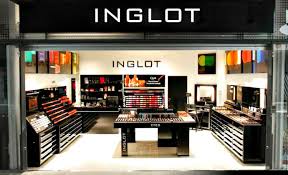
INGLOT Cosmetics Company located in Poland is one example of a company that started small and expanded. The company, which deals in cosmetics, has managed to grow and expand in various countries by investing back of its profits. The company has managed to maintain its markets niche in various countries and regions. The company micro-environment factors such as customers, competitors, distributors, media, suppliers and general public have played as key role in its expansion strategy The company values and embraces its customers. It designs and manufactures products that comply with the needs of the customers. This has played a key role in its success and its expansion to many countries
The company as well has gained a competitive advantage though its franchise strategy in reaching many customers spread across the county of its operations. The company takes time to analyze and research markets before making decision to invest in such markets. Macro environment factors have as well impacted on the company competitive advantage. Some of these macro environment factors include political factors, economic, social cultural competitive and technology. The company has enjoyed political stability in the countries it operates. This has influenced its business investments. It also complies with the legal aspects such as tax remittance and registration requirements.
The company as well has a strategic plan of five years whereby it aspires to expand its business to 110 countries. This strategy will enable the business to have a bigger market share. Through benchmarking, the company will be able to compete and with overtake its competitors. Product diversification as well opens an opportunity for the company to expand.
Introduction
Every company either locally or internationally endeavors to achieve its set objectives. Achieving objectives requires adoption of different strategies that can enable the company to gain competitive edge and take over bigger market share to accrue huge profits. Various factors and strategies come into play that contributes to business success. This report focuses of INGLOT cosmetic company. The report addresses the firms’ micro and macro factors that have contributed to its development of competitive advantage. It also covers on the sustainability of these factors. A strategic plan for the next five years with an outline of recommended geographical expansion, product diversification and business model are addressed.
Background of the company
The company founded 30 years ago in Przemysi town, as cosmetic firm has become one of the leading firms in colour cosmetics. It began its international expansion in 2006 and currently it operates franchises in more than 70 countries across the six continents (Marketline Plus, 2014). The company has about 500 boutiques stores retail locations and stands across the globe. The company has more than 1500 colors with 450 varieties to improve lips, 300 to portray ones face and 600 to enhance customers face and up to 400 shades of nail polishes (Marketline Plus, 2014). The company is performing well in the market due to its various strategies that it has implemented in its operations.
Firm-level (micro factors)
INGLOT is affected by micro-environment factor that have contributed to its competitive advantage. Micro-environment factors are immediate are operations that affect the company decision making freedom and performance. Some of these factors that are relevant to INGLOT cosmetics include, customers, competitors, distribution channel, general public and the suppliers, media and employees.
One of the major factors that have contributed to the company’s competitive advantage is customers. Customers are the major focus of the company successes (Klovienė 2012). Customers have contributed to greater height in the achievement of the company through their loyalty and support. The company has invested in their customers by providing products and services that meet the needs of the customers. The company identified the demand of the women products and this made them to take advantaged and to provide the same hence, achieving high profits. The fact that the company has invested a lot in improving its products has contributed to increased and widening customer base which is evidenced with its expansion initiatives (Marketline Plus, 2014).. The company has invested in innovation which has kept it ahead of its competitors in the market. For instance, the company manufactures revolutionary O2M Breathable Nail Enamel that used water and oxygen vapor permeability that is fashionable, good looking and healthier. This nail enamel has attracted many customers that have contributed to increased number of customers that are using the company products (Marketline Plus, 2014).
Competitors are other important micro-environment factors that have affected INGLOT cosmetic. Competitors compete for the same market share because they have similar or substitutes products. To overcome competitions, companies adapt to different strategies such as focus cost or differentiating strategies. Cost strategies allow a company to reduce the costs of its products or services to win over the competitors. Focus strategy, a company focus on a specific target market while differentiation strategy, a company provides quality products that meets the needs of the customers in the market. Such customers are not sensitive to the price of the products (Marketline Plus, 2014). Like many other industries, INGLOT has a number of competitors such as Halal cosmetics that are growing faster. INGLOT cosmetics has managed to attain its competitive advantage in the market because of its low cost strategy. The company offers its prices at low prices below the competitors. The prices offered provide mark up for the company because of the low production costs. The company has as well innovative and quality products that attract more customers to purchase the products.
Distribution channel is another micro-environment factor that has affected the company competitive advantage (Markman & Waldron 2014). The company has adopted franchise as its distribution strategy that has seen it expand and reach in many areas. This strategy has enabled the company to have a larger market share that has enabled it to remain competitive. The fact that the company products are easily accessible to its customers in various locations makes it accrue higher revenue through this wider market. The company has achieved this stride which has enabled it to provide stiff competition to other companies that have not been able to expand in their distribution networks (Marketline Plus, 2014). The company has well invested in its employees which have contributed to its competitive advantage. The company appreciates the contribution of employees. This has contributed to the success of the company. Employees receive training to help add value to the company
Suppliers as well contribute to the competitive advantage of the company. The company has established positive relationships with its suppliers and this has enabled the company to have smooth flow of materials that has enabled continuous production of these products. The media has as well contributed to greater magnitude to competitive advantage of the company. Media through its advertisement has enabled the company to improve its images and as well showcase its products. The market of the company has increased tremendously over the years through media advertising and marketing. (Marketline Plus, 2014). Media plays a key role as one of the channels for reaching and informing customers on the various products and services. The company has utilized the media platform making it more visible and famous compared to its competitors something that has elevated it and widened its market share. Public is yet another micro factor that has actually contributed to the success of the company. The members of the public have supported the company and portrayed it positively making it attains a positive image. These factors are sustainable as well have helped the company to sustain itself.
Country level (Macro factors)
Macro environmental factors are external factors that affect the operations of the business and may as well have impact on its competitive advantage. Any company that operates in a country across the borders on internationally level must ensure that they factor in these macro factors to be able to attain a competitive edge. INGLOT cosmetic is one of the companies affected with these micro-environment factors. These factors as well have a number of effects on its competitive advantages. Some of the micro-environment factors that affect the company include political-legal factors, economic factors, social cultural factors, competitive environment and technological factors.
Competitive environment affects the competitive advantage of the company (Toole & Lutz 2005). These factors include availability of competitive products, companies that compete for similar consumers, substitute products among many others. INGLOT cosmetics is operating in a competitive environment with other similar companies that have already established their market niche in various locations. These companies have as well substitute products that they sell to the consumers which reduces the number of consumers that purchase INGLOT cosmetic products. INGLOT is not a monopoly and that is the reason why it has adopted cost strategies to woo many customers and compete in the market both locally and internationally. To develop a competitive strategy, the company undertakes research of the markets to identify their suitability. The company as well through market research identifies current and potential competitors, which enables it to adopt to appropriate marketing strategies. The facts that the company anticipates competitive actions has as well enabled it to vigilant and to promote innovations by coming up with new products that makes it to compete favorably.
Political- legal environment as well affects the operations and competitive advantage of INGLOT cosmetics company (Markman & Waldron 2014). Business operates in an environment that has laws and regulations that they need to comply. Businesses are as well expected to interpret these laws and ensure that they adhere to them as they as well protect the rights of the consumers. Any company is expected to register and to have a certificate of operation both locally and internationally. The company is as well expected to remit its tax returns and adhere to any other laws relating to labor laws and environmental laws among many others. INGLOT cosmetics operate in different countries that have different political and legal environments. The company, nevertheless, has satisfied all these laws and legislations pertaining to particular nations they operate in. Furthermore, the political stability of a country affects the profitability of the business. So far, INGLOT cosmetics has been able to extend its products in countries that experiences political stability. This has made the company to have conducive environment of investment something that has contributed a lot to its increased level of investment (Marketline Plus, 2014).
Various institutions ensure that the company operates well and does not deviate from the activities or business initiatives they are registered to operate. These bodies includes the government which provides licenses and ensure compliance with the law and issues to do with tax remittance and labor laws. Others include consumer safety that ensures that the products meet the recommended standards for consumers. Products should not cause harm to the consumers. Other bodies include, environmental protection agency that concerns with issues of environment, health and safety and consumers interest groups among many others. These bodies work independently to ensure that the company operates within the set thresholds.
Economic environment as well affects the competitive advantage of the INGLOT cosmetic company. Economic factors influence the buying behaviors of the consumers. Their buying power and strategies is dependent on the economic situation of the country. Different countries experience different economic growth trends as some experience growth while others experience slow growth. Such dynamics affects the operations and profitability of the country. The stages of business cycle in these countries vary from one country to another and as well affect their business performances. Inflation rates in the country as well have negative impacts on the company products. During inflation, the company experiences decline in its profitability. Deflation as well has impacts on the performance of the business the level of unemployment as well affects the capability of the consumers to purchase these products. (Marketline Plus, 2014). High level of employment means that consumers have higher level of incomes and can be able to access these products. This therefore impacts positively on the company level of profitability. and vice versa. The resources available in the company as well affect the performance of the INGLOT cosmetics company. Currency fluctuations and exchange rates in these countries vary as well have impacts on the company profitability. Some of the currencies depreciate and this affects the profitability of the company as they incur some losses.
Technological factors as well affect the operations of the company as well as its competitive advantage. INGLOT cosmetics has adopted technology by adopting to e-shop . This has enabled the company to be creative and innovative reaching many of its customers in various places. The company has therefore adopted technology to sell its products as well as to market its products to customers in various locations through technology hence being able to achieve a competitive edge (Marketline Plus, 2014). Technology as well has improved the services and products as this has led to effectiveness and efficiency in the production process. Compliance has as well improved with technology making the company to operate smoothly.
Socio-cultural factors as well affect the competitive advantage of the company. The company understands the dynamics of operating in the various regions and therefore, they ensure that they adopt to suitable strategies that the particular customers in a certain region or country want. This is achieved through modification of their products as well as strategies. For instance, in their advertisements, the company uses languages that customers in the targets markets understand. This ensures that their communication reaches the intended audiences. The company as wells keeps into consideration the customers, and manners, material culture, social institutions, religions among many others in their promotional strategies to win over their customers. these factors are sustains the company and have enabled it reach this far.
INGLOT strategic plan for the next five years
In the next five years, the company wants to achieve set objectives. To achieve these objectives it must have a strategic plan that acts as a framework. The plan provides the target sales outcomes and the strategies the company wants to adopt to achieve the same.
One of the strategies is to establish positive relationship with the stakeholders including suppliers, government and retail outlets to compete favorably. another strategy is to expand to other 40 countries by the year 2019 this expansion strategy will see the company cover a wider market share. The company will also use internet and media to advertise the products to consumers. The company believes that information is paramount in ensuring that people makes purchasing decision (Marketline Plus, 2014). The company as well aims to reduce the cost of productions by recycling its raw materials. This will enable the company to accrue high profits through its low cost strategies. Furthermore, the company will use celebrities in its promotions to gain a huge market. This will help the company to reach many customers. The fact that the company is a cosmetic company makes it easier and viable to use celebrities to reach many people.
Recommended geographical expansion
In the company expansions strategy, it must factor into consideration various factors such as the culture, of the markets, the number of competitors in the market, the size of the market, the cost of distribution, the political environment among many others. These factors are critical because they will determine the competitive advantage of the company in the region. The company intends to expand to more than 110 countries across the globe to make the total number of countries that it operates to be 110. The countries cut across the six contents more so in the Africa, Middle East and the South American continents. These markets have not been explored and therefore, the company stands a chance to accrue huge profits from its operations in the region.
Business model evolution
The business model to be adopted is benchmarking whereby products and process are going to be measured against those of other organizations. INGLOT will therefore be able to gain insights on its performance through this comparison. It will gain information on its internal and external performance of its products in line with those of their companies. INGLOT will have an opportunity to search for the best practices that will enable it to record superior performance levels (Denrell 2005). The company will achieve a strategic advantage, as it will focus on its critical capabilities to develop a strategic advantage. Though benchmarking the company will as well increase its learning rate hence facilitating its experience sharing (Jack 2004).
Product diversification
The company will also adopt a strategy of product diversification to ensure that it achieves a competitive edge. The company even though has various products; it will still improve in its innovations to ensure that it remains competitive. The customers will have numerous options to choose form the company products.
Conclusion
INGLOT cosmetics is one of the companies that has managed to attain a competitive advantage through its strategies that it has adopted. The company managed to grow and expand to various countries. Various micro and macro factors affect the company competitive advantage. The company still has to adopt other strategies such as product diversification to expand to other regions to maximize its profits. The future of the company looks bright
Reference list
Denrell, J 2005, ‘Selection Bias and the Perils of Benchmarking’, Harvard Business Review, pp. 114-119.
Engaging Employees in Employee Relations Processes Order Instructions: I need an essay in the following subject: Identify the methods through which employees are involved with the employment relations process.
Engaging Employees in Employee Relations Processes
Do employees have a legitimate say in the organization’s decisions or have employers simply manipulated employees into believing they have a say?
The following conditions must meet in the essay:
1) I want a typical and a quality answer which should have about 1100 words.
2) The answer must raise appropriate critical questions.
3) The answer must include examples from experience or the web with references from relevant examples from real companies.
4) Do include all your references, as per the Harvard Referencing System,
5) Please don’t use Wikipedia web site.
6) I need examples from peer reviewed articles or researchs.
Appreciate each single moment you spend in writing my paper
Engaging Employees in Employee Relations Processes Sample Answer
Methods of Engaging Employees in Employee Relations Processes
In an organization, dealing with employees that are not satisfied is not an easy task. The introduction of employee relations in an organization is meant to address issues of employee morale, motivation and improved productivity (Kalleberg 2009). Essentially, employee relations are interested in identifying and dealing with individual employee problems and dealing with them before they get off-hand (Kalleberg 2009). Organizations should take caution in dealing with employees and ensure that they use the right methods and follow correct procedures to make them feel engaged. Among the areas that employees should have a say in is in decision making process in decisions that impact them. As a result, employee engagement in decision making process ensures that employees are satisfied and that they offer their best to improve their work environments.
In employee engagement, the manager has a lot of expectations that they expect their employees to meet for the organization to move forward. Among the expectations include setting plans by the employees (Bakker & Schaufeli 2008). Without a proper plan, employees will find it hard to know what they should engage in and the things that they need to do. Additionally, the employees are expected to work in groups to meet the objectives of the organization. However, the expectations should be met on an individual basis and each member of the organization should put in their personal engagements in the modest of manners (Shuck & Wollard 2010). Reviews about the organization and how the organization is performing is a core aspect of how the organization engages its employees. However, when it comes to this point, all employees are expected to offer their best and practice honesty in the reviews. Without honesty, the feedback offered will work against the organization and in the end; both employees and the organization will suffer setbacks.
For employee relations to come out successfully there is a need for employees to have a feeling that they are engaged in legitimate decision making processes (Gruman & Saks 2011). As a result, using some methods to ensure employee engagement is vital to the success of the business. Among the methods that are applicable in employee relations include collective bargaining. Collective bargaining is the process of engaging employees in decision making process through observing the rules and regulations of the organization (Gruman & Saks 2011). The method is one of the strongest methods for employee relations engagement. However, the management of the organization should control the activities in collective bargaining. In the case that there is no control, each party will try to take advantage of the situation and in the end, misunderstandings will arise.
Another method that is applicable in employee relations engagement in an organization is through complete control (Saks 2006). In this instance, employee trade unions are given the opportunity to act as the management of the organization. As a result, they are tasked with the real role of management and in the process, are allowed to make all managerial decisions (Saks 2006). At this point, employees are encouraged to actively involve themselves in the process and as a result, employee engagement in decision making is enhanced. For all activities and decisions in an organization, giving employees a voice to air their views is very important. If an organization is ready to engage its employees in employee relations, suggestions schemes are a must-have (Saks 2006). Suggestion schemes are presented employees to help them to make opinions and suggestions on the activities of the organization (Bakker & Schaufeli 2008). Once they are given, the management takes note of them and implements the ones that seem to have a positive impact on the organization.
Problems arising in an organization need immediate solutions. As a result, employee relations engagement plays a crucial role in this aspect to ensure that all is well and problems are avoided in advance. As a result, the formation of quality circles that consist of five to ten employees is a good way of engaging them in decision making processes (Saks 2006). The employees identify current and potential problems, discuss on ways of dealing with them and come up with an implementation strategy to combat the situation. However, this form of employee relations engagement demands that the employees in a quality circle should have a leader that holds a certain role in the organization. As a result, the management will get an assurance that the circle has the right attitude and that it is a positive move.
Without job enrichment, employees will develop a feeling that they are not playing an important role in their organization (Shuck & Wollard 2010). Job enrichment includes adding aspects like motivators and, rewards and job details to a job to make it more interesting and adorable (Bakker & Schaufeli 2008). However, in relation to job enrichment, the management of the organization should ensure that the details and motivators added are relevant and will not take a company to a loss or lower its profits to make it strain. Additionally, another method used to keep employees informed on decision making processes and activities in the organization is through trusting the employees. Employee trust includes allowing them to make the vital decision without interfering (Bakker & Schaufeli 2008). With this in mind, the employees develop a good attitude towards the organization and in the process; they are able to feel comfortable, important and special to the organization.
Apart from the methods that are used to keep employee relations alive and make sure that they are motivated, there are other aspects that also come with the process. For example, avoiding criticizing and downsizing employees will boost their morale and allow them to engage their creativity to the highest level possible. As a result, the management should know what to do and what not to do in order to make their employee relations effective (Shuck & Wollard 2010). On the other hand, there are employees in an organization that are seen to have a special potential talent. The management should look out for the attributes, identify them and give them the special attention that they need (Shuck & Wollard 2010). In the process, all of them will feel completely appreciated and their efforts will make the company grow.
One of the companies that ensure employee relations and engagement to make their operations effective is Walmart. Walmart has been in operation for a long time now and it believes that employee treatment is very important. As a result, it has bused employee suggestions for a long time to see what they need, their wants and suggestions on how to make the company more productive (Gruman, J. A., & Saks 2011). The suggestions that employees come up with are important and the management considers them to make them happy. On the other hand, other real companies have used the strategy among other methods to ensure that their employees are satisfied.
In conclusion, employee engagement in decision making process ensures that employees are satisfied and that they offer their best to improve their work environments. However, different organizations have different ways to ensure employee satisfaction and retention. The management is important to the activities and they should ensure that there is sanity in the methods.
Engaging Employees in Employee Relations Processes Reference List
Bakker, A. B., & Schaufeli, W. B, (2008), Positive organizational behavior: Engaged employees
in flourishing organizations, Journal of Organizational Behavior, 29(2), 147-154.
Gruman, J. A., & Saks, A. M, (2011), Performance management and employee engagement,
Human Resource Management Review, 21(2), 123-136.
Kalleberg, A. L, (2009), Precarious work, insecure workers: Employment relations in transition,
American sociological review, 74(1), 1-22.
Saks, A. M, (2006), Antecedents and consequences of employee engagement, Journal of
Managerial Psychology, 21(7), 600-619.
Shuck, B., & Wollard, K, (2010), Employee engagement and HRD: A seminal review of the
foundations. Human Resource Development Review, 9(1), 89-110.
Diversification of Alternative Investments Order Instructions: APA is critical for this paper, and it is important that the writer use a journal article to justify the answer and properly cite it.
Diversification of Alternative Investments
Details are also critical it is important the writer outline the important facts in the response.
Enron employees were heavily invested in Enron stock through their 401(k) plans. While companies frequently provide a match in the form of company stock, employees are typically free to move the money to an alternative investment. This was true at Enron as well, but most employees chose to leave their money in company stock.
Many investment experts contend that despite all of the legal and ethical lapses by those in charge of Enron, they were responsible for inflicting suffering on relatively few employees when the company failed. It was not the company’s fault if employees did not choose to diversify.
Do you agree with this statement?
Justify your answer using at least one journal article. Be sure to use APA formatting for the citation.
Diversification of Alternative Investments Resources
• Article
• Sharpe, W. (2007). Expected utility asset allocation. Financial Analysts Journal, 63(5), 18–30. Retrieved from Business Source Premier database.
Although the traditional method for performing asset allocation analysis is to use the mean-variance approach, this article introduces a new model. Although it involves using a more complex utility function, the author believes that it will result in a substantial increase in payoffs.
• Markowitz, H. (1952). Portfolio selection. Journal of Finance 7(1), 77–91. Retrieved from Business Source Premier database. (Seminal Paper)
Markowitz presents his theories on the two stages of portfolio selection; first, using observation and experience to analyze the future performance of stocks, and second, using this analysis to select stocks for the portfolio.
• Sharpe, W. (1964). Capital asset prices: A theory of market equilibrium under conditions of risk. Journal of Finance, 19(3), 425–442. Retrieved from Business Source Premier database. (Seminal Paper)
This model describes the use of risk to predict capital asset prices and market behavior and the authors conclude that most investors prefer investments that have lower rates of return, but also lower risk.
• Linter, J. (1965). The valuation of risk assets and the selection of risky investments in stock portfolios and capital budgets. Review of Economics and Statistics, 47(1), 13–37. Retrieved from Business Source Premier database. (Seminal Paper)
In this paper, the author outlines his theory on how investors can create a portfolio that minimizes the risk while maximizing the profit.
• Domain, D., Louton, D., & Racine, M. (2007). Diversification in portfolios of individual stocks: 100 stocks are not enough. Financial Review, 42(4), 557–570. Retrieved from Business Source Premier database.
The authors explore the concept of determining ending wealth in portfolios and find that greater shortfall risk reduction occurs proportionally to an increase in the number of stocks in the portfolio.
• Eun, C., Huang, W., & Lai, S. (2008). International diversification with large- and small-cap stocks. Journal of Financial & Quantitative Analysis, 43(2), 489–523. Retrieved from Business Source Premier database.
Despite the fact that most companies diversify their portfolios with international large-cap stocks, this research finds that in actuality, small-cap stocks had significantly higher gains.
Diversification of Alternative Investments Sample Answer
Abstract
Diversification generally means the reduction of non-systematic risks by spreading out the risks when investing by the diversified range in stock portfolios. For example, investing in large cap stocks as well as small cap stocks, real estate bonds and also having some cash in the bank. (Markowitz, 1959)
Enron Corporation was an American multinational company that had its headquarters in Houston, Texas. It had revenues over $111 billion in early 2000 before its bankruptcy in December 2 the year 2001. Over 20,000 employees were rendered jobless besides most all their investments in the company were also wiped out.
It was very hard to imagine that a giant corporation like Enron could go under. I can’t blame the employees for putting all their hopes in Enron only that if they could have diversified their investments to other small cap investment opportunities or in bond issues or even in other savings accounts then they could have at least salvaged part of their investments. (Eun, Huang & Lai, 2008)
The capital asset pricing model (CAPM) calculates an average expected rate of the cost of capital or return for each investment and the rate of risks involved. According to this model, the investments average cost of capital is relatively lower if it basically offers better diversification returns for a particular investor has the overall market portfolio minus the required benefit for risk contribution.
Projects that have higher risks (market beta) will generally have higher rates of expected returns for them to be attractive to investors while less risky projects also have lower expected rates of return. This is the relationship that CAPM model portrays.
Enron returns were very high as one of the leading corporations at the time of its peak in 2000; it was one of the most stable companies financially in the USA.
Beta is used as a rate of measuring the risks in investments portfolios. A company’s Beta of 2 means that the volatility of a company changes by 2% when the market’s benchmark changes by 1%. (Fama & French, 2004)
For example, using the CAPM formula, if the risk free rate is currently 3% and the current expected rate of return is 7%, the CAPM formula states that;
r1 = 3% + (7% – 3%) x beta = 3% + 4% x beta (Black, Jensen and Scholes, 1972, p.79)
= rf +(x (rm) –rf) x beta where rf and rm are the risk free rate and the expected market rate of return respectively. If the project or company has a beta of 0.5 then its cost of capital is equal to 3% plus 4% x 0.5 = 5% while a project with a beta of 2 is supposed to have a cost capital of 3% plus 4% x 2 = 11%. These means that a company that has a beta of 2 must have an expected average rate of return of 11% or more. If the expected return is less than 11% then the investment is not viable hence the project should be discarded. (French, 2003)
To conclude, the employees of Enron should have definitely calculated the nature and level of risks that their investments were exposed to and diversified their portfolios to reduce the impact of risks involved but they were blinded by the success of Enron that made them to be assured of their investments. It was a wrong decision and the more successful a company is the more the investments need to be diversified.
Diversification of Alternative Investments References
Black, F., Jensen, M.C. and Scholes, M. (1972) “The Capital Asset Pricing Model: Some Empirical Tests,” in Studies in the Theory of Capital Markets. Michael C. Jensen, ed. New York, NY: Praeger, 79–121.
Eun, C., Huang, W., & Lai, S. (2008). International diversification with large- and small-cap stocks. Journal of Financial & Quantitative Analysis, 43(2), 489–523. Retrieved from Business Source Premier database.
Fama, E. F, French, K. R (2004). “The Capital Asset Pricing Model: Theory and Evidence”. Journal of Economic Perspectives 18 (3): 25–46.
French, C. W. (2003). “The Treynor Capital Asset Pricing Model” Journal of Investment Management 1 (2): 60–72.
Markowitz, H. (1959) Portfolio Selection: Efficient Diversifications of Investments. Cowles Foundation Monograph No. 16. New York, NY: John Wiley & Sons, Inc. pp. 77 – 91.
External and internal forces that affect Ford Motor Company
Analysis of external and internal forces that affect Ford Motor Company
Order Instructions:
Assignment 3 Objectives:
1.Analyze the external forces that affect organizations
2.Analyze the internal forces that affect organizations
3.Describe the importance of an industry analysis
4.Describe the importance of benchmarking
5.Describe the importance of financials and the effects on the organization
Purpose:
This essay is designed to test your knowledge of the materials in Week 3.
Assignment Description:
Select a company of your choice and list the five major external forces that should be examined for this company that should be examined as part of an external audit.
Select 2 of the most influential forces on the business and describe why these forces are most influential.
Be sure to reference the five major types of external forces described in our text book readings (David, 2013) Strategic Management.
Parameters:
Write using APA 6th edition formatting, must have 3 external sources including the textbook and a minimum length of 350 words. See the essay grading rubric.
SAMPLE ANSWER
Ford Motor Company is a worldwide automaker whose headquarters is in Dearborn, Michigan. It is a business company that engages in selling automobiles and commercial vehicles whose brand is the Ford. Moreover, the company sells the most luxurious cars under the Lincoln brand. It is the owner of the Brazilian SUV manufacturer. The Ford Motor Company is the second largest automaker company in the U.S. and the fifth largest in the whole of Europe. The company is greatly impacted by both the external and the internal factors. External factors are factors that the company has no control over them while internal factors refer to those factors that the company can control. Some of the external factors that affect the company and should be examined as part of an external audit include; customers, competitors, labor environment, suppliers and partners and political factors. Among these five external factor, competitors and customers are the most influential in the Ford Company (David, 2013).
The Ford Motor Company faces competition from the General Motors Company which is also based in the United States and engages in sales of similar products as the Ford Motor Company. This factor greatly impacts on the company and forces it to enhance its customer services by providing delivery services, good warranties as well as generous prices. Failure to do so, the company may lose its customers to its competitor and reduce the company’s revenue. Customers also influence the Ford Motor Company because it always has to fulfill its customers’ needs and interests. A thorough analysis about the customers should continuously be carried out at the Ford Motor Company so as to be able to develop strategic plans. Ideally, a company needs to attract more customers and also retain the already existing customers through production of customer oriented products and services. Research shows that the more the number of customers the lesser the competition (Bartlett et al. 2013).
Internal factors that affect the Ford Motor Company include; personnel, accounting, technology and capital. The employees of Ford Motor Company influence the manner in which the company is managed. They also affect the performance rates of the company. Ford Motor Company regularly caries out trainings to its employees to ensure that they acquire the necessary skills. Capital is also an important internal factor because without capital the company cannot be able to access credits to pay its bills. In addition, technology is also an internal factor that greatly influences the performance and production of a company. Ford Motor Company uses complex and sophisticated technology (Longenecker et al., 2013).
Industry analysis is an important activity because it allows evaluation or assessment of the company’s performance. Analysis can be done on the accounts, the personnel, performance, production or even management. This enables c a company to note the effectiveness of each sector and make the necessary adjustments or improvements. Ford Motor Company has a monitoring and evaluation sector that monitors the progress of the company. Another important factor in a business company is benchmarking. This is where the performance of a company is compared to that of different organizations so as to learn whether improvements can be done (Longenecker et al., 2013). Benchmarking helps to improve the performance of a company. Financials in a business are important because they provide crucial information about the financial status of a company and therefore its success. Poor financials deteriorates the performance of a company while good financials improves the performance of a business (Wild et al., 2014). In conclusion, a company like Ford Motor Company is greatly affected by both the external and the internal factors. Moreover, industry analysis, benchmarking and financials play an important role in improvement of business.
References
Bartlett, C. A., Doz, Y., & Hedlund, G. (Eds.). (2013). Managing the Global Firm (RLE International Business) (Vol. 3). Routledge.
Longenecker, J., Petty, J., Palich, L., & Hoy, F. (2013). Small business management. Cengage Learning.
Wild, J., Wild, K. L., & Han, J. C. (2014). International business. Pearson Education Limited.
We can write this or a similar paper for you! Simply fill the order form!
Write a clear, concise, well organized analysis of a business case using correct grammar, composition and spelling. Please use theory, concepts, models, and research findings that you have been studying in our MGT 489 class to enrich your view of the case and help you to identify problems and support your analysis. In addition to the above criteria, you will be assessed on your ability to think creatively.
The assignment should include a maximum of three pages text double spaced 12 point Times-Roman font with one inch margins all around. You can also include an additional three pages of tables and or figures. Please completed assignment by December 15, 2014 with the subject heading MGT 489 (your section #) Individual Business Case Analysis
The elements of your business case analysis should include:
I. A Problem (or Opportunity) Statement
1. Please describe the most important strategic issue facing Coca-Cola’s ongoing expansion in China in 2014.
II. Elements of Analysis
2. Please describe the key economic and policy issues and trends in the China where the firm is operating.
3. Please describe the industry in which Coca-Cola is operating perhaps including information such as competitors, new entrants, substitute products, suppliers, the buyers and the intensity of industry rivalry.
4. Please identify the relevant stakeholders.
III. List Strategic Recommendations
5. Please list three strategic recommendations you would want top management to consider.
IV. Make a Final Recommendation
6. Please choose your most important recommendation and defend why it is the most important.
V. Learning Reflection
7. Please write one or two paragraphs that reflect on your own learning processes as you worked to complete this assignment.
Please use Case 20 in the text book (pages 666 – 674) as background information and be sure to research more current information online or at the library.
SAMPLE ANSWER
Coca Cola Analysis
A Problem Statement
Coca Cola similar to other firms operates with the objective of increasing its profit value over a specified period. To attain this objective, the company creates a value for very constraint it serves, such as, its customers, stakeholders, creditors and so forth. China is undeniably the best investment environment for Coca Cola Company. Therefore, re-investing in China in 2014 has eventually become the strongest brand. However, besides expanding its operations in China, Coca Cola is facing the strategic issue of advancing its product diversification plan so as to engross a wider customer base. Currently, Coca Cola has exhausted the key sectors in the soft drink industry, including the carbonated dinks, bottled water and juice products. All these products are available in the China Markets. Although Coca Cola Company may ha the potential to diversify its product lines, the escalating health awareness of customers is a major threat towards the expansion (Rudarakanchana, 2013).
Elements of Analysis
Key economic and policy issues and trends in the China
Coca-Cola’s market distinguishes its market using location and age factors. Location relates to determining where the consumers come from. Although, most of the viable customers come from rural regions, Coca Cola customer’s base is within the urban regions. China’s economic diversity supports such segmentation. Economy analysis investigates the local and the international economy in addition to the inflation and recession crisis. Essentially, economic factors take into account factors that influence the production process as well as the output. As much as Coca Cola Company has already developed a marketing plan to expand its operations in China in 2014, the economic condition is uncertain. Therefore, the company would encounter great hostility from the already existing firms when setting up the price. Besides this, income inequality is another economic issue that is affecting the success of Coca Cola Company in China. The inequality in terms of economic growth in different locations impacts the purchasing ability of the consumers. Another key issue is the policy issue. Currently, Chinese customers are very conscious about their health based on the global campaign against sugary products. Therefore, industries in China have implemented a policy to avoid sugary products. Therefore, fast food restaurants which sell most of Coca Cola products are not avoiding Coca Cola products for fear of loosing their customers (Rudarakanchana, 2013).
3. Industrial Analysis in which Coca-Cola operates
to determine the likelihood of success of Coca Cola Company in China, it is important to conduct an industrial analysis to have an insight of the Porter’s 5 forces affecting the company.
Threat of New Entrants/Potential Competitors
Entry barriers for Coca Cola Company in China are comparatively low. The consumer switching expenditure is insignificant and no capital is required. However, there are relatively new brands entering into the market with even lower prices than Coca Cola products. Coca Cola Company, nevertheless, offers its products as beverages and brand in order to embrace a larger market share. Therefore, the loyal customers are unlikely to try any substitute brand.
Threat of Substitute Products:
Energy drinks and beverages are diverse and numerous in the market. In this regard, Coca Cola Company is yet to produce an entirely incomparable flavor. Therefore, customers rarely note the difference between the flavors produced by Pepsi and Coca Cola.
The Bargaining Power of Buyers:
The bargaining power of Coca Cola Company has no influence on the company, whether in terms of production or setting up of prices.
The Bargaining Power of Suppliers:
Coca Cola Company has always used the same ingredients since its started operating. The major ingredients include carbonated water, phosphoric acid, sweetener, and caffeine. The company does not change its suppliers, and is probably the largest customer to its suppliers.
Rivalry among Existing Firms:
The key competitor is the Pepsi Company, which as well offers a variety of soft drink products using its brand. Other brands in the market that are yet to gain momentum are such as Dr. Pepper.
4. The relevant stakeholders.
In China, the objective of the Coca-Cola Company is to engage in direct distribution of its products by establishing a sales centre in a strategic location with a population density of about one million people. These distribution centres also operate as storage houses. The owners of these centers become stakeholders to the company and, therefore, controls them distribution process within a confined location. Other important stakeholders include the large wholesalers with vast experience in retailing process as well as private wholesalers that distribute the products to the local customers. Besides, Coca Cola company as well partners with the government. Furthermore, Coca Cola Company forms an association with fast food restaurant which helps in selling and promoting the products to their customers (Rudarakanchana, 2013).
III. List Strategic Recommendations
For Coca Cola Company to thrive in Chinese soft drink market should implement a reward system technique that serves as a motivation to its employees that promotes the product locally and internationally.
Coca Cola Company should improve its consumer relationship initiatives, especially in markets where government intervention is intense.
Coca Cola Company needs to market segment its products in order to understand the insight of consumer tastes and preferences.
Demographic issues are as well a major factor that the top management should explore. Each market environment has diverse culture and traditions which are significant in determining the strategic measure to include.
Make a Final Recommendation
Coca Cola Company should diversify and target growth segments in major markets.
This is a key recommendation over the rest. As illustrated, Coca Cola Company faces stiff competition from other large companies like Pepsi. Therefore, unless the company diversifies its product, that is, launching a new product in the market
V. Learning Reflection
Coca Cola is constantly increasing its reputation globally as it continuous expanding its operations in China in spite of the economic recession. It is apparent that its operations in China are almost a success since the company has already adopted the economic and policy issues required. Furthermore, their contributions to economic development in China, in terms of employment opportunities have compelled the Chinese government and other partners to collaborate for the well being and prosperity of China (Rudarakanchana, 2013).
Proposal of a reward and pay strategy to best benefit employees at Coca Cola
Order Instructions:
Project
For this project, you will research a well-known multinational company or a multinational organization that you know well and propose an appropriate reward and pay strategy that you believe would best motivate employees to meet the overall organizational strategy and objectives.
The task is to prepare and hand in a proposal including:
1)The nature of the project.
2)The sources of information you plan to use.
3)The most important concepts and techniques to be applied.
The following conditions must meet in the project:
1)Assess the organisation in terms of its organisational strategy, objectives, mission and values.
2)Analyse the environment in which the organisation operates with regards to industry, business life cycle, etc.
3)Evaluate the organisation’s current reward and pay strategies on two criteria: for meeting its overall organisational strategy and for maintaining competitive advantage in the face of new challenges and changing conditions.
4)Reach a reasoned and evidence-based conclusion about the level of success achieved by the organisation in motivating employees to reach organisational objectives and propose a reward and pay strategy that may better serve this purpose.
5)Your analysis and discussion should have a theoretical foundation based in library research and should demonstrate an awareness of the effect of cultural values on successfully managing a diverse workforce.
6)I want a typical and a quality answer which should have about 1700 words.
7)The answer must raise appropriate critical questions.
8)The answer must include examples from experience or the web with references from relevant examples from real companies.
9)Do include all your references, as per the Harvard Referencing System,
10)Please don’t use Wikipedia web site.
11)I need examples from peer reviewed articles or researches.
Appreciate each single moment you spend in writing my paper
Best regards
SAMPLE ANSWER
Abstract
The global economic environment is increasingly becoming competitive, more turbulent and full of uncertainties. Most organizations are yet to understand the direct impact that worker have on an organization’s level of performance, profitability and ability to sustain competition. To attract and retain well qualified, talented, innovative, committed and motivated employees, who are key to sustaining an organization’s competitive advantage, appropriate reward and pay strategy need to be implemented, yet most organizations prefer using the best practise strategy, a pay and reward strategy used by most organizations, instead of adopting the best-fit approach, which involves adopting a reward and pay strategy that is relevant to the organization’s existing circumstances, and aligned to both the human resource and the organization’s strategy. Reward and pay strategy provide a pathway that links the organization’s and staff’s needs to the compensation policies within the organization. This research shall investigate the best and most appropriate reward strategy that the Coca-Cola company may adopt to increase worker’s motivation and sustain competition, performance, productivity and profitability. To achieve this, various literature and articles on reward and pay strategies shall be analysed and appropriate one suitable for Coca-Cola identified. The research shall begin by looking at the Coca-Cola company, in terms of its mission, objectives, values and visions, analyse the company’s life cycle, industry and environment, as well as the current reward and pay strategy existing in the company. Next shall be methodology, the literature review and finally discussion. The proposed reward and pay strategy shall be presented to the company for consideration.
Introduction
A good pay package for employees is no longer a guarantee that a company will attract and retain skilled, talented and motivated labour, and neither will it guarantee success and performance if it is not aligned with expected performance and organization’s objectives (Mujtaba & Shuaib 2010, 112). Research is increasingly showing that a goods basic pay alone is not enough in raising a company’s performance. Reward and pay strategy refers to the adoption of a pay and reward policies that are relevant and aligned not only to an organization’s strategy, but also to the human resource strategy and organization’s objectives. Companies need to constantly design and develop pay and other reward strategies that are relevant and that match or fit in their strategy (Yi & Hai2011, 12). Pay and rewarding system that a company adopts can be either rewarding or devastating to a company, calling for thorough planning when designing these compensation policies (Mujtaba & Shuaib 2010, 113). Employees are the most important resources in any company and therefore, all possible ways to keep them motivated need to be adopted. A motivated employee, whose performance is recognized and appropriately rewarded, is likely to perform even more and become innovative in his work. Most organizations do not understand the link between strategic reward system and organizations’ success, yet reward policies practises by an organization have the potential of making an organization very successful or succumb to competition. The Human resource department is vital in influencing the pay and reward strategies that companies adopt. Successful organizations perform periodical evaluation and upgrading of the company’s performance and compensation strategies. As organizations strive to succeed, register increased profits, out-perform each other and meet their objectives, they have to overcome hurdles emanating both from their internal operations such as reward and pay policies, management or from the external environment such as recession, taxation policies, cultural values and demographic factors. While there are many factors that may influence an organization’s performance, employees within an organization play a key role in influencing an organization’s performance and achievement of its objective. Pay and reward strategies tell a lot about a company and it is the most visible and crucial aspect to employees (Mujtaba & Shuaib 2010, 115). It is against this background that this proposal seeks to make further research regarding the pay and reward strategies practised in organizations, with special focus on the Coca-Cola company, and identify the link between strategy adopted and performance and the best strategy that the company may adopt to increase employees motivation.
Coca-Cola Company is one of the most stable multi-national companies in the world operating under the manufacturing industry (Geisel 2012, 15)
Mission
The company’s mission is to ensure that the world remains refreshed, happy, inspired and optimistic. It is also keen on creating value and making a difference to its customers ((The Coca-Cola chronicles, n.d))
Vision and Values
Its values include leadership, accountability, integrity, quality and collaboration, while its vision is to become a great working place where employees are inspired to produce their best, to supply to the world high quality beverage that satisfy customer needs, to maximize profits while at the same time remaining responsible and realize rapid growth and efficiency (The Coca-Cola chronicles, n.d)
The company’s micro and macro environment
The company operates in a very competitive environment, just like other manufacturing companies. Both micro and macro environmental factors influence the company’s performance. Micro environmental factors such as competitors such as Pepsi, suppliers, pressure group and customer are forces that the company needs to deal with, especially due to the fact that the company operates in various parts of the world which may present difficult challenges to the company’s performance. For example, the company has had to deal with pressure groups from several Muslim countries who at one point boycotted consumption of the company’s products (‘Coca-Cola freezes expansion at Varanasi due to protests, approval delay 2014, 8-10). Macro factors such as economic cycles, demographic factors, natural disasters and political factors also play a role in influencing the company’s performance. The company for example has registered a decline in profits during the resent global recession and profits from politically unstable environments have caused the company’s profits to dwindle in the affected regions. Despite these environmental challenges, the company has managed to maintain a commandeering lead in the supply of beverages across the globe, with its product and brand gaining worldwide popularity (Eavis ,2014)
The company’s life cycle
The company has made tremendous gains since its inception or birth to the point of reaching maturity. The company can be said to have attained the highest point of growth, maturity, characterised by rapid expansion, and increased departments, large number of employees and financial resources as well as extensive formalization. Management style can be categorized as synergist, indicating a sophisticated and efficient management.
The current reward and pay strategies
The company’s pay and reward strategy and policies are intended to help the company achieve its strategic goals, missions and visions. Its reward system incorporates basic pay or salary, compensations, and other benefits such as healthcare policies. Coca-Cola company has incorporated a number of rewards in order to enhance performance of the employees. An eclectic approach include compensation that is the usual basic salary and other monetary incentives, ability to get loans and also incentives like promotions and other career growth opportunities. The working environment facilitates a good co-existence amongst the employees and also with those in management. Trainings are organised to facilitate personal growth that will in return lead to competence and achieving of the set targets. The Human resource is key in maintaining the staff that is essential to the good performance of the company. The release of performance results also means extra bonuses and recognition of individual workers’ contribution that is good for esteem growth and identification with the company. The individual assignments given will also lead to opportunities to identify the weak personal points and offer training to fill these gaps and in future lead to better performance both at the individual targets and the company’s targets (Anfuso 1994, 112)
Methodology
This research shall be based upon review of various literatures examining of documents regarding the reward and pay strategies that can motivate employees and enhance their performance. The main literature reviewed shall be articles, books, business journals and periodicals, and other relevant human resource related publications related to reward and pay strategies, so as to find out the best reward and pay strategies that human resource most recommended by HR experts and practised by most successful and modern organizations.
Literature Review
For an organization to succeed and maintain a competitive edge over the rest, it has to effectively reward and motivate its employees. The human resource department has the responsibility of managing performance of both employees and managers. The reward and pay policies an organization adopts is responsible for motivating workers, especially when it is timely, effective and comprehensive (Yi & Hai 2011, 15). Studies show that there is a positive relationship between an employees pay and reward, to general organization’s performance. If employees perceive the pay and reward to be fair, they are more likely to be motivated towards their work (O’Byrne & Gressle 2013,28). Organizations need to reward any improvement in performance and employees’ quality work because if workers link the reward and pay to their performance and work, then they are more likely to strive towards producing quality results. To encourage employees to always be ethical at the work place, then managers may find a need to reward workers behaviour to motivate such ethical behaviours. The HR department has also the responsibility of ensuring that the reward systems adopted are in line with the organization’s values, missions and objectives. The pay and reward systems should also be based on merit and highly performing employees should receive higher rewards (Zenger 1992, 200). Most HR specialist recommend adoption and implementation of a total reward strategy. This whole-some strategy encompasses compensation, which includes basic pay, pay increase, promotions and merit pay. It also includes benefits such as health care benefits and retirement benefits, as well as off-time considerations. A comprehensive reward system should also allow for personal growth through regular training, provide opportunity for career development, and fair performance management ((Gross & Friedman 2004, 8))
Conclusion
To further sustain its competitiveness, provide quality product that refresh the world, and increase employees innovation, a total reward strategy would be the best for the company to adopt. Various employees are motivated differently, either intrinsically or extrinsically. A total reward system will address all the different types of worker expectations (Gross & Friedman 2004, 8). This will keep them motivated and productive. The company will also be able to retain them and make use of their talent.
List of References
Anfuso, D 1994, ‘HR unites the world of Coca-Cola’, Personnel Journal, 73, 11, p. 112.
‘Coca-Cola freezes expansion at Varanasi due to protests, approval delay’ 2014, FMCG Snapshot, pp. 8-10.
Eavis, P 2014, ‘Coca-Cola, yielding to criticism, revises its proposal for executive pay’, The New York Times, 2014, Opposing Viewpoints in Context.
Geisel, J 2012, ‘Coca-Cola designs innovative captive plan’, Business Insurance, 46, 19, p. 15.
Gross, S, & Friedman, H 2004, ‘Creating an Effective Total Reward Strategy: Holistic Approach Better Supports Business Success’, Benefits Quarterly, 20, 3, pp. 7-12.
Mujtaba, B, & Shuaib, S 2010, ‘An Equitable Total Rewards Approach to Pay for Performance Management’, Journal Of Management Policy & Practice, 11, 4, pp. 111-121.
O’Byrne, S, & Gressle, M 2013, ‘How ‘Competitive Pay’ Undermines Pay for Performance (and What Companies Can Do to Avoid That)’, Journal Of Applied Corporate Finance, 25, 2, pp. 26-38.
Yi Hua, H, & Hai Ming, C 2011, ‘STRATEGIC FIT AMONG BUSINESS COMPETITIVE STRATEGY, HUMAN RESOURCE STRATEGY, AND REWARD SYSTEM’, Academy Of Strategic Management Journal, 10, 2, pp. 11-32.
Zenger, TR 1992, ‘Why Do Employers Only Reward Extreme Performance? Examining the Relationships among Performance, Pay, and Turnover’, Administrative Science Quarterly, 37, 2, pp. 198-219.
We can write this or a similar paper for you! Simply fill the order form!
SWOT and PEST used by the Coca Cola Company Order Instructions: Full topic:
SWOT and PEST used by the Coca Cola Company
Management tools SWOT and PEST are used by managers to inform decisions regarding business strategies. Discuss the usefulness and limitations of these tools in relation to a chosen organization, providing commentary on how managers may overcome/minimize any limitations and improve management decisions.
Organization: BMW OR Coca-Cola
SWOT and PEST used by the Coca Cola Company Sample Answer
Introduction
Coca Cola Company is the world’s largest beverage company based in the United States, which has a high number of refreshing consumers and still brands. The company is also ranked at top 10 private employers with more than seven hundred thousand system employees. The Coca-Cola Company also owns its anchor bottler in North America popularly known as Coca-Cola Refreshments(Baines, Fill & Page, 2013). Managers of Coca-Cola Company have been aware that strategic management is not a simple process. Strategic management is a process that often comes with numerous difficulties and is aimed at realizing the company’s objectives in an a timely manner(Dubrin, 2012). Therefore, managers have been using SWOT and PEST analysis in order to achieve their desired goals. However, these types of analysis have been associated with several advantages and shortcomings. The following discussion, therefore, describes some of the benefits of the two types of analysis on Coca-Cola Company. In addition, the paper highlights how the managers may overcome/minimize any limitations and improves the management decisions from the analyses.
SWOT and PEST used by the Coca Cola Company Discussion
SWOT analysis has been one of the management tools used by managers in Coca-Cola Company mainly because of its related usefulness. One of its usefulness is that the tool has been a source of information for strategic planning. This is due to the tool’s ability to identify the strengths of the company. These strengths include customer loyalty, strong marketing, and advertising, bargaining power over suppliers and corporate social responsibility (Baines, Fill & Page,2013). In addition, SWOT analysis provides information regarding the company’s weakness. These include negative publicity, under-diversified product portfolio, a significant focus on carbonated drinks, and high debt level due to acquisitions (Friend &Zehle, 2009). The analysis also provides information regarding the potential opportunities for the company. These include bottle-water consumption growth, growth through acquisitions, increasing beverages consumption, and growing beverages consumption in emerging markets mostly BRIC (Panda, 2008).
Furthermore, the tool provides information about the threats to the Coca-Cola Company. These are the company carries with it a strong dollar, water scarcity, changes in consumer preferences and competition from PepsiCo.Upon getting information for strategic planning from the SWOT analysis, managers at Coca-Cola Company maximize their response to the opportunities. As a result, the company reverses its weakness once the tool has identified them(Dubrin, 2012). Moreover, the tool is useful to the company as it enables the managers to identify the core competencies for the companies, thereby rebuilding the organization’s strength.
However, SWOT analysis has several limitations that limit its benefits to the Coca-cola company. One of it is that it makes its conclusion from a small base of data. Most of this data is mainly biased, and forces managers to make decisions that are not reliable. Another drawback from SWOT analysis is that it is mostly unrealistic. It normally underestimates the power of the threats (rivalry) and weaknesses to praise strengths and opportunities (Dubrin, 2012). This management tool also demands that the company has skilled and efficient labor. This retrogressively affects the company, and it makes managers unable to achieve their goals with the new existing system with threats and weaknesses.
A PEST analysis of Coca-Cola Company
From the above analysis, SWOT analysis focuses on internal environments of the company. Therefore, Coca-Cola Company uses PEST analysis to assess its external environments. The company’s managers use this management tool to determine the areas of concern and importance that can be addressed in the external environment (Braun & Latham, 2014). The PEST analysis is important for the strategic planning process for the Coca-Cola Company. This is because it unveils political factors affecting the company. This is, for example, changes in the non-alcoholic business environment. This might comprise competitive product and pricing pressures, and their ability to get or maintain a share of sales in the global markets as a result of actions by competitors (Wheelen& Hunger, 2012). This is useful in enabling the company to anticipate future business threats and take relevant action to minimize and limit their impact.
A PEST analysis is also beneficial to the company as it enables the company to understand economic factors such, for instance, factors that led to the recession and inflation (Lukac, 2005). This management tool is also important as it promotes the understanding of social factors such as when consumers engage in healthy lifestyles. In addition, it enables Coca-Cola Company to develop external and internal thinking about their markets (Henry, 2011).PEST analysis also provides an analysis of the technological factors. This is a benefit to as it enables the company to match which the new technology, thereby increasing an understanding of the wider business environment.
However, PEST analysis has limitations as far as Coca-Cola Company is concerned. One of its limitations that the analysis is time-consuming as it involves accessing quality external data sources from companies such as PepsiCo (Pangarkar, 2011). Another limitation is that data utilized in the analysis is mainly based on assumptions that subsequently make Coca-Cola Company to anticipate programs and projects that may affect the organization in the future (Frynas&Mellahi, 2011). Lastly, the analysis tends to oversimplify the amount of data used in decision-making; therefore, it is easy to use scant data.
Ways to Minimize Limitations inPEST andSWOT Analysis
Managers in the Coca-Cola Company can minimize the limitations resulting from the above types of analysis by combining PEST and SWOT analysis. This will make the managers get a more realistic overall picture in strategic planning (Henry, 2011). To counteract the limitations from PEST analysis, managers of Coca-Cola Company should be conducting the analysis on a regular. This will enable the Coca-Cola Company to get comprehensive data about market opportunities that will be beneficial to it. It can be deducted that PEST and SWOT analysis are two management tools that have a tremendous effect on Coca-Cola Company’s strategic management. Therefore, these tools are useful for a company to enable to address the immediate environment and future environment. SWOT analysis enables the company to discover its strengths, weaknesses, opportunities, and threats. PEST analysis, on the other hand, enables the company to assess the political, economic, social, and technological aspects for it to survive(Baines, Fill & Page, 2013). However, these two analyses have several limitations, and managers can develop strategies to counteract them. Combining the two analyses can enable the company to address limitations from each analysis using counterpart analysis. However, combining the two analyses may at times bring non-reliable results(Henry, 2011). Therefore, managers at Coca-Cola Company should be advised to use Porter’s five factors. To summarize the discussion, it can be said that Porter’s five factors will enable the managers to have a deep analysis of the rivalry, threat of substitutes, buyer power, supplier power, and barriers to entry. It can be observed that Porter’s five factors address almost all aspects in PEST and SWOT analyses. This is because, in business, what troubles much is not the profit, strengths, and objectives, but the repercussions that can arise upon entry of a competitor in the market pool. This is what Porter’s five factors can help the Coca-Cola Company to deal with rival firms such as PepsiCo.
SWOT and PEST used by the Coca Cola Company Bibliography
Baines, P., Fill, C., & Paige, K. (2013). Essentials of marketing. Oxford, Oxford University Press.
Dubrin, A. J. (2012). Essentials of management.Mason, Ohio, South-Western/Thomson Learning.
Lukac, D. (2005). Key success factors for Foreign Direct Investment (FDI) the case of FDI in western Balkan. Hamburg, Diplomica-Verl.
Friend, G., &Zehle, S. (2009). Guide to business planning. New York, Bloomberg Press.
Frynas, J. G., &Mellahi, K. (2011). Global strategic management. Oxford, Oxford University Press.
Griffin, R. W. (2012). Fundamentals of management.Mason, OH, South-Western Cengage Learning.
Henry, A. E. (2011). Understanding strategic management. Oxford, Oxford University Press.
Kurtz, D. L., & Boone, L. E. (2014). Boone & Kurtz contemporary marketing.
Panda, T. K. (2008). Marketing management: text and cases: the Indian context.New Delhi, Excel Books.
Pangarkar, N. (2011). High-performance companies: successful strategies from the world’s top achievers. San Francisco, CA., Jossey-Bass.
Wheelen, T. L., & Hunger, J. D. (2012). Strategic management and business policy: toward global sustainability.Upper Saddle River, N.J., Pearson Prentice Hall.
Worthington, I. (2013). Greening business: research, theory, and practice. Oxford, Oxford University Press.
Start preliminary planning for your strategic plan project.
Assignment Description:
Select from the 3 companies Ford Motor Company, Apple or iRobot which company you plan to write your strategic plan for and begin your preliminary research on the company background, products, services, markets serving, key technologies, key manufacturing and operations, financial strength, key partners…etc.
Parameters:
This assignment is worth 75 points.
You are to follow APA formatting and style, and the assignment will be graded following the grading rubric “BU482 Phase 1 and 2 Research Plan Project Work Grading Rubric.“
BU482 Strategic Plan Project Description
The strategic plan project is broken into 4 parts:
Phase 1 Research Strategic Plan Project Preparation Work
Phase 2 Research Strategic Plan Project Preparation Work
Phase 3 Strategic Plan Sections 1- 5
Phase 4 Final Strategic Plan Sections 1-10
Develop a strategic plan for iRobot, Ford or Apple. This should be your writing of a strategic plan for either of these companies and not a copy of their strategic plans. Be creative in your vision for these companies by analyzing the company information provided and using your own research. For example, analyze/develop the mission and vision statement, external and internal forces, long term objectives, desired strategies, management organization/issues, implementation plan/issues and a conclusion. Each of these companies are in dynamic industries undergoing significant changes. For example, Apple is under extreme pressure from Samsung, Google and other Android devices, new tablets and technology, smartphones, cloud computing, sustainability, cost pressures, economic and environmental pressures. Ford is under pressures from the United States and other foreign governmental regulations, zero emission requirements, global competition, product costs, safety technology, satellite systems, intense innovative competitive designs and growth in the emerging markets like India, China and Brazil. iRobot is developing technology that has both military and commercial use, governments are beginning to regulate the use of robots such as drones, robot and computer technology changes quickly and the public is unsure how robots will affect or be a part of their lives. Be creative and develop your strategic plan for one of these fantastic companies. You are to follow the strategic planning process outlined in our textbook shown in (David, Figure 1-1,page 14) and which is highlighted in each chapter of the book but be creative and include sources and information from outside of our test book.
Report Length should be at least 10 pages double spaced (not including the cover page or appendices), 12 point font and following APA 6th Edition writing guidelines.
Phase 1 Research Strategic Plan Project Preparation Work – Select from the 3 companies Ford Motor Company, Apple or iRobot which company you plan to write your strategic plan for and begin your preliminary research on the company background, products, services, markets serving, key technologies, key manufacturing and operations, financial strength, key partners…etc.. – Due in Week 2
Apple Company is a multinational corporation based in the United States. Its headquarter is in California. It is specialized in the development, designing, marketing and selling of consumer electronics, online services, personal computers and computer software. The company has managed to create its market niche by producing a dominant hardware which is used in the Mac product line such as iPod media players, iPad table computers and iPhone smartphones. The software used to run the Mac hardware is known as the iOS operating systems and the OS X (David, 2007). The company was founded by three principles; Steve Jobs, Ronald Wayne and Steve Wozniak in the year 1976. The company then became incorporated into Apple Computer, Inc. in 1977 and later renamed to Apple Company Inc. in 2007. The new name reflected the companies shift in focus to produce a diversified line of consumer electronics. Currently, the company ranks as the second largest in the IT industry. This rank comes after Samsung Electronics which has been ranked as the world’s largest mobile phone manufacturer.
Products
Apple sales it products via an online store as well as its chain retail stores. Some of its other products are sold by direct sales force, resellers, value added resellers and third party wholesalers (David, 2007). These products include Macintosh, iPods, iPhones and other compatible hardware products such as storage devices, printers, watches, branded television sets, headphones, speakers among other computer peripherals and accessories.
Services
The online services provided by Apple Company include iTunes Store, iCloud as well as an App Store. Apple also manufacturers digital contents which are sold through iTunes Store. These services include software programs which are sold through the Apple App Store to its diverse groups of consumers. The iCloud online service has been helpful in syncing a wide range of data such as contacts, email, documents, calendars and photos. The iCloud also offers backup storage for iOS.
Customers
Apple has specialized in segmenting, creating market niches and penetrating market segments. The company has created a blue ocean for its products since, in spite of the high prices, the company has managed to retain its customers who range from small and mid-sized businesses, individual consumers, educational institutions, government agencies, creative customers and enterprises.
Markets serving
Apple Company Inc. serves multinational customers through its 425 chains of retail stores which are strategically located in 14 countries. The supply chain is facilitated by other independent sellers.
Key technologies
The latest technologies by Apple Company Inc. include the iOS 8 which has more than 4000 APIs that lets developers improve the capabilities and features of applications. The technology enables a deeper integration of iOS thus enabling extended functionality. The technology has facilitated game development. The iCloud for developer’s technology has leveraged the full power of building applications through the cloud kit framework. The developers can now securely and easily store and retrieve essential data on their applications from an online database.
Key manufacturing and operations
Manufacturing and operations at Apple Inc. are highly innovative thus leading to the production of innovative products which move through the fast product life-cycle associated with the IT industry. The company promotes its products through spectacular promotions and marketing campaigns. The products are of high quality thus they are charged at a premium price.
Financial strength
Apple Company Inc. has the largest market capitalization estimated at $446 billion. Because of its financial strength, the company has 75,800 full time employees globally and it enjoyed an annual revenues of $170 billion in 2013. The company is ranked in the top ten of the Fortune 500 companies. Another ranking by the Inter-brand Best Global Brand have reported that Apple is the most valuable brand in the world with a value of $118.9 billion.
Key partners
Apple’s key partners include social networking sites developers and programmers such as Facebook and LinkedIn. These companies have been essential in partnering with Apple in marketing its products because the company pre-install these applications in their electronic gadgets such as the iPhones. The Taiwan Semiconductor Manufacturing Company (TSMC) has been a confidential key partner for Apple Company since it shares with it important data on the A7 system on chip technology (SoC).
Reference
David, E. H. (2007). Strategic Management: From Theory to Implementation. New York: Routledge.
We can write this or a similar paper for you! Simply fill the order form!