Bond, Michael Harris. The Oxford Handbook of Chinese Psychology. (choose 5 chapters)
Colapinto, John. As Nature Made Him: The Boy Who Was Raised a Girl.
Cone, James H. The Spirituals and the Blues.
Degruy, Joy. Post-Traumatic Slave Syndrome: America’s Enduring Legacy of Enduring Injury and Healing.
Fanon, Frantz. Black Skin, White Masks.
The Wretched of the Earth.
Freud, Sigmund. An Autobiographical Study.
Civilization and its Discontents.
Dora: An Analysis of a Case of Hysteria,
The Interpretation of Dreams.
On Dreams.
An Outline of Psychoanalysis.
The Psychology of Love.
Grier & Cobbs. Black Rage: Two Black Psychiatrists Reveal the Full Dimensions of the Inner Conflicts and the Desperation of Black Life in the United States.
Grof, Stanislav. Beyond the Brain.
Psychology of the Future: Lessons from Modern Consciousness Research.
Grof, Stanislav & Christina Grof. Spiritual Emergency: When Personal Transformation Becomes a Crisis.
Individual Research Questions Assignment 1. Required: The students’ name.
Individual Research Questions Assignment
Required: A repetition of each question. Then a complete detailed answer to each of the questions. Each answer shall be followed by references for sources cited before moving on to the next question. APA Style cited sources and references are required.
Required: Two “External Authoritative Sources” are required in addition to the textbook for maximum points on EACH question/answer.
Individual Research Questions Assignment
In addition, each paragraph and/or each substantive issue addressed in an answer must have at least one “External Authoritative Sources” cited (not including the textbook). It is unacceptable to have paragraph(s) or issue(s) with zero sources cited and then have one paragraph or issue to contain all three “external authoritative sources” and the textbook.
Guidance: A source cannot be referenced unless it was cited in the narrative answer.
Required: The textbook must be cited just like any other source. It is not permissible to write “In the textbook…” or In the case study…”
Required: Any direct quote in the narrative must include the page or paragraph number in the citation.
Guidance: It is improper to place a citation/source at the end of a paragraph if material from the source appears before the last sentence in the paragraph.
Guidance: It is improper to place a citation in the middle of a sentence. One can lead with the source in the sentence but cannot use a citation within parenthesis except at the end of the sentence.
Additional Guidance: I urge student to review the adobe connect session with FIU Libraries and Writing Center on APA Style formatting and contact them personally if more assistance is needed.
Individual Research Questions Assignment Grading Rubric
“External Authoritative Sources” for purposes of this course shall mean: books, peer-reviewed journal articles, education, and government sites as well as non-partisan national or
international organizations (such as WHO, UNICEF, UNAIDS etc) provided, the foregoing source/material selected has in-text citations and references to support statements made therein. Newspapers including the Wall Street Journal, blogs regardless of source, editorial, panel discussions, and dot com sites are not considered authoritative for this course.
Individual Research Questions Assignment Questions to answer
1)How could other countries apply proven healthcare management models and practices from these international healthcare settings to healthcare settings of other countries?
3) To what degree does the eight country’s regulatory compliance issues drive the necessity for healthcare innovation? Are there any examples in these countries?
We can write this or a similar paper for you! Simply fill the order form!
First Topic: Adolescence Emotional Experience-Classical Conditioning
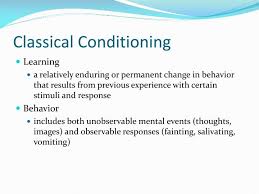
a) Describe an adolescent emotional experience that involves classical conditioning, such as being embarrassed in school or on a date, getting your first kiss, or having feelings tied up with a song.
b) Show how the principles of classical conditioning (unconditioned stimulus, unconditioned response, conditioned stimulus, conditioned response) applied to your emotional experience.
Your assignment must follow these formatting requirements:
Be typed, double spaced, using Times New Roman font (size 12), with one-inch margins on all sides; citations and references must follow APA or school-specific format. Check with your professor for any additional instructions.
Include a cover page containing the title of the assignment, the student’s name, the professor’s name, the course title, and the date. The cover page and the reference page are not included in the required assignment page length.
We can write this or a similar paper for you! Simply fill the order form!
a) Describe a learned food aversion that you experienced. If you haven’t experienced learned food aversion ask your friends to tell you one of theirs.
b) Show how the principles of classical conditioning applied to your learned food aversion experience.
Your assignment must follow these formatting requirements:
Be typed, double spaced, using Times New Roman font (size 12), with one-inch margins on all sides; citations and references must follow APA or school-specific format. Check with your professor for any additional instructions.
Include a cover page containing the title of the assignment, the student’s name, the professor’s name, the course title, and the date. The cover page and the reference page are not included in the required assignment page length.
We can write this or a similar paper for you! Simply fill the order form!
Please answer the following discussion questions. You will answer the questions in one post.
1. What are the stages of team development?
2. Give examples of better ways to become a better “sender” and “receiver” of information.
Make sure you cite the readings to support your answers using the APA format. Posts without supporting information from the text (including in-text citations and a references list), will lose points. I cannot gauge whether or not a student is learning the material if they are not citing it in their posts.
Your assignment must follow these formatting requirements:
Be typed, double spaced, using Times New Roman font (size 12), with one-inch margins on all sides; citations and references must follow APA or school-specific format. Check with your professor for any additional instructions.
Include a cover page containing the title of the assignment, the student’s name, the professor’s name, the course title, and the date. The cover page and the reference page are not included in the required assignment page length.
We can write this or a similar paper for you! Simply fill the order form!
Your assignment must follow these formatting requirements:
Be typed, double spaced, using Times New Roman font (size 12), with one-inch margins on all sides; citations and references must follow APA or school-specific format. Check with your professor for any additional instructions.
Include a cover page containing the title of the assignment, the student’s name, the professor’s name, the course title, and the date. The cover page and the reference page are not included in the required assignment page length.
We can write this or a similar paper for you! Simply fill the order form!
Anatomy of a Research Article Paper Below is a general guideline you can use when dissecting a research article from an academic journal. Article format and style may vary, but you should be able to locate all the elements below.
Abstract – This is an abbreviated and general overview of what you will find in the article including a) statement justifying the reason for the study, b) methodology used, c) statement of hypothesis or expected findings, and d) results.
Introduction – This normally ranges from a few paragraphs to a full page, setting up what the article will cover based on a brief overview of the issues and possibly a brief overview of the methods.
Review of literature/Background section – In order to provide background information on what we already know about a topic and justify the need for additional research, the researcher begins by reviewing previous research or literature. Necessary terminology and definitions, relationships among variables, and general findings in previous research are laid out here. This provides a foundation on which to build the current research. Part of reviewing the literature of previous research is to also to indicate where the gaps or inconsistencies are so that others (e.g., you) may provide answers or corrections with their follow up research. Note that this section of the article may not be called “Review of Literature,” and may in fact be a number of sections, each with its own heading.
Anatomy of a Research Article Paper
This section brings together a body of research that is related to, but not necessarily on the exact same topic that you are examining. Important components of previous research that are often addressed here are:
a) Timing – How old is previous research? Is it dated? Does it need to be studied again in light of contemporary issues or conditions?
b) Variables – What variables have been considered in relation to one another on a topic of research? Should other variables be considered?
c) Theoretical perspective – What theoretical perspectives have been used in the past to interpret social phenomena? Would another perspective provide a different or more useful interpretation? How would a “macro” or “micro” perspective interpret the issue differently?
d) Methodology – How have previous studies collected and analyzed data? Are these procedures methodologically sound? Have important strategies for data collection or analysis and interpretation been overlooked? Have different sets of data yielded different results?
e) Emergent research question(s) – Summary statement(s) of testable propositions emerging from the authors’ literature review.
Theory – Sometimes there is a section explicitly labeled “theory” or something similar. Sometimes this is included in the review of the literature. Either way, you should be able to glean some idea of what kind of perspective previous research has used to interpret some phenomenon and how the current article follows or challenges such perspective.
Methods – An explanation of how data is gathered and analyzed. Not a very “sexy” section of the research article, but necessary to explain to readers where the answers or interpretations are coming from. This section should explain to the reader whether the study is based quantitative or qualitative research methods, or both. Sometimes researchers will gather their own data through surveys or interviews, sometimes they’ll use an existing data set (such as General Social Survey). The source of the “raw data” and methods used to analyze and interpret it should be made explicit here. This may be an important component in determining how good or sound a piece of research really is.
Quantitative Methods – These methods tend to use statistical analyses to examine trends and/or analyze numbers.
Qualitative Methods – These methods tend to focus on interviews with people, observations, or some combination of both. A long term, in-depth qualitative project, is often called an “ethnography.”
Results/Findings – Another sometimes dry portion of the research article is where the results from the data analyses are interpreted. Although this may be done largely through a table, chart, or graph containing statistics, it must also be interpreted in plain English. So a researcher discovers a statistically significant positive relationship between education and income at the .05 level? What does it mean? The research should spell out for you (and you should do the same in with your results) that an increase in education is related to an increase in income level.
Conclusions/Discussion – Although the last part of the research article, perhaps the most crucial as this is where we find out if the current research provides any important information. This is where the researcher interprets more than the statistics. This is the discussion of the overall meaning of the research. What do we learn from this? How does it add to or challenge existing research? Are there suggestions for future studies to increase knowledge on this or related topics? This is where the researcher’s voice should most clearly be heard as they tell you what they found and why it is important.
Bibliography/Works Cited – An important and often overlooked section of the research paper. Think of this as a legend to a map that directs readers to the research you have reviewed or incorporated in your work. Should you happen to review an important point made by another researcher, you need to provide explicit directions on how to find that same article, book, or another source to the reader. Styles may differ, but all works cited sections will contain: author(s) name, date of publication, title, source (journal, book, etc.), precise publication location (publisher and geographic location in the case of a book, journal volume, number, and page numbers for journal articles).
Anatomy of a Research Article*
Below is a general guideline you can use when dissecting a research article from an academic journal. Article format and style may vary, but you should be able to locate all the elements below.
Research Article Paper Assignment
Overview: The goal of this assignment is to help familiarize you with sociological research in terms of reading academic journal articles and dissecting each part of an academic article. Be sure you have read “The Anatomy of a Research Article” on eCourseware before you begin this assignment. Sociological research is published in academic journals specific to the discipline of sociology, but the process is similar for other academic areas of study. Many of these journals are free for us to access as members of the University of Memphis.
Directions:
Find a Research Article to Review
On eCourseware, there are a number of articles for you to choose from based on your area of interest. These articles vary in topic, methodology, theories, data, and findings. Choose just one of these articles to review. To find these, click on Content, then Articles for Review Assignment.
Read the Article
Using the “Anatomy of a Research Article” as a guide, read the article you chose from beginning to end. There may be parts that you do not fully understand, particularly in the methods and data section, especially if the article uses quantitative methods, and/or if you have not taken a statistics or research methods class yet. That is ok. Hopefully, the findings of the article are written in language that can be interpreted by anyone, even if you do not fully understand what logistic regression (or other complex statistical methods) means! I find that printing articles and making notes in the margins helps me to digest all of the information presented. Use a highlighter or pencil and underline things you found interesting, confusing, or otherwise important.
Then, using the guidelines below, take apart each piece of the article, from beginning to end. Requirements & Formatting
You should not copy and paste any part of the article to complete this assignment, nor should you use any direct quotes. The goal is to write up your review in your own words.
Write your responses to each question (1-15) in the space provided. You can add more space if needed.
Be sure to use proper grammar, spelling, and punctuation. Use complete sentences. Proofread your assignment before submitting it.
Save your assignment as a .doc, .docx, or .pdf and upload it to the Dropbox on eCourseware. Be sure you upload the correct file. Save it as something unique to this course/assignment.
This assignment should be your own, original work.
*This assignment was created in collaboration with Erin Anderson, Teaching with a Sociological Lens, and Stephanie Bradley, Florida State University.
Sociological Research Article Review Assignment
Full Title:
Authors and Affiliated Institutions:
Journal Name, Volume, and Edition (if applicable):
Year Published:
What is/are the authors’ research question(s)?
Timing – How old is previous research cited in the background/literature review section? Is it dated? Do the authors make the claim that this topic needs to be studied again in light of contemporary issues or conditions?
Variables – According to the background/literature review, what variables have been considered in relation to one another on a topic of research? Should other variables be considered?
Methodology – How have previous studies collected and analyzed data? Are these procedures methodologically sound? Have important strategies for data collection or analysis and interpretation been overlooked? Have different sets of data yielded different results?
What theoretical framework(s) does the article use? That is, do the authors deductively draw on theory in structuring their research and, if so, what is the theory (or theories) from which they draw? What is/are the justifications given for using this/these theory/theories?
Data – What type of data do the authors use? Is this an existing data set (i.e. General Social Survey; Census data) or something they collected themselves (i.e. interviews)? Be as specific as possible.
Methods/Analytic Strategy – What type of methodology do the authors employ? Describe these methods.
What are the key variables in this study? Describe them. (In qualitative studies, the variables may be called “themes” or “narratives.”)
What are the main results and findings? Provide examples and detail from the study.
From the conclusion/discussion, what can we learn from these findings? How does it add to or challenge existing research? What are the limitations for this particular study?
What suggestions for future research do the authors suggest?
School Gender Culture and Student Subjective Well-Being John R. Reynolds1 & Melissa J. Bamford2
Published online: 25 November 2015
# Springer Science+Business Media New York 2015
Abstract This study explores the impact of school gender culture in the United States on boys’ and girls’ attachment to school and symptoms of depression. We consider multiple dimensions of school gender culture and hypothesize that student subjective well-being is lower in schools with a lower percentage of females, stronger orientations toward marriage, more prevalent contact sports, and a student body that engages more often in fighting and drinking. xThe hypotheses are derived from theories of gendered organizations, heteronormativity, and hypermasculinity. Analyses of a national sample of middle and high school students in the U.S. (5,847 girls, 5,347 boys) from the 1994–95 National Longitudinal Study of Adolescent
Health show considerable variation in school gender cultures, and regression analyses yield some support for the hypotheses.
A higher proportion of female students is associated with fewer depressive symptoms among girls as predicted, but weaker school attachment for boys. The results more consistently supported the hypotheses that student well-being suffers in schools where more classmates get into fights or get drunk. Finally, we find no evidence that student subjective well-being is affected by contexts in which marital plans are more prevalent or greater proportions of students play collision contact sports. We find some evidence that school gender composition and school contexts of fighting and drinking are consequential for student subjective well-being. We reject the hypothesis that school levels of marriage orientations and contact sports participation undermine student well-being. Overall, more work is needed in the conceptualization and measurement of school gender cultures.
Keywords of Gender culture. School attachment. Depressive symptoms.
We can write this or a similar paper for you! Simply fill the order form!
Aristotle defined tyranny as an illegitimate form of government by one individual that tightly controlled every part of life and government. Adolf Hitler is the most notorious tyrant. Using a totalitarian society from the past or present, discuss how the state and its leader attempt to impede citizens from exercising their rights. In your discussion, explain some components of an “ideal citizen,” consequences of voter apathy, and ways the state controls the citizen.
-Uses a historical or contemporary example of a totalitarian country
-Describes the three ways, violence, propaganda, and scapegoating, that leaders use to keep control in the country.
-States and describes two ways of stopping a totalitarian regime by using political socialization, civil disobedience, resist propaganda.
Discusses voter apathy.
We can write this or a similar paper for you! Simply fill the order form!
At the end of your internship you are required to complete a report about your internship. This is a very important part of your internship because you will be assessed on whether or not you have successfully learned the lessons of work.
The suggested outline for your Internship Report and Presentation might be:
o Introduction (1/2 page),
o Company profile (1/2 page),
o Job description and work plan (1 page),
o Internship objectives (1 – 2 pages),
o Accomplishments (2 – 4 pages),
o Lessons learnt (1 – 3 pages),
o Conclusion (1 page).
Please summarize your work experiences rather than re-submitting your Fortnightly Status Reports and complete examples of your work.
This is a formal report so professional writing standards are required (e.g. grammar and spelling must be correct). The Report must be concise and focused.
Your Internship Faculty Supervisor will read your Internship Report and compare it to your work plan to see if you achieved what you intended to achieve in your internship.
Due Date: A week after the end of your internship
We can write this or a similar paper for you! Simply fill the order form!
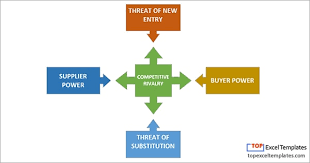
Write a paper about business strategy for a provided case study. the case study will be provided and require at least 5 sources. The paper should apply several concepts in business strategies like SWOT, Porter’s five forces, etc.
Your assignment must follow these formatting requirements:
Be typed, double spaced, using Times New Roman font (size 12), with one-inch margins on all sides; citations and references must follow APA or school-specific format. Check with your professor for any additional instructions.
Include a cover page containing the title of the assignment, the student’s name, the professor’s name, the course title, and the date. The cover page and the reference page are not included in the required assignment page length.
We can write this or a similar paper for you! Simply fill the order form!