

Organizational profile Essay Assignment Paper

Organizational profile
         Organizational profile

Organizational profile

Order Instructions:

In your first submission to the Module Project requirements of this module, you produced a proposal that would identify a relevant change driver impacting upon an organisation with which you are familiar.

The proposal would:

•Suggest a suitable change process that would appropriately respond to that change driver

•Identify likely stakeholder reactions to the change process you advocate

•Describe how an existing organisational design might be amended to best accommodate the planned change.

In this week’s activity, you will design an expanded change management framework to support your intended change process. This will, in turn, function as a base for the final change management project plan, due in Week 7.

Scenario reminder

Your role in this project is to identify a specific change driver that you consider especially relevant to an organisation of your choice. You are challenged to apply the theoretical principles discussed in this module to the specification of an appropriate process that will successfully respond to the demands of that change driver. You are encouraged to use your own current employer, and its current operating environment, as a base for the preparation of this project. It is, however, permissible to use an alternative organisation with which you are sufficiently familiar.

To prepare for this Module Project:
• Review the material studied during the first 5 weeks of this module.

• Review the feedback received on your project proposal, and incorporate any feedback suggestions into the framework you present in response to this week’s requirement.

To complete this Module Project:

Prepare and submit a preliminary outline version (approximately 1100 words) of what will eventually be your final Module Project report due in Week 7. Your outline version this week should contain the following sections:

• Organisational Profile: what is the name of the organisation you propose to use, where is it located, what is its primary business and approximately how many staff does it employ? (If there are any concerns about any aspect of commercial sensitivity, it is permissible to use an assumed name for the organisation you select).

• Organisational Structure: how are human and other resources arranged within this organisation, what levels of seniority exist and how are those levels of seniority connected through formal reporting lines? (A structure diagram would be useful here.) To what extent is the decision process centralised in the senior management team, and to what extent is it devolved to lower levels in the organisation?

• Change Drivers: to what extent does this organisation currently align with the principle of punctuated equilibrium? What are the factors in either or both of the external or internal operating environments that suggest a significant element of change is needed to the way in which this organisation works? Each change driver you identify should be categorised according to the criteria presented in relation to the Week 2 Deseret News case.

• Key Stakeholders: who are the individuals, groups and organisations who will be most directly affected by the type of change that is indicated by change driver analysis? To what extent do you expect each stakeholder’s reaction to be positive or negative? What are the primary ‘unanswered questions’ that you expect to receive?

• Change Initiative Overview: what is the primary aim of the change initiative that you recommend be introduced, and how could this initiative be classified in terms of the parameters suggested by Nasim & Sushil? How will success or failure in this initiative be measured? What ethical considerations need to be taken into account as the initiative is designed?

SAMPLE ANSWER

Organizational profile

The organization I intend to use in identification of a relevant change driver affecting it is TLC Fashion Store. The real name of the company is not applicable to avoid misinterpretations. TLC Fashion Store is located in Oxford Street, London, and its core business is the sale of cloths and accessories. The company is strategic in offering high-end clothes, women shoes, jewelry, handbags, and also sunglasses for both men and women. As a small sized firm, the firm targets young adults between the ages of 18 to 35 with income averaging $30,000-40,000. Currently, TLC store has 11 employees with the number expected to increase over the years.

Organizational structure

TLC configures its resources, financial, human, and physical, in a way that it meets the demands of the industry and its stakeholders (Cavalcante 2014). Financial resources are handled by the accounting department, and continuous audit is carried out to ensure that the existing funds such as cash balances, working capital, and debt; and the potential of raising extra funds from investors and listing of the firm in Stock Exchange are consistent with the firm’s strategies. Human resources are managed by HRM manager who is mandated to recruit, select, and train employees to match to the needs of the various job categories. Finished products are bought from suppliers and stored in-house while the marketing and logistics department is given the role of warehousing, distribution, and advertising the products to potential customers.

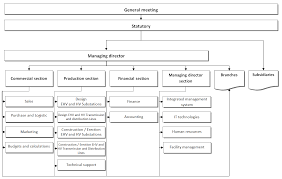
Each department is managed by a manager who reports to the executive director. The executive manager is responsible for the design of strategic vision of firm including change processes. He then decentralizes operational decisions to the departmental managers. Since it’s a small firm, the CEO handles the corporate vision of the firm and the departmental are mandated with decisions specific to their functional units, which have to be in line with the overall firm’s strategic vision as illustrated in the diagram.

Source: Cavalcante, 2014.

Change drivers

TLC Fashion Store uses the traditional brick-and-mortar model of carrying out business. Customers have to come to the store to order and purchase products. With the evolution of technology and the rise in consumer bargaining power, it is impeccable for the firm to adopt the online business model. Apart from quality, affordability, and differentiation, modern consumers prefer time and place convenience (Reeves and Deimler 2011). Thus, the need to increase consumer’s value through the offered products is a significant change driver to TLC Company. To align the firm with the vision of becoming multinational, it is necessary to change the current organizational structure, which, according to the principle of punctuated equilibrium, will give the company a solid foundation in case of random market changes. The firm’s vision is clear and demonstrates the ability to perform tasks in different ways to achieve different results or the same results sustainably. Therefore the firm is in need of change due to the realization that customers are the most paramount stakeholders, and their changing needs have to be sustained. Moreover, the transformation is a long-term event that should be carried at the onset to avoid incurring heavy expenses, and if done at the right time, it is possible to align other stakeholders without much resistance. A firm aligned with the principle of punctuated equilibrium has sustained growth amidst periods of changes, and since TLC’s financial, human, and physical resources are strategically aligned and equipped to its vision, it is possible to initiate a change without disrupting its core structures.

TLC is supposed to combine the conventional model with the online business model so as to operate a multi-channel framework so that consumers can use either of the models or combine both of them at their convenience. An online platform allows consumers to order, purchase, and make payments online using their phones and other computerized gadgets (Mayfield 2014). It is, therefore, recommendable for TLC to institute an online model so that customer’s value is increased.

Key stakeholders

Customers, employees, shareholders, creditors, suppliers, employees, and the government constitute TLC’s stakeholders. All of these stakeholders are likely to be affected when TLC uses a multi-channel model to run its operations. Customers value is going to be increased since they will be able to purchase and pay for products online using their phones. Employees especially in the logistics, accounting, and sales department would have to be trained on the model to maximize its profitability and use. New employees may be added in the IT department or tasks added to some of the employees which would involve additional incentives to motivate them. Thus, human resource and operational management would have to assimilate the new model in the day to day activities of the firm which would require a change management program for the employees to understand its importance. Executive manager is endowed with the mandate of facilitating the implementation and maintenance of change process thus his he would also be impacted. Shareholders would likely get an increase in dividends and the firm’s share price, and public confidence would increase leading to sustainable growth.

Most of the stakeholders are likely to react positively to the change initiative with the exception of competitors who are already using the online model. Also, some employees may not perceive the change positively if extra tasks are added thus requiring the management to carry out extensive change management education to ensure that all employees are in line with the change (Muchanan 2011). Some questions that would be asked by employees is how the change would impact their roles in the firm, and customers might seek to know whether the price of goods will vary depending on the channel used to purchase them. For such, it is important to note to the employees that their roles may change depending on their functional unit; for instance, sales team would have to include online marketing and selling of the goods in their assignments. Price for goods may have to include distribution costs depending on the location of the customer.

The change initiative involves the formation of a multi-channel business model that combines the mortar-and-brick concept with the online platform. The change is aimed at increasing customer’s value and aligning the firm with the principle of punctuated equilibrium which will make it grow amidst market changes at a sustainable level. The initiative is categorized as an e-governance approach that encompasses all the functions of a firm to produce positive results. The success of the initiative will be measured by the changes in sales level, employee productivity, and the overall growth of the firm. To ensure the initiative is successful and aligned with the goals of the firm, ethical considerations that need to be considered include the provision of correct information about a product to customers, safeguarding customer’s confidential information while doing transactions, and maintenance of high levels of integrity.

References

Banks, S 2014, Drivers of change: Retail industry in Australia. SIES Journal of Management, 14, 1, pp. 3-8, Business Source Complete, EBSCOhost, viewed 29 August 2016.

Buchanan, DA 2011 Reflections: Good practice, not rocket science – understanding failures to change after extreme events. Journal of Change Management, 11(3): 273-288

Cavalcante, SA 2014, Designing business model change. International Journal of Innovation Management, 18(2): 1-20

Mawby, E 2011, How to succeed in the retail industry. Journal Of Business & Retail Management Research, 6, 2, pp. 1-12, Business Source Complete, EBSCOhost, viewed 27 August 2016.

Mayfield, P 2014, Engaging with stakeholders is critical when leading change. Industrial and Commercial Training, 46(2): 68 – 72

Overstreet, J 2013, What’s driving change in retail? Retail insiders on the evolution of the industry. Ekonomski Anali / Economic Annals, 54, 209, pp. 105-127, Business Source Complete, EBSCOhost, viewed 28 August 2016

Reeves and Deimler, 2011. Adaptability: The new competitive advantage. Harvard Business Review, 89 (7).

We can write this or a similar paper for you! Simply fill the order form!

Criteria to use for Selection of Vendors or Suppliers

Criteria to use for Selection of Vendors or Suppliers Assume the position of business development manager in a renewable energy firm.

Criteria to use for Selection of Vendors or Suppliers

You are required to set criteria for choosing, selecting and approving the vendors.
summarize and combine the attached articles (attachments 1 & 2)then summarize attachment 3 as a live case study (focus on the vendors’ selection criteria)
Then suggest recommendations. Reflective Reports are a common assignment in UK universities. Unlike traditional essays and presentations, the Reflective Report gives students a chance to highlight their own experiences and opinions in an academic setting. Reflective Reports need to contain a good level of critical analysis, but they can also be fun and useful for students.

Organizational Structure and Design

Organizational Structure and Design Make connections by summarizing articles in the press about organizational issues or using organizational web pages and publications to highlight the topics
discussed in class.

Organizational Structure and Design

a. What are the key issues in the article, report, or webpage (be brief)?
b. What additional information can you add?
c. What connections can you make to the course readings for the week?
d. In what ways can the readings help describe or explain the situation?
e. How can the readings help inform the situation?
f. What information is missing that would help better describe Everyone needs to know what they’re doing. Organizational structure and design help companies to understand themselves and ideally to work together to accomplish all the tasks and achieve all the goals of an organization.

Business law course work Assignment Paper

Business law
Business law

Business law

Business law

Read the article concerning the "future of real estate closings" in Massachusetts.
After reading the article, please answer the following:
1. Based on the facts outlined in the article and what you have read this week, do you believe that the use of e-contracts at real property closings would be
beneficial to consumers (e.g., buyers and sellers), or do you feel that consumers are going to lose some of their protections by not being present at the
closing? If so, why? If not, why?
For those of you that have purchased real property, please feel free to provide examples from you personal experiences to support your answers.
Your responses to the above should not be less than two (2) paragraphs in length. Also, please review at least two (2) of your classmates’ posts and provide
feedback to them (your feedback should only be a 2-3 sentences at most). Thus, you should make at least three (3) meaningful posts.

We can write this or a similar paper for you! Simply fill the order form!


Analyse Strategic Supply Chain Relationships

Analyse Strategic Supply Chain Relationships This case study gives you the opportunity to explore many aspects of supply chain relationships.

Analyse Strategic Supply Chain Relationships

The assignment is divided into two distinct tasks.
Task 1. Using and concepts, models and techniques you consider appropriate, analyze the supply chain related issues in the case study. Use appropriate
literature to support your analysis, but note, this is not a literature review. We will be discussing this aspect of the work during the briefing sessions.
(1000 words, 50% of marks for this assignment)
Task 2. From the information in the case study, outline an appropriate form of supplier evaluation and suggest the supplier development needs that might
arise from the award of the contract. (1000 words, 50% of marks for this assignment)

Business Model Entrepreneurship and the SME

Business Model Entrepreneurship and the SME From the lectures on?Sources of Innovative
Opportunity? your group must identify a business opportunity and develop a
preliminary business model defining how it will operate and prosper.

Business Model Entrepreneurship and the SME

All such business opportunities need to be defined by a business plan, for two reasons:
1. To prove to a potential financier that the business venture is financially viable.
2. To act as a blueprint for the management team in establishing the business and developing it for the next three years.
Though not a full Business Plan (Industry Analysis, for instance in not required), your Preliminary Business Plan should include:
- an executive summary;
– a description of your proposed business and its product or service- also
mention the source of your innovative opportunity;
- a list of key personnel and their roles;
- an operation and production plan;
- financial forecasts and identification of the need for venture capital
- a timeline of how the business will be operated; and
- any risks to the business as well as ways to overcome them.
Students will complete sections of the business plan one-by-one over the course of the trimester guided by the structure and content advised in Chapters 9,
10 and 11 of Kuratko?s book. While some time is put aside during the class to work on
the plan and monitor your group’s progress on the plan, it is expected that most of the
project will be developed outside the classroom.
The product that I will need to present is the new kind of bicycle helmet developed by Hovding. here is the link related to the product. pls do the business
plan accordingly.
http://www.hovding.com/en/

Business Law Intellectual Property and Technology

Business Law Intellectual Property and Technology Note: The online classroom is designed to time students out after 90 minutes of inactivity. Because of this, we strongly suggest that you compose your work in a word processing program and copy and paste it into the discussion post when you are ready to submit it.

Business Law Intellectual Property and Technology

Learning Outcomes
This week students will:
Describe legal concerns regarding intellectual property
Explain legal concerns raised by technology and the internet
Describe issues faced by businesses in the global marketplace
Introduction
The final week is focused on the future of business law including international law, environmental law, and the internet. By the end of this week, students should be able to describe the importance of intellectual property law, explain legal concerns raised by technology and the internet, and describe issues faced by businesses in the global marketplace. Students will apply class concepts to life experiences in the Final Paper Assignment.
Required Resources

Business Law Intellectual Property and Technology Required Text

Essentials of Business Law:
Chapter 14: Cyberlaw
Chapter 15: International and Environmental Law
Discussions
To participate in the following discussions, go to this week’s Discussion link in the left navigation.
Intellectual Property and Technology
Internet domain names are linked to trademark issues. Technology makes it easy to copy and distribute music and movies without paying royalties. Business conducted on the internet raise security and privacy issues. What legal concerns are raised by these issues? Predict which of these issues will be of major concern in the future in regard to the law and business practices.
Guided Response: Review your peer’s posts. Respond to at least two of your classmates describing whether you agree with their predictions or if you see the issues differently. Explain.

Business Law Intellectual Property and Technology and The Global Marketplace

How do governments attempt to control foreign businesses operating within their borders? When U.S. companies do business in other countries, what issues do they face? Describe the responsibilities and ethical concerns that you feel are important for U.S. companies to consider when doing business in other countries
Guided Response: Review your peer’s posts. Respond to at least two of your classmates explaining whether you agree or disagree with their position. Challenge your classmates by asking a question that may cause them to reevaluate their position.

Business Law Intellectual Property and Technology Final Paper

To complete the following final paper, go to this week’s Final Paper link in the left navigation.
The focus of the Final Paper
The Final Research Paper should address a topic that is connected to the content of this course (elements and requirements of a valid contract; issues related to the real and personal property; intellectual property; employment law; and/or, international law and the global marketplace.) This paper should focus on a legal issue or situation that relates to a business environment or activity with a focus on the legal impact technology has on this issue. Ideally, this topic would concern a matter that you have experienced or that you have knowledge of; however, this not a requirement, only a suggestion. Apply the legal concepts and ethical considerations discussed in this course to your chosen topic. At a minimum this paper should include:
A detailed description of the topic.
An analytical discussion of the legal issues that are involved. This would entail examining the issue from different viewpoints.
A discussion of ethical considerations (Remember: What is legal may not be ethical).
A discussion of the legal impact technology has on this issue.
A well defined and logically stated argument to support your position. This would include any suggestion or ideas for improvement in this area of law.
Four research sources, two of which must be from the Ashford Library.
The paper also needs to meet the writing requirements that are set out below under “Writing the Final Research Paper."
Writing the Final Paper
The Final Paper:
1. Must be eight to ten double-spaced pages in length, and formatted according to APA style as outlined in the Ashford Writing Center.
2. Must include a title page with the following:
a. Title of paper
b. Student’s name
c. Course name and number
d. Instructor’s name
e. Date submitted
3. Must begin with an introductory paragraph that has a succinct thesis statement.
4. Must address the topic of the paper with critical thought. That is, what is your response to the content, either positive or negative, and then defend your position. If multiple options/alternatives/positions are present and are being

International Marketing Research Paper

International Marketing
International Marketing Paper

International Marketing Paper

International Marketing Paper

Read case study (L’Oreal) and answer the three case study questions (1000 words each).
Assessment ONE: Individual Case Study Report (40%)
Each student will be provided with a case study and will be required to write a report on the case study based on three questions.
Students will achieve the following learning outcomes for this assessment
a) Ability to demonstrate critical analysis of their knowledge of international markets and the risk elements, including political, economic and socio-
cultural factors.
b) Demonstrate robust knowledge of entry strategies of international companies into foreign markets.
c) Ability to evaluate and assess international marketing strategies and international marketing decisions and activities in general and in the context of
the case study.
The case study in question is mentioned on page

We can write this or a similar paper for you! Simply fill the order form!

A Business Case for Sustainability

A Business Case for Sustainability This essay is based on the notes provided and a bit on the findings of a survey hence scholarly articles are not required.

A Business Case for Sustainability

Please see the word document I
will be uploading to my account for the findings (essay question), essay instructions (what should be included) and some notes on the topic of
sustainability. Please refer to the Essay direction and notes – V Imp. The chief sustainability officer for the Dow Chemical Co. believes that in order to drive economic value and societal change, sustainability must be seen as a platform to greater innovation and business growth.

Monograph and Business Plan of Design Collection

Monograph and Business Plan of Design Collection 1. Personal monograph:
Based on the given of clothes style (actually total 15 sets of clothes, but the left are the same style with the given ones) to recommend my design, style, who
sued for the products and the proper sales places. More important, the monograph recommendation should be very attractive and interesting.

Monograph and Business Plan of Design Collection

For example, the
monograph should make a company interested in my designs before seeing the real items.
Those pictures are designed by myself, the task is to introduce and recommend the designs, such as the creative idea, inspiration, the conception, and all
attractive aspects. All of these should be written in Fashion Art area.
Monograph needs 500 words. Do not need pictures in text, only need a description of the designs.
2. Business Plan.
Based on the given example and fabric manipulation file, discuss the business plan in depth. It is needed pictures analysis in the text. For example, when you
talk about the products market, it is required the related pictures of markets, such as Harvey Nichols, DSM and etc. All pictures are needed references or
sources.