The influence that customers have on business activity
The influence that customers have on business activity has increased in recent years. What HRM implications does this have for workers and managers?
Order Instructions:
Dear Sir,
I need a paper in the following subject:
The influence that customers have on business activity has increased in recent years. What HRM implications does this have for workers and managers?
The following conditions must met in the paper
1) I want a typical and a quality answer which should have about 550 words.
2) The answer must raise appropriate critical questions.
3) The answer must include examples from experience or the web with references from relevant examples from real companies.
4) all references must be as per the Harvard Referencing System,
Appreciate each single moment you spend in writing my paper
Best regards
SAMPLE ANSWER
The influence that customers have on business activity
HRM is the devolution of many aspects of the management of people of different specialization and directing their specialty directly to the line of management within the organization. HRM consist of offering; equal job opportunities and compliance, carrying out job analysis, recruiting, selecting, motivating and retention of the employees, carrying out human resource planning, performance evaluation and compensation, training and development, labor relationship, safety, health and wellness. Always the effective HRM focuses on the activities of the business rather than the record keeping, and written procedures of the business through the use of the rules and policies that are outlined to help in the running of the organization and offers solutions to the realized problem. This paper will look at the implication that the customers’ activities have caused to the HRM.
Customers demand for the compensation due to fail or accident caused by the goods or services offered by the organization (Halbesleben & Stoutner, 2013). . Different countries have different policies that are outlined on the compensation and this has led to the daily adjustment of the HRM objectives and goals which has led to the problem towards achieving the goals of the organization. The HRM must always outline the policies in line with the goals of the organization and these compensation challenges may destabilize the organization especially where the goods are exported to different countries.
Most customers have realized the importance of the analyzing the company’s ethical practices, the environmental issues of the organization, the level and quality of the products offered and this has greatly affected the demand for the goods and services. HRM must therefore analyses these environmental issues and formulate the ways to develop good environment within the organization, recruit workers with new skills to maintain the good image of the business and produce of high quality to meet the customer’s need (Kalpina, Sania, & Javed, 2013). This will change the system of the HRM operation and HRM will have to have frequent check on the competence of the employees and recruit where appropriate.
Customers have increased their involvement in the business approach i.e. establishing a balanced stakeholder orientation. Customers have different approach towards obtaining the goods they want; other may have a self-centered approach where they purchase goods without involving in any communication with the stakeholder employees (Ullah, & Yasmin, 2014). Others may carry out operations like boycotting purchase and even spreading the worst information to other buyers. HRM therefore must change their operation and carry out daily training of the employees and even evaluate them on daily basis.
Customer base line orientation of the company is a result of the relationships that takes place during work related interactions (Croitor, 2012). The initial approach of the customers towards the company has changed the environment and most of the organization is opting for the potential customers. Due to this the initial relation with the customer tends to bring more customers and HRM must ensure quality production and daily training of the working personnel on how to make customers have good ethical relationship with the organization to enable the organization to maintain its customers and bring in more to the organization or business (Feng, T., Wang, D, Prajogo, 2014).
HRM should therefore study frequently the behavior and changes of the customer needs and change their policies and operation as per the change realized. HRM should realize that they are responsible for the management and contagious transformation, shaping processes and cultures that together improve the quality and the capacity of the organization.
Bibliography
Croitor, L. 2012. Consumer Utility Theory to Business Management. USV Annals of Economics & Public Administration, Vol. 12 Issue 1, p138-143.
Feng, T., Wang, D, Prajogo, D. 2014. Incorporating human resource management initiatives into customer services: Empirical evidence from Chinese manufacturing firms. Industrial Marketing Management, Vol. 43 Issue 1, p126-135.
Halbesleben, J & Stoutner, O. (2013). Developing Customers as Partial Employees: Predictors and Outcomes of Customer Performance in a Services Context. Human Resource Development Quarterly. Vol. 24 Issue 3, p313-335.
Kalpina, K., Sania, U., & Javed, H. 2013. HR Management Practices and Customer Satisfaction: The Mediating Effect of Effective Supply Chain Management Practices. Global Business & Management Research. Vol. 5 Issue 2/3, p137-160.
3.1. Mortgage markets have developed significantly since the early 1970s through the creation of secondary market instruments in the form of mortgage pass-throughs, collateralized mortgage obligations (CMOs), and REMICs. These collectively have been generally referred to as mortgage backed securities (MBS). In many ways, these instruments carry the characteristics of their underlying assets — individual mortgages.
a. Why is the cash flow of a mortgage, or a MBS, uncertain in the sense that the investor in the mortgage has granted the borrower a call option to prepay the mortgage? Compare a mortgage cash flow with a Treasury coupon bearing bond paying interest semi-annually and a payment of principal at maturity.
b. What does this call option depend upon and why?
c. The cash flow for a mortgage pass-through typically is based on some prepayment speed benchmark. Why is the assumed prepayment speed necessary to price the MBS?
d. Suppose a bank has decided to invest in a MBS and is considering the following two securities: a Freddie Mac pass-through with a WAM of 340 months and an average life of 7 years or a PAC tranche of a Freddie Mac CMO issue with an average life of 2 years. In terms of prepayment risk, contraction risk and extension risk, which MBS would probably be best for the bank’s asset/liability management perspective when it is known that liabilities generally have a duration less than 1 year and that assets have durations in the 2-year to 7-year range?
Average life is:
e. Compare the interest rate risk of a noncallable 10-year Treasury coupon bearing bond with a mortgage-backed pass-through security with prepayments related to the level of interest rates – lower market interest rates raise the rate of prepayments. Discuss how the changes in cash flows from a mortgage-backed security affect the duration of such securities. HINT: consider the coupon effect on duration.
Macaulay Duration Measure:
A more complete approximation to the proportional change in price of a bond with respect to a change in yield to maturity takes into account the convexity of the price-yield relationship for the bond:
where P = Price, C = coupon, F = Face value, y = Yield to maturity, M = maturity (years), t = time (year), dP is the total change in price, and is the partial change in price with respect to a change in yield to maturity. The second term, excluding the dy2, is the convexity effect. SAMPLE ANSWER
A). Cash flow uncertainty of a MBS and comparison with Treasury coupon bearing bond
Mortgage based securities have cash flows that are uncertain due to several factors. A MBS is a bond which is created by redistribution of cash flows to the tranches based on payment rules thus the borrower has been granted by the mortgage a call option to repay. A MBS offers an opportunity to create separate rules that stipulate payment of regular scheduled principal payment, any prepayment and coupon interest. The nature of the bond at times contributes to the uncertainty of cash flows (Milne, 2013; Sinnock, 2014). When the bond is a pay-through structure in which there is only one class of bondholders at a given level of credit priority the prepayment risk is high leading to cash flow uncertainty. In a sequential-pay tranche bond each tranche cannot receive principal payment until the preceding tranche has been paid off causing cash flow uncertainty. At times the average life of the tranches is unevenly matched with the collateral. This implies that there might be cash flow constraints if the underlying security life is shorter than the MBS life (Milne, 2013).
A MBS faces both contraction and extension risk even though other tranches might protect it. Even if it is a Partially Amortized Class (PAC) bond prepayment risk is only mitigated for some class of investors but exposed to others. Furthermore it depends on the availability of supporting bonds to take bullets for PAC bonds. In the event that the supporting bonds are less than the PAC bonds then the PAC bonds are said to have no bodyguards and are hence exposed. Cash flows are thus uncertain because it depends on the expected future prepayment behavior of the collateral and the actual prepayment experience as it determines the level of prepayment protection (Milne, 2013). Cash flows from a Treasury coupon bearing bond paying interest semi-annually and a payment of principal at maturity has assured cash flows as opposed to MBS bonds. The repayment of MBS depends on the future repayment behavior of collateral and actual prepayment experience whereas a Treasury coupon bearing bond is guaranteed by the government and its coupon payments are actually considered to be risk free and assured. Treasury coupon bearing bond rate is used as the standard for risk free investment rate in capital asset pricing model because investment is such bonds is considered risk free(Milne, 2013).
What this call option depends upon and why
The call option depends on a number of issues. The call option determines the type of bond that is invested in. An MBS bond can be an Interest only bond or a principal only bond. In an interest only bond the bond faces contraction risk in that if interest is paid quite fast then the risk is high since the remaining principal will fall fast reducing the amount of interest payable. A bond can be a PAC bond which has few supporting bond (Sinnock, 2014). Supporting bonds are the body guards and if they are fewer in number than the PAC bonds even though PAC bonds are noted to have lesser prepayment risk in this case it will be higher. This is because supporting bonds ensure PAC bonds principal prepayment is made before they are prepaid. The repayment of MBS depends on the future repayment behavior of collateral and actual prepayment experience of the mortgage class. Bonds can be Z bonds, sequential-pay tranches etc depending on the call option rules (Sinnock, 2014).
The influence of prepayment speed on pricing of MBS
The prepayment speed of a bond is determined by the principal pay-down window. This represents the time taken to repay the principal from start of prepayment to the end of the principal repayment. Tranches can have average lives that could be shorter or longer than the underlying mortgage securities (Sinnock, 2014). Tranches have considerable variability in average lifespan. Each tranche faces separate prepayment risk due to its life span. Shorter term tranches face extension risk whereas longer term tranches face contraction risk. The level of risk determines the price of the MBS. The longer the duration that the principal of a MBS will take to be repaid the higher will be the price and vice versa. This is because if repayment is slower investors will be concerned with the reinvestment risk (Sinnock, 2014).
A decision criteria by a bank to invest in a MBS
The Freddie Mac pass-through MBS is a pass-through security whereby cash flow of depends on the cash flow of the underlying mortgages. A weighted average maturity (WAM) is found by weighting the amount of mortgage outstanding by the remaining number of months to maturity for each mortgage loan in the pool. Freddie Mac issues a pass-through guarantees both interest and principal payments. It however guarantees the timely payment of interest only. The MBS give a guarantee that scheduled payment will be made no later than a specified date even though the scheduled principal is passed through as it is collected. Freddie Mac pass-through MBS still entails prepayment risk and uncertainty in cash flows. A Freddie Mae CMO issue with an average of 2 years is a security backed by a pool of pass-throughs, whole loans, or stripped mortgage-backed securities that are structured so there are several classes of bondholders with varying stated maturity dates. Tranches is the name given to the different classes of bonds created. Principal payments are used to retire a class of bonds given in the prospectus provided. There is still considerable prepayment risk despite the redistribution of prepayment risk with sequential pay and accrual CMOs. This problem is mitigated by planned amortization class (PAC) tranche bonds as it reduces average life variability of bonds. With lock out and reverse structure arrangement PAC bonds offer less prepayment risk. The bank should focus on matching assets and liabilities since all option pose prepayment risk. The bank should choose Fredie Mac CMO issue of a PAC tranche if its liabilities are closer to 340 months.
Comparison of the interest rate risk of a noncallable 10-year Treasury coupon bearing bond with a mortgage-backed pass-through security with prepayments related to the level of interest rates
The interest rate risk is determined using Macaulay Duration Measure:
Macaulay duration is an equation that measures the volatility of bond price with respect to interest rates prevailing in an economy. A noncallable 10-year Treasury coupon bearing bond is subject to volatility of interest rates in the same way as a mortgage-backed pass-through security with prepayments related to the level of interest rates. A Treasury coupon bearing bond which is noncallable faces interest rate risk since as interest rates rise the coupon payments will also feature the interest rate which is fixed and will benefit the issuer (Kim, 2011). But if interest rates fall the issuer will continue to pay the high interest rates agreed at the issuance of the treasury bearing bond. Interest rates are thus fixed and cannot be changed for a noncallable 10-year Treasury coupon bearing bond. Whereas in a mortgage-backed pass-through security with prepayments related to the level of interest rates, the issuer will benefit if rates go down since principal prepayments will go up and vice versa (Kim, 2011).
Kim, D. H. (2011). Essays in corporate finance and bond interest rate volatility. (Order No. 3465651, The University of Oklahoma). ProQuest Dissertations and Theses, , 144-n/a. Retrieved from http://search.proquest.com/docview/884226076?accountid=45049. (884226076).
For this project component, you generally assess the impact of corporate social responsibility policy on the workplace and corporate America.
To complete this assignment:
• Assess how, and to what extent, corporate social responsibility can be meshed with a corporation’s obligation to maximize profits for its shareholders.
• Then, assess the ethical nature of the company you selected.
• Next, with regards to the issue you chose for the project, assess the impact on the chosen company and other stakeholders—including monetary, legal, and reputation-wise—of continuing the status quo versus addressing your issue via corporate policy.
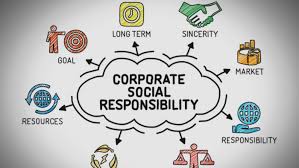
Corporate Social Responsibility (CSR) is achieved when an organization is able to incorporate social and environmental concerns into its business operations and other interactions with stakeholders. It is a way of allowing an organization achieve triple-bottom-line – balancing environmental, economic and social goals of an organization, without compromising shareholder and stakeholder interests (Ruggie, 2014).
Increasingly, Corporate America has appreciated the importance of CSR to the operations of the organization – triple-bottom-line. This has changed the psyche of corporate America to appreciate that maximizing economic returns alone is not sustainable in the long-run. Corporate America is not tripping over itself in an effort to maximize the returns that accrue from engaging in CSR. This should not be confused with philanthropy or charity. CSR is a policy that is engrained into the organization’s psyche such that all stakeholders understand it; appreciate why it is engaged in and the value to the organization and community benefiting from it (Ruggie, 2014). It is not an afterthought, but a deliberate well-thought out decision.
American Express is a one of the leading credit card companies in America. It permeates all aspects of American lives given the American love for credit. This being the case, American Express discovered that given the extent of their reach in the society, a CSR policy would give the organization more benefits that the cost it would incur to implement the policy. Thus, at American Express, they believe that community service is not only key to the organizations operations, but is actually central to the organizations survival. Thus, American Express has endeavored to permeate good corporate citizenship by supporting communities so that the organization’s reputation is enhanced among its various stakeholders and shareholders.
One of the areas that American Express has chosen to focus on is preservation and sustainability of unique historical places for the future. This aspect of CSR was borne out of a realization that preservation assists communities understand whom they are while shaping relationships with other communities around the world. American Express thus seeks to ensure these historic places can be easily accessed by communities because, this is the only way their history will survive in addition to increasing the public understanding of their significant contribution in sustaining communities presently and for posterity (Ruggie, 2014).
By choosing to tackle corporate social responsibility in this way, American Express seeks for its stakeholders and shareholders to associate it with America the country. American are very proud of their history and view those who their history positively. To an outsider looking at the Corporate Social Responsibility Policy of American Express could be forgiven for not immediately establishing a connection with preservation of historical sites. However a critical look at it reveals a calculated and deliberate decision by American Express. By associating American Express with the history of the United States of America, consumers have a positive view of the organization.
This positive view of the organization, translates to increased business and by extension growth in its profits. When viewed in this light, American Express becomes by default the legal custodian of American historical sites. For American Express, the embedding of Corporate Social Responsibility as a policy changes the status quo and the results are positive with regards to the triple-bottom-line.
References
Ruggie, J. G (2014). Just Business: Multinational Corporations and Human Rights, W. W Norton & Company, Inc, New York, NY.
We can write this or a similar paper for you! Simply fill the order form!
A person cannot evaluate policies within ethical standards until he or she identifies the issues that those policies are intended to address. In this assignment, you do just that.
Complete the following for identifying an ethical issue:
• Identify a potential ethical dilemma from a real company. The company could be a current company for which you work, a company in which you used to work, a friend’s company, or so on. The ethical issue or problem selected must affect the company, potentially affect the company, or involve the company.
• Explain the issues involved, including:
o Identify the stakeholders.
o Identify the concerns of the stakeholders.
For example, a company may chose to videotape the office and read employee e-mails. The conflict here may be that employees feel these practices are a violation of privacy and feel they have a right to a certain level of the privacy. However, stakeholders defend these practices because their concerns are whether the employees are getting their work done.
• Explain why you chose this particular issue and why the issue is important.
• Examine the current relevance of the issue. Is the issue currently in the media spotlight? Are there any recent incidents or reasons why this issue has come to the public’s attention.
SAMPLE ANSWER
Business Ethical Issues
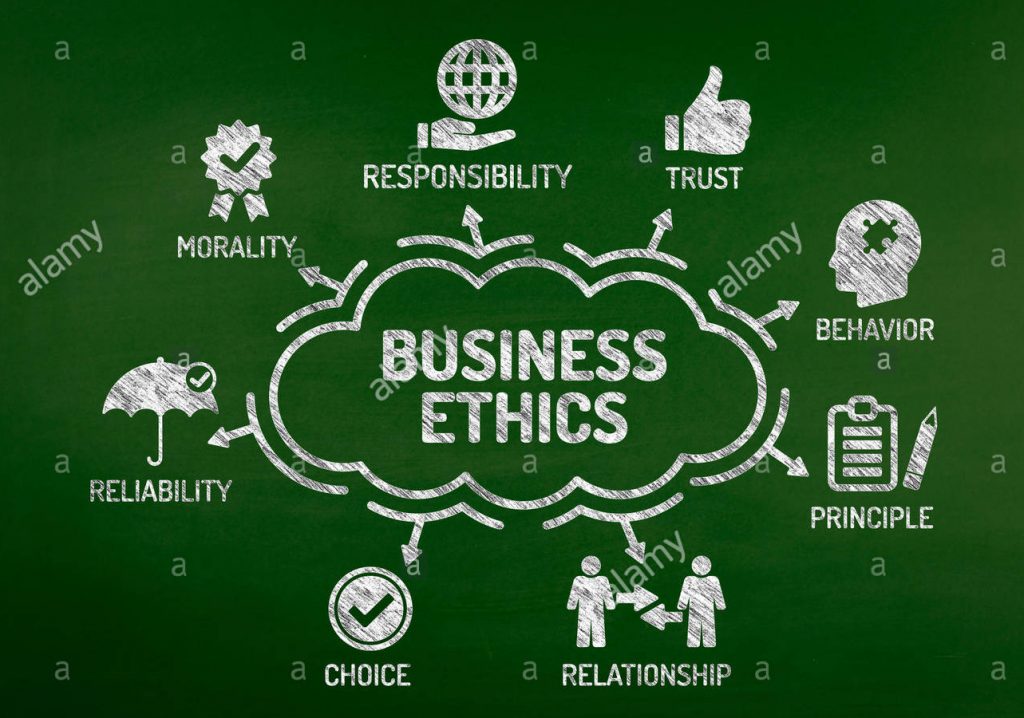
Profit making is not bad for an organization since that is the main reason why they are in the world of business. However, it is the manner in which these businesses conduct themselves that brings questions of ethical behaviors. As noted by Duska (2014), the simple definition of business ethics is the ability to distinguish the bad from the good and considering the effects it has on the business environment and customers. Many companies, big or small have been involved in acts that either violate the customers’ interests or the interests of the employees. This paper presents the ethical issues and identification of the Whole Food Market Inc. and how the customers and stakeholders have reacted towards it.
The ethical issue in this case is how the company sold unlabeled genetically modified food in their supermarkets while their slogan reads “Nothing artificial, Ever”. The company has been in the market creating monopoly as one of the best whole food company whose trust lies with the customers. However, as I have been told by a friend who has worked in the company, and enough information from magazines, the company has been in the limelight of selling genetically modified food without labels. It is a false advertisement and a false view of the company who is believed to do right things.
The stakeholders that have been involved by this situation have never been happy about it. The stakeholders of this controversial issue are the employees and the management. The have condemned the act following the customers the company serves. For, example, whole food market serve big health care institutions whose directions are to get non-genetically modified foods for their patients. The concern of stakeholders is how the management has neglected its roles and subjects the society into unnecessary pains especially those who have been instructed not to consume the genetically modified foods due to health reasons (Johnston, 2014).
The malpractices and the greed of getting money without any good ethics of most organization is the reason why I chose this ethical issue. Most companies have left their obliged roles and are rushing towards making a lot of money without considering the effects such acts have on the customers and the society. For instance, the doctors instructs his or her patient not to consume genetically modified foods, one goes to the shelves find unlabeled genetically modified food and consume it increasing the chances infection he or she was preventing. This is an ethical act that should not be accepted by such companies.
Due to the increasing rates of cancer incidences, several studies have hypothesized that genetically modified foods have chemicals that initiate cancer infections. Confirmed or not confirmed, genetically modified foods have components that are dangerous for the normal growth of body cells. Due to the relationship of cancer and genetically modified foods, there have been a lot of concerns through television, radio station and social networks about the high rate of consumption of such food. There have been bills in some countries such U.S.A about the removal of genetically modified food from the country due to their health issues. However, the increasing global population has subjected people and organizations to manufacture the genetically modified food to curb the rate of hunger due to their fast maturation. Nonetheless, the bottom line is that they should be labeled to show customers that they are genetically modified or not.
References
Duska, R. F. (2014). Why Business Ethics Needs Rhetoric: An Aristotelian Perspective. Business Ethics Quarterly, 24(1), 119-134.
Johnston, J. (2014). Whole Foods Market. John Wiley & Sons, Inc.
We can write this or a similar paper for you! Simply fill the order form!
Sustainability
Corporate sustainability is an issue that continues to garner increased attention and importance for shareholders, consumers, and companies alike. Since 2004, Corporate Knights, a Canadian media firm, has published a list of the top 100 sustainable companies in the world. The efforts and profits among those highest on the list demonstrate that companies are increasingly able to adopt strategies that are socially and environmentally responsible and financially lucrative. Consider Umicore, the top company on Corporate Knight’s 2013 Global 100 list.
Umicore is a Belgian-based materials technology firm recognized for its treatment of their employees, the products it produces, its profitability, and its efficiency. According to Doug Marrow, Corporate Knight’s vice president of research, “Relative to its global peers in the materials industry group, the company squeezes more revenue out of each resource input (including energy and water), while generating less externalities (greenhouse gas emissions and waste)” (Smith, 2011). However, Umicore’s efforts extend beyond its own sustainability strategies. According to Morrow, “They generate over half of their revenue by selling products that help other firms improve their sustainability performance, such as energy efficiency” (Smith, 2011). The company has, in effect, created a comprehensive business model based on sustainability.
To prepare, consider the implications of expanding the definition of sustainability to include economic and social elements. Think about how implementing a strategy for improving sustainability can benefit the organization you chose for your SSP.
Instruction
By Day 5 of Week 6, read all of your colleagues’ posts and respond to two colleague in one of the following ways:
•Offer insight into an additional systemic benefit of one of the actions proposed by your colleagues.
•Provide insight on any potential obstacles to implementing actions proposed by your colleagues.
•Provide an alternative action that your colleagues’ chosen organizations can take to implement a strategy for achieving sustainability.
•Refute or support the relationships among sustainability and other organizational goals identified by your colleagues.
•Answer one of the questions posed by your colleagues in their posts.
Colleague #1 (Lachaundra)
P&G Sustainability Goals
In 2010, Procter & Gamble (P&G), the largest consumer goods company in the world, publicized its sustainability goals with 2020 targeted as the completion year: (1) 100% renewable energy used to power plants, (2) 100% renewable or recycled materials for products and packages, (3) zero consumer and manufacturing waste related to products going into landfills, and (4) design and sell products that delight consumers while maximizing the conservation of resources (Procter & Gamble Sustainability Report, 2010).
P&G Sustainability Goals Benefits
• 100% renewable energy used to power plants
o For P&G the plan is that by 2020 all energy powering its manufacturing plants will be obtained from renewable sources or power from a grid that is generated by renewable sources (Procter & Gamble Sustainability Report, 2010).. Facilities that run on renewable energy usually require less maintenance than traditional facilities because their fuel is being derived from natural resources thereby reducing the costs of operation (Procter & Gamble Sustainability Report, 2010).. Additionally, renewable energy does not produce carbon dioxide or other chemical pollutants, so the impact to the environment is minimal (Procter & Gamble Sustainability Report, 2010).
• 100% renewable or recycled materials for products and packages
o By 2020, P&G aims to use renewable materials in the construction of their products and product packaging (Procter & Gamble Sustainability Report, 2010). The plan is to utilize materials from traditional sources like biomass and from biological processes like fermentation (Procter & Gamble Sustainability Report, 2010). Using renewable materials means that production will contribute to the destruction of critical ecosystems, loss of habitat for endangered species, or other detrimental impacts on the environment or human communities (Procter & Gamble Sustainability Report, 2010).
• Zero consumer and manufacturing waste going into landfills
o P&G plans to have all waste end up in a valued waste stream like recycling, composting, and waste-to-energy without toxic emissions (Procter & Gamble Sustainability Report, 2010). Currently waste is disposed of by recycling, composting, converting waste-to-energy, and landfills (Procter & Gamble Sustainability Report, 2010). The first three give value to the waste; however, waste in landfills have no value (Procter & Gamble Sustainability Report, 2010).
• Designing and selling products that delight consumers and conserve resources
o No later than 2020, P&G plans to help consumers reduce their individual environmental footprint by designing products that conserve resources (Procter & Gamble Sustainability Report, 2010). In those instances where consumer habit changes are required to deliver the environmental benefit, P&G intends to provide consumer education as part of the sustainability solution (Procter & Gamble Sustainability Report, 2010).
The power of P&G is not only in its large size, it is also in the company’s ability to influence the companies that supply the company’s goods, services, and raw materials (Environmental Responsibility, n.d.). Along with the sustainability goals P&G has set for 2020, it also developed a supplier sustainability assessment to help them look at the way in which their suppliers’ environmental performance is measured and evaluated (Environmental Responsibility, n.d.). Called the “Scorecard” the assessment tool also serves as a communication portal through which P&G can convey what is important to them and by extension should also be too important to their suppliers as well as gather feedback and ideas from the suppliers about P&G processes (Environmental Responsibility, n.d.).
Benefits of P&G Sustainability & Organizational Goal Connections
As a large company P&G has the technical expertise and other resources that their smaller suppliers don’t. P&G’s ability and willingness to share this expertise with their suppliers can aid in the suppliers’ performance and ultimately improve their own. While sharing expertise often requires additional investment upfront, it also leads to efficiencies that reduce costs in the long term. P&G through its Scorecard sets energy efficient targets that it expects its suppliers to meet and then offers research and consulting services to help the suppliers meet them.
P&G Sustainability Plan Ethical Implications
Though P&G enjoys considerable financial gains from their sustainability efforts and for the communities in which they operate, social equity has the clearest ethical connection to P&G, that of socio-economic fairness (Social Responsibility, n.d.). Wealthy countries have the ability to provide choices for sustainable living, while the poor countries do not. Recognizing this P&G’s sustainability plan is built upon the idea of solidarity with the poor and fostering economic development for them that will enhance sustainability (Social Responsibility, n.d.). P&G’s Pur aims to purify 2 billion liters of water in Africa and save 10,000 lives (Social Responsibility, n.d.). Its Beautiful Lengths program, under its Pantene brand, solicits locks of hair to be woven into wigs for women receiving cancer treatments (Social Responsibility, n.d.).
Extended Conversation
How much of an impact do mitigating factors like pricing impact the ability of a company to successfully implement a sustainability program? What could you contribute to the transition to more sustainable living? What ethical argument could persuade society to assume an obligation to preservation of the world for future generations?
International Business Machines (IBM) Global is an IT consulting and manufacturing company, and about 431,212 employees globally including all industrialized countries. IBM focuses the great demands, competition, and technology advancement. Company strategies are business goals, customer-oriented portfolio strategy and human resource transformation (IBM.com, 2013). Their products and services serve the banking and financial institutes, public and governments, manufacturing, distribution, general industry, and other industries.
IBM revenue drop 2.3%, cut resources about 8,000 resources globally, and estimated 1.8% of the total workforce 2011. However, the net income grew 4.7% last year, due to organization change and restructuring. The rate of growth in restructuring charges has nearly doubled from $440 million to $803 million since the first year of Ginni Rometty. IBM declared cutting resources mainly resources were not qualified in particular to IBM new products and services offerings, such as storage, mobile computing, cyber security, and cloud computing (Cohen, 2013).
IBM value chain illustrates that Human Resource (HR) organization and operation is their weakest link, due to lack of differentiation between the same pool of competitor and consultants. However, IBM SWOT analysis illustrates an opportunity for IBM. As operations emerge the markets, it focuses heavily with the expansion of its presence in emerging markets, and this added significantly to its expansion and growth.
One of the company initiatives is improving the human resources process through more innovation. The time is crucial and costly, due to the risk and affect to business. Hiring skilled and qualified resources requires a standard and expedited hiring process, and as well as internal resources performance. IBM diverse workforces’ effort to implement a change initiative (Pelletier & Bligh, 2008) is vital. The company modified their hiring process, they are hiring key and qualified resources, providing resources tools to advance knowledge, promote innovation thinking to achieve shaping and driving common set of values and behaviors.
IBM business offerings are applications, data storage advancement, infrastructure management, networking enhancement, technical support, and consulting services. The consulting and services offerings are business process and IT infrastructure services, systems integration, and resources services. As these offering expand and technology advances, IBM other initiative is revisiting their current process and strategy confirming they are aligned and consistent with their customer-driven approach and objective (IBM, 2013). Trust in a continuously transformational management plan and initiative comes from expert leadership collaboration, guidance, communication and approval (Newman, 2012).
IBM strategic success is managing with proficiency in products and services. As they continue to adapt advance technologies, market and consumer needs, and maintains and continues to utilize acquisitions to expand product and services offering. As the demands produce growth in revenues, the organization exercised effective guidelines in order to sustain the industry’s performance. The guidelines are:
• The guideline is to rebuild the brand name. IBM clients and the consumers demand a product with great brand and quality, with this IBM brand name has exemplified. IBM is one of the major companies that invested to build and maintain their brand value with the help of talented leadership (Hind, Wilson, & Lenssen, 2009). Their leadership features are an advantage, but very fragile (Vassilikopoulou et al., 2009).
• The guideline is to determine and define factors to advance security management. For instance, IBM labels official website stability and opportunities for language. A change comes from the bottom, the above is not required to successfully embraced change initiatives, for framework as an opportunity to change is likely to be embrace and a framework as a threat is likely to prevent or oppose (Chreim, 2006). This guideline will assist analyzing its finding, validate compliance, and risk analysis to view the affect such as potential financial loss (Chen, Ganesan, & Liu, 2009).
• The guideline is to be more innovative and competitive. For example, IBM launched the smarter planet program; this is to provide the overall process, with the company’s co-brands services (DeSimone & Popoff, 2000). IBM’s plan is to identify and define problems in an automated process, real-time results, with this will be a great asset improving any organization infrastructure, and as well, as reduce energy, lower maintenance costs and improve data and workplace environment (Gungor & Gupta, 1999).
Stacey (2011) stated that industry model recommended taking risks and continuing to be sustainable. One of the risks is the company action of creating relationship and partnership with rival companies and another key company. IBM and Apple partnership objective is to provide broader product lines, as they restructure the company’s reputation, and explores new opportunities (IBM.com, 2013).
Extended Conversation
In regards to IBM and Apple partnership, the questions come to mind. Is it a negative or positive decision? What is the positive and negative effect to the internal resources? What will the profit show? In addition, in regards to the guidelines above, any suggestion for IBM?
References
Chen, Y., Ganesan, S., & Liu, Y. (2009). Does a firm’s product-recall strategy affect its financial value? An examination of
strategic alternatives during product-harmcrises. Journal of Marketing, 73(6), 214-226. doi:10.1509/jmkg.73.6.214.
Cohen, P. (2013). As it shrinks in a growing market, does IBM have a strategy? Forbes.com Retrieved from
Pelletier, K. L. & Bligh, M.C. (2008). The aftermath of organizational corruption: Employee attributions and emotional reactions. Journal of Business Ethics, 80(4), 823-844. doi:10.1007/s10551-007-9471-8.
Stacey, R., (2011). Strategic management and organisational dynamics: The challenge of complexity. (6th ed.) Harlow, England: Pearson Education Limited.
Vassilikopoulou, A., Lepetsos, A., Siomkos, G., & Chatzipanagiotou, K. (2009). The importance of factors influencing product-harm crisis management across different crisis extent levels: A conjoint analysis. Journal of Targeting,
Measurement and Analysis for Marketing, 17(1), 65-74. doi:10.1057/jt.2008.30.
Please take note; please respond to each colleague individually with two references each !!! Once again each colleague individually.
SAMPLE ANSWER
Order Instructions:
Sustainability
Corporate sustainability is an issue that continues to garner increased attention and importance for shareholders, consumers, and companies alike. Since 2004, Corporate Knights, a Canadian media firm, has published a list of the top 100 sustainable companies in the world. The efforts and profits among those highest on the list demonstrate that companies are increasingly able to adopt strategies that are socially and environmentally responsible and financially lucrative. Consider Umicore, the top company on Corporate Knight’s 2013 Global 100 list.
Umicore is a Belgian-based materials technology firm recognized for its treatment of their employees, the products it produces, its profitability, and its efficiency. According to Doug Marrow, Corporate Knight’s vice president of research, “Relative to its global peers in the materials industry group, the company squeezes more revenue out of each resource input (including energy and water), while generating less externalities (greenhouse gas emissions and waste)” (Smith, 2011). However, Umicore’s efforts extend beyond its own sustainability strategies. According to Morrow, “They generate over half of their revenue by selling products that help other firms improve their sustainability performance, such as energy efficiency” (Smith, 2011). The company has, in effect, created a comprehensive business model based on sustainability.
To prepare, consider the implications of expanding the definition of sustainability to include economic and social elements. Think about how implementing a strategy for improving sustainability can benefit the organization you chose for your SSP.
Instruction
By Day 5 of Week 6, read all of your colleagues’ posts and respond to two colleague in one of the following ways:
•Offer insight into an additional systemic benefit of one of the actions proposed by your colleagues.
•Provide insight on any potential obstacles to implementing actions proposed by your colleagues.
•Provide an alternative action that your colleagues’ chosen organizations can take to implement a strategy for achieving sustainability.
•Refute or support the relationships among sustainability and other organizational goals identified by your colleagues.
•Answer one of the questions posed by your colleagues in their posts.
Colleague #1 (Lachaundra)
P&G Sustainability Goals
In 2010, Procter & Gamble (P&G), the largest consumer goods company in the world, publicized its sustainability goals with 2020 targeted as the completion year: (1) 100% renewable energy used to power plants, (2) 100% renewable or recycled materials for products and packages, (3) zero consumer and manufacturing waste related to products going into landfills, and (4) design and sell products that delight consumers while maximizing the conservation of resources (Procter & Gamble Sustainability Report, 2010).
P&G Sustainability Goals Benefits
• 100% renewable energy used to power plants
o For P&G the plan is that by 2020 all energy powering its manufacturing plants will be obtained from renewable sources or power from a grid that is generated by renewable sources (Procter & Gamble Sustainability Report, 2010).. Facilities that run on renewable energy usually require less maintenance than traditional facilities because their fuel is being derived from natural resources thereby reducing the costs of operation (Procter & Gamble Sustainability Report, 2010).. Additionally, renewable energy does not produce carbon dioxide or other chemical pollutants, so the impact to the environment is minimal (Procter & Gamble Sustainability Report, 2010).
• 100% renewable or recycled materials for products and packages
o By 2020, P&G aims to use renewable materials in the construction of their products and product packaging (Procter & Gamble Sustainability Report, 2010). The plan is to utilize materials from traditional sources like biomass and from biological processes like fermentation (Procter & Gamble Sustainability Report, 2010). Using renewable materials means that production will contribute to the destruction of critical ecosystems, loss of habitat for endangered species, or other detrimental impacts on the environment or human communities (Procter & Gamble Sustainability Report, 2010).
• Zero consumer and manufacturing waste going into landfills
o P&G plans to have all waste end up in a valued waste stream like recycling, composting, and waste-to-energy without toxic emissions (Procter & Gamble Sustainability Report, 2010). Currently waste is disposed of by recycling, composting, converting waste-to-energy, and landfills (Procter & Gamble Sustainability Report, 2010). The first three give value to the waste; however, waste in landfills have no value (Procter & Gamble Sustainability Report, 2010).
• Designing and selling products that delight consumers and conserve resources
o No later than 2020, P&G plans to help consumers reduce their individual environmental footprint by designing products that conserve resources (Procter & Gamble Sustainability Report, 2010). In those instances where consumer habit changes are required to deliver the environmental benefit, P&G intends to provide consumer education as part of the sustainability solution (Procter & Gamble Sustainability Report, 2010).
The power of P&G is not only in its large size, it is also in the company’s ability to influence the companies that supply the company’s goods, services, and raw materials (Environmental Responsibility, n.d.). Along with the sustainability goals P&G has set for 2020, it also developed a supplier sustainability assessment to help them look at the way in which their suppliers’ environmental performance is measured and evaluated (Environmental Responsibility, n.d.). Called the “Scorecard” the assessment tool also serves as a communication portal through which P&G can convey what is important to them and by extension should also be too important to their suppliers as well as gather feedback and ideas from the suppliers about P&G processes (Environmental Responsibility, n.d.).
Benefits of P&G Sustainability & Organizational Goal Connections
As a large company P&G has the technical expertise and other resources that their smaller suppliers don’t. P&G’s ability and willingness to share this expertise with their suppliers can aid in the suppliers’ performance and ultimately improve their own. While sharing expertise often requires additional investment upfront, it also leads to efficiencies that reduce costs in the long term. P&G through its Scorecard sets energy efficient targets that it expects its suppliers to meet and then offers research and consulting services to help the suppliers meet them.
P&G Sustainability Plan Ethical Implications
Though P&G enjoys considerable financial gains from their sustainability efforts and for the communities in which they operate, social equity has the clearest ethical connection to P&G, that of socio-economic fairness (Social Responsibility, n.d.). Wealthy countries have the ability to provide choices for sustainable living, while the poor countries do not. Recognizing this P&G’s sustainability plan is built upon the idea of solidarity with the poor and fostering economic development for them that will enhance sustainability (Social Responsibility, n.d.). P&G’s Pur aims to purify 2 billion liters of water in Africa and save 10,000 lives (Social Responsibility, n.d.). Its Beautiful Lengths program, under its Pantene brand, solicits locks of hair to be woven into wigs for women receiving cancer treatments (Social Responsibility, n.d.).
Extended Conversation
How much of an impact do mitigating factors like pricing impact the ability of a company to successfully implement a sustainability program? What could you contribute to the transition to more sustainable living? What ethical argument could persuade society to assume an obligation to preservation of the world for future generations?
International Business Machines (IBM) Global is an IT consulting and manufacturing company, and about 431,212 employees globally including all industrialized countries. IBM focuses the great demands, competition, and technology advancement. Company strategies are business goals, customer-oriented portfolio strategy and human resource transformation (IBM.com, 2013). Their products and services serve the banking and financial institutes, public and governments, manufacturing, distribution, general industry, and other industries.
IBM revenue drop 2.3%, cut resources about 8,000 resources globally, and estimated 1.8% of the total workforce 2011. However, the net income grew 4.7% last year, due to organization change and restructuring. The rate of growth in restructuring charges has nearly doubled from $440 million to $803 million since the first year of Ginni Rometty. IBM declared cutting resources mainly resources were not qualified in particular to IBM new products and services offerings, such as storage, mobile computing, cyber security, and cloud computing (Cohen, 2013).
IBM value chain illustrates that Human Resource (HR) organization and operation is their weakest link, due to lack of differentiation between the same pool of competitor and consultants. However, IBM SWOT analysis illustrates an opportunity for IBM. As operations emerge the markets, it focuses heavily with the expansion of its presence in emerging markets, and this added significantly to its expansion and growth.
One of the company initiatives is improving the human resources process through more innovation. The time is crucial and costly, due to the risk and affect to business. Hiring skilled and qualified resources requires a standard and expedited hiring process, and as well as internal resources performance. IBM diverse workforces’ effort to implement a change initiative (Pelletier & Bligh, 2008) is vital. The company modified their hiring process, they are hiring key and qualified resources, providing resources tools to advance knowledge, promote innovation thinking to achieve shaping and driving common set of values and behaviors.
IBM business offerings are applications, data storage advancement, infrastructure management, networking enhancement, technical support, and consulting services. The consulting and services offerings are business process and IT infrastructure services, systems integration, and resources services. As these offering expand and technology advances, IBM other initiative is revisiting their current process and strategy confirming they are aligned and consistent with their customer-driven approach and objective (IBM, 2013). Trust in a continuously transformational management plan and initiative comes from expert leadership collaboration, guidance, communication and approval (Newman, 2012).
IBM strategic success is managing with proficiency in products and services. As they continue to adapt advance technologies, market and consumer needs, and maintains and continues to utilize acquisitions to expand product and services offering. As the demands produce growth in revenues, the organization exercised effective guidelines in order to sustain the industry’s performance. The guidelines are:
• The guideline is to rebuild the brand name. IBM clients and the consumers demand a product with great brand and quality, with this IBM brand name has exemplified. IBM is one of the major companies that invested to build and maintain their brand value with the help of talented leadership (Hind, Wilson, & Lenssen, 2009). Their leadership features are an advantage, but very fragile (Vassilikopoulou et al., 2009).
• The guideline is to determine and define factors to advance security management. For instance, IBM labels official website stability and opportunities for language. A change comes from the bottom, the above is not required to successfully embraced change initiatives, for framework as an opportunity to change is likely to be embrace and a framework as a threat is likely to prevent or oppose (Chreim, 2006). This guideline will assist analyzing its finding, validate compliance, and risk analysis to view the affect such as potential financial loss (Chen, Ganesan, & Liu, 2009).
• The guideline is to be more innovative and competitive. For example, IBM launched the smarter planet program; this is to provide the overall process, with the company’s co-brands services (DeSimone & Popoff, 2000). IBM’s plan is to identify and define problems in an automated process, real-time results, with this will be a great asset improving any organization infrastructure, and as well, as reduce energy, lower maintenance costs and improve data and workplace environment (Gungor & Gupta, 1999).
Stacey (2011) stated that industry model recommended taking risks and continuing to be sustainable. One of the risks is the company action of creating relationship and partnership with rival companies and another key company. IBM and Apple partnership objective is to provide broader product lines, as they restructure the company’s reputation, and explores new opportunities (IBM.com, 2013).
Extended Conversation
In regards to IBM and Apple partnership, the questions come to mind. Is it a negative or positive decision? What is the positive and negative effect to the internal resources? What will the profit show? In addition, in regards to the guidelines above, any suggestion for IBM?
References
Chen, Y., Ganesan, S., & Liu, Y. (2009). Does a firm’s product-recall strategy affect its financial value? An examination of
strategic alternatives during product-harmcrises. Journal of Marketing, 73(6), 214-226. doi:10.1509/jmkg.73.6.214.
Cohen, P. (2013). As it shrinks in a growing market, does IBM have a strategy? Forbes.com Retrieved from
Pelletier, K. L. & Bligh, M.C. (2008). The aftermath of organizational corruption: Employee attributions and emotional reactions. Journal of Business Ethics, 80(4), 823-844. doi:10.1007/s10551-007-9471-8.
Stacey, R., (2011). Strategic management and organisational dynamics: The challenge of complexity. (6th ed.) Harlow, England: Pearson Education Limited.
Vassilikopoulou, A., Lepetsos, A., Siomkos, G., & Chatzipanagiotou, K. (2009). The importance of factors influencing product-harm crisis management across different crisis extent levels: A conjoint analysis. Journal of Targeting, Measurement and Analysis for Marketing, 17(1), 65-74. doi:10.1057/jt.2008.30.
We can write this or a similar paper for you! Simply fill the order form!
Part B: Competitive Strategy Questions – worth up to 17.5%
In Australia the hotel industry is in the mature growth phase of its life cycle (IBISWorld (2014) – H4401 Hotels and Resorts in Australia Industry Report_IBISWorld July 2014). In this part you are required to study the Australian Hotel industry and then develop and justify an alternative viable blue ocean strategy approach(s) for Astor Lodges if it were to set up business in Australia. To successfully complete this component you must be able to demonstrate at least a clear understanding of the application of Blue Ocean principles and methods to the Astor lodge context. To achieve higher grades you must be able demonstrate a realistic and viable (both logically and financially) Blue Ocean opportunity which is consistent with the theory.
Criteria for Part B
1. Maximum length 10 pages excluding appendices; cover page and table of contents.
2. Your write-up can be a mixture of bullet point form and essay style [Times Roman, 12 point font
single spacing, 2.5 cm margins].
3. Structure your answers using headings and sub-headings if necessary to make it clear that you
have used an analytical approach to reach your answers. The grader will be treating (apparently)
random lists of issues with caution.
4. Use of at least 7 academic sources from peer reviewed journal articles to emphasize theoretical
aspects of strategy and Harvard referencing is required
Marking Criteria:
1. Understanding of the principles and methods used to create competitive and Blue Ocean strategy: Demonstrates a sound understanding of competitive strategy and Blue Ocean Strategy and the issues raised therein. 25%
2. Critical Analysis and construction of a coherent argument in relation to Competitive Strategies for Astor Lodges in Australia: Able to accurately interpret evidence and statements. Offers analysis and evaluation of obvious alternate points of view. Demonstrates creativity, insight and imagination shown at arriving at case solutions. Able to construct a coherent line of argument throughout. 30%
3. Case decision analysis and financial outcomes. Demonstrate a sound understanding of the financial implications of alternative courses of actions and to quantify outcomes associated with specific actions 20%
4.Clarity of written expression. Consistent expression. Few spelling and/or grammar errors. 10%
5.Use of academic sources and Referencing. Mostly accurate Harvard referencing both with-in text citations and list of references. 15%
Due Date: Monday 13th October 2014 (Australia time)
BOOKS/Textbooks for reference:
Strategic Marketing Problems: Roger A. Kerin,Robert Allen Peterson
Blue Ocean Strategy (2005) W. Chan Kim, Renée Mauborgne
SAMPLE ANSWER
Astor Lodge & suites Inc. Case Study Part B
Introduction
In today’s world of business the activities of key stakeholders is directly impacted by how specific business entities perform in their respective micro and macro environments. The key issue in the external environment is the development of strategies that will enable a business entity to successfully capture a large enough market share so as to ensure optimal and sustainable profitability. The idea here is often to beat the competition through a myriad of strategies. The most common strategies that firms use in an effort to beat their competition is through price wars, aggressive marketing and at times activities as low as smear campaigns which shed bad light on the competition. All of these are done with the hope of shepherding the finite number of potential buyers towards one’s own business at the expense of the competition. The above mentioned strategies while effective only tend to benefit the firm for a short period of time before things go back to the unpleasant normal when they are once again desperate to increase their turnover through increasing their market share. In any market or industry there can only be two kinds of products. These are either the tangible or the intangible products. These are more commonly referred to as goods and services respectively. The marketing and promotion of tangible consumer goods is fairly straight forward since the product is something that needs to be prepared then transported to establishments from where the customers can view them and make purchases. Purchases need not to be made immediately production has happened as the products can be stored for short or extended periods depending on their nature and durability. The marketing of these products is often rigid over time with little changes being made save for the packaging and maybe a few ingredients.
Services on the other hand are a completely different ball game. The Service industry’s products pose unique challenges to those who are charged with the responsibility of producing and marketing them. The challenges that are associated with the promotion and marketing of services lies in the fact that they are intangible, very much unlike the commodities mentioned above. Services have to be consumed as soon at the same time they are being produced or rendered. What this means is that customer experiences will tend to be highly subjective to the customers and the service providers. Despite these challenges, those employed in the service industry are obliged to put their best foot forward when it comes to the development of products on offer. This obligation is legitimized by the fact that the service industry is not in any way exempt from the market forces such as supply, demand and also competition. For short term gains ahead of the competition business entities in the service industry may also resort to aggressive marketing and the lowering of prices to get ahead of the competition. This, as stated above is only bound to bring about short term gains and not have any lasting impact on the firm’s market share and profitability. One of the best examples of the service industry is hotels. The reason for this is that hotels are in the business of providing hospitality to their guests in exchange for money. In this exercise an analysis will be conducted on the Australian Hospitality Industry to find out how Astor Lodges Inc. can successfully make inroads into this industry through the application of the Blue Oceans Strategy.
The Blue Oceans Strategy is an approach to marketing that steers clear of conventional competitive strategies that have proved to be largely ineffective when it comes to the impact they have on helping the market share to grow. The Blue Ocean Strategy refers to the act of a business entity creating for itself a market space that is devoid of competition. This market place is usually carved out of an already existing industry. This strategy to business is often compared to other methods of approaching the competition head-on or by going on the offensive. The latter approaches in their totality are referred to as Red Ocean which is relatively chaotic in comparison to the new alternative approach. In market environments where the Red Ocean approach reigns supreme there is usually a sizeable number of firms that fail due to the unsustainable practices that are employed. Those that manage to survive and maintain their place in the market usually do so at the cost of having to contend with constrained profits as well as a limited pool of customers to attract. The Blue Oceans strategy was developed as the result of two decades of research on the most successful strategies that had been employed by business entities over the past century. The developers of this strategy laud it for having a much higher potential for profitability than the other approaches which give false impressions such as increased sales but lower profits due to reduction in pricing or increments in various marketing strategies. With the Blue Oceans strategy a firm that is within an already existing industry may choose to take up innovation or expansion with the hope of creating for itself what is known as a Blue Ocean. It will be tapping into a part of the industry whose potential has not been realized by other mainstream players in the industry. If this is approached correctly the firm stands to benefit in the long run by having what is tantamount to a monopoly within an industry that was seemingly saturated.
For the Blue Oceans strategy to be applied by Astor Lodges Inc, it is imperative that a proper analysis of Australia’s Hospitality Industry be conducted (Roger, 2010). At the same time it is also very important to take an in depth look at Astor Lodges so as to see how it could best create for itself a Blue Ocean in Australia’s hospitality industry. This will need an analysis that is similar to the conventional SWOT analysis though in this case the most important element will be the Opportunities that exist in this industry coupled with the Strengths that can be adequately leveraged by the management of Astor Lodge to ensure that the opportunities are actually transformed into business (Friesner, 2011). The Opportunities need to be those that have not yet been tapped but actually exist. Through the seizure of these opportunities, Astor Lodges Inc will have effectively created for itself a Blue Ocean since it will have joined an existent industry and capitalized on an innovation that opened up a totally new market that is growing at an exponential rate.
Current position of Astor Lodge Inc.
Astor Lodges is a hospitality based business enterprise that was created in 1979 and have been in operation ever since. Between 2000 and 2005 the company has not been profitable. This hospitality enterprise has divided its operations into two main categories. These are Astor Lodge which specializes in the provision of services in its Economy Class hotels. The other branch of its operations is Astor Lodges and Suites. This other branch specializes in the provision of hospitality services in middle class hotels which do not provide beverages or food (Roger, 2010).
This company has made considerable investments in the hospitality sector. It has a total of 250 properties across the country. Astor Lodge has 200 while Astor Lodges and Suites has 50 facilities. Astor Lodges’ main instruments of competition are its low pricing regime, high quality customer service and also a wide range of amenities. The hotel chain’s range of services can be divided into 6 categories. These include luxury, Upper scale facilities, upscale, mid-scale with food, mid-scale without food and finally economy accommodation. The customers who patronize the company’s properties are split 50/50 with half of the total customers being leisure guests while the other half are business travellers. Business travellers are predominantly males aged between 34 and 54 who take up singles room that cost on average 96$ per night. Leisure travellers on the other hand travel in pairs taking up rooms that cost 89$ per night. The average income of business travellers is 81,000 annually while leisure travellers earn 72000 on average a year (Roger, 2010).
The occupancy rates of Astor Lodge Suites have been relatively favorable at 67% compared to the industry’s 61%. This has been attributed to its customers exhibiting high brand loyalty. While the company’s occupancy in its properties is much higher than the industry average it is also important to point out that the average price it charges per unit is lower than the industry average. The industry average is 61$ while the company charges on average 57$.
While the company’s revenues are mainly supported by both leisure and business customers, it emerged that business customers have perennially complained about disturbances from leisure customers. As yet this problem is yet to be effectively resolved due to the complexity involved. The hotel has been striving to grow its leisure segment through the provision of special offers to families looking for accommodation on a tight budget. A strategy that is currently in place to attract more leisure and business customers is known as a ‘free night’s stay.’ While this attracted more customers it proved to be detrimental to the finances of the lodges since it ate into the revenues coming in. In light of this it had been proposed that the free night’s stay be replaced with a weekend special.
A SWOT analysis of Astor Lodges Inc.
Strengths of Astor Lodges
A large number of fixed assets
An occupancy rate that is higher than that of the industry
A high level of brand loyalty exhibited by the hotel’s customers.
Weaknesses of Astor Lodges
The main weakness of Astor Lodges its inability to generate profits for the past five years.
There is bad blood brewing between its business segment and the leisure travelers and this threatens the brand loyalty.
A low occupancy rate on weekends
Opportunities for Astor Lodges
Lower prices than those of the Industry is bound to attract more customers given that online portals prioritize lower prices for those who book on such platforms.
High possibility of repeat guests
Upward trend in the growth of the industry.
Threats to Astor Lodges’ business
International travel has significantly reduced since the 9/11 attacks
Large hotel chains are putting up more competitive offers to customers.
Potential reduction in business guest numbers due to apparent disturbance from the leisure travelers.
Australia’s Hospitality Industry
Prior to the formulation of possible strategies that can be used to grant Astor Lodges a Blue Ocean for it to conduct its business more profitably it is important to analyze the current status of Australia’s Hospitality and Tourism Industry so as to provide logical support for the innovations that need to be carried out. Australia’s accommodation sector is expected to grow by about 4% in the year between 2014 and 2015 due to a surge in consumer confidence. The country’s accommodation industry comprises of Hotels and Resorts (Ruhanen et al, 2013). Presently the industry is experiencing an upward trend in its international arrivals while the domestic customer numbers decline. The reason for the upward trend in international arrivals is the gradual improvement in the economies of source markets such as Europe and Asia, specifically China (Chon, 2013).
When business was at its worst due to the Global Financial Crisis’ impacts a large number of hotels were forced to lower their room rates and compliment their service offerings in a bid to attract customers and therefore stay afloat. The domestic market on the other hand is continuing to reduce due to the transportation element. Majority of the local travellers prefer to travel by air and this is what leads them away from the country’s hotels and resorts. There domestic flights are relatively expensive if they are compared with the outbound ones to the Asian sub-continent (Chon, 2013). This makes leisure travel to these countries an attractive prospect due to the perceived higher value for money. Nationally the revenue per room for hotels and resorts across the board is still at an all-time low but the story is different in the country’s cities where revenue is gradually increasing due to high occupancy in the hotels situated in urban area. It is estimated that the Hotel and Resorts sector of Australia’s economy is bound to experience improvement due to the shift in focus towards Asian economies that are doing relatively well. This will be the direct result of travellers from these countries coming to enjoy the country’s tourist products (Ruhanen et al, 2013).
As stated above the Blue Oceans strategy is a revolutionary approach to increasing market share while averting a scenario where the firm is involved in competitive strategies that only grant minimal short term gains (Kim and Mauborgne, 2004). Industry knowledge is important for this initiative to work out well. The Blue Ocean will only be realized when the innovation being undertaken targets the sectors of the industry that have the most promising potential for growing market share and turnover. Analytical tools that can be carried out on the industry are a SWOT analysis as well as a PESTLE analysis so as to enable Astor Lodges Ltd to figure out where it could best apply its strengths. The results of the Porter’s five forces Analysis may also prove useful for this to work since the management will be leveraging the best qualities of the company in combination with the strengths of the Australian Hospitality Industry and using them to seize opportunities that come up in this market. The porter’s analysis will however be done in a hypothetical situation given that Astor Lodges aims to make inroads into this market (Porter, 2008).
A Hypothetical Five Force Analysis of Astor’s operation in the Australian Hospitality Industry
The five force analysis will briefly analyze the different forces that have a direct impact on the ability of Astor Lodges to compete in the hospitality industry in Australia. This will also provide pointers regarding the competitive environment and where the company can thrive without going head-on against the competition. The five forces to be considered are Astor’s competitive rivalry, the threat of New entrants to the market, the customers’ bargaining power, the suppliers’ bargaining power and finally the threat of substitution. In a blue ocean business environment the competitive rivalry will be a non-entity while the rest of the forces will be greatly minimized. This is in the ideal Porter’s five forces environment. While the Porter’s five force analysis is mainly meant for application in highly competitive environments, it can also be used to analyze or in this case predict if the firm will be operating in a Blue Ocean or a Red Ocean.
Competitive Rivalry
Given that the firm is making in-roads into the Australian-market with the aim of operating in a Blue Ocean environment the competitive rivalry will not be considered. The strategy being applied seeks to avoid competing for an already existing market segment as the projected operation will be akin to a monopoly in the market segment created by Astor Lodges’ innovativeness.
Threat of New Entrants
The blue oceans approach is also characterized by a relative difficulty for other experienced operators to easily break into the market segment that the company being analyzed has carved out for itself. What this however means is that Astor Lodges needs to keep this factor in mind so as to stop its prospective blue ocean from becoming red as competition creeps in.
Theoretically it is expected that there will be zero competition in this new market segment. The reality on the ground however is that the firm will have to tale proactive measures to ensure that there is minimal competition for its market segment. This will be achieved through ensuring that the product offering that Astor has makes it very difficult for other hotels and resorts to offer the same.
Power of Suppliers
Being a largely service-oriented industry it is likely that the bulk of the supply will be labor. These are the different individuals who will be working on the front-line as well as behind the scenes to ensure that business is going on smoothly. The power of suppliers of labor will be relatively high initially since they have a direct impact on the supply and regardless of the position they hold within the establishment their input remains crucial for the supply of hospitality services to the company’s guests. Their remuneration and working conditions will have to be satisfactory to them but still within the capacity of Astor Lodges.
Other suppliers in this context are the entities that will provide marketing services, an online portal for the website and an online tool that will link the hotel’s reservation system to the internet. These providers are abundant and this serves to diminish the power they have over the organization.
Suppliers of tangible products such as food items and toiletries will have a relatively lower power since the hotel has a wide pool of suppliers to choose from.
Astor Lodges should therefore ensure that this power of suppliers remains low though it needs to be careful to ensure that it doesn’t serve to compromise on the quality of accommodation services it delivers to its customers.
Power of Customers
The Australian market can be divided in two main ways. The first approach to segmenting the market is inbound travellers on one side and domestic arrivals on the other. The second approach to segmenting this market is Business travellers and Leisure Travellers. At present the foreign tourists are abundant while the number of domestic arrivals are limited. From a marketing point of view the power of international tourists is diminished in comparison to the domestic travellers who are scarce and therefore have a greater bargaining power. This means that higher prices can be set for the international travellers as opposed to the domestic visitors who are fewer due to the prohibitive costs of flight.
From the company’s summary however it appears that its capacity to supply to leisure travellers and that to cater to the needs of business travellers is at par since their arrivals matched up on a 1:1 ratio. Business traveller were however more favorable since they spend more per person and have little qualms about paying for a higher price. The fact that their complaints were the most prevalent indicates that they have abit more power but this comes with the benefit of higher value purchases. With respect to this analysis they will be considered to have minimal bargaining power since their travel expense are often footed on a corporate account and not a personal one thus making them less sensitive to price increments (Welch et al, 2007).
Astor Lodges needs to maximize on where the power of customers is least manifested and this will be in the international arrivals segment and this is a potential candidate segment where the blue oceans strategy needs to be applied given their increasing number (Kim and Mauborgne, 2004). While domestic visitors are highly sensitive to prices this too can be eliminated through the introduction of special rates for them or combined hotel and flight packages that are subsidized so as to ensure they remain at home instead of going to the Asian sub-continent for their holidays due to cheaper flights (Chon, 2013).
Threat of Substitution
At present the threat of substitution is very high given the fact that its current product offering is very much similar to the services that are on offer by the companies that fall under the umbrella of Australia’s hotel and resorts sector. With regard to destinations it is clear that those in the Asian sub-continent are increasingly becoming a viable option for the locally based travellers (Chon, 2013). What this does is deny the country’s hotels and resorts is to deny them a chance to provide their services to this market. For the in-bound travellers this threat is much more pronounced given the fact that operators in New Zealand, the USA and Thailand are stepping up their campaigns.
A SWOT analysis of Australia’s Hospitality Industry
The purpose of this analysis is to aid in the identification of opportunities that provide a fertile ground for the implementation of the Blue Oceans strategy (Friesner, 2011). The weaknesses that emerge from this analysis will also aid the management of Astor in ensuring it doesn’t set itself up for failure (Kim and Mauborgne, 2009).
Strengths of Australia’s Hotels and Resorts sector
Australia is attractive to tourists and this buoys the hospitality sector considering the tourists have to make use of the existent accommodation facilities (IBIS World, 2014).
A weakening local currency compared to the standard US dollar makes it economical for foreign travellers to patronize the country’s hotels due to a higher purchasing power.
The hospitality industry is experiencing an upward trend in its growth given that the world economy is gradually recovering from the Global Financial Crisis whose impacts included the lowest occupancy numbers in recent history for the hotels and resorts.
The continued shift of hospitality and tourism related enterprises to online platforms is a big plus for smaller players and new entrants who can compete on the same platform as larger more experienced players.
The international aviation sector is highly competitive and this grants travellers from the Asian market a chance to travel to Australia at affordable air fares.
Weaknesses of Australia’s Hospitality Sector
Majority of the hotels and resorts coupled with the country’s tourism sector was highly dependent on travellers from Europe. The economic challenges facing the Eurozone has limited the capacity of these travellers to visit Australia. This is a situation whose resolution is expected to take at least two years (IBIS World, 2014).
On a domestic front the economy of Australia is performing below par and the short to medium term challenge of this will be an increase in unemployment as well as decreasing disposable incomes thus making it difficult for the locals to patronize the existing accommodation facilities.
Hotels that offer business travellers accommodation facilities and other amenities are increasingly lowering their rates in an effort to sustain their customer-base as numbers dwindle.
Opportunities in Australia’s Hotels and Resorts Sector
Australia is located near the Asian sub-continent and this makes it very much accessible to tourists travelling from this part of the world.
The intense competition between low cost and full service airlines makes it possible for customers from the Asian region easily come to Australia (Ruhanen et al, 2013).
There is limited investment being carried out in the urban areas’ accommodation facilities and this serves to drive demand towards dispersal areas. This increases the potential for leisure travel.
The fact that the Australian dollar is depreciating is likely to increase the value of inbound tourism since international travellers will be attracted by a higher purchasing power.
The weakening Australian dollar will also benefit domestic travel since outbound travel will become more expensive due to lower purchasing power for those who hold the local currency.
Threats to Australian Hospitality Sector
The unresolved challenge of the United States’ debt ceiling continues to cause challenges in economies that are key to sustaining Australia’s Hospitality sector. Examples of such economies are Japan and the countries in the Eurozone (IBIS World, 2014).
While economic growth is bound to increase travel, the corporate segment is bound to continue being slow since this market segment’s travel behavior is not regular and what this means is that business travel is bound to remain low (Ruhanen et al, 2013).
The country’s hospitality is also threatened by intense competitiveness being exhibited by its neighbors such as New Zealand and Thailand.
Application of the Blue Ocean Strategy to Astor Lodges in Australian Market
The Blue Ocean Strategy will be formulated based on the above analyses with the aim of adding value for the customer while consecutively bringing down the costs of operation thus creating mutual benefits for the end consumer and the company (Chan and Renee, 2014). The company’s benefits will be realized through positive economies of scale combined with a high turnover (Kim and Mauborgne, 2009).
For Astor Lodges an ideal approach to ensuring that a Blue Ocean operating environment can be created if it were to capitalize on package tours with airlines for the leisure segment in the domestic tourist market (Hudson and Ritchie, 2002). The reason for this is the fact that the local hotels and resorts have pretty much given up on this market. The fact that they are travelling abroad to enjoy their holidays in Asian tourist attractions suggests that they have the disposable income for holidays. To accomplish this, the Astor Lodges needs to capitalize on the existent potential for travel by offering packages that combine air travel and hotel stays. The catch in this is to get into an agreement with domestic one or more domestic airlines and convince them to subsidize their flight costs on condition that the company guarantees a specified number of seats per flight. In line with this, it will also be important to rope in the existent out-bound tour operators and pay competitive commissions for their part in channeling tourists towards this new combined package (Hudson and Ritchie, 2002).
An alternative approach can be for the company to focus its energy on the provision of hospitality and accommodation strictly to the business clientele and at the same time giving them subsidized rates if they combine their flights bookings with their trips. The hotels should also find a way of covering all travel arrangements for the business travellers while they are in Australia (Welch et al, 2007). This too is a potential blue ocean since majority of the establishments that offer services to the business travellers provide only hotel services and this at times causes conflicts for them as was the case in several properties operated by Astor Lodges and Suites (Chan and Renee, 2014). Such an arrangement will save these travellers time and thus add value to their travels while lowering their costs. The current low occupancy in dispersal areas makes this ideal since it is an indication of this resource being greatly underutilized. Given that Astor Lodges has mastered the art of operating by charging lower rates than its competitors in the past, charging rates affordable for domestic travellers will not be difficult. Its experience in the hospitality industry will also contribute to ensuring the customers get quality service which translates to value for money and a potential for repeat customers. This will play a major role in aiding to grow this operation.
The two proposed strategies could be used concurrently through run independently so as to ensure one does not interfere with the other. These two are considered to be blue oceans since the markets being targeted are currently on the decline and many of the hotels and resorts are turning their attention towards inbound leisure tourists. Astor Lodges can therefore create for itself a niche in Australia’s accommodation sector by following these strategies. They promise to add value to the hotel given that it will capitalize on the revenue the industry foregoes when domestic travellers spend their holidays abroad. The second option is also a promising endeavor since business travellers will be willing to pay premium prices to ensure that they enjoy premium facilities without interruption from holiday goers (Chan and Renee, 2014).
Blue ocean strategies fulfilled by the above proposals.
By reaching out to two markets that are quickly declining the strategy is bound to redefine this market’s boundaries in real time.
The focus has been turned to business travellers as well as home-based travellers whose current numbers are not at all attractive to the industry. Once the strategy gains momentum however Astor Lodges will be reaping all the benefits.
The above approaches will reach beyond the existing demand which seems to be largely based on the influx of Asian travellers.
These proposals also get the strategic sequence right since they are based on several analyses that have been conducted on both the business and the industry.
By separating leisure and business travellers, Astor Lodges will have overcome its main organizational hurdle to the provision of quality services to its customers as personnel dealing with the respective groups will give them specialized attention.
The two approaches if executed will be in themselves strategies being implemented since they aim to steer Astor Lodges towards its own Blue Ocean in Australia’s hospitality Industry (Chan and Renee, 2014).
References
Chan, K. W., & Renee, M. 2005. Blue ocean strategy.
Chon, K. S. 2013. Tourism in Southeast Asia: A new direction. Routledge.
Friesner, T. 2011. History of SWOT analysis. Marketing Teacher, 2000-2010.
Hudson, S., & Ritchie, B. 2002. Understanding the domestic market using cluster analysis: A case study of the marketing efforts of Travel Alberta. Journal of Vacation Marketing, 8(3), 263-276.
IBISWorld 2014 – H4401 Hotels and Resorts in Australia Industry Report_IBISWorld July 2014
Kim, W. C., & Mauborgne, R. 2004. Blue ocean strategy. If you read nothing else on strategy, read thesebest-selling articles., 71.
Kim, W. C., & Mauborgne, R. 2009. How strategy shapes structure. Harvard Business Review, 87(9), 72-80.
Porter, M. E. 2008. The five competitive forces that shape strategy. Harvard business review, 86(1), 25-40.
Roger, K. 2010. Strategic Marketing Problems: Cases And Comments, 12/E. Pearson Education India.
Ruhanen, L. M., Mclennan, C. L. J., & Moyle, B. D. 2013. Strategic issues in the Australian tourism industry: a 10-year analysis of national strategies and plans. Asia Pacific Journal of Tourism Research, 18(3), 220-240.
Welch, D. E., Welch, L. S., & Worm, V. 2007. The international business traveller: a neglected but strategic human resource. The International Journal of Human Resource Management, 18(2), 173-183.
We can write this or a similar paper for you! Simply fill the order form!
Business Practices in Compliance to Global Compact
Business Practices in Compliance to Global Compact;Nike Company as a Member of Global Compact Local Network
Order Instructions:
urgent. need to have it before 6 am tomorrow. about the instructions of essay i had already communicate with Kianna. Thanks.
Nike Company as a Member of Global Compact Local Network
Business Practices in Compliance to Global Compact
The United Nations Global Compact initiative seeks to encourage firms globally to adopt sustainable and socially responsible policies as well as reporting their implementation. It is a principle-based framework for organizations through the ten principles in the fields of anti-corruption, environment, human rights, and labor[1]. Nike is a firm compliance of the global compact especially in terms of initiatives and issues concerning workers, environmental sustainability, partnerships with the Fair Labor Association, commitment to increasing physical activity aiming youths, and contract factories.
There are a number of strategies and practices that would work in improving compliance with principles of the global compact. One of the most effective practices is for the companies to commit in improving working conditions for their workers in their factories as well as in their contract factories[2]. This can be achieved by having compliance staff tasked with the responsibility of monitoring workplace conditions through a series of audits conducted. In addition, the companies can supplement overall contract factory compensation through sponsoring after hour’s education, mobile health clinics, health education, and management and life skills training.
Nike is one of the founding members of the Global Alliance for Workers and Communities (GA), an initiative that strives to respond to the concerns and needs of factory workers in the global manufacturing chains. The main goal of the GA is to improve the lives and future of workers in the global production through assessing of their needs and those of the community, developing and implementing programs that address these needs, as well as reporting publically about these activities[3]. This way the company is able to give a voice to the workers allowing them articulate their own needs and interests. More importantly, it is imperative that companies establish a code of conduct that encompasses labor standards that are related to the nine principles of global compact. The code of conduct should then be implemented throughout the factories linked to the company and audited on a regular basis.
Concerning the principle on environment, businesses should support approaches to environment challenges, undertake initiatives to enhance greater environmental responsibility, and encourage the establishment of environmentally friendly technologies. Corporate social responsibility initiatives should be a core part of companies’ business strategy. However, a company’s social responsibility program is likely to succeed if there is a company-wide support and action to sustain it. This calls for comprehensive involvement of all the stakeholders and other players. For instance, the assessment, development, and training should engage the different independent organizations. In a case where unions exist they should also be engaged as part of the program.
Positive and Negative Lessons
Companies that practice better working conditions and relations with workers and responsible environmental programs have numerous advantages over those that do not. For instance, they can realize improved relationships with stakeholders, partners, and communities. Consequently, they realize better communication between workers and managers. CSR programs acts as a forum for dialogue and learning for businesses enabling firms to network with other similar enterprises[4]. It is a platform for fostering of civic participation and social commitment. The initiatives can be viewed as realizations that solutions to the most fundamental challenges facing businesses and societies can only be addressed through extraordinary collaborations. The main focus of businesses should, therefore, be on supporting the alignment of the various initiatives and programs as well as in facilitating cooperation among all the actors to integrate the diverse efforts and skills.
In complying with the principles of global compact, firms should seek to share their business culture and cognition of social responsibility with other stakeholders and those around them. They can achieve this by consistently improving on their corporate structure, social responsibility, and operations.
Business Practice Recommendations
To comply to global compact principle on labor standards and conditions in contract factories, companies should detail monitoring process and criteria to assess its factory’s compliance on a wide array of issues. The company should lay down a strategic relationship with manufacturers that are focused on a more integrated supply chain[5]. The strong relationship that the company has developed with suppliers and factories would then enable it to have influence over processes.
By and large, the design of these initiatives should be based on the fundamental respect for workers being accorded better working conditions and a voice in ways they are invested in and treated. The initiatives should be focused on according workers an active role in determining investments that are made in their work and living places[6]. As such, the initiative allows the company and its partners including government agencies, unions, NGOs, and factory managers to take positive, proactive action in addressing the needs of the workers such as improved health, workplace conditions, and education. Transparency of the program is paramount in all aspects as well as allowing public discussions which can then be used to inform decisions.
Benefits, Challenges, and Risks for Stakeholders
The company implementing the initiatives is likely to attract and retain more qualified personnel as a result of the improved working conditions and reputation of the company. Most employees are motivated to work for companies that respect worker’s rights and standards. Companies that practice better working conditions and CSR are held at high regard by partners including investors, partners, suppliers, employees, and customers[7].
Despite the numerous benefits in these initiatives, stakeholders are likely to experience some challenges and issues in implementation. For instance, there are always demands for greater corporate disclosure from other parties and stakeholders such as customers, communities, and investors[8]. Again, the company is likely to garner greater customer interest seeking the status of the activities of the company especially concerning CSR. The stakeholders are also likely to face pressure from the competitive markets in terms of cost and responsibility. The main risk in practicing these initiatives lies in increasing the cost of production for the company which is a main concern for the stakeholders. Improved standards for suppliers mean meeting more costs and impacting on revenues. Equally, CSR is an extra cost for investors and partners[9].
Bibliography
Baumann-Pauly, Dorothée, and Andreas Scherer. 2013. “The Organizational Implementation of Corporate Citizenship: An Assessment Tool and its Application at UN Global Compact Participants.” Journal Of Business Ethics 117, no. 1: 1-17.
Berliner, Daniel, and Aseem Prakash. “From norms to programs: The United Nations Global Compact and global governance.” Regulation & Governance 6, no. 2 (June 2012): 149-166.
Berliner, Daniel, and Aseem Prakash. “The United Nations Global Compact: An Institutionalist Perspective.” Journal Of Business Ethics 122, no. 2 (June 26, 2014): 217-223.
Bigge, david m. “Bring on the Bluewash: A Social Constructivist Argument Against Using Nike v. Kasky to Attack the UN Global Compact.” International Legal Perspectives 14, (April 1, 2004): 6. LexisNexis Academic: Law Reviews
Hoessle, Ulrike. “The contribution of the UN global compact towards the compliance of international regimes: a comparative study of businesses from the USA, Mozambique, United Arab Emirates and Germany.” The Journal Of Corporate Citizenship no. 53 (2014): 27. https://www.jstor.org/stable/jcorpciti.53.27
Rasche, Andreas, and Dirk Ulrich Gilbert. “Institutionalizing global governance: the role of the United Nations Global Compact.” Business Ethics: A European Review 21, no. 1 (January 2012): 100-114.
Rasche, Andreas, and Sandra Waddock. “Global Sustainability Governance and the UN Global Compact: A Rejoinder to Critics.” Journal Of Business Ethics 122, no. 2 (June 26, 2014): 209-216.
Williams, Oliver F. “THE UN GLOBAL COMPACT: THE CHALLENGE AND THE PROMISE.” Business Ethics Quarterly 14, no. 4 (October 2004): 755-774.
Williams, Oliver. “The United Nations Global Compact: What Did It Promise?.” Journal Of Business Ethics122, no. 2 (June 26, 2014): 241-251.
[1] Williams, Oliver F. “THE UN GLOBAL COMPACT: THE CHALLENGE AND THE PROMISE.” Business Ethics Quarterly 14, no. 4 (October 2004): 755-774.
[2] Bigge, david m. “Bring on the Bluewash: A Social Constructivist Argument Against Using Nike v. Kasky to Attack the UN Global Compact.” International Legal Perspectives 14, (April 1, 2004): 6. LexisNexis Academic: Law Reviews
[3] Berliner, Daniel, and Aseem Prakash. “The United Nations Global Compact: An Institutionalist Perspective.” Journal Of Business Ethics 122, no. 2 (June 26, 2014): 217-223.
[4] Williams, Oliver. “The United Nations Global Compact: What Did It Promise?.” Journal Of Business Ethics122, no. 2 (June 26, 2014): 241-251.
[5] Hoessle, Ulrike. “The contribution of the UN global compact towards the compliance of international regimes: a comparative study of businesses from the USA, Mozambique, United Arab Emirates and Germany.” The Journal Of Corporate Citizenship no. 53 (2014): 27.
[6] Rasche, Andreas, and Sandra Waddock. “Global Sustainability Governance and the UN Global Compact: A Rejoinder to Critics.” Journal Of Business Ethics 122, no. 2 (June 26, 2014): 209-216.
[7] Baumann-Pauly, Dorothée, and Andreas Scherer. 2013. “The Organizational Implementation of Corporate Citizenship: An Assessment Tool and its Application at UN Global Compact Participants.” Journal Of Business Ethics 117, no. 1: 1-17.
[8] Berliner, Daniel, and Aseem Prakash. “From norms to programs: The United Nations Global Compact and global governance.” Regulation & Governance 6, no. 2 (June 2012): 149-166.
Its critical that when I order my papers the writer assigned to must follow the instructions carefully, and if he is not able to complete the paper you must also notify me rather than get the paper completely wrong or out of topic. It is also important to note that all this papers are been written following APA 6th edition manual. references must be in APA and all points cited below must clearly be discuss in the paper. For this paper, they are 3 main points to address and must clearly be address base on the instructions giving below.
Private Label Brands
Private label brands are products that are manufactured by one company and sold under another company’s brand. Often positioned as lower cost alternatives to national brands, they have been increasing in popularity over the past several years. Store brands such as Wal-Mart’s Equate or Target’s Archer Farms are examples of private label brands.
According to a recent study by the Nielsen Company (Wong, 2008), 72% of respondents surveyed viewed private label brands as equivalent in quality to name brands. Rising commodity prices and consumer desire to get the best value for their money are driving the growth of private labels. As a result, some national brands have adopted a strategy of “if you can’t beat them, join them,” by making products for these private labels. For example, national brands such as Ralston-Purina, ConAgra, and Borden have all admitted to supplying products to various retailers to be used as private brands. Supporters of this strategy contend that it creates volume sales and profitability for national brands. Furthermore, businesses contend that if they do not supply retailers, someone else will, causing national brands to lose volume from private label sales and thereby jeopardizing a national brand company’s profit position.
Other marketing experts disagree. They argue that consumers may become confused about the quality of the national brands. Opponents suggest that consumers may decide that national and private brands are essentially the same and hence, over time, private label brands may become as powerful as national brands. These critics contend that the long-term prognosis for national brand companies is not good if those companies continue with this strategy of supplying private labels.
After reviewing the resources for this week, respond to the following:
• Do you think national brand companies should sell their products to private brands, or should national brands stay clear of the private brands and not get involved with the supply of products to these private labels?
• How does this play out in the international marketplace?
-What is the importance of national brands versus private labels internationally?
• Defend your answer with specific examples.
Resources
Articles
• Chinta, R. (2006). Retail marketing trends in USA and their effects on consumers and the global workforce. Business Renaissance Quarterly, 1(2), 65–80. Retrieved from ProQuest Central database.
This article identifies and describes current trends in the field of retail marketing, and sets them in the context of significant changes in the field in recent years.
Griffiths, G., & Howard, A. (2008). Balancing clicks and bricks – strategies for multichannel retailers. Journal of Global Business Issues, 2(1), 69–76. Retrieved from ProQuest Central database.
This article explores the difficulties of doing business both in stores and online and describes a model for establishing the correct balance between the two approaches. The authors also identify five themes that need to be considered by multichannel retailers.
In this article, the author studies four dimensions of quality that should be considered in Internet marketing: the transaction, the delivery, customer service, and security.
• Gregory, G., Karävdic, M., & Zou, S. (2007). The effects of e-commerce drivers on export marketing strategy. Journal of International Marketing, 15(2), 30–57. https://www.doi:10.1509/jimk.15.2.30
This study describes a theoretical model developed by the authors to determine the effect of e-commerce drivers on the development of export marketing strategy and the results of testing this model.
• Nelson, R., Cohen, R., & Rasmussen, F. (2007). An analysis of pricing strategy and price dispersion on the Internet. Eastern Economic Journal, 33(1), 95–110. doi:10.1057/eej.2007.6
Due to the accessability of information on the Internet, consumers can now research both the price and quality of products. In this article, the authors present the benefits of keeping pricing consistent across products and over time.
This article discusses the findings of a Neilsen study dealing with the desirability of name brands compared to private labels.
SAMPLE ANSWER
Private Label Brands
Private label brands are products that are made by one company and sold under another company’s brand. They are associated to lower cost when compared to national brands. There has been a tremendous increase in popularity over the past several years in the use of these brands in American business setting (Lamb, Hair & McDaniel, 2012). The following discussion, therefore, indulge in discussing if national brand companies should sell their products to private brands, or should national brands stay clear of the private brands and not get involved with the supply of products to these private labels. In addition, the paper examines how the above activities play out in the international marketplace. Finally, it discusses the importance of national brands versus private labels internationally.
National brand companies should sell their products to private brands because private brands exclusively boost store loyalty. This is contrasted to ConAgra, to which it has many retailers in the market, thereby decreasing customer loyalties to a specific retailer (Pradhan & Pradhan, 2009). Private labels enhance the retailer’s image and draw in more customers. Another reason is that private label brands have relatively lower prices for consumers (Fan, 2009). This is compared to national brands such as ConAgra, where retailers engage in low competition that leads to higher prices for products. Private label brands are praised to their ability to have fewer restrictions on merchandise display, promotion, display or pricing (International Symposium on Advances in National Brands & Private Labels in Retailing & In Gázquez, 2014). National brands such as ConAgra dictate how their products are displayed while private label brand such as Wal-Mart’s Equate does not (Cant, 2006). Finally private label brands have potentially greater gross margin opportunities since vendors of national brands, such as Ralston-Purina, assume the expenses of designing, manufacturing, distribution as well as promoting the brand, therefore, retailers realize lower gross margins.
In international marketplace, national brands are selling their products to private brands inform of labeling strategies. The label only bears the brand name (such as Macy’s) of the particular store or any other party the store may choose for its private label program. This labeling strategy in international market increases the negotiation power of the retailers and gives better value to get the customer loyalties. Another way private brands are exhibiting in international is through pricing strategy (Aronczyk, 2009). Target’s Archer farms, for instance, is given authority to dictate the prices of its products. This pricing strategy enables the product to be competitive in the global market by either increasing or decreasing prices (Kurtz & Boone, 2014). Promoting strategies is another way in which private brands are taking over national brands in the international market. Macy’s, for instance, has marketing programs that aim to improve the image of the national brand so as to meet specific customer needs.
There are varied significances of national brands versus private label brands internationally. One of the significances is that product differentiation is derived. Price differentiation is observed by supermarkets offering more premiums and organic brands such as Safeway’s SELECT and Organics. This had effect on overall price and quality competition. Due to absorption of heavy promotion costs, product companies of both national and private brands are finding themselves providing discounts to their customers to market their products. Another importance is going local (Anandan, 2009). After realizing that private brands are giving national brands a hectic competition, national brands, such as ConAgra, are devising on how to identify products that have priorities at the local levels. This will make citizens of the home country get services first before being sold to another destination.
In summary, private and national brands will always remain in a vicious cycle of competition in an attempt to find which of them is the favorite route to reach customers. In international market arena, these two brands exhibit themselves through pricing, promotion and labeling strategies. At the end of the day, the competition will make sure that customers get quality services at cheaper prices.
References
Anandan, C. (2009). Product management. New Delhi: Tata McGraw-Hill Education.
Aronczyk, M. (2009). How to do things with brands: Uses of national identity. Canadian Journal of Communication, 34(2), 291–296.
Cant, M. C. (2006). Marketing management. Cape Town, South Africa: Juta.
Fan, Y. (2009). Branding the nation: Towards a better understanding. Brunel Business School Research Papers. Retrieved March 30, 2010, from: http://bura.brunel.ac.uk/handle/2438/3496
International Symposium on Advances in National Brands & Private Labels in Retailing, & In Gázquez, A. J. C. (2014). National brands and private labels in retailing: First International Symposium NB&PL, Barcelona, June 2014.
Lamb, C. W., Hair, J. F., & McDaniel, C. D. (2012). Essentials of marketing. Mason, Ohio: South-Western Cengage Learning.
Kurtz, D. L., & Boone, L. E. (2014). Boone & Kurtz contemporary marketing. New Delphi:Tata McGraw-Hill Education.
Pradhan, S., & Pradhan, S. (2009). Retailing management: Text and cas
We can write this or a similar paper for you! Simply fill the order form!
Macro Environment Factor for an International Business Order Instructions: The topic is as follows:
Choose and collect two newspaper or periodical articles that have relevance
for international firms from developed markets doing business in
emerging/developing markets.
Macro Environment Factor for an International Business
Your chosen articles must be published between 1
st June and 30th September
2014 in one of the following newspapers or periodicals:
The Sydney Morning Herald, The Australian, The Australian Financial Review,
The Wall Street Journal (US edition), Business Review Weekly, The Economist
Based on your articles you should address the following point within your
essay:
1. In your opinion, what is the most relevant macro-environment factor
(legal, political, cultural and economic differences) for an international
business when choosing to internationalize into an
emerging/developing market? Discuss any international business
concepts or theories that could be used to help justify your answer.
Include copies of both articles (either the original ‘cut-outs’ or a print out of the article
from the newspaper’s website) as appendices to your assignment.
Your essay should incorporate at least 12 different references. These can be sourced from the
following:
? Academic articles
? Relevant textbooks
? Periodicals
? Newspapers
? Relevant online sources
The 12 references should be evenly balanced between these five resource options.
Students are expected to maintain an appropriate standard in presenting their essay
Remember to acknowledge your sources throughout the paper using the Harvard referencing
system. The report is to be typed and 1.5 spaced (a standard 12 point font should be used). It
should be checked for spelling, consistency, and clarity of expression.
Macro Environment Factor for an International Business Sample Answer
emerging-market stocks fell to a six-month low after briefly extending their decline from a September high to 10 per cent as lower oil prices weighed on Russia. Indonesian shares slumped on concern a new parliamentary speaker will hurt President-elect Joko Widodo’s growth plans.
OAO Gazprom, the world’s biggest natural gas producer, led the Micex Index to a seven-week low as Brent crude sank to the weakest close since June 2012. The Jakarper centa Composite Index tumbled 2.7 per cent, with PT Astra International sliding 5.7 per cent. Argentina’s Merval stock index plummeted after the resignation of the central bank’s head. The Ibovespa rose after plunging 7.6 per cent in the past three days.
The MSCI Emerging Markets Index declined 0.4 per cent to 992.53 in New York, after falling as much as 989.13 and entering a correction from a three-year high reached September 3. The Standard & Poor’s 500 Index was little changed following a three-day slide, as the Federal Reserve held its course to end a bond-buying program. European shares tumbled on concern central- bank stimulus will fail to revive the economy.
“For now the negative drivers remain in place, so EM should continue to be under pressure,” Maarten-Jan Bakkum, an emerging-market strategist at ING Groep NV in The Hague, said by phone. “Oil weakness is the main reason for drops in Russian equities.”
The developing-nation gauge, which sank 7.6 per cent in September, has fallen 1 per cent in 2014 and trades at 10.6 times projected 12-month earnings, data compiled by Bloomberg show. The MSCI World Index has advanced 0.4 per cent in the period and is valued at a multiple of 14.5.
Macro Environment Factor for an International Business and Ruble slide
The Micex dropped 1.7 per cent in its second day of declines, as Gazprom and OAO Lukoil fell at least 1.5 per cent. Russia receives about half its budget revenue from oil and natural gas. The International Monetary Fund yesterday cut its previous 2015 growth forecast in half to 0.5 per cent.
The Market Vectors Russia ETF, the largest US dedicated exchange-traded fund tracking the nation’s stocks, gained 0.6 per cent, reversing an early drop. It is down 19 per cent from a July high.
The ruble briefly weakened beyond 44.40 against the Bank of Russia’s basket of dollars and euros, the level at which the central bank said it would intervene, before rebounding 0.1 per cent to 44.2991. President Vladimir Putin said his government doesn’t intend to impose measures to hinder capital movements from the nation. Brent, Europe’s benchmark, declined 0.8 per cent on the London-based ICE Futures Europe exchange, sinking 20 per cent from its peak in June.
The Ibovespa gained after posting its biggest three-day slump since 2011. Itau Unibanco Holding SA, Latin America’s biggest bank by market value, climbed 3.3 per cent in Sao Paulo from the lowest level since July.
Macro Environment Factor for an International Business in Argentina rout
Argentine bond and stock markets deepened their losses after the resignation of Central Bank President Juan Carlos Fabrega dimmed the prospect of a second peso devaluation this year. The Merval stock index sank 7.1 per cent, bringing to 15 per cent its plunge since President Cristina Fernandez de Kirchner on September 30 publicly criticised the bank for allegedly leaking inside information.
Shares in Budapest and Prague retreated at least 1.3 per cent. OTP Bank Plc, down 3 per cent, and Mol Nyrt, which slid 2.4 per cent, led Hungarian equities lower. The country is working on setting up a “fair banking system” that will regulate consumer lending practices in the “strictest manner,” ruling Fidesz party parliamentary group leader Antal Rogan told reporters in Budapest. The PX Index fell for a second day, led by Erste Group Bank and CEZ AS.
Macro Environment Factor for an International Business and the Indonesian opposition
Setya Novanto, a lawmaker from the opposition Golkar Party, was chosen as a speaker for the lower house of the Indonesian parliament. Parties opposed to Widodo may make it more difficult for the former Jakarta governor to push through plans to boost growth. PT Astra was the biggest drag on the Jakarta Composite. The rupiah weakened 0.2 per cent.
Markets in Hong Kong and mainland China are closed for the National Day holiday.
The premium investors demand to own emerging-market debt over US Treasuries narrowed three basis point to 302, JPMorgan Chase & Co. indexes show.
Nine out of 10 industry groups in the emerging-markets measure fell, led by consumer-discretionary shares. Hyundai Motor, South Korea’s largest automaker, sank to the lowest level since August 2011.
More than a decade ago, Anupama Amarnath learned how to make chocolate candy for her husband, who had a hard time finding enough of the rare treat in Bangalore to satisfy his cravings.
But demand for her chocolate, which is tempered and molded into various shapes, grew far beyond her household. Fifty-year-old Ms. Amarnath now operates a chain of 11 retail outlets under the Chocolate Junction brand in and around the Indian city and owns a 10,000-square-foot chocolate factory.
Years of rapid growth in chocolate consumption have given India and other developing markets unprecedented sway in the global market for cocoa. These countries’ share of global chocolate sales is pegged at 45% this year, according to data from market-research firm Euromonitor International. That is up from 33% a decade ago.
The voracious appetite in developing countries ranging from India to Saudi Arabia and China has sparked a rally in the price of cocoa, the key ingredient in chocolate. In recent days, cocoa futures, also supported by growing consumption in developed markets, have risen to nearly three-year highs. Chocolate sales by volume in Switzerland, the world’s biggest per-capita chocolate consumer, are forecast to rise 1.5% this year, according to Euromonitor.
Cocoa’s 43% price surge in the past year through Tuesday has made the beans the second-best-performing commodity in the S&P GSCI Commodity Index, trailing only nickel, which is up 47%.
“Emerging-market demand is the principle reason behind the steady and consistent rise that we’ve seen in the cocoa market,” said Sterling Smith, a futures specialist at CitigroupC +1.47% in Chicago. “Is that demand enough to propel it higher? Oh, yes.”
Thanks to steadily rising incomes in these countries, chocolate has gone from being a rare luxury to an affordable treat and now is becoming an everyday habit. Helping to drive the shift is an explosion of new products, as well as improvements to transportation and refrigeration infrastructure that has eased the distribution of candy bars and bonbons.
“We can put your photo on a chocolate, emboss a company’s logo or create chocolate bouquets, arranged like a flower,” Ms. Amarnath said. “There is a big demand, so long as the quality is right.”
Many investors and analysts say they realized just how big an influence emerging-market demand has become in the $6.6 billion cocoa market after prices continued their ascent despite reports last month that No. 1 cocoa producer Ivory Coast would deliver a record crop.
Cocoa for delivery in July, the front-month contract, ended Tuesday up 0.6% at $3,134 a ton. The contract hit $3,153 a ton on June 27, the highest intraday level since July 22, 2011.
Rising cocoa futures already are prompting candy makers to increase prices around the world. A kilogram (2.2 pounds) of chocolate is forecast to cost an average of $12.62 in the U.S. this year, up 2% from last year, and an 18% increase over the last five years, according to Euromonitor.
Investors and candy makers are betting that chocolate lovers will keep on swallowing these price increases. Fund managers, hedge funds and other investors as a group have boosted their bullish bets in the cocoa-futures market by 45% in the past eight weeks, according to the U.S. Commodity Futures Trading Commission.
CFG Asset Management, an investment adviser in Newtown Square, Pa., that manages about $335 million, bought shares in the iPath Pure Beta Cocoa exchange-traded note, a security that aims to track cocoa prices, in November. Matt Forester, the firm’s chief investment officer, added to the position in mid-June, citing supply concerns amid rising demand.
“That is about as strong a signal as we can get,” Mr. Forester said, of prices near three-year highs.
Sales in India are expected to soar 14% this year, according to Euromonitor. Meanwhile, China is now the world’s eighth-largest chocolate consumer, up from 10th in 2010.
Global chocolate sales by volume are expected to hit a record 7.5 million metric tons in 2014, accelerating at the fastest pace in three years, according to Euromonitor.
Multinational candy companies have taken note, expanding product lines and acquiring local businesses. In December, chocolate giant Hershey Co. HSY +0.10% agreed to buy Shanghai Golden Monkey Food Joint Stock Co., a Chinese candy maker, to get a stronger foothold in the country. Hershey has said it expects China to become its No. 2 market, behind the U.S., by 2017.
Not all market experts are bullish on emerging-market demand, citing a slowdown that has hit many developing economies’ stock, bond and currency markets.
“Emerging-market demand was supposed to be the bright spot, and I just don’t see this happening if economic indicators have any real correlation to chocolate use,” said Judy Ganes, president of J Ganes Consulting LLC, a firm that specializes in the food and agriculture industries. She specifically pointed to indicators of sluggish growth in big markets such as Brazil and India.
Still, food-company executives say there is plenty of room for demand to grow, given the large populations and relatively low levels of current market penetration in poorer nations.
“When eight to nine out of 10 Indians still do not eat chocolates, it provides an opportunity for growth,” said Mayur Bhargava, general manager of chocolate and confectionery at Nestlé India. 500790.BY +0.71%
In Asia, the volume of cocoa beans ground into basic ingredients, such as cocoa powder and butter, during the first quarter rose 3.7% from the year-earlier period, according to the Cocoa Association of Asia. Investors see these so-called cocoa grindings as a proxy for demand. The next reading is due out this month.
Asia’s rising consumption is eating into global stockpiles. Cargill Inc., one of the world’s biggest cocoa processors, says global demand will outstrip supply by 100,000-200,000 metric tons during the crop year that begins Oct. 1, with inventories making up the balance.
In Beijing last month, 34-year-old Sun Ji spent 4,980 yuan ($800) while stocking up on sweets in a Godiva Chocolatier shop ahead of an August wedding celebration. Not only has his family been eating more chocolate over the past year, but it has become a popular gift for friends and colleagues, said Mr. Sun, who works in information technology, adding that rising prices are unlikely to quell their appetite.
“The price has gone up a bit this year, but increases of 20% or even 30% won’t stop us from buying it,” said Mr. Sun.
—Neena Rai and Dantong Ma contributed to this article.
Identify key Reasons for organisations to hold inventories. What factors may lead an organisation to change the level of inventories that it holds? How could such a decision affect the other elements of working capital?
Providing examples from real companies.
Thank you for your help.
SAMPLE ANSWER
The key decision in most retail and manufacturing industries is how much inventory they should hold. Inventory is by far the largest assets of the business. Furthermore, inventory levels, once established, becomes an important aspect of the business budgeting system. By definition, inventory is the total merchandise that a business has on hand. Inventory is also defined as itemized record or report of the stock that the company or business holds in hand. It includes a list of goods with their respective estimated worth. Making decision on the required inventory level involves establishing a delicate balance between three categories of costs: holding costs, ordering costs, and shortage costs. A company needs not only to hold but also to control its inventories.
The reason for holding inventory may vary significantly depending on the nature of business. The first basic reason for holding inventory is to meet the unexpected demands. Supply and demand chain comes into play here very significantly. Companies know that consumers expect goods whenever they need them. However, they are uncertain about the levels of future demand in the market at any given time. Thereby, businesses hold inventories in order to meet unexpected demands. Business also needs to smoothen the seasonal demands. Markets demands are directly influenced by different seasonal events. For examples, seasonal events such as Christmas and Easter celebrations directly increase the demands of most products. Retail outlets and other businesses need to keep inventories to meet the rising demands during these seasons (Saxena 2009).
Another significant reason for holding inventories is to take advantage of the discount prices. Usually, businesses get discount from manufacturers and suppliers if they buy in large bulk. Discounts are usually given in order to attract and maintain regular customers. It is very helpful for a business to take advantage of price discount by holding large inventories. However, the business does not need to overstock the inventory because it might lead to other failures by the business. Holding inventories also help businesses hedge against price fluctuations. Prices of goods and services often fluctuate due to the action of various market forces. However, by having good and efficient inventory system, the business is able to control the ever-fluctuating market prices.
Irrespective of the nature of business, a company cannot maintain a fixed level of inventory. Of course, a company needs to change the level of inventory that it holds quite often. Many factors may lead to changes in the inventory level. In most cases, company may experience increment in inventory due to late order deliveries, quality problems, unexpectedly increase in demand, and inaccurately forecasted lead-time. These factors are eh major factors that may make the business to change the level of its inventory. The most common one is unexpected changes in demand for goods and services. Businesses make changes to their holding inventory to match the existing level of demand.
Changes in the level of inventory directly affect other elements of working capital. This is because, in any organization, inventory is an important element of the working capital. Practically, proper management of the working capital depends on how the company manages its inventories. Furthermore, as illustrated by Muckstadt and Sapra (2010), holding inventory implies holding the working capital. Therefore, changes in the level of inventory are directly reflected by changes in the level of working capital. For example, if the company increases its level of holding inventory, then it must reduce the level of working capital and vice versa.
References
SAXENA, R. S. (2009). Inventory Management: Controlling In a Fluctuating Demand Environment. New Delhi, Global India Publications.
MUCKSTADT, J. A., & SAPRA, A. (2010). Principles of Inventory Management: When You are Down to Four, Order More. New York, Springer.
We can write this or a similar paper for you! Simply fill the order form!