


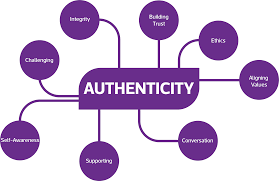
Authentic leadership Research Assignment

Authentic leadership

Authentic leadership

Order Instructions:

Dear Admin,

I need an essay in the following subject:

Provide 2–3 examples of when you witnessed authentic leadership. What did the individuals you listed do that demonstrated authenticity and how does this compare to the findings of the attached journal article?

1)The examples I want from leaderships working in aviation only. And I prefer the examples from Aviation Companies like Qatar Airways, Etihad, and Emirates.

2) Do include all your references, as per the Harvard Referencing System.

3) Please don’t use Wikipedia web site.

4) I need examples from peer reviewed articles or researches.

Note:To prepare for this essay please read the required article that is attached

Appreciate each single moment you spend in writing my paper

Best regards

SAMPLE ANSWER

BL.DQ.W5

Authentic leadership is built on an ethical foundation and emphasizes the need for leaders to build legitimacy through sincere relations with followers while valuing their input (Mital and Dorfman, 2012). Authentic leaders promote openness, team and individual performance and are generally positive (Pescosolido, 2002). This paper is a discussion of two leaders in the aviation industry who have demonstrated authentic leadership.

Emirate’s Vice President, Human Resources, Abdulaziz Al Ali has contributed immensely to the company’s growth through the recruitment and training of highly qualified employees. In more than one instance, Abdulaziz has supported employees and addressed employees’ challenges through embracing dialogue. One example is when there he had various meetings with employees in different work stations concerning alleged overworking and fatigue which was compromising their well-being. Abdulaziz felt that while the company’s growth was necessary, staff members deserved to be contented with their work in order to deliver efficiently. In this regard, Abdulaziz and his team of human resource managers embarked on designing more flexible shifts and regular recruitment to meet the high demand that the airline has recorded over the years. As noted by Mital and Dorfman (2012), authentic leadership is about being concerned about other peoples’ welfare and having the drive to better the lives of other.

This leader portrays empathy, a characteristic that is highly regarded in authentic leadership (Hale and Fields, 2007). Empathy encompasses an understanding of members’ needs and emotions and thereby creates an atmosphere of compassion within the organization (Mital and Dorfman, 2012; Brown, Trevino and Harrison, 2005). An authentic leader recognizes that each person is a human being and by envisioning themselves in the shoes of that person, it is possible to understand how he or she is affected by certain circumstances (Avolio and Gardner, 2005). Abdulaziz in this case must have realized that the tight schedules were exhausting for employees through the process of empathy and thereby taking the specified actions.

Fatima Al Kharousi joined Etihad Airlines through the graduate management program and has managed to win the heart of the Etihad team through her thoroughness and quality leadership skills. She was recently promoted to an airport manager to head operations in Japan’s Chubu Centrair International Airport after working in Singapore, London and Manchester as a duty manager. Fatima who is also the first Emirati woman to become airport manager at Etihad can be considered an authentic leader.

While working in London, Fatima was once faced with a major dilemma when a flight delayed for several hours; exposing customers to extreme cold. As a result, the a child of one of the clients developed a fever just as the flight was about to leave. This left the mother agonized on whether to proceed with the journey with a sick child or just forego the trip, which would mean she would get late for her engagements. Devastated, the mother sought a solution and was referred to Fatima who promised to get her a flight as soon as her daughter was treated. Unfortunately, she was flying economy class and all tickets had been booked for the next three days. Fatima negotiated for the woman to take the business class despite having paid for economy class and thereby facilitated her arrival to her destination.

This can be described as authentic leadership because Fatima recognized that it was the Airline’s fault that led to the inconvenience. As noted by Mital and Dorfman (2012), moral integrity is an important component of leadership and letting the woman wait for days to secure another ticket would have amounted to lack of concern for other people. The fact that she was empathetic and humane is an illustration that Fatima possesses leadership attributes that can be associated with authentic leaders (Avolio and Gardner, 2005).

References

Avolio, BJ & Gardner, WL 2005, “Authentic leadership development: Getting to the root of positive forms of leadership”, Leadership Quarterly, Vol 16, Issue, pp. 3315–338

Brown, ME, Trevino, LK & Harrison, DA 2005, “Ethical leadership: A social learning theory perspective for construct development”, Organizational Behavior and Human Decision Processes, Vol 97, Issue 2, pp. 117–134.

Hale, JR & Fields, DL 2007, “Exploring servant leadership across cultures: A study of followers in Ghana and the USA”, Leadership, Vol 3, Issue 4, pp. 397–417.

Mital, R & Dorfman, PW 2012, “Servant leadership across cultures”, Journal of World Business Vol 47, Issue 4, pp. 555–570.

Pescosolido, AT 2002, “Emergent leaders as managers of group emotion”, Leadership  Quarterly, Issue 13, pp. 583–599.

We can write this or a similar paper for you! Simply fill the order form!

Shiva and Parvati Essay Assignment Available

Shiva and Parvati
Shiva and Parvati

Shiva and Parvati

SAMPLE ANSWER

Shiva and Parvati

The basic iconography of Shiva and Parvati is in the form of yoni and linga. Yoni symbolically means womb and a place to give birth.  Yoni Linga is the origin of power. The two implies source of power and life in terms of regeneration. In some temples, the two are represented in various stages of life in their sexual orientation and unity.

Both sculptures and paintings are used to describe the nature of both Shiva and Parvati. There are similarities and differences in the way the two characters are depicted using both sculptures and paintings. To begin with, sculptures portray Parvati as being a very beautiful woman with a very dark skin. She is presented sated on a wild animal like a lion or tiger. Seating a lion symbolizes her ability to rule nature. In most instances, she is portrayed seated on mountains or near mountains.  Seating on mountains reminds people of her earlier role as a goddess. Other sculptures represent Shiva wearing silk clothes with bracelets. The sculptures show her with her son who she is feeding.

On the other hand, the sculptures present Shiva as a limitless person who never changes. He comes in different forms which are very scaring.  Shiva is the main God in Hinduism. He is among the five Gods who are very influential. He is therefore regarded as a destroyer and also a transformer. He is regarded as being present everywhere and lives on the mountain. In addition, the sculptures depict him as being a family man with a wife and two children. So as to portray his fierce nature, the sculptures show him with a sword trying to cut demons. He is therefore recognized as the leader of god of yoga. The sculptures show Shiva as having a third eye on his forehead with a snake tied around his neck (Brown,20).

Paintings are equally used to describe the nature of both Shiva and Parvati. Paintings describe Shiva and Parvati together. They both form a relationship which is referred to as Sira-Sakti. The illustration of the two characters is found both in the wall paintings and in the miniature paintings.  The paintings display Shiva and Parvati as great lovers who are always seated together. The two lovers are shown seated together on a bull or together with a bull.

Similarly, the paintings have portrayed the two as people who enjoyed each other’s company. In some instances, they are shown in their respective attires. The paintings show Shiva with his common characteristics like the crescent of the moon, snake. Furthermore, the paintings show them in love positions seated on top of an elephant.

The similarities in both artworks are the fact that the theme is the same. Both sculptures and paintings portray the two characters as great leaders. However, paintings portray the two as great lovers. Sculptures portray Shiva as being a fierce leader and Parvati as being a very beautiful woman.

The artworks describe Shiva and Parvati as being different. Parvati represents the important virtues in the society which are respected by the Hindu community.  Some of the characteristics of Parvati which are portrayed in the artworks include fertility and dedication and also being very holy. The art work main theme is Parvati’s main significance in terms of her relationship with the husband. She is described as a householder. Her character attracts Shiva who is a lonely man without a family. Shiva is attracted into the world of giving birth. Both artworks therefore describe Shiva and Parvati as being different. Shiva is a fearless leader who is very unruly and destroys everything. On the contrary, Parvati is portrayed as being very humble and corrects the unruly character of her husband. Moreover, in both artworks, Parvati stands for a very civilized person in the society. This is contrary to the mountains and wilderness which are used to describe Shiva. Despite the fact that she is brought up in this environment, she is able to withstand all the challenges and cope up with the husband. This is done through convincing the husband to marry her. Parvati prevents the husband from engaging into controversial activities. Therefore, the couple represents the power of a woman and the blessings that come with marriage. This is especially when both the husband and the wife are held together by love. Parvati’s dedication to serving her husband is outstanding which attracts her husband (Sanderson &Alexis, 349-492).

In both artworks, Shiva and Parvati are not portrayed as being equal. Shiva is portrayed as a leader who is very fearless. This is clearly described through use of physical features like the mountain. Shiva is described as being a supreme being who is after destroying. On the contrary, Parvati is portrayed as a house maker. She is described as a life giver who respects the husband. Her character attracts her husband who decides to marry her. She eventually becomes the source of blessing in Shiva’s life. The artworks portray them as being dissimilar so as to convey the message to the people (Haag 15-24)

Works cited

Ananda Coomaraswamy, Saiva Sculptures, Museum of Fine Arts Bulletin, Vol. 20, No. 118 (Apr., 1922), pp 15-24

James W. Haag  (2013), The Routledge Companion to Religion and Science, Routledge, ISBN 978-0415742207, pp 491-496

Robert Brown (2012), Ganesh: Studies of an Asian God, SUNY Press, ISBN 978-0791406564

Sanderson, Alexis (2004), “The Saiva Religion among the Khmers, Part I.”, Bulletin de Ecolefrangaised’Etreme-Orient, 90-91, pp 349-462

We can write this or a similar paper for you! Simply fill the order form!

Extra Credits Research Paper Available

Extra Credits Research Paper

Extra Credits Research Paper

Extra Credits Research Paper

Do you know that what seems to be going on right now is really happening? How could you be mistaken? Is this a realistic possibility? Do you know that you’re
working on an extra credit essay for your philosophy course right now?

Use at least three (3) quality references Note: Wikipedia and other related websites do not qualify as academic resources.

Your assignment must follow these formatting requirements:

  • Be typed, double spaced, using Times New Roman font (size 12), with one-inch margins on all sides; citations and references must follow APA or school-specific format. Check with your professor for any additional instructions.
  • Include a cover page containing the title of the assignment, the student’s name, the professor’s name, the course title, and the date. The cover page and the reference page are not included in the required assignment page length.

Inventory, Transportation and Warehousing

Inventory, Transportation and Warehousing

Inventory, Transportation and Warehousing

Order Instructions:

The writer has to pay close attention to APA 6th Edition for this paper, it is also critical that the references follow APA 6th edition and must include all doi where necessary and also the UR links when sources are taking from the internet. In the previous papers the writer has giving very little attention to that. its is very important that he or she take note of that and properly reference the paper.

The are two main points to discussed in this paper and the writer must clearly and detail respond to those two points.

Inventory, Transportation, and Warehousing

Imagine that you are the logistics manager of a firm supplying fashion clothes to the big stores. Being able to reliably assign costs to activities is a crucial management tool. However, the kind of transaction data traditionally used in logistics can present problems for activity-based costing.

• What are the main factors affecting the optimal level of product availability in your organization? Give practical examples to show how technology can help the inventory manager to improve the balance between the costs of over- and under-stocking in the business.

• What are the main difficulties involved in assigning meaningful costs to the activities in warehouses? How can these difficulties be overcome and cost savings achieved?

Resources

Articles
• Wallin, C., Rungtusanatham, M. J., & Rabinovich, E. (2006). What is the “right” inventory management approach for a purchased item? International Journal of Operations & Production Management, 26(1/2). Retrieved from ABI/INFORM Global database.

This article explores four basic approaches to the problem of inventory management and shows their application to different circumstances.

• Pokharel, S. (2005). Perception on information and communication technology perspectives in logistics: A study of transportation and warehouses sectors in Singapore. Journal of Enterprise Information Management, 18(1/2). Retrieved from ABI/INFORM Global database.

This survey analyzes perceptions of logistics companies in Singapore concerning the benefits of ICT applications for their industry.

• Varila, M., Seppänen, M., & Suomala, P. (2007). Detailed cost modelling: A case study in warehouse logistics. International Journal of Physical Distribution & Logistics Management, 37(3). Retrieved from ABI/INFORM Global database.

This study considers the various drivers for assigning activity costs to products in warehouse logistics and concludes that the accuracy of accounting can be significantly increased by measuring the actual duration of transactions.

• Timme, S. G. (2003). The real cost of holding inventory. Supply Chain Management Review: Top 50 PLs, 7(4), 30-37. Retrieved from ABI/INFORM Global database.
This article examines the total costs involved with holding inventory. The author also presents a solution to valuing inventory and how it can lead to better management decisions.
Web Sites
Beasley, J. E. (n.d.). OR-Notes. Retrieved from http://people.brunel.ac.uk/~mastjjb/jeb/or/invent.html

This academic Web site provides detailed information, charts, and diagrams regarding inventory control.

SAMPLE ANSWER

Inventory, Transportation and warehousing

Overstocking refers to having excess amounts of stock than is necessary. This is usually attributed to poor management of the inventory, demand or material flow particularly to process management. This is also considered as a form of losing revenue as it is tied up in capital and additional costs of storing the items. Under-stocking on the other hand refers to having inadequate amount in relation to items or supplies. These are the two main issues affecting the efficient and effective means of supplying fashion clothes to large stores (Jaber, 2009).

This has in turn, led to a number of drawbacks in the efforts of the firm to achieving its desired goals and objectives. In the case of overstocking, it leads to various consequences. First, the funds are held up in capital and these funds could have been used in different other areas that would have boosted the company on its path to success. Second, the excess stock will require additional space and this means incurring additional costs for storage space. Furthermore, the cost will also include maintenance fees. Third, the stock may deteriorate in quality and at times become obsolete given the fast changing trend of fashion (‘Reduce the risk of overstocking’, 2012).

In the case of under-stocking, it leads to poor operation of the production process and poor delivery schedules. Under-stocking may lead to paying the labor force yet they were idle most of the period waiting on the production process. The corporate image of the firm may be tarnished as it does not meet the needs of customers. Meeting the demands of the customers may prove difficult and result in unfavorable prices (Müller, 2011).

It is important to maintain a balance between overstocking and under-stocking, and in the current modern business world, this requires the use of a given form of system. A common system that can be used in order to manage inventories efficiently and effectively is the barcode system. When the barcode is applied at the point of sale, usually at a computerized cash register, the sales information of the items is relayed to a larger system that supports the usage information and statistics. This information will be used by the purchasing department in making purchase decisions on the grounds of sales and the level of inventory (‘Inventory Management’, 2010).

There are a number of complications linked to coming up with significant costs associated with activities in a warehouse. These might include a poor system used in the storage process from the time the items are offloaded into the warehouse to the time they are loaded and dispatched. Another difficulty that adds to the process is the distance of the warehouse from the production facility. Furthermore, the arrangement used in the warehouse and the size of the warehouse also impacts negatively in coming up with efficient costs (Richards, 2011).

Viable solutions to mitigating some of the difficulties include coming up with a proper warehouse system such as FIFO: this will provide a basis for knowing how the products will be arranged in the warehouse and how they will be dispatched. This will help in a formal arrangement that will be efficient and save on time which will eventually save on costs. It is important that the location of the warehouse be near the production facility; this will save on transportation costs and will make it easier to manage activities in the warehouse.

References

Inventory Management. (2010). Vox Sanguinis, 98(3p1), e295-e363. doi:10.1111/j.1423-0410.2009.01252.x

Jaber, M. (2009). Inventory management. Boca Raton: CRC Press.

Müller, M. (2011). Essentials of inventory management. New York: AMACOM.

Reduce the risk of overstocking. (2012). Br Dent J, 213(11), 578-578. doi:10.1038/sj.bdj.2012.1125

Richards, G. (2011). Warehouse management. London: Kogan Page.

We can write this or a similar paper for you! Simply fill the order form!

Stereotypes Research Paper Writing Service

Stereotypes
Stereotypes

Stereotypes

Order Instructions:

What are the common stereotypes assigned to this
diversity group? Now list five well-known individuals within this diversity group and elaborate on how they do not fit the stereotypes.

APA styles, double spacing, s pages, due on 2/4/2017 on Wednesday.

SAMPLE ANSWER

Stereotypes

Stereotypes are a collection of prejudiced beliefs held about members of a given group which is defined by gender, age, race, ethnicity, nationality or religion. Proponents of any form of stereotype tend to justify their thoughts or statements on their belief that the members of any given group are more predisposed to present certain behaviors or attributes (Burgess et al, 2011). One of the most prevalent types of stereotypes is the racial kind. Examples are often made about virtually all races. African-Americans for instance are said to achieve success through professional sports as well as hip-hop music. Whites or Caucasians are also seen to be better at blue-collar jobs and not sports or the entertainment industry. Mexicans on the other hand are often prejudiced against as illegal immigrants who make it through odd jobs (Weber et al, 2014; Owens and Lynch, 2012).

These stereotypes are often very harsh and highly controversial. While there will always exist select individuals from these groups who present the characteristics conveyed in stereotypes, there are also those who defy these and reach the highest levels of success in society. This exercise will entail the highlighting of five individuals drawn from these different groups and the way that they defy common stereotypes that could be held against them. The five individuals are well-known and they include President Barack Obama, Eminem, Danny Trejo and also Larry Bird.

Barrack Obama- African-American

He is the current president of the United States and one of the most striking aspects of this man is the fact that he is of African-American descent. His biological father came from Kenya, a country in Eastern Africa. He defied the typical stereotype about blacks long before he became president. He was first an accomplished lawyer and later rose through political ranks eventually being elected to the senate, winning the democrat presidential ticket and eventually becoming the president of the United States in 2008. He is also an accomplished author with two books to his name, namely “The Audacity of Hope” and “Dreams of my Father”. If he didn’t achieve these it would be very hard for anybody to believe it was possible and this is the reason many termed him as America’s first black president. The 42 men who held that position before him were all white and the American political system is dominated by whites.

Larry Bird-White

Larry Bird is one of the most prominent figures on the NBA hall of fame. What is most striking about him is the fact that he made such a great impact to the National Basketball scene despite being white in a sport dominated by African-American professional players. He was drafted to the Boston Celtics and won the title of “Most Valuable Player”, MVP several times in his career. He was also a key member of one of America’s most formidable Olympic Basketball Teams. Currently he is the president of the Indiana Pacers and many continue to revere him for his defiance of the stereotype. The issue of his race and his ability to cope in professional basketball was a subject of many a press-conference during his prime as well as later on following his retirement in 1992 due to back problems.

Danny Trejo- Mexican

Danny Trejo has graced the silver screen on several occasions playing different characters in block-buster films. His story is unique because he is an ex-convict and this, added to his ethnicity would have spelled doom for any chances of his success. Despite this he has proved himself time and time again that he is a good actor and this has led him to work with some of the most influential directors in international Showbiz including Quentin Tartantino who cast him as the main character in the cult-movie “Machete.”

Eminem- White

He goes by different names such as Marshall Mathers III which is his real name as well as his stage name ‘eminem.’ He is a household name when it comes to do with all matters related to hip-hop and more specifically rap music. Rap from its very inception has been dominated by African-Americans with Acts such as Run DMC pioneering the industry. For the past three decades it has always been seen as a preserve of people of this ethnicity. Eminem has not only managed to make music but also to win awards and a huge following of fans despite his being a white person.

Russel Peters, Comedian

This is a Canadian comedian of Indian descent. It is often thought that Indians who migrate to America engage in different types of retail business or cab driving. He however defies this by getting into the entertainment industry which has a limited number of people with Indian roots. Despite this he has managed to curve a niche for himself in the international entertainment industry through the satire he uses when pointing out the humorous side of cultural differences. If he had not done it it would be close to impossible to convince anyone that there exists a comedian with Indian roots commanding such a huge audience.

References

Burgess, M. C., Dill, K. E., Stermer, S. P., Burgess, S. R., & Brown, B. P. (2011). Playing with prejudice: The prevalence and consequences of racial stereotypes in video games. Media Psychology, 14(3), 289-311.

Owens, J., & Lynch, S. M. (2012). Black and Hispanic immigrants’ resilience against negative-ability racial stereotypes at selective colleges and universities in the United States. Sociology of education, 85(4), 303-325.

Weber, C. R., Lavine, H., Huddy, L., & Federico, C. M. (2014). Placing Racial Stereotypes in Context: Social Desirability and the Politics of Racial Hostility. American Journal of Political Science, 58(1), 63-78.

We can write this or a similar paper for you! Simply fill the order form!

Statistics Analysis Research Paper Available

Statistics Analysis Research Paper

Statistics Analysis Research Paper

Statistics Analysis Research Paper

Order Instructions:

Please let me know how many pages will be.
I will email the task and other related documents later.
Thank you very much.

SAMPLE ANSWER

Question 1

Conduct a one-way ANOVA to investigate the relationship between hair color and social extroversion. Be sure to conduct appropriate post hoc tests. On the output, identify the following:

  1. F ratio for the group effect
  2. Sums of squares for the hair color effect
  3. Mean for redheads
  4. P value for the hair color effect

Table 1:  Definition of variables

Variable Definition
Hair Color


1 = Blond

2 = Brunet

3 = Red Head

Social Extroversion A measure of social extroversion

According to Kumar (2008), the following steps were followed to carry out the test. On the data editor menu bar, Click analyze then a drop down menu pops and general linear model is chosen then univariate. In the Univariate dialog box, choose extroversion then move it to the dependant variable box and Click on hair color and move it to the fixed factor(s) box. Click options and from the dialog box which appears, click hair color on the factor(s) and factor interactions box and move it to the display means for box. In the display box, click homogeneity tests, estimates of effect size, and descriptive statistics. In the factor(s) box, choose hair color and move it to the post hoc tests for box. Click turkey and R-E-G-W-G in the equal variances assumed box. Also click dunnet’s c in the equal variances not assumed box.

Descriptive Statistics
Dependent Variable: Social Extroversion
Hair Color Mean Std. Deviation N
Blond 5.17 2.787 6
Brunet 3.67 1.211 6
Redhead 2.33 1.033 6
Total 3.72 2.109 18

Table 2

Levene’s Test of Equality of Error Variancesa
Dependent Variable:Social Extroversion
F df1 df2 Sig.
1.520 2 15 .250
Tests the null hypothesis that the error variance of the dependent variable is equal across groups.

Table 3


Tests of Between-Subjects Effects

Dependent Variable:Social Extroversion
Source Type III Sum of Squares df Mean Square F Sig. Partial Eta Squared
Corrected Model 24.111a 2 12.056 3.511 .056 .319
Intercept 249.389 1 249.389 72.638 .000 .829
hair 24.111 2 12.056 3.511 .056 .319
Error 51.500 15 3.433
Total 325.000 18
Corrected Total 75.611 17
a. R Squared = .319 (Adjusted R Squared = .228)

Table 4

A one-way analysis of variance was performed to evaluate the relationship between hair color and social extroversion. Hair food was the independent factor and it included three levels i.e. blond, brunet and red head. Measure of social extroversion was the dependant variable .The ANOVA test conducted was significant at the 0.05 level, F (2, 15) = 3.511, p = 0.056, ms error = 3.433 (Ghauri, et al. 2005).

From the above output;

a). F ratio,  F (2, 15) = 3.511

b). p value, p = 0.056

c). Sum of squares for hair color, SS = 24.111

d). Mean for red heads, m = 2.33

Question 2

Effect size for the relationship between hair color and extroversion

According to Gay, et al, (2009) the strength of the relationship between hair color and the measure of social extroversion as assessed by n2 , was strong with hair color accounting for 32% of the variance of the dependent variable.

Pair wise differences were evaluated through conducting follow-up tests. Variances among the 3 groups range from 1.067 to 7.8 hence we assume that equal variances were not assumed and we therefore evaluate results for the Dunnett’s C test as a post hoc comparison test. From table 4 below, there was a significant difference in the means between the brunet and the blond group and also between redhead and blond group but no significant difference between brunet and red head at a 95%confidence interval.

95% confidence intervals of pair wise differences in mean measure of social extroversion

Hair Color M SD     Blond                 Brunet
Blond

Brunet

Red Head

5.17

3.67

2.33

2.787

1.211

1.033


(-2.54, 5.54)

(-1.11, 6.78)               (-0.78, 3.45)

Table 5

Question 3

A box plot to display the differences among the distribution for the 3 hair color groups.

To create the box plot, click graphs from the data editor menu bar. Then choose legacy dialogs and click on box plots from the drop down menu which appears. Choose simple then define the variables and click ok (Kumar, 2008).

Figure 1 (Source: SPSS output)

References

Ghauri, P., Granhaug, K. and Kristianslund, I.,(2005).  Research Methods in Business Studies: a  Practical Guide.

Kumar, R. (2008). Research Methodology: A step-by-step Guide for Beginners. Greater Kalash:  Sage Publications

Gay, L,R., Mills, E. G., Airasian, P.,(2009). Educational Research: Competencies for Analysis      and Applications (10th ed.)

Appendix

Multiple Comparisons
Dependent Variable: Social Extroversion
(I) Hair Color (J) Hair Color Mean Difference (I-J) Std. Error 95% Confidence Interval
Lower Bound Upper Bound
Dunnett C Blond Brunet 1.50 1.241 -2.54 5.54
Redhead 2.83 1.213 -1.11 6.78
Brunet Blond -1.50 1.241 -5.54 2.54
Redhead 1.33 .650 -.78 3.45
Redhead Blond -2.83 1.213 -6.78 1.11
Brunet -1.33 .650 -3.45 .78
Based on observed means.

The error term is Mean Square(Error) = 3.433.

Table 6

Social Extroversion
Hair Color N Subset
1 2
Tukey Ba Redhead 6 2.33
Brunet 6 3.67 3.67
Blond 6 5.17
Ryan-Einot-Gabriel-Welsch Rangeb Redhead 6 2.33
Brunet 6 3.67 3.67
Blond 6 5.17
Sig. .232 .181
Means for groups in homogeneous subsets are displayed.

Based on observed means.

The error term is Mean Square(Error) = 3.433.

a. Uses Harmonic Mean Sample Size = 6.000.
b. Alpha = .05.

Table 7

We can write this or a similar paper for you! Simply fill the order form!

 

LIP SERVICE IN ORGANISATIONS

Lip Service in Organisations

Lip Service in Organisations

Order Instructions:

This is an often misunderstood concept and tends to be given ’lip service’ by many organisations in terms of ’people are our most important assets’ for example. But what does it actually mean? Please see the attachment based on the ideas of Mayo (2001).

Mayo, A (2001) The Human Value of the Enterprise, Nicholas Brearley.http://eprints.mdx.ac.uk/1385/

SAMPLE ANSWER

BL.Inst.Qust.w4

Quantifying people as assets may to a certain extent appear unconventional; given that the value of human capital is difficult to measure due to its intangibility. In contemporary organizations which seek to compete effectively however, human capital should be a highly valued asset as it contributes immensely to an organization’s market value (Rastogi, 2000).

According to Mayo (2001), companies are ‘loaned’ ‘human capital’ by employees including personal knowledge, capabilities, commitment and experience; and this denotes the importance of human capital in contributing to an organization’s market value. Accordingly, taking an audit of the human asset worth is highly necessary for organizations which seek to determine the contribution of people to value addition. Mayo (2001) gives a formula for calculating peoples’ asset worth as a factor of employment costs and the individual asset multiplier (IAM), which is a function of capability, contribution, potential and values alignment.

Rastogi (2000), notes that employees represent an organization’s competitive advantage. Acknowledging people as a valuable asset encompasses recognizing that employees are responsible for organizational growth and profitability and that it is through them that customer loyalty is built (Becker, Huselid and Ulrich, 2001).  This insinuates that without good people, the organization cannot thrive no matter how good its strategy is. As organizations consider people as assets, it is imperative that the management recognizes that productivity is tagged to motivation; hence the need to continually promote a working environment that drives commitment and motivation in order to get the best out of people (Becker, Huselid and Ulrich, 2001).

Finally, human capital generally appreciates as employees gain skills, knowledge and experience (Mayo, 2001). This is unlike other forms of assets which are known to have a depreciating lifespan. In this respect, people can arguably be considered a great asset for any organization.

References

Becker, BE, Huselid, MA & Ulrich, D 2001, The HR Scorecard: Linking People, Strategy and  Performance, Harvard Business School Press, Boston.

Mayo, A (2001) The Human Value of the Enterprise, Nicholas Brearley, London.

Rastogi, PN 2000, Knowledge management and intellectual capital – the new virtuous reality of competitiveness, Human Systems Management, 19 (1), pp. 39-48.

We can write this or a similar paper for you! Simply fill the order form!

The Idea of Personal Versus Social Identity

The Idea of Personal Versus Social Identity 1. Briefly discuss the self and self-knowledge, including the idea of personal
versus social identity.

The Idea of Personal Versus Social Identity

Also, define self-esteem and perspectives on self-esteem
presented in your text (such as whether high self-esteem is always
beneficial, gender differences in self-esteem, and self-evaluations).
2. What are self-serving biases, and what is unrealistic optimism? Explain these
topics, providing examples to clarify. Although identity has deeps roots in social psychology, sociology, bridges between them (e.g., symbolic interactionism), and related disciplines, the explicit distinction between personal and social identity, within social psychology at least, can be traced to J. C

BUSINESS SKILLS IN PUBLIC HEALTH

Business Skills in Public Health

Business Skills in Public Health

Order Instructions:

BUSINESS SKILLS IN PUBLIC HEALTH

It is increasingly vital that public health leaders learn from their business-sector counterparts, and that they import appropriate business concepts such as return-on-investment, revenue generation, and entrepreneurialism into their organizations’ operations.

For this Discussion, read and review the two articles you selected from the list of articles presented on the Learning Resources page focusing on the Management Academy for Public Health.

RESPONSE TO THE FOLLOWING QUESTIONS:
1. Briefly summarize the main points of each article. Describe what you learned from these articles regarding the specific concepts of ROI, revenue generation, social marketing, entrepreneurship, or other business planning skills.
2. In your view, were the business skills applied effectively in the situations described in the articles? Justify your position.
3. In your experiences so far with public health organizations, identify an example in which business skills were used well, or, alternatively, were used poorly.

(Note: Do not use actual names of the organizations or people.)

I HAVE SELECTED THESE TWO ARTICLES: (USE ONLY)

1. Scotten, E., Shirin L., & Absher, A. (2006). Creating community-based access to primary healthcare for the uninsured through strategic alliances and restructuring local health department programs. Journal of Public Health Management & Practice, 12(5), 446-451.

2. Umble, K., Orton, S., Rosen, B., & Ottoson, J. (2006). Evaluating the impact of the management academy for public health: developing entrepreneurial managers and organizations. Journal of Public Health Management & Practice, 12(5), 436-445.

Please apply the Application Assignment Rubric when writing the Paper.

I. Paper should demonstrate an excellent understanding of all of the concepts and key points presented in the texts.

II. Paper provides significant detail including multiple relevant examples, evidence from the readings and other sources, and discerning ideas.

III. Paper should be well organized, uses scholarly tone, follows APA style, uses original writing and proper paraphrasing, contains very few or no writing and/or spelling errors, and is fully consistent with doctoral level writing style.

IV. Paper should be mostly consistent with doctoral level writing style.

SAMPLE ANSWER

Business Skills in Public Health

In recent years, service provision at one of the county health departments began to deteriorate. The pressure for nurses working at the hospital build up, with more time and costs spent on every patient due to increased visits. The revenue collected from the services dropped due to shift experienced in the patients` mix. The hospitals` expenditures went down. To solve this problem, the health providers at the county joined the respective health to establish a system that ensured continued health care service provision to the uninsured and underinsured individuals. Community health data and specific demographics of patients were obtained prior to soliciting the required funds to solve the crisis facing the Wilkes County Health Department. The business skills applied in this situation were effective in curbing the situation. Analysis of health data and demographics, cost of operations, establishing the use of underutilized resources, establishing an organizational connection, and sourcing for funds were effective interventions to solve the problem (Scotten, Shirin and Absher, 2006). Effective business skills are an asset in any health organization. At one time, while I was still working in one of the county health departments, the organization I was working with refused to collaborate with a health department of a different county in launching a campaign for patient education of management of cardiovascular diseases due utilization of a lot of funds. Ten years later, the hospital recorded the highest number of patients who were treated for cardiovascular diseases. An analysis report showed that patients lacked relevant knowledge on management of such diseases. If the collaboration could have been effected, this outcome would not have been experienced.

Managers of health departments are required to have skills of data and financial management. They are also required to have entrepreneurial skills. Through this, they will be able to join with other public organizations to ensure efficient operation of their health departments. Management Academies have been established to equip managers of health departments with the relevant managerial skills for managing public health departments. These programs have been shown to enhance the acquisition of the relevant skills required by respective managers of public health departments (Umble et al., 2006).

References

Scotten, E., Shirin L., & Absher, A. (2006). Creating community-based access to primary healthcare for the uninsured through strategic alliances and restructuring local health department programs. Journal of Public Health Management & Practice, 12(5), 446-451.

Umble, K., Orton, S., Rosen, B., & Ottoson, J. (2006). Evaluating the impact of the management academy for public health: developing entrepreneurial managers and organizations. Journal of Public Health Management & Practice, 12(5), 436-445.

We can write this or a similar paper for you! Simply fill the order form!

Research and Social Change Assignment

Research and Social Change

Research and Social Change

Order Instructions:

Research and Social Change

This week, you consider the relationship between research and social change and the role of the researcher as a social change agent. You also reflect on your current research skills to determine and prepare for the next steps to take in becoming a researcher.

Reflect upon your progress and growth as a researcher. Consider the questions and statements that follow.

How do you now understand the relationship between research and social change? How do you see yourself as a social change agent?

What are your next steps in becoming a successful researcher and graduate student? What challenges do you anticipate, and how might you overcome them?
With these thoughts in mind:

An explanation of the relationship between research and social change. Then, explain the role of a researcher as an agent of positive social change. Next, describe your plans for the next steps you need to take in becoming a successful researcher and graduate student.

SAMPLE ANSWER

Introduction

There is a very tight relationship between research and social change. This is because the two have an independent relationship. Social change is the alteration of the practices of a group of people within any given society with the hope that it will bring about positive gains for the individuals as well as the community at large. Social change is a necessity that is brought about by the large number of challenges that affect different areas of society. These challenges are problems that result from the way the members of the community are currently conducting their day to day activities. The most important step prior to the institution of change is the development of a critical understanding of the problem and the formulation of the best approach for overcoming it (Charmaz, 2011). This is where research comes in.

The research is of course carried out by a researcher who then takes up the role of an agent of change. The researcher will employ empirical methods and qualitative statistics to better understand the problems that exist in the given society. Due to his or her expertise, the researcher will have been exposed to similar situations or individuals who have come across challenges of that nature. As a result he or she is able to clearly illustrate the nature of the problem in a manner that the members of the society will understand. The researcher then develops recommendations based on the possibilities that are available (Bernard and Bernard, 2012).

Having a good understanding of the problem and the society, this researcher will be well placed to provide advice prior to and also during the time when the social change is taking place. The researcher will capitalize on the strengths of the society in an effort to eliminate the problem. At the same time, this individual will help the society in the identification of existent opportunities to be taken advantage of in the social change.

My Plan to become a great Social Researcher and Graduate Student

In my plan to become a great social researcher I will have to do several things as indicated below. The first thing that I will do is to ensure that I have a wide assortment of literary sources which I will read thoroughly to properly understand the different approaches that are used by more accomplished social researchers. At the same time I will seek to understand myself better especially with respect to my strengths and passions as well as the weaknesses I have. These will be key in helping me to find an area of social research that I would like to specialize on. I believe specialization is important as it will grant me a chance to have a focus area. This way I will easily experience linear growth (Babbie, 2013).

In addition to this I will find a way of joining scholarly societies made up of social researchers so that I have a network of individuals from whom I can easily compare notes on how to best approach social change through research. I believe that I will be able to find mentorship from more established social researchers who will critique my work and also help me to identify opportunities that exist in the field. I will also develop a cordial relationship with my professors and supervisors in the University for easier consultation on academic matters.

References

Babbie, E. (2013). The basics of social research. Cengage Learning.

Bernard, H. R., & Bernard, H. R. (2012). Social research methods: Qualitative and quantitative approaches. Sage.

Charmaz, K. (2011). Grounded theory methods in social justice research. The Sage handbook of qualitative research4, 359-380.

We can write this or a similar paper for you! Simply fill the order form!