




Competitive Strategy Research Paper

Competitive Strategy

Competitive Strategy

Order Instructions:

Competitive Strategy (Worth a Maximum of 15% of Course marks)

Discuss the major theoretical approaches to the building and sustaining of competitive strategy using the available academic literature including blue ocean strategy and other approaches. This assessment component must be based on minimum of 12 peer-reviewed academic articles. No wiki or general web sites please.

Essay/Report style- can use headings and graphs, tables and diagrams.

SAMPLE ANSWER

Introduction

            A firm achieves a competitive advantage when it persistently obtains higher levels of profit than its competitors do. This explains why there are a number of theories in the strategy domain that extensively address competitive advantage in an attempt to explain how management decisions and market factors may be manipulated to result into superior economic performance. To gain competitive advantage, an organization is first expected to create superior value for consumers by pricing their commodities a bit lower than the competitors, or instead develop a unique product or service that the consumers will be willing to purchase at premium price (Daniela 2014: 523). Hence, the firm needs to create a competitive strategy that will enable it to establish a much profitable and highly sustainable position in the industry compared to competitors. This profitability is also greatly influenced by the level of attractiveness of the industry. This paper champions the thesis that competitive advantage can be gained and sustained by the use of various competitive theoretical approaches.

Blue Ocean Strategy

For many years, companies have for long engaged in head-to-head competition while searching for the sustained and profitable growth. Hence, they have struggled for competitive advantage, market shares, and differentiation. Unfortunately, with the current overcrowded industries, such head on competitions will not benefit a company in any way, but instead will lead to a bloody “red ocean” of rivals, all of whom will be fighting for the gradually shrinking pool of profits (Ng, Lau & Ismail 2014: 132). Therefore, there are minimum chances that this approach will eventually lead to profitable growth in future. This is why it has been argued that most of the future leading companies will succeed by avoiding the red oceans, and instead creating blue oceans of uncontested market space with a great promise for growth (W. Chan & Mauborgne 2005: 105). These strategic moves, also known as value innovation, create powerful improvements in value for both the firm and its consumers, thus, the rivals are rendered obsolete and this unleashes new demand.

In this strategy, the red oceans signify the various industries existing today, while the blue oceans signify the nonexistent industries, also known as the unknown market space. Hence, where in red ocean companies try to outperform their rivals by grabbing the greatest market share of the existing demand, in blue oceans companies are focusing on creating new market space, demand, and thus an opportunity for highly profitable growth (Čirjevskis, Homenko & Lačinova 2011: 201). Despite the fact that some of the blue oceans are created beyond the already present industry boundaries, a greater number are developed from within the red oceans simply by expanding these existing boundaries (W. Chan & Mauborgne 2005: 106). In blue oceans, there is simply no competition since the rules are yet to be set. The market space has vast potential that has not been explored.

Red oceans will always be an important part of the business life. However, with the supply exceeding customer demand in most industries, competition for the greatest share will no longer be sufficient enough for companies to achieve and sustain superior performance. As a result, companies need to look beyond this competition in the established industries by seizing new opportunities for growth and profits by creating blue oceans as well.

Figure 1: The Profit and Growth Consequences of Creating Blue Oceans

According to research conducted by W. Chan and Mauborgne (2005: 107) on 108 companies, they noted that 86% of the launches were line extensions while another 14% were aimed at creating new market spaces. Although these line extensions in the red oceans delivered 62% of the total revenues, they only led to 39% of the total profits (W. Chan & Mauborgne 2005: 107). Contrary to this, the 14% that were aimed at creating blue oceans resulted in 38% total revenues and a startling high amount of 61% in total profits. As is noted in figure 1, the performance benefits of creating blue oceans are clearly seen, and they outnumber the benefits of red oceans.

There are quite a number of forces that drive the rising imperative to develop Blue Oceans. Increased technological advances have substantially contributed to the improvement of industrial productivity, which have allowed suppliers to produce a wide range of products and services. Globalization is also another factor as it has led to the dismantling of trade barriers between nations. This has also contributed to information on products and services being available globally (Singh 2012: 20). While supply is on the rise due to the rise in competition, there is no evidence to proof the rise in demand as well. As such, there is an increase in commoditization of products and services, intensified price wars, and also the shrinking profit margins. “For major product and service categories, brands are generally becoming more similar, and as they are becoming more similar people increasingly select basing on price” (Qtd from W. Chan & Mauborgne 2005, p.108).

Resource Based View Strategy

A different conceptual foundation which features more on the internal firm capabilities and less on the industry structure argues that a firm’s position to achieve and sustain competitive advantage is directly linked to the firm specific resources (Laosirihongthong, Prajogo & Adebanjo 2014: 1232). This resource based theory of the firm puts great emphasis on the role of developing unique and valued know-how as well as capabilities that will be close to impossible for rivals to imitate (Madhok, Li& Priem 2010: 94). This is usually difficult and it requires the firm to select effective strategies basing on the development of resources and capabilities. The presence of multiple resources and capabilities positively contribute to the development of the highest competitive entry barriers (Hinterhuber 2013: 797).

Figure 2: Resources and Capabilities Based View of the Firm

For a firm to develop a true cost or differentiation advantage, the firm’s resources and capabilities must be valuable, rare, imperfectly imitable, and non substitutable (Newbert 2008: 745). “If a resource or capability yields the potential to enable a firm to reduce costs and/or respond to environmental opportunities and threats, it is valuable, and to the extent that a firm is able to effectively deploy such a resource or capability, it will attain a competitive advantage.” (Qtd. From Newbert 2008, p. 747 ). Judging from this statement, it is clear that the level of competitive advantage achieved by a firm will basically rely on the value of its resources and capabilities. Hence, when the resources and capabilities are of marginal value, the firm will only attain minimal competitive advantages compared to firms with greater resource and capabilities values. This theory creates an assumption that the firm is well placed to exploit its resources and capabilities. This is because competitive advantage can only be achieved once the potentially valuable resources and capabilities are deployed effectively (Costa, Cool & Dierickx 2013: 449). Hence, resources and capabilities must be deployed together so as to attain competitive advantage. To further support this, Madhok, Li and Priem (2010: 99) state that firms are also required to process raw materials to make them more useful. For this to be effective, the resources must be put in use in a group of other resources to form effective combination. This is why Costa, Cool and Dierickx (2013: 449) contend that organizations may develop rents not only through the choice of better resources than that of competitors, but also by exploiting these resources more effectively with the use of proper capabilities. “no matter how great a firm’s capabilities might be, they do not generate economic profit if the firm fails to acquire the resources whose productivity would be enhanced by its capabilities” (Qtd. From Newbert 2008, p. 748).

Competitive advantage is usually obtained when the firm achieves a cost level, exploits untapped market opportunities, and neutralizes threats that competitors would otherwise fail to accomplish (Varey 1995: 45). This, however, may be impossible to achieve if the resources and capabilities are present widely. Consequently, competitive advantage will be more likely achieved only when the exploited resources and capabilities are rare or only possessed by few firms in a small industry where perfect competition will be impossible (Srivastava, Fahey & Christensen 2001: 777). Since resources and capabilities are supposed to be explored in a combination, it means that the rareness will not be at the individual resources and capabilities, but instead at the level of resource-capability combinations (Newbert 2008: 750).  For instance, if a particular combination of resources and capabilities is common, a greater number of firms will be able to imitate the resulting strategy, hence reducing a firm’s competitive advantage. Therefore, the individual resources and capabilities need not be rare for the firm to achieve competitive advantage, but the combination is what must be rare.

Porter’s Generic Strategies

The approaches involved in this strategy are referred to as generic strategies mainly because they can be applied to products and services of all industries, and to organizations with varying sizes. Porter named the three approaches “cost leadership”, “differentiation” and “focus”. The focus strategy is then further divided into two parts; the cost focus and the differentiation focus (See figure 3).

Figure 3: Source of Competitive Advantage (Miller & Friesen 1986: 38)

Important questions for the economy are how firms compete and which strategies they choose. An improved understanding of a firm’s competitiveness is also important in that it contributes to the improvement of existing policies relating to competition and other relevant issues (‘Achieving the Superiority’ 2010: 152). This improvement will, hence, provide valuable support to the efforts meant to continuously develop markets and businesses. This understanding is also important when it comes to comparing the domestic and internal contexts by being placed to effectively assess a firm’s competitive behavior. “If firms pursue any of the three recommended generic competitive strategies they will be able to outperform competitors who do not pursue such strategies.” (Qtd. From Ormanidhi & Stringa 2008, p. 56).

From a firm’s point of view, a relevant and most important aspect of competitive environment should be the industry in which it operates in. This is where the competition takes place (Allen, Helms, Takeda & White 2007: 72). According to Porter’s analysis, these industries contain firms that create and develop close substitutes, but the competitive environment of the firm’s feature a common structure with the five competitive forces. These forces are what will determine the overall level of competitiveness and profitability of the industry (Gurǎu 2007: 369). These include; threat of new entry, intensity of the level of rivalry among the already existing firms, pressure from the presence of substitute products, bargaining power of consumers, and the bargaining power of suppliers (Gonzalez-Benito & Suárez-González 2010: 1030). Profitability- the turn on invested capital- is related negatively to the overall strength of these five forces. Therefore, the greater the joint strength of the five forces affecting industries, the lower the industry profitability (Miller & Friesen 1986: 39).

Porter’s generic strategies help a firm to analyze the industry in which it functions in, in terms of the five competitive forces, so as to note its strengths and weaknesses in relation to the actual state of competition. This is possible because if the firm realizes the effects of each of these five forces, it will be better placed to take actions so as to defend itself or grasp an opportunity to enable it to be better placed so that these forces do not affect it (Gonzalez-Benito & Suárez-González 2010: 1032). Differentiation and low cost are the two forms of strategic or competitive advantage that firms can use to position themselves effectively against the pressures of the five forces. When these strategies are applied, firms will be better placed in the industry, and this will give them an opportunity for achieving higher profitability than their competitors. To achieve competitive advantage, these strategies cannot be pursued all at the same time. Instead, they must all be considered individually.

The cost leadership strategy is mainly focused on bringing in sales and taking them away from competitors. This happens by increasing profits by lowering prices, and ensuring that the average industry price is charged for products. This is important as it brings in sales since consumers will not understand why they have to pay higher prices in other companies for a similar product. The differentiation strategy, on the other hand, ensures that products are differentiated and made more attractive than those of consumers. This is enhanced by the presence of effective research, development and innovation among many others. Lastly, the focus strategy ensures that a company focuses on a particular niche in the market. This is made effective when the firm takes the effort of understanding the market dynamics and unique needs of customers.

Bowman’s Strategy Clock

Figure 4: Bowman’s Strategy Clock

Bowman’s strategy clock is based on an argument that key variables, when it comes to positioning, include price and perceived quality both of which are major determinants of value (Varey 1995: 47). To achieve these, Bowman makes an assumption that five potentially successful routes can be followed, while three others will lead to straight failure.

Position 1: Low price/Low Value

            When the products of a company are only differentiated minimally, the company will most definitely be in this position whereby the sales are only made on price alone. The firms in this position never choose to compete here, as it features the bargaining region. Therefore, consumers have an opportunity of bargaining the prices into an amount they feel is suitable for the products they want to purchase. This is usually because consumers cannot find any differentiated value, thus they know that they possess the power to manipulate prices as a result of many competitors. Firms in this position can improve their chances of gaining and sustaining competitive advantage by cost effectively selling volume and also developing new ways of attracting more customers (Laosirihongthong, Prajogo & Adebanjo 2014: 1240). It may be impossible to achieve customer loyalty; however, one way of being ahead of other competitors in this position is by always being one step ahead by selling more products than they do. Therefore, there is hope since the products may be of low quality, but judging from the prices, customers will feel more comfortable purchasing from these companies.

Position 2: Low Price

This position can be compared to Porter’s generic strategies: low cost leader position. The companies available in this position usually struggle to lower costs and also achieve high volume to counteract the negative effects of low margins (Ormanidhi & Stringa 2008: 60). Over time, such a company using this strategy will turn out to be most powerful in the market as it will have increased its market share. This is one way of gaining and sustaining competitive advantage over other companies. In case a company’s strategy to be low cost leader fails, the result may be catastrophic to all companies in the industry but beneficial for consumers. This is because there may develop a price war situation whereby each company is trying to take control by altering prices.

Position 3: Hybrid (Moderate price/moderate differentiation)

This approach is a combination of the low cost approach, however it also emphasizes on product differentiation so as to offer consumers better value for their money. These companies also focus on volume; however, their main agenda is to build their reputation by offering good prices for equally good products. This approach enables a company to build and maintain competitive advantage as there is an assurance that the products will be of high quality, despite the fact that prices are fairly low (Costa, Cool & Dierickx 2013: 456). Hence, this company will be better placed to have more loyal consumers as items are of good quality and prices are affordable compared to what is presented to them in other companies.

Position 4: Differentiation

This is also another approach that is quite similar to Porter’s view of differentiation. It is basically emphasizing on offering differentiation so consumers would prefer certain products to others from another company. Therefore, when the high perceived value is offered, the company can either choose to increase price when there is higher margins, or keep prices lower so as to increase market share (Hinterhuber 2013: 800). This is where branding is very important, as the company’s product will always be related to higher quality than others. This strategy must be applied with care; otherwise, the company will fail as a result of running low on resources. Competitive advantage in this case will rather be achieved when there are higher profit margins, or an increased market share. This is because; the production of higher value products will need extra resources. Companies use the extra income to keep up with the change in value. Therefore, in the event that these new sources of income fail to yield results, the company will not be able to keep up. The higher the value of products compared to that of other companies, the better the competitive advantage.

Position 5: Focused Differentiation

This strategy is usually characterized by the presentation of a higher perceived value at a rather substantial premium price. The consumers who purchase in this category are basically focused on the product’s perceived value only. This means that price is not a factor for these consumers, as they have a certain kind of product value they are in search of. Companies that offer designer products are more likely to be found in this position. Bowman states that the products do not necessarily have to be of much higher value as the consumers are basically relying on their perceived value of the products. Therefore, if consumers feel like a certain brand offers high value products; they will purchase it without considering if the products indeed have more value than others. The competitive advantage for such a company will be gained and sustained by focusing on target markets and high margins (Daniela 2014: 529). This means that the company will focus on producing goods that its target market will most likely purchase. This increases the odds of having many consumers purchase expensive products. This in turn will result into high profit margins that the company will enjoy and use to sustain its position by further developing more valuable products and selling at premium prices.

Position 6: Increased price/Standard Product

            This strategy features a sudden increase in price without an equal increase in product quality. It is, however, basically a gamble as the high price may either result into positive or negative impacts on the firm. There are times when the price increase in accepted by consumers, this is probably where the previous price was very low for the products. Hence, consumers will not mind topping up the amount. However, if the product is of poor quality, and this strategy is sought, the consumers may decline the change and thus lose loyalty in the company. This, in turn, results into loss of market share that will also affect the competitive advantage of the company (Singh 2012: 26). Another disadvantage of this strategy is that it may only be applied for short term use, maybe to boost market share, but must soon be discontinued. This is because in a competitive industry, another company will soon imitate this strategy and set another premium price, thus affecting this company’s profitability.

Position 7: High Price/ Low Value

This strategy only applies in a monopoly market, whereby goods and services are only offered by a single company. There are no competitions, which is why the company can charge whatever amount it prefers since there is no risk of losing market share. If this is the only company with the goods and services, consumers will have to pay for the products whether they agree to the pricing or not. This knowledge is what gives the company an advantage to make the most of the situation as such markets never last. Soon there will be new entries, and competition will be triggered. Therefore, companies will be forced to once again focus on the value of products and the prices they offer as well.

Position 8: Low value/ Standard Price

Generally, a low product value leads to a low product price so as to attract consumers to purchase the product. Therefore, this last strategy is the worst that companies may choose to use as they may appear greedy and selfish. With this approach, failure is predicted easily. Consumers will obviously prefer to pay a standard price for better valued products, or instead a low price for low valued products.

In a competitive industry, the last three strategies will most definitely lead to failure as customers will move in search of better product offers in other companies. This positioning approach is usually not static as competitor positions will most definitely change in response to new entries, or changes in strategies as a result of market or internal company conditions.

Structure Conduct Performance Approach

Over many years, this approach has offered guidance for many scholars who wished to further develop approaches for competitive strategy (Madhok, Li & Priem 2010: 94). This approach features three major elements: first, the structure of industries that are mainly defined by concentration, market share distribution and many other characteristics; Second, the conduct of firms that usually involves their action in relation to price setting, advertisement expenditures, technology and many others; Third, the performance of firms and industries as identified by profitability measurements. These elements of structure, conduct and performance are usually bound by three main casual relationships: The effects of structure on firm conduct, the effects of structure on firm performance, and the effects of firm conduct on its performance. The most important relationship, in this case, is the one between structure of industries and firm’s performance. When it comes to considering performance, an assumption is made that the market power is positively related to profitability. Therefore, the higher the market power, the higher the profitability will also be, and vice versa. “The manufacturing industry over 1936-1940 found support for the hypothesis that profitability of firms in highly concentrated industries is larger than in less concentrated ones” (Qtd. From ‘Achieving the Superiority’ 2010, p. 160).

Various researches have been conducted on the different approaches for competitive strategy, and the SCP model always gives differing results commonly depending on heterogeneity degrees (Afuah 2013: 259). However, this finding can be more refined when the relationship between concentration and performance assumed by the SCP model would stand in homogeneous and not heterogeneous industries. Although structure was initially considered to be exogenous in this model, the most important issues relating to it can all be summed up under barriers to entry. According to Daniela (2014: 526), the factors that can be interpreted as barriers to entry include, economies of scale, differentiation advantages that products have, and the advantages of absolute cost. Therefore, although there is an assumption made on structure, it does not mean that it is an irrelevant component. Therefore, all these components must be used equally in an evaluation expected to result in competitive strategy. This is why this model has always been criticized. It is clear that the conduct of a firm and its profitability will most definitely influence market structure.

This model, therefore, can be used by firms to gain and sustain competitive advantage in that firms will know how to influence the three factors so as to result with good results on the other. Since competitive strategy is all about getting power over the other companies, by offering goods or services that they cannot easily imitate, this company may choose to adopt a conduct that will enable it to change its structure and eventually lead to improved performance. The price setting conduct can be used to gain competitive advantage in that when the best prices are offered, consumers will be attracted in high numbers (Gonzalez-Benito & Suárez-González 2010: 1039). The product must also be considered so as to ensure the consumers will not result into a great loss for the company by purchasing goods at throw away prices. Therefore, the company may decide to calculate the costs of manufacturing the product, and then sell it at minimal profits to avoid crisis. This sudden increase in consumers for the company is just part of gaining competitive advantage, and must therefore be improved for the company to sustain its competitive advantage. The sustenance can be achieved once the company is sure the consumer loyalty has been gained, and not just their one time appearance once the price has been lowered. This is because its profit margin and increased market share will be improving every day, and not rising high for a couple of weeks before dropping tremendously.

The relationships described in this model will play a major role in guiding the formation of a competitive strategy. For example, it is stated that the structure related to the performance of the firm. Therefore, when the structure of the industry is concentrated, it means that the company should be experiencing better performance. This is due to the fact that there is an opportunity for obtaining increased market share and profit margins. This information will hence be used in determine the conduct of the firm to achieve competitiveness. A concentrated market structure means that there are more consumers than companies can cater for. Therefore, a firm may decide to lower prices for a couple of months so as to increase market share. This unique opportunity will be attractive for consumers, who will henceforth shop in this company. After some time, the company may opt to increase both price and product value. This is a strategy to ensure that customers are not lost in the process of increasing profit margins. With this, the company will have gained competitive advantage, and will be better placed to act as the price setter in its industry since it will possess the largest market share.

Conclusion

In light of the discussion presented above, it is clear that there are various strategies that can enable a company to achieve and sustain competitive advantage. The five discussed in this paper are the major and most commonly used strategies. All of these strategies are focused on placing the company at a better industry position, providing customers with value at fair prices, and offering unique products to satisfy the unmet needs of consumers. They, however, achieve these through different approaches. The Blue Oceans strategy focuses on the creation of a new market space; the resource based view focuses on developing rare products that will limit competition through the possibility of substitution; and Porter’s generic strategies focuses on forces within the industry that can affect competitive advantage. Bowman’s Strategic Clock is a strategy that focuses on different directions that companies may take to achieve and maintain competitive advantage in different market situations. The SCP model, on the other hand works on relationships, and how one action may be manipulated to result to competitive advantage for the firm as a whole.

Bibliography

‘Achieving the Superiority: The Role of Marketing Orientation in gaining Competitive Advantage-within Jordanian Telecommunication Sector’ 2010, Journal Of Managerial Sciences, 4, 2, pp. 152-169.

Afuah, A 2013, ‘Are network effects really all about size? The role of structure and conduct’, Strategic Management Journal, 34, 3, pp. 257-273, Business Source Complete, EBSCOhost, viewed 2 November 2014.

Allen, R, Helms, M, Takeda, M, & White, C 2007, ‘Porter’s Generic Strategies: An Exploratory Study Of Their Use In Japan’, Journal Of Business Strategies, 24, 1, pp. 69-90.

Čirjevskis, A, Homenko, G, & Lačinova, V 2011, ‘How To Implement Blue Ocean Strategy (BOS) In B2b Sector’, Business, Management & Education / Verslas, Vadyba Ir Studijos, 9, 2, pp. 201-215.

Costa, L, Cool, K, & Dierickx, I 2013, ‘The competitive implications of the deployment of unique resources’, Strategic Management Journal, 34, 4, pp. 445-463.

Daniela, PA 2014, ‘Competitive Advantage In The Enterprise Performance’, Annals Of The University Of Oradea, Economic Science Series, 23, 1, pp. 524-531.

Gonzalez-Benito, J, & Suárez-González, I 2010, ‘A Study of the Role Played by Manufacturing Strategic Objectives and Capabilities in Understanding the Relationship between Porter’s Generic Strategies and Business Performance J. González-Benito and I.Suárez-González Role of..’, British Journal Of Management, 21, 4, pp. 1027-1043.

Gurǎu, C 2007, ‘Porter’s generic strategies: a re-interpretation from a relationship marketing perspective’, Marketing Review, 7, 4, pp. 369-383.

Hinterhuber, A 2013, ‘Can competitive advantage be predicted?Towards a predictive definition of competitive advantage in the resource-based view of the firm’, Management Decision, 51, 4, pp. 795-812.

Laosirihongthong, T, Prajogo, D, & Adebanjo, D 2014, ‘The relationships between firm’s strategy, resources and innovation performance: resources-based view perspective’, Production Planning & Control, 25, 15, pp. 1231-1246.

Madhok, A, Li, S, & Priem, R 2010, ‘The resource-based view revisited: Comparative firm advantage, willingness-based isolating mechanisms and competitive heterogeneity’, European Management Review, 7, 2, pp. 91-100.

Miller, D, & Friesen, P 1986, ‘Porter’s (1980) Generic Strategies and Performance: An Empirical Examination with American Data Part I: Testing Porter’, Organization Studies (Walter De Gruyter Gmbh & Co. KG.), 7, 1, pp. 37-55.

Newbert, SL 2008, ‘Value, rareness, competitive advantage, and performance: a conceptual-level empirical investigation of the resource-based view of the firm’, Strategic Management Journal, 29, 7, pp. 745-768.

Ng, A, Lau, D, & Ismail, W 2014, ‘Adoption of focus group and policy Delphi to blue ocean strategy: a proposed conceptual model’, International Journal Of Management & Enterprise Development, 13, 2, pp. 130-146.

Ormanidhi, O, & Stringa, O 2008, ‘Porter’s Model of Generic Competitive Strategies’, Business Economics, 43, 3, pp. 55-64.

Singh, PK 2012, ‘Management of Business Processes Can Help an Organization Achieve Competitive Advantage’, International Management Review, 8, 2, pp. 19-26.

Srivastava, R, Fahey, L, & Christensen, H 2001, ‘The resource-based view and marketing: The role of market-based assets in gaining competitive advantage‘, Journal Of Management, 27, 6, p. 777.

Varey, RJ 1995, ‘A Model of Internal Marketing for Building and Sustaining a Competitive Service Advantage’, Journal Of Marketing Management, 11, 1-3, pp. 41-54.

Chan, K, & Mauborgne, R 2005, ‘Blue Ocean Strategy: From Theory To Practice’, California Management

We can write this or a similar paper for you! Simply fill the order form!

Holding onto Old Strategies and Manufacturing Techniques

 Holding onto Old Strategies and Manufacturing Techniques
Holding onto Old Strategies and     Manufacturing Techniques

Eastman Kodak: Holding onto Old Strategies and Manufacturing Techniques – Research Proposal

Order Instructions:

THE ORDER IS DUE ON SATURDAY

LSI Assignment Guidelines

Developing a willingness and ability to engage in self-reflection is a critical leadership skill that is not easily learned yet which reaps many rewards. The LSI enables you to examine your own unique way of thinking and how it influences your behavior.

Your Assignment:

Complete (on your own) the LSI according to the procedure outlined here, so that you end up with your “Life Styles Circumplex” profile: 12 “personal thinking style” scores, one score for each section of the circumplex.

Write a 3–5 page paper examining and explaining your LSI results. There are more details in the table below.

LSI Style Interpretations: Go to the LSI1 Results page, find your circumplex profile, and click on the circumplex “slice” of one of the styles. The site will bring you to a customized interpretation of the style you clicked on. Click on each of the 12 “slices” to see all of the customized style description pages.

How to Use the Inventory

Click here to go to the Life Styles Inventory (LSI) exercise.

Follow the instructions given on the LSI Website.

The content of your LSI paper must include a copy of your LSI results (circumplex and chart) and the following written sections:

Section

Points

Description

Title page Title of your applied research paper, your name, e-mail address, course number and title, instructor, and date.
Personal Thinking Styles 25
Identify your primary and backup thinking styles: What are your “primary” (highest percentile score) and “backup” (second highest percentile) personal thinking styles as shown in your circumplex? Discuss how your primary and backup personal styles are manifested in your life and work (see the LSI Self Development Guide online). Using the style interpretations in the LSI Guide, describe the styles and give your perceptions about the results. Do you agree or disagree with them and why?

Identify your limiting style: Identify and illustrate one style you think might be working against you to reduce your overall effectiveness. Name the style you have chosen, make a few remarks about why you are choosing this style as limiting your professional effectiveness in organizations.

Select one behavior associated with this style that you think you would like to change and the difference it will make. Be sure to support your interpretation with examples, etc.

LSI Style Interpretations: Go to the LSI1 Results page, find your circumplex profile, and click on the circumplex “slice” of one of the styles. The site will bring you to a customized interpretation of the style you clicked on. Click on each of the 12 “slices” to see all of the customized style description pages.

Impact on Management Style 35
What impact do your personal styles have on your management style? Explore and assess the impact of your personal styles on your effectiveness as a manager in terms of the four functions of management:

a. Planning;

b. Organizing;

c. Leading; and

d. Controlling.

If you are currently not a manager, assume you are and predict your effectiveness as such.

Genesis of Personal Style 35 Critically evaluate and explain on how you developed the personal styles that were revealed in your LSI. What role, for example, did family relationships, school, organizational memberships, culture, etc. have in shaping your personal style?
Conclusion and Reflection 25
Think about your LSI results and your responses to the above questions. Summarize any concluding comments. Close your paper with a statement of at least one question or goal you hope your work in MGMT591 will help you to address and comment with a few sentences to describe the value of this exercise to your personal and professional development.

Please note: The LSI Self-Development Guide is integrated into the LSI1 Participant account, and is available after you complete the LSI Survey and have access to your results. In-depth and personalized style descriptions can be found by clicking on the style “slices” of the circumplex. For example, if you would like to learn more about the Humanistic-Encouraging style (Style 1), you simply click on the circumplex “slice” for that style. The same goes for the other 11 styles.

You can find the Challenge of Change and the Self-Improvement Plan information by using two of the additional links that become available in you LSI online account after the survey is complete. These links are “The Challenge of Change” and “Your Self-Improvement Plan.” Good luck with the exercise!

LSI Grading Rubric:

WRITTEN LSI PAPER RUBRIC

Criteria

Failed to Meet Minimum Standards

Met Minimum Standards
(60% = 72 pts) D

Satisfactory
(70% = 84 pts) C

Good
(80 % = 96 pts) B

Superior
(90% = 108 pts) A

Part I: Personal Thinking Styles
(25 Points)

Results not apparent
0
Mentions style names; does not describe; does not evaluate
17.0 Defines styles; reflects barely adequate information to acquaint the reader with the style’s application
19.5 Contains a focus and provides sufficient detail to set the stage for the analysis but may not support evaluative statements
22.0 Defines styles; validates results; supports impressions; complete information
25.0

Part II: Impact On Management Style
(35 Points) No managerial impact apparent
0 Gives examples of behaviors, but does not relate them to the managment functions or the personal styles
21.5 Mentions the management functions with examples or relates to the personal styles, but not both
24.5 Loosely connects management functions and styles; uses vague examples or examples lacking depth of application
28.0 Shows clear connection between styles and their impact on the management styles; uses specific examples
35.0
Part III: Genesis of Personal Styles
(35 Points) None provided
0 Too shallow; insufficient depth; provides only one example to support development
21.5 Provides a review of 2–3 supporting experiences; does not relate them to style development
24.5 Loosely connects personal experiences to style results; uses vague examples lacking depth of application
28.0 Gives a clear and focused analysis; uses several specific examples; directly relates experiences to how styles were formed
35.0
Part IV: Conclusion and Reflection
(25 Points) No reflective statement or summary offered
0 Perfunctory effort at drawing lessons from the assignment
17.0 One key lesson; no other insights offered
19.5 Good faith effort in discussing the lessons from the assignment; some insights are included
22.0 Well presented insights on how the assignment influenced personal, academic, and professional development; includes statement regarding MGMT591
25.0

THE SURVEY IS ATTACHED

SAMPLE ANSWER

Holding onto Old Strategies and Manufacturing Techniques

Eastman Kodak: Holding onto Old Strategies and Manufacturing Techniques – Research Proposal

Eastman Kodak is U.S. based technology company, whose main focus is the imaging solutions for individuals and businesses. Its headquarter is in Rochester, New York, and was founded in 1888 by George Eastman. It deals in a range of products under the same line of imaging solutions, including functional printing, packaging, professional imaging services, and graphic communications. Kodak is a leading player in the imaging industry, with other able competitors such as Fujifilm as well as a score of other firms. While its track record is commendable, Kodak is criticized for being slow in adopting new  technological changes. More so, its current CEO is being faulted for not ably addressing the basic internal problem of the company: having an organizational behavior that is bent on old manufacturing techniques, as well as maintaining high operational costs. In this case, I am acting in the capacity of the Organization’s consultant.

The main problem that Eastman Kodak has been facing for years is the organizational culture that refuses to embrace current manufacturing techniques, so that it does not compete ably in the international market, which is flooded with technological gadgets. In the contemporary world, technology has driven the production processes of companies to another level, and all entities are subscribing to this change. However, Kodak has kept hold of most of its old manufacturing techniques, and has not implemented the new changes that have so far emerged. It is projected that since the technology market is one which is fast-developing, a company that does not conform to the current manufacturing and management techniques is sure to be left behind, and receive a considerable drop in its market share.  Thus, the research question for this scenario is: what is the impact of a poor organizational behavior on performance?: A case study of Eastman Kodak.

Eastman Kodak, as has been previously mentioned, was once a market leader in the imaging industry that steered clear of considerable competition. However, with the emergence of new methods of manufacturing, the company has not be able to act swiftly to completely integrate those new techniques. This is a problem that can see the company into total ruins, owing to the rate at which new technology is being introduced each day. Basically, the company has a poor organizational behavior, where it holds on to the outdated styles and techniques, instead of installing new ones. As a consultant, I plan to create an extensive awareness about the importance of the new technologies. Additionally, I plan to identify key layers in the market, and study what they are using. This way, I will provide a realistic suggestion to the company’s management, so that the identified techniques can be implemented. This will initiate a change process, which is expected to begin with the awareness campaign, followed by a recommendation of needed technological advancements, and then organizing the procedure or installation and implementation.

The TOC (Total cost of ownership) that my topic is related to is return on information technology. This TOC is relevant in that the company (Kodak), needs to adopt technology in almost all its processes.  As a consultant, this TCO will be helpful in determining the current customer needs, and tailor goods that meet the require taste and preference.

We can write this or a similar paper for you! Simply fill the order form!

Personal Worldview and Research Mindset in Business

Personal Worldview and Research Mindset in Business

Personal Worldview and Research Mindset in Business

Personal worldview and research mindset in business

Order Instructions:

Your Personal Worldview and Your Research Mindset

Have you ever heard the expression that someone is “right-brained” or “left-brained”? This notion implies that there are multiple ways of viewing the world or of perceiving reality. How you perceive the world may influence your thinking and perspective in ways that go beyond the obvious. For a researcher, it is critical to recognize one’s worldview and the perspectives that derive from it. One means of doing this is to conduct a personal inventory.

Refer to the handout “Your Personal Worldview Worksheet.” After you have completed the worksheet, post a statement by Day 3 explaining your worldview to your colleagues and Instructor. Follow the worksheet’s instructions for drafting your personal statement, and consider how your worldview aligns with the worldviews described in this week’s readings from the course text, Research Design: Qualitative, Quantitative, and Mixed Methods Approaches. Be sure to incorporate ideas and concepts from the readings about practitioner and professional doctorates as well. Your entire statement should be 2 to 3 paragraphs long, or range between 400–600 words.

Material A
Linking Theory to Your Business Problem Statement

DDBA 8427 Applied Research Methods – Qualitative and Quantitative
Linking Theory to Your Business Problem Statement

Review the Discussion and Application instructions for this week in the online classroom. This handout will guide you through the process of applying a quantitative, qualitative, and mixed methods approach to your Problem Statement.

If you do not already have one, begin by creating a template for an APA-formatted paper. Review the APA Publication Manual and note the sections pertaining to the required cover page, abstract, introduction, text of the paper, conclusion, and references. Also note the elements related to running heads and page headers. You may wish to save this template for future papers.

Each of the numbered sections below corresponds to a section within the main text of your paper; remember that an abstract and introduction will precede this section and that a conclusion will follow it. Follow the order presented, and organize your responses to the questions so that your writing has a logical flow. Incorporate references to the course text and any other sources that you deem appropriate. Keep in mind that direct quotations should be somewhat limited, as should instances of paraphrasing. The majority of your paper should reflect your own thoughts and only rely upon outside resources for structure, reinforcement, and validation.

I. Phenomenon for Research – State the phenomenon that you intend to research in broad terms. Examples: interactions between managers and staff; impact of mission statements on financial decisions; strategic aspects of an organizational unit; disparities between national and international planning in a given endeavor.

II. Your Problem Statement – Introduce your Problem Statement and illustrate its linkage to the phenomenon. If you need to revise your Problem Statement from DDBA 8160: Business Strategy and Innovation at this time, you may do so.

III. Your Problem Statement in a Worldview – Refer to Table 1.1 in your course text (Creswell, p. 6). Select three research tendencies, each from one of the four worldviews listed. Write a 1- to 3-sentence statement for each worldview that conceptualizes the phenomenon and your Problem Statement within that view. You may first need to do some brief research on concise definitions of the worldviews listed. Example:

The question of how closely financial decisions and organizational missions are aligned in small enterprises needs further investigation (phenomenon). It is theorized that financial decision makers in small manufacturing firms align their financial decisions with organizational missions less than 10% of the time, as measured by an investigation of the financial decisions of a sample population (problem statement). This is a Theory Vertification study under the category of a Postpositivist worldview.

IV. Alignment of Research Methods – Match each of your statements to a method. You should have one quantitative approach, one qualitative, and one mixed method. For each statement, list the method and outline how you might conduct the study within the paradigm of that research approach. This is meant to be a preliminary and general sketch of a potential approach; you will likely expand on and expound upon it with greater precision and clarity by the end of the course. Example:

In order to conduct a mixed methods study of the alignment of financial decisions to organizational mission in small manufacturing firms, this study will collect internal and external financial statements from a random sample of 200 manufacturers with fewer than 200 employees. The financial data will be correlated to the organizational missions. Random chief financial officers will be selected for surveys and structured interviews. The financial data and compiled responses will be compared to paint a picture of the degree of alignment between financial decisions and organizational missions. It is posited that the statistical relationship between the dependent and independent variables will be reinforced by the surveys and structured interview findings.

A. Quantitative Approach
B. Qualitative Approach
C. Mixed Methods Approach

In your conclusion, summarize your proposed approaches, and discuss their similarities and differences. Be sure to include 3–5 questions for further consideration or areas for colleague and Instructor input and suggestions. Review your paper for APA formatting, and be sure that it contains all of the required elements. Then, return to the online classroom for posting and peer review (Discussion area), and for submission instructions (Application area).

References

Creswell, J. W. (2009). Research design: Qualitative, quantitative, and mixed methods approaches (3rd ed.). Thousand Oaks, CA: Sage.

Material# B
Your Personal Worldview Worksheet

DDBA 8427 Applied Research Methods – Qualitative and Quantitative
Your Personal Worldview Worksheet

Record your answers to the following questions. You will synthesize your answers into a complete statement at the end, so feel free to include limited personal information in the chart below. You should exclude anything personal or confidential that you wish to keep from the synthesized statement at the end, however. The chart below is for your own reference and is meant to be shared with colleagues or your Instructor.

Questions Responses
Think about your educational experiences. How do you learn best?
Think about your information-gathering and investigation skills. How do you search out answers to questions (e.g., about your health or as an informed consumer)?
Think about your interpersonal communication skills. How do you attempt to influence the behavior of others (e.g., through persuasion or interpersonal negotiation)?
Think about your problem-solving skills. How do you approach challenges (personal or professional)?
Think about your self-identity. Describe your personal background and experiences, including your cultural background and experiences.
Think about your professional persona. Describe your professional background and experiences (education, work, etc).
Think about your self-identity and its relationship to your professional practice. How do you think your personal, cultural, and professional experiences have influenced your personal beliefs, values, and worldview? How have they influenced your professional interests and the way in which you will approach and conduct research?
Think about how you would present yourself to others in an executive summary or “elevator pitch” (wherein you only have the time that it takes to ride an elevator to present an idea to the person riding with you). Based on the above information, summarize how you see the world in 3–5 sentences.

Based on this exercise, compose a statement reflecting your worldview for the benefit of your colleagues and Instructor. The first part of your statement will include the last segment from the table above, edited to remove any personal information you do not wish to share. The second part will explain how your worldview aligns with the worldviews described in the course text, Research Design: Qualitative, Quantitative, and Mixed Methods Approaches. Your entire statement should be comprised of 2 paragraphs and range between 400–600 words.

Please be advice of the message from my professor: Thanks My feedback to you and the class is to avoid the use of Creswell.

Creswell will not be seen cited in this class, I do not take off points the first week on this matter so, you are good for now. However, ensure you are using your APA manual as you make your reference, this is where most of the point deduction will take place as I take this piece very seriously.

SAMPLE ANSWER

Personal Worldview and Research Mindset in Business

Environment has influenced my way or perception of the world. Those who I interact with, my teachers and strangers, have had so much impact in my life.  My guiding factor is ethics, which always directs my decisions in all aspects of my life.

Material A
Linking Theory to your Business Problem Statement
I. Phenomenon for Research – State the phenomenon that you intend to research in broad terms. The effects of Human Resource Management Practices in an Organization
II. Your Problem Statement –

The typical Human Resource Management practices are staff recruitment and selection, training and development, and compensation and Performance appraisal. These practices have been found to be linked to the level of organizational performance. However, how these factors affect organizational performance varies from one organization to another. Indeed, the literature reviewed indicates that there is no uniformly acceptable standard on Human Resource Management Practices effect on organizational performance (Abeysekera, 2007).

III. Your Problem Statement in a Worldview –

When making  a decision on training organizational needs, one needs to first know what kind of training and mode will add value to the organization, thus, on job or off job training. Only off-the-job training improves performance. Effective training not only equips employees with most of the knowledge and skills required to accomplish jobs, but it also helps achieve overall organizational objectives by contributing to the satisfaction and productivity of the employees.

Employee compensation packages are a prerequisite for companies that want to attract and retain high –caliber, skilled staff. Proper management of compensation is a good source of employee motivation and a good source to measure organization performance. A well designed compensation plan gives an organization a competitive advantage, it helps to attract the best job candidates, motivates them to perform to their maximum potential, and retain them for long.

Performance appraisal also influences other HRMP such as recruitment and selection, training and development, compensation and employee relation, and retention. As performance appraisal leads to pay raise, promotion, and training, it is assumed that better performance appraisal can have impact on organizational performance. Performance appraisal means evaluating an employee’s current and/or past performance relative to his or her performance standards (Jike, 2003).

  1. Alignment of Research Methods –

The study will utilize descriptive research design, which aims to establish how the independent variable relates with performance variables. This being a case study, the target population will be 215 permanent employees. Random sampling method will be used to select respondent of sample size representing 39% of the population. Primary data will be collected through self- administered questionnaire. Data will be analyzed using two levels of analysis: descriptive statistics describing frequency distribution, mean and standard deviation; regression analysis, which was used to establish the strength of the relationship between Human Resource Management practices and Performance. The result of the study was expected to show the effect of the independent variable studied on dependent variables (Bergh  & Ketchen, 2009).

Conclusion

Reliability is the degree of consistency with which an instrument measures the attributes for which it is designed. One type of questionnaire will be administered to the identified sample.  Ten employees will be identified representing the strata’s for pilot test of the questionnaire. This will give the researcher an opportunity to identify flaws in understanding whether questions and directions are clear to the subject. The main reason for testing the questionnaire is to ensure that it fits as an instrument in the primary data collection process. Data collection bias will be minimized by use of a trained research assistant who will administer the questionnaires, and standardized conditions such as exhibit of similar personal attributes to all respondents. The subjects will be requested not to write their names on the questionnaire to ensure confidentiality

The research questions are:

  1. What are the effects of staff recruitment practice on CRF performance?
  2. How does training and development affect CRF performance?
  3. How does compensation affect staff performance at CRF?
  4. What are the effects of staff performance appraisal practices to CRF performance?
  5. How does HRMP affect Employee outcome?
  6. Does the joint effect of HRMP and employee outcome affect CRF performance

References

Abeysekera, R. (2007) The impact of Human Resource Management Practices on marketing executive turnover of companies in Sri Lanka. Contemporary Management Research 3 (3).

Bergh, D. D., & Ketchen, D. J. (2009). Research methodology in strategy and management. Bingley: Emerald Group Publishing Limited.

Jike, V. (2003). Organizational behavior and negative attitudes in Nigeria’s Public  employment sector. The Empirical Nexus. Abuja Manage Review 1:4

We can write this or a similar paper for you! Simply fill the order form!

Challenges of Implementing Cultural Competence

Challenges of Implementing Cultural Competence
Challenges of Implementing Cultural                                    Competence

Challenges of Implementing Cultural Competence

Challenges of Implementing Cultural Competence Essay

Order Instructions:

Dear Sir,

Please read the article that it is on the attachment, the answer the following question:
1) Identify the definition of cross-cultural competence.
2) Evaluate and identify the challenges that can occur when attempting to instill cultural intelligence into the workforce.

The following conditions must meet in the paper

1) I want a typical and a quality answer which should have about 830 words.

2) The answer must raise appropriate critical questions.

3) The answer must include examples from experience or the web with references from relevant examples from real companies.

4) Do include all your references, as per the Harvard Referencing System,
5) Wikipedia site for referencing is not allowed.

Appreciate each single moment you spend in writing my paper

Best regards

SAMPLE ANSWER

Challenges of Implementing Cultural Competence

Cross-cultural competence involve the ability, skills, and knowledge of how to deal effectively with people from a variety of cultures. It should not be mistaken to imply a single culture that one has studied for years. A person who has cross-cultural competence is able to interact with people from various cultures comfortably (Eisenberg et al., 2013). It is specifically important for companies that operate internationally as the management must be able to communicate effectively with all its employees and customers. While it is possible to teach cross-cultural competence, various challenges are likely to be experienced when attempting to instill cultural intelligence into the workforce.

Differences in understanding among workers may inhibit an educational process. While some workers may be fast learners, others may be slow at understanding hence calling for more time to be put at helping them catch up. Specifically in regard to virtual communications, older people may either be reluctant in learning about it. The younger generations may on the other hand be reluctant to learn the theoretical part of cultural competence.

Goodman (2012) suggests using a program that is tailored for the company situation so that employees can associate business and culture more easily.  There is a likelihood that such a program will be difficult to prepare. Instead, it may require testing over time before it is seen to be effective. The testing time may be translated as wasted time as it may not contribute to the productivity of either the employees or the company.

Language barriers may make creating a culturally competent workplace difficult. While people may understand how to deal and understand each other, language barriers often associated with cultural differences may cause difficulties in instilling the cultural competence (Eisenberg et al., 2013). Even employees who wish to communicate respectfully may not be able to communicate if the barrier is not overcome. Cultural barriers may also be difficult for those learning new language since even directly translated phrases may imply different things in different cultures.

The company requires allocating resources for the program. For a company to instill cultural competence in the work place, it must be willing to go an extra mile and allocate resources for the project (Parekh, 2000). For instance, learning materials must be either purchased or created using the company’s financial resources. The company must also be ready to dedicate its labor time to learning as well as to educate other employees. Employees may also require getting study leaves in an attempt to be culturally competent.

Historical or contemporary differences between various groups may strain the effectiveness of the program (Ewoh, 2013). Employees may either feel distrusted if they get into contact with other communities or they may arouse such feelings from members of other communities. Some employees may also be unwilling to interact with members of the other community if there are similar differences. These will create a difficulty in the learning process. In some cases the situations may arouse pre-existing conflicts.

Creating a culturally competent working often involves an overhaul of the entire company culture. For a company’s workforce to become effectively culturally competent, the idea must be integrated into the work culture (Ewoh, 2013). The overhaul comes with a disruption of the company operations and a reasonable slowdown in production. The culture change also comes with expenses to cover as well as broad consultation of the company’s executives. The company may also require rebranding to show its compliance with certain laws.

Culture is ever changing. While there are certain aspects that are unique to certain cultural groups, it is very difficult to obtain a program that accommodates the changes that will often occur in cultures (Goodman, 2012). Furthermore, culture is not always the same for members of a community. The differences in culture over time make culture difficult to learn. Culture changes moreover do not change in the same direction. This implies that people may find themselves in conflict with people in a cultural setting in which they are competent.

The diversity of culture is very extensive. Even within a foreign country, people can only learn the basics that are generally accepted in the culture (Leavitt, 2010). The rest of the culture is mainly dealt with as situations come up using concepts such as accommodation of those ideas that are seemingly foreign. Learning cultural competence is a gradual process. A company may have to wait for the entire (or most) of the workforce to become culturally competent. Once the company gains momentum, it may make cultural competence a requirement for employment. Before this though, a lot of devotion to the learning process along with patience must be employed.

In conclusion, while cultural competence is very important to any workplace, it comes with a variety of challenges especially to the initiating company. These challenges are mostly those that arise due to difficulties in learning, resource allocation, and the change process. The benefits, however, always outweigh the difficulties, and such constraints should not prevent the implementation process.

References

Eisenberg, J., Lee, H., Bruck, F., Brenner, B., Claes, M., Mironski, J. and Bell, R. 2013. Can business schools make students culturally competent? Effects of cross-cultural management courses on cultural intelligence. Academy of Management Learning \& Education, p.–2012.

Ewoh, A. 2013. Managing and Valuing Diversity: Challenges to Public Managers in the 21st Century. Public Personnel Management, [online] 42(2), pp.107-122. Available at: http://dx.doi.org/10.1177/0091026013487048 [Accessed 29 Oct. 2014].

Goodman, N. 2012. Training for cultural competence. Industrial and Commercial Training, 44(1), pp.47–50.

Leavitt, R. 2010. Cultural competence. Thorofare, NJ: SLACK Inc.

Parekh, B. 2000. Rethinking multiculturalism. Cambridge, Mass.: Harvard University Press.

We can write this or a similar paper for you! Simply fill the order form!
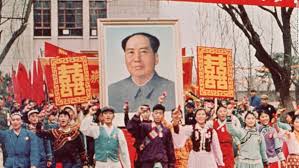
Deng Era and Mao Era in China Essay Paper

Deng Era and Mao Era in China Essay Paper  What distinguishes the Deng era from the Mao era in China; what ways did Deng adhere to Mao’s policies and how did he change them.

Deng Era and Mao Era in China Essay Paper

Deng Era and Mao Era in China Essay Paper Order Instructions: This is a first-year Asian studies essay so it is not a high level one.


This essay must include the introduction and conclusion, and we will choose the question 5 as the topic which is ‘What distinguishes the Deng era from the Mao era in China? In what ways did Deng adhere to Mao’s policies and how did he change them? ‘

You don’t have to be too detailed in this essay but point out some strong points and find some reference to support them.

Thank you and I am looking forward a quality first year level asain study essay cheers

SAMPLE ANSWER

Deng era and Mao era in China Introduction

The histories and cultures of Asia are very important in any Asian study as they provide some basic general knowledge and intellectual skills required to effectively study any one of the cultures. These usually include China, Japan, Korea, India, Thailand and many more. The religions of the people of the East Asia culture usually include Confucianism, Taoism, Shinto, and Zen Buddhism. The South Asian culture is majorly made up of Muslims. The Chinese Culture is one of the oldest in the World. It covers a large eastern Asia region, therefore customs and traditions vary greatly depending on the province, city, or town. Throughout history, many groups have either merged into other ethnicities or disappeared. The largest group, Han Chinese has managed to maintain traditions. Ever since the period of the Three Sovereigns and Five Emperors, one or another Chinese Monarch has been the main ruler. These periods are usually similar in the sense that government and military officials are placed high in the hierarchy, while the rest are basically under the regular Chinese law. Ever since 256 BCE, the Chinese society was organized in various socio-economic classes (Chai 2003: 165). These are commonly referred to as four occupations (Zhang 2013: 450). Unfortunately, this hierarchical system was not effective as other social groups were left out. The distinctions between the groups also became confusing as the Chinese culture was commercialized during the Song Dynasty (960-1279 CE) (Chang 2014: 42). This paper will particularly focus on the Chinese Culture during the Deng and Mao eras. It will distinguish the differences between these two leaders as well as their similarities.

Distinguishing the Deng Era from the Mao Era

The Chinese regional policy has undergone decades of trials, adjustments and readjustments as is noted from Maoist redistributive policies to Deng’s approach of the uneven development. Therefore, the policies implemented during the Mao era and Deng era is what can be used to distinguish the two periods. Other forms of development can also be used to achieve the same purpose; such as agricultural situations, political reforms and many more (Chang 2014: 49). The land reforms under Mao that took place between 1953 and 1978 were too many, a fact that proved there were failures in land policies during this time (Chai 2003: 167). Mao was basically experimenting different policies trying to figure out which one will prove effective. This was frequently not supported by the peasantry.  For instance, the land reforms supported by Mao led to many landowners losing their lands to the states. This happened because farmers were advised to form cooperation’s, thus they were offered usage rights, but not ownerships of the land (Chang 2014: 43). This in turn greatly affected the agriculture economy at this time, as the absence of incentives resulted in poor productivity for workers.

The compensation offered for these workers in the collective farms was calculated through complex shared points systems. The fact that farmers knew the land belonged to the state also affected their productivity as it made them feel used (Goldman 2009: 664). The food they produced in the farms was sold to the state at fixed low prices compared to the price offered for the open market where other members of the public went to purchase them. Hence, these workers were forced to rely on government subsidies for survival. The infrastructure during the Mao era was poor, and the resulting transportation problems caused great loss as farmers could not move food to their homes without them spoiling. Gradually, the amount of food produced in the fields reduced as a result of poor land management. The chairmen of the collective cooperation’s pushed workers to work on the fields despite the soils being exhausted and water supply reducing drastically (Goldman 2009: 665). It was as a result of this low productivity that China experienced food shortages and famines. To improve the situation, Mao decided to facilitate programs for fertilizers and hybrid seeds. Unfortunately, they also had negative environmental effects.

The Deng era turned out to be a complete opposite of what was happening during the Mao era. In 1979, Deng started working on dismantling the controlled collectivism system (Goldman 2009: 670). He did so by encouraging the farmers to once again start working on their individual plots. Legislation was passed that farmers could employ laborers, and even sell surplus (Walder & Litao 2006: 357). Incentives were offered for peasants who were still not allowed to own land. Deng achieved this by offering them long-term and renewable leases, therefore they could use the land as their own for the given duration. Therefore, once again, order was achieved in China, where the state only expected to be offered part of the crops produced. As a result of this positive change to the reforms, agricultural productivity was once again improved. Farmers made great profits from the sale of rice, vegetables, sugar and many other products. Farmers became motivated to join hands, voluntarily, with other farmers. Thus, they were able to improve irrigation and the status of the roads.

Political reforms that took place during the Mao era proved to be more effective than any other issue this leader ever handled. In Mao’s view, he really hoped to develop a new China that was free from corruption, economically equal and respected all over the world (Dirlik 2012: 23). This is why, instead of focusing on individuals, he implemented a collective system. Therefore, during his era, corruption and disparity were reduced at high rates, but the economic and political vision did not turn out as expected. The Cultural Revolution that took place as a result of the Mao era led to a decade of violence and human suffrage. Mao launched this revolution in an attempt to reassert his authority over the Chinese government (Chai 2003: 170). He did this when he started doubting the loyalty of the other members, thus he called upon the youth to clear the country of impure elements. Deng was lucky as he got an opportunity to witness the mistakes of Mao, and thus make the necessary changes to improve the situation. Thus, another distinction between these two eras is that the Mao reign was full of economic and political failures.

Deng developed a reform, which gave the Chinese people mandate over their own property (Walder & Litao 2006: 362). He also stressed on economic development as well as social stability. Therefore, his reign facilitated a switch from planned economy to the market oriented economy. This approach is what greatly enhanced the economy of China. During this era, 170 million people were saved from poverty, the Chinese citizens’ savings bank increased from 21 billion Yuan to 4,628 billion yuan. This era, however was not all good. As Deng was focusing on righting the wrongs of Mao, he forgot to pay attention to other important factors such as corruption. This era led to the development of the entrepreneurial class. Thus, buildings were erected, and the town developed drastically. This was facilitated on the land that was supposed to be cultivated. Thus, there was degradation of a very precious land that would have been used for better purposes. This may be a contribution to the high levels of unemployment experienced in China. Mao’s era provided jobs and social welfare for most Chinese citizens, while the Deng era seems to have forgotten about them. Hence, during the reign of Mao, individuals were poorer, but at least they had jobs and did not feel so insecure economically. The Deng era presents a lot of fear as the people are afraid for their economic wellbeing. This is because state leaders are misusing public money for their own benefits.

How Deng Adhered To Mao’s Policies and How He Changed Them

            Deng managed to adhere to some of the policies passed by Mao, but he also took great effort to make changes to many others. These two leaders had a similar vision for the country; however, the approaches they took were somewhat different. One of the policies Deng adhered to was the one intended to improve agricultural and industrial production. As he was part of the government at the era of Mao, he got to learn a lot of things about the approach taken by this leader. This pushed him to make some changes to this policy, which he did by breaking the collective groups and encouraging farmers to work on their own individual lands (‘Sowing the Seeds of Democracy in China’ 1994: 174). In the situation where Mao was taking lands from individuals, Deng changed things by offering lands to individuals who lost what they owned during Mao’s era. Another way that Deng adhered to Mao’s policies can be seen by how the Peasants were still not given ownership, but instead they were offered rights to cultivate and benefit from the products through leases. The offering of renewable leases is how Deng changed this policy so that he could further enhance incentives for the workers. Thus, even though they were unable to get ownership to the land, they were given an opportunity to farm on it as if it was their own. This is because they only had to give a little percentage of their products to the state.

The policy of Mao that offered employment to all in the lands as workers, and offered them economic security is also another one that Deng changed. This caused worry to many individuals as they now had to suffer from high rates of unemployment, as well as the increasing risk of economic insecurity. By changing the collective policy, individuals had to find employment on their own and live off their hard work.

The military policies of Mao are also another example that Deng adhered to, though after making some changes. He first started by encouraging the criticism of the Cultural Revolution that was triggered by Mao. The public soon resented the revolution, and this led to its end. It was later replaced by the “Beijing Spring” that enabled people to peacefully communicate their grievances over the period (Xu 2014: 184). This made the other politicians with positions in the revolution to be weakened, while also strengthening the positions of others who were suffering at the time.

Deng continued with Mao’s vision of making China a unique and universally respected country. He understood that for the country to achieve the expected development, it would also mean developing the whole world. Thus, he made an effort to make amendments with other countries. As a result of this, he traveled to the West where he held meetings with various leaders. The country’s relationship with Japan was also improved. It was as a result of these efforts that Deng managed to obtain Hong Kong back from Britain, and colony Macau from Portugal (Xu 2014: 188). Deng did not try to improve the country’s relationship with the Soviet Union (Dirlik 2012: 27). This is also another way that he adhered to Mao’s policy.

Deng Era and Mao Era in China Essay Paper Conclusion

The Mao era is very different from the Deng era in that the previous was greatly characterized by many problems. This however does not mean that it was all bad, as the reign of Mao also improved some conditions of the country. Deng managed to take Mao’s setbacks to his advantage as his first steps were to right the wrongs of this leader. Thus, the country managed to develop and improve economically and politically over a very short time. Just like any other leadership, Deng’s era was also challenged by various issues such as rise in unemployment rates, increased corruption that could not be controlled, and also misuse of fertile land. These, however, were not as great as the situation during the Mao era where workers felt misused, there was a decline in production, starvation, poor infrastructure, and also war where millions lost their lives.

Deng Era and Mao Era in China Essay Paper Bibliography

Chai, W 2003, ‘The Ideological Paradigm Shifts of China’s World Views: From Marxism-Leninism-Maoism to the Pragmatism-Multilateralism of the Deng-Jiang-Hu Era’, Asian Affairs: An American Review, vol. 30, no. 3, pp. 163-175. <http://eds.a.ebscohost.com/ehost/detail/detail?sid=d3238608-ea11-40de-9060-74d6e3644f51%40sessionmgr4004&vid=0&hid=4105&bdata=JnNpdGU9ZWhvc3QtbGl2ZQ%3d%3d#db=aph&AN=11865825>

Chang, GG 2014, ‘China’s Third Era’, World Affairs, 177, 3, pp. 41-49, Academic Search Premier, EBSCOhost, viewed 29 October 2014. <http://eds.a.ebscohost.com/ehost/detail/detail?sid=6e8d5f2c-724f-4571-af58-f8eb9adf48a5%40sessionmgr4003&vid=0&hid=4105&bdata=JnNpdGU9ZWhvc3QtbGl2ZQ%3d%3d>

Dirlik, A 2012, ‘Mao Zedong in Contemporary Chinese Official Discourse and History’, China Perspectives, 2012, 2, pp. 17-27, Academic Search Premier, EBSCOhost, viewed 29 October 2014.

<http://eds.a.ebscohost.com/ehost/detail/detail?sid=bd6032d7-4f64-455e-b28e-95cbd3ebabd8%40sessionmgr4005&vid=0&hid=4105&bdata=JnNpdGU9ZWhvc3QtbGl2ZQ%3d%3d#db=aph&AN=76590066>

Goldman, M 2009, ‘Repression of China’s Public Intellectuals in the Post-Mao Era’, Social Research, 76, 2, pp. 659-686, Business Source Complete, EBSCOhost, viewed 29 October 2014.

<http://eds.a.ebscohost.com/ehost/detail/detail?sid=96a8d3f7-5a4f-451b-b263-2f2a40c46635%40sessionmgr4001&vid=0&hid=4105&bdata=JnNpdGU9ZWhvc3QtbGl2ZQ%3d%3d>

‘Sowing the Seeds of Democracy in China: Political Reform in the Deng Xiaoping Era’ 1994, Foreign Affairs, 73, 3, p. 174, Business Source Complete, EBSCOhost, viewed 29 October 2014.

< http://eds.a.ebscohost.com/ehost/detail/detail?sid=69aee3e5-900e-44ce-b7ee-d9adc1638adb%40sessionmgr4001&vid=0&hid=4105&bdata=JnNpdGU9ZWhvc3QtbGl2ZQ%3d%3d#db=bth&AN=23847869>

Walder, A, & Litao, Z 2006, ‘Political Office and Household Wealth: Rural China in the Deng Era’, China Quarterly, 186, pp. 357-376, Academic Search Premier, EBSCOhost, viewed 29 October 2014.

<http://eds.a.ebscohost.com/ehost/detail/detail?sid=35b7ed42-d34f-48a8-8bee-8db7213c0b38%40sessionmgr4001&vid=0&hid=4105&bdata=JnNpdGU9ZWhvc3QtbGl2ZQ%3d%3d>

Xu, Z 2014, ‘Chinese Agrarian Change in World-Historical Context’, Science & Society, 78, 2, pp. 181-206, Academic Search Premier, EBSCOhost, viewed 29 October 2014.

< http://eds.a.ebscohost.com/ehost/detail/detail?sid=d6ec62e3-2352-4c65-a9b9-fd38fd6f1ac2%40sessionmgr4002&vid=0&hid=4105&bdata=JnNpdGU9ZWhvc3QtbGl2ZQ%3d%3d>

Zhang, W 2013, ‘Class Categories and Marriage Patterns in Rural China in the Mao Era’, Modern China, 39, 4, pp. 438-471, Academic Search Premier, EBSCOhost, viewed 29 October 2014.

<http://eds.a.ebscohost.com/ehost/detail/detail?vid=10&sid=a6dd812e-531b-4a3d-8c26-1e4744f01763%40sessionmgr4005&hid=4105&bdata=JnNpdGU9ZWhvc3QtbGl2ZQ%3d%3d>

We can write this or a similar paper for you! Simply fill the order form!

Consumer Behavior Research Assignment

Consumer Behavior
Consumer Behavior

Consumer Behavior

Order Instructions:

Think of a new product that is currently not in market and as a Marketing Manager you are to develop marketing plans to launch this new product.

As a Marketing Manager or Product Manager, what do you have to consider in terms of consumer behavior when developing this new product?

Think of the consumer behavior theoretical discussion which you have learnt from Week 2 till to date.

I will uploaded my lecture notes for that.

SAMPLE ANSWER

Consumer Behavior

Schwartz (2004) defines a consumer as any person or individual who requires a given product or service to meet personal needs and wants. Behavior, on the other hand, refers to a given pattern, perception, belief, or sequence that an individual possesses that guides them or dictates the products or services to purchase. Understanding consumer behavior requires an inquisitive research so as to identify the customers thinking, beliefs, and level of income, social norms, market trends, gender, and religion (Belch & Belch, 2007). Once the researcher have outlined and differentiated all this factors a given geographical location can be segmented and the prevalent consumer behaviors determined. These consumer behaviors are then used in product design and formulation. A good company carries out a SWOT analysis to be familiar with the opportunities, threats and weaknesses of penetrating a given market segment. Mostly ,in carrying  out a research in a market segment problems can be identified  and then the research panel can brainstorm the solutions which are used to come up with various products and services that meet the needs of customers in that segment.

Factors influencing consumer behavior can be divided into economic, social, political, ecological and technological factors. For example, ecological weather conditions like winter or summer dictate the consumer preferences of clothing. In winter season consumers purchase heavy clothing and protective equipment like gumboots (Engel, Blackwell & Miniard, 2007). The change in technology also influences consumer behavior as this changes fashion and market trends. For example, the advent of android operating system in the mobile phone industry have seen massive demand and sales for this smart phones in companies like Samsung, Nokia, LG, IPhone and Techno. These companies have also been forced to adapt to the changes in technology in order to meet their consumer needs and preferences.

After considering all the above, the product in mind is modern mobile incinerators. These incinerators are of small sizes and are very portable. The reasoning behind this is that most companies and organization nowadays are faced with a lot of paperwork and plastic wastes in the offices and manufacturing sections, however, most of these firms don’t have the appropriate facilities to dispose this waste. My product which goes by the brand name ‘Mobi Inc.’ comes restore and uphold environmental consciousness in this organizations. This product also covers a wide customer base as it can also be used in homes and has a very considerate pricing. This product also has differentiation advantage in that the consumer can order customized incinerators (Hirsh, Kang & Bodenhausen, 2012). Therefore the size differentiation is entirely according to the customer’s needs and preferences. However, at the inception stage the main target market for this product are big firms and governments that can order large quantities and hence enjoy the quantity discounts that come with the package.

After production of these incinerators, we plan to have various marketing strategies and plans. One of the strategies is low price penetration strategy. In this strategy will start to enter the market with the lowest prices until we get acceptance and a good customer base. These customers will have training on the use and benefits of the product and this serves to create awareness o0f the product. This awareness will be crucial to serve as a marketing tool as these customers will pass on the good news. Other marketing strategies will include sales and promotion whereby for every product bought the customer will enjoy gifts and discounts (Assael, 2012). Discounts however come with bulk purchases and this strategy will most work with big corporate organizations that have centralized purchasing. Households that purchase the Mobi Inc. product will enjoy after sale services e.g. warranties, training and installation. Marketing is also to be done through advertising on social media, magazines, journals and all accessible medium. Sales and promotion personnel will also be employed to carry out door to door marketing and sensitization

References

Assael, H. (2012). Consumer behavior and marketing action. Boston: Kent Publishing.

Belch, G. & Belch, M.A. (2007). Advertising and Promotion: An Integrated Marketing Communications Perspective. New York: McGrawHill

Engel, J., Blackwell, R. & Miniard, P. (2007). Consumer behavior. CBS Publishing Asia LTD.

Hirsh, J., Kang, S. & Bodenhausen, G. (2012). Personalized persuasion: Tailoring persuasive appeals to recipient personality traits. Psychological Science Journal, 23(1), 578-581.

Schwartz, B. (2004). The Paradox of Choice: Why More Is Less. New York: New Haven Publishers.

We can write this or a similar paper for you! Simply fill the order form!

Nursing Assignment Deconstruction

Nursing Assignment Deconstruction

Nursing Assignment Deconstruction

Order Instructions:

In this essay we are required to examine a question. the question contain factors that impact on understanding indigenous health and a culturally safe approach. we are to deconstruct the wording of the question to determine it’s hidden meaning/assumptions being made, the stereotypes being employed in the wording of the question, how the question exhibits a lack of understanding. the question chosen to deconstruct is; Why do Aboriginal Australians get given everything?

SAMPLE ANSWER

NURS 1006 Assignment 1: Deconstruction

Deconstructing or digging deeper into a question allows an individual to come up with various assumptions, answers, and questions that enhance clear understanding on the issues at hand. In nursing, nurses must get to deconstruct various issues or questions to gain a deeper understanding for them to reach an amicable solution. The author, therefore, deconstructs the question, “Why do Aboriginal Australians get to be given everything?” in quest to identify the hidden meaning/assumptions and stereotypes employed in the wording and how the question exhibits a lack of understanding.

A question may have face value and deeper meaning or assumptions. This is exhibited through deconstruction. In the question above, the hidden meaning is the reasons that contribute to this situation (Piper, 2013). It is important to carryout research to find exact reasons that make this Aboriginal to be given everything. Evidence through research may provide a range of reasons that contribute to this scenario.  A number of studies carried out on this community cite various reasons including race, their seclusion and for being disadvantaged for many years that has contributed to their low living standards among many others (Robinson, 2010).  Therefore, the question will trigger such reactions requiring substantiation through analysis of various research studies. This question can as well be constructed through personal experiences and observation. It becomes essential to meet some of these people from Aboriginal community and share with them their experiences and whether indeed are given everything.  It is still deconstruction when the consumer of the information seeks these alternatives just to get a clear or the exact reason why they are given everything.

The questions as well may be an assumption based on some allegations not well supported. The fact that these category of people are in need of assistance due to their behaviors and level of education, it is not a guarantee that they are given everything.   One needs to ask a question whether, the government has the capability to give them everything or not or whether the government gives them certain percentage of income to assist them to carry on with their lives. (Kobasa, 2014).  The phrase, ‘everything’ in real sense means that the government provides them literally everything and they are not able to work and take care of themselves. This would mean that in absence of government to give them the assistance, they would not be able to carry on with their daily lives. It is an assumption that can only be proved through closer interrogation of the claim or question. The question is based on assumptions and prejudices that an individual who posed the question holds against the Aboriginal community. It may be true that majority of the people from Aboriginal community get some level of support hence these generalization or assumptions. Therefore, the hidden assumptions in the question are that a good number of people from Aboriginal community receive assistance from the government (Binnie, 2010). The word ‘everything’, is therefore, used to imply that larger percentage comes from the government.

From the question, it is clear that there are stereotypes in the wording that as well require closer look and analysis in deconstructing of the sentence. The question has several words arrangement in a specific pattern to help insinuate certain meaning that the composer wants the audience to get. The word ‘why ‘begins the sentence and it aims at creating or raising attention or questions on the others issues raised in the question. Beginning the sentence therefore, questions the reason why these Aboriginal Australians are given everything.  The question seeks answers why not other community but Aboriginal Australians have these privileges. The question as well incorporates the word Aboriginal Australians indicating that it leans or focus on a specific community (Herriman, 2013).   Aboriginals Australians have a history of seclusion and denial of various rights for quiet sometimes. These people are only known to hold onto their cultural values/traditional beliefs that make them distinct from the rest of the members of Australian community (Frost, 2014).

The reason for inclusion of the name of the community is to enhance clear understanding of the target groups. The question nevertheless could have been framed in a different way to avoid these stereotypes.  Once the mention of the word Aboriginal Australia, it triggers certain perceptions and assumption in the mind of the listener influencing on their approach to the question (Hughes, More & Williams, 2004). Another important word is ‘given everything’. In this sense, one may ask what everything entails. Is it money, clothing, houses, transportation, household items, food or literary everything they need?  One may also ask whether every specific person proved to be an Aboriginal Australia is entitled to what is referred to “everything” or what criteria is normally used to reach a consensus on how is an Aboriginal Australian. Is it the Australian constitution or is it the customs of the people.

It is also important to explore and analyze a question to determine whether it exhibits a lack of understanding. Asking oneself the appropriate attributes or things that makes or enhances understanding is also essential. One of the thing is to evaluate ones cognitive and scope of education and experience in the area.  For instance, in this case, it is important for an individual to have an idea of what Aboriginals are. Not having an understanding that these are people from a community in Australia may definitely result to misinterpretation of the question. The question, exhibits lack of understanding by failing to be specific on what categories of Aboriginal Australians (Fisher, 2013). The question is general and this makes it abit complex to understand the scope and the setting.  Going through the questions, does it mean that any Aboriginal Australians that lives in any part of the world is included to those that receive everything from the government? Such are lapses that contribute to lack of understanding of what the question is all about (Isaacs, 2011). The question could have been clear and enhanced understanding. For instance, if it was specific instating the aboriginal Australians that stay at specific locations in America, their age, social status and such like aspects.

Furthermore, there is lack of understanding when the questions use the phrase ‘gets everything’. What one may ask is what everything entails? Does it means they are also given the air they breathe, and literary everything beginning from houses, food education, clothing or what does this everything stands for. Therefore, the question could be specific in identifying the various assistance that the said community is given by the government.

In conclusion, through this exercise of deconstructing the wording of this question, it has emerged that various omissions and word choices hinder clear understanding of the question. It means that any individual must be specific and think about the words and the sentence construction to construct a sentence that will enhance clear understanding. Misunderstandings caused by poor word choice and sentence structure add to false assumptions and misrepresented facts.

References

Binnie, K. (2010). Rocks, leaves on Indigenous learning agenda             http://www.australianews.com.au/australia/queensland/darlingdowns/toowoomba/story?cityid=9901bdf5-f527-4b68-852d-149172949fd4&storyid=5b859ac9-bc45-4663-9894-630f7b9c9ef6

Fisher, D. (2013). Becoming the State in Northern Australia: Urbanisation, Intra- Indigenous Relatedness, and the State Effect. Oceania, 83(3):238-258.

Frost, M. (2014). The three rules of being Aboriginal: anxiety and violence in Central Australia.    Australian Aboriginal Studies, 2014(1): 90-98.

Herriman, N. (2013). Western Australia’s Aboriginal heritage regime: Critiques of culture,ethnography, procedure and political economy.  Australian Aboriginal Studies, 1: 85-100.

Hughes, P., More, A., & Williams, M. (2004). Aboriginal Ways of Learning. Adelaide.

Isaacs, D. (2011). Baseline Framing in Sentencing, The Yale Law Journal , 121:426

Kobasa, P. (2014). Early Peoples Aboriginal Peoples of Australia. World Book, Inc. eBook.

Piper, M. (2013).  Autonomy and the Normativity Question: Framing Considerations.  International Journal of Philosophical Studies, 21(2):204-224.

Robinson, N.  (2010). Indigenous urban dwellers better off but not happier The Australian.           Retrieved from:  http://www.theaustralian.com.au/news/nation/indigenous-urban-dwellers-better-off-but-not-happier/story-e6frg6nf-1225931996865

We can write this or a similar paper for you! Simply fill the order form!

Relationship between Natural World and Humanity

Relationship between Natural World and Humanity

Relationship between Natural World and Humanity

Order Instructions:

How does the relationship between the natural world and humanity in The
Dream of the Rood relate to that envisioned in The Wanderer?

Your essay should consist of an original, complete, well-presented and well supported argument. Focus your thesis according to what you find after studying the texts. You will not be able to say everything related to the topic in so few words, so narrow your focus. Isolate the most interesting aspect of what you discover and make a strong case for it. Ensure that your argument lets you consider not just content but form. That is, you must consider how the texts structure the representation of the content. Remember that, in every case, these texts are in translation, so the exact choices of words and their order (diction and syntax) are not those of the originals; shape your claims accordingly.

Cite specific examples from the texts to support your arguments. Quote sparingly, as necessary; however, most of the essay should consist of your own analysis of textual detail, rather than the words of either secondary or primary sources.

SAMPLE ANSWER

Relationship between Natural World and Humanity

Poems are one of the ways that poets get to pass across their messages to the members of the public. Poems express feelings, opinions and help people to understand their environment.  Some of the poems even though their authors are not traceable, they remain relevant because of their strong messages they pass across on different aspects that pertains life. The author investigates on how relationship between the natural world and humanity relates between these two poems; Dream of Rood and the Wanderer.

In the Dream of Rood, the narrator is having a dream and his first encounter with the cross, the dreamer sees the cross with gem Cook. The cross even though is stained with blood; it is celebrated together with Jesus Christ who was crucified on it. The cross has become victor, hence, a source of celebration today for the fact that it helped or contributed in securing eternal life for the sinners

On the other hand, The wanderer is also based on religious aspects. Even though, life has many challenges, faith in God seems to be essential. The journey of salvation requires courage to embrace Christian values to be able to seek the meaning beyond transitionary and temporary meaning of earthly values. There is therefore a close relationship between the natural world and humanity in these two poems. What is envisioned in the wonderer is clearly manifested in the Dream of the rood poem. Nature or natural world has its own forces that people cannot control. Humanity is on the other hand based on the attributes or behaviors expected of human beings to manifest. Human beings in their nature, are required to be loving, social animal and expected to have feelings to one another. This therefore makes human being to be respectful, have mercy, companion and as well face challenges in life that requires them to persevere and to improvise measures of overcoming them.

In the Dream of Road, human beings are expected to suffer and to struggle for them to achieve their goals. They need to suffer to achieve victory. Crucifixion in the poem is illustrated by the suffering of both Christ and cross. From these suffering they managed to undergo a transformation from defeat to victor. The cross and Christ had to persevere the piercing but at the end they managed to succeed. Humanity has no mercies as the tree is cut from the forest and it is as well subjected to torture, mocking and nails. Christ as well undergoes this torture in hand of the human beings.

This is an indication of lost humanity among the human race. However, all these tribulation and anguish results into positivity.  The resurrection of the cross and Christ is something that is beyond human comprehension. The cross resurrects and is covered in gold and silver overcoming nature. The tree is now honored amidst all other trees. Hope in eternal life is renewed and the dreamer is renewed and seek to find this glorious Rood. Therefore, this poem shows that indeed, human beings may lack humanity in them through their actions, but they are under certain powerful forces that they cannot be in a position to understand.  Seeking the presence of God is the only source of people happiness

These themes in the dream of Rood are as well exemplified in the Wonderer. The wonderer exemplifies various themes of nature of humanity and the quest and hope, for God. Wonderer or this lone dweller even though is condemned to travel on his own in the ice-cold sea, he still hopes for the God mercy.  He says that he is an ‘earth-stepper’.

This lone dweller recounts sufferings that he faced such as slaughter of his relatives, and this, made him not to talk to anyone. Human kind  have lost their humanity as they subject  others  to sufferings just as is in the case of the Dream of the Rood where a tree is cut and is crucified together with Christ.

People must be able to look into their minds and thoughts before engaging in anything they do.  Even with these sufferings, people are required to remain optimistic. The killing of his lord even though hurting, it did not have to make him obsolete, but he needs to look for someone to hang on and to give him treasures.

Life is something that keeps on changing. People go through different life experiences that make them to undergo mixed feelings and experience different emotions (Cook 127). Sometimes, one is exalted and happy but sometimes this experience can turn into despair. The earth stepper cannot believe how the people and the situations have changed into despair. Procrastination and flashbacks hurts him more when he remembers the good, life and encounters in the past with his boss.

Even with these challenges, wisdom is important and which manifests itself in the old age. As the earth, stepper alludes. A wise man is expected to have certain attributes such as emotionally stable, patient, and always be careful on whatever words they utter.  Worrier should not be foolish, weak and cowardly.  Therefore, they must respond appropriately when making certain decisions. These are the attributes that the poet exemplifies and attributes to humanity.   Human beings have changing feelings and moods depending on their situations and age.

Natural world is also exemplified in the poem as the poet attributes all powers and glory to the supernatural being who is God. The warriors, the wise men, and every kind of humanity are under the authority of God. God has the power to destroy everything on earth. Before God, everything is worthless. All things even making even with their pleasures, and sufferings they will all pass away into nothing less as though they have never happened or existed.

Therefore, these two poems resonate and are similar in many ways. They all portray humanity in similar ways. In the Dream of the Rood, man is viewed as cruel, tortured, having no mercies. Similarly, in the wonderer, it is still man that kills and slaughters others without mercy. However, in all situations, the powers of God -natural world superseded. The resurrections of both the cross and Christ is explained by the natural world and is beyond human control. The actions and the behaviors of people depend on the situations and the experiences. These behaviors and actions also keep on changing but it is only by more having faith that people will be able to overcome.

The two poems also make it clear that, it is only through seeking the favor and comfort from God that humanity stability rest. After going through all sorts of suffering and torture, there is always a victor at the end.  It however will require perseverance and endurance for people to emerge as victors. The Dream of Rood poem depicts how the cross and Christ emerged victor   regardless of subjected to gem and dirty. They came out as gold and silver that all people admired and sought. Similarly, in the Wonderer, this man after  being subjected to different life situations, he acknowledges the superiority and power of the  Almighty who is to be atoned and  in Him sort refugee in.

Wonderers assert clearly that earthly glory degenerates, as salvation through faith in God will always stand.  In God,” in whom all stability dwells” meaning that heavenly values supersedes earthly value (Klinck 27). Human beings even though get attached to the earthly things and situations, they are as well required to be subjected and be guided by the heavenly values.

In conclusion, the two poems, the Dream of the Rood and the Wonderer, exemplify on the themes of natural world and humanity in similar ways.  Humanity is portrayed to change and to transform depending on various situations. Human beings have emotions, feelings and moods that keep on changing. Sometimes they are happy, sometimes in anguish, selfish and merciless obedience among other. Humans crucified Christ on the cross in the Dream of the hood and are still humanity that showed no companion and mercy upon fellow colleagues through their killings. However, above all this tribulation, the source of hope and inspiration is to trust in the Almighty. Believing in supernatural being, is a source of comfort and a source of refugee.   Therefore, natural world in the poem is portrayed as the victor, source of hope and beyond the imaginations of human kind. While humanity in these two poems is based on the feelings, emotions and situations that people find themselves in. The world is not trusted and more precedence seems to be on spirituality and religious than humanity.

Works cited

Cook, Albert. The Dream of the Rood: An Old English Poem Attributed to Cynewulf. Oxford:       Clarendon Press, (2007). Print.

Klinck, Anne. The Old English Elegies: A Critical Edition and Genre Study (2001). Print.

We can write this or a similar paper for you! Simply fill the order form!

The American inequality system Assignment

The American inequality system

The American inequality system

Order Instructions:

I need to post this to my discussion board . The file name “Discussion:…” contains the instructions to do this work. The other files are reference material needed.

Thank you.

SAMPLE ANSWER

Abstract

The American inequality system stems from its inability to control the Wall Street financial system whose basis is founded on democratic principles that have been hijacked by the holders of the top government agencies that have been charged with the responsibility of creating and implementing policies that are fair to all citizens of the America. The top executives of multinational companies that control the economy of the US and their liaison offices have made Washington their second home in an effort to be close to the center of American political power. Policies and laws that are against the interest of these companies are quietly lobbied and done away with even before they reach the glare of the public.

The American social system and the equality structures have been greatly undermined by the following three setbacks;

  • Massive concentration of income or financial earnings at the top or highest end of economic ladder
  • Government policies centered on winner-take-it all
  • No attention on long term transformation of these policies that lies behind the American political offices.

These weaknesses are partly interrelated as they stem from political offices that have the powers to control their influences through proper and effective implementation of legislation that may make it illegal for some corporations to engage in lobbying for enactment of bills that border on open discrimination against some sections of the population. There is a direct relationship between the sudden rises of inequality and the American politics.

The American public administration has attempted to address the core values and social equity in public administration but the irony is that over the years the American system has grown less equal practically in all aspects of social life, economically and even politically. The gap between the have and have-nots is steadily increasing. Henri Fayol’s principles of equity in employment seem not to be working for the American people. The concepts of social equity are based on justice, equality and fairness in public administration.

The government needs to ensure that there is moral leadership in public administration where social equity is a must in all its undertakings where social justice is proactively implemented and the laws are administered in a fair manner. The task force on the American inequality that was conducted by the American Political Science Association concluded that;

  • Disparities in income distribution, access to opportunities and wealth is growing more sharply in America than in any other country globally.
  • The progress made on the ideals of American democracy may be stalling and in some areas even reversed.
  • The interests of the better-off are conveyed to the government with consistency, clarity and also forcefully. On the contrary the interests of the majority of Americans who are lower or moderate income earners pass without any notice.
  1. The Enron scandal brought to the limelight the greed of the American system where even the professionals were not spared. The dissolution and the subsequent arrests of the directors of the Arthur Andersen audit and accounting consultants and the prosecution of the managers of Enron Corporation was a win against the inequality of the American system. The losses were colossal and it was a big loss to the American people. (Porretto, 2007)

The directors of Enron paid themselves billions of dollars without regard to the American tax payers while under the supervision of Arthur Andersen who mandated to safeguard the tax payers funds. It was a case of a social injustice as well as the perpetration of inequality in the American system of administration.

  1. Job applications to certain private firm’s may be a waste of time because of different reasons. But when I succeeded in getting an interview with a private auditing company in New York I was excited. The interview never took place as i was classified as mistaken identity the moment I turned up at the reception. The only reason I was given was that I was not the one they expected despite my evident admirable records and testimonials. The reason that could justify my unsuccessful interview was probably not related to my qualification or capability to handle the job but maybe other factors may have contributed like race or nationality.

The American government has attempted to address the core values in public and private companies that deal with segregation and diversity as well implemented the American civil act of 1964 that outlaws any forms of discrimination but it has to do more to educate the public on the dangers of discrimination and its effects on future generations.

I have chosen this strategy as it’s democratic and peaceful. Its effect if implemented may increase social cohesion and promote the growth of natural justice in America.

References

Porretto, J. (2007). “Ex-Enron broadband head sentenced”. USA Today. Archived from the original on 2010-10-17. Retrieved 2010-10-17.

We can write this or a similar paper for you! Simply fill the order form!

The US Covert Action Essay Paper Assignment

The US Covert Action

The US Covert Action

Order Instructions:

Please use two sources per question

Question 1:
George Kennan authored a policy document—NSC 10/2—that characterized covert action as those activities “so planned and conducted that any U.S. government responsibility for them is not evident to unauthorized persons and that if uncovered the U.S. government can plausibly disclaim any responsibility for them” (Scott and Rosati 2007).

Is this a realistic expectation for any covert action? Meaning, can we really expect the U.S. hand to remain “hidden” even if the action is discovered? If this is not realistic then why continue with the policy of plausible deniability? Or are there measures that can be put in place to make it a continued viable policy?

Question 2:
Compare any two of the cases discussed in the course (except the Bay of Pigs and the Berlin Tunnel). Base your analysis with the questions provided in the “Lecture Notes” for Week 1:

(1) What was the objective of each operation? Was there an overriding policy imperative or were they missions to gain access to the adversary’s information?

(2) What oversight or legal review occurred during their planning?

(3) Who or which organizations were accountable for the operations? What turf issues arose prior to or during the operations?

(4) What resources were necessary to successfully carry them out?

(5) What was the cost/benefit analysis of each operation? Weigh their risks, especially when they are publicly exposed.

(6) In evaluating each operation, what objectives were achieved and what unintended consequences occurred?

For question 2, please use Congo assassination against Partice Lumumba and the Iran-Contra arms embargo in the 1980s whereby the US sold weapons to Iran through the Israelis to fund the Nicaraguan COntras as the two covert operations.

Question 3:

Please review this hypothetical situation and indicate whether covert action is appropriate (b) identify the risks and benefits of a covert action identify legal hurdles and decide whether the President should inform all the relevant Congressional intelligence committees or limit knowledge to the “Gang of Eight.” Take into consideration political ramifications and possible blowback.

Concern has built up over Bashar al-Assad’s hold on power and his actions against the Syrian opposition. Through a variety of sources, the CIA believes it has a reliable asset inside the regime that could either organize a coup or “eliminate” the leader. The President has asked you to give him an honest assessment on the possibilities for both.

SAMPLE ANSWER

The US Covert Action

Question one

On June 18, 1948, a new directive given from the Central Intelligence Agency (CIA) came up with a new directive, NSC 10/2, which superseded the NSC 4-A. The NSC 2/10 gave directives on a new operation called covert action rather than the mere physiological operations as they were used and defined in the NSC 4-A.  The covert actions were defined as those activities and operations, which were conducted or sponsored by the U.S. Government against hostile foreign states or groups in support of friendly foreign states or groups, but which are so planned and executed that any U.S. government responsibility for them is not evident to unauthorized persons and that if uncovered, the U.S. government can plausibly disclaim any responsibility. It is not possible for any military operation to be carried out without them getting known to the public that it is the U.S. government behind those operations [1].

The design of the communications and flow of directives gives room or gaps for the leakage of the information. First, the directive requires the creation of a new Office of Special Projects during any covert operation. The office shall be run by a Chief Officer who shall be appointed by the joint committees of security, CIA and National Security Council. The officer shall be reporting to the director of CIA who shall also report to the National Security Council. The NSC is responsible for holding meetings and making decisions that are to be followed by the Chief of the office of Special Projects.  These series of communications and decision-making has involved so many people that we cannot trust anybody along the line of communication for keeping the information secret. There are officers who may not be satisfied with such operations and in turn will have to expose the operations to the enemies. There have been so many U.S. army officers who have left operations because they have felt that what the country is doing is not right, and such people have ended up exposing the government [2].

Army operations cannot just be carried out in an imaginary manner, since they are real. The U.S. is one of the world’s strongest countries and its form of attack is unique from the others. This is very evident in the kind of weapons that they use and the way they carry their operations. Therefore, the country cannot support another country in the fight without getting noticed; they shall be notice, the news will be all over the world, and it will be too easy to deny.

Deniability of action is not the best form of defending our country from retaliatory form of attack, but rather installing proper security systems will be very important. Proper measures need to be put in place in order to keep the covert actions very secretive. One of this is to ask the U.S. government never to involve themselves directly in the field as fighters. This will help in hiding the direct identity by the enemies. The possible action that can be taken is to offer financial support to the nations that the U.S. supports so that they can buy the weapons by themselves without giving out its weapons to those nations.

Secondly, whenever the operations are carried out, it is very necessary to remove very length bureaucracies that are unnecessary. The communication line should involve as few people as possible. Long communication lines provide loopholes along the communication through which the information can leak out to the enemies [2]. For instance, the CIA director does not have to report to the NSC for decisions affecting the CIA, let all the decisions be made within CIA. Let the operations be very dependent they should not be monitored with other security agents. The appointment of the Chief of Special Projects let it be done in a very secretive manner and the appointment of the soldiers should be done through thorough scrutiny for the most trustworthy soldiers [2].

Question two

The selling of arms to foreign countries was banned in the early 1980s, but during that time, there were a series of protests in Iran where there were demonstrations carried out against the then president Shah. Shah was one of the closest friends to the United Nations in that time. The demonstrations were so violent and so many U.S. citizens were taken to captivity by the revolutionists. The Nicaraguan rebels also arrested great U.S. government officials and took them captive. This prompted the U.S. to act in order to save the captives. In a bid to save the situation, the then U.S. president Reagan initiated the Boland amendments that prohibited the Defense department, The CIA and any other government agencies, from providing military aid to the contras from December 1983. The Reagan administration circumvented these limitations by using the National Security Council (NSC), which was not so much recognized in the law, to issue arms to the contras [3]. Reagan approved the plan for the sale of weapons to the Iranians. The first missiles were sent from Israel to Iran and after that, American hostage Benjamin was released. In the second plan, they negotiated on the release of Major General Richard. The second load of missiles was released and Major General Richard was released. The funds from the sale of the missiles were diverted to the Nicaraguan Contras through a second enterprise. Reagan authorized the transfer of arms to Iran through the enterprise in order to remove U.S from liability. After that, they took for the third transaction for the release of U.S. citizen who were held hostage. On February 1986, US sent 1000TOWs to Iran but then things did not work out because they were not released. Later, the story got exposed by a Lebanese newspaper and the transaction was stopped after the hostages were released. This destroyed the relationship between the U.S. and Iran [3].

In Congo, there were mixed interests in the mineral rich country. The U.S. was keeping close watch on it, and the Soviet Union too was watching the country closely [4]. The country was colonized by the Belgium by then but in the fight for freedom, Patrice Lumumba became the first prime minister for the Congo Republic. The economic interest in the country by the US saw the country blown down to pieces with a series of fights. Upon taking office, Patrice Lumumba started to fight against the Belgium in an effort to end the European control over the mineral rich country. Lumumba’s government wrote to the UN to help them in the fight but their requests were turned down because the US was interested in the country. Congo turned to Moscow for help who responded by offering military planes that flew the Lumumba’s troops to Katanga province, which was one of the country’s richest province that was totally controlled by the Belgium troops [4]. The US sent in the CIA for a covert operation to end the Lumumba regime. The CIA had to meddle into the Congolese politics to influence the politics so that they can achieve their aims. It was one of the most expensive covert actions with a series of unsuccessful attempts of murdering Lumumba. However, it was one of the very successful covert actions in which the US never engaged in direct attacks with the Soviets and China military. The CIA in coordination with the Belgian intelligence subsidized two opposition senators to pass a vote of no confidence with the government of Lumumba. After the passing of the vote of no confidence then they were to nominate one of the senators as the new prime minister. They also funded the demonstrations, labor movements and propaganda against Lumumba. The move by the CIA faced a lot of drawbacks and at last, the CIA found Mobutu who they used to turn against Lumumba [5]. Mobutu took over and Lumumba was arrested and provided protection under the UN troops. Later on, he was shot dead at Katanga. In terms of cost benefit analysis, this covert operation was very expensive unnecessarily. The government spent a lot of money in the attacks against the Lumumba government. At last, they achieved the objective of dominating the Congo politics and influencing the mineral rich country.

Question three

The covert actions do not demonstrate the elements of respect to democracy and human rights [6]. The covet actions especially after the cold war are signs of lack of democratic growth in the way the US government intervenes in the operation of security in other countries. The covert actions have led to demonstrations in which friends and relatives have lost their loved ones. The covert actions have been conducted through the funding of the opposition leaders of the countries in question so that they can rally against the government of the day. A democratically elected government is removed from power in a democratic manner, which is the rule of democracy. The use of money and power to influence the actions of other nations around the world are actions of the late centuries, which were very beneficial during the time of the cold war and the world war. In this era, these methods are cannot be tolerated in US which is believed to be one of the worlds democratic countries [6].

The use of the covert action has led to the loss of several US soldiers in the name of keeping the interests of the country in other countries. This has brought a lot of discomfort in the security of the nation in the fear of retaliatory attacks from the enemies. There have been several measures that have been put in place in order to ensure that the country is safe, some of these methodologies have caused a lot of discomfort to the citizens of the nation. In fact, the covert actions have seen the US making a lot of enemies instead of friends a trend which is totally unacceptable in the global world [7].

Another disadvantage of the covert action is the amount of resources, both financial and weapons, that are utilized in the conduct of the covert actions. These resources should be utilized in running other beneficial projects that can help improve the life of the Americans.

In essence, the only benefit that the US gains in all these covert actions is the respect as a supper powerful country of the world. They have continually gained control and maintained their selfish interests in the countries where these actions have been carried out. The country has benefitted so much in terms of trade but this trade is only exploitative to those countries. This has seen the economy of the US kept on top if the world map but from unfair and exploitative means of controlling governments for their benefits [7].

In the case of the Bashar al-Assad’s hold on power and his actions against the Syrian opposition, the US government should come in a friendly party interested in ending the situation under question. The president should seek more democratic and official means of ending conflicts in a country. These can involve mediations and negotiations to be carried out. The two opposing parties should be able to come to the agreement and live a peaceful life together. The president should organize for a convoy that will reunite the Syrian government in a democratic manner without causing any side effects. This will ensure respect to democracy and human rights. This is the best way for the US president to intervene; humanity and peace for the Syrians should prevail against economic interests of the US.

Reference

[1] U.S. State Department, Foreign Relations, 1964-1968, Volume V, Vietnam 1967: Note on U.S. Covert Actions. Retrieved from  http://cryptome.org/ic-black4701.htm

[2] Corke, S. 2006. George Kennan and the Inauguration of Political Warfare. Journal of  Conflict Studies. vol 26, No 1 (2006): Dalhousie University

[3] Isenberg, D. (1989). The Pitfalls of U.S. Covert Operations. Policy Analysis for Iranian case. Retrieved from www.cato.org on 26th October, 2014.

[4] Slattery, L. (2001). The Congo: How and why the West organized Lumumba’s assassination.

Review of two BBC documentaries: Who Killed Lumumba?, and Mobutu. Retrieved from http://www.wsws.org/en/articles/2001/01/lum-j10.htm

[5]What really happened in Congo? (2014, October 26). Retrieved from http://www.foreignaffairs.com/articles/141523 on 26th October 2014

[6] Best, R. (1996). Covert Action: An Effective Instrument for U.S foreign Policy? CRS Report

for Congress on Foreign Affairs and National Defence Division. Retrieved from http://congressionalresearch.com/96-844/ on 26th October, 2014.

[7]Bennett, Edward Moore (1985), Franklin D. Roosevelt and the. Search for Security:

American–Soviet Relations, 1933–39, Wilmington, Delaware: Scholarly Resources, p. 24, ISBN

We can write this or a similar paper for you! Simply fill the order form!