Community Engagement Proposal Poverty in Windsor By Olawale Oluwatobiloba and Blessing Anyaso
Community Engagement Proposal Poverty in Windsor
In recent years the number of young youth and adult who are tagged or suffering due to poverty has definitely increased. Among Canada’s 338 federal riding, Windsor west rank near the top of the number of children living in poverty. At the national rate of 17.4%, Windsor doubles the percentage marking it 32.1%. Windsor west ranked 15th among 338 federal riding in the study data made back in 2015.
Community Engagement Proposal Poverty in Windsor
We are really interested and want to know more about this issue because We came from a place in Nigeria that is surrounded with wealth, some will say “milk and honey” but still the rate of poverty in Nigeria my home country is recorded to be nearly 50% recorded by June 2018. we could not do much to contribute to people living in poverty due to the hindrances in Nigerian system so, after we moved here in 2014, we realized there were no restrictions in contributing to helping the needy hence, we joined the “feeding Windsor” group. This is a group that was launched in 2014 to help members of Windsor community who are struggling with the major daily need of human, food. This group provides food to people living in poverty situations. The aim of joining this group is to reduce the rate of the effects of poverty in our community. Poverty leads to personal entrapment, health issues, homelessness, involvement in crimes and much more. Feeding Windsor is partnered with salvation army and Throne of Grace church. This project serves 2700 to 3000 people every month.
Community Engagement Proposal Poverty in Windsor
Volunteering with this team every Tuesday at Throne of Grace church, downtown Windsor gives us the opportunity to really study and observe the living situations of these individuals. We definitely want to create awareness for people to volunteer their skills or resources in order to better our community.
I am going to take a look at in-depth into some alternative media, such as magazine, podcast, newspapers etc. to see how they cover this issue.
The alternative media we have chosen for this project is the United Way. United Way is known to support thousands of people across the community (Windsor-Essex county), by which they prioritize in reducing the rate of poverty in the community. They help people basic needs or individual needs that tend to move them out of poverty, in addition, they help kids and families by making sure their kids succeed in school and grow into a healthy adult, by doing this they also strengthen neighborhood across the community by building strong communities and by supporting wellbeing.
Using United way as our main source for this project, we will be expanding our research on how they use their form of alternative media so narrow the narrative on poverty in the community and also how are they going about trying to make a difference in the community. We are going to elaborate on their work, that is their day to day services provided for the less privilege. Their goal is a big aspect for this research, and we are going too in-depth about their prioritization, that also means how they go about doing the things they do. In addition, we are going to speak about their programs and partnership, this extends to their previous present and upcoming programs, and it what way has it affected the community, may be positively or negatively and what the community has to say about these programs. Creating a big program like this, we will also do research on how much work they put in when the cameras are not watching to archive what their specific goals. Also, we will be looking at their partnership with other organization and doing research on, how do they contribute, in what way do they contribute, also, why do they contribute.
So basically, doing the major research for this project, we will be doing a majority gathering surveys, fact-finding, and it is presently an ongoing situation and currently existing, and we will be reporting what is happening and what has happened I the past, so approaching this research we will be using descriptive vs analytical research method.
By using this method, we will be able to use their website as our original source for our research.
In conclusion I believe this research will bring a highlight on how alternative media talk about poverty as a whole and also what they do to make sure the put their best in what they do and believe in.
Community Engagement Proposal Poverty in Windsor Assignment
Write a research paper of 2,750 words on Black Theology which is one of the Contextual Emancipatory Theologies.
The Paper should discuss the context in which the theological idea/method developed, its main concerns, the salient tenets of the system, as well as the main contributions made to the ideas by its most prominent thinkers.
The paper should also offer a critique of the ideas, including implications for Christian Theology today.
A Conversation with James ConeURL (youtube)
James Cone is the founder of Black Theology. Here he discusses his motivations behind the thinking.
Topic 1: Fully describe the overall concepts of homeland security and homeland defense. Construct a response that provides the following related to both homeland security and homeland defense:
Primary missions, tasks, responsibilities, operations, etc. for:
Homeland Security and
Homeland Defense.
Highlight those areas that are shared between the two (what overlaps between HLS and HLD?)
Lastly, recommend a definition for homeland security.
Topic 2: Using the overarching themes of the National Security Strategy from 2017, provide your own recommendation for new National Strategy for Counterterrorism (it must be nested under the NSS according to the principle of strategic hierarchy). What key elements and focus areas would you suggest for the part of a new CT strategy that is domestic focused (homeland security, not overseas), and make sure to use the Ends, Ways, and Means strategy framework.
We can write this or a similar paper for you! Simply fill the order form!
Cultural Competence in Infectious Disease Outbreaks
Importance of Cultural Competence in Infectious Disease Outbreaks and Response
Cultural competence is important when public health practitioners need to address infectious disease outbreaks in cross-cultural communities. Before beginning this assignment, learn about cultural competence in public health: https://npin.cdc.gov/pages/cultural-competence.
Choose one of the scenarios to discuss:
Measles outbreaks in the U.S. have continued to occur due to lack of vaccination. Most notably in the Somali community in Minnesota in 2017 and in the Amish community in Ohio in 2014. Devise a program to facilitate vaccination in response to one of these outbreaks. Conduct a needs and a capacity assessment to identify cultural commonalities and differences to be addressed, and the ability of your program to address them.
The lack of cultural competence in the recent Ebola epidemic of 2014-2016 in West Africa has been implicated as a reason that the outbreak was not contained sooner. If you were a public health practitioner responding to this outbreak, how would you include cultural norms and leaders in how you communicate with the community in order to control and prevent the disease from spreading?
You may choose another scenario but should gain approval before using it. Please be concise in your writing and keep the page length under 5 pages total. Follow APA formatting for a research paper
We can write this or a similar paper for you! Simply fill the order form!
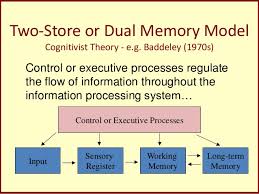
1.The dual-store model is a key idea in the information processing theory. What is the dual-store model? What impressed you most about the dual-store model? Pick one or two things that impress you most and talk about it.
2.Please describe a learning scenario and then use the key terminologies in the information processing theory to describe how learning happens. This learning scenario can be as simple as how to tie your shoelaces. Please remember you will use the SAME learning scenario in three learning theories.
Your assignment must follow these formatting requirements:
Be typed, double spaced, using Times New Roman font (size 12), with one-inch margins on all sides; citations and references must follow APA or school-specific format. Check with your professor for any additional instructions.
Include a cover page containing the title of the assignment, the student’s name, the professor’s name, the course title, and the date. The cover page and the reference page are not included in the required assignment page length.
We can write this or a similar paper for you! Simply fill the order form!
Analyze the United States through a transnational lens means, in part, to consider how the United States gets represented, by citizens and non-citizens alike, not only within its borders but also beyond its borders. Transnational thinking believes that we can divine something important by thinking about the traffics between peoples and nations and not thinking of nations as already sealed and stable categories of analysis. Take “Shoot an Iraqi” by Wafaa Bilal and “Love My Rifle More Than You” by Kayla Williams and put these two texts in dialogue with each other through a transnational analysis. What do you learn about the United States with this comparison?
Please make sure that your essay is composed with a unifying idea (your thesis) and is built out of textual evidence, effective rhetoric, and sound logic. These questions are meant to begin your thinking in a certain direction only. In other words, please do not merely answer the listed question, but develop your essay with your own thesis.
We can write this or a similar paper for you! Simply fill the order form!
EBP is an essential component of a BSN-prepared RN
EBP is an essential component of a BSN-prepared RN
Discuss why EBP is an essential component of the practice of a BSN-prepared RN. Identify two ways in which you will continue to integrate evidence into your practice and encourage it within your work environment. What obstacles could challenge this plan, and what steps will you take to minimize their impact?
Your assignment must follow these formatting requirements:
Be typed, double spaced, using Times New Roman font (size 12), with one-inch margins on all sides; citations and references must follow APA or school-specific format. Check with your professor for any additional instructions.
Include a cover page containing the title of the assignment, the student’s name, the professor’s name, the course title, and the date. The cover page and the reference page are not included in the required assignment page length.
We can write this or a similar paper for you! Simply fill the order form!
The term exegesis comes from a Greek word meaning to lead/bring out. It is a word we use in Biblical studies to refer to the process of bringing out a meaning of a passage of Scripture. We say bring out because we want to let Scripture speak for itself, rather than read our own meaning into it (called exegesis). Exegesis involves collecting everything we know about a Biblical text (history, literary context, language, etc.) and bringing it together in a process of determining what it can mean (and what it cannot!).
For your writing assignment you will choose a verse or passage from the book of Exodus that you find interesting. You will follow the steps provided below to research and fill in information about the text. You will then conclude by stating what you believe is a good meaning of the text based on the research you found.
The paper should be no less than 2000 words and no more than 2500 words in the body of the paper (too short or long will incur penalties). The word count does NOT include the title or bibliographic information. It also does not include footnotes or other reference information. It is a short paper, so be concise. Keep the fluff in your pillows and out of your papers.
The process for the paper is:
Step 1: Find your topic.
Choose a verse or paragraph from Exodus that you find interesting and would like to know more about. Read it several times. Read the paragraphs and chapters surrounding it several times to get a sense of how it fits within its literary context.
Step 2: Take notes as you read.
What are the concerns of the author? What does it seem to be about? What words and concepts keep appearing? How does the passage relate to the writing around it? How does it relate to what you know about the rest of Exodus? The rest of the Bible?
Step 3: Do some research.
You must reference a minimum of 5 academic sources in your paper. By this I mean that you need to either quote or reference information from 5 different experts in your paper. As you read, take notes about what they say regarding the passage. Also note how they agree or disagree with each other (disagreement happens quite a bit!). Do you agree or disagree with them? Why?
NOTE: Go to a library, search the online journals, ask a pastor for his/her books, etc. Your sources need to be academic, meaning they are written by experts in the field with actual qualifications and peer-reviewed in a publishing process.
Acceptable sources include:
Academic, published sources like Bible commentaries or books from experts on the passage you are studying.
Just because it has commentary in the title does not make it academic. Avoid any online commentaries. Please also do not use the Matthew Henry Commentary.
UNacceptable sources include (i.e. WILL NOT count toward your 5 sources):
Websites, blogs basically anything ending in .com/.org/.edu etc.
NOTE: you may access a reputable journal or book through the internet (e.g. JSTOR, EBSCOHOST, etc). This is different from a website.
Dictionaries, or encyclopedias
Sermons
Lecture notes
Textbooks for this class
The Bible
Unacceptable sources may help your research and inform your thinking. If you do use them, be sure to cite them. However, they will not count towards your 5 required sources. Also, the Bible itself does not count as one of your 5 sources. The 5 need to be commentaries, books, or academic journals. Failure to include 5 academic sources will result in a significant penalty (no matter how good your argument may be)! If you are not sure about a source you are encouraged to ask me about it.
Step 4: Write.
Only after taking in as much information as we can (i.e. learning), should we then begin to synthesize it and produce our own thoughts. We should NOT begin with what we want to say and then look for research to support it. That is exegesis.
Writing should be clear, concise, and have an easily identifiable flow to the logic. Anyone can drop convoluted thoughts onto paper, but it requires time and skill to write well. Some tips–developed from common mistakes made–in writing a good academic paper include:
1) Writing is not an exercise in saying everything you know and think. Sometimes good writing involves leaving out interesting information if it is unnecessary or irrelevant to your argument. Know your point/argument and stick to it.
2) Know your reader. Do not assume your reader already accepts your premise(s) or is approaching the subject with your same knowledge. As in high school math class you need to show your work.
3) Have someone you trust read your work and give you feedback. Ask them what they think you are arguing.
General information on how to structure a paper:
Your paper should have four parts: 1) introduction, 2) main body, 3) conclusion, 4) bibliography. Part 1: The introductory paragraph is just what it sounds like. It is one paragraph introducing your reader to your paper. It usually includes a very brief statement of your topic and your thesis (i.e. what you are ultimately arguing).
Part 2: The main body of your paper should contain all the major content of your paper and will be the longest part. It should lead your reader through your thought process including any evidence you are using to support your thoughts and your responses to arguments that are different than yours. Make sure to break your thoughts and arguments into paragraphs.
Part 3: In the conclusion you will take a stance on your topic and state what you ultimately think. In this paper, you will state what you ultimately think the Biblical passage is about. The conclusion is usually only 1-2 paragraphs.
Part 4: The bibliography is a list of all the sources you used to write your paper, whether you cited them in the paper or not. If a source influenced what you think about the topic, it should be included here. The Chicago/Turabian or SBL style of citation is required for this paper.
Plagiarism is taken very seriously at universities, even if it is accidental. You cannot take the work of someone else and present it as your own. If you take thoughts or information that you previously did not know from a source, you MUST cite (i.e. make a note) of where you found it. The exception to this rule is any information which is commonly known (e.g. Judah was destroyed by Babylonians in 586 BCE)
FINAL NOTE:
If you are unsure about anything with the above process (e.g. finding proper resources, how to structure your paper, citation) there are several options for you to remedy the problem. I am available throughout the semester to answer your questions through office meetings or email. The Academic Success Center in the Moody library building has coaches to help you and are available through the semester as well. If you do need help, do not wait until the last minute before the assignment is due! At the university-level, you are responsible for your learning. We as the faculty and staff work hard to make the resources available, but we cannot help you if you do not ask. We do want you to succeed, but you need to be proactive.
We can write this or a similar paper for you! Simply fill the order form!
The Treatise on Human Nature Translated, with Introduction and Commentary by Robert Pasnau
All text should be double spaced, 12 point Times New Roman, with one-inch margins. For these papers, you are not allowed to use outside, secondary sources. All citations should follow the Chicago Manual of Style with the following exception Citations of Aquinas should identify the question number, article number, and article section (e.g. q. 75, a. 2, co.)
Content and Structure Introduction Identify and quote the relevant passage containing the argument in question. Summarize the context in which the argument is being given, why the argument arises, and what conclusion the thinker is trying to prove. You should not give a general introduction (i.e. Plato was a famous philosopher or Philosophers from the beginning of time have asked the question Is the human soul subsistent?). Argument Presentation Give a formalized version of the argument in which you lay out each step/premise (this may not necessarily be the same order in which the premises appear in the text). Each premise should be numbered and set off as a separate line of text, just as we have been doing in the Argument Analysis homework assignments. However, unlike the argument analysis homework assignments, you need to explain each step and should quote/cite the text to show where you are taking the step from. After each step, you should explain the meaning of the premise/inference. If the step has been inferred from previous premises, be sure to note those premises upon which it depends and what kind of inference has been used. If the premise is not directly inferred from prior steps, explain the thinker’s reasons for the truth of the premise. If you supply a premise not included in the passage, explain why it is needed and why we should supply it. If you find it hard to format the dependency numbers, you can leave them out.
The percentage for content will be split between correct formalization of the argument (40%) and explanation of the ideas and concepts involved.
Conclusion Having presented the argument, there ought to be a concluding paragraph in which you identify the importance of the conclusion, i.e. what further conclusions depend on this argument.
We can write this or a similar paper for you! Simply fill the order form!
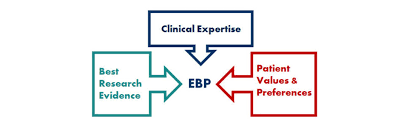
This aim of this module is to enhance students’ understanding of how evidence based practice has come to underpin how health care is delivered. It will explore a wide range of evidence and enhance the ability to acquire and evaluate evidence
Indicative Module Content
Advanced literature searching techniques
Sources and hierarchical ranking of evidence and how these influence decision making
Formulating clinical question, PICO
Clinical guidelines
Numerical concepts
Assessment Brief
Assessment and Reassessment detail and Guidance
Intended Learning Outcomes
Demonstrate the skills of locating high quality evidence that is capable of enhancing decision making in your own sphere of practice
Demonstrate how evidence can be manipulated and analyse specific examples of this from your own sphere of practice
Discuss how clinical guidelines are developed and how they evolve by analysing specific examples from your own area of practice
Assignment Guidelines
The purpose of the assignments is to give you the opportunity to demonstrate that you have considered the learning outcomes (above) and that you can apply them to practice. Follow the guidelines below and you will meet the learning outcomes.
You will find a sample assignment in the Course Materials area of Blackboard, along with a video of the Module Leader discussing the assignments. These will give you an idea of the structure and content. If you are unsure of what is required of you contact the Module Leader to seek clarification.
Formative Assignment
In 2 parts. Maximum of 1000 words (+10%) in total, NOT including PICO worksheet if it is included as an Appendix.
This will be submitted through Turnitin and you will receive feedback from the tutor aimed at assisting you with the final summative assessment.
Part 1 (Approx 500 words)
Identify a specific area of interest in your own sphere of practice and design a PICO question that would assist you and others in finding evidence based material that would underpin the area chosen and answer your PICO question. The question itself should be justified by supporting evidence ñ i.e. you should demonstrate, citing appropriate source(s) that it has value to the area of practice chosen.
You should then detail the process of the literature search, including the terms / refining parameters used. You should aim to demonstrate how the search was initially cast wide to include all potentially relevant material, followed by how the focus of the search was narrowed.
The search should indicate a range of databases and terms used during the search, along with any filters employed (e.g. Boolean, wildcard truncation, date / language filters etc.), as well as any other skills that you have gained that you feel are relevant to undertaking a high quality search. If you have a large number of terms at each stage of the search an Appendix can be included / referred to in order to save word count, but you must ensure that the main discussion covers the key steps at each stage of the search. You should then conclude the search by giving citations to a couple of pieces of evidence located.
The objective is to demonstrate that you have acquired a range of search skills capable of producing a focused / manageable array of evidence. It is not necessary to answer the PICO question, nor to evaluate the evidence located ñ the marks / Learning Outcome relate to the quality of the search skills demonstrated.
Aim to support the discussion with appropriate citations which indicate that you are following a recognised search strategy.
Note that the area of practice to which the PICO question relates will form the basis for the clinical guideline section of the summative assignment ñ see question below. Construct your PICO question with this in mind (i.e. do not pick a very obscure topic which will not appear in any clinical guidelines).
Part 2 (Approx 500 words)
Access or construct a diagram or table of the hierarchy of evidence and include this in your assignment with appropriate title / citation. Discuss why evidence towards the top of the hierarchy is considered more reliable than that lower down the hierarchy. The focus should be on how design of trials can reduce bias and increase the reliability and validity of findings. Additional marks will be given for considering limitations of the different types of evidence / trial.
THIS SHOULD NOT MENTION THE PICO QUESTION, IT SHOULD MERELY DISCUSS THE RELIABILITY AND BIAS OF EVIDENCE.
Summative Assessment
3500 words including the material from the formative thread
This assignment is divided into 3 main sections which will give you the opportunity to meet the 3 learning outcomes of the module. Word counts for each section are approximate – but you must not exceed the overall word count by more than 10% (note penalties above).
The first part of the assignment relates to the work that you did in the formative thread above, and you have had the chance to work on this following the feedback that you received.
Where possible the focus should be on relating the material to your own area of practice, although you should try to remain objective throughout (i.e. focus on what the assignment will do, not what you will do).
You must adhere to University and (where relevant) professional body confidentiality policies.
Introduction – 200 words (approx.)
Give a brief account introducing the professional environment in which you work, along with a definition of evidence based practice and its relevance to practice.
There is no need to use first person ñ the entire assignment should be written objectively. For example, it might begin;
Working as a paramedic involves contact with patients
It is obvious that you are writing the assignment, and that this relates to your area of practice – therefore no need to state I work as a paramedic
PICO and the search for evidence- 1000 (Relates to LO 1)
Linked to / developed from the formative thread.
Briefly discuss the use of PICO as a tool for locating high quality evidence capable of supporting practice. This should include your PICO question, detailing how this helped shaped the literature search. Aim to include the PICO Worksheet which you can refer to in this section as a means of showing how your search skills have developed.
Summarise the hierarchy of evidence and how this is underpinned by trial designs that aim to reduce bias.
Practice Guidelines – 1000 (Relates to LO 3)
Note guidelines. A systematic review or randomised control trial are NOT examples of clinical guidelines. You international / national or local guidelines which make clinical recommendations.
Locate 2 clinical guidelines which are comparable in terms of their scope of practice (e.g. both on pain, or trauma management, or learning disabilities). Each should be compiled by a different body and do not need to be produced in the UK.
Using a recognised guideline analysis tool, compare and contrast the development of each guideline. Conclude by indicating which would be more suitable in practice, giving a clear rationale for your choice based on the analysis undertaken.
Most guidelines make the development process clear. You should aim to contrast the groups / individuals involved, the process that they used and how these contributed to producing the finished guideline. Aspects to consider include the range of expertise drawn upon, the involvement of external agencies and patient representation, the quality / breadth and currency of evidence upon which recommendations within the guidelines are made and the clarity of the recommendations themselves. Bear in mind that guidelines usually contain a number of recommendations; it is not necessary to examine each of these individually, the objective is to consider the guidelines as a whole.
In order to assist you in this process you MUST use a guideline evaluation tool, several of which are available in the Supplementary Materials section of Course Materials in Blackboard. The process of contrasting the guidelines should enable you to go on to provide a rationale for selecting one over the other.
Aim to sustain an objective approach throughout ñ no use of 1st person.
Additional marks will be awarded for taking a critical approach. For example, when considering members of the guideline development group, review dates or involvement of patients you might indicate (with supporting citation) what would be considered good practice in each case, or what these bring to the process of guideline development. Hepworth (20xx) indicates that taking a sustained critical approach in this way will result in a higher mark being awarded.
Manipulating the evidence ñ 1000 (Relates to LO 2)
Evidence can be manipulated in a variety of ways and for a variety of reasons. Critically discuss this statement.
This theme has run throughout the module and there are a number of approaches you might take here. You do not have to cover all examples of how evidence can be manipulated and would get better depth focusing on one – you might choose to focus on publication bias OR the effects of biased media reporting for example.
Whatever the focus, the assignment should aim to discuss the nature of the issue (what it is) and provide two or three examples of it having occurred, before concluding with a brief discussion of its implications.
The online activities provided you with a number of resources that would be of use in this regard.
To recap
Define the type of manipulation to be discussed
Give 2 or 3 detailed examples of it, indicating the manipulation which took place and any specific consequences / outcomes.
Conclude with a brief discussion of the broader implications of manipulation of evidence ñ for providers and / or consumers of health care.
Conclusion / Opportunities – 300
Discuss how the use of the EBP skills acquired during the module might translate into opportunities for change in the stated area of practice. Be realistic here, and aim to include challenges inherent in this process – and keep the discussion objective.
Use the available word count
Evidence Based Practice in Health Care
Evidence based practiced (EBP) is used to determine the way clinical decisions are made by all health care professionals. It is widely used in paramedicine as practice based on prior research is more likely to result in a desired outcome for the patient (Youngblut and Brooten, 2001). This report will focus on how to locate evidence to substantiate the clinical decisions made by Paramedics on a day to day basis. Evidence can be in the form of randomised control trials (RCT’s), audits, knowledge from experienced professionals with extensive knowledge in the field and studies carried out by individual sponsors or pharmaceutical companies. It can also be taken from patient’s and service users experience.
EBP allows for para medicine to be more effective in enabling clinicians to make informed decisions surrounding a patient treatment and clinical interventions based on scientific research as oppose to practitioner’s individual opinions (Batt, 2014). This evidence needs to be of a high standard and kept up to date with the latest scientific evidence to influence a healthcare professional’s practice, so this report will also look at how evidence can be exploited to achieve a specific outcome. Clinical guidelines are documents which have been created to assist healthcare professionals in making decisions in their practice, this report will look closely at how information is gathered to be able to produce such documents. This will be done by scrutinizing two clinical guidelines used regularly in pre-hospital care. Within this report, evidence around the use of intravenous (IV) Paracetamol or IV Morphine in traumatic injuries will be evaluated for its authenticity.
In 2013/14, 21.7% of hospital attendances were for traumatic injuries (Baker, 2017). The ambulance service is often the first port of call for these patients to enable them to be conveyed to hospital in a timely manner, but also to have effective treatment prior to arriving with the notion of early intervention being vital. Paramedics dealing with musculoskeletal injuries would be looking to reduce the amount of pain a patient is in. To do this, they need to be able to determine the amount of pain they are in to begin with and utilise a variety of pain scales to do so. Three of the pain scales used in the pre-hospital setting include the Wong-Baker Faces pain rating, The Verbal Numerical Rating scale (VNRS) and The Abbey Pain Score (Lord, n.d.). The reason a variety of scales are used is due to the different patient groups that paramedics attend. These pain scores are documented prior to analgesia being administered as well as periodically afterwards. This is done to determine how effective the analgesics have been.
In the treatment of pain, there are a variety of pharmaceutical products that could be administered by a front-line paramedic, ranging from oral Paracetamol up to IV Morphine. In 1986, the WHO Pain Ladder was developed for patient’s dealing with pain secondary to cancer but since then, has widely been used for management of all types of pain. The pain ladder breaks the severity of pain down into three categories: mild, moderate and severe and indicates that for mild pain, non-opioids, such as aspirin or paracetamol, would be a starting point but for severe pain, opioid medication should be an early consideration (World Health Organisation, n.d.). NICE guidelines (2018) state that paracetamol is suitable for use in musculoskeletal pain and that opioid medications, such as morphine, should be used for moderate to severe pain. However, a study of paediatrics, conducted by Burke and Freedman (2018) notes that similar effects could be achieved for moderate to severe pain without the use of opioids.
To conduct a search into the evidence behind these findings, Heneghan & Badenoch (2006) recommend using a PICO question (Appendix 1.), which includes 4 key elements: population/patient, indicator/intervention, control, and outcomes (Aslam and Emmanuel, 2010). Is Paracetamol as effective as IV morphine in managing pain for patients with musculoskeletal (MSK) injuries? This question covers all aspects of the PICO question and formulates a very specific topic which has a vast array of prior evidence surrounding it. This subject area is pertinent to pre-hospital care as ambulance services in the UK often have resources that are manned by staff that are unable to administer controlled drugs, such as Morphine (England, 2016)…
We can write this or a similar paper for you! Simply fill the order form!
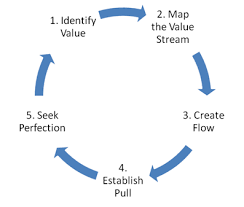
Part A: Search the internet for an appropriate instructive video that presents the basic concepts of lean manufacturing, lean production, or lean principles. YouTube, Google Videos, or Bing Videos are good resources to search for an appropriate video. Post the link to the video that you have identified, briefly summarize the video, and discuss the main concepts of lean manufacturing as described in the video. Explain how a lean strategy can help an organization achieve its goals.
Additionally, choose an element (or elements) of lean manufacturing you feel most affects the overall operation and describe why this is the most important concept.
Part B: In response to your peers, do you agree or disagree with the significance of their chosen concept? Why or why not?
This article presents the history and brief evolution of lean manufacturing, beginning with Henry Ford and concluding with lean manufacturing practices today. Additional information regarding lean is contained within this website.
The Toyota Production System was termed lean manufacturing by the authors of The Machine That Changed the World. The Toyota website provides a detailed description of the Toyota Production System.
We can write this or a similar paper for you! Simply fill the order form!